You join me after a rather electrifying week to close off the BMW Electric Mobility story! It’s been a busy week with many driven and ridden kms, so kick back and get comfortable, because this is a long one! My daily journey is a 25km round trip that starts in suburbia and goes right to the heart of the CBD, as it does for many other Aucklanders. I live close to the ramp so just after driving a few blocks, I have to sit until it is my turn to rush onto the motorway, where things get a bit better. I then cross the bridge and brave the 30km/h speed limits before I get to where my office is, right by our postal card, the Sky Tower.
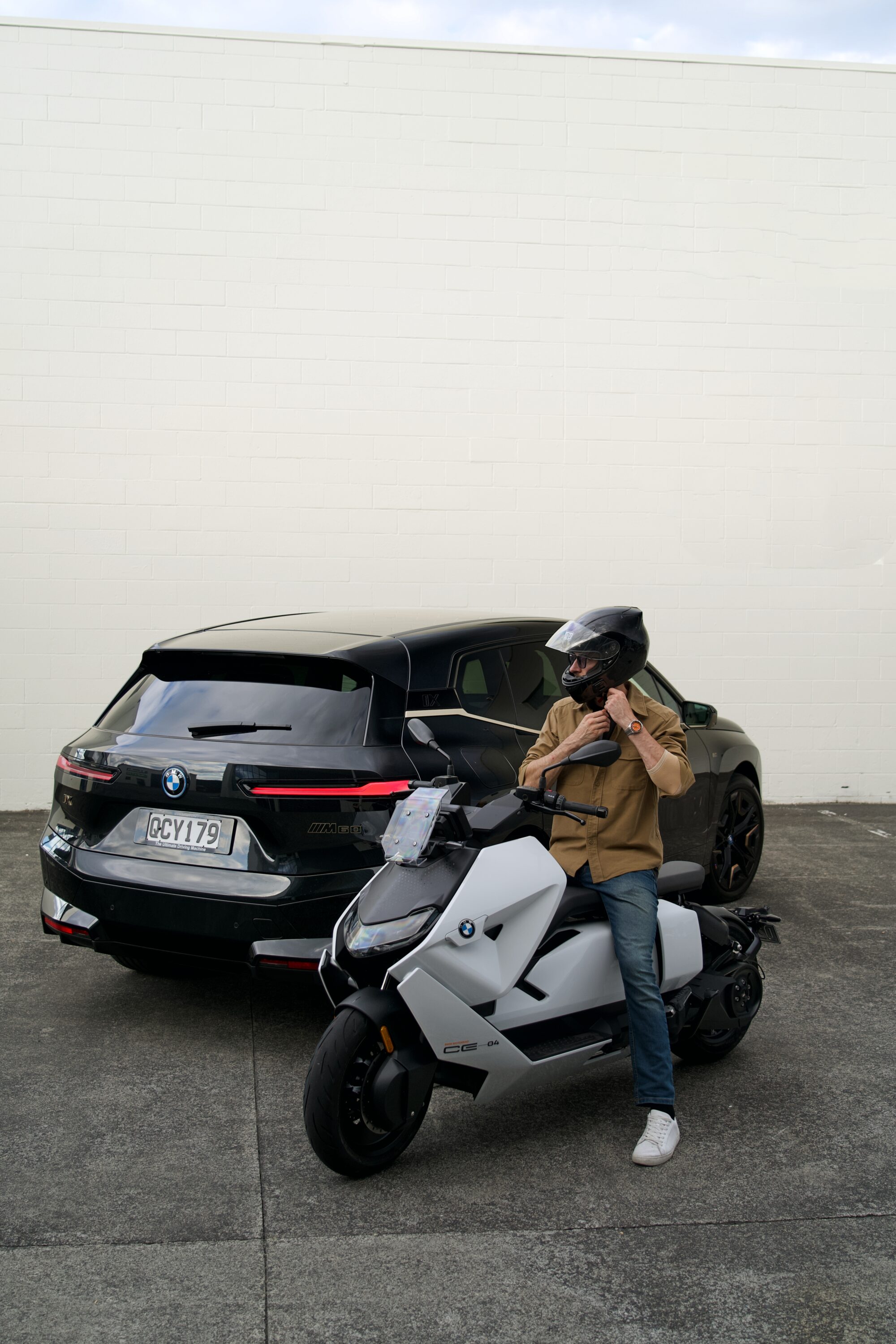
But, in order to mix things up a little and to cover different scenarios, I also did a there-and-back journey up North, with a big stint on the motorway and 20km of twisty roads. The first one to be put to the test was the lovely CE 04.
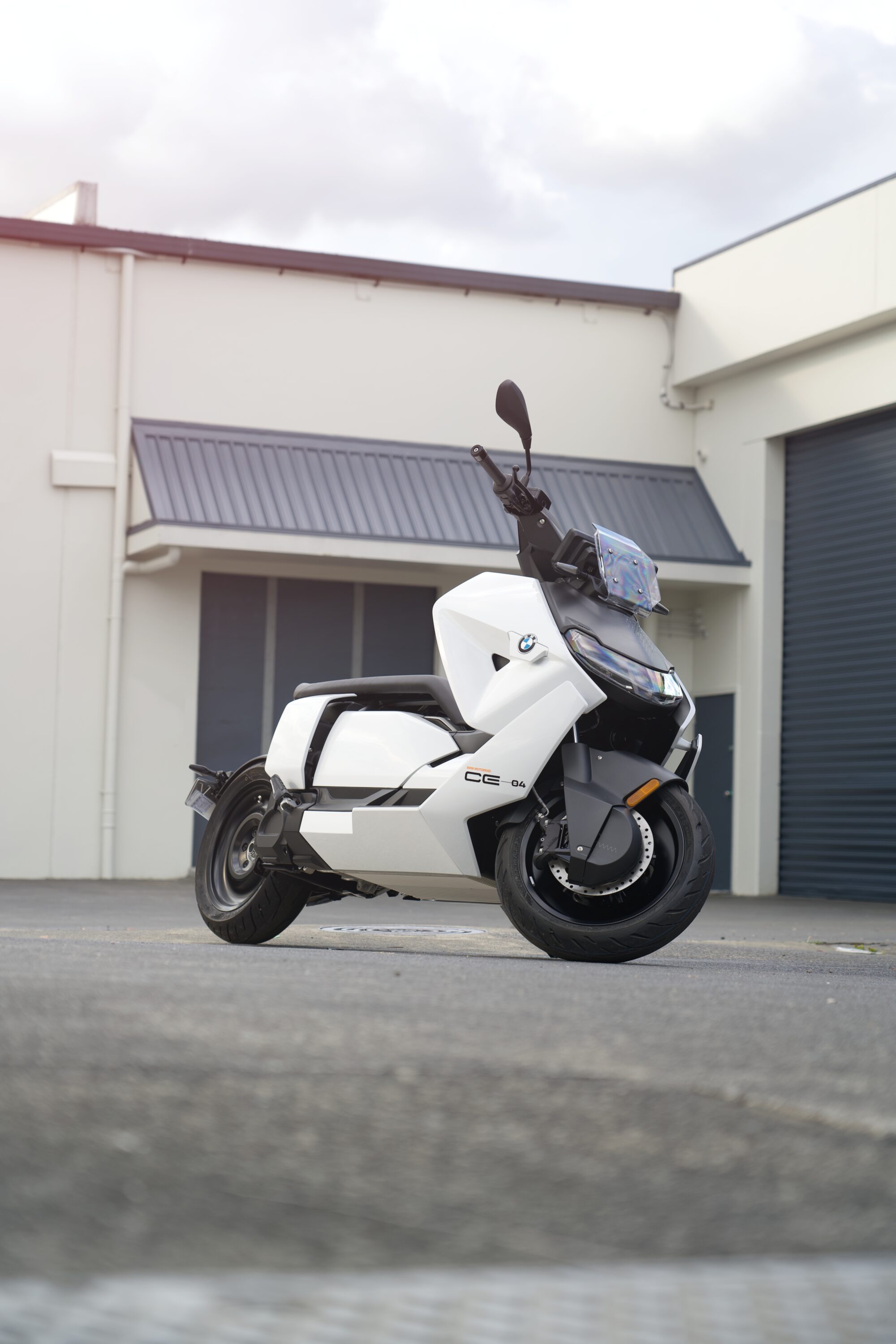
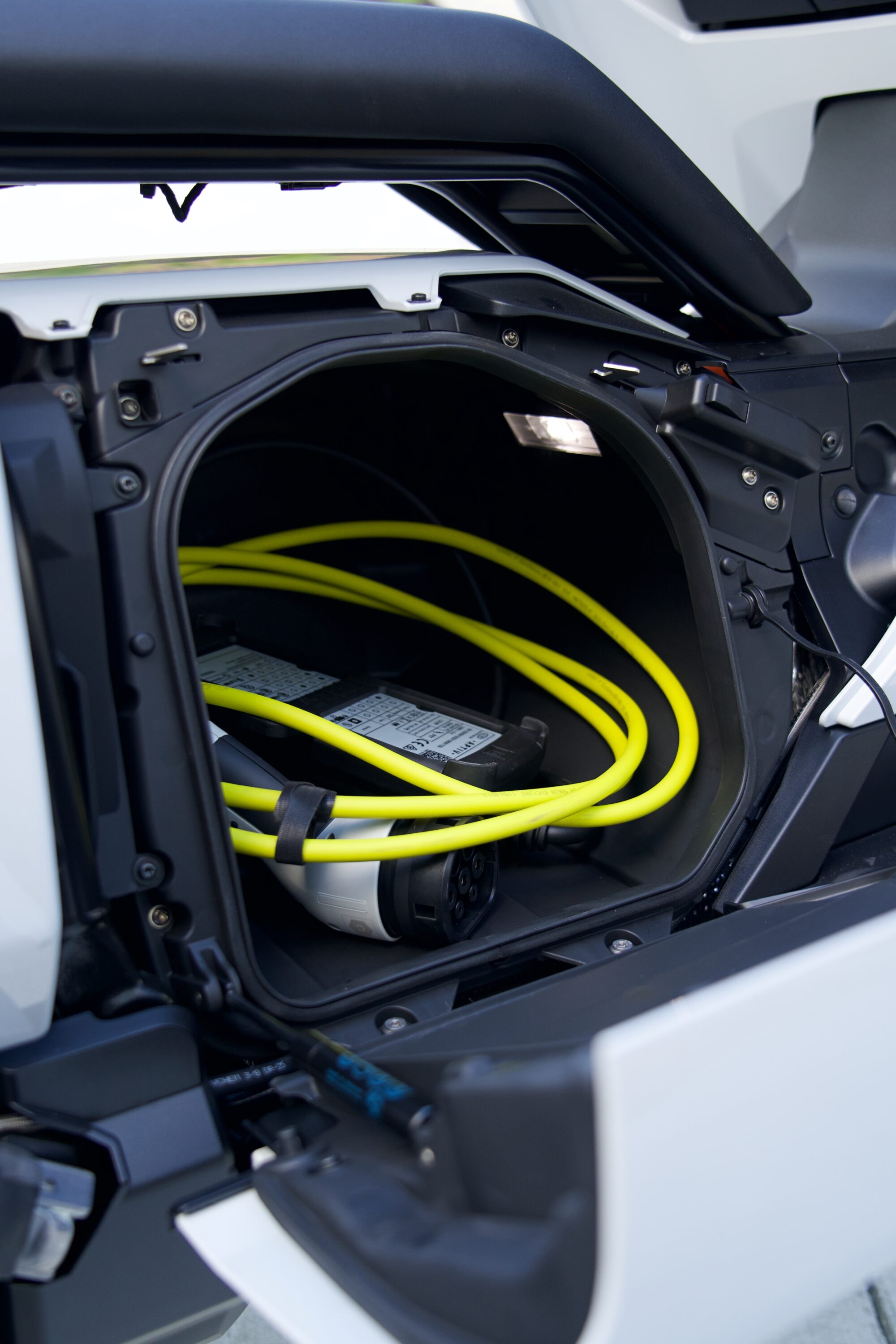
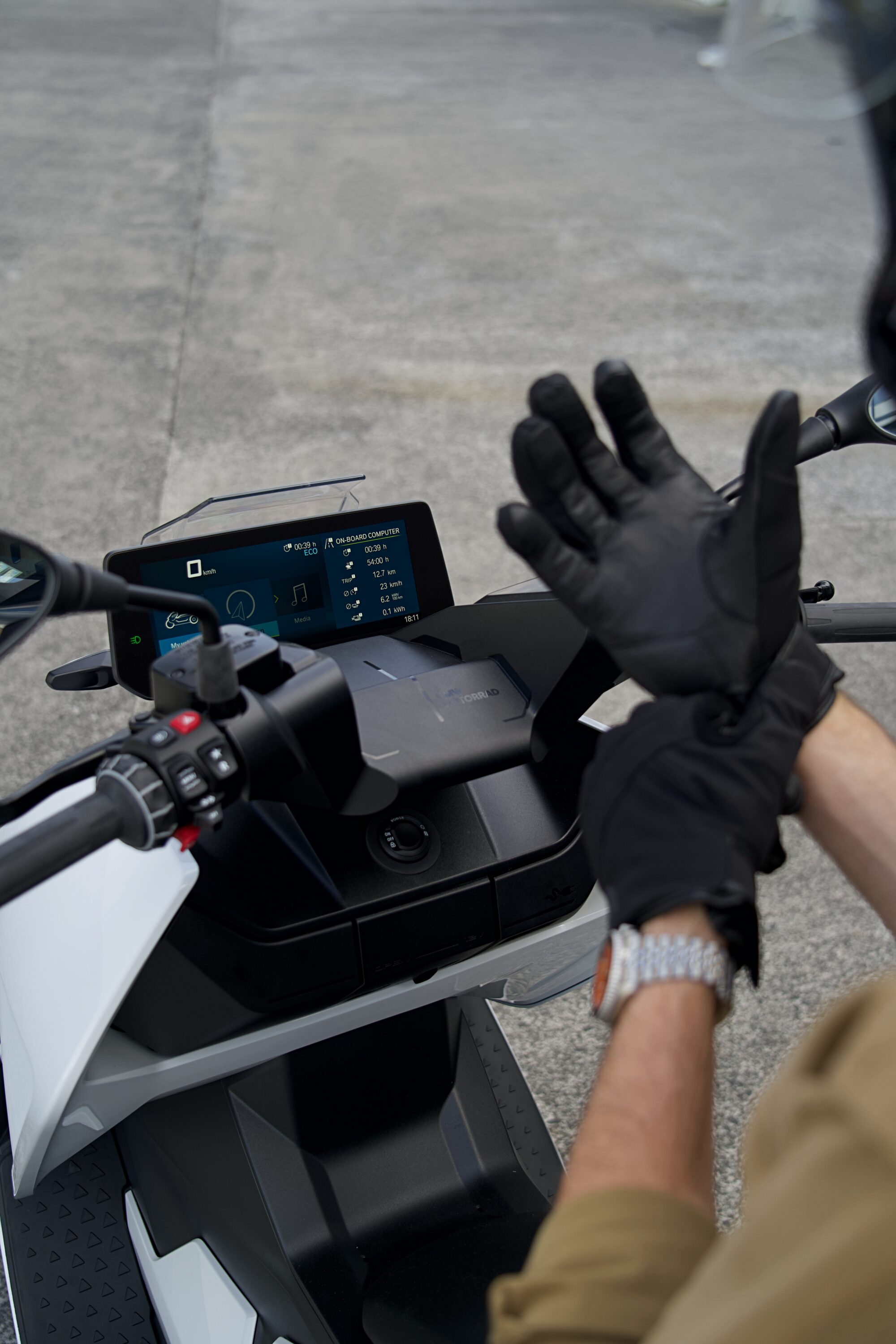
As with all bikes, there is some setup required. I geared up, connected the Motorrad app that allowed the map to be shown on the cluster, and put my laptop, backpack and the charger in the cubby underneath the seat. This is really useful storage, riding without a backpack over your leather riding jacket is just so much better! We’re off to a good start already.
The access to the motorway is through a two lane ramp that goes for hundreds of metres. Usual Auckland stuff, and a stretch of road where bikes are the best equipped to save time. Being a Brazilian, I’m used to lane splitting (it’s a national sport back there), but the CE 04 doesn’t enjoy that as much. The scooter seating position doesn’t feel particularly comfortable shuffling between cars compared to a regular motorbike, but the immediacy of the electric torque makes it easy to fill any tiny gap in traffic you see.
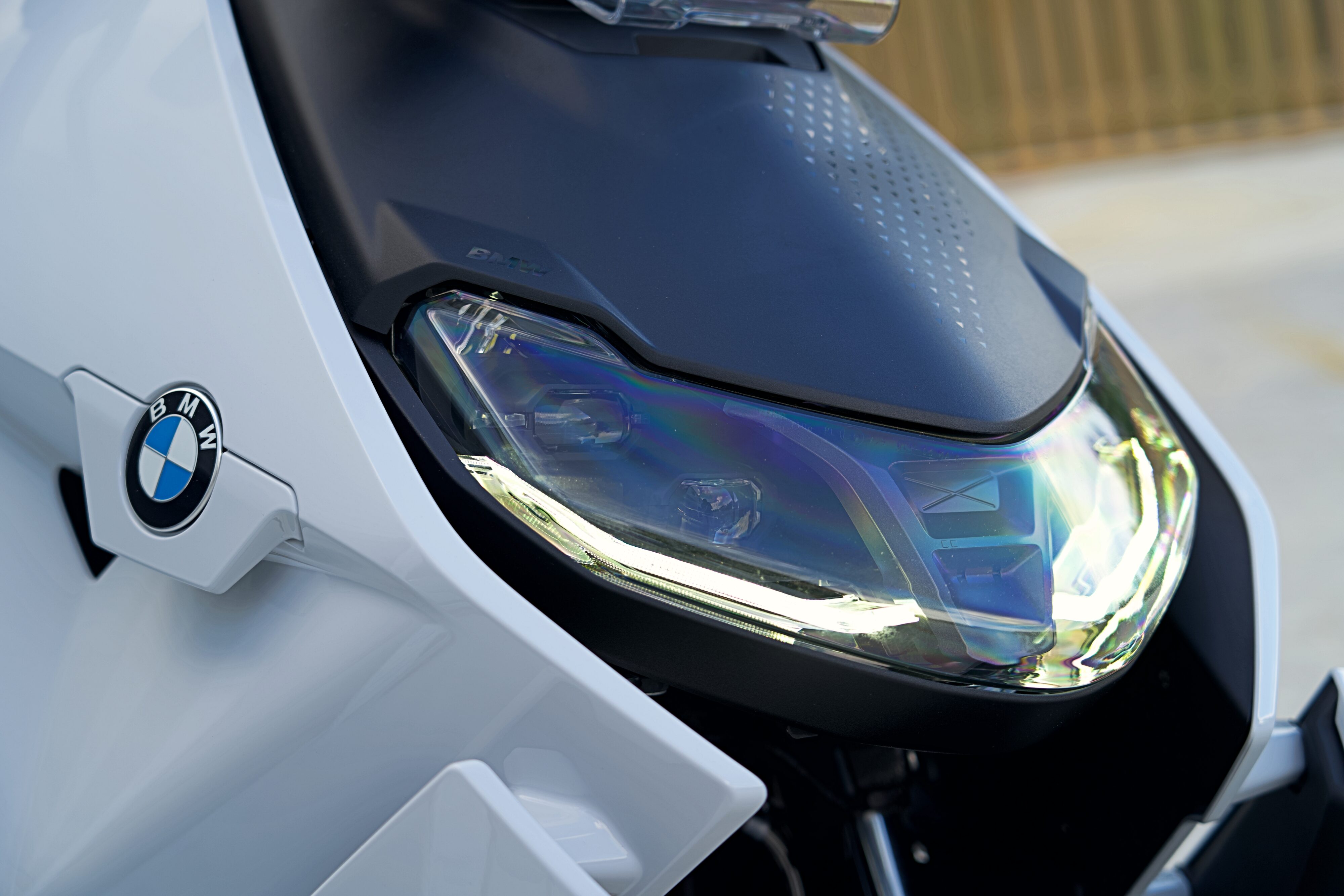
Once merged and moving with traffic, the scooter starts showing its skills. Given its motor and battery were initially designed for cars, there is enough grunt to keep up with any movement, even facing headwinds going up the Bridge, regardless the state of charge – this latter being a big thing.
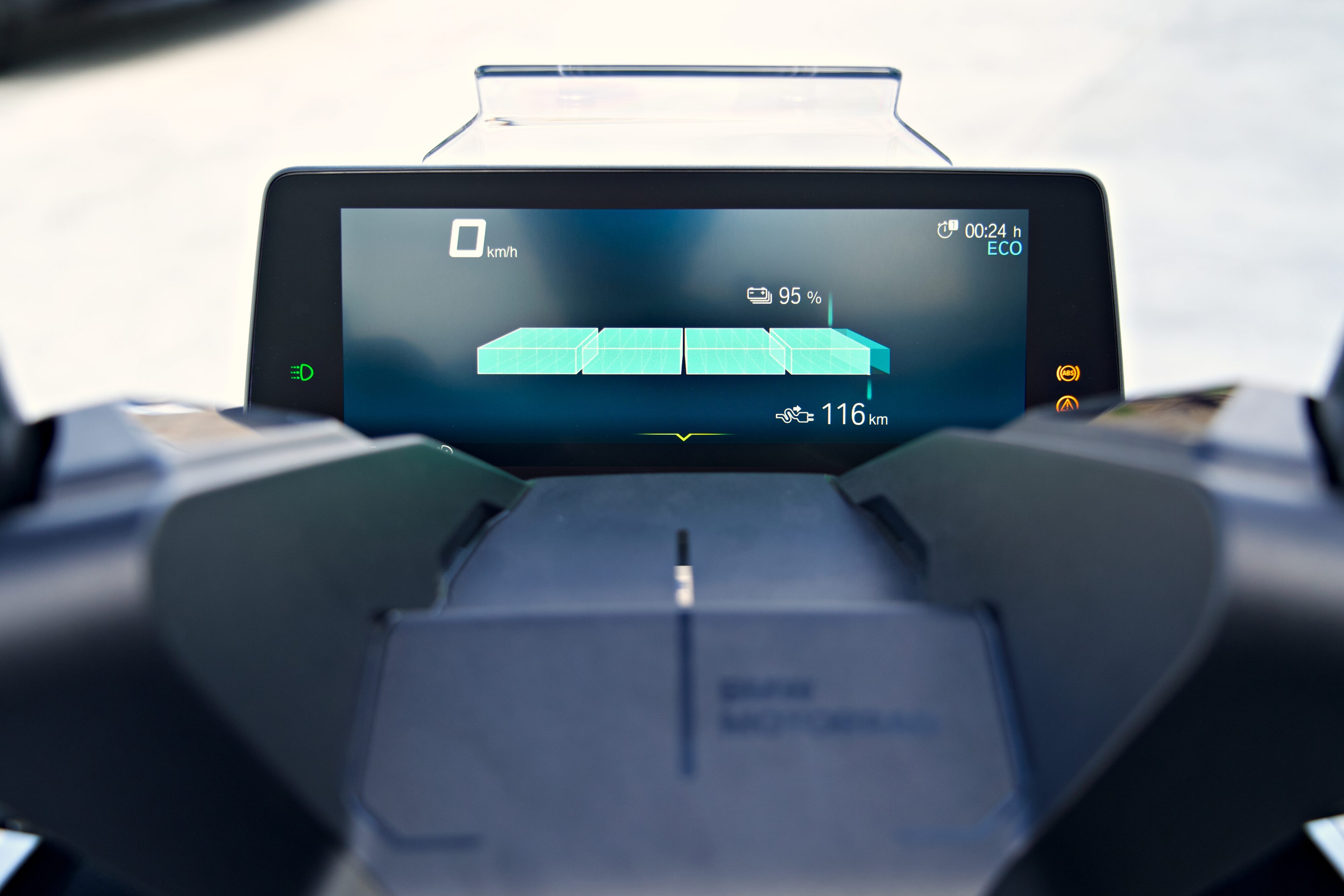
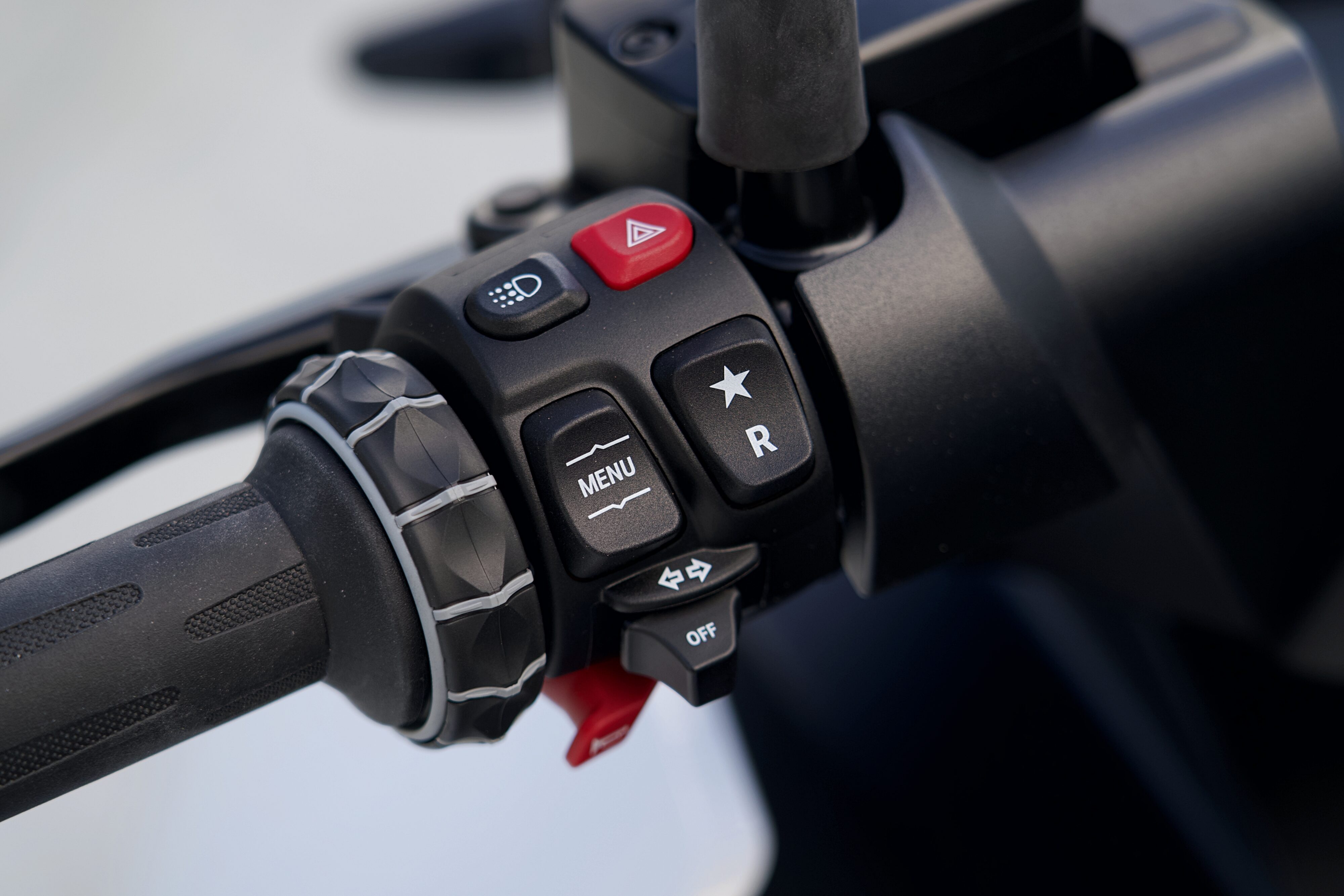
The information shown on the screen is very helpful. You get not only a comprehensive trip computer, but “the gauges” give you important information about how much power and regeneration you have available, which all change depending on the Ride Mode you’re in. If only it were easier to flick between them: the button sits at the top of the commands on the right, which makes it complicated to hit when moving. It’s probably just easier to change them with the left hand, or do the right thing and stop before changing.
When on the open road up North, the bike’s long wheelbase shows its benefits. It feels as stable as a big motorcycle and can easily cope with motorway speeds even against strong winds. It never feels underpowered, and you can shift your weight around and try different riding positions to make the air resistance less tiring.
However, the long body also makes it less willing to change trajectory and dance with you, something the smaller sister was great at. After you get used to the riding position – I had little experience with scooters myself – and the very low centre of gravity, it becomes easy to work with it and learn how far you can comfortably lean on the bike when taking turns. It is more competent than engaging, and completely within the range of what you would expect from this kind of bike.
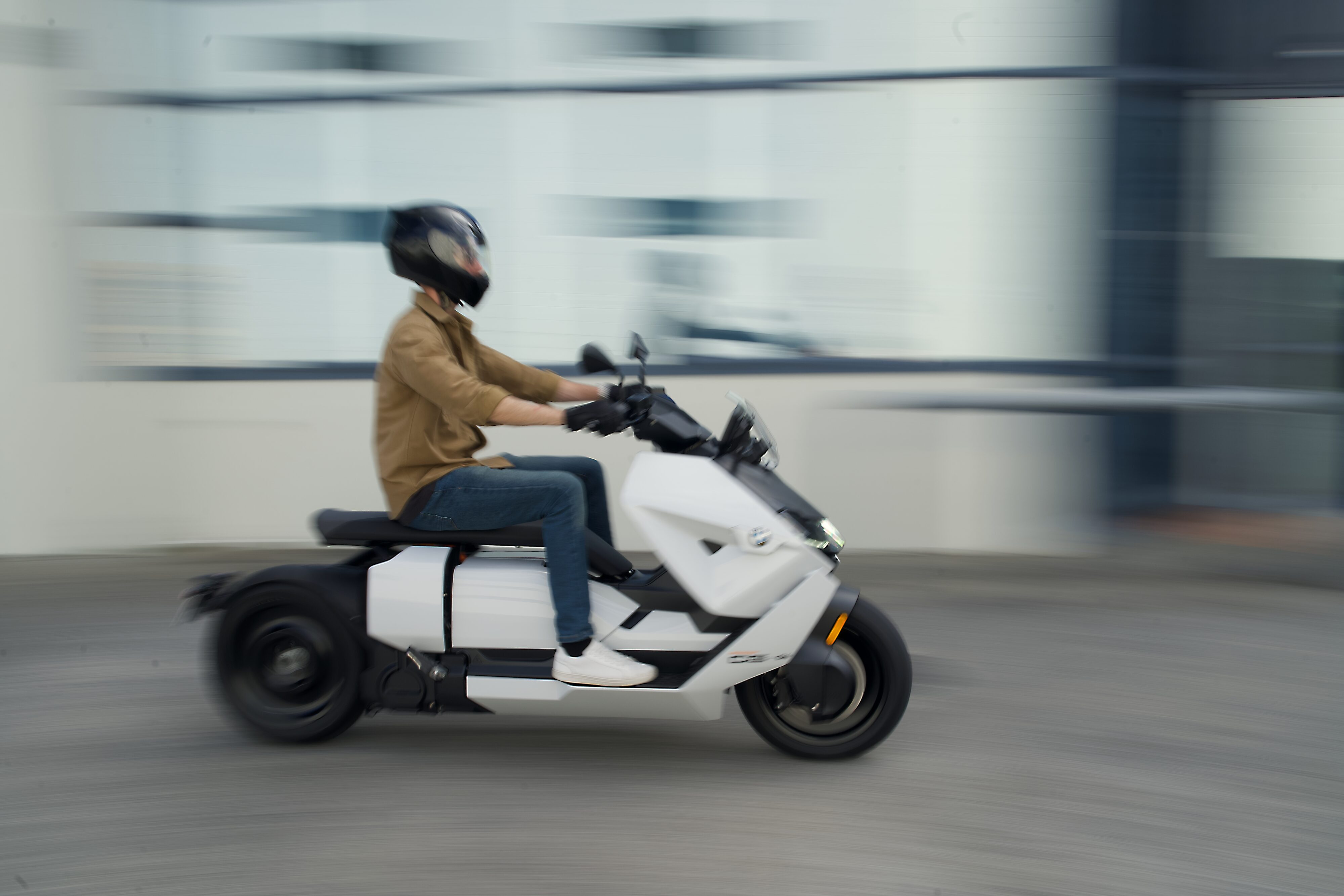
I came back home with very little range left, so we’ll pick up the CE 04 conversation back up again when it’s time to talk charging. For now, I lay down my helmet and change being exposed to the elements to jumping inside the rocket ship isolation pod that is the iX M60.
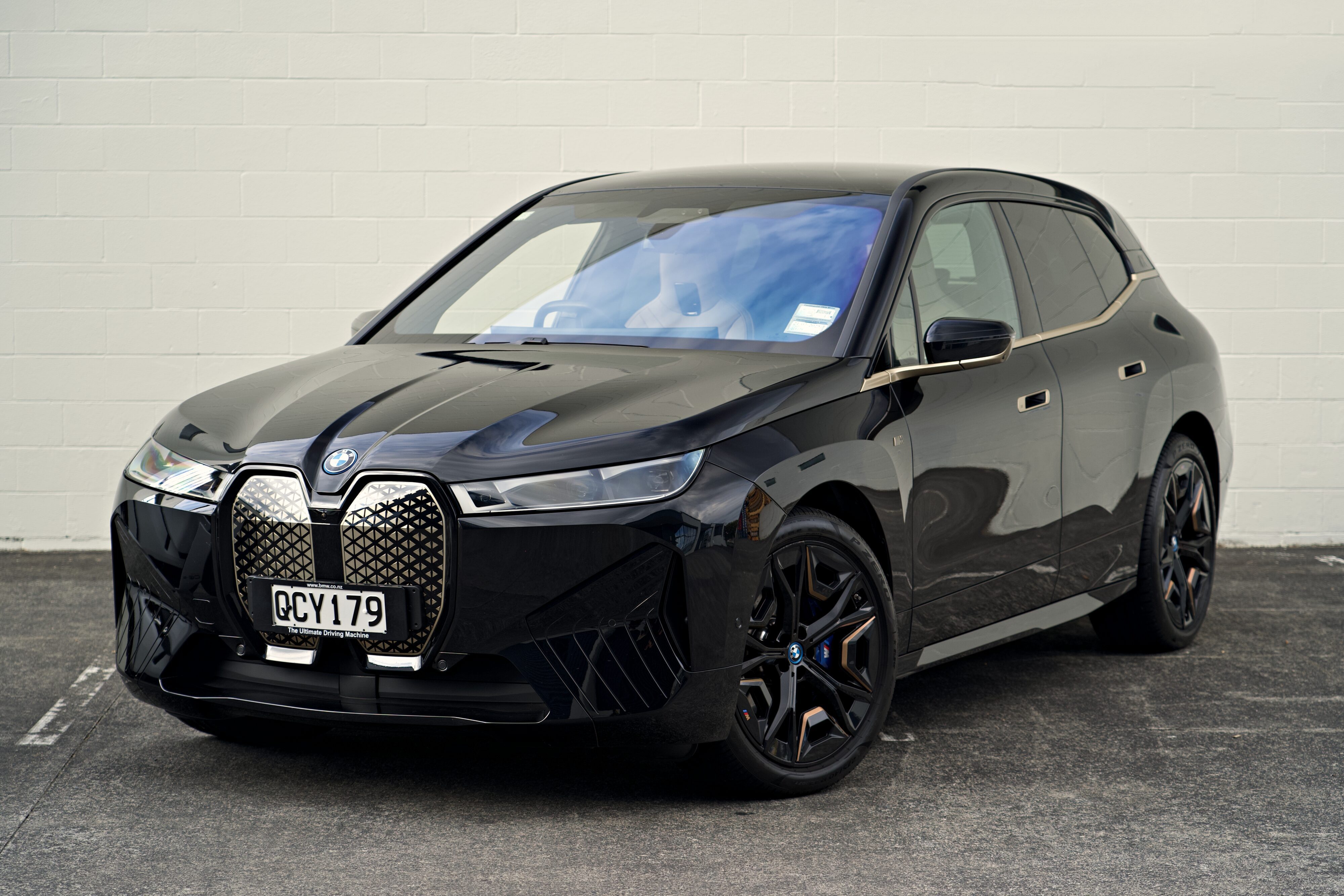
For the stop-and-go part of the journey, the two vehicles could not have been more different. While I had to be completely locked in and focussed on every single movement in traffic when riding the CE 04, with the iX I could basically rely entirely on the smooth adaptive cruise control and let all the comfort of the cabin pamper me.
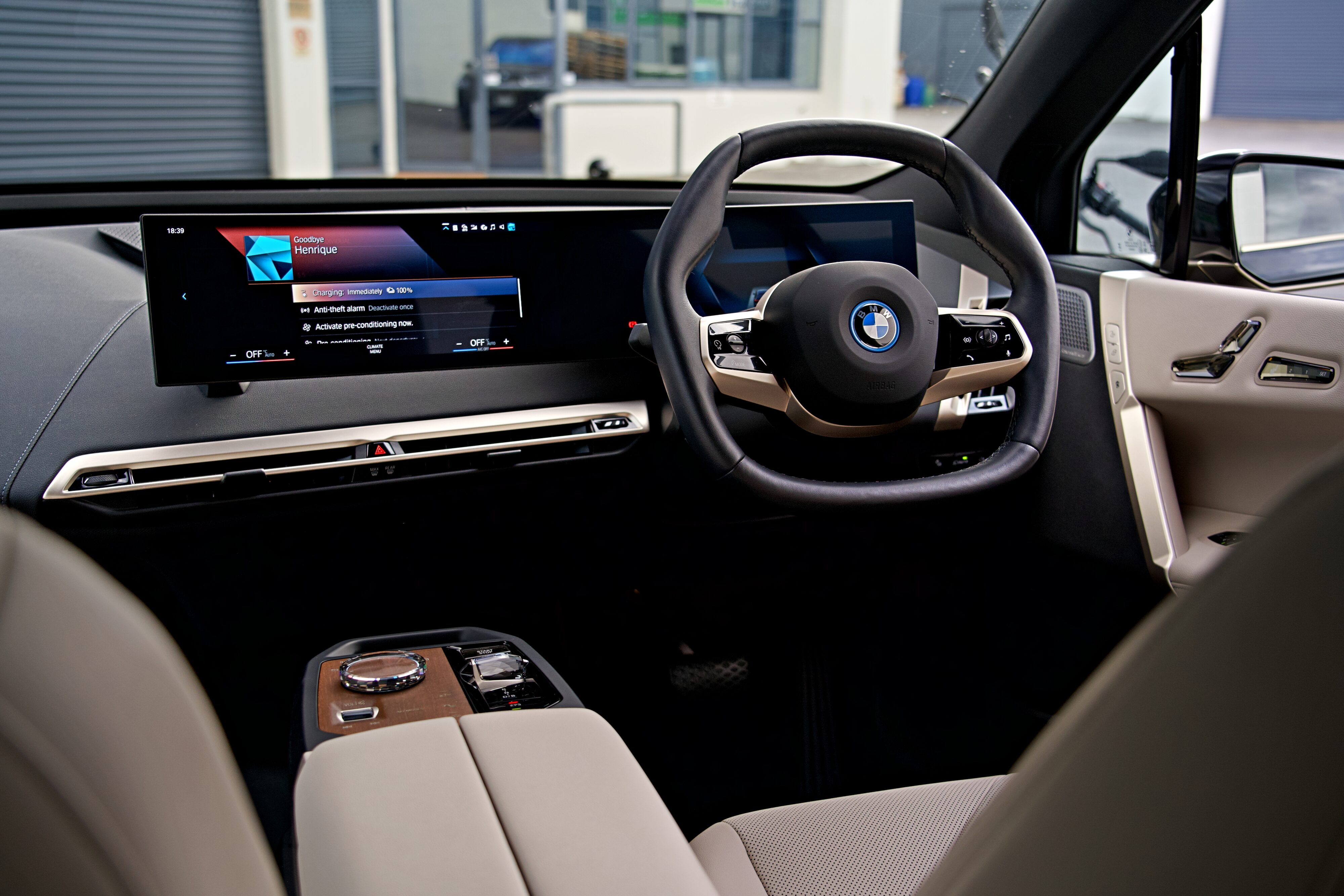
The low noise floor keeps all the unwanted sounds outside, and this cocooned feeling keeps you interacting with whatever is in your bubble. I used this time to set up the final steps for the tech suite and take note of a few stats about the drive, all done through the beautiful dual screen layout and great touch points – for whatever there are buttons left, that is.
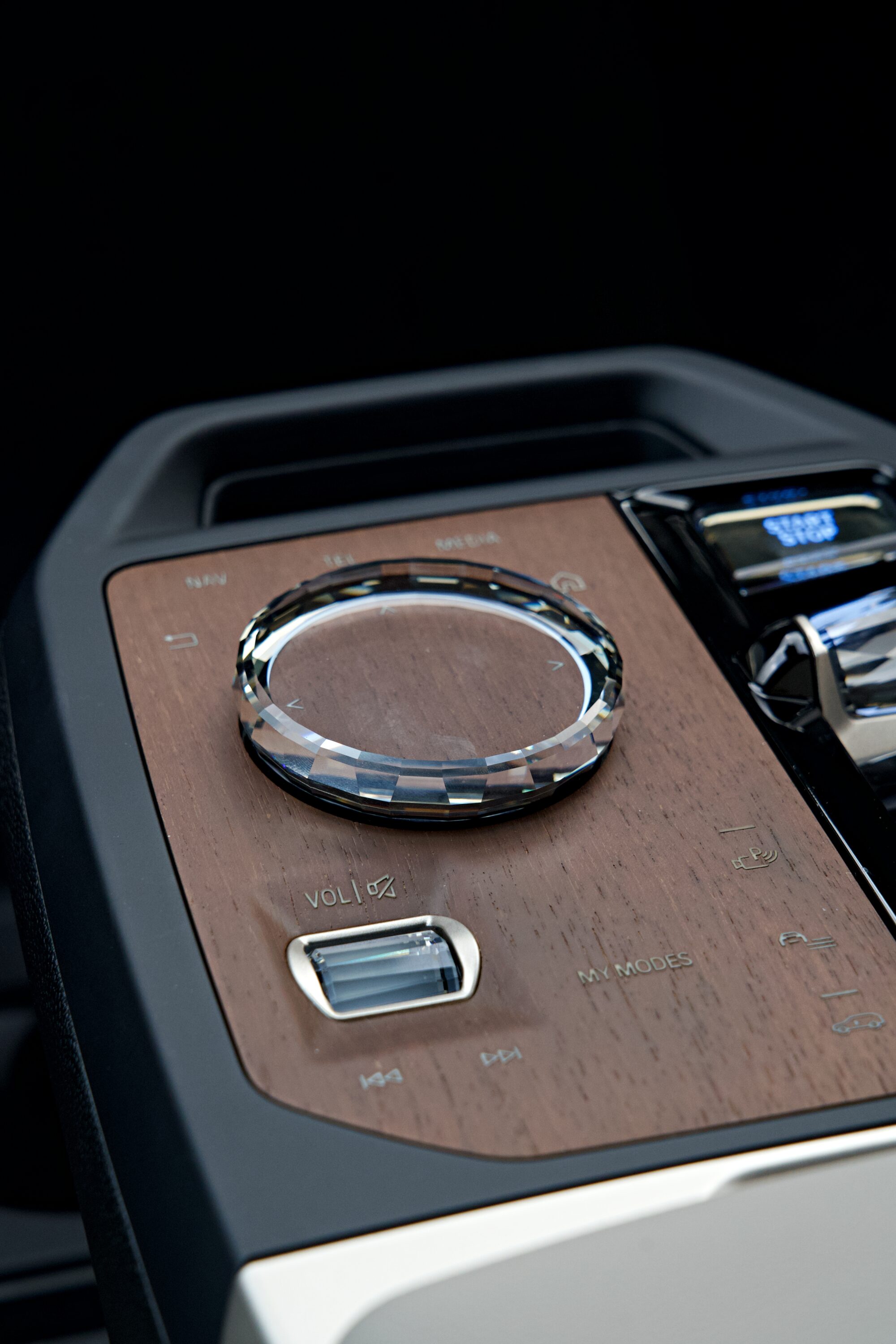
And, of course, the sound system. The Bowers and Wilkins setup found here is one of the absolute highlights not only for the iX, but for the whole industry, widely renown as one of the current best in class. I found the processing to be a little too gimmicky, however, and it was only after turning off most of the “add-ons” that I got to enjoy its full clarity and punch.

When lights went green and it was time to merge, the M60 impresses. In Efficient mode, there is little theatre and the experience is mostly dominated, again, by the silence and predictability. There are other modes like Digital Art and Expressive that will add some Hans-Zimmer-made drama to it, but they are mostly fun party tricks – I still preferred Efficient for the pure silence or Sport for the engine noise simulation.
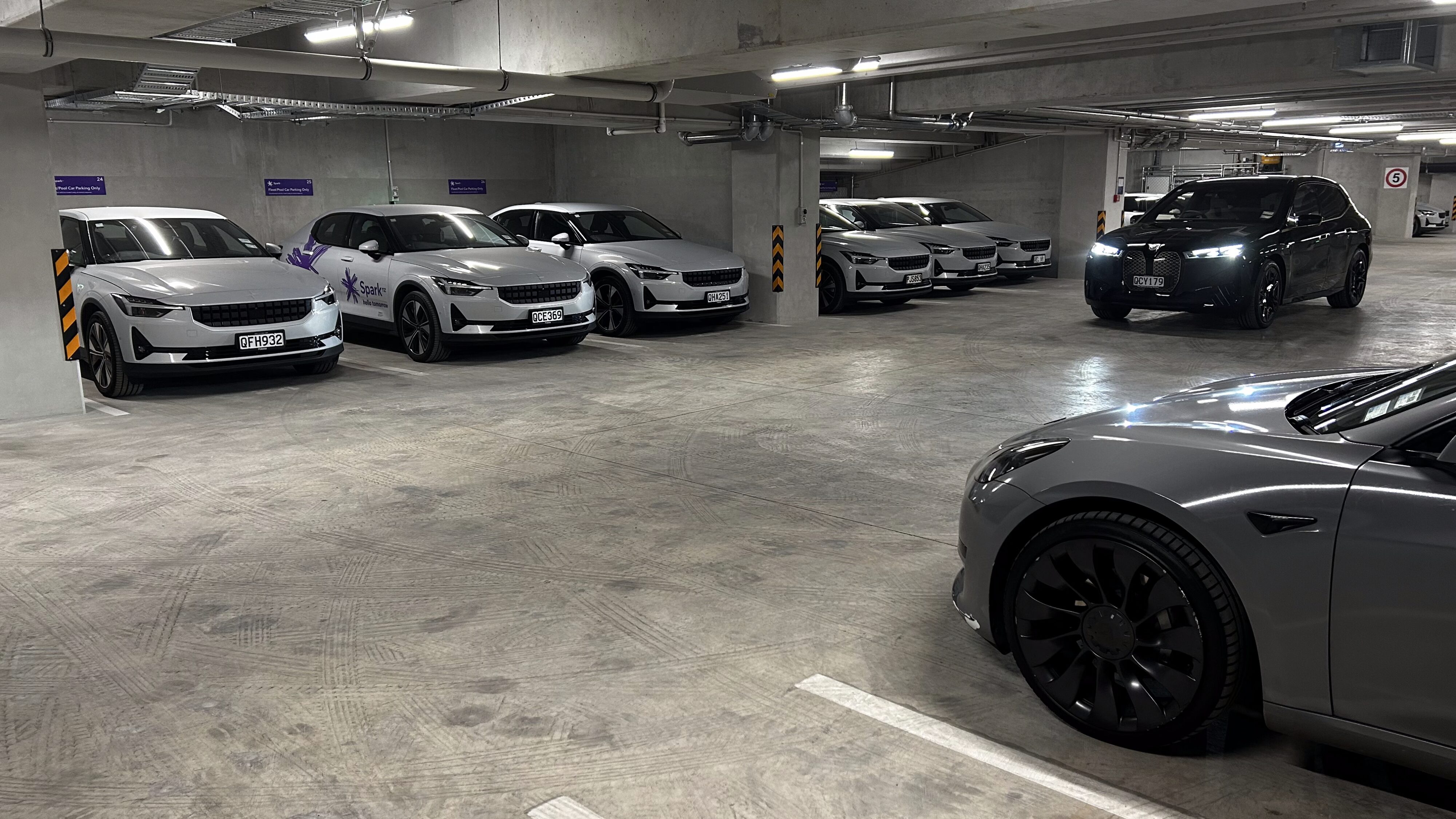
As I crossed the bridge and made it into the CBD, the disparity in size became the most apparent. This is a big SUV, touching the lines on both sides of the parking spot I chose. Rear wheel steer is a welcome addition here, shrinking the car’s footprint and making it easy to put it anywhere, greatly assisted by the comprehensive parking package available.
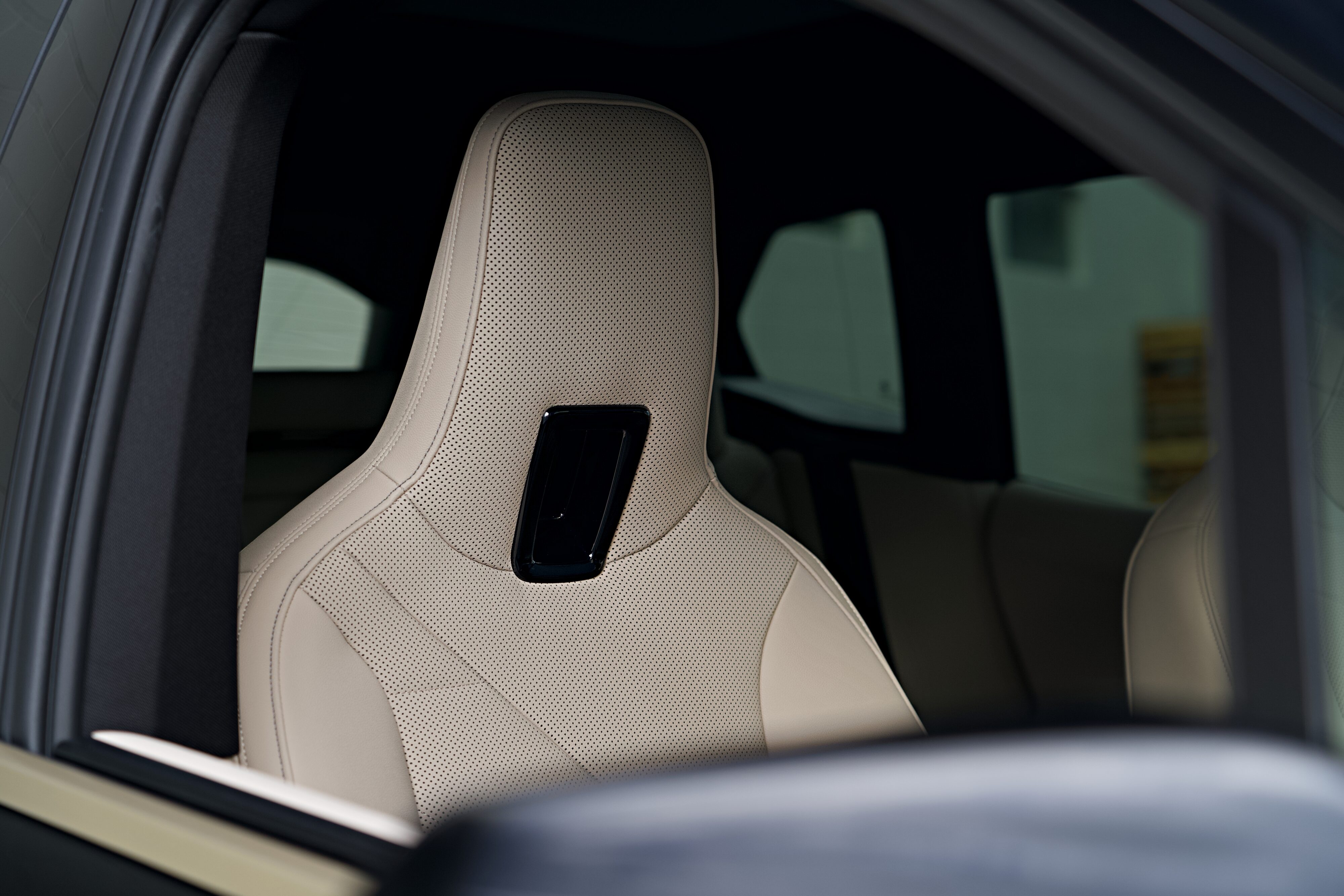
Up North, the iX got to show more of its capability. Should surprise no one that it was great on the open road, considering the combination of little noise, great comfort and power for days. A slight diss? This was where I wanted to enjoy the massage function, but being a system that just inflates a few bladders against your back, I thought it lacked some strength. The seats themselves, however, are amazing.
I once read that true luxury is always having power on tap, never feeling like the powertrain is giving you its full power and it’s still not enough. If this is true, then the iX M60 is the ultimate luxury barge – it is just effortless, all the time. In Efficient Mode, take offs are comfortable and silent, with a steady build up of power that feels like a big plane starting leaving the runway. But then, in Sport Mode, quick stabs to the accelerator will move the iX in a way that I thought was impossible in a car this big and tall, it lives up to the break-neck behaviour we’ve come to expect from hot EVs. Both modes (and everything between and around them) are done with incredible integration between the other systems, there is not a whole lot to fault BMW’s approach to powertrain calibration in both vehicles.

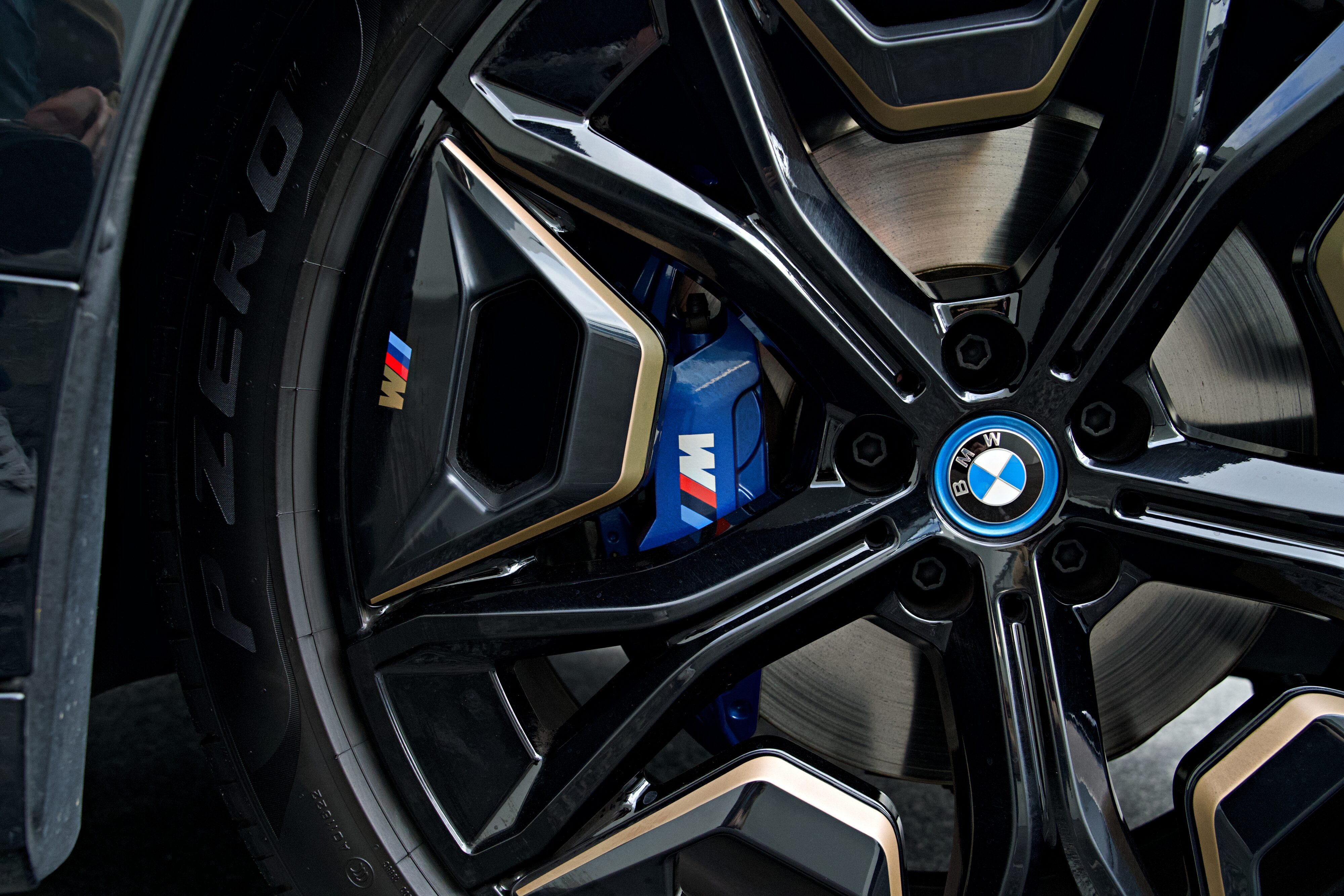
But all this isolation and competence masks speeds really well, and without an audible feedback of how quick you’re going, it’s easy to approach a turn faster than you initially intended. The good part is that the iX is well served in the brake and tyre fronts, enough to cope with the massive weight in a way that inspires a lot of confidence. Same as with the bike, we’re not dealing with their natural habitats here, but the iX honours the M badges better and feels less like a fish out of water on the bendy bits.
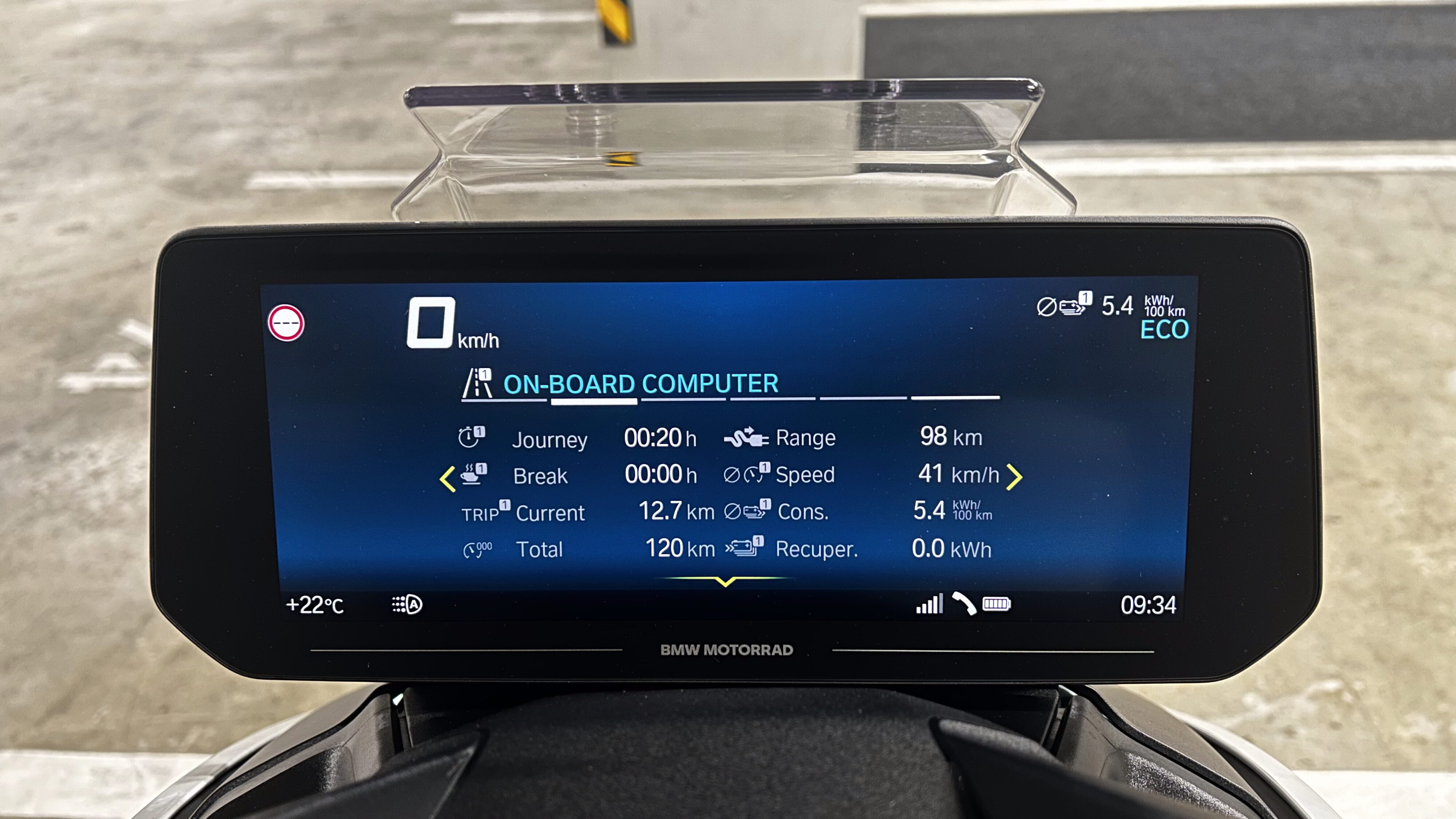
At the end of all these journeys, I jotted down figures for both vehicles and got to comparing them. It was a great learning exercise in electric efficiency, something we should talk more about, as range anxiety becomes less of a pressing topic.
For the work bit, it took me 19 minutes on the CE 04, with an efficiency figure of 5.4kWh/100km. On the iX, it took me 32 minutes and I got 21kWh/100km. The CE 04 was almost never stopped as there are almost no traffic lights and I lane-split whenever I could, whereas the iX was relaxed in the powertrain department, but I’m sure the aircon and the sound system both on full blast ate some of those electrons.
For the motorway drive, the CE 04 came down to 8.4kWh/100km, and the iX reported an average of 26.5kWh/100km, with some peaks of around 31 that got diluted in the overall journey. Substantial changes, but still well within expected. It supports my claim from pt I – despite the size, EVs are always happier in the city, and they’re better for it.
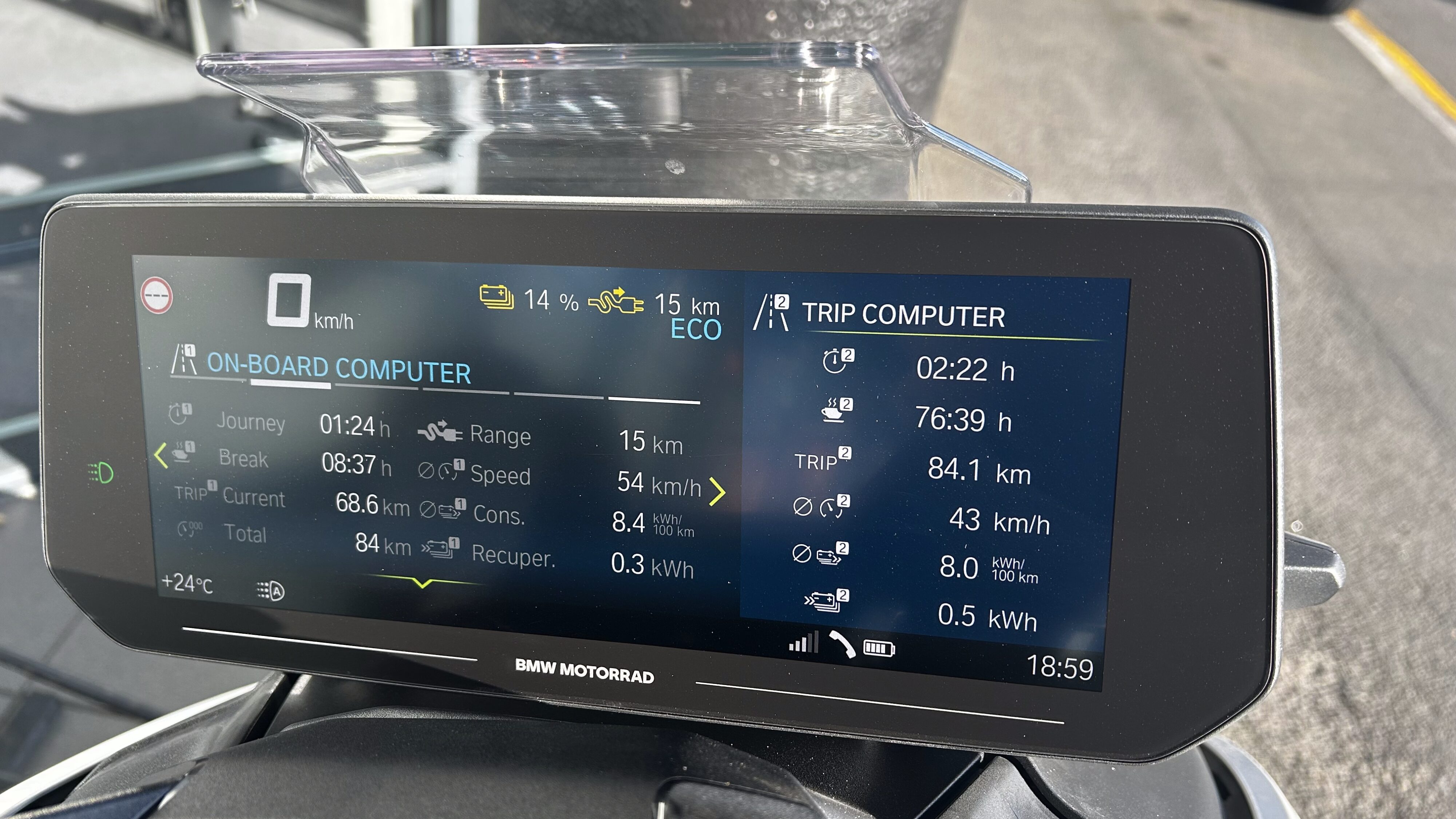
All this driving surely took its toll on the batteries, and while they were both still on track to meet and exceed their claimed ranges, it was also time to charge them.
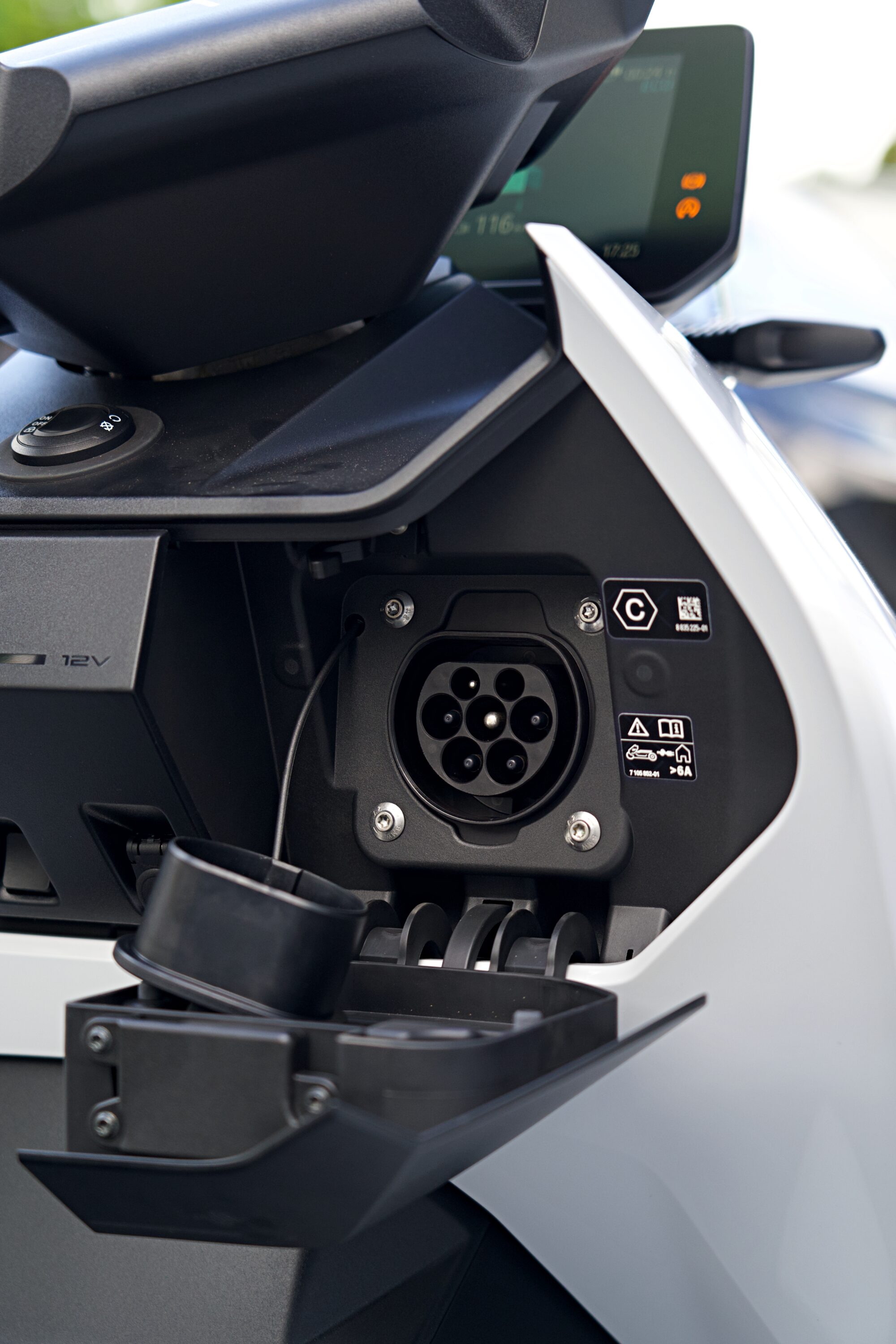
With the bike, the experience could not have been better. This is because the charging hardware is now built into the bike (remember it wasn’t in the CE 02?), which means that the cord you need is much more ubiquitous and reasonable to lug around. Using the provided 2kW trickle charger, I plugged the CE 04 at my office’s e-bike parking lot and achieved a 13 to 80% charge in 4 hours, but that could be quicker as that setup offered 6A instead of the “normal” 8.
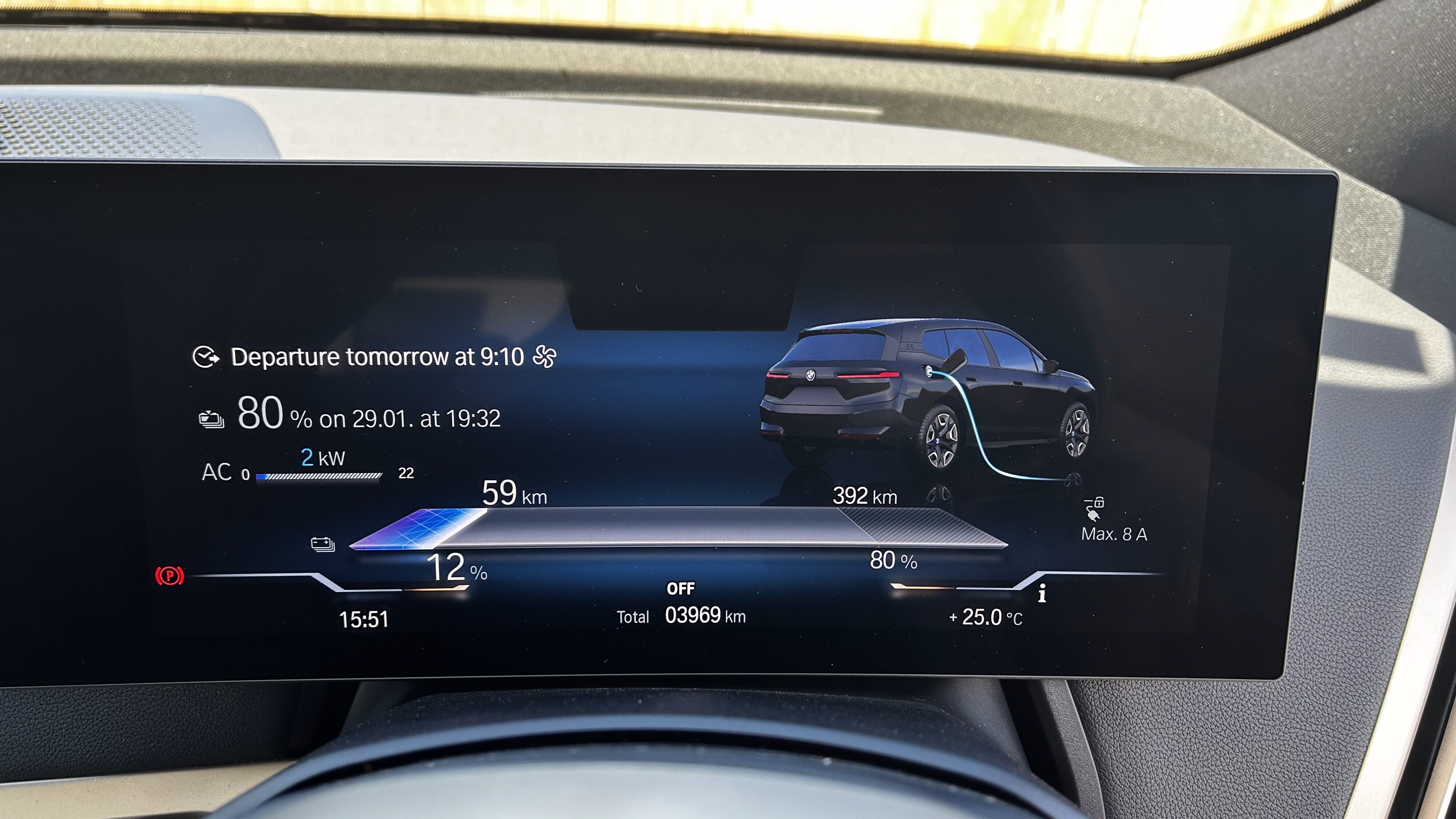
The iX was a fun story. The car was provided to me with a male-to-male cord, so I plugged in the CE 04’s trickle charger just for the laughs and to see it asked for 55h for a charge from 12 to 80%. When you are dealing with a battery this massive (105.2 usable kWh), your charging set up needs to be top notch for the experience not to be frustrating. But honestly, chances are that with an IX, you would have a wall box at home, so I don’t consider that to be an issue in the slightest – the car’s limits will easily allow for full charge overnight. The iX offers a super easy to use function to schedule, monitor and customise charging sessions, which is always handy.
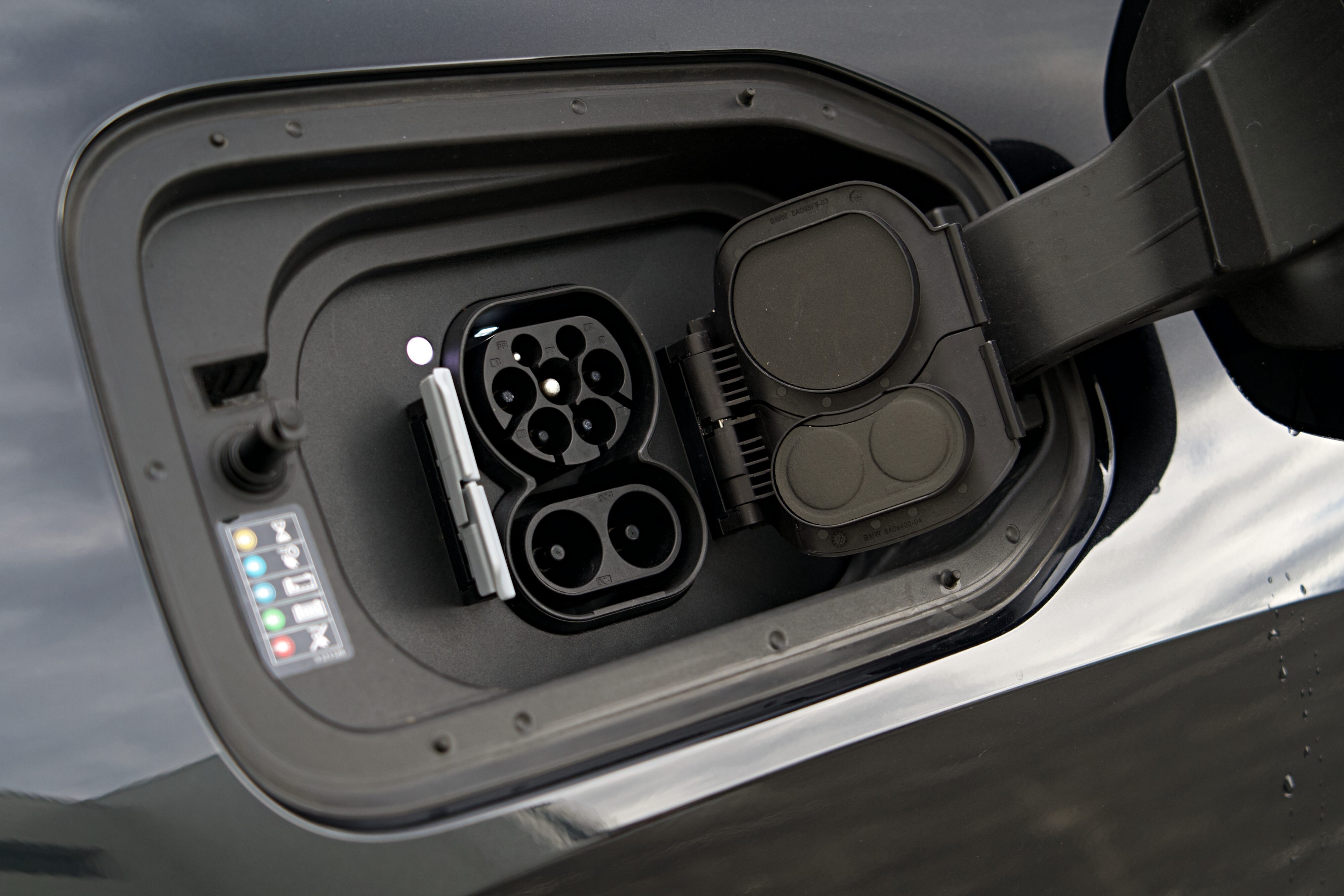
However, I still needed juice, so I stopped for a fast charging session at a 150kW charger close to my house. With a peak power rating for DC charging of 195kW and a steady charging curve, the iX was unfazed with these figures and in half an hour of charging it took in 65kWh, taking me from 59 to 360km of range left.
So what does all of that mean? First of all, that not all EVs are made the same, even within the same brand. Yes, we have gone to extremes here, but is it great to see the market is shifting to see EVs as their own, separate lane of the market, having vehicles that are good on their own that just happen to be electric.
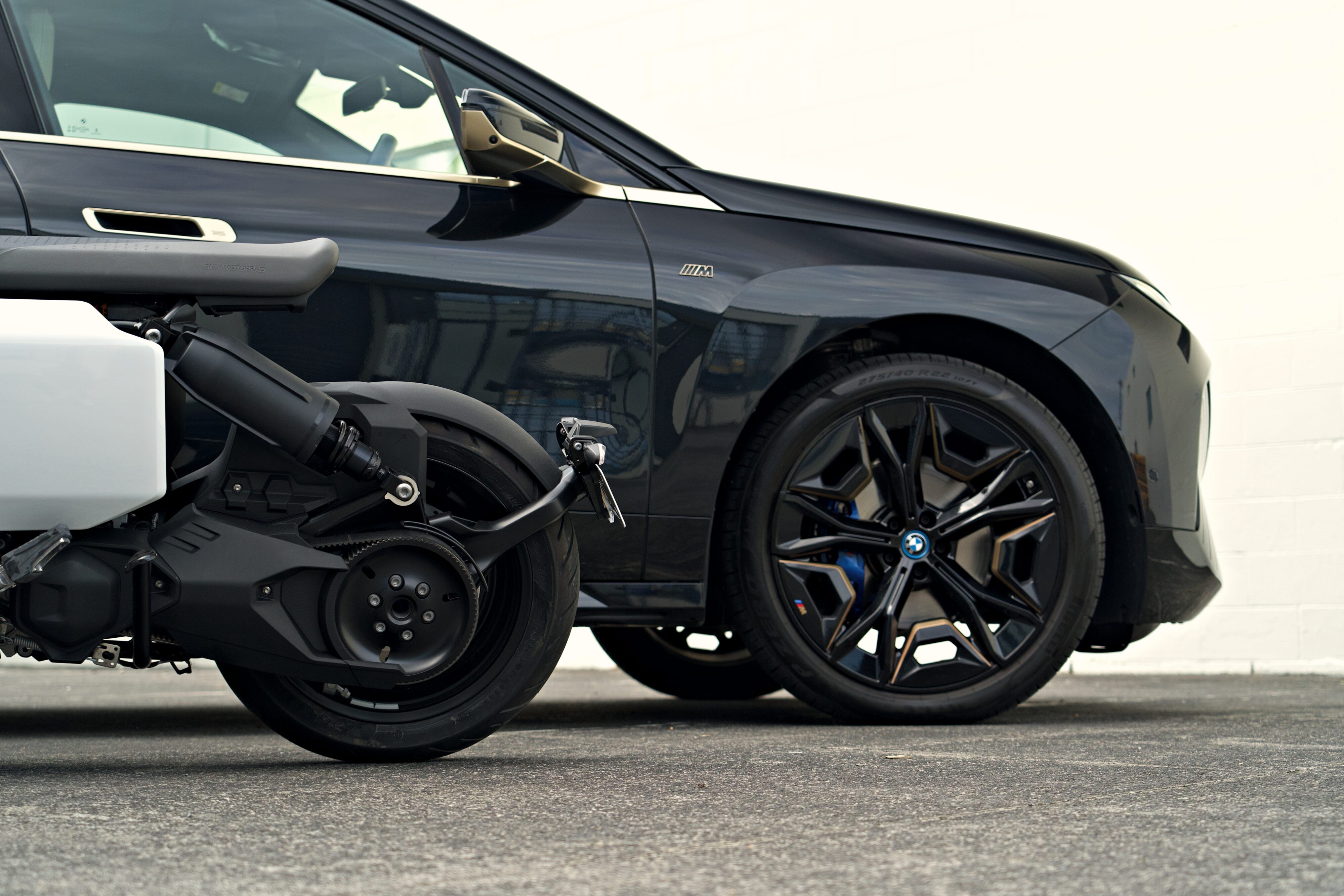
Second, that charging is a big thing – who knew! It is abundantly clear that battery size dictates the charging experience. The CE 04, with its smaller battery, can easily be topped up with trickle charging, making it simple to live with even without dedicated charging infrastructure. The iX, on the other hand, demands a more serious setup. DC fast charging is great, yes, but relying on it frequently isn’t always convenient, viable or good for longevity. As the market shifts and charging networks improve, infrastructure is today just as important as range when considering an EV purchase.
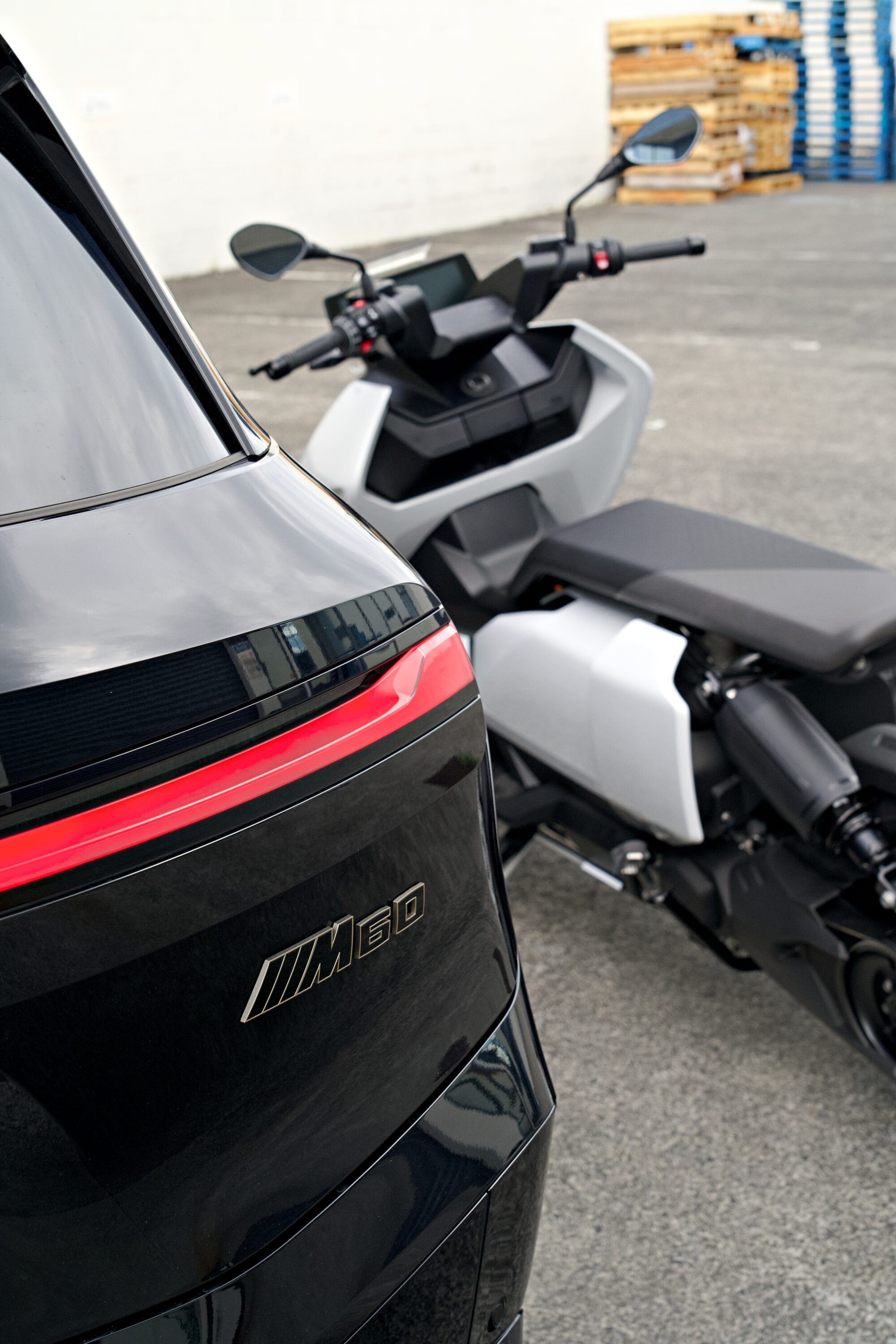
Perhaps the most interesting takeaway from this test isn’t about EVs replacing petrol cars — it’s about rethinking mobility altogether. No one will mourn the loss of a scooter’s noisy, clunky engine when an electric alternative is this refined. With the iX, it’s more complicated: you are trading the rumble of a V8 for deafening silence, but BMW (and B&W) have gone the extra mile to ensure that performance, engagement and entertainment aren’t lost in the transition.
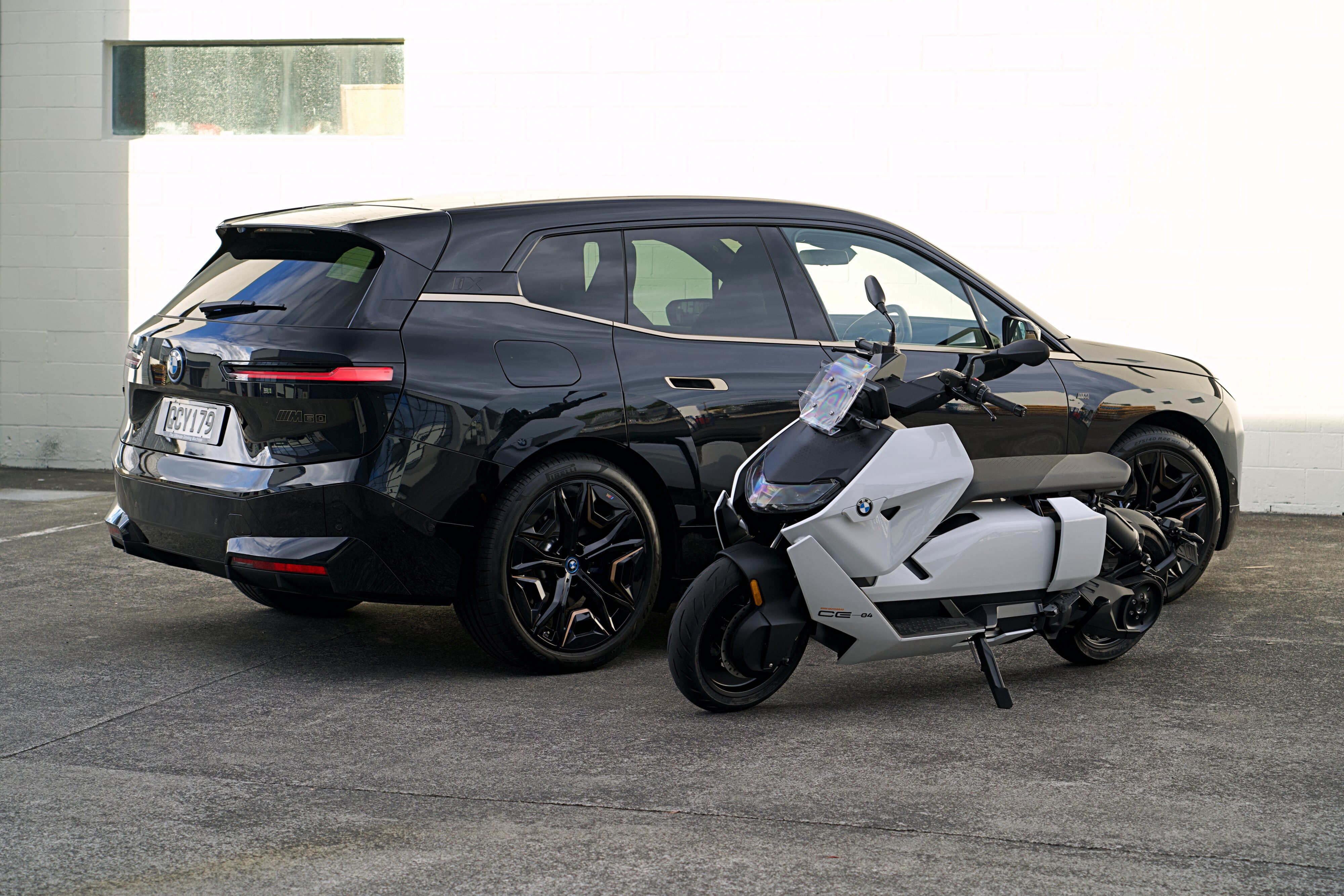
Ultimately, the whole conversation isn’t just about swapping petrol for electrons — it’s about re-evaluating what we actually need in our vehicles. Maybe we don’t always need nearly three tonnes of metal to move a single person, and maybe the real future of mobility is a mix of two wheels and four. Either way, BMW is offering choices, and great ones at that.
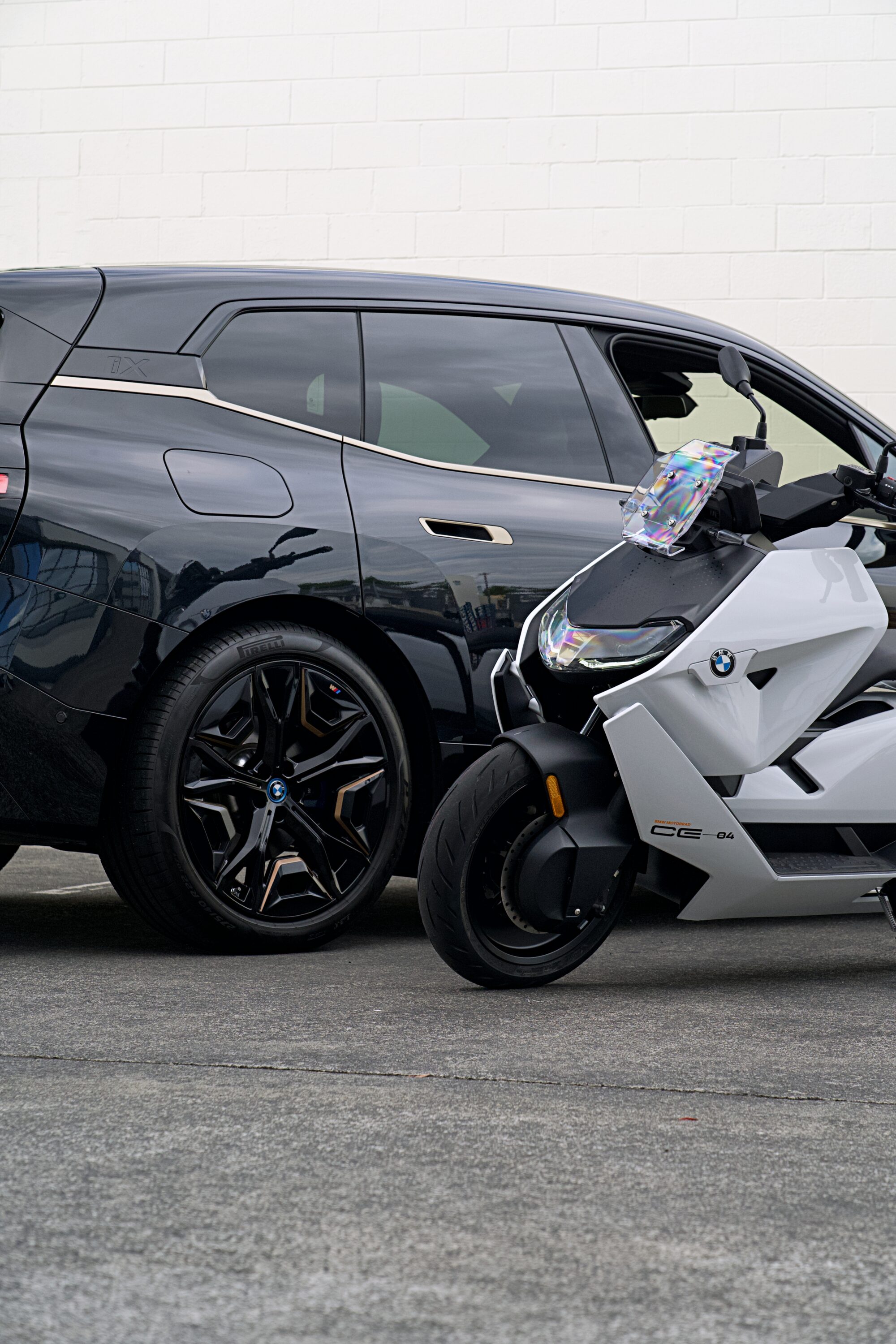
Thanks, BMW, for buying into the idea, and thank you for reading this far into this long a piece. See you next time!