You tune in today for the latest installment in my narrative arc of moving up Nissan’s SUV hierarchy. Starting with the Nissan X-Trail, stepping into the more grown-up Nissan Pathfinder, and eventually landing here, at the Patrol V8, it might seem like just a progression in size, price, and capability. But, in reality, it feels more like stepping through entirely different eras of automotive philosophy.
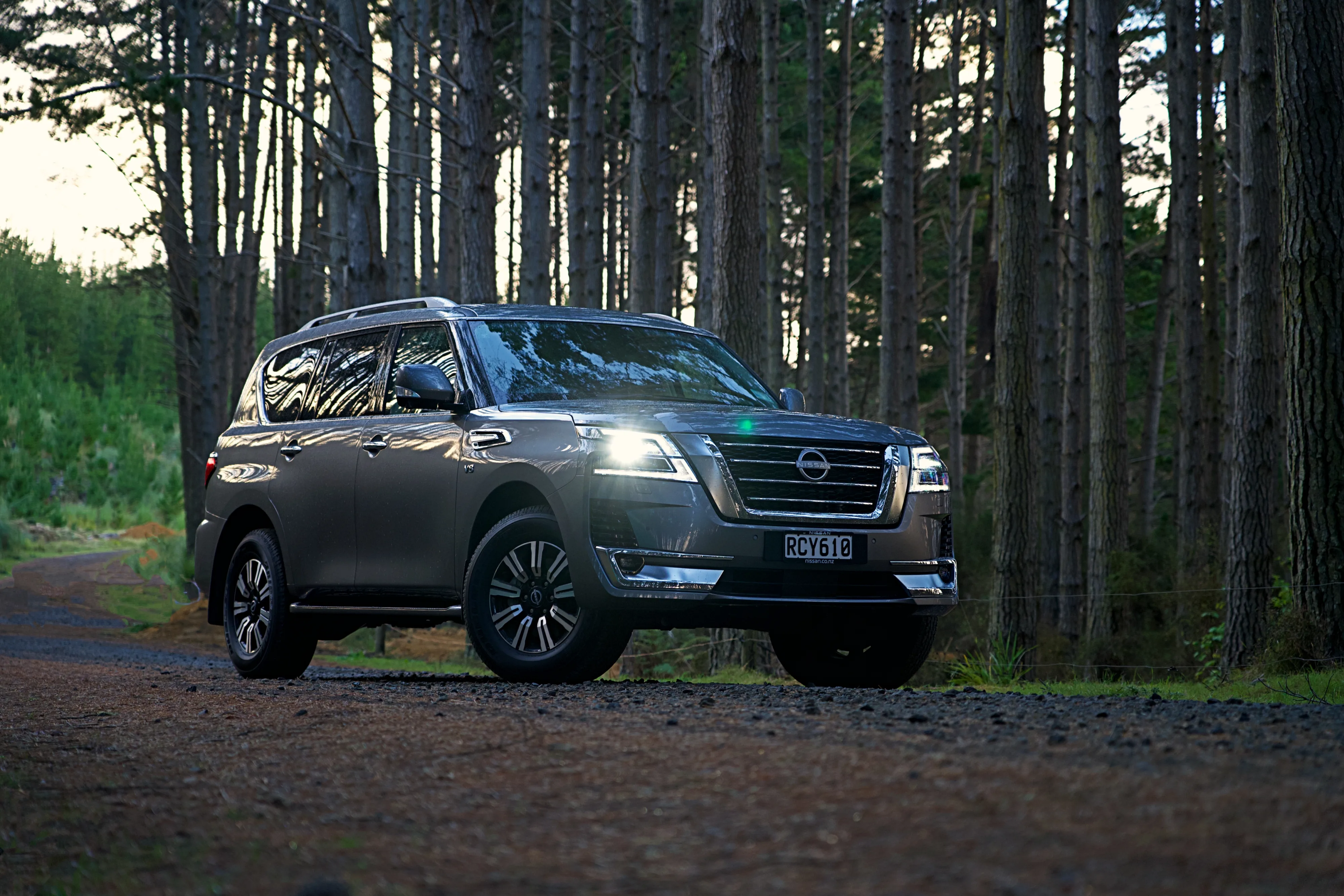
That’s because while the X-Trail and the Pathfinder feel modern, rational, and aligned with where the market is heading, the Patrol V8 feels like it was stuck in Jurassic World and missed the memo entirely – and no one’s mad.
The Patrol occupies a unique position in the market. In our corner of the world and the Middle East, it has surpassed the image of just being a large SUV to become a cultural fixture. A vehicle built around durability, long-distance touring, and serious off-road credibility. And crucially, it hasn’t fundamentally changed its formula in a very long time, which explains a lot of its appeal.
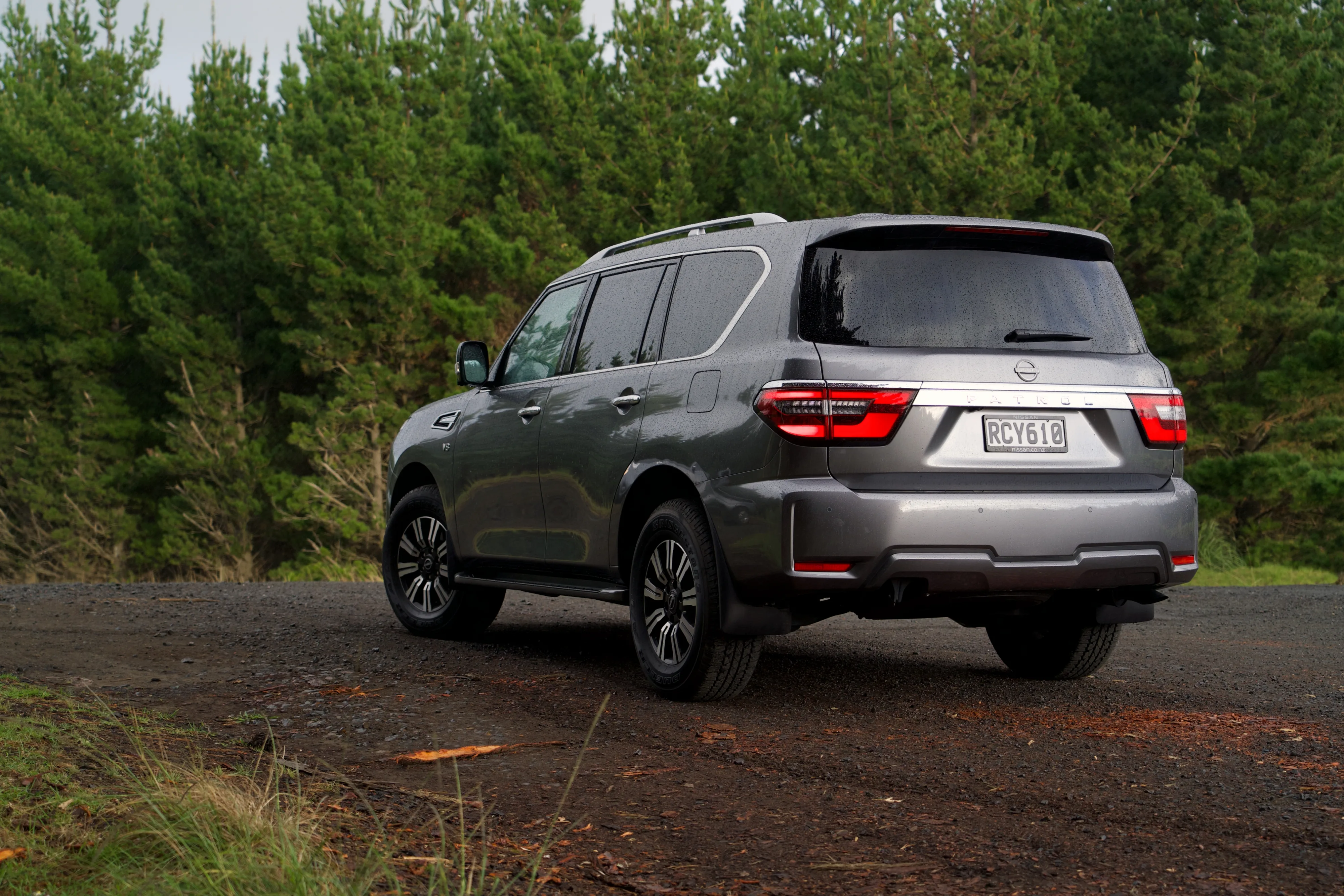
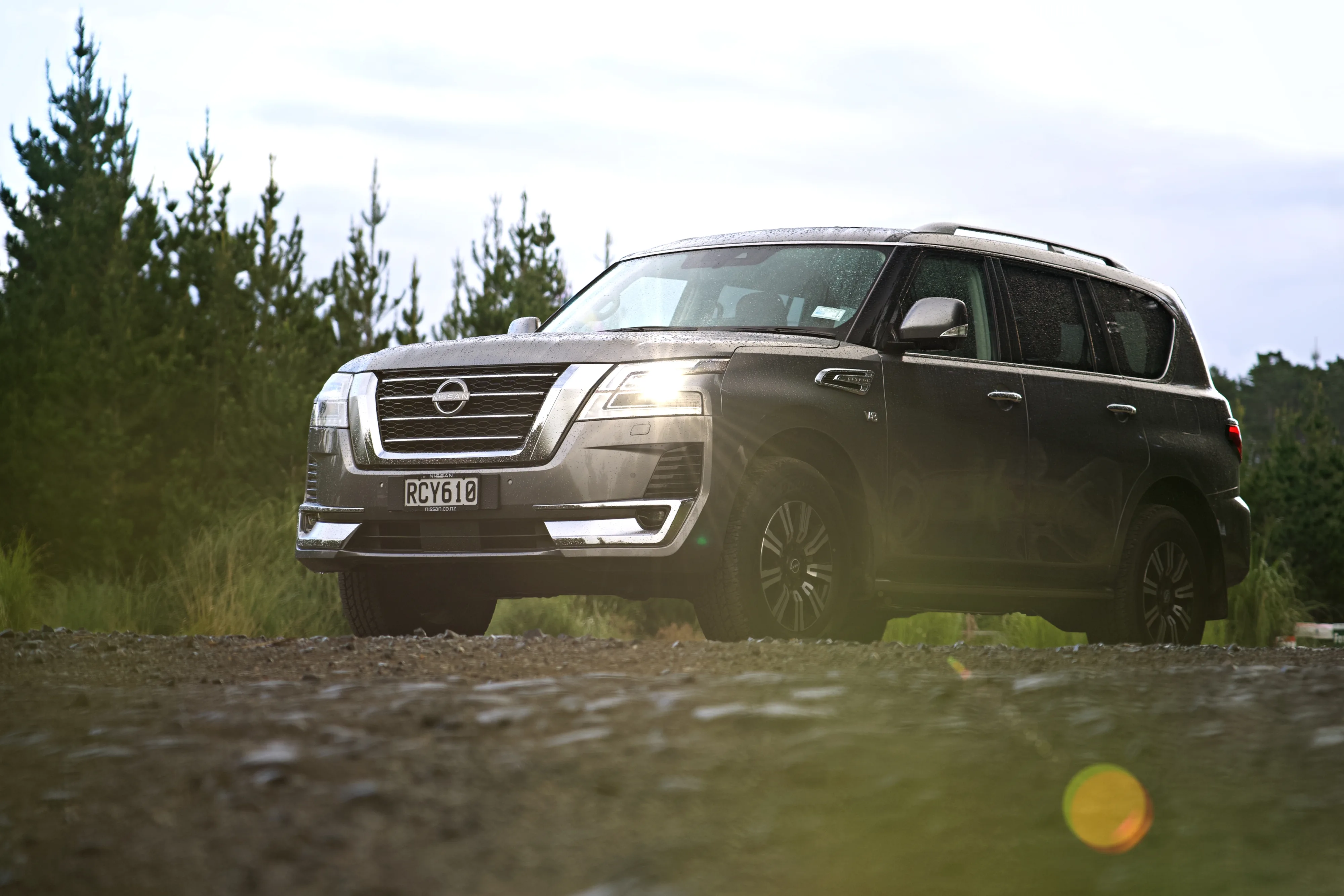
The design language leans heavily into its sheer presence: large chrome elements, squared-off lines, and a towering ride height all contribute to that “king-of-the-hill” stance. You won’t find the super creased lines, the immense alloys, or any hint of aerodynamics – refreshing.
Climb up into the cabin (climb being is the operative word here) and the first thing that hits you is just how physical everything feels. Buttons everywhere. Knobs everywhere. Dedicated switches for drive modes, climate, infotainment controls, all of it tactile, mechanical, and immediate. In an era dominated by touchscreens and haptic panels, this feels almost defiant (and very Nissan, might I add).
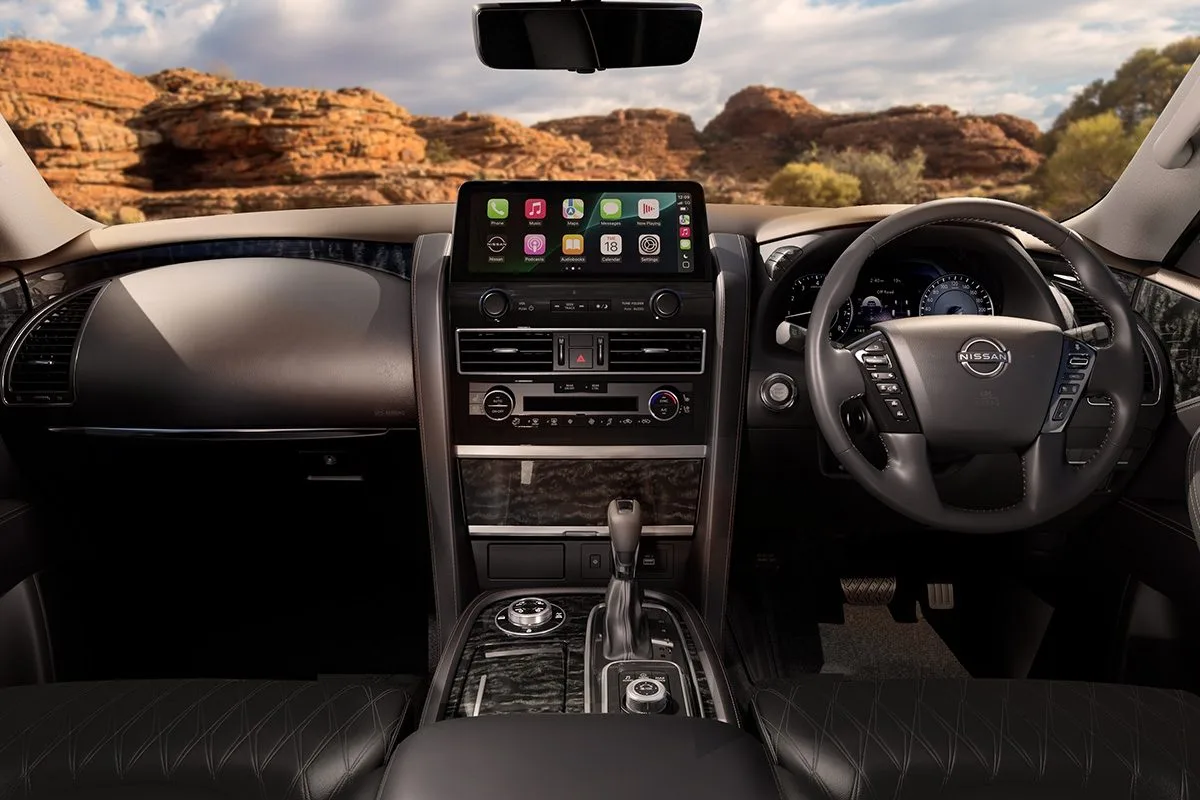
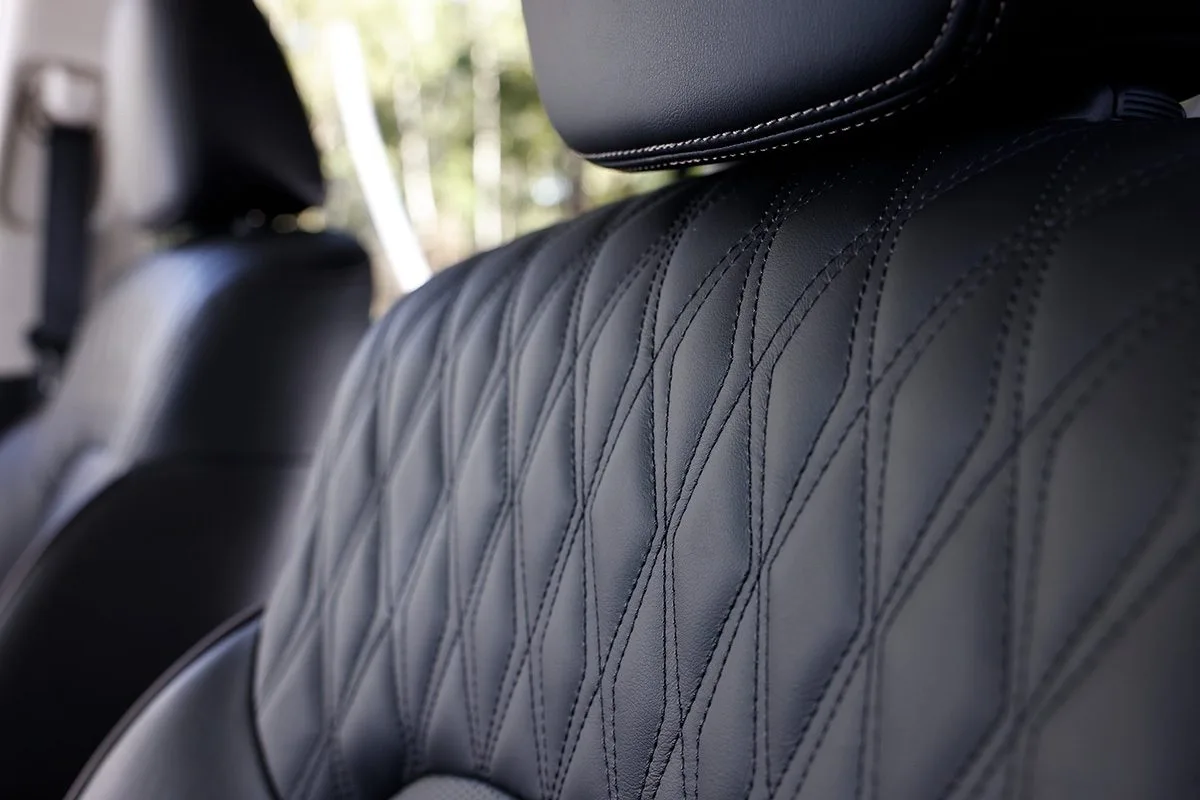
And, ironically, Nissan’s reluctancy to be on the bleeding edge has worked in their favour here. Because the underlying architecture hasn’t changed much, they’ve been able to “modernise” the infotainment screen without redesigning the entire cabin. The screen is larger and sharper, but it still feels well behind the curve in both usability and integration. Material-wise, there’s a clear attempt to push into premium territory. Quilted leather seats, wood-style trim, and soft-touch surfaces are everywhere. The gathered leather on the doors feels distinctly old, sitting right on the line between classic luxury and something a bit overdone. But importantly, very little feels cheap. Even when the design dates itself, the materials still convey substance.
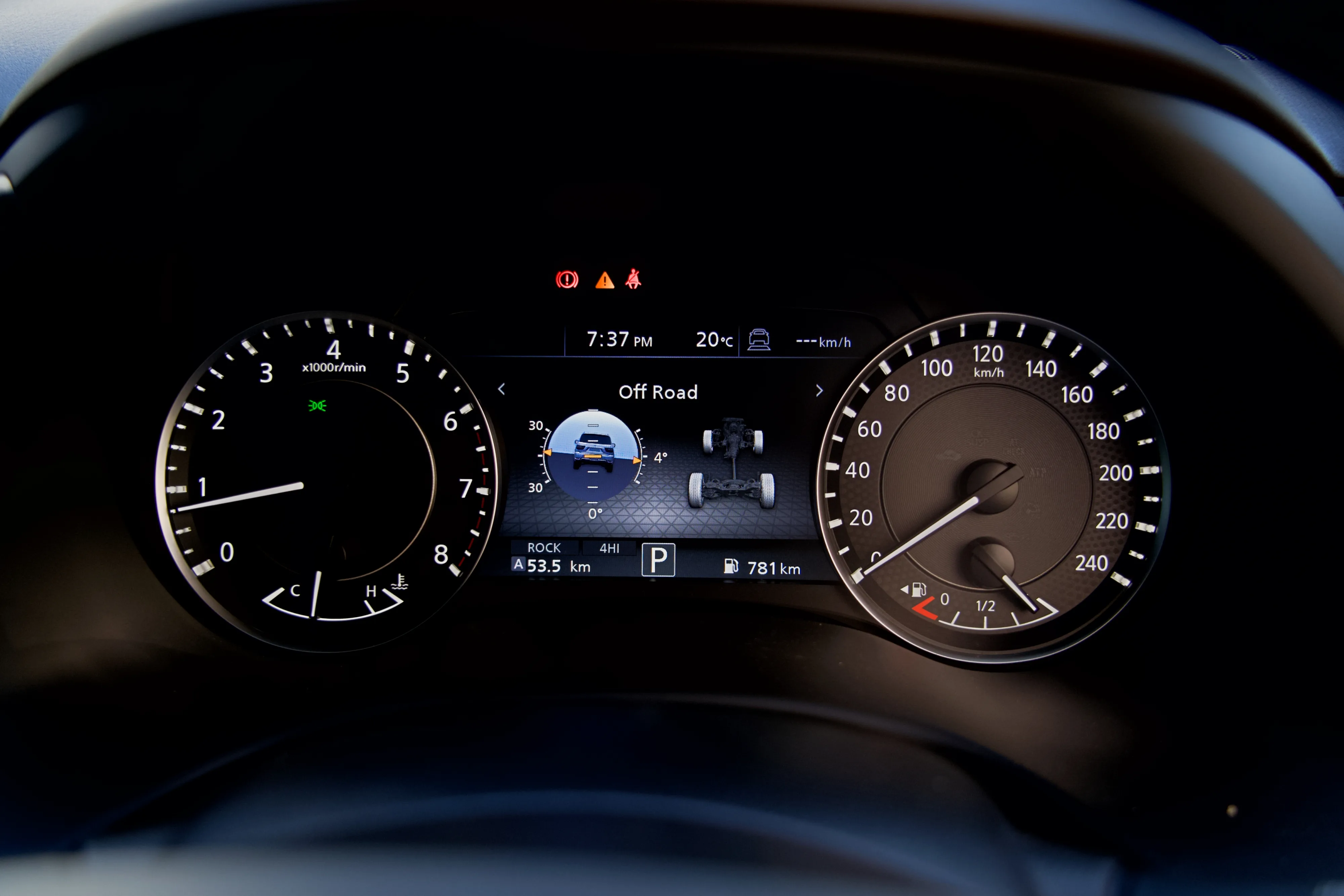
The seating itself is interesting. The cushions are broad and flat: incredibly easy to get in and out of, but offering minimal lateral support. Push this thing even mildly through corners, and you’ll quickly realise you’re essentially sitting on a very expensive leather couch. And everyone gets that feeling, regardless of where they’re seated. All rows are spacious, comfortable, and remind you of the fact that only actual trucks are riding higher than you, even though they cannot go to many of the places you can with no issues.
I bet the Patrol doesn’t want me to, but we must talk tech. Driver assistance systems feel several generations behind, with adaptive cruise control that disengages completely at a stop. The reverse camera lacks the clarity you’d expect at this price point, and its angle shows it was clearly an afterthought – the kerb view camera is very helpful, however. Even the finer details reinforce that sense of time displacement. A foot-operated handbrake. A surprisingly small sunroof. Interfaces and interactions that feel like they belong to a previous decade. But, you clearly don’t gravitate towards a Patrol because of its tech, you do it for what’s under the bonnet.
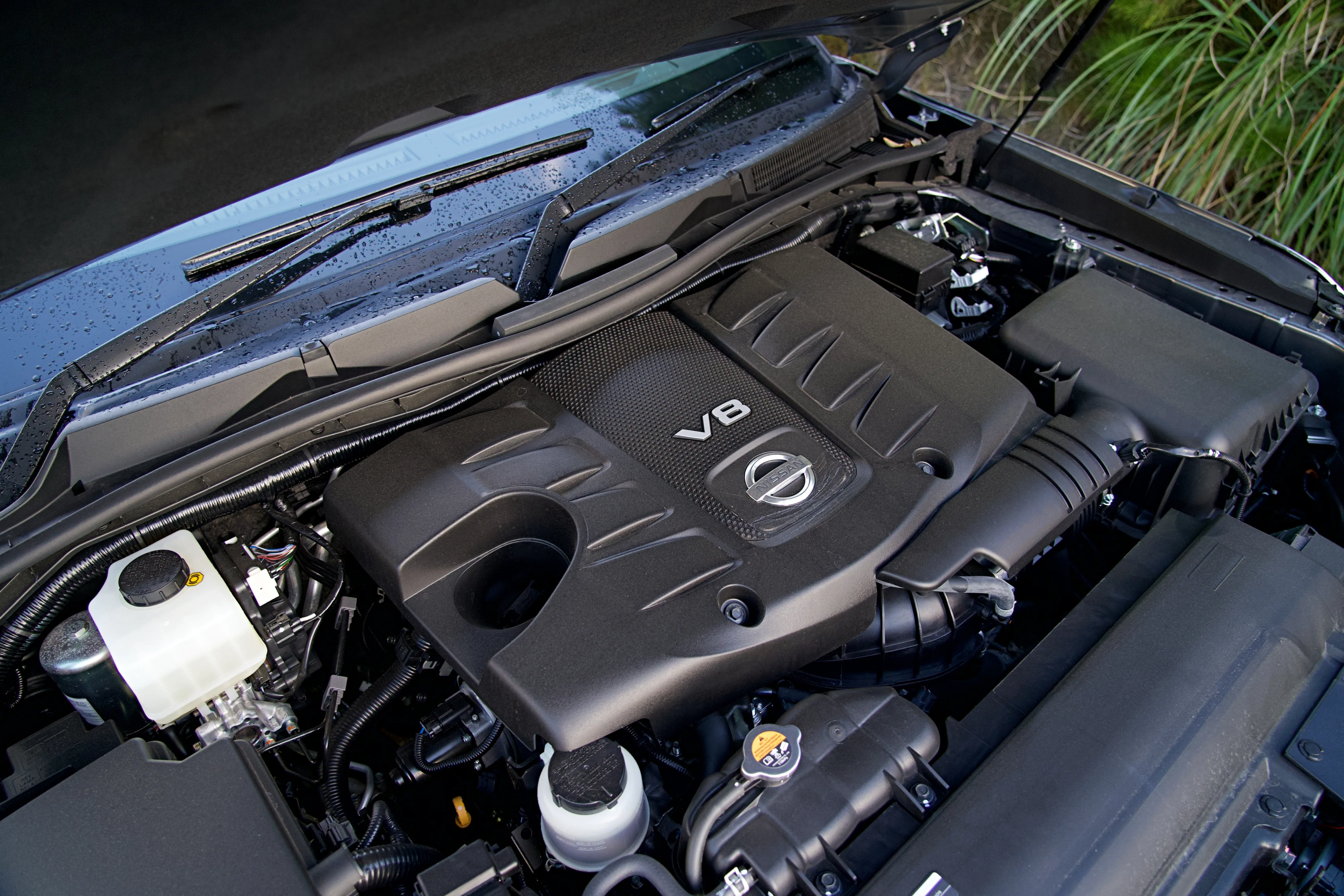
And then, there’s the centrepiece: the V8. A naturally aspirated unit in a world that has almost entirely moved on to turbocharged six-cylinders and hybridised four-cylinders. The moment you start it, there’s a warmth and depth to the sound that feels immediately special. On throttle, it delivers power in a smooth, linear wave. No spikes, no artificial surges, but a consistent, effortless push that suits the Patrol’s character perfectly, and brings with it this feeling of luxury with how under-stressed it is. Gearbox performance is convincing, being smooth and allowing for control in tricky situations such as towing or off-roading.
More than anything, it’s the emotional component that stands out. This is a drivetrain that feels increasingly rare, and you’re constantly aware of that every time you drive it. On a straight line or off-road, one would hope, because dynamically, the Patrol behaves exactly as its architecture suggests.
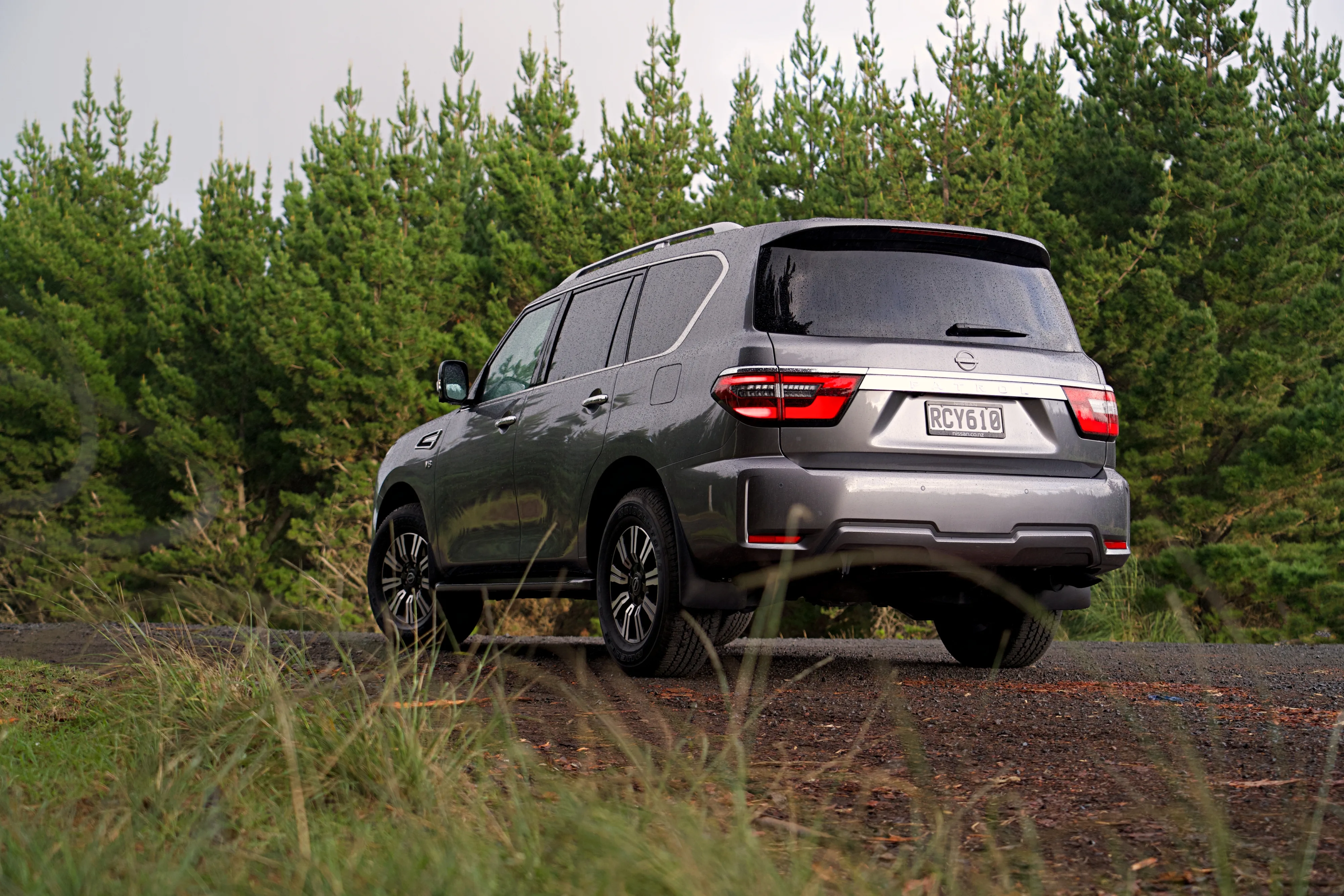
The combination of tall-profile tyres and soft suspension gives it immense capability over rough surfaces. Broken roads, speed bumps, gravel: it absorbs all of it with a level of composure that makes other SUVs feel fragile by comparison. You’re completely insulated from the outside world (the double pane windows certainly help). But that same setup defines its limits on-road. Through roundabouts or quick direction changes, the body leans heavily, the tyres protest, and the vehicle makes it very clear that enthusiastic driving is not part of the brief.
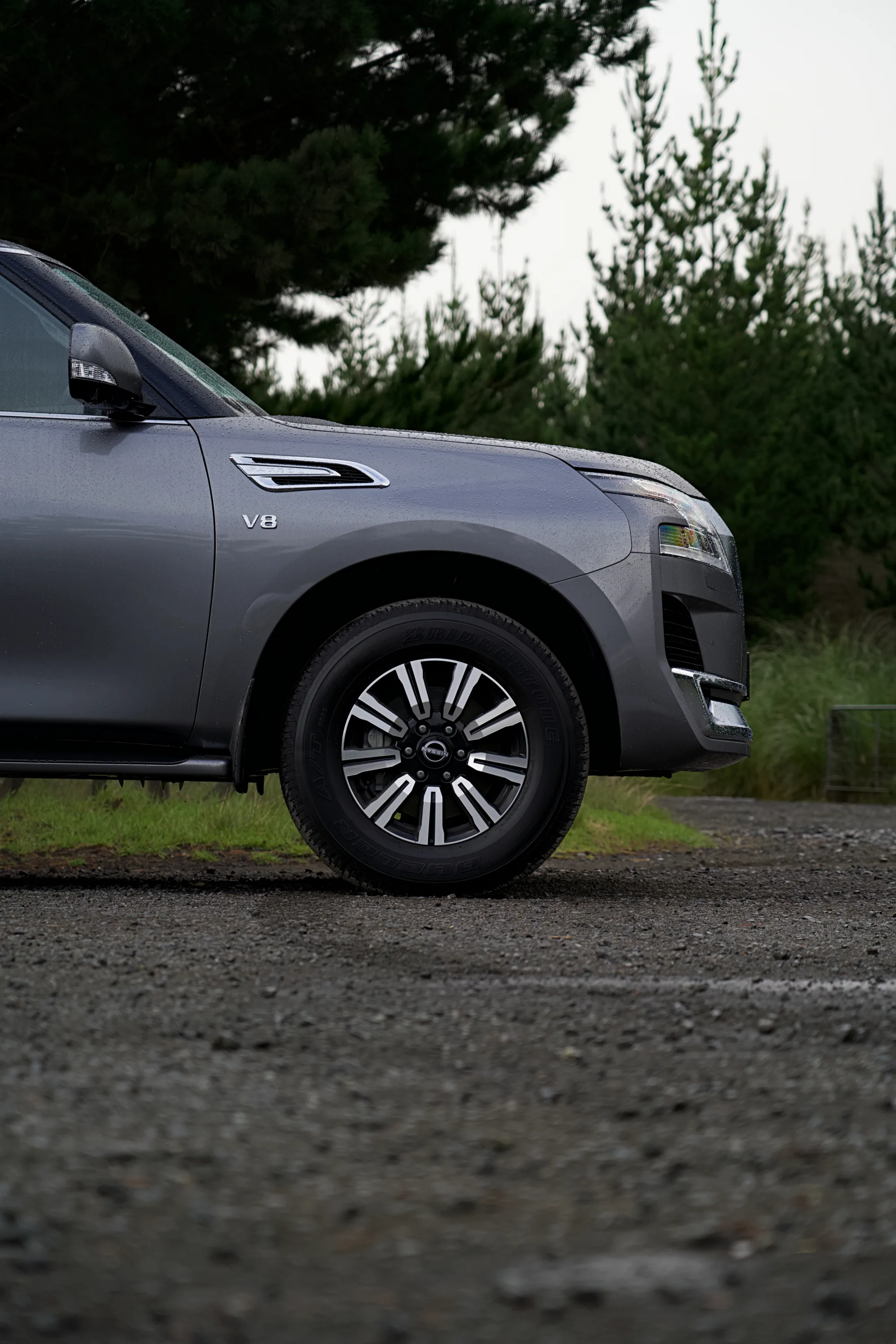
A long-ish drive down a fire road gave me the perfect indication of both behaviours. When it was rough and jarring, the Patrol couldn’t care less, and handled it like if it were a mall parking lot. On the way out, when that road joined the paved access road, I asked for more power and it gave me all of it, getting seriously sideways on me just before every single assistance came on and brought it back on track.
I could attribute that to (dirty) all-terrain tyres, a banked turn, and me asking for it, but it is clear that the Patrol is not trying to be agile, it’s trying to be unstoppable. And where it truly excels is in long-distance cruising. At highway speeds, the engine settles, the cabin quietens, and the whole vehicle takes on a relaxed, almost effortless character. It feels like it could cross entire countries without strain, and that’s exactly what it was built to do.
Of course, there’s no escaping the trade-offs. Fuel consumption sits firmly in the realm of ~17L/100km. Even with those figures, predicted range on a full tank was enough to cross the North Island from tip to tip, but beware the bowser.
The Patrol V8 exists in a niche that is rapidly shrinking. It doesn’t compete on technology. It doesn’t pretend to be efficient. And it certainly doesn’t try to align itself with the modern SUV trends we see everywhere else. While many people get disappointed with the range of choices dwindling and/or getting more generic, Nissan’s approach led to many of their cars offering an old-school take that is too charming to ignore. And if that combination resonates with you, it’s probably one of the last chances you’ll have to experience something like this before it disappears entirely.
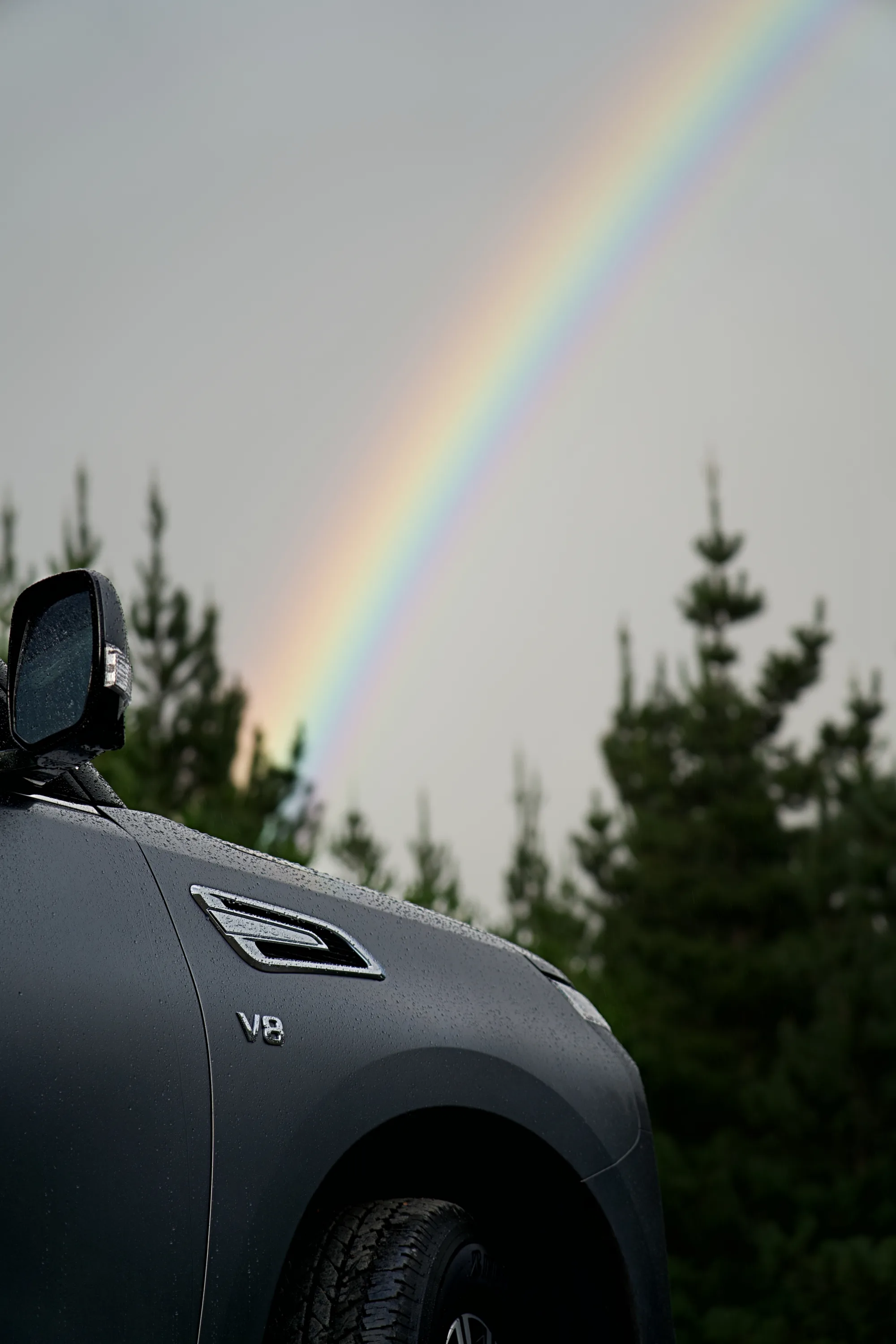
The Patrol offers a sense of mechanical honesty. A body-on-frame platform, a naturally aspirated V8, and a driving experience that prioritises durability and character over refinement and innovation. This is what made this nameplate so famous and loved, and the fact you can buy one with 0 miles and a warranty today is something to be celebrated.
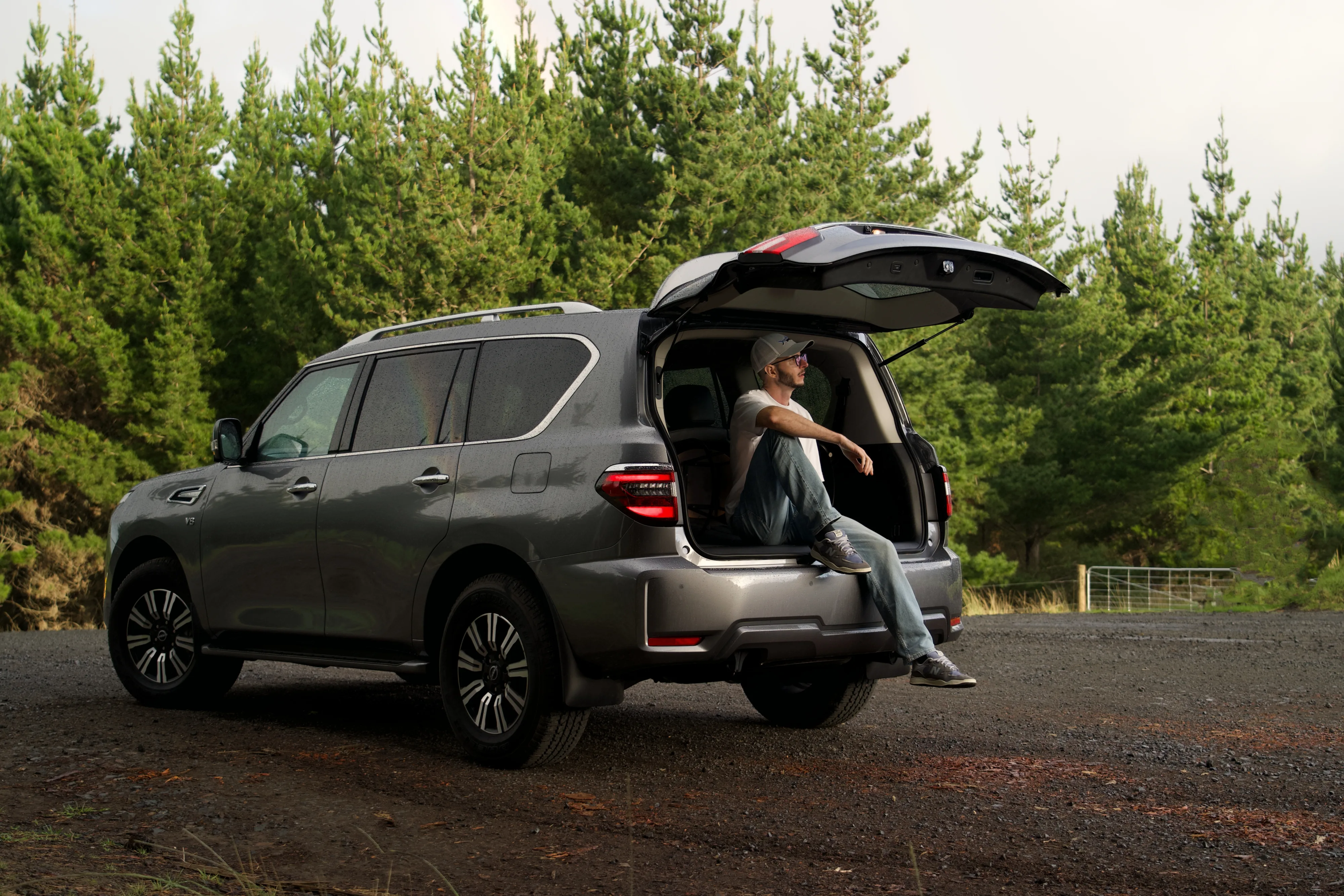
Moving from the X-Trail, to the Pathfinder, and now to the Patrol felt like more than climbing a product ladder, it also felt like a journey backwards in time, in the best possible way. The Patrol is a contradiction, a relic. An endangered species, a T-Rex, if you like. The Pathfinder is your jurassic-adjacent mammoth, which probably makes the X-Trail something akin to a wolf (reaching), but the Patrol is not beating the dinosaur allegations. And I love dinosaurs. Thanks, Nissan, for the opportunity, and thank you for reading this far!