While the automotive world buzzes with the hum of battery-electric vehicles (BEVs), BMW is playing a different, longer game. The Bavarian marque, synonymous with the “Ultimate Driving Machine,” is charting a parallel course, one powered by the most abundant element in the universe: hydrogen. By 2028, the company will have a hydrogen fuel cell vehicle (FCEV) ready for the showroom floor, a culmination of a journey that began long before EVs became mainstream.
This isn’t a knee-jerk reaction to market trends or a simple science project. It’s a deliberate, four-decade strategy built on engineering prowess, strategic partnerships, and a belief that the future of mobility requires more than one solution. In an NZ exclusive, we sat down with Juergen Guldner, BMW’s General Program Manager for Hydrogen Technology, to understand the why, the how, and the when of BMW’s hydrogen ambitions. The story is one of persistence, innovation, and a vision for a more flexible energy future. As Guldner puts it, BMW believes in “walking on 2 legs rather than trying to stand on one”.
The Four-Decade Overture: From Combustion to Fuel Cell
Many assume BMW’s hydrogen exploration is a recent development, but its roots run deep. “BMW has been working on hydrogen for almost 4 decades,” Guldner reveals. Back in the late 1970s, spurred by the oil crisis, the company began exploring alternatives, looking at both battery-electric cars and hydrogen.
Their initial approach was not with fuel cells, but with hydrogen-powered internal combustion engines (HICE). These were often dual-fuel vehicles, capable of running on either gasoline or hydrogen, with the driver able to switch between the two. The pinnacle of this research was the BMW Hydrogen 7, a limited-production 7 Series from the early 2000s that undertook a world tour. While a remarkable engineering feat, it highlighted the challenges of the HICE approach, particularly around efficiency and packaging.
Following the Hydrogen 7 project, BMW made two crucial strategic decisions. “We decided to abandon the combustion engine and go with fuel cell systems,” Guldner explains. This pivot aligned them with a more efficient technology that generates electricity from hydrogen to power an electric motor, offering the quiet, instant torque characteristic of modern EVs.
Secondly, they switched from storing super-chilled liquid hydrogen to compressed gaseous hydrogen, which had become the global standard at 700-bar pressure. This standardisation was key, ensuring a BMW FCEV could refuel at any compatible station worldwide.
The Toyota Tango and Mastering the Technology
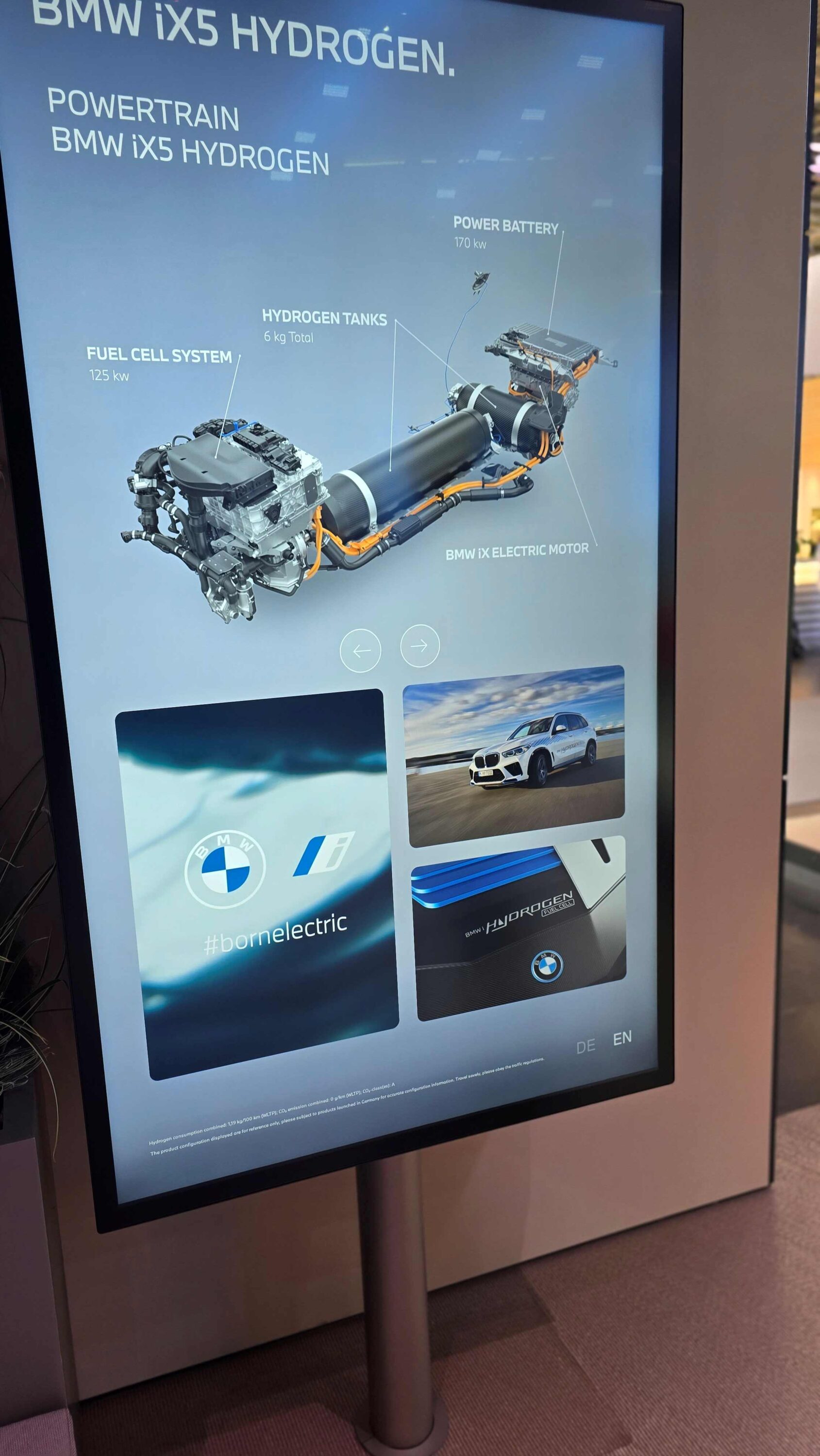
To accelerate its fuel cell development, BMW sought a partner with deep expertise in the field. They found one in Toyota, a pioneer that had already brought the Mirai, the world’s first mass-produced FCEV, to market. This collaboration began with what Guldner calls “Generation 1.” “The first generation was basically integrating that the Toyota fuel cell system into our car, which was a 5 GT,” he says.
This initial phase was about learning and integration. But for a company like BMW, simply using another manufacturer’s powertrain wasn’t the end goal. The next step was crucial for owning the technology. “After that, we said, okay, we want to take it to the next step and start developing our own fuel cell system, to basically master the technology ourselves,” Guldner states.
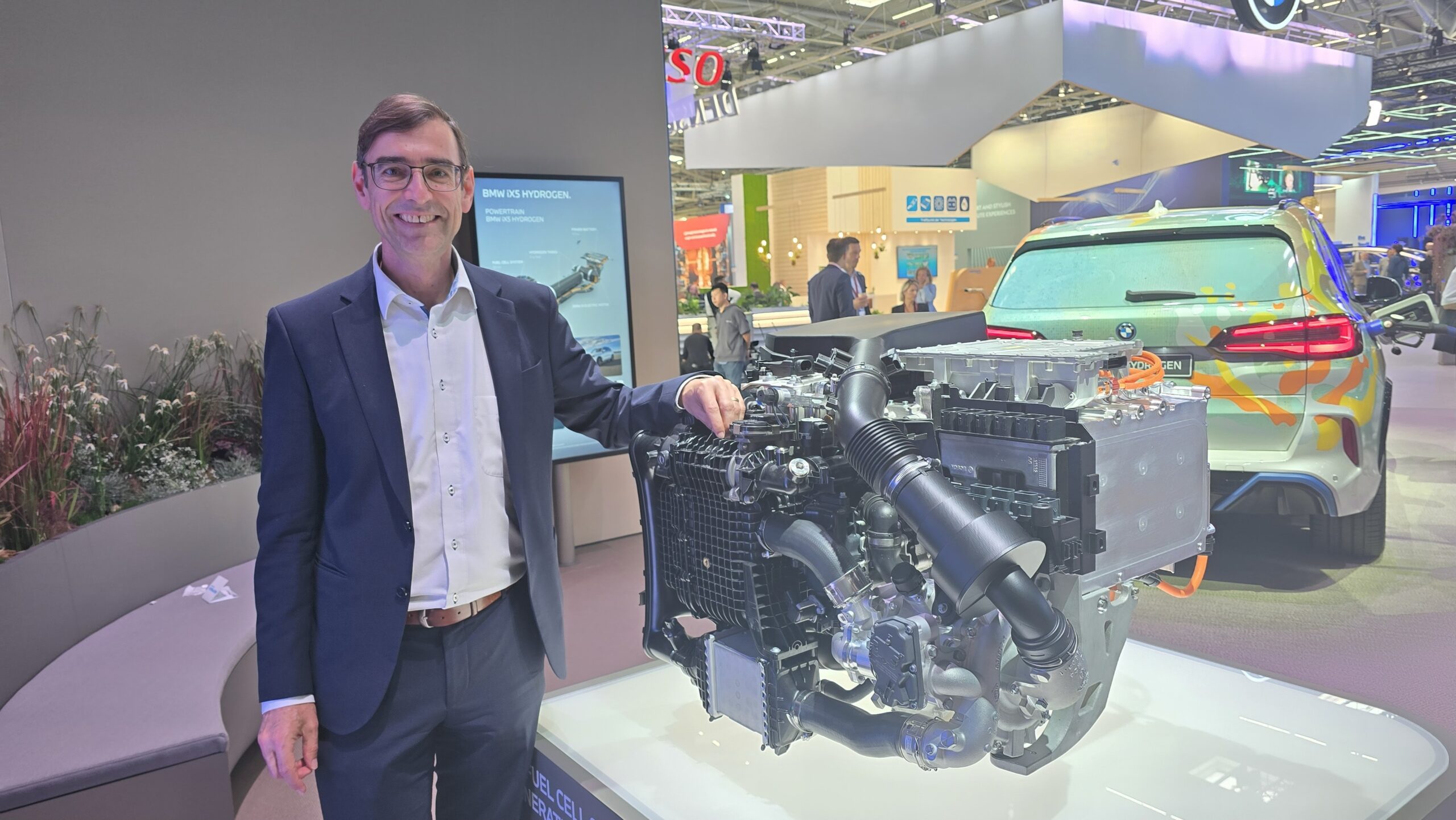
This led to “Generation 2,” the technology powering the current BMW iX5 Hydrogen pilot fleet that has been testing globally since 2023. While BMW still sources the individual, core fuel cells from Toyota in their partnership, everything surrounding them (the high-speed compressor, the control units, the power electronics, the entire system architecture) is pure BMW engineering. This is the program Guldner was brought in to lead, leveraging his experience with international cooperation and hybrid vehicle development. The Generation 2 cars are not concepts; they are fully working prototypes proving the viability and performance of BMW’s unique system on public roads.
The Tipping Point: Hydrogen’s Role in a Greener World
For years, hydrogen vehicles faced a chicken-and-egg problem: a lack of infrastructure stifled vehicle development, and a lack of vehicles gave little incentive for infrastructure investment. The question “where does the hydrogen come from?” was a constant challenge.
According to Guldner, the tipping point came in 2019. The International Energy Agency (IEA), at the request of the Japanese government for the G20 summit, published a landmark report on the role of hydrogen in the global energy transition. “That was the first time that it was recognized that in the renewable energy age, we will need both electricity electrons and also molecules ‘gas’ like hydrogen to be able to do the 100% energy transit,” Guldner explains.
The report solidified an idea that engineers had long understood, batteries are excellent for short-term energy storage, but not for long-term, large-scale storage. You can’t, as Guldner colorfully puts it, “store the Sun from the summer for the winter” in a battery. Hydrogen, however, can be produced using excess renewable energy (like solar power on a sunny day), stored in vast quantities like natural gas, and transported across continents.
This realisation transformed the conversation. Hydrogen was no longer just a niche transport fuel; it was a fundamental pillar of the entire future energy system. “At that point, when it was clear that we will have hydrogen and electricity as Twins for the energy transition, it also dawned on people, well if that’s true, why don’t we do that in the transport sector as well,” Guldner notes. This gave BMW’s program a powerful new context. “For me, as an engineer that was the big step, going from engineering to a system – all of a sudden, I’m part of the energy transition,” he says.
The Hydrogen Advantage: Best of Both Worlds
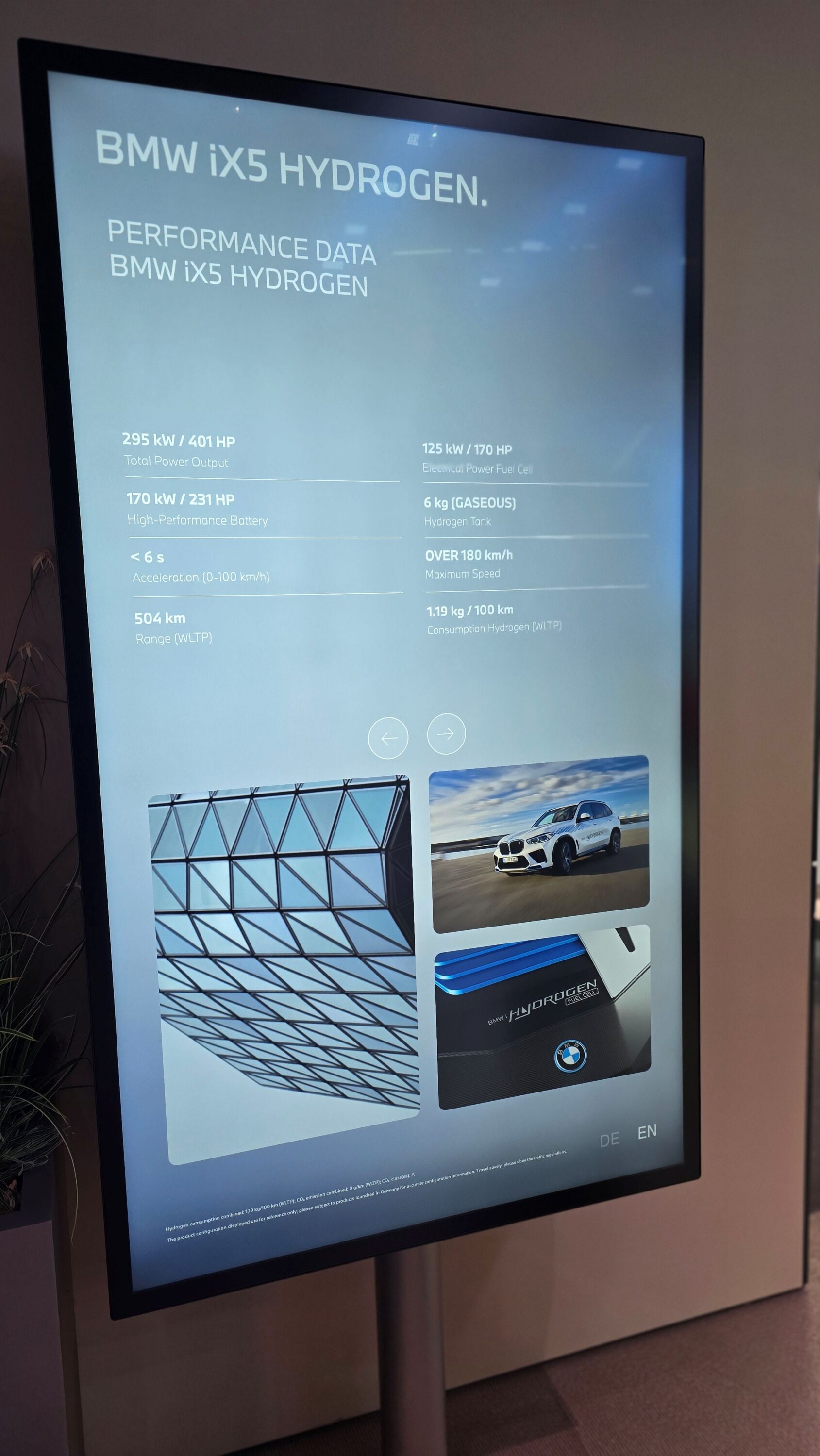
With a clear role in the future energy landscape, what exactly is the benefit of a hydrogen car for the driver? Guldner calls it the “best of both worlds”. On one hand, you get all the advantages of premium electric driving: silent operation, smooth power delivery, and thrilling acceleration. On the other hand, you retain the convenience that has defined motoring for a century. “Go to a gas station, 3-4 minutes, you’re 100% full, you keep going,” he says.
This refuelling speed is a game-changer for specific customers. Think of people living in dense cities like Tokyo or Seoul, where home charging infrastructure is a massive challenge, or drivers who frequently cover long distances and cannot afford lengthy charging stops. He says that even as BEV charging times decrease, they often require enormously powerful megawatt chargers, which present their own infrastructure hurdles.
Beyond user convenience, FCEVs offer another strategic advantage: a reduced reliance on certain critical raw materials. A fuel cell system uses significantly fewer of the materials found in large battery packs, materials that can be subject to price volatility and complex supply chains.
Overcoming Hurdles and the Final Countdown to 2028
The path forward is not without its challenges. Guldner is candid that the “biggest hurdle really is to make it known to the public “. The primary argument leveled against hydrogen is its perceived inefficiency compared to directly charging a BEV. Guldner argues this is a simplistic view that ignores the bigger picture.
“When you look a little bit deeper, you all of a sudden, find that it’s only a piece of the puzzle, and when you get the full picture the world looks different,” he asserts. The “full picture” includes the entire lifecycle, from raw material extraction to the energy system as a whole. For instance, if a country is importing renewable energy in the form of hydrogen, it makes far more sense to use that hydrogen directly in a car rather than converting it back to electricity just to charge a battery.
This educational mission is central to BMW’s strategy as it moves towards its 2028 goal. The current iX5 Hydrogen fleet represents Generation 2. The production car will be “Generation 3,” which is currently in development. So, if the technology is already working, why the wait until 2028?
“Because we wanted to do one more loop of technology advancement in terms of how compact a system is, how efficient the system is,” Guldner clarifies. This final refinement will ensure the production model meets BMW’s stringent standards for performance, packaging, and reliability.
Cost is the final piece of the puzzle. BMW is confident that with scale, the cost of both the vehicle and the hydrogen fuel will come down. Guldner points to calculations showing that FCEV technology can be “absolutely competitive with diesel” once production reaches the tens of thousands, a milestone he believes is achievable within the next 5 to 10 years.
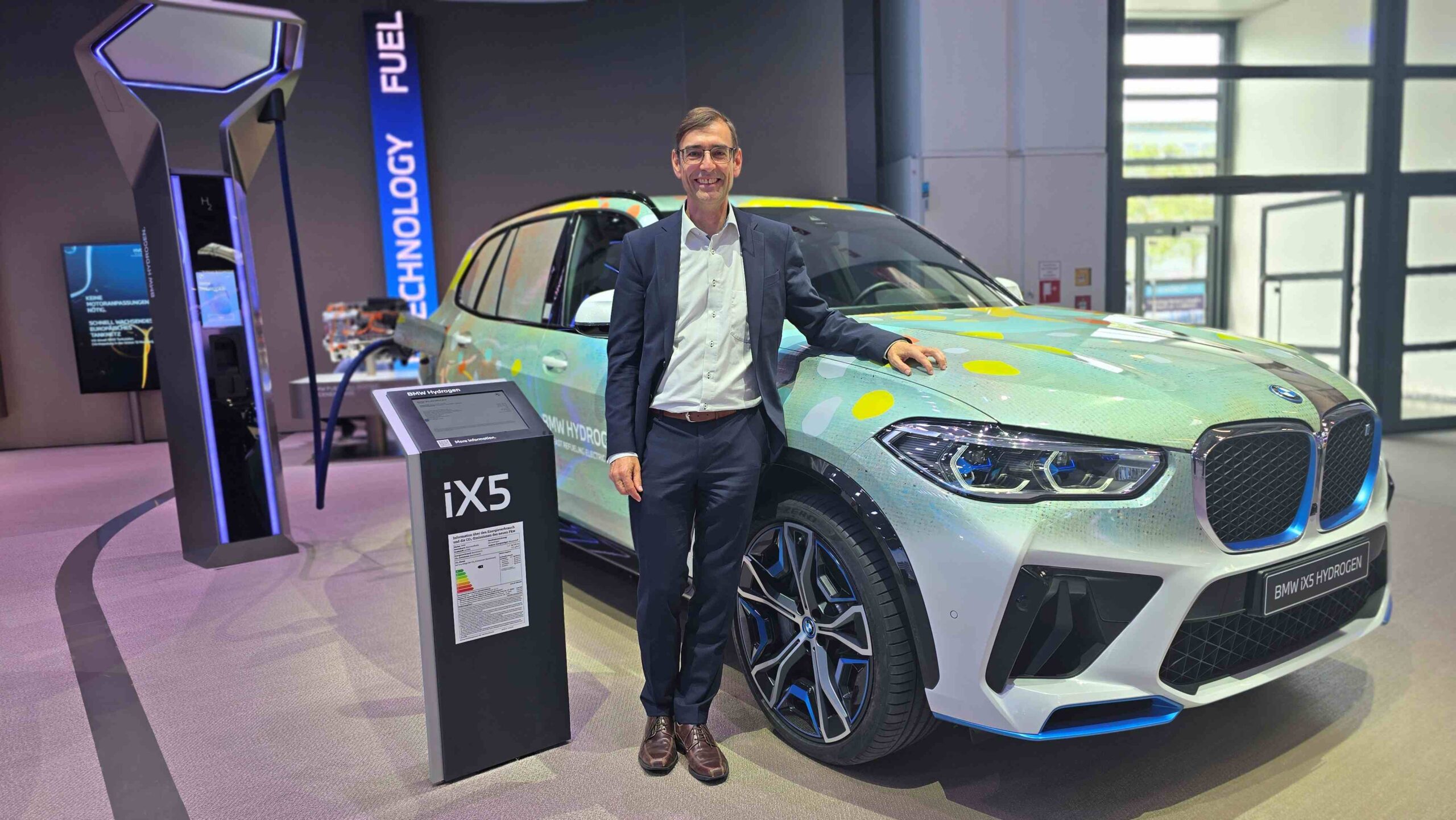
While BMW remains tight-lipped about which model will carry the hydrogen torch first, the groundwork is firmly laid. The 2028 target is set. By offering customers the choice between plug-in hybrids, class-leading BEVs, and cutting-edge FCEVs, BMW isn’t just hedging its bets; it’s building a resilient, customer-focused strategy for the future of driving.
It’s a bold vision, proving that for the Ultimate Driving Machine, there is more than one road ahead, with multiple powertrain options to suit – aka, the power of choice. How’s that for BMW Neue Klasse?!!