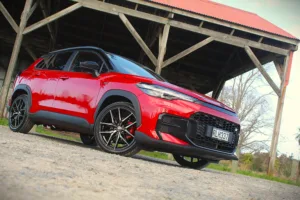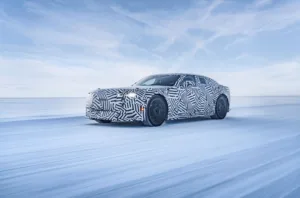
Chinese manufacturers are making bold moves into territories traditionally dominated by Japanese and European brands, in this case, the Jaecoo J7 SHS Super Hybrid, a name that itself tells a story. Jaecoo, a portmanteau of “Jaeger (hunter)” and “Cool,” is Cherry’s adventure-focused sub-brand, and their J7 represents an intriguing proposition in the increasingly crowded hybrid SUV segment. But can this newcomer genuinely challenge established players like the Toyota RAV4?
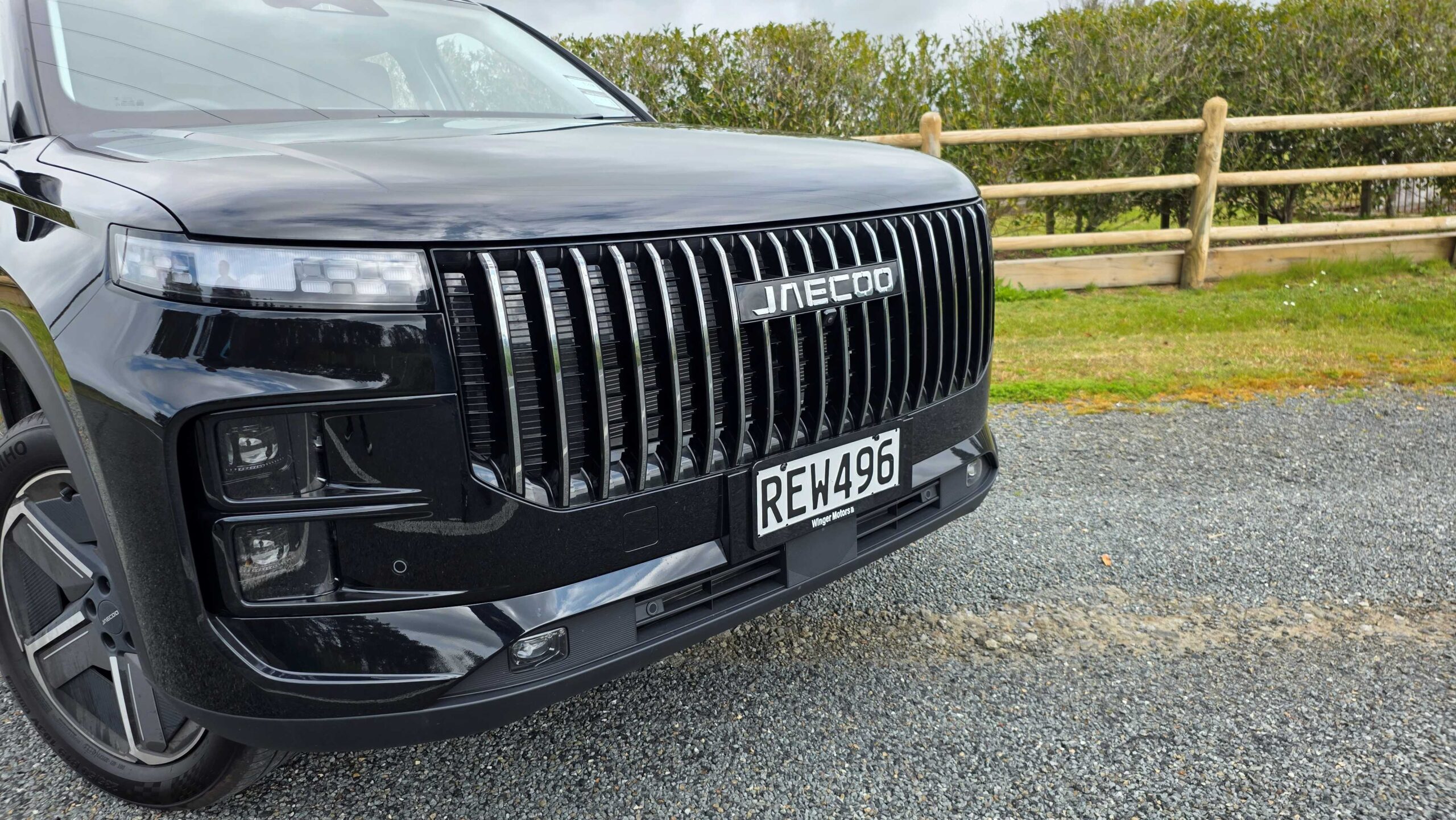
The J7’s exterior styling strikes a confident pose with its adventure-oriented design language. The front fascia is dominated by what Jaecoo calls a “waterfall grille”, a sea of vertical slats that gives the vehicle a distinctive presence on the road. It’s a bold design choice that immediately sets it apart from the more conservative styling of its Japanese competitors.
Dimensionally, the J7 measures 4.5 metres in length, making it approximately 10 centimeters more compact than the segment-leading RAV4. This slightly smaller footprint translates to real-world benefits (e.g – it’ll slip into tight parking spaces with greater ease) and won’t feel overwhelming in urban environments, while at 1.68 metres tall, it maintains a commanding road presence while remaining garage-friendly. The ride height sits “nice and stoic,” too, giving it that adventure-ready stance without venturing into full-blown off-roader territory.
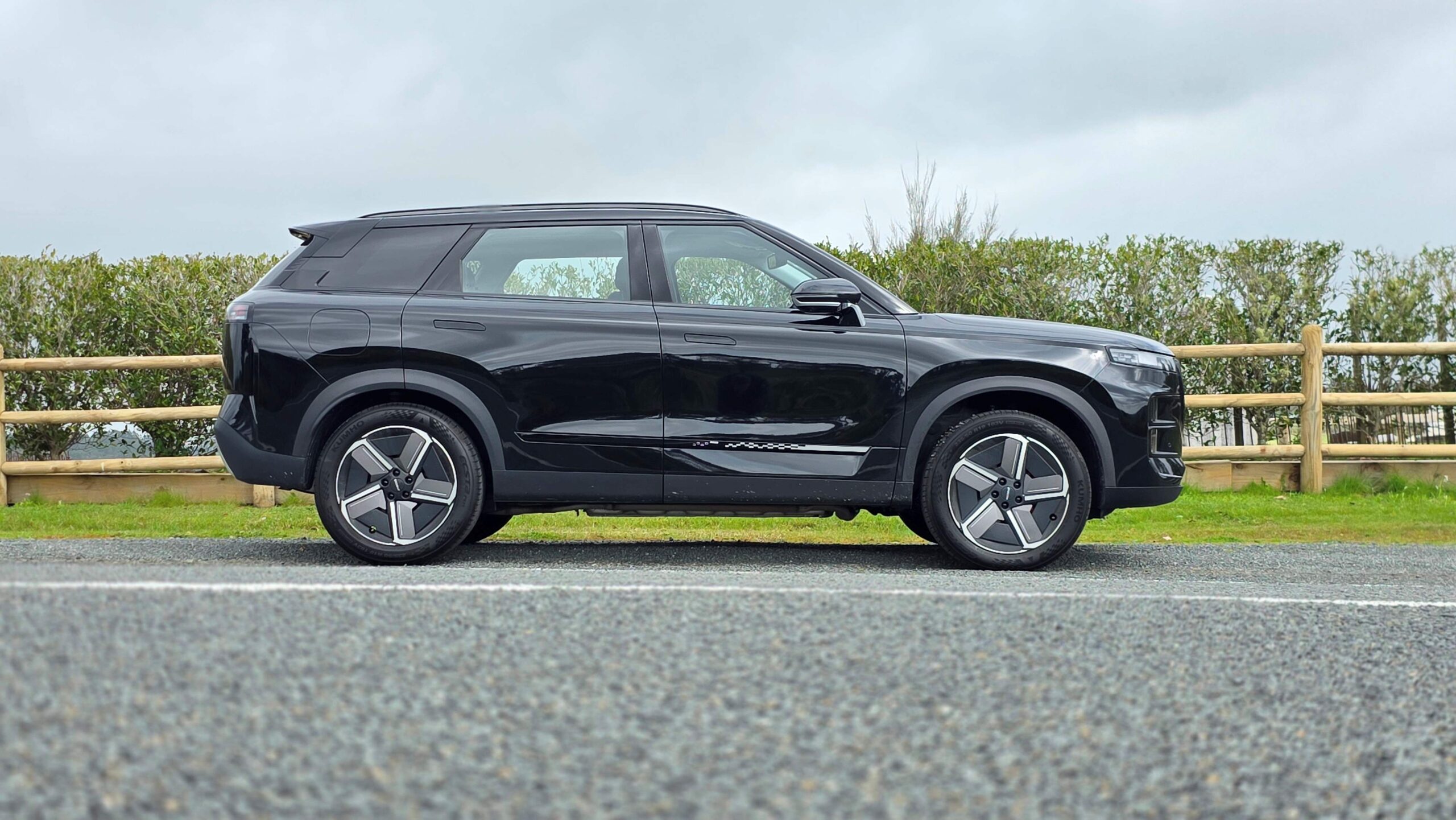
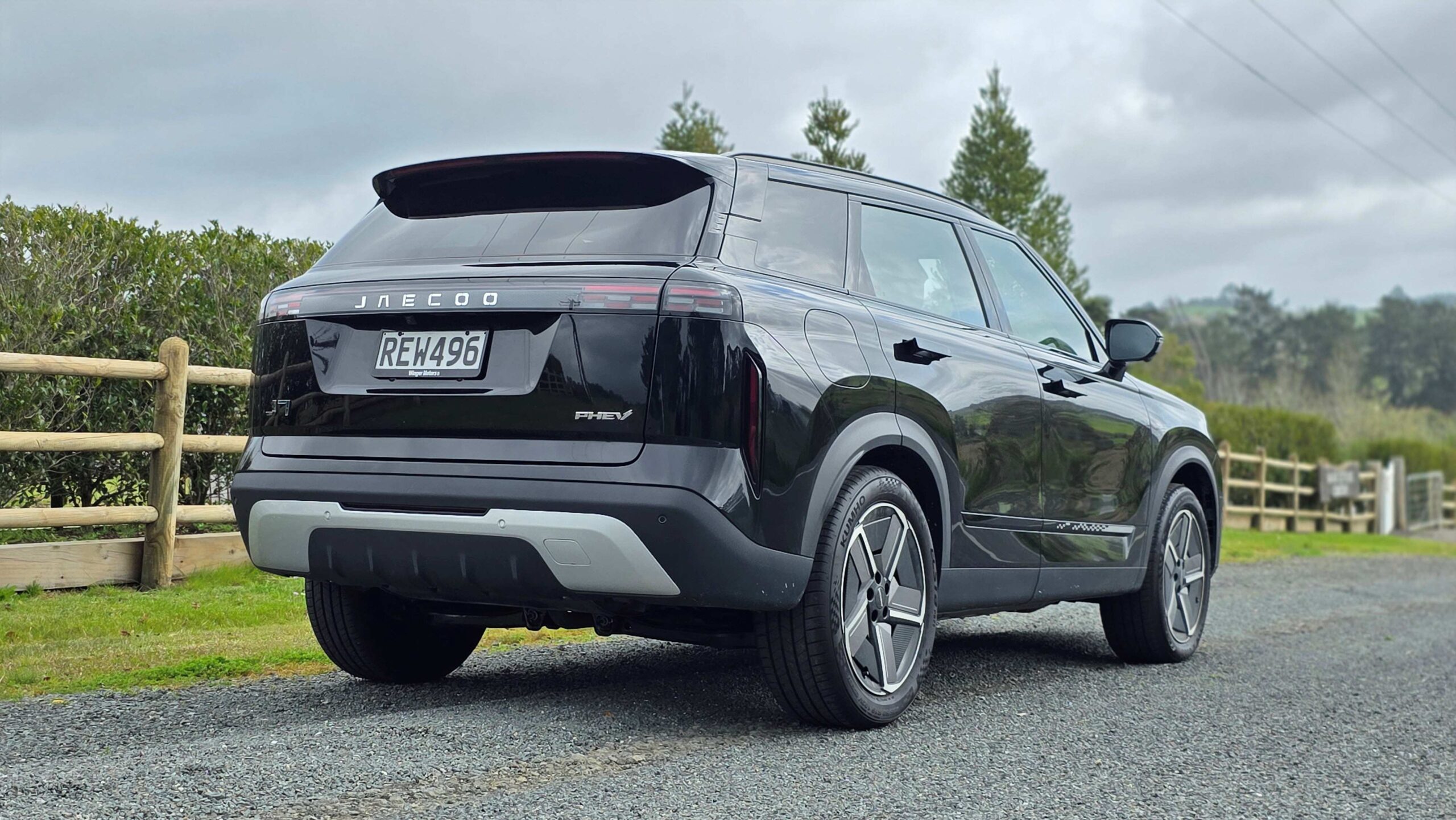
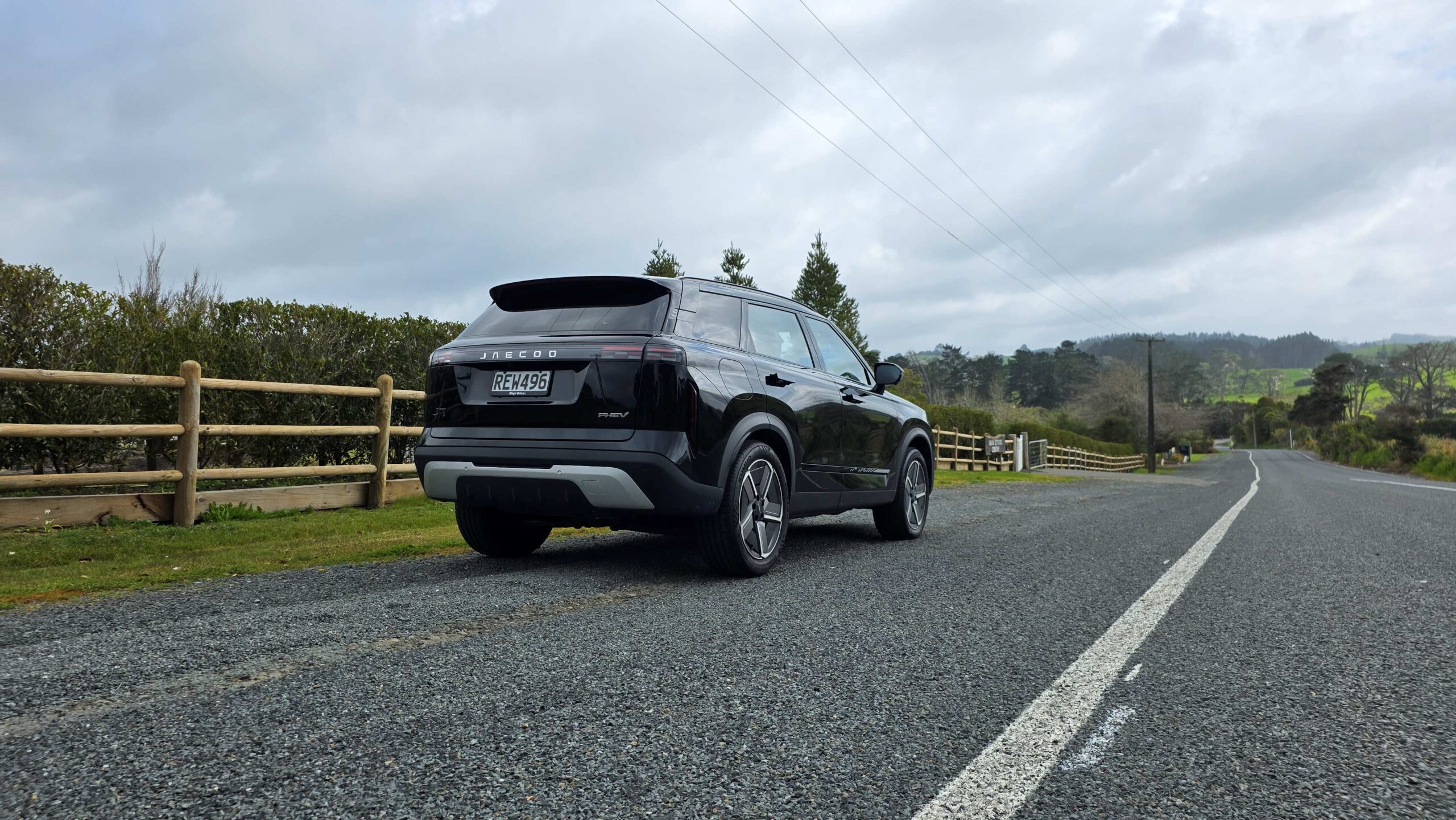
Aerodynamics clearly played a significant role in the J7’s development. The flush door handles and aerodynamically enhanced 19-inch wheels contribute to a respectable drag coefficient of around 0.38cd. While not groundbreaking, this figure demonstrates Jaecoo’s commitment to efficiency, crucial for a hybrid vehicle promising extended range. The side profile is clean and modern, while the rear features a full-width light bar and integrated roofline spoiler that adds a contemporary flourish.
Ground clearance is generous, catering to those who occasionally venture off the beaten track, though it’s worth noting this is a front-wheel-drive configuration. The 340-litre boot capacity should handle weekly shopping runs and weekend adventures adequately, with additional storage beneath the boot floor.
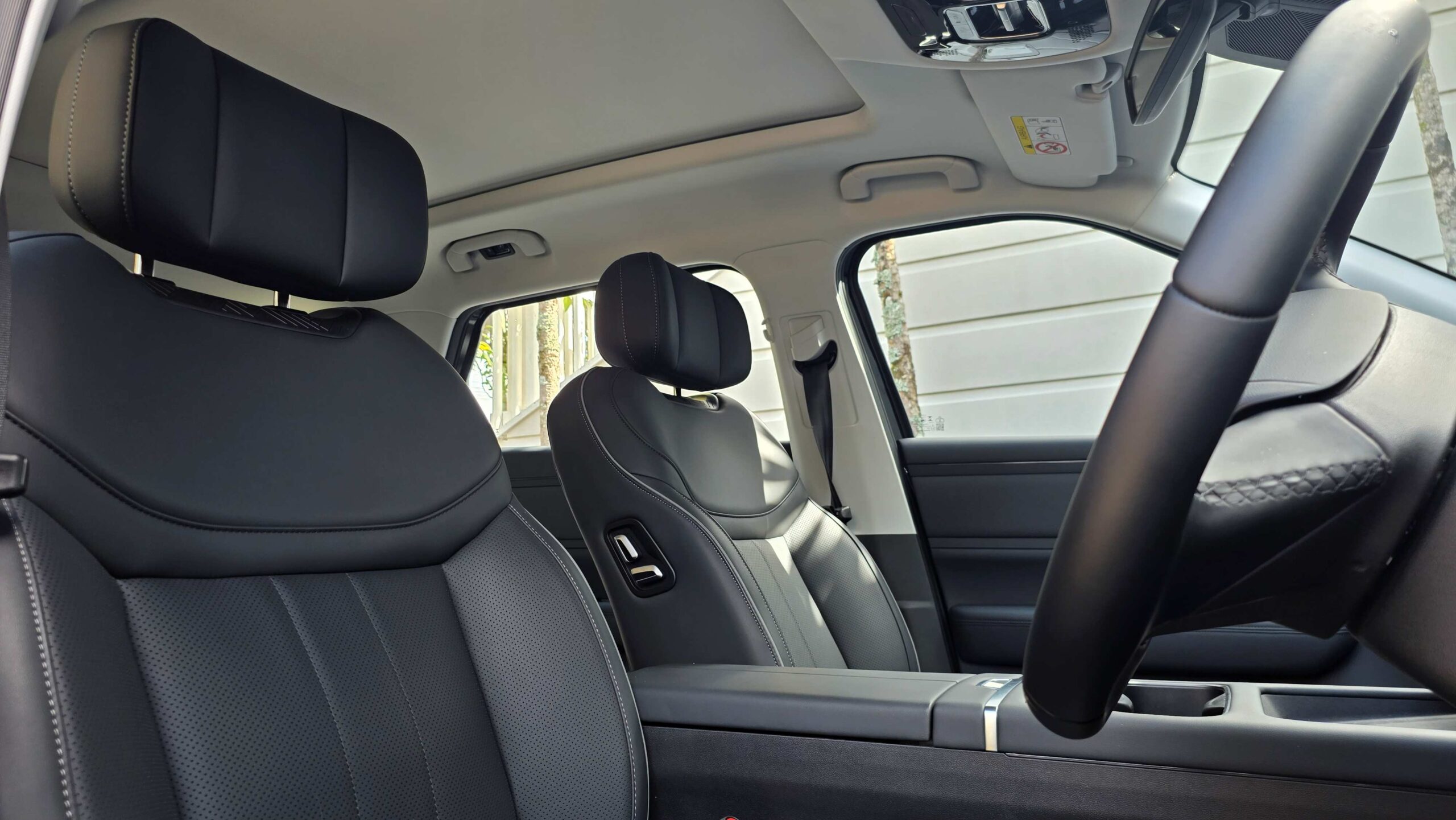
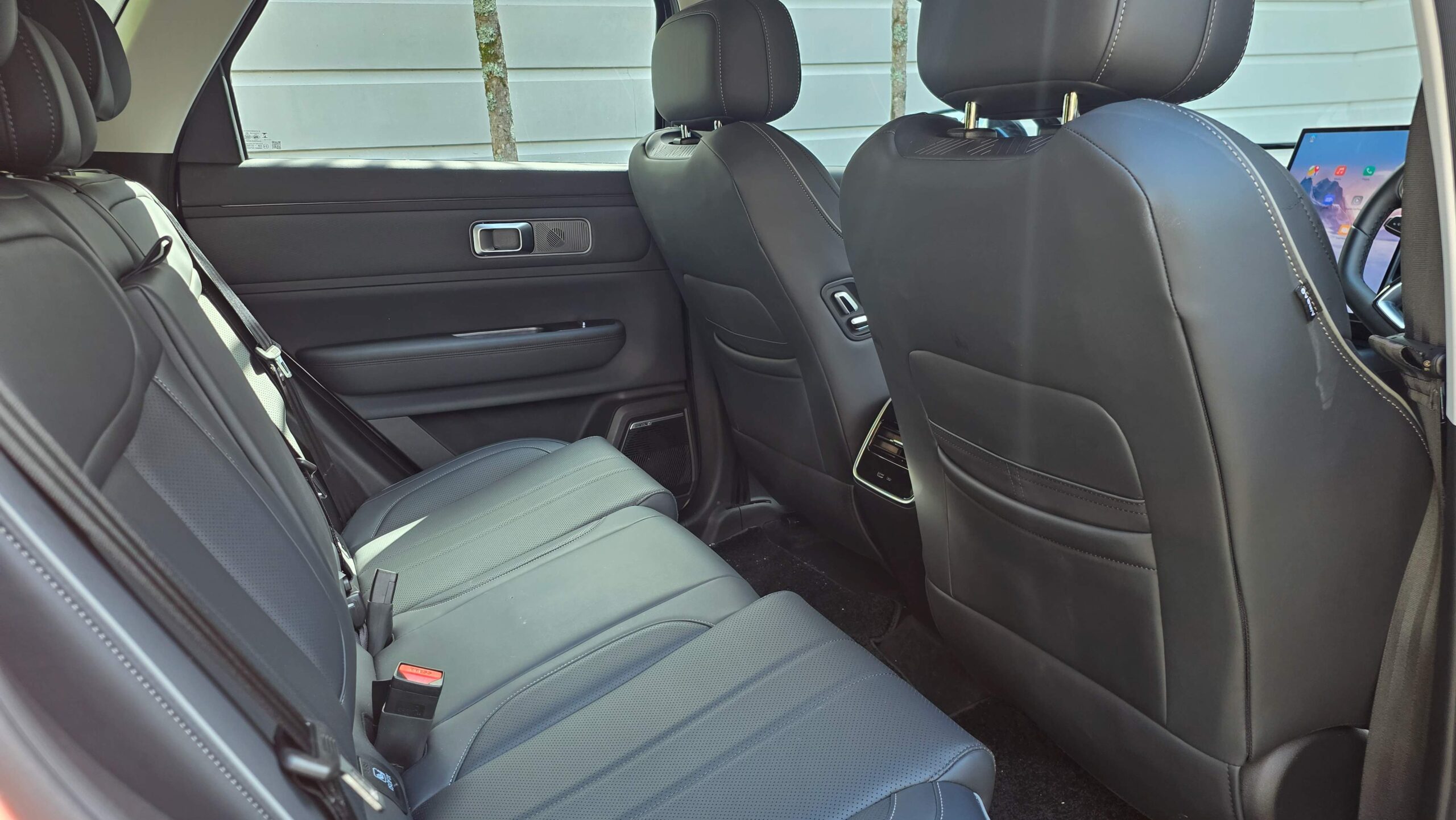
Step inside, and the J7 reveals its premium aspirations. The cabin presents a thoughtful blend of style and practicality, wrapped in what the brand hopes will be perceived as luxurious finishes. The seats are generously bolstered units finished in leatherette, providing good support and helping to dampen the effects of the somewhat firm suspension setup.
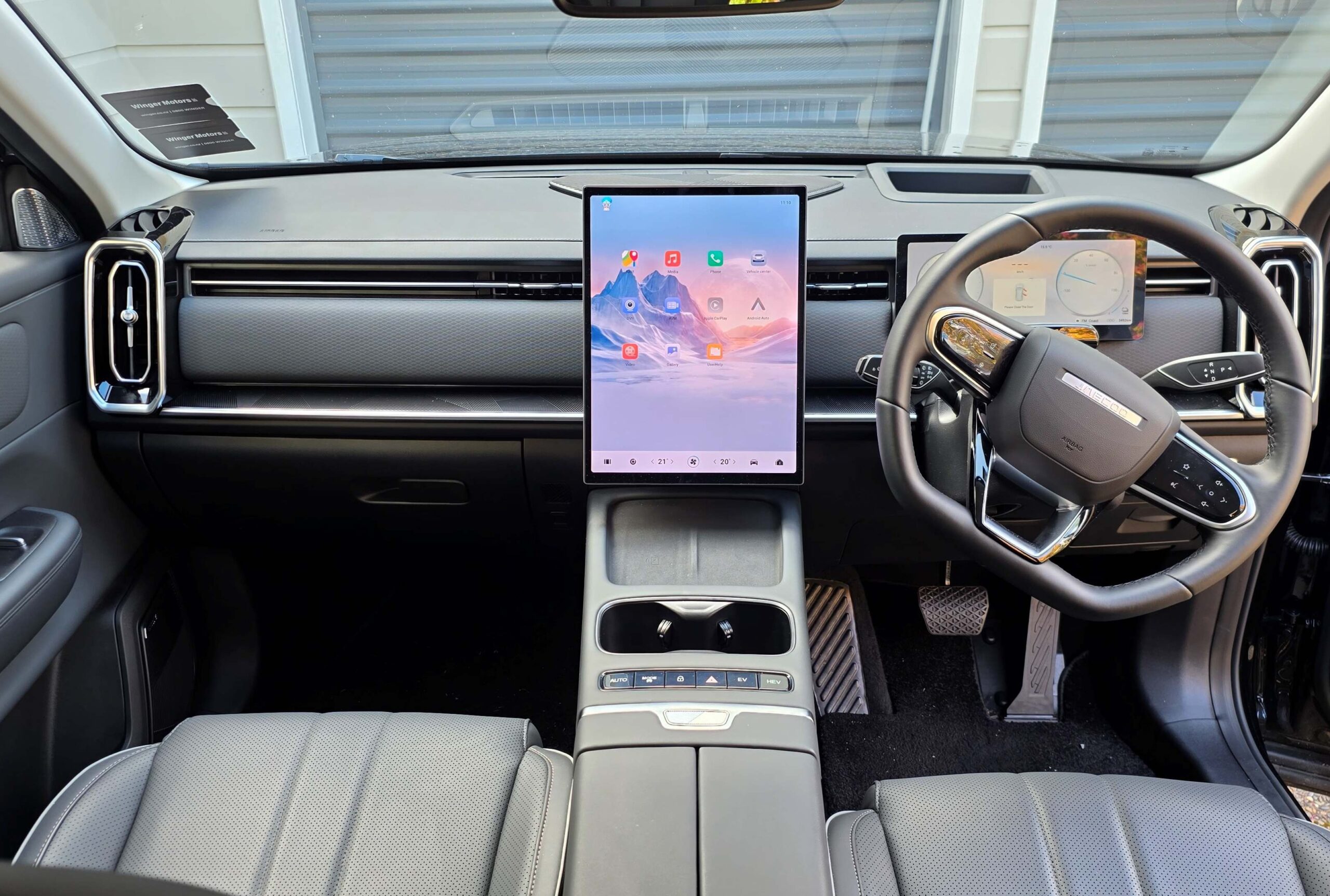
Dashboard materials follow a mixed approach, soft-touch materials grace the upper portions, while piano black patterned panels and chrome-like elements break up the black plastic expanses. It’s a deliberate design strategy that elevates the perceived quality above what you might expect at this price point. The Sony-branded audio system adds another premium touch, complete with distinctive tweeter housings on either side of the dashboard, though a word of warning: these can feel surprisingly abrasive to the touch, so best keep curious fingers away.
Practicality hasn’t been sacrificed for style. Decent-sized door cubbies, under-armrest storage with a closable vent (perfect for keeping drinks cold), and dual cup holders demonstrate thoughtful design. A clever detail is the dual phone storage area, one standard slot and one wireless charging pad equipped with active cooling to prevent overheating during high-power charging. There’s even a neatly placed luggage hook, another small touch that shows attention to real-world usability. The large dual sunroof floods the cabin with natural light, enhancing the sense of space.
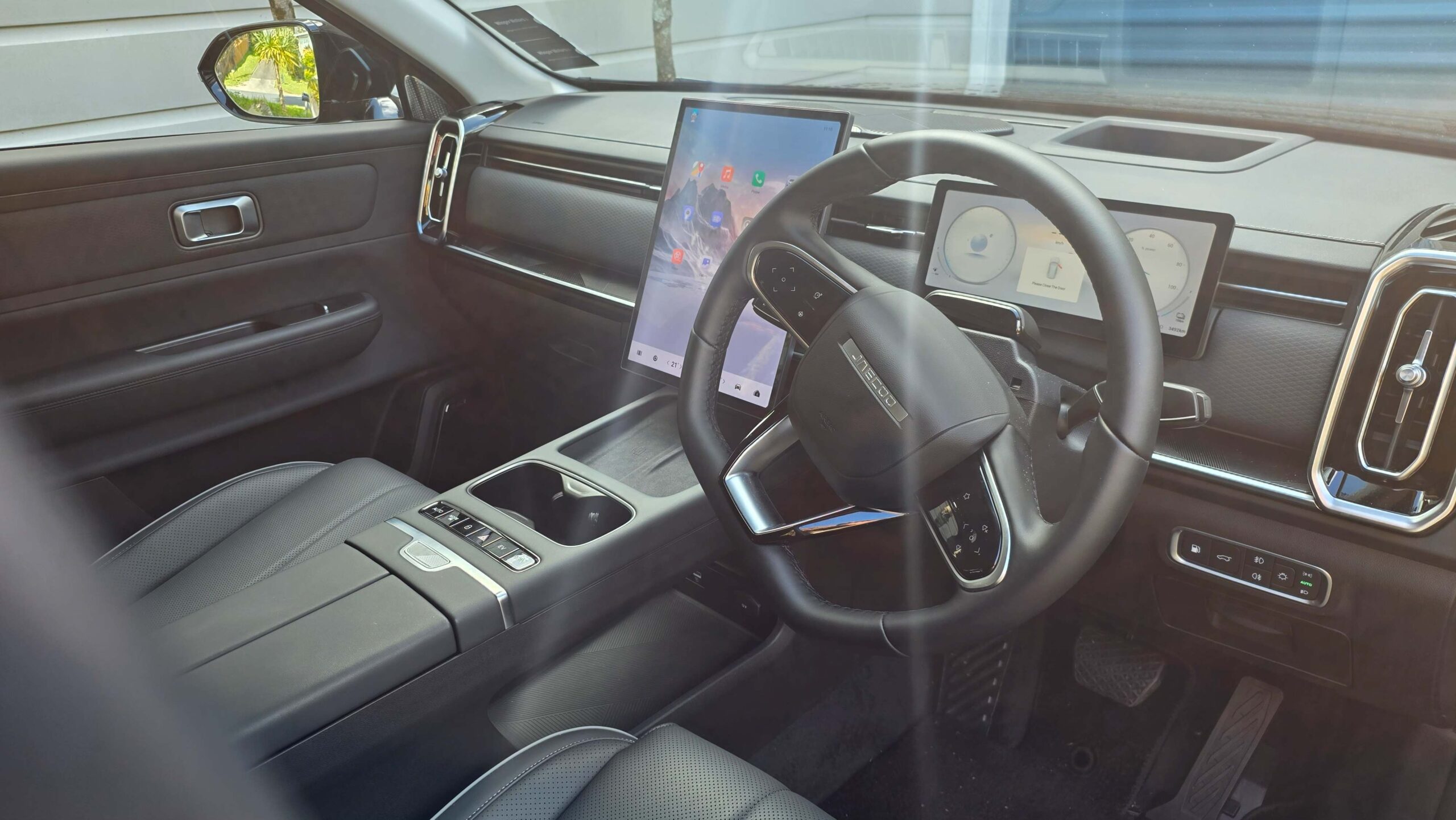
However, the J7 isn’t without its quirks. The window switches require pushing away from you to lower the windows, a counterintuitive design that takes adjustment. More bizarrely, the rearview mirror has an unusual reflection quality that can be genuinely distracting. Side-Mirror adjustment requires diving into menus rather than having dedicated switches, which feels like an unnecessary complication.
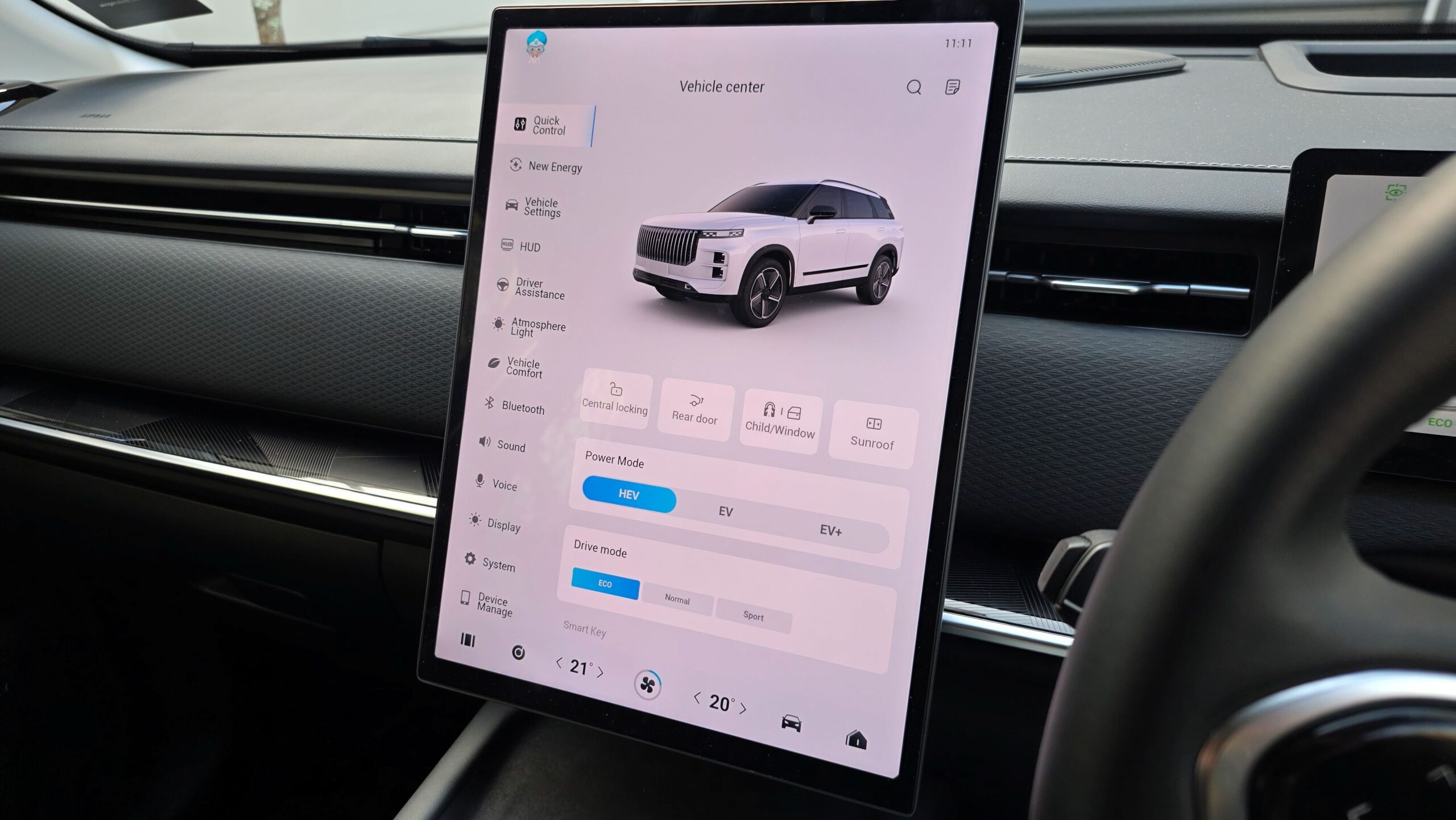
The centrepiece of the dashboard is a bright, portrait-oriented 14.8-inch touchscreen that cannot be rotated. While some might initially balk at this configuration, there’s sound logic behind it, when using Apple CarPlay or Android Auto, the portrait orientation mirrors smartphone and tablet layouts far more naturally than landscape alternatives.
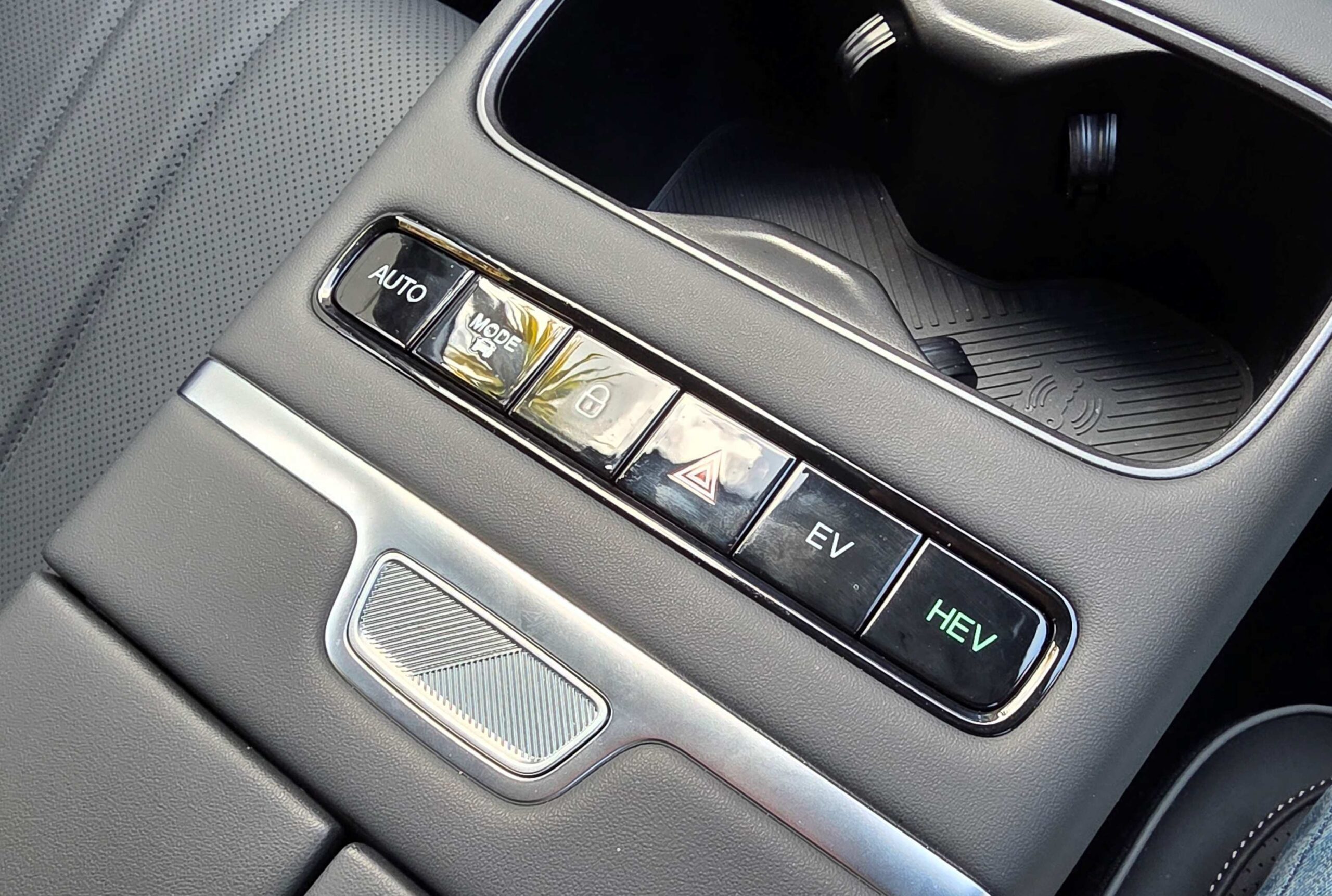
The interface houses quick controls for power modes (Hybrid, EV, or EV Plus) and drive modes, with deeper vehicle settings accessible through intuitive menus. You can adjust wiper sensitivity, steering force, and brake pitch from within the vehicle settings. The five-star ANCAP safety rating speaks to the comprehensive driver assistance suite available.
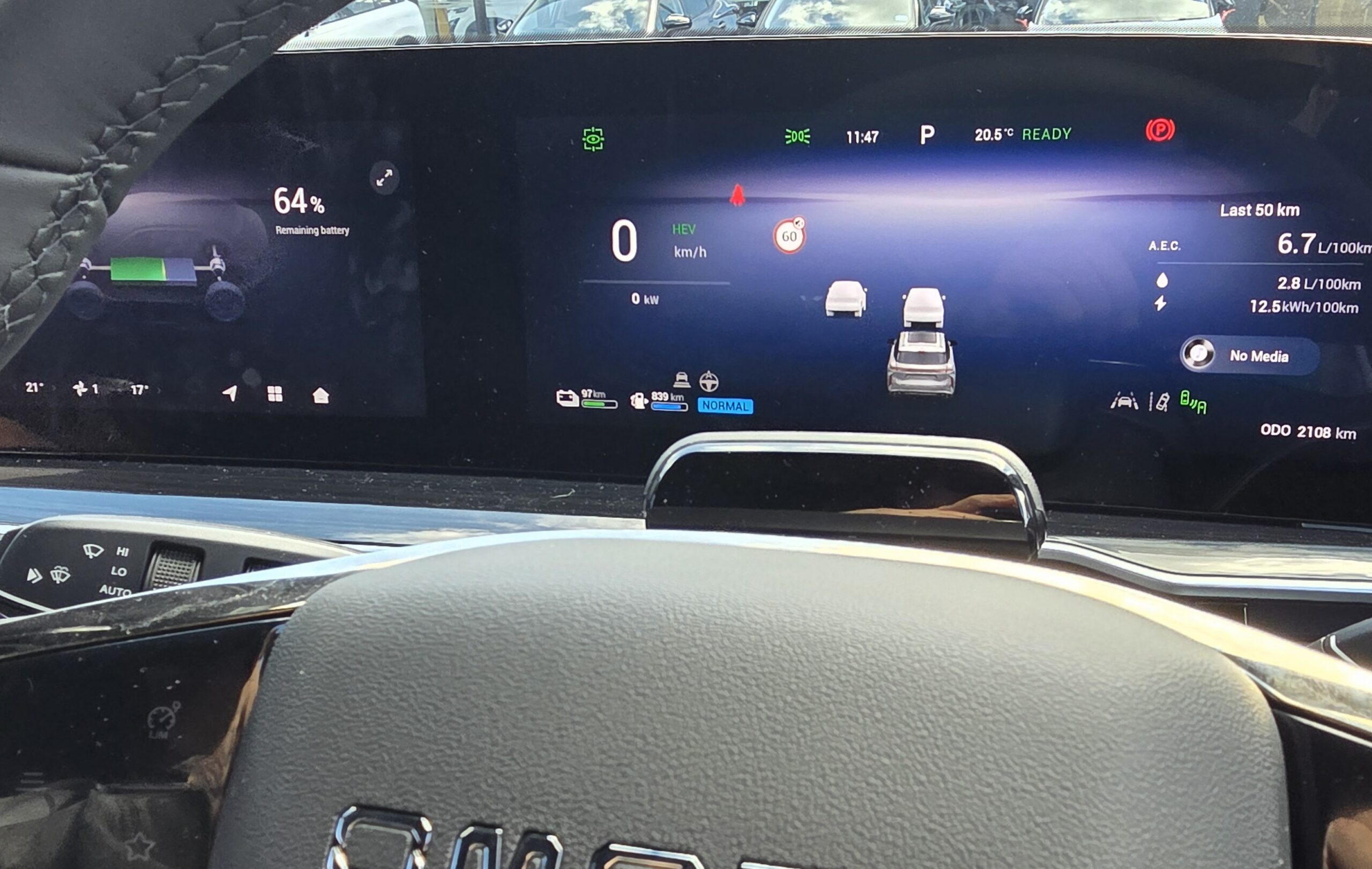
The Sony audio system can be fine-tuned through an equalizer, allowing audiophiles to dial in their preferred sound signature. The digital instrument cluster presents information clearly, showing power flow, driving mode, charge status, and remaining electric range in a traditional gauge-inspired layout.
The Super Hybrid Difference
Here’s where the J7 genuinely impresses. The “super hybrid” moniker isn’t mere marketing fluff (ok the super bit is – maybe hybrid+), it represents a sophisticated plug-in hybrid system that intelligently switches between multiple operating modes. Under the bonnet sits a 1.5-litre turbocharged engine paired with an 18.3 kWh battery pack and a 150 kW electric motor, all connected through a dedicated EV/hybrid transmission.
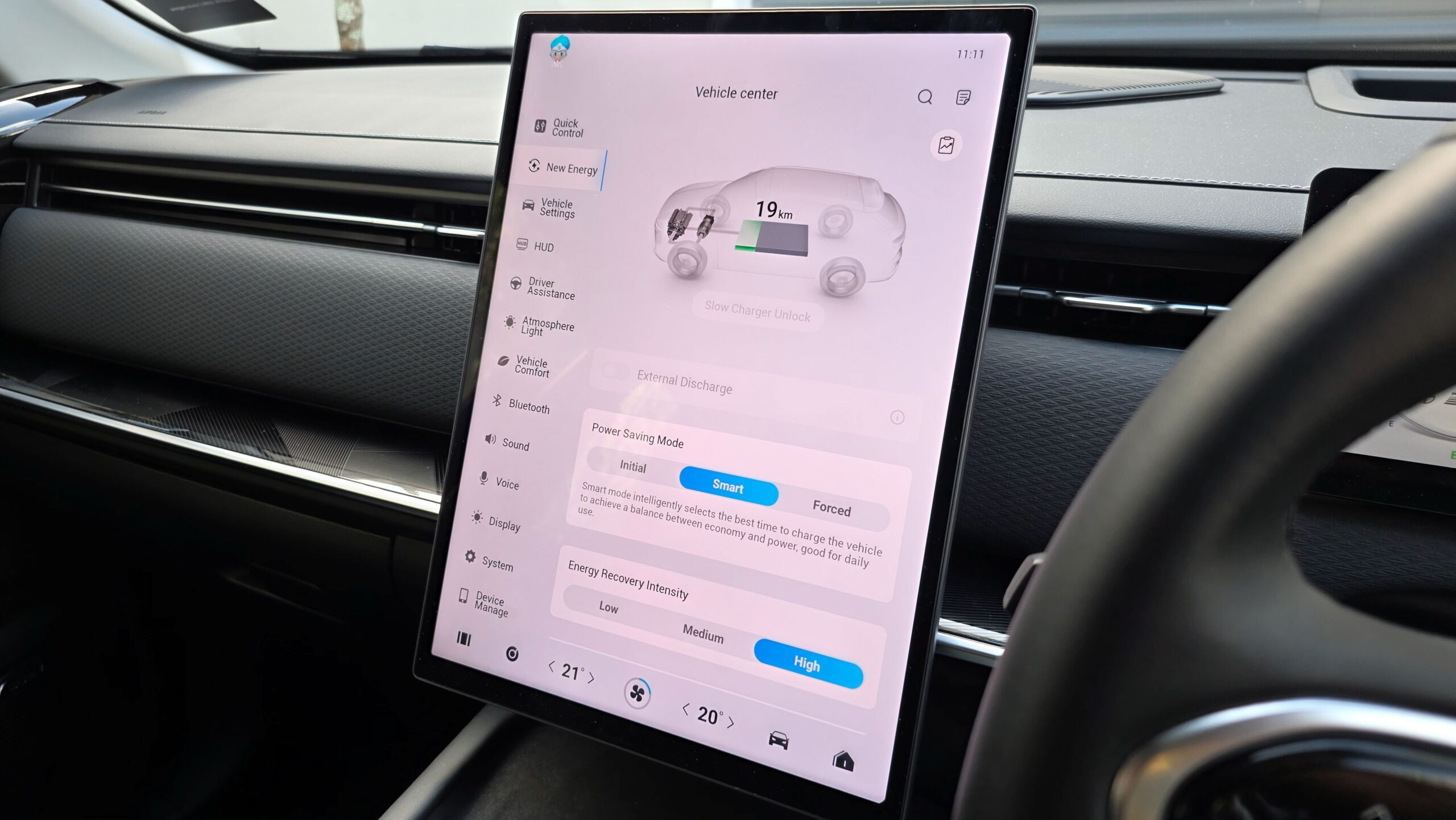
The combined output is impressive, 255 kW of power and 525 Nm of torque. The system intelligently operates in pure EV mode, series hybrid, parallel hybrid, or even petrol-only configurations depending on driving conditions and battery state. This flexibility delivers remarkable efficiency, when the battery is maintained above 30%, fuel consumption can drop to just 1L/100km.
Total range? An eye-watering 1,200 kilometres on a single tank, with approximately 100 kilometres of pure electric range. For plug-in capability, both AC and DC charging ports are provided, with DC fast charging delivering 30-80% charge in roughly 20 minutes.
On the Road – Conflicting Emotions
The driving experience reveals the J7’s dual personality. Acceleration is strong, with the electric motor’s instant torque makes urban driving effortless and overtaking confident. The powertrain’s seamless transitions between operating modes showcase sophisticated engineering, constantly optimizing for efficiency.
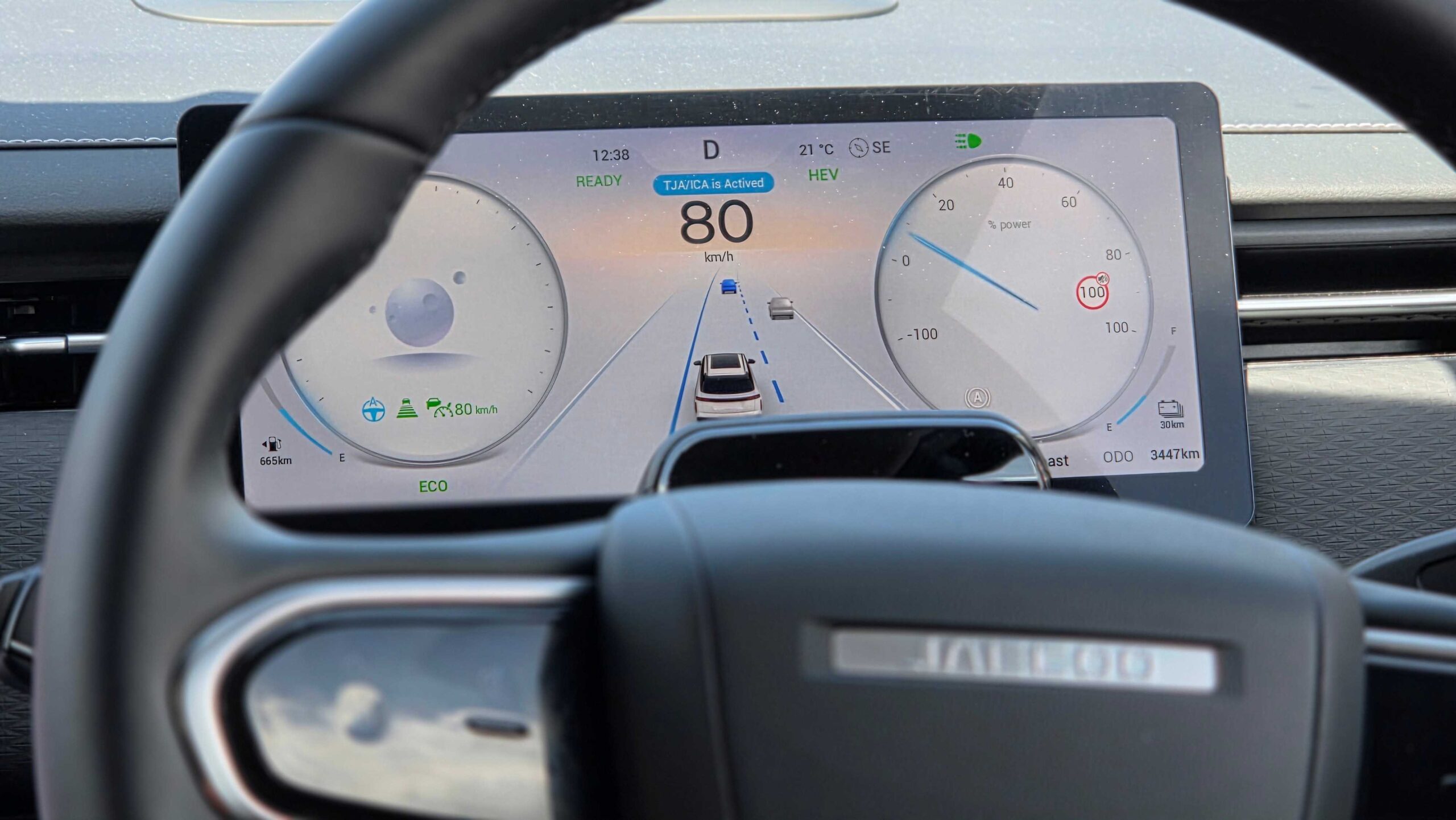
However, the ride quality proves divisive. The suspension setup errs on the firmer side, which isn’t necessarily problematic but can feel overly harsh on typical New Zealand back roads. Despite riding on chunky tires and not being marketed as a performance SUV, the suspension transmits road imperfections into the cabin more than expected. On longer country drives, this firmness can become tiresome.
Then there are the irritations. The car beeps incessantly unless you dive into menus to disable various warnings. The driver monitoring system frequently triggers “driver distracted” warnings at inopportune moments. The flat-bottom steering wheel adds a sporty touch, but having to navigate menus for simple mirror adjustments frustrates.
Tarmac Takeaway – Impressive Tech, Real-World Compromises
The Jaecoo J7 SHS Super Hybrid presents a compelling package on paper and delivers genuinely impressive hybrid technology. The powertrain’s sophistication, remarkable efficiency, and extended range make it a genuine contender for those prioritizing running costs and environmental credentials. The interior quality punches above its likely price point, and the infotainment system works well despite minor ergonomic quirks.
Yet it’s not without compromises. The firm ride, counterintuitive controls, and persistent warning systems create frustrations that may grate on daily use. It’s a vehicle that inspires “conflicting emotions”, there’s much to admire, but be ready for some things that irritate – it could just be me getting old though!