For years, the industry (and the public) have been talking about a certain event horizon where you could choose a size of car that works for your needs, and then the drivetrain choice (whether powered by dinosaur juice or electrons) would just be another step on the decision tree, and not a fundamental fork right at the beginning of shortlisting.
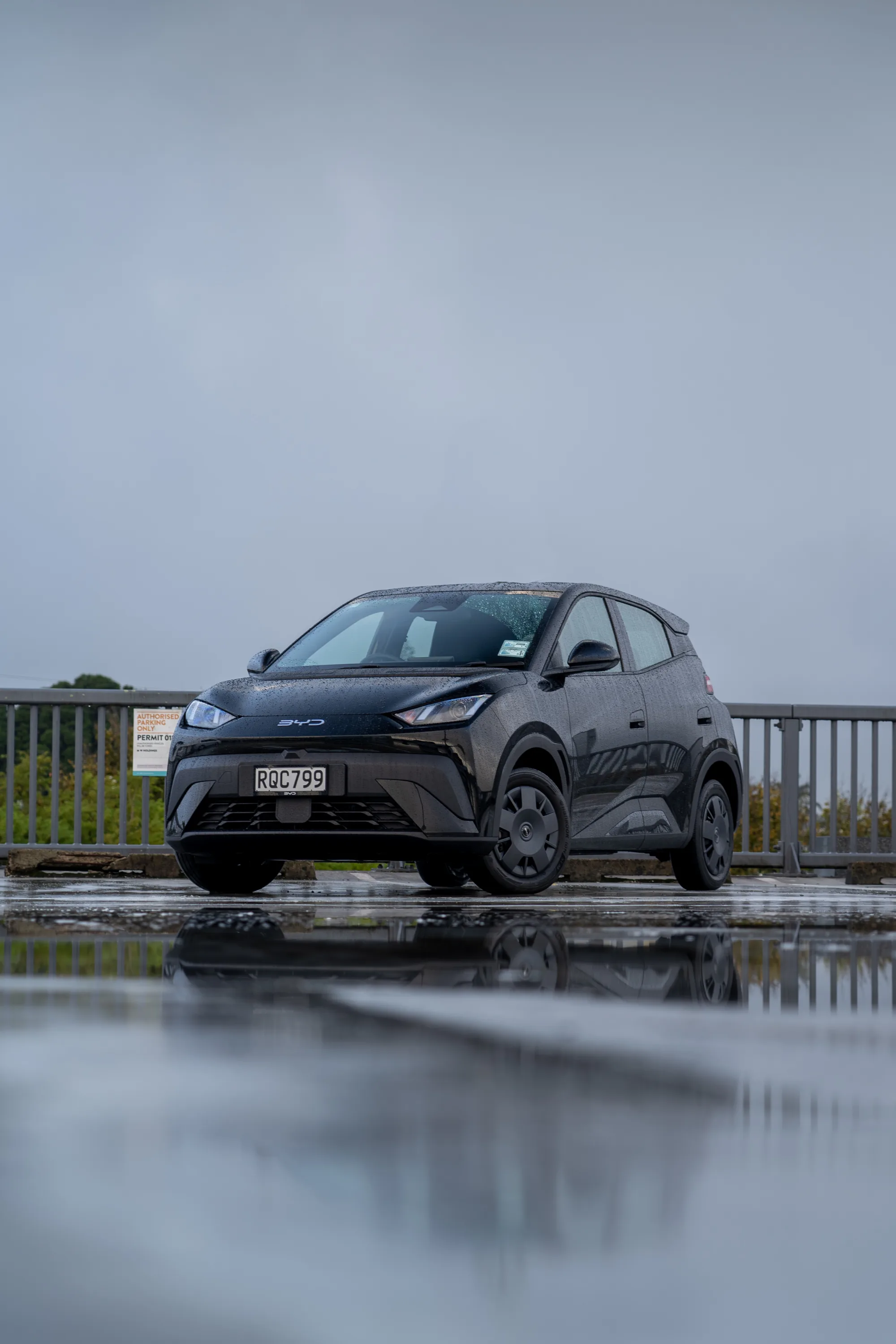
We might not be there just yet for all car shapes and sizes, but the BYD Atto 1 gets us closer when it comes to entry level hatchbacks. In Essential trim, it strips things back to, well, the essentials, and delivers a fully electric driving experience, and delivers a product that is both usable and enjoyable.
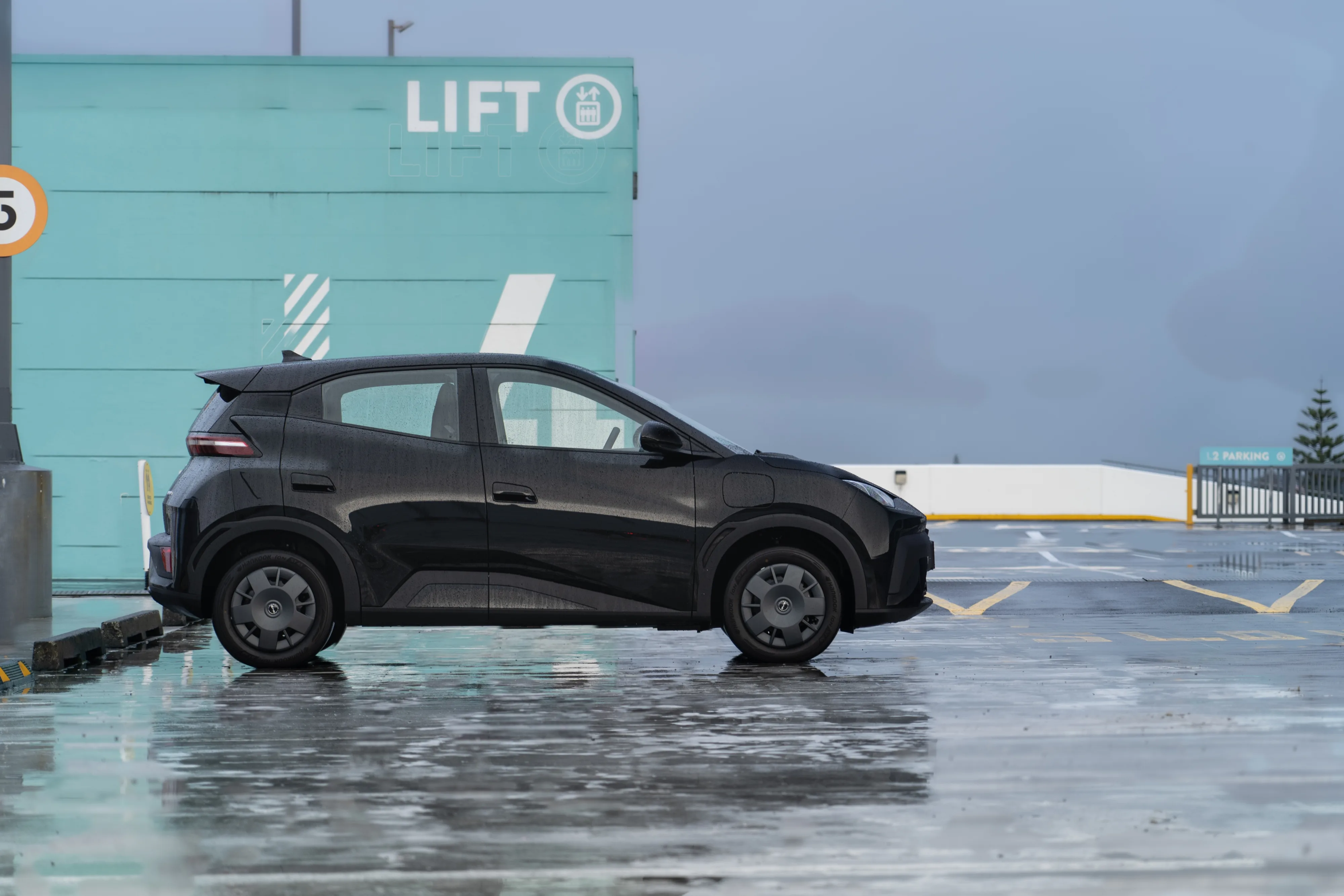
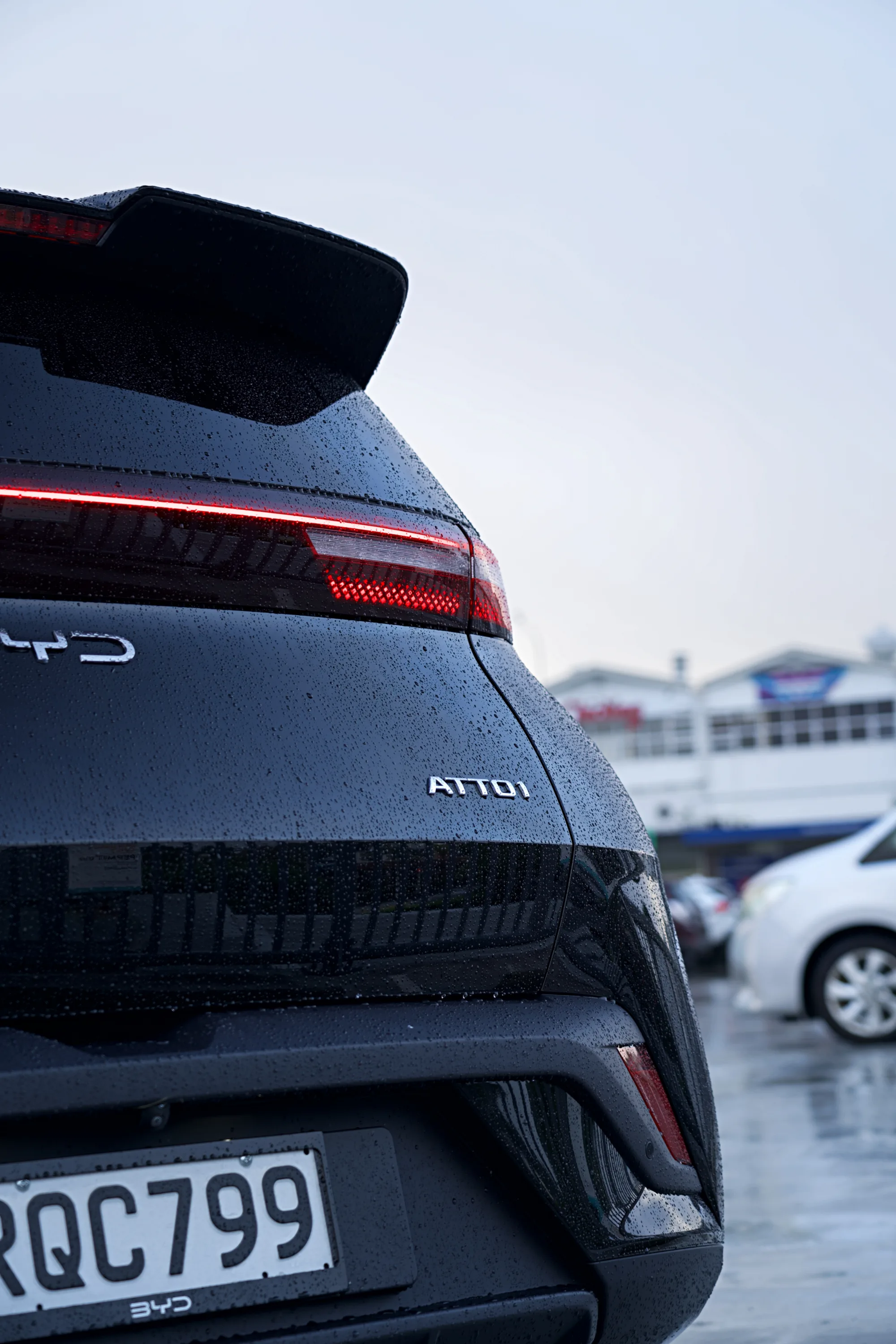
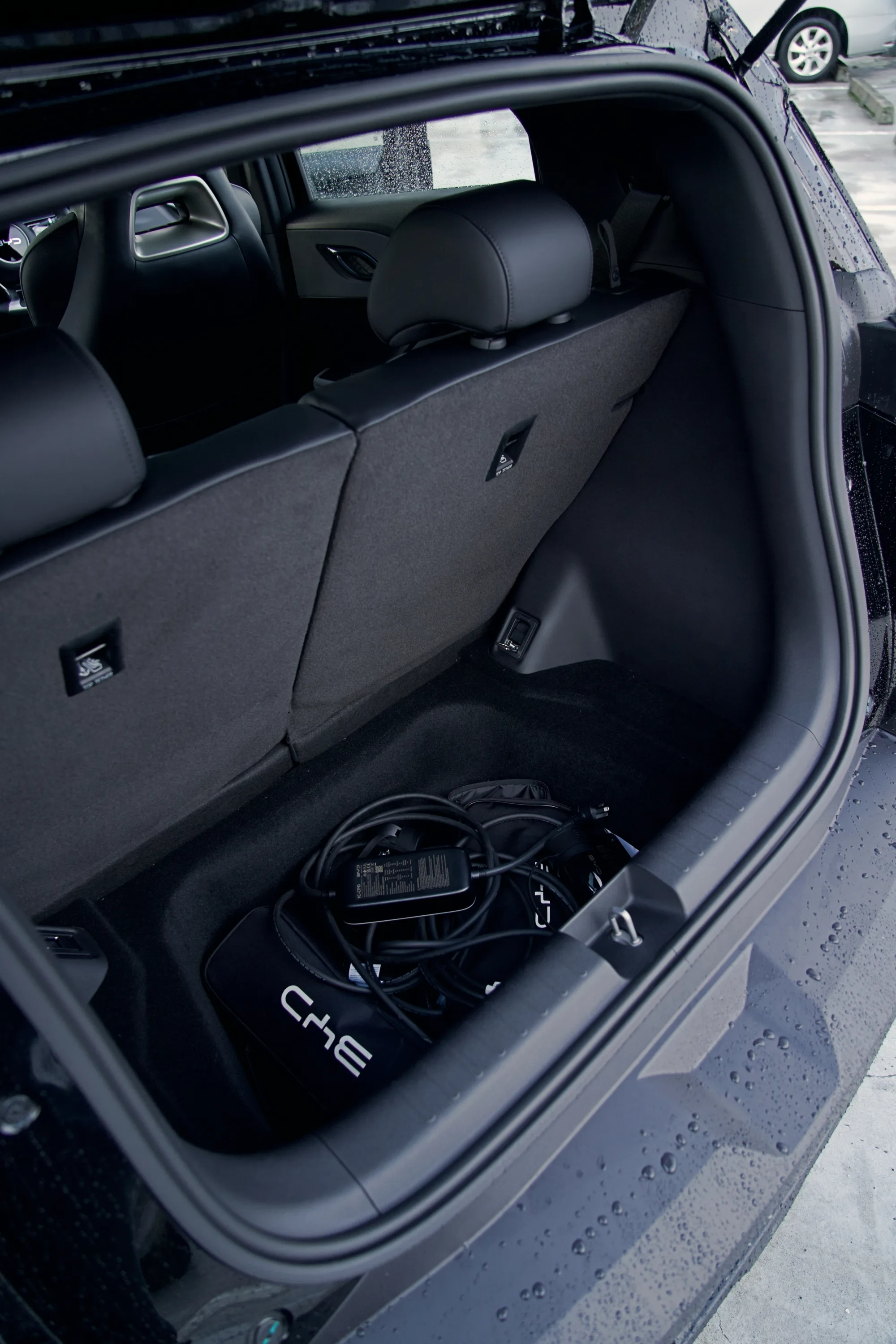
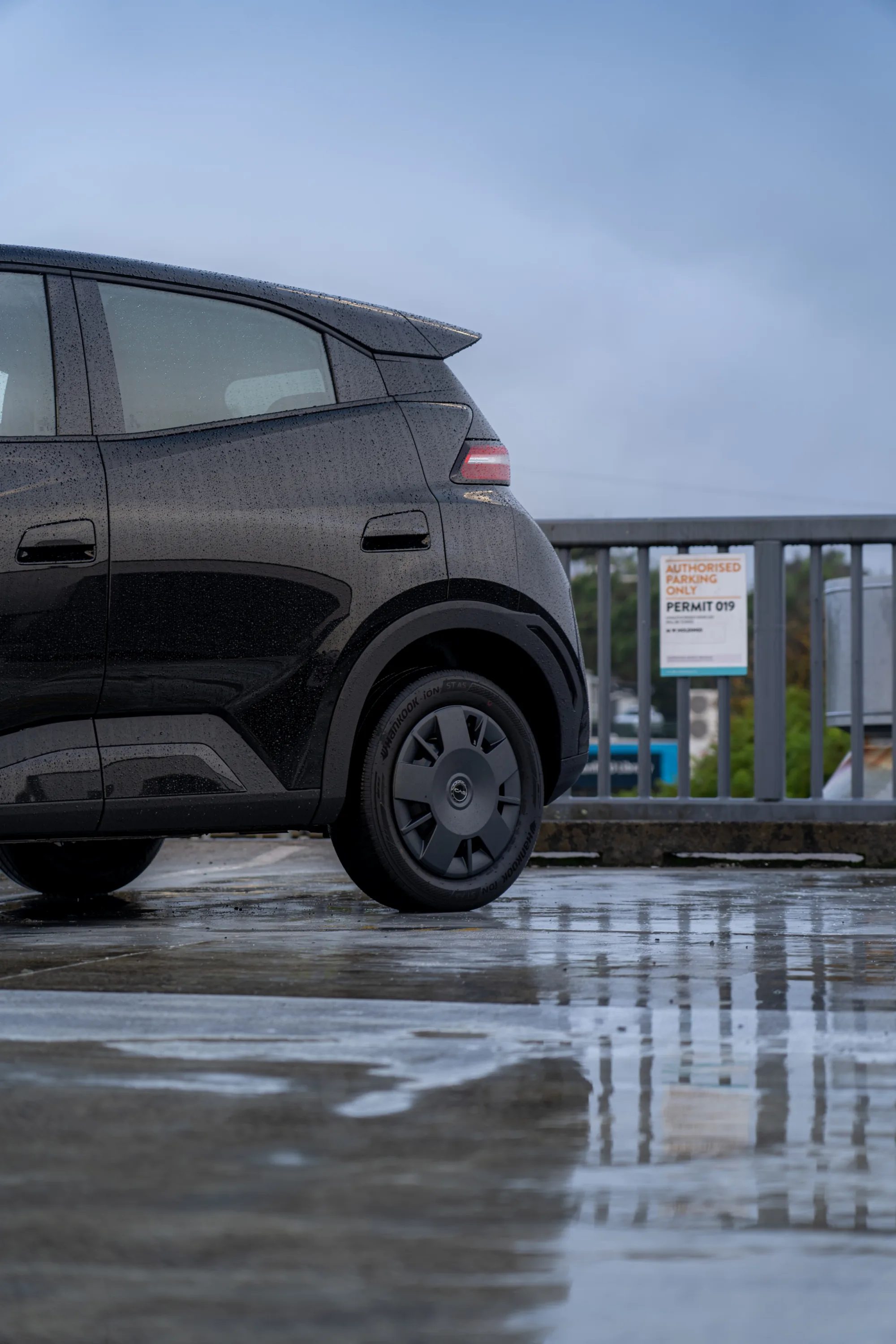
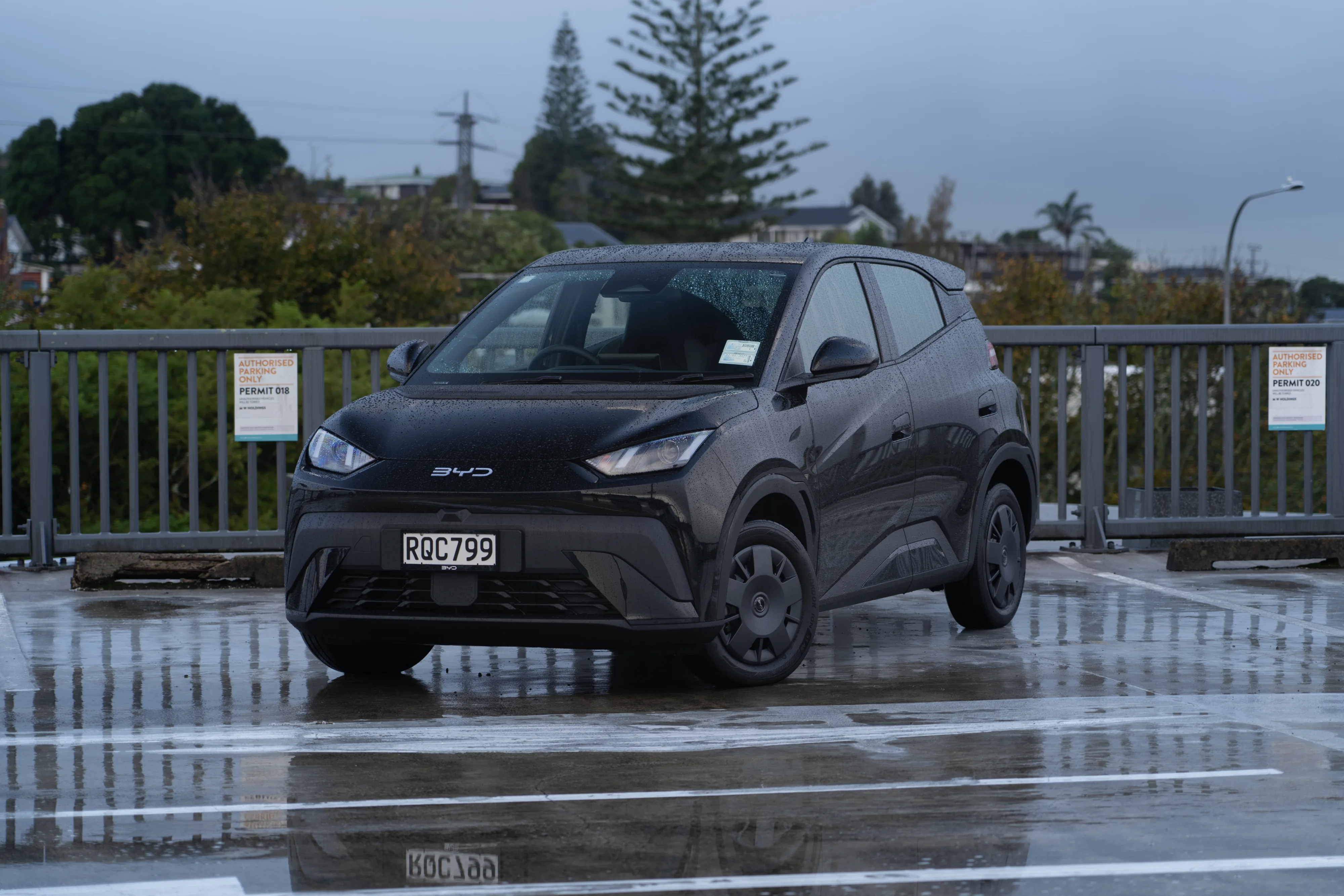
The exterior design is quirky, with a high profile that accentuates how narrow the car is, and gives it a very approachable aura, perfect for what it is. The obligatory unibrow at the back is mounted very high, and the front fascia drives BYD’s visual identity, flanked by the halogen headlights. It benefits from having the wheels at the very corners of the car to amplify interior room despite a small footprint. The boot is not the most practical and definitely on the smaller side, but interior room for 4 occupants is surprisingly good. It’s compact, easy to place on the road, and very clearly aimed at urban life.
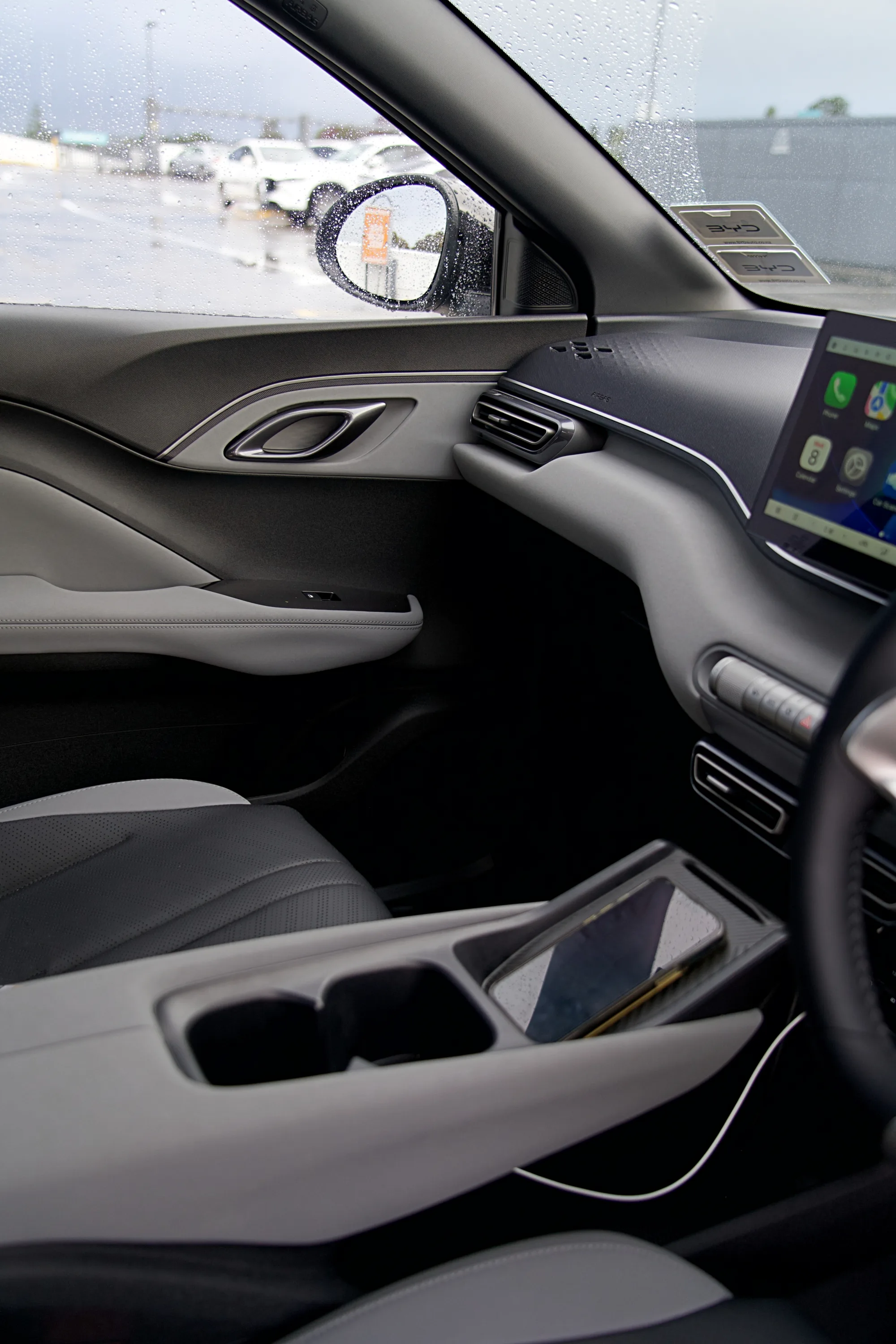
Having just had the Atto 2 for a week, jumping into the Atto 1 makes the hierarchy within the lineup immediately obvious. This is where the cost savings live, and BYD isn’t particularly interested in hiding that. The cabin is the clearest giveaway: hard plastics dominate pretty much every surface you touch, broken only by a thin strip of softer material running across the dashboard and door cards. It gives the whole interior a distinctly “cheap and cheerful” vibe; not offensive, but congruent with what you’ll see in most of the competition. That said, the seats are genuinely better than what you’d expect at this price point, offering decent comfort even if the rest of the environment feels pared back.
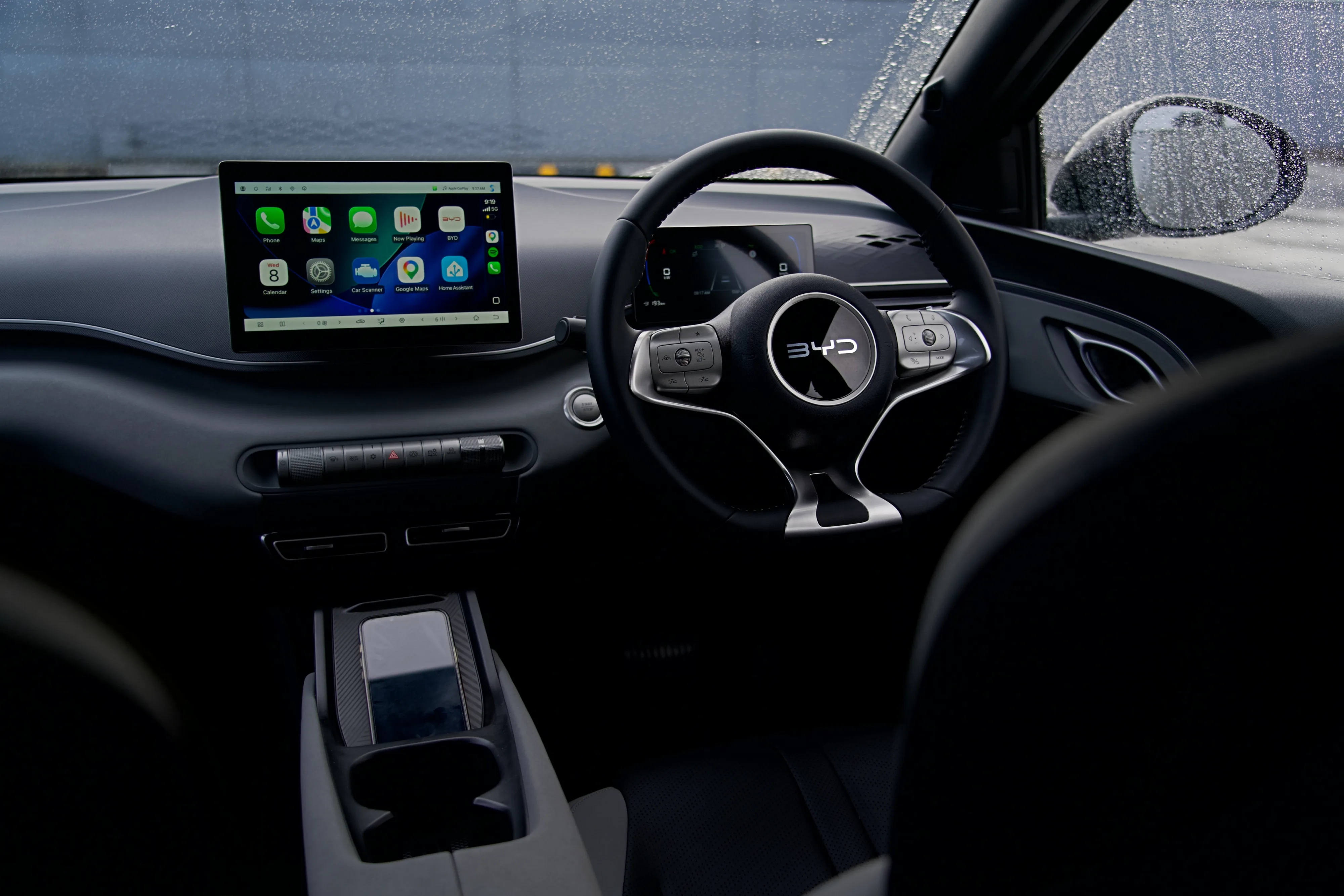
Ergonomically, though, there are some compromises that are harder to ignore. In this Essential trim, the steering wheel doesn’t telescope, and the driver’s seat lacks height adjustment, which makes finding the perfect driving position more difficult than it should be. It’s one of those things that constantly reminds you this is built to a price.
Technology follows a similar pattern of highs and lows. The infotainment system gets the basics done, but you can tell it’s a step down from the Atto 2. The screen is lower resolution, slightly laggier, and more prone to showing visual artefacts. The driver’s display is also simplified, with a smaller central screen flanked by basic digital readouts. It works, but it doesn’t impress.
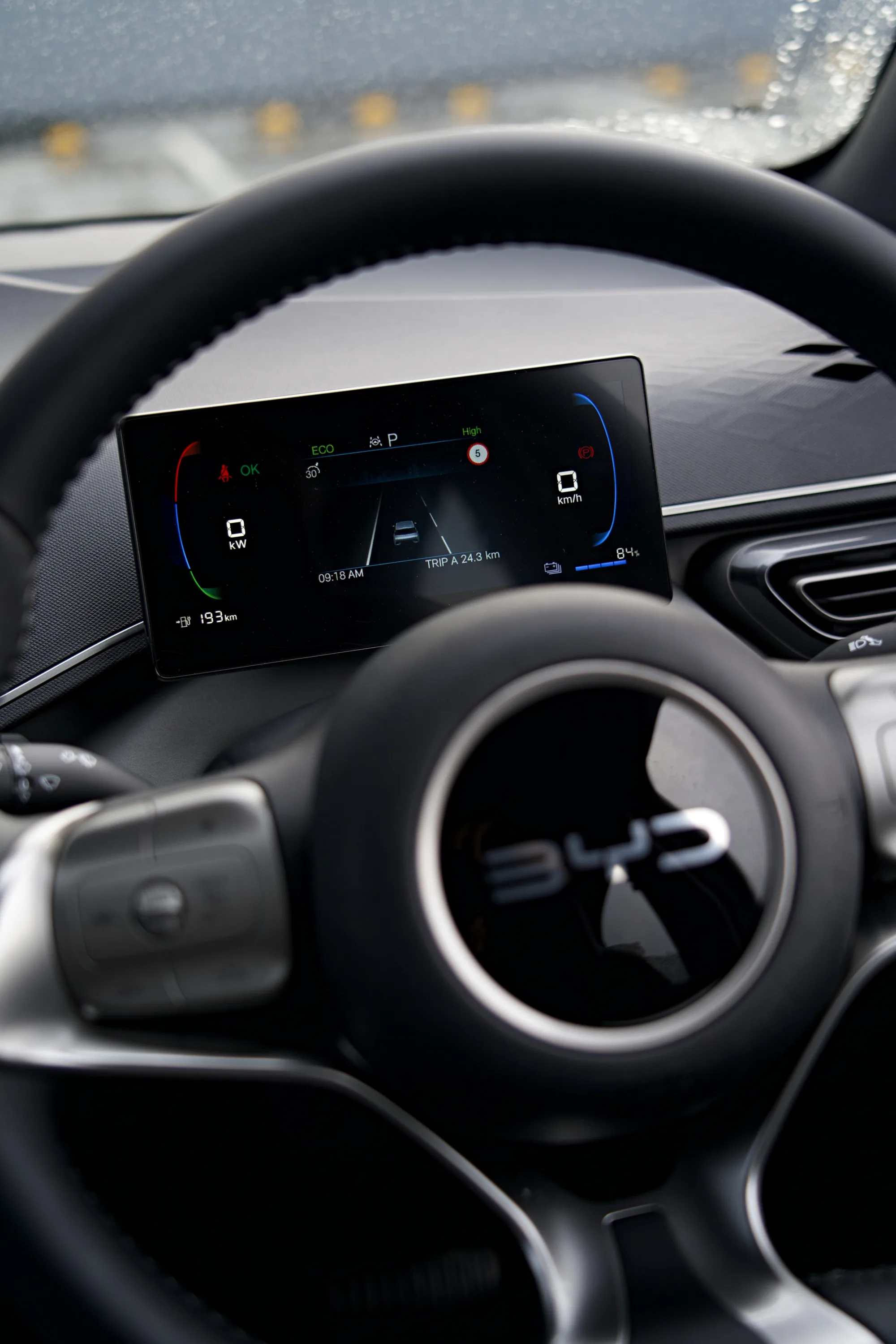
Under the skin, the Atto 1 stays true to its entry level brief. The Essential model comes with a 30kWh battery, while the higher trim bumps that up to 43kWh. Power sits at just 65kW, which translates to a 0–100km/h time hovering around the 11 mark. It is somewhat unusual to see such comprehensive changes in powertrain in each trim level unless you’re going for a Performance model, so this shows deep market segmentation. In isolation, the Essential numbers don’t sound particularly exciting (well, they aren’t), but they don’t tell the full story.
Because the car is light, compact, and carries its weight low, it ends up being surprisingly engaging to drive. In fact, this might be the most fun BYD in the lineup. There’s an eagerness to it, a willingness to be thrown around corners, that you simply don’t get from the brand’s larger, more comfort-focused models. It’s not fast, but it’s playful, and that counts for a lot in a segment that often forgets driving enjoyment altogether, especially because a small, cheap hatchback benefits loads from electrification, replacing an uninspired engine with an electric motor.
Plus, around town, it’s quiet, smooth, and effortless. There’s no engine noise, no vibration, just simple point-and-go convenience. For buyers cross-shopping this against similarly priced petrol cars, that refinement alone will feel like a step into a different class.
Range, however, is where the limitations start to show. With around 220km on a full charge, this is very much a city machine. Road trips are possible, but they require thinking, and probably more patience than most buyers in this segment will be willing to invest. Charging speeds are modest as well (65kW AC), but again, in the context of what this car is designed to do, they’re adequate. This is more your charge-overnight-using-11kW-AC than roadtripping from one destination charger to another, and the figures back it up: this is the most efficient EV I have personally tested (dethroning the BYD Atto 2), with figures as low as 9.8kWh/100km during my full week with it.
There are a few quirks that creep into daily use. The lack of proper passenger side unlocking can get annoying, and the base sound system is genuinely poor, something that feels like a missed opportunity given how much younger buyers might gravitate towards a car like this. But step back and look at the bigger picture, and the Atto 1 starts to make a lot of sense.
It is a result of product planning genius by BYD New Zealand. In Essential trim, it becomes appealing to those looking for an entry level, feature rich, efficient EV that offers actual price parity with internal combustion. It lacks the pizzaz and the power of the range topper, and it is great to have both choices, as they each deserve their spot.
It is not luxury, techy, or super posh. Instead, it focuses on doing the fundamentals (sorry, the Essentials) right, and then sprinkles a bit of unexpected driving charm on top. And in doing so, it becomes one of the most honest and likeable cars BYD currently makes. And, undercutting ICE cars, it is in a position to reshape the conversation of first car buying. Thanks, BYD, for the opportunity, and thank you for reading this far!