Vehicle-to-grid charging promises to turn electric vehicles into mobile power stations, feeding energy back to the grid or a home when demand is high. It is a compelling idea, but Hyundai Australia wants its customers to know that, for now, the technology is not ready for use with its vehicles in this market.
What V2G Actually Does
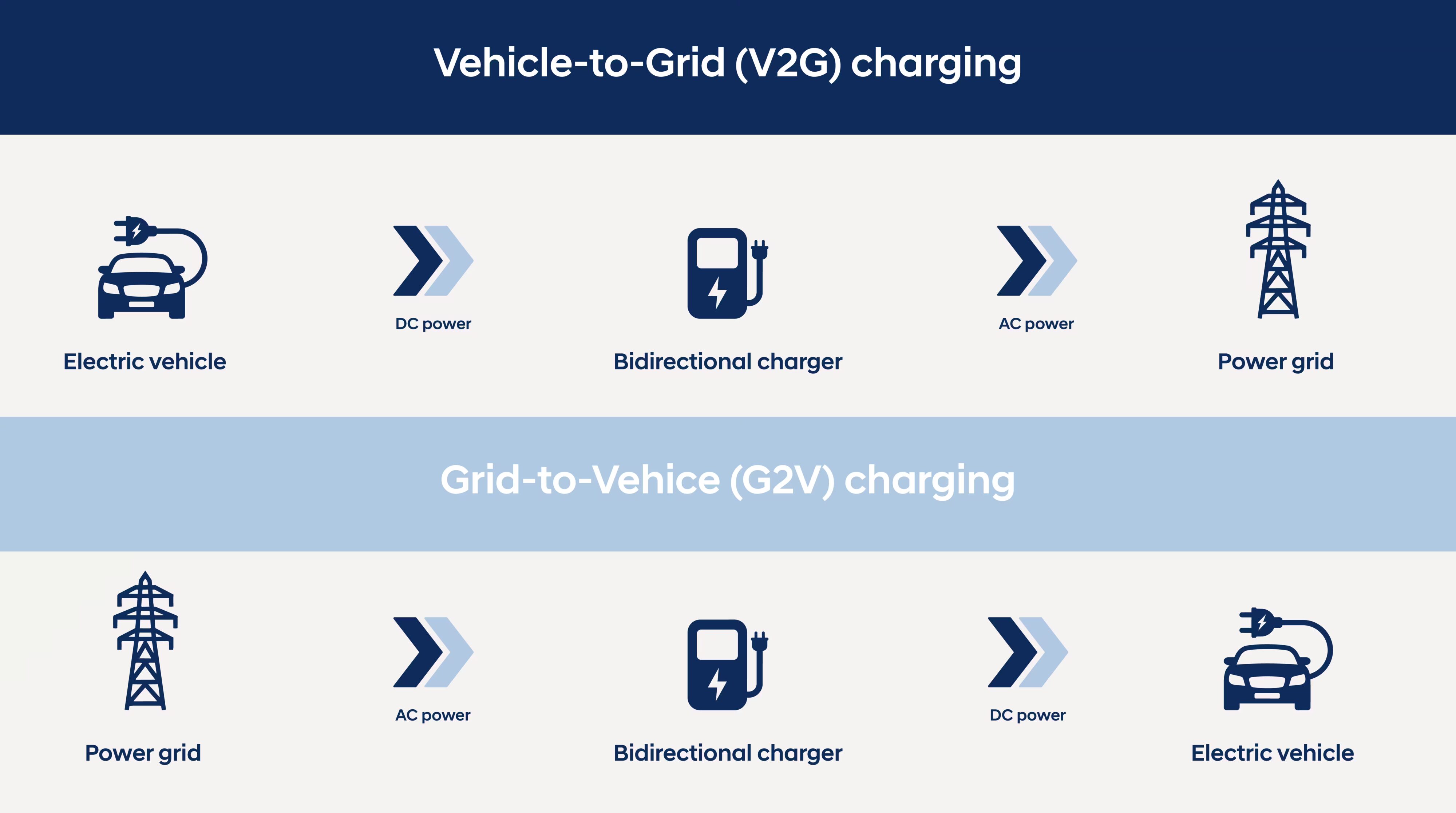
Vehicle-to-grid, or V2G, is a bidirectional charging system. Rather than simply drawing power from the grid, a compatible EV can also push stored energy back out, to a home, or to the broader electricity network. The hardware that makes this possible is a bidirectional charger, which converts the battery’s direct current into the alternating current used by homes and the grid.
The process is managed by software. When an owner plugs in, the charger and vehicle perform a digital handshake using the ISO 15118 communication standard, sharing data such as battery charge level and temperature. An aggregator (a cloud-based platform run by an energy company) then monitors grid demand in real time and signals the charger to either draw from or supply the battery accordingly.
In practical terms, an owner could set a minimum charge requirement by a given time, and the system handles the rest overnight: selling surplus energy back during peak periods and recharging cheaply during off-peak hours when renewable generation is high. The owner earns a credit; the grid avoids firing up a fossil-fuel peaker plant. The concept is straightforward enough on paper.
Where Hyundai Stands Right Now
Despite the appeal, Hyundai Australia is clear on its current position. Scott Nargar, the brand’s Senior Manager of Future Mobility and Government Relations, states that Hyundai EVs do not support V2G charging in Australia at this time. Using unapproved bidirectional chargers with a Hyundai EV, he warns, risks safety, vehicle integrity, and warranty coverage.
That is not a dismissal of the technology itself. Hyundai is the only vehicle manufacturer currently participating in the federal government and ARENA-funded Vehicle-Grid Network programme in Australia. The brand is also involved in V2G trials in the United States, the Netherlands, and South Korea, and is working with Australian research organisations on testing charging systems, EVs, and the standards needed to govern safe energy export.
The distinction matters: Hyundai is investing in V2G’s future while drawing a firm line around its present use. The technology, Nargar says, is not yet ready for the Australian market, which has its own regulatory requirements and technical considerations that still need to be resolved.
An Emerging Technology, Not a New One
V2G is not as recent an idea as the current buzz might suggest. Its formal framework dates to 1997, developed by Dr Willett Kempton and economist Steven Letendre at the University of Delaware. The first practical trials followed a decade later, and dozens of pilot programmes have since run worldwide, including a recent Australian trial by energy provider Amber Electric.
More than 25 years on, V2G is only now beginning to move beyond the experimental phase. That slow progression reflects the genuine complexity involved: aligning vehicle hardware, charger certification, grid infrastructure, and regulation across different markets is no small task.
Why It Still Matters
The environmental case for V2G is tied directly to the shift toward renewable energy. Off-peak periods tend to see higher proportions of solar and wind generation, meaning an EV charged overnight and discharged during the evening peak could effectively store and redistribute clean energy rather than letting fossil-fuel plants fill the gap.
For Australian EV owners, the message from Hyundai is patient but optimistic. The question is not whether V2G will arrive, but when, and under what conditions it can be used safely. Until the standards and certification systems are in place, the brand’s advice is to leave the experimentation to those running the official trials.