The Chery Tiggo 9 has evidently arrived in New Zealand (and wider global markets) with a mission, to disrupt the family SUV scene by offering big space, big performance, and an even bigger electric-only range, all at a price tag sharper than virtsually every traditional rival.
Familiar Lines With Quiet Confidence
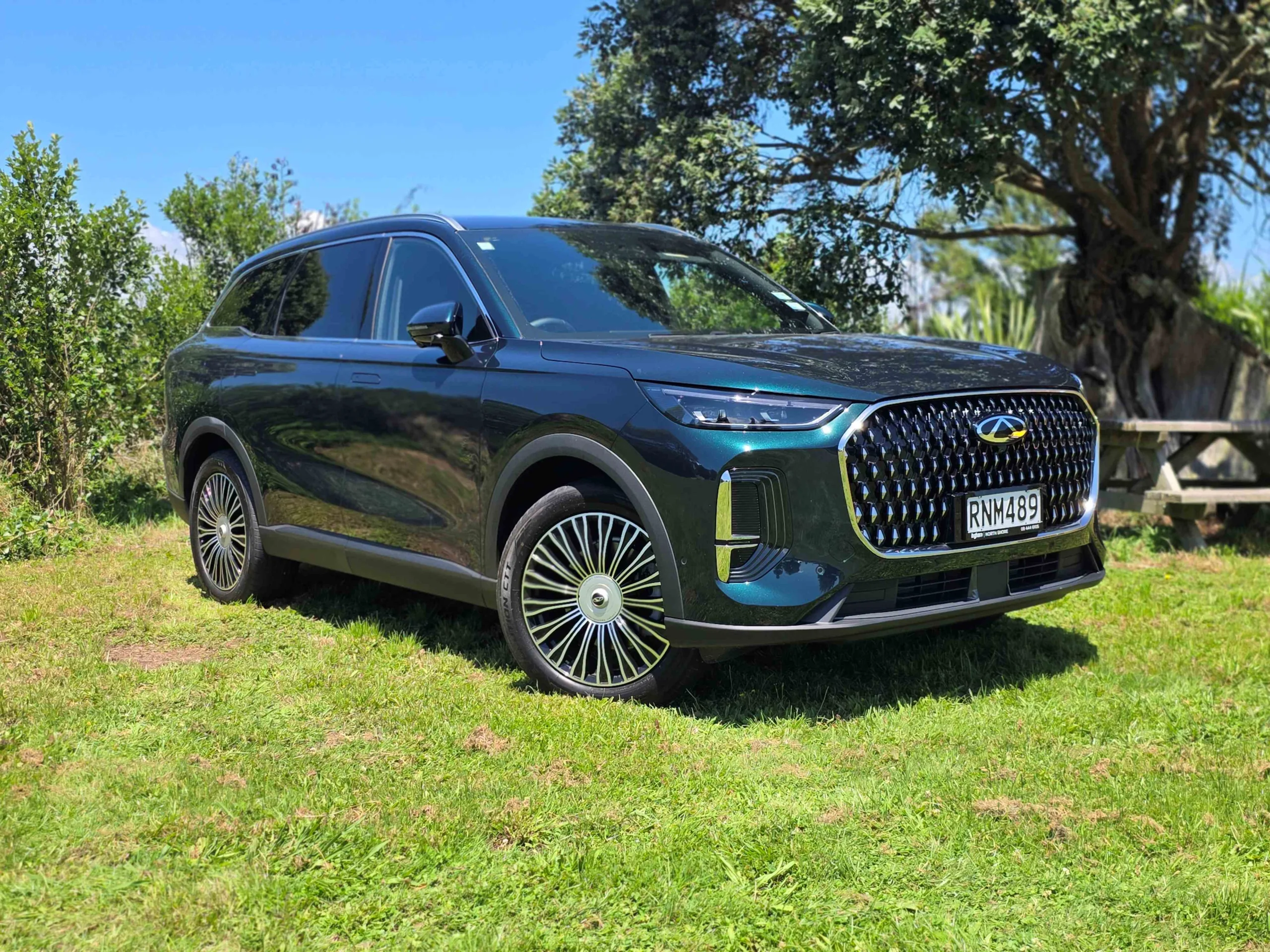
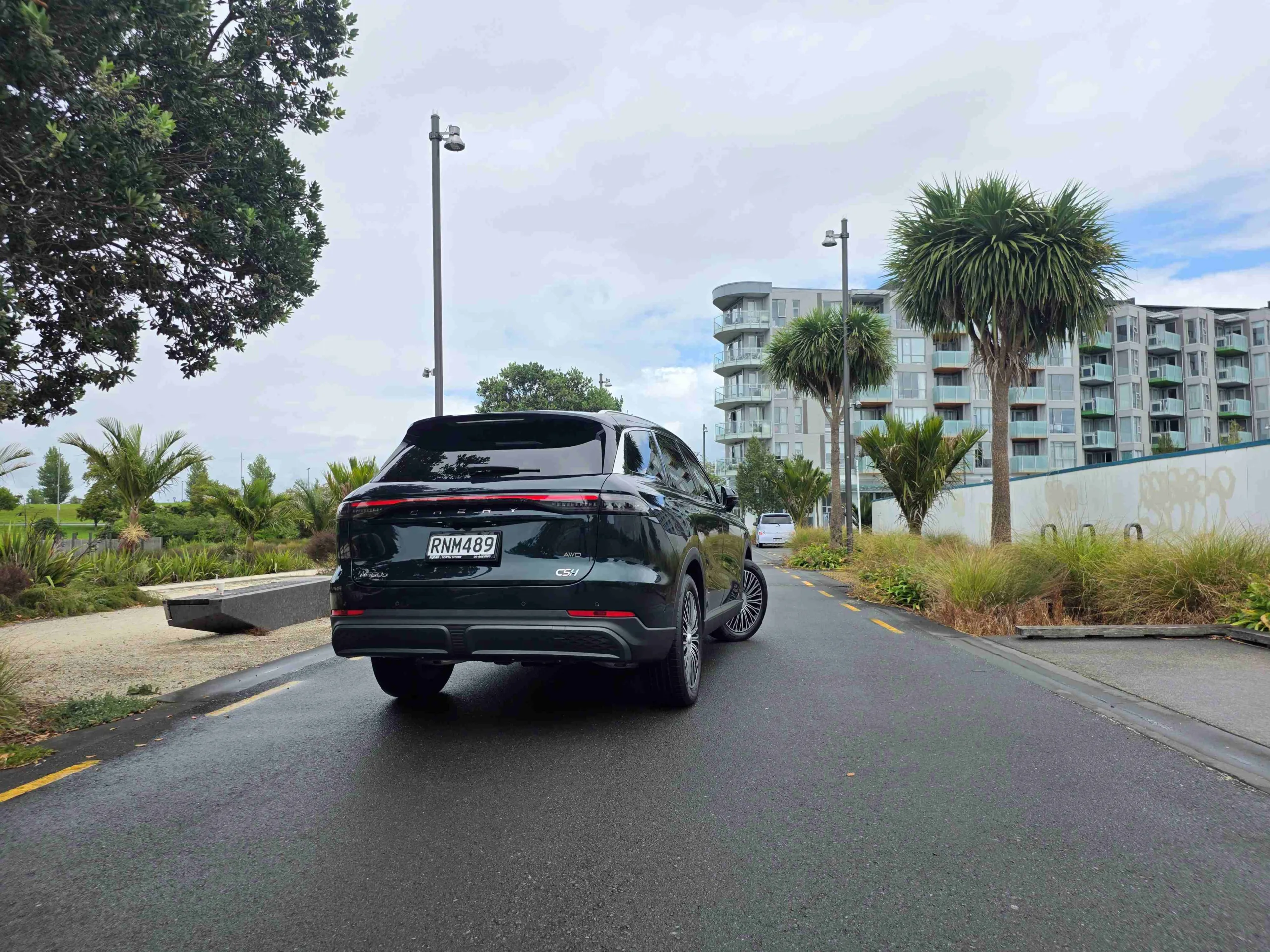
At 4.8 metres long and 1.74 metres tall, the Tiggo 9 occupies the kind of footprint you’d expect from a modern seven-seat SUV, slotting slightly smaller than the Hyundai Santa Fe but larger than the likes of a Peugeot 5008. The proportions feel spot‑on for family duties, and the stance (wide, planted, and premium‑leaning) gives it the presence expected from a brand’s flagship.
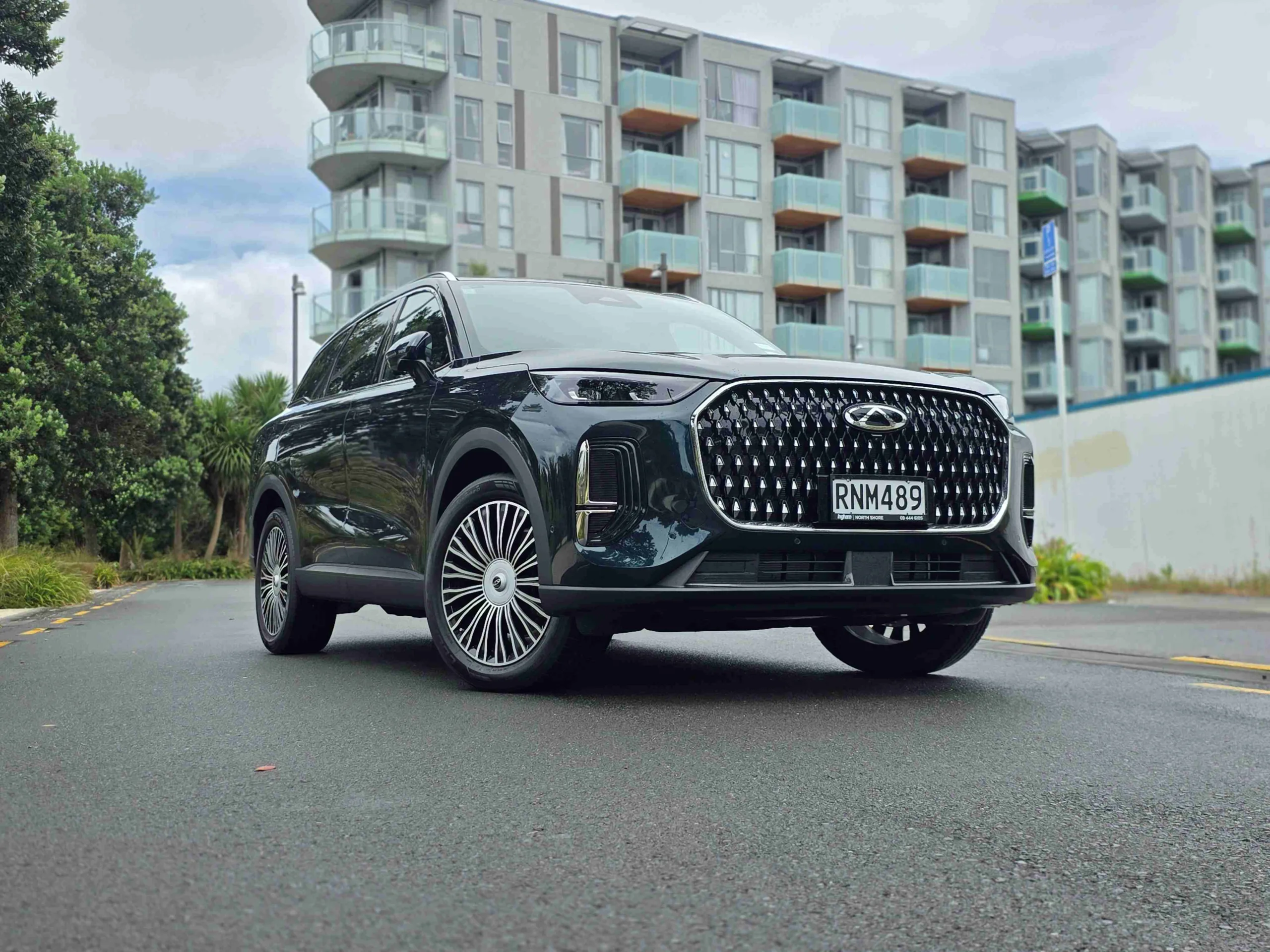
But here’s the rub, Chery’s designers have kept things safe. Very safe in fact. The outward styling looks like many other modern SUV’s, basically a smoothed over body shape with the obligatory full-width light bar at the rear. It’s neat, clean, and contemporary, but it’s unlikely to turn heads. However, that may be the Tiggo 9’s quietly intentional strategy, appealing to buyers who prefer capability over crowing.
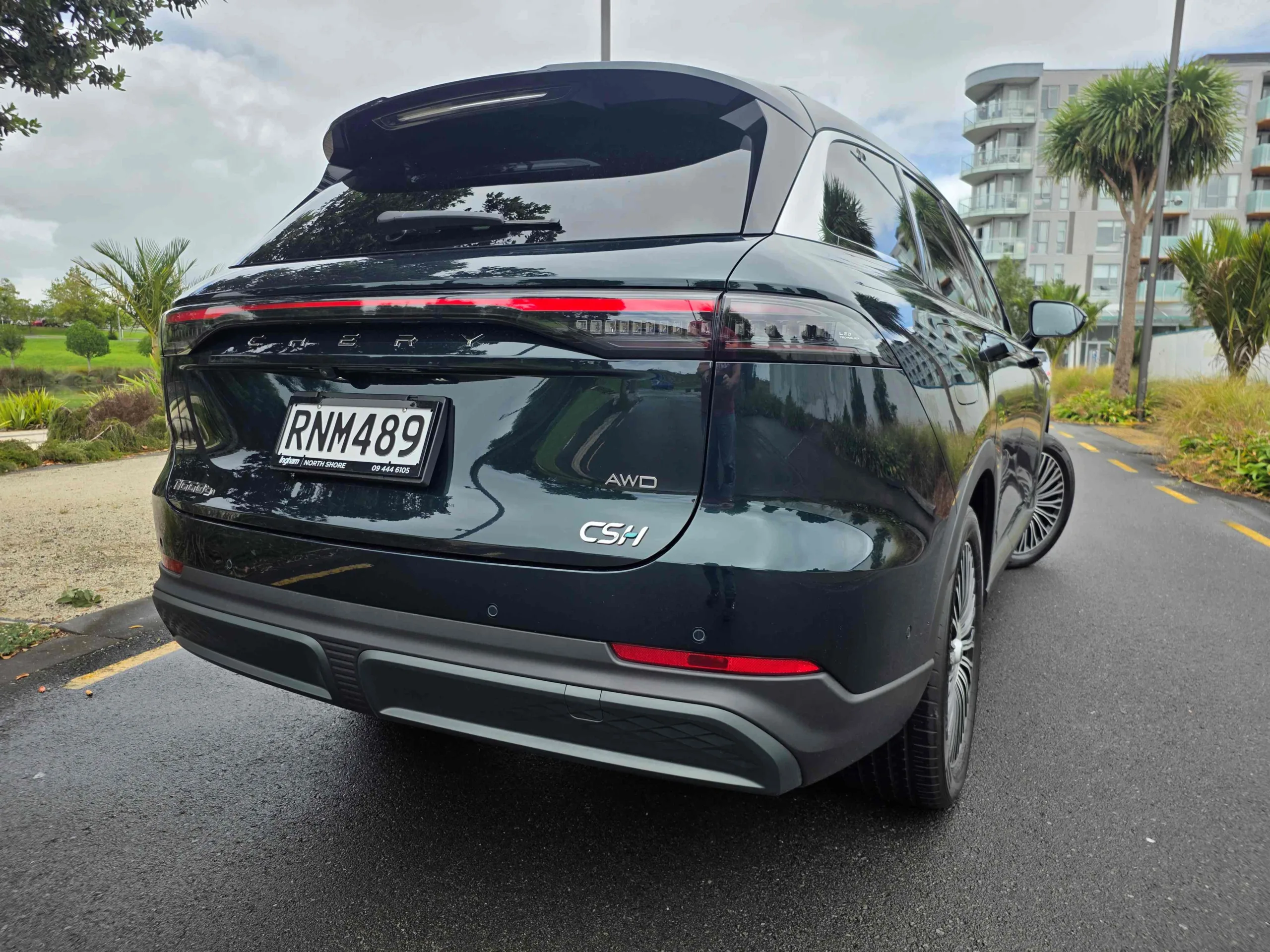
Still, the execution is tidy, the surfaces well-proportioned, and the design communicates a sense of no‑nonsense practicality. It may not be daring, but it won’t date quickly either.
Space Galore, But Not Premium Feel
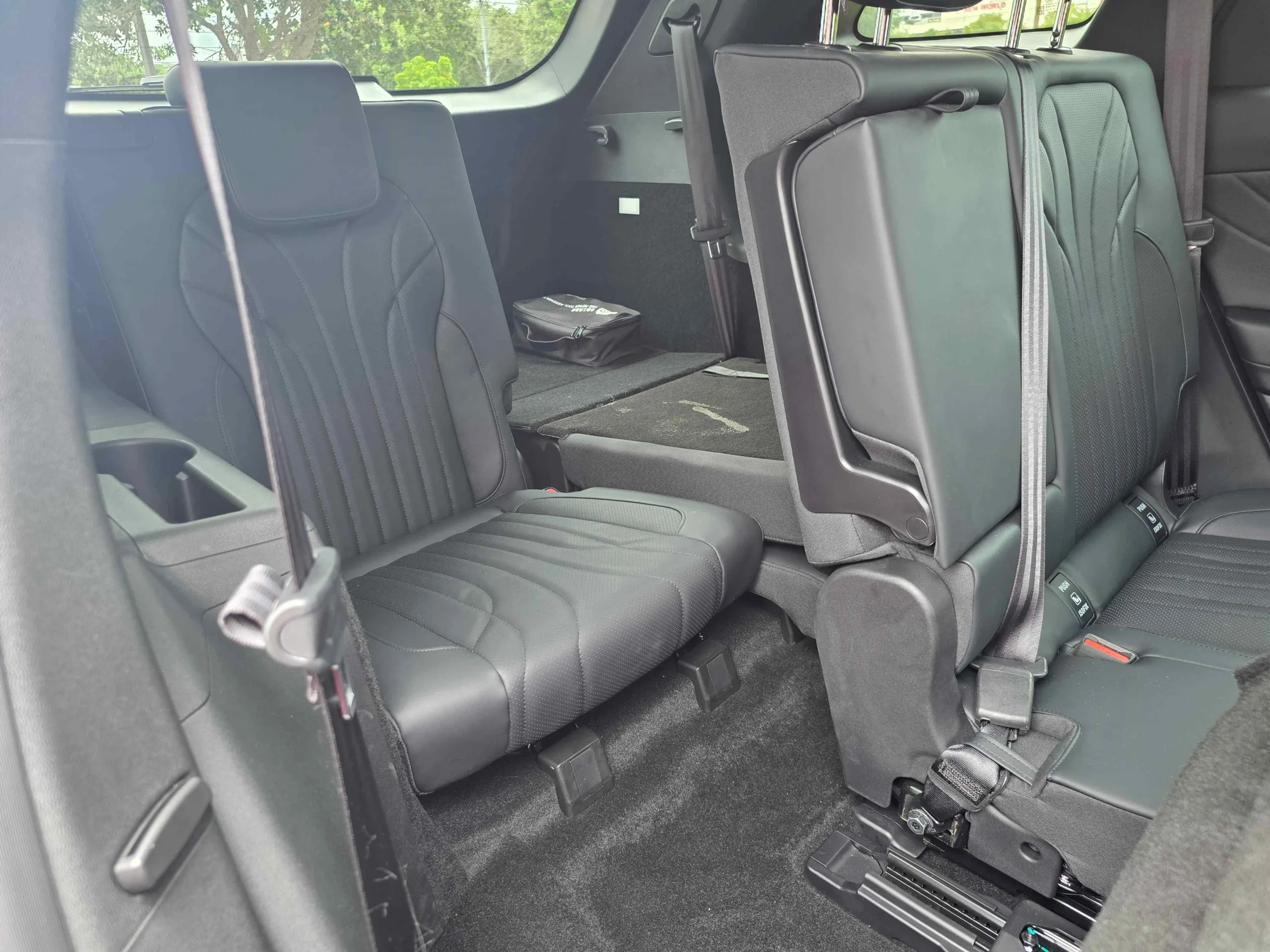
Inside is where the Tiggo 9 swings hardest, and lands some powerful hits. First, the practicality is excellent. This is a full-sized seven-seater where the PHEV battery doesn’t steal boot or cabin space, leaving 819 litres of rear storage to play with in five-seat mode. The second row offers proper adult comfort, and while the third row is best suited to children or smaller adults, it remains usable for short trips.
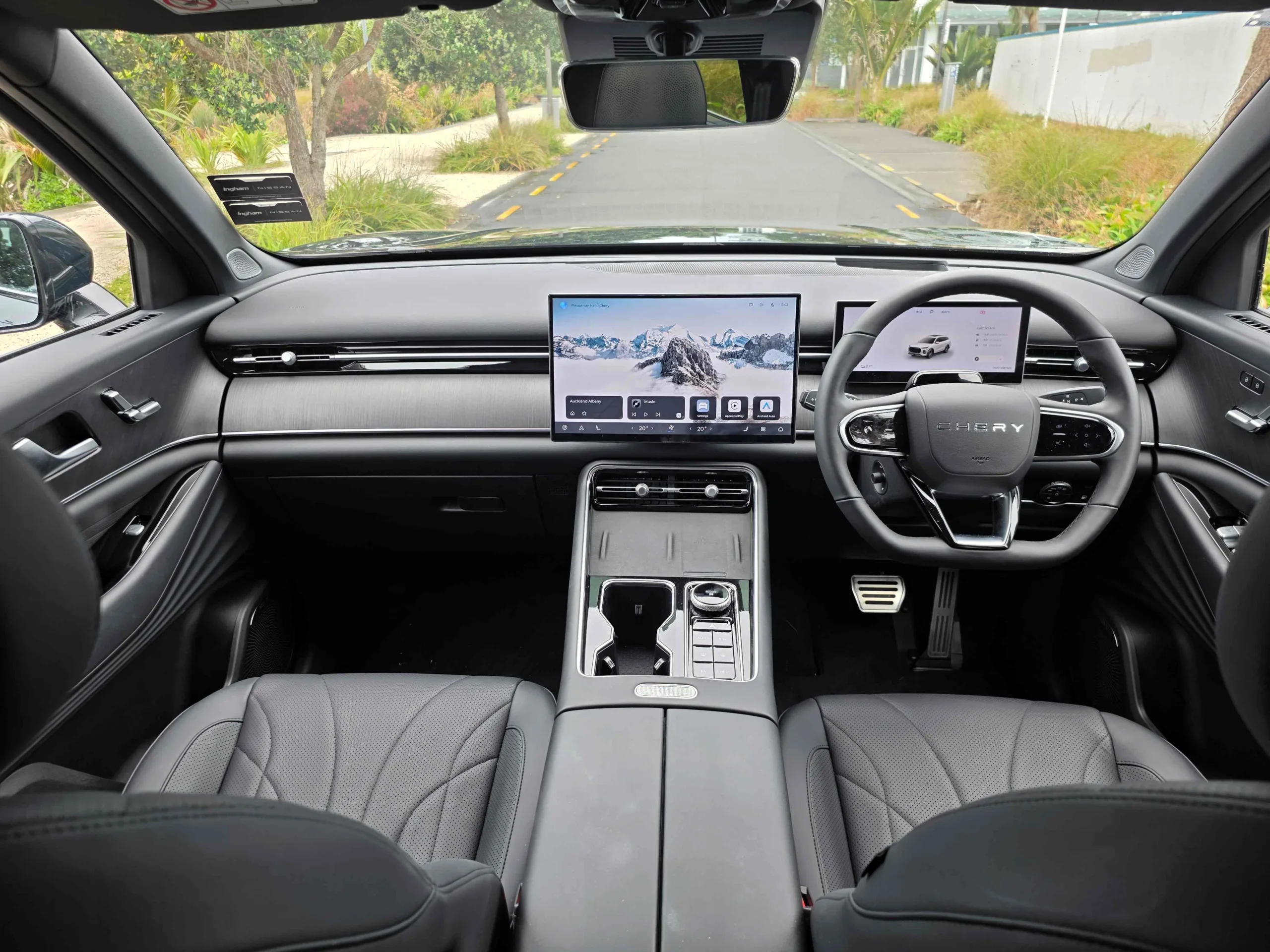
Only the top-tier ‘Ultimate’ trim is offered right now, meaning standard equipment includes massaging eco‑leather seats, huge 20‑inch wheels, laminated glass, and a 14‑speaker audio system with headrest speakers. It’s a strong spec sheet, and a thoughtful one for family buyers.
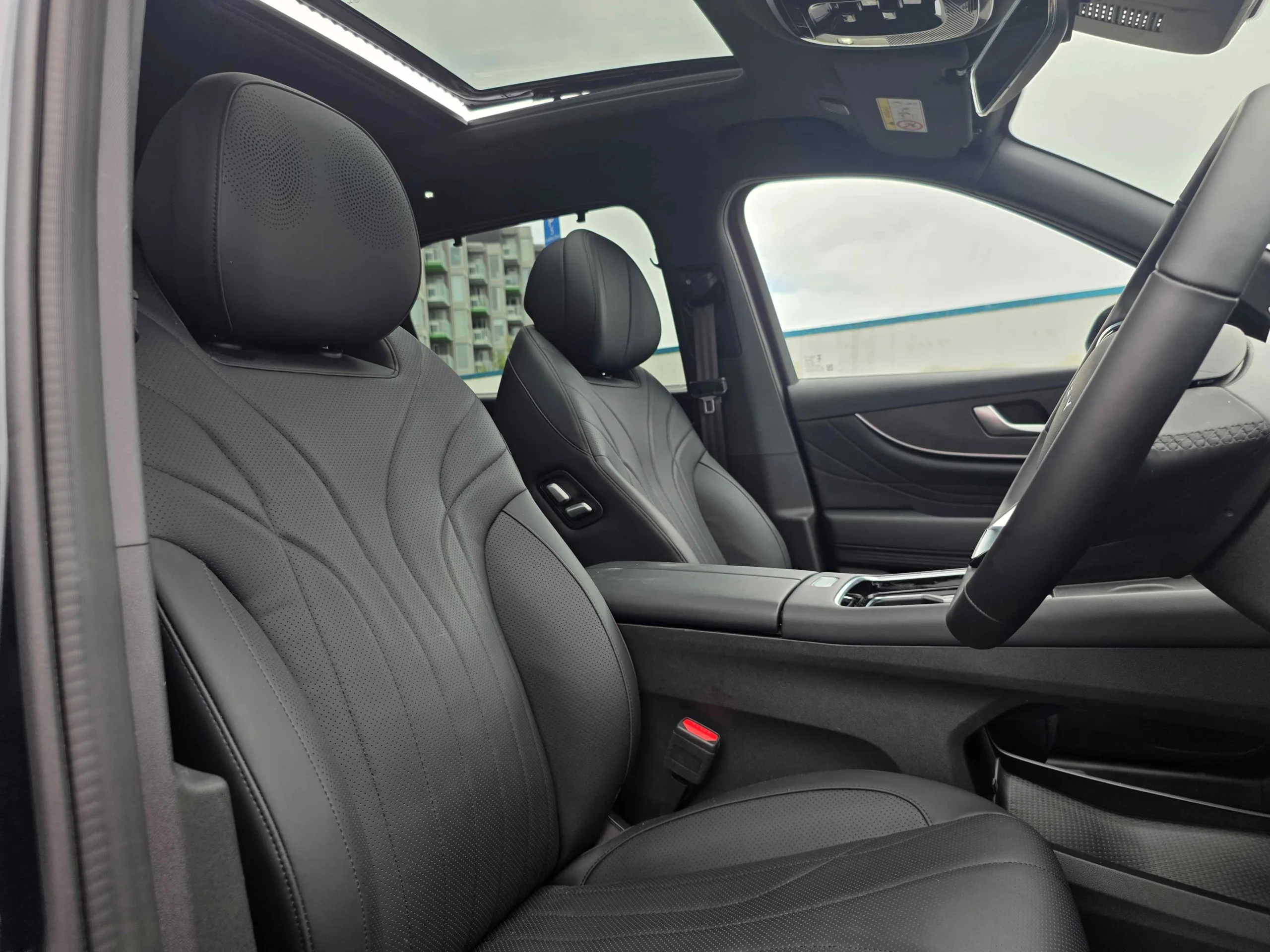
But not everything lands perfectly. The cabin materials include expanses of shiny plastic and fittings that in areas,feel flimsy and cheap, lacking the premium solidity you’d expect from some rivals. It’s a tale of two cabins, comfortable, spacious, and feature-rich, yet lacking tactile polish.
Ambitious, Feature‑Loaded… and Often Frustrating
The centrepiece is a 15.6‑inch touchscreen that controls almost everything, from climate to mirror adjustment to regen braking settings. The screen is bright and crisp, but part of it is obscured by the steering wheel rim, requiring awkward neck manoeuvres to view key menus.
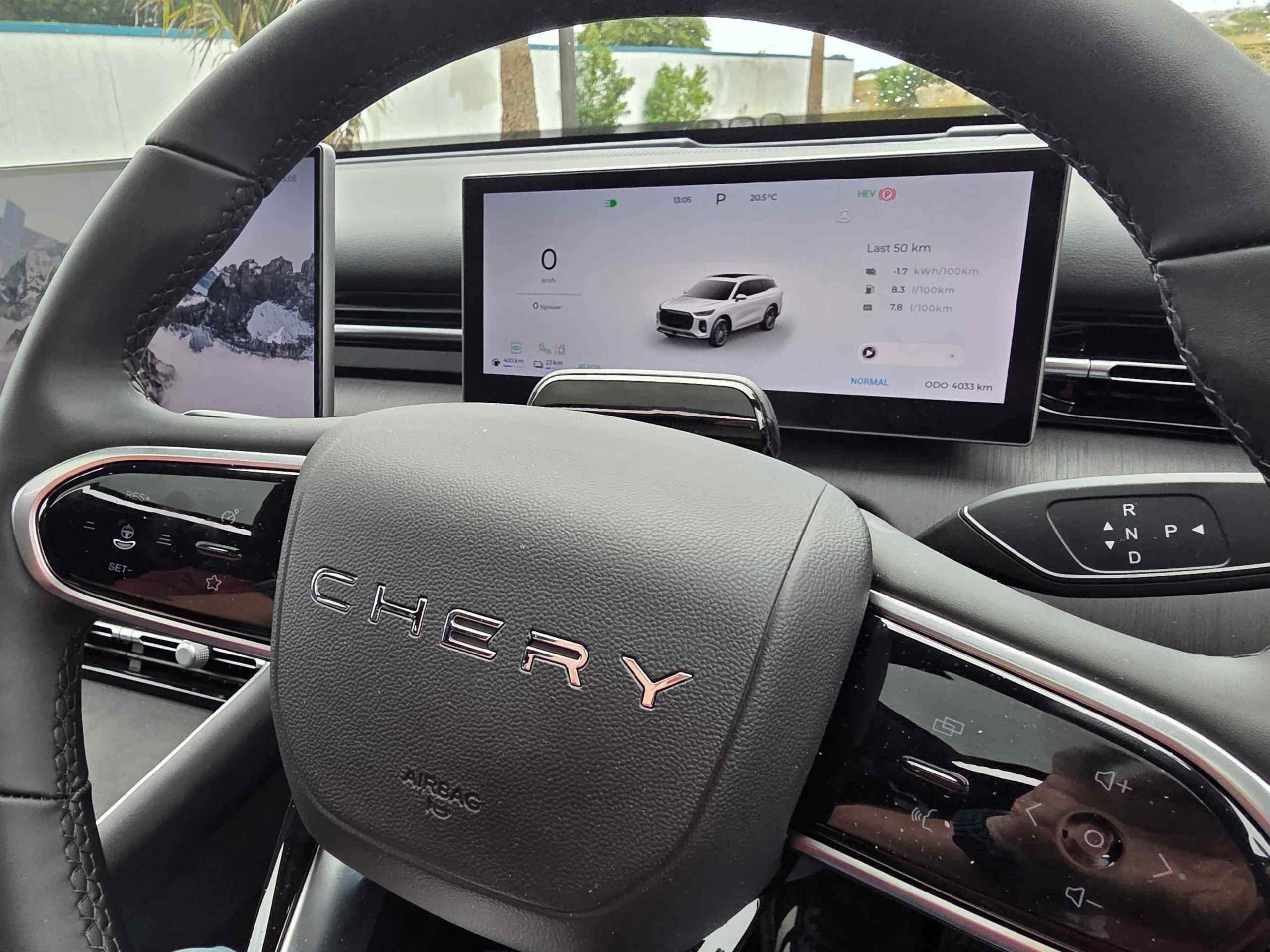
Usability, frankly, is the system’s Achilles heel. Expect to find, deep, unintuitive sub‑menus, a clumsy smartphone mirroring integration that consumes the entire screen, a trip computer that doesn’t appear to be able to reset, ADAS toggles scattered across multiple locations, need I go on? It could frustrate owners who prefer tactile buttons or simple, intuitive layouts.
A Standout PHEV System With Huge Range
On the flipside, the PHEV powertrain is the Tiggo 9’s most impressive party trick. It’s a tri‑motor, four‑wheel‑drive PHEV powertrain delivering 315kW and 580Nm of torque. Three electric motors (one starter-generator plus separate front and rear axle motors) team up with a 1.5‑litre turbo petrol engine via a clever three‑speed hybrid transmission.
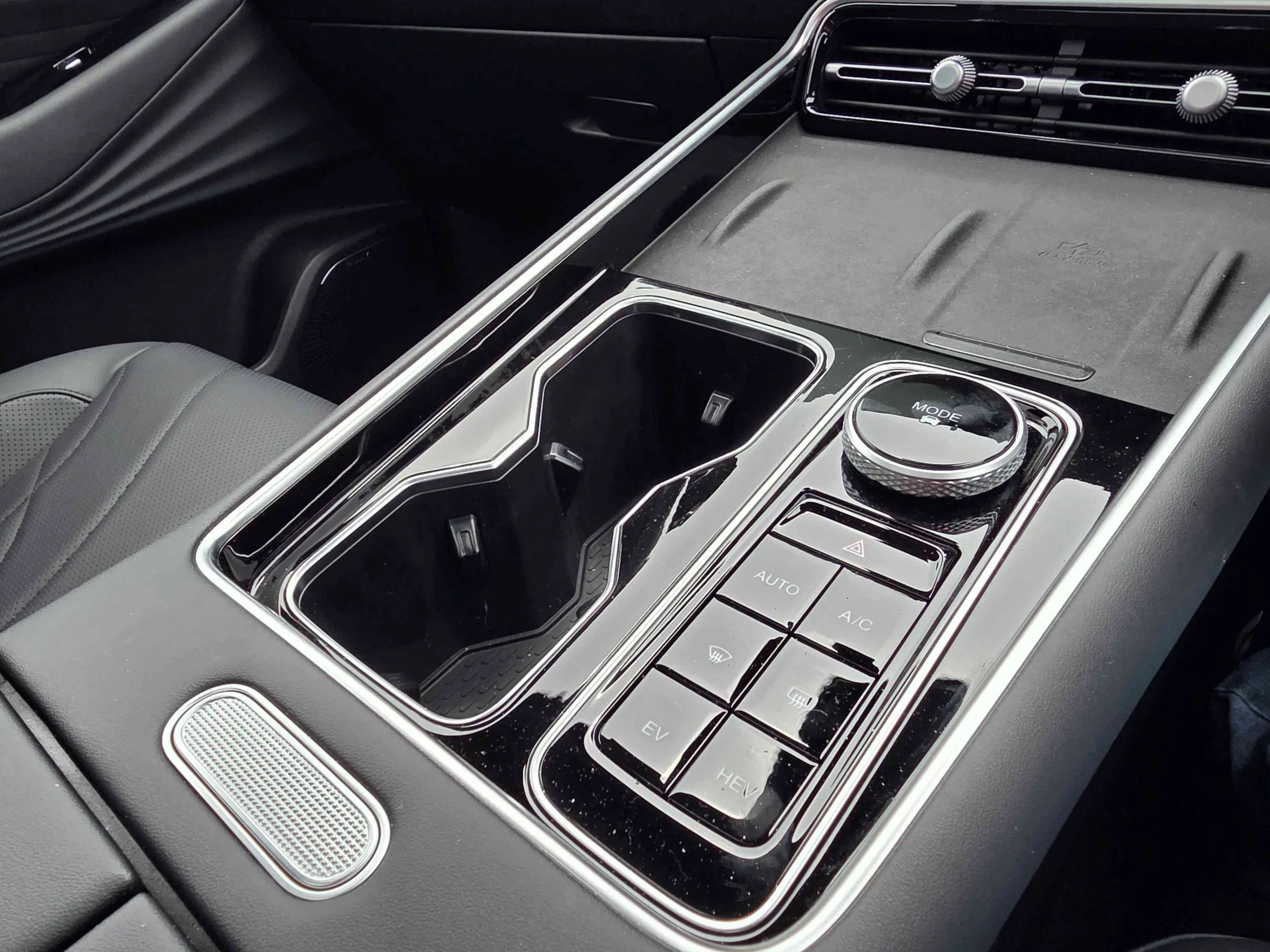
The result? Shockingly quick acceleration for a two‑tonne family SUV, but performance isn’t its only flex. The Tiggo 9 boasts a sizable 34.4kWh Li-ion battery that offers electric‑only range is a massive 170km (NEDC), remarkable for any PHEV. Even better, it supports DC fast charging up to 71kW, allowing meaningful top‑ups on the go.
In EV mode, it behaves convincingly like a pure electric car, offering quiet operation, instant torque, and smooth low‑speed driveability. The engine, when required, hums away like a background generator rather than barging its presence into the cabin.
The only let-down comes from the braking system, which gets “grabby” at low speeds during regen–friction blending. Dedicated regen paddles would have solved much of this.
Surprisingly Capable, With a Few Rough Edges
Chery says the Tiggo 9 received local chassis tuning, and it shows. Despite its 2.2‑tonne mass and conventional suspension, it maintains tidy body control and offers steering that, while not inspiring, is accurate and predictable. Out on open roads, it feels stable and composed.
Ride quality is decent overall, especially for a heavy SUV on 20‑inch wheels, though it struggles slightly over rougher surfaces where the suspension can feel hollow and under‑isolated. Road noise is well controlled on smooth surfaces but becomes noticeable on NZ’s coarse-chip stretches.
In town, its sheer size can make tight manoeuvres feel like a chore, again, typical of a vehicle in this class. But as a family hauler built for comfort and long‑range efficiency, it fulfils its brief convincingly.
Tarmac Takeaway – A Big, Bold, and Brilliantly Economical Family SUV- with Minor Flaws You Might Forgive
The Chery Tiggo 9 isn’t perfect. The infotainment needs an overhaul, the interior materials lack the richness of pricier competitors, and ride refinement could be better in places. But these flaws pale next to the overwhelming value proposition, massive space, massive electric range, massive spec, and performance that embarrasses many established rivals.
For families wanting maximum practicality, low running costs, and genuinely impressive PHEV capability without breaking the bank, the Tiggo 9 deserves to be on the shortlist. It’s not a show-off SUV but it is a smart one.