The entry-level BYD Atto 3 EVO Dynamic swaps quirky for grown-up and fast for sensible, and we ask whether it has done enough to earn the EVO badge.
For a certain generation of road racing Kiwis (you know who you are), the letters E, V and O bring to mind rally stages, big rear wings and a boy racer’s poster on the bedroom wall. So when a family-friendly electric SUV turns up wearing an EVO badge, it’s fair to ask the obvious question: should a BYD really be wearing it? Charles Darwin would probably say it depends on how well it adapts to its environment, and in this case that environment is a busy, crowded corner of the NZ electric SUV market.
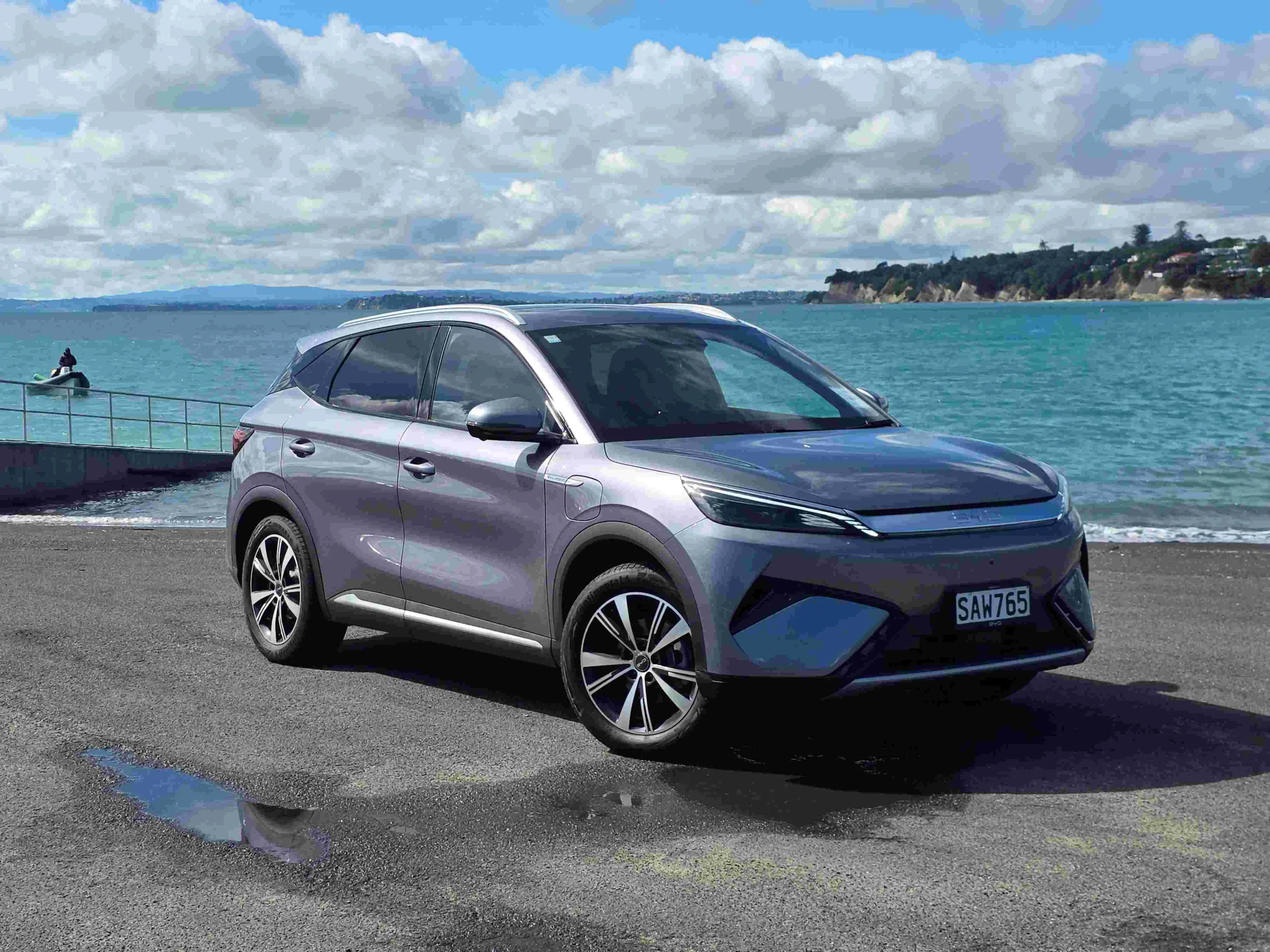
BYD let me take a look at the Atto 3 EVO Dynamic. That’s the entry point to the refreshed Atto 3 EVO range, not the 330kW AWD Performance tyre-fryer, so the real question is whether the entry-level EVO has enough going for it to justify its place.
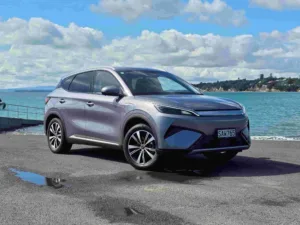
Let’s get the looks out of the way first. The original Atto 3 was never anonymous, its rounded proportions, distinctive lighting and slightly quirky design set it apart in a market where many electric SUVs look like they were designed by the same committee. The EVO keeps that familiar shape and makes it look more mature. Up front, BYD’s updated Dragon Face styling gives the nose a cleaner, sharper look, and the revised lighting signature makes it look more contemporary. It looks more purposeful too, without losing the approachable character that made the original so popular.
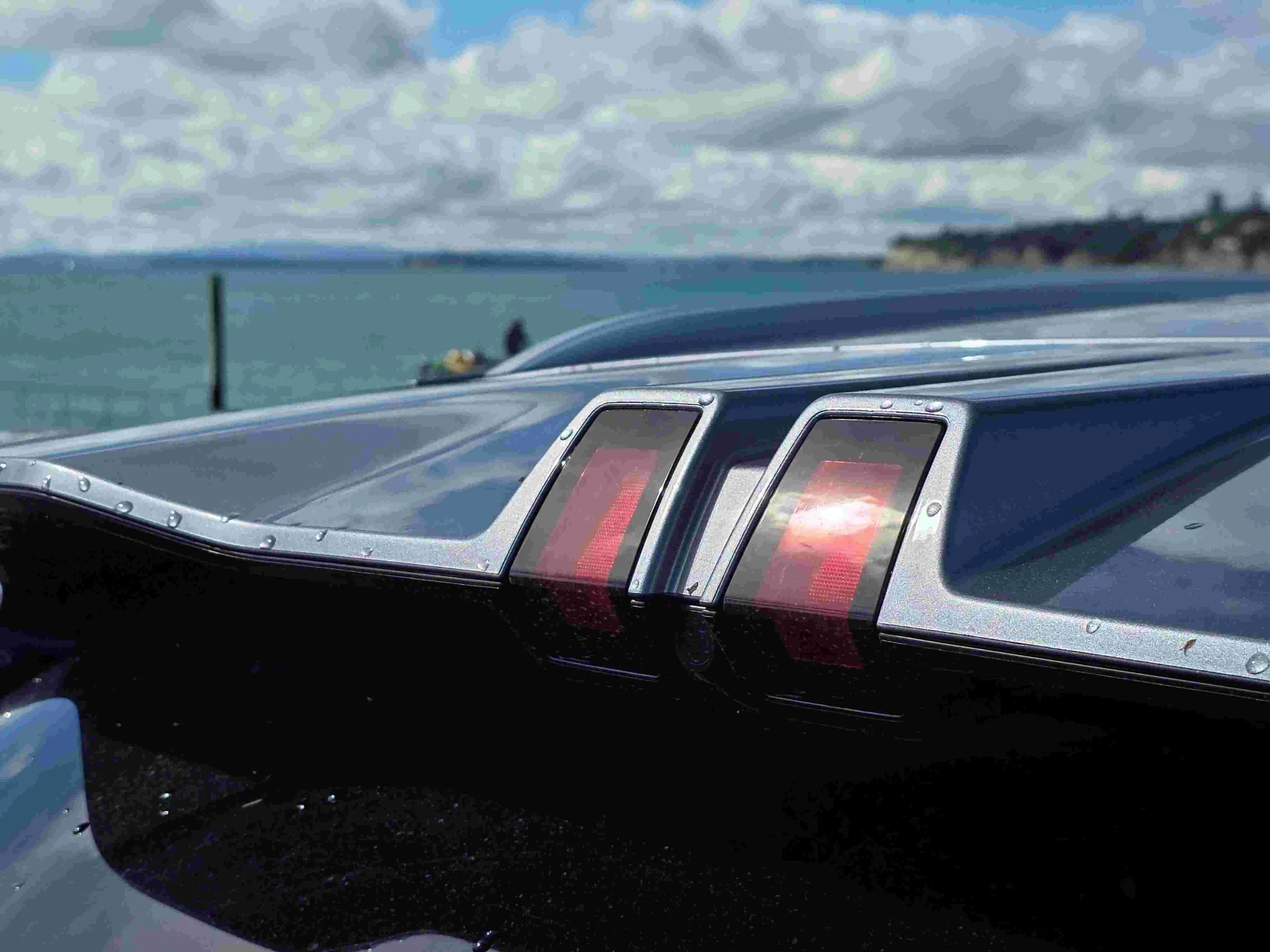
From the side the proportions are unchanged (4,455mm long, 1,875mm wide and 1,615mm tall, on a 2,720mm wheelbase), so it’s still a compact family SUV rather than something that needs a second mortgage just to park it. At the rear, the Chinese-knot-inspired taillights give it a signature you’ll recognise after dark. It’s an evolution rather than a revolution, which is probably sensible, since the Atto 3 already had a recognisable shape and the EVO simply gives it a more polished suit. It won’t make you turn around for a second look every time you park it, but it is less playful and more sophisticated, and it does make the Atto 3 feel more grown-up.
Under the bonnet (well, under the floor and up front) the Dynamic has a single front-mounted motor making 150kW/310Nm, fed by BYD’s 60.48kWh LFP Blade Battery. That’s good for a claimed 0–100km/h time of 7.3s and up to 420km of WLTP range. Those numbers won’t trouble a family sports car, but they’re perfectly respectable for an everyday electric SUV. The LFP chemistry is designed around durability and safety, although real-world longevity will always depend on usage, charging habits and conditions (just being picky, but it’s worth saying).
Charging is where the Dynamic separates itself from its pricier siblings. It takes up to 110kW DC (10–80% in about 41 minutes) and 7kW AC (15–100% in about 9.5 hours). Overnight charging at home is the most convenient option, with public DC chargers for top-ups on longer trips. The Premium and Performance variants charge considerably faster, but if your routine revolves around home, work, school and the supermarket, the Dynamic’s charging should be perfectly workable.
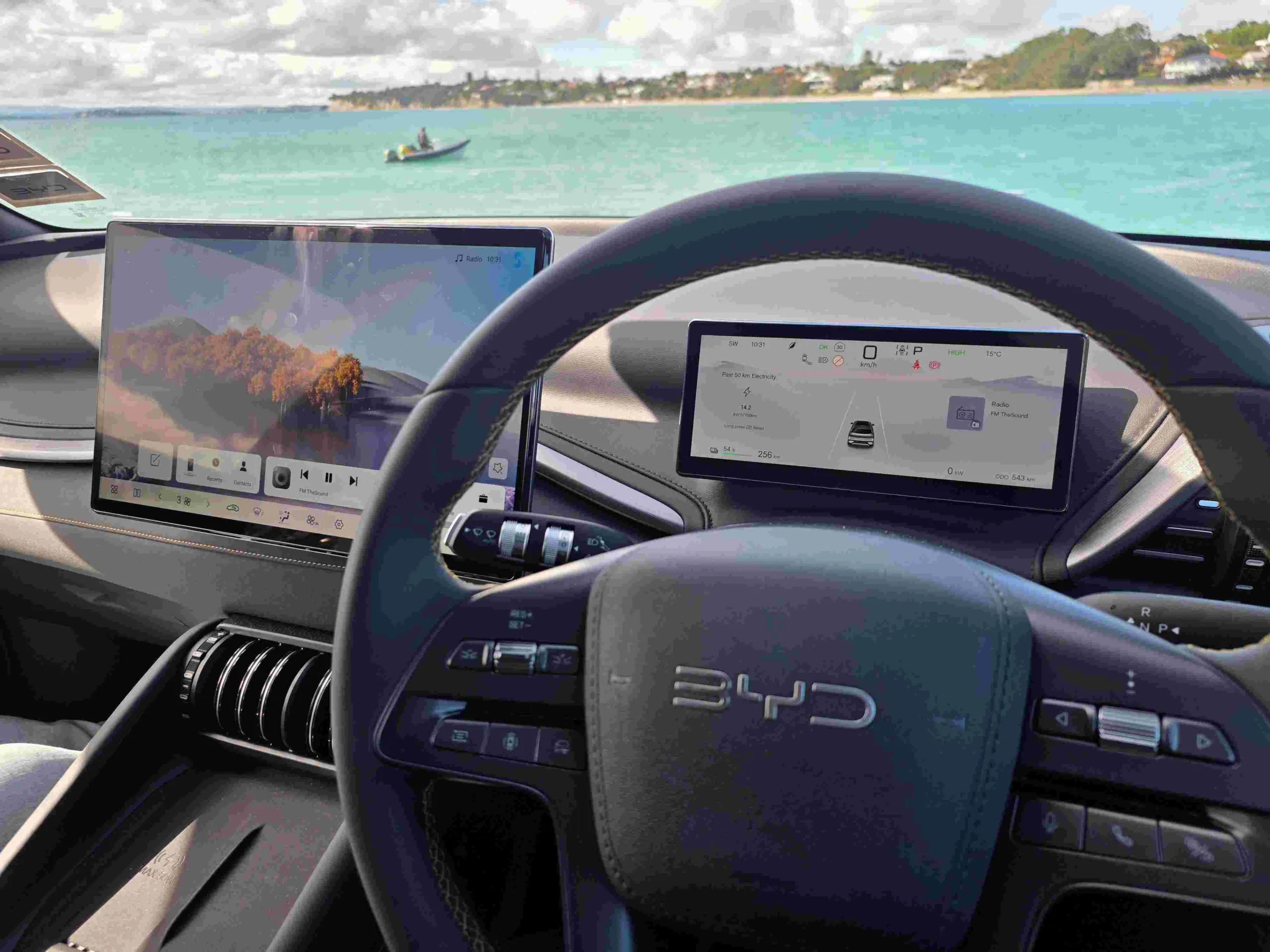
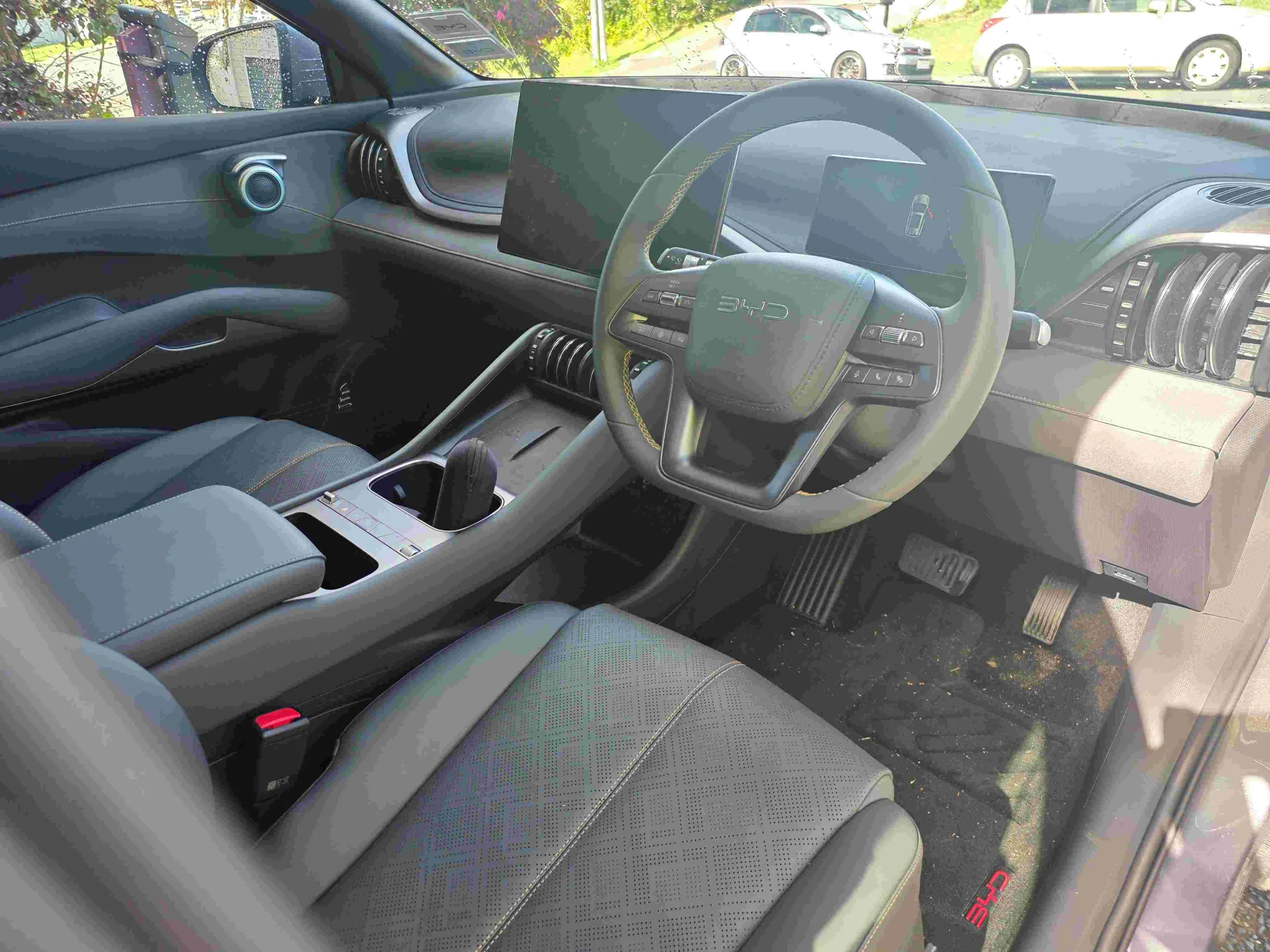
Inside, there’s less gimmick and more everyday sense. The original cabin was memorable for its unusual details: guitar-string-inspired door pockets, and a centre console that looked as though it had escaped from a futuristic gymnasium. The EVO moves to a cleaner, more conventional layout with a redesigned steering wheel and an 8.8-inch digital instrument display. The column-mounted gear selector is a particularly welcome change. It frees up the centre console, so the cabin feels more open, less cluttered and better organised. The driving position is SUV-like, with a fairly commanding view of the road, and the flat rear floor makes the back seat genuinely practical. The boot holds about 434L with the rear seats up and about 1,340L with them folded, which leaves room for school runs, family duties and the bags and sports gear that seem to multiply back there. There are still plenty of digital surfaces, but it’s more restrained than before, and that will suit anyone who likes technology without wanting their car to resemble a gaming convention.
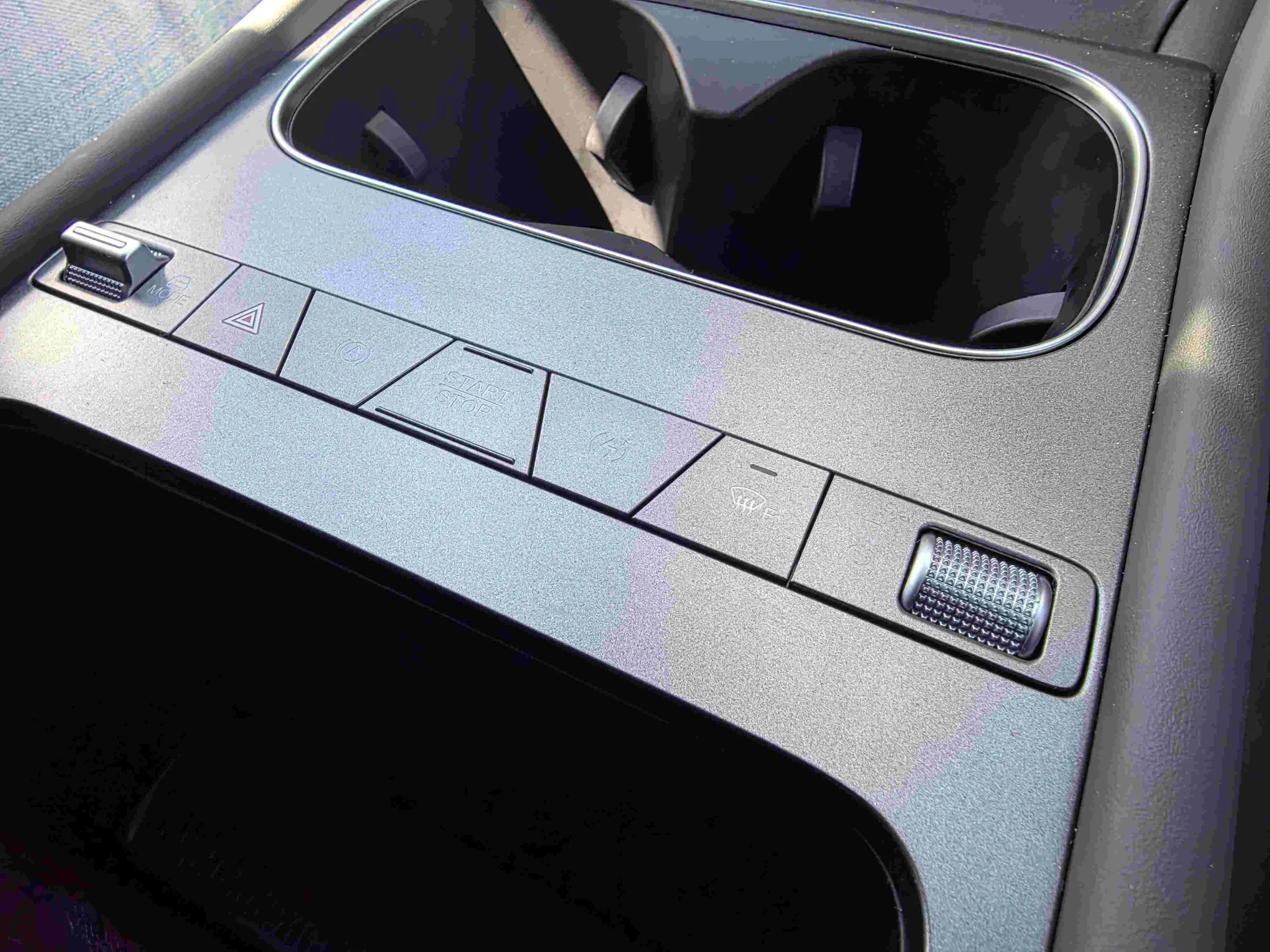
The updated Di-Link intelligent cockpit brings wireless Apple CarPlay and Android Auto, intelligent voice control and a more modern connected experience. The central touchscreen is the hub for entertainment, navigation and vehicle settings, and it gives you plenty of functionality without a dashboard covered in buttons. Wireless smartphone integration means no more daily ritual of hunting for a cable, and the 50W wireless charger is welcome too, although you’ll need a compatible device to get the most from it. Personally, my caveat is that, like many modern cars, the EVO still leans heavily on the touchscreen for certain functions. That’s fine when you’re parked and less appealing when you’re trying to adjust something quickly in traffic. The tech is more comprehensive than before, but the real measure is how naturally it works while you’re actually driving and it’s good but my old brain needs longer than a week for muscle memory to kick in.
Out on the road, the Dynamic isn’t trying to be the performance hero of the EVO family. With front-wheel drive and 150kW, it seems that the emphasis is on accessible performance, predictable behaviour and everyday usability. Around town, the instant electric response is one of its biggest advantages: pulling away from junctions is smooth, low-speed progress is effortless, and the lack of engine noise gives the cabin a relaxed feel. The 7.3s sprint is quick enough to make overtaking and motorway merging straightforward when conditions allow. You still get that characteristic electric shove, just without (I assume) the almost comical acceleration of the flagship Performance model.
The compact dimensions should make it easy to place on the open road, and with MacPherson struts up front and multi-link at the rear there’s useful potential for balancing ride comfort and body control (although, as ever, the final tuning matters more than the hardware). Like the original, its mission is family usability rather than enthusiastic cornering. With 310Nm available immediately through the front wheels, steering and traction are worth watching when you accelerate hard out of tighter corners or on slippery surfaces. A smooth right foot is more rewarding than treating every set of traffic lights like a drag strip.
That brings us to the catch. At $59,990 plus ORC, the Dynamic sits in a much more competitive part of the NZ market than the original Atto 3 did at launch. It is backed by a six-year/150,000km vehicle warranty, an eight-year/160,000km battery warranty and eight years of roadside assistance. Buyers will need to look beyond the badge, the touchscreen and the promise of electric motoring, and weigh up real-world range, charging access, ride comfort, equipment and overall ownership costs, along with whatever discounts are on offer on rival EVs.
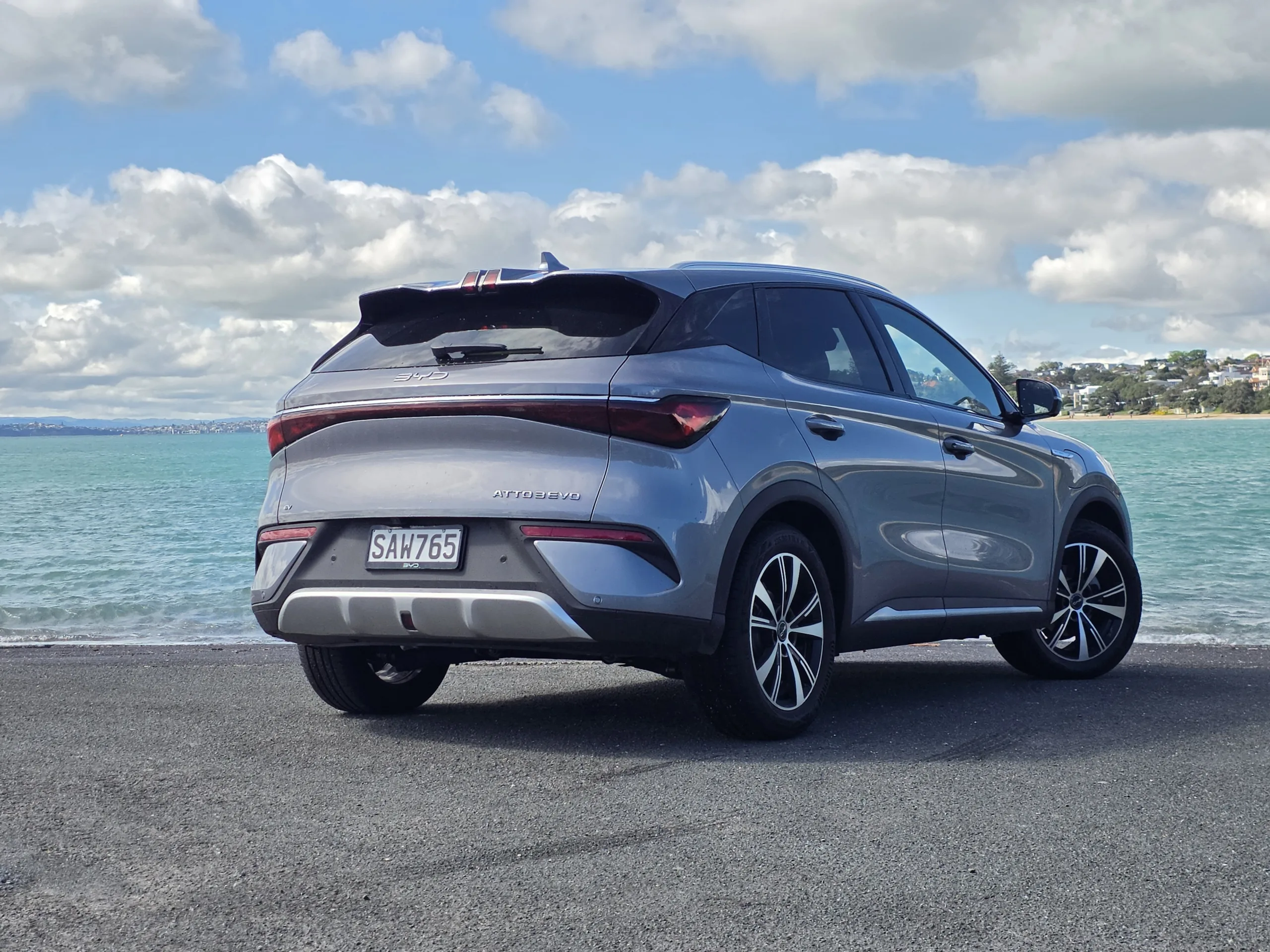
So, should a BYD wear the EVO badge? The Dynamic doesn’t have its siblings’ outrageous performance, and it doesn’t need it. Its job is to make electric driving easy, comfortable and practical, and it’s the sensible member of the family. Sometimes sensible is exactly what you want. The styling has matured, the tech has moved forward and the everyday performance is perfectly respectable. It’s not a revolution, but Darwin would approve, because the Atto 3 has clearly evolved and BYD is determined to keep it in the conversation. Survival of the fittest? Oh yeah!
You might also like: Dream Team – BYD ATTO 3 Trio range review · Amped up ATTO-Tude – BYD ATTO 3 review NZ · BYD Atto 1 First Drive Review – NZ’s New ‘Little Treasure’ for Urban Living