Rolex’s official pre-owned programme generated an estimated US$229 million in the third quarter of 2026, its best result since launch, putting annual sales of US$1 billion within reach in 2027.
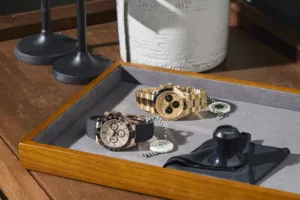
Rolex has spent years making new watches hard to buy. Its official pre-owned channel, meanwhile, is proving remarkably easy to sell. Rolex Certified Pre-Owned (RCPO) generated an estimated US$229 million in the three months to September 2026, its strongest quarter since launching in December 2022.
The figures come from Morgan Stanley’s latest secondary-market report, built on WatchCharts data, rather than from Rolex itself. Sales rose 61% year-on-year and 30% on the previous quarter, with roughly 10,300 certified watches sold.
From $6 Million to Top-10 Territory
Nine months in, RCPO has taken about US$550 million. That already beats the US$490 million estimated for all of 2025, and the Christmas quarter has yet to arrive.
If the fourth quarter matches the third, 2026 would close near US$780 million, which puts US$1 billion within reach in 2027. At that level, the programme’s retail sales would rival a top-10 Swiss watch brand, ahead of IWC, Jaeger-LeCoultre and Tudor on current estimates. With volume forecast to pass 50,000 units next year, it could also put more watches on wrists than Audemars Piguet.
Not bad for a business that turned over just US$6 million in early 2023, when Bucherer and its US subsidiary Tourneau were the first official partners.
Fewer New Dealers, Busier Counters
An estimated 167 retailers now take part, up from 157 at the end of June. Recruitment is slowing, though: 23 have joined so far in 2026, against 37 in 2025 and 81 in 2024. Rising sales from a steadier network suggest dealers are getting better at buying, authenticating, servicing and reselling.
Listings reached 12,390 watches at the end of September, up 10% on the quarter and 31% on the year. The median asking price sits around US$18,000. Rolex-owned Bucherer and Tourneau hold 25% of that stock, Watches of Switzerland Group 14% and The 1916 Company 8%. The other 164 partners share the remaining 53%.
Harrods signed up in November 2025, and Prestons Jewellers has built RCPO into its enlarged Guildford showroom. Prestons operations director Lauren Cook told WatchPro the programme lets customers buy discontinued models, unusual dials and watches from particular years, as well as trade in existing pieces. New-watch sales, by contrast, stay tied to the current collection and allocations.
The Price of Certification
Cost has always been the sticking point. Early participants routinely charged almost 40% more than independent dealers for comparable watches. The median premium now stands at 23.1%, barely changed from 22.6% last quarter. That comparison is like-for-like, measured against the same references sold used by reputable non-CPO dealers in the same region.
- Datejust: 22.3% premium, median asking price US$14,310, almost a quarter of inventory
- Submariner: 24.2%
- Daytona and Day-Date: 17.5%
- Lady-Datejust: 33.2%, the highest
- Oyster Perpetual and Cellini: 29.9% and 29.2%
Retailers differ too. The 1916 Company keeps prices closer to the wider market, while Bucherer and Watches of Switzerland hold higher premiums.
Growth Without the Hype
Notably, this boom is happening while values stall. The WatchCharts index rose 1.2% in the third quarter, but Rolex prices gained only 0.5%, the brand’s weakest showing in seven quarters. Secondary supply is at record levels and demand has stopped growing.
That points to genuine retail buyers rather than pandemic-style speculation. Estimates do vary, mind you. EveryWatch put first-half RCPO sales at US$385 million, against Morgan Stanley’s roughly US$319 million, and suggested certified sales had overtaken new-and-unworn grey-market Rolex sales.
Whichever figure is closer, the direction is clear. Rolex and its dealers now hold a growing slice of a market once left to independent traders, and buyers are paying close to a quarter extra for the official paperwork.