“Human driving statistics show an average collision every 200,000 miles“
Robotaxis are driving into the future of modern, accessible public transport, showcasing their ability to offer driverless services across select cities. IDTechEx’s latest report, “Autonomous Vehicles Market 2025-2045: Robotaxis, Autonomous Cars, Sensors,” dives deep into the industry’s current and projected capabilities. While testing is happening worldwide, China leads in commercial deployment, with key players pushing boundaries as they evaluate safety and tackle challenges head-on (pardon the pun).
In California, for example, autonomous vehicle testing data provides clear insights, with 9 million miles recorded in 2023. Leaders like Waymo and Cruise captured significant attention, Waymo accounted for half of California’s miles, whereas Cruise covered 30%, though its operations were subsequently shut down. An important industry metric is Miles per Disengagement (MPD), which measures how far vehicles go before a safety driver needs to intervene. MPD has skyrocketed across the board, now standing at monumental distances—so high that a human driver would take over a decade to hit similar numbers. However, disengagements are not the sole indicator of safety, as robotaxis can still experience collisions, whether or not a safety driver is present .
Comparing robotaxis to human drivers sparks ongoing debate. Human driving statistics show an average collision every 200,000 miles, with busy urban areas showing even higher rates. In contrast, the top three robotaxi companies (excluding Cruise) achieved an average of 86,000 miles per disengagement in 2023, and IDTechEx predicts that by 2025, autonomous vehicles may surpass human performance. Notably, Waymo’s data already highlights fewer crashes and airbag deployments compared to average human drivers, underscoring the safety potential of autonomous systems.
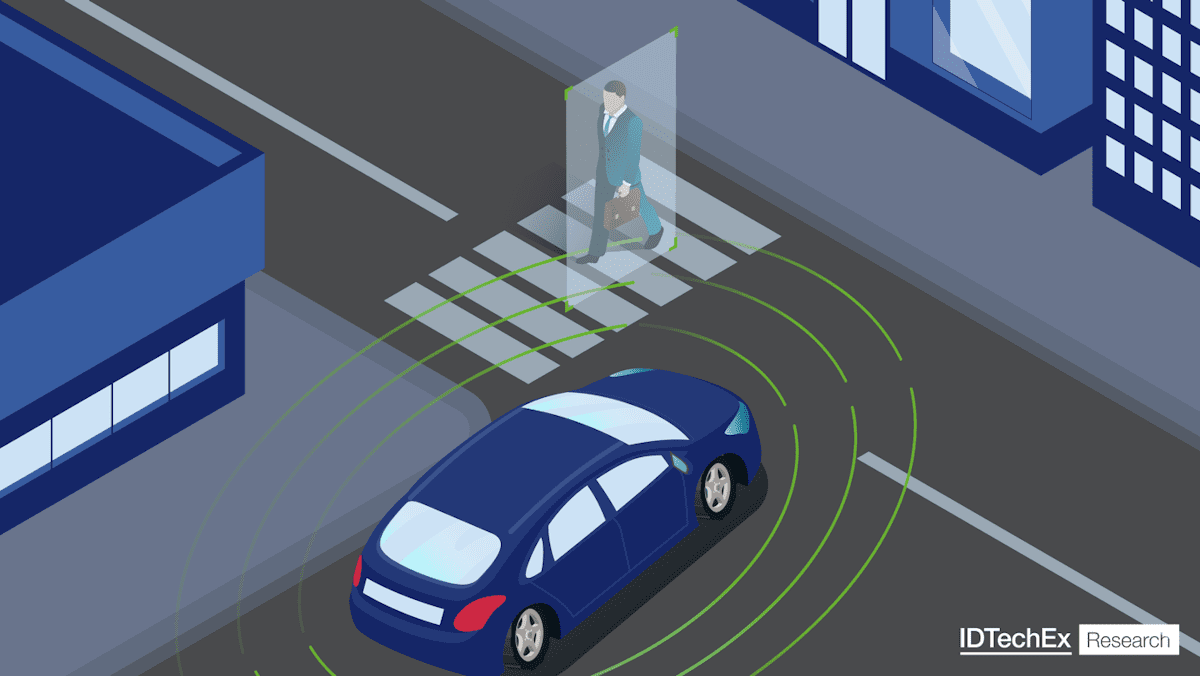
Waymo is undoubtedly a frontrunner in the US. Their Early Rider program in Phoenix evolved into a commercial service in 2020, and by 2022, passengers could travel from the airport to the city center. Expanding operations into cities like LA in 2023 and with plans to introduce services in Atlanta and Austin by 2025, Waymo has proved its ability to integrate robotaxis into urban life. Demonstrating their success, Waymo reports 150,000 paid trips weekly, covering over a million fully autonomous miles, a figure expected to climb in the coming years.
Internationally, the robotaxi movement is gathering steam. China hosts commercial deployments in six cities with testing underway in two more, while the US operates these vehicles in three states with plans to expand to two additional states and over 20 cities. Europe and Japan are also testing their waters, with Germany’s first commercial deployments anticipated for 2025 and Japan following in 2026. Although widespread deployment is still on the horizon, many companies are working hard to move beyond isolated pilot programs and single-location operations.
Robotaxis are carving a path toward a future of fully autonomous transport, offering the tantalizing promise of safer, data-driven, and efficient mobility across the globe.