BMW has long been synonymous with the ultimate driving machine. But as we hurtle toward an increasingly connected future, the Bavarian automaker is redefining what that means with their all-new iX3 Neue Klasse. In a fascinating deep-dive chat in Spain, BMW’s engineering team pulled back the curtain on how artificial intelligence and machine learning are fundamentally reshaping the driving experience, and it’s far more nuanced than you might think.
Beyond the Hype – Understanding AI in Automotive
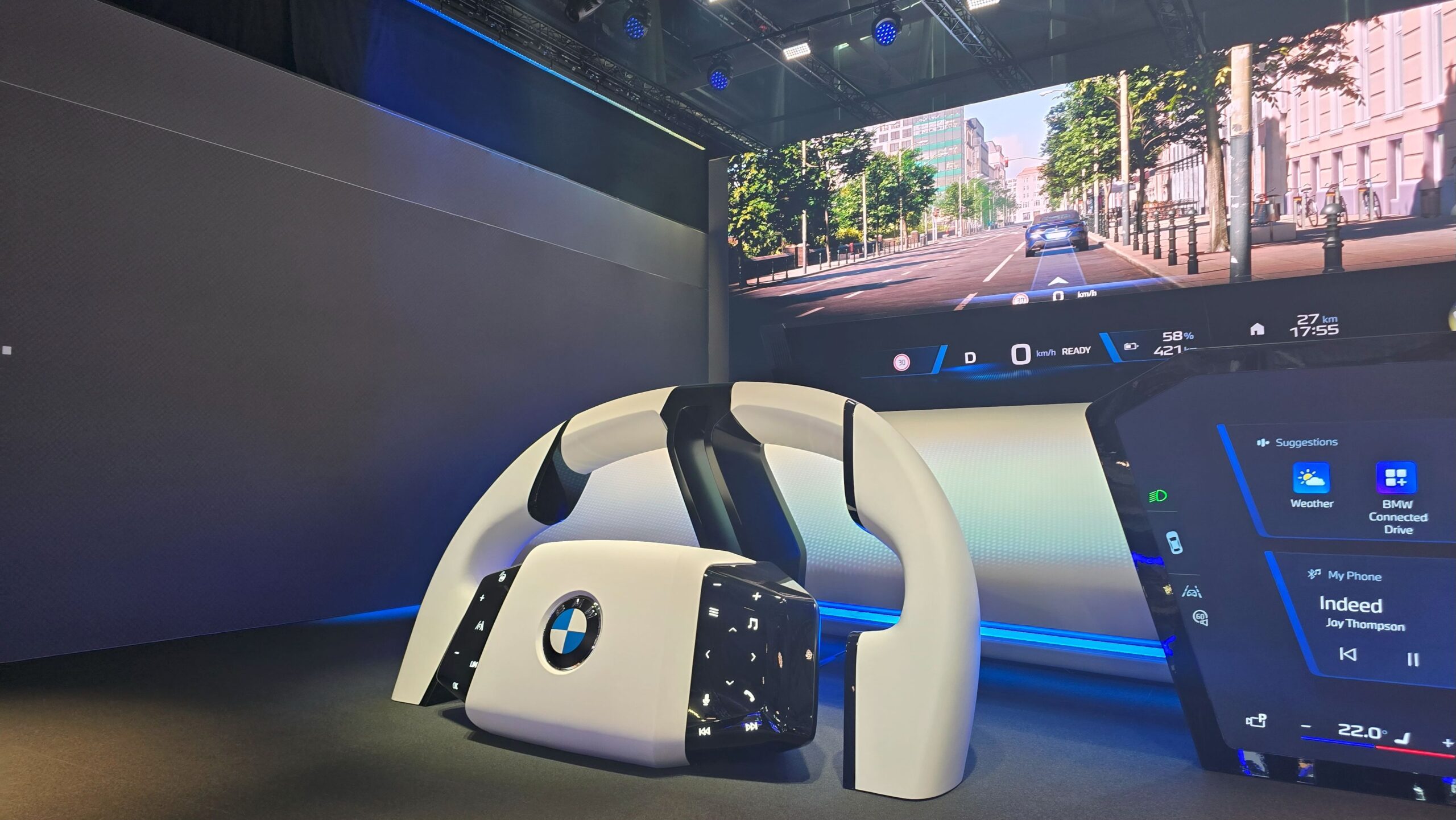
Let’s cut through the noise. When most people hear “AI in cars,” their minds jump immediately to self-driving vehicles and autonomous fleets. But BMW’s approach is refreshingly grounded in reality. As their engineers explain, artificial intelligence in the iX3 Neue Klasse represents a fundamental shift in how vehicles process information and make decisions.
Traditional automotive algorithms operate on rigid, rule-based logic, ‘if this happens, then do that’ kind of thing. It’s a straightforward approach that’s served the industry well for decades. But machine learning algorithms take a different tack entirely. Instead of manually programming every possible scenario, these systems consume vast amounts of sensor data (far more than any human engineer could visually comprehend) and use neural networks to compute actionable outputs.
The difference is profound. Rather than trying to recognise rectangular structures as cars or detecting “sticky things” that might be humans, through predefined parameters, the iX3’s AI systems process raw sensor data holistically. Multiple sensors feed into machine learning models that provide semantic representations of the environment, creating a more natural and intuitive understanding of the world around the vehicle.
The Voice Revolution – Alexa Integration Done Right
One of the most immediately noticeable AI applications in the iX3 is the intelligent personal assistant, powered by Amazon’s white-label Alexa solution. It’s not just simple voice commands, it’s genuine natural language understanding powered by large language models.
Here’s where it gets interesting: the system doesn’t just recognise words; it infers intent. Ask about the weather, and the AI doesn’t just parrot back a generic forecast. It considers your current position, calculates where you’re driving to, and provides contextually relevant information in natural language. This same technology that powers internet search engines has been seamlessly integrated into both the latest Operating System X and the previous generation Operating System 9.
But BMW has pushed this further. Through their Amazon partnership, future updates will include Alexa Plus capabilities, allowing drivers to book restaurant reservations, purchase concert tickets, or control smart home devices, all through voice commands while keeping their hands on the wheel and eyes on the road. It’s the kind of thoughtful integration that transforms a car from a mode of transport into a connected lifestyle hub.
The Devil’s in the Details – Learning Your Habits
Perhaps the most impressive aspect of BMW’s AI implementation is how it manifests in the small, almost invisible ways that collectively create what the engineering team calls a “smart feeling”. Take the charging flap, for instance, a seemingly mundane feature that BMW has transformed through machine learning.
The system uses your paired smartphone as a key, tracking your movement around the vehicle. But it doesn’t simply open the charging flap every time you walk near that side of the car. Instead, it learns your patterns. When you’re at a charging station you frequent, having arrived via your usual route, the AI recognises the context and automatically opens the charging flap as you approach. It’s predictive, contextual, and utterly seamless.
This exemplifies BMW’s philosophy, AI doesn’t always have to be flashy or dramatic. Sometimes the most valuable applications are the subtle ones that learn your habits by analyzing sensor data and inferring your intentions.
Predictive Driving – Anticipating the Road Ahead
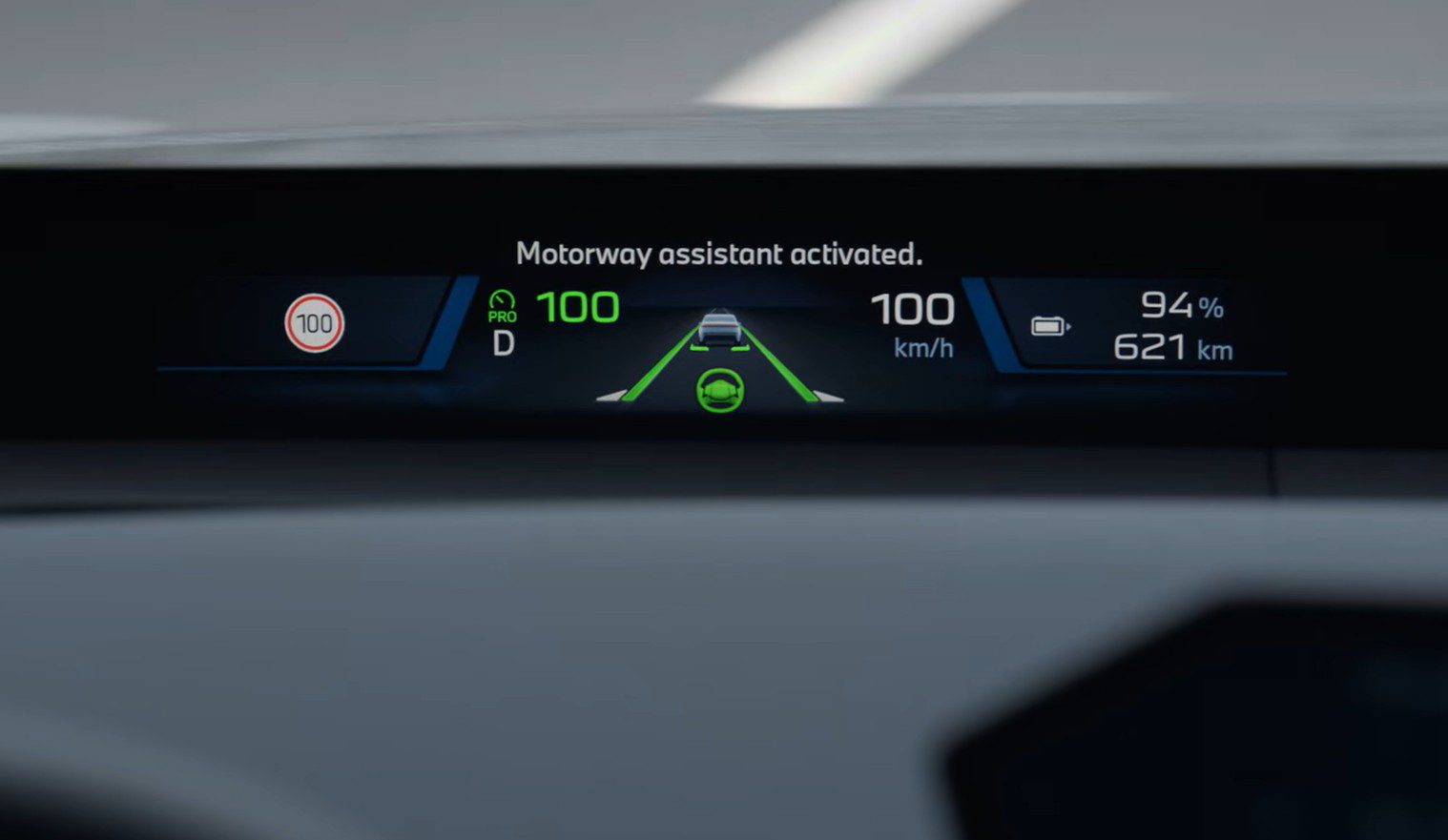
Where machine learning truly shines in the iX3 is in predictive driving scenarios. Consider the common highway situation, a vehicle in the adjacent lane begins to cut in front of you. Traditional rule-based systems would wait for specific thresholds (a certain offset from the lane, the blinker activating, sufficient gap space) before reacting. But this approach obviously feels clunky ‘robotic’.
BMW’s machine learning approach is elegantly different. By observing thousands of cut-in maneuvers, the AI learns to recognise the pattern before it fully develops. Maybe it’s not just the lateral offset that matters, but also the speed differential, the rate of change in position, or even the type of vehicle involved. The machine learning system identifies these patterns organically, without engineers having to explicitly program every variable.
The result? The iX3’s cruise control can detect a cut-in even before the other vehicle has fully left its lane, providing smoother, more natural reactions that mirror how an attentive human driver would respond. It’s this kind of nuanced decision-making that makes the technology feel less like automation and more like augmentation.

Parking Like a Human – Why Perfect Isn’t Always Better
BMW’s application of AI to parking assistance reveals a counterintuitive insight about human-machine interaction. Initially, engineers approached automated parking geometrically, using rulers and optimal curves to plot the mathematically perfect path into a space. The result was technically flawless but felt weird to occupants.
So BMW changed tack. Instead of pursuing mathematical perfection, they used machine learning to imitate how actual customers approach parking gaps. Sometimes this means driving forward first to improve the angle, resulting in a path that looks “wobblier” from a bird’s eye view, but feels natural to humans inside the vehicle.
Why does this matter? Trust. If an automated system behaves in ways that feel foreign or unnatural, drivers won’t trust it, regardless of its technical superiority. By training the AI on human parking behavior, BMW ensures the iX3’s automated parking feels intuitive and confidence-inspiring.
The Infrastructure Behind the Intelligence
None of this would be possible without the right hardware foundation. Machine learning requires specialised computing power, not the traditional processors found in laptops or smartphones, but chips with many parallel compute units, similar to graphics cards. BMW has invested heavily in this infrastructure, ensuring the iX3 Neue Klasse has the processing muscle to run sophisticated AI algorithms in real-time.
But hardware is only part of the equation. BMW has also built the engineering expertise and data labeling infrastructure necessary to develop and refine these systems. This is a fundamental technical enablement that positions BMW to continue evolving these capabilities.
Learning from the Fleet – Continuous Improvement
One of the most intriguing aspects of BMW’s AI approach is the potential for continuous improvement through fleet learning. The principle is straightforward, as more iX3 Neue Klasse vehicles operate in real-world conditions, they generate vast amounts of data that can be used to retrain and refine the AI systems.
This data can be labeled in clever ways, sometimes even using customer behavior as an implicit labeling mechanism. For instance, if a traffic light detection system stops at every light and the driver immediately accelerates at green lights, that driver frustration becomes a signal that the light was green. While BMW doesn’t employ this specific method (they use paid labelers), it illustrates the creative approaches possible with fleet data.
However, BMW’s engineers are quick to temper expectations. Not every driving situation benefits equally from AI. On a straight highway with a simple lane change, machine learning might not produce noticeably different results from traditional algorithms. The customer experience remains the same, though the underlying code may be more elegant and maintainable.
Walking the Tightrope – Innovation Without Overhype
Perhaps most refreshingly, BMW’s engineering team acknowledges the fine line between trend and hype. Yes, AI represents a significant direction for the automotive industry, and companies must invest in the technical capabilities to compete. But that doesn’t mean every problem should be solved with machine learning.
They noted that you could theoretically use machine learning to recognise barcodes in supermarket scanners, train the system on all possible barcodes and you’re done. But this would be absurd when simple pattern matching works perfectly well with cheaper, simpler sensors. The key is applying AI where it genuinely adds value, not chasing it for its own sake.
This pragmatic philosophy pervades BMW’s approach to the iX3 Neue Klasse. Machine learning is used extensively for sensor fusion, prediction algorithms, and situations where natural, human-like behavior is desired. But traditional algorithms still handle tasks where they’re more efficient or where the customer experience is identical.
Tarmac Takeaway – The Road Ahead
What emerges from this deep dive is a picture of automotive AI that’s simultaneously more modest and more impressive than the hype might suggest. BMW isn’t promising self-driving utopias or revolutionary transformations overnight. Instead, they’re methodically applying machine learning to solve real problems and enhance the driving experience in tangible, often subtle ways.
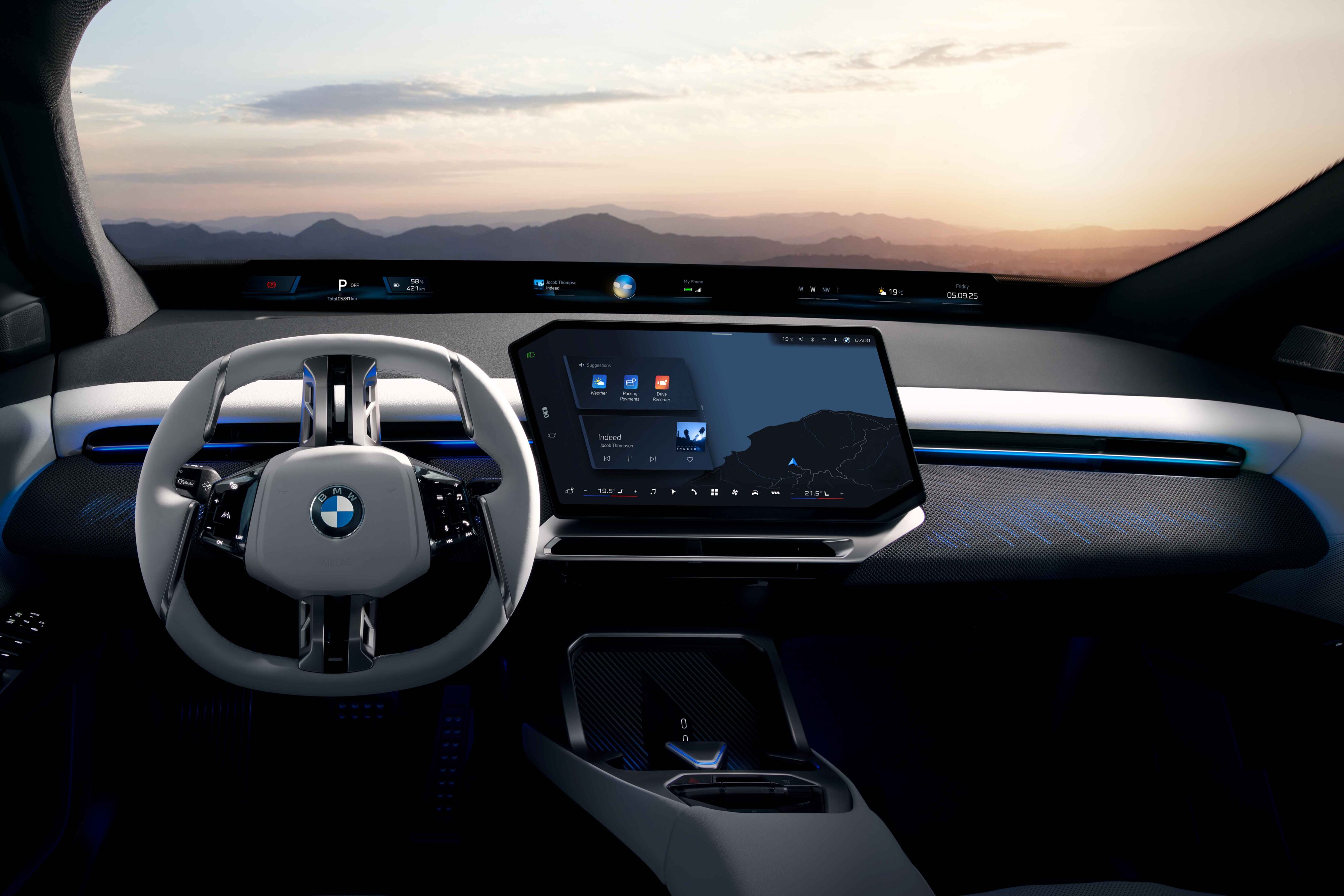
The all-new iX3 Neue Klasse represents the culmination of this philosophy, a vehicle where AI works largely in the background, making thousands of small decisions that collectively create a more intuitive, responsive, and enjoyable driving experience. From predicting traffic patterns to learning your charging habits, from enabling natural voice interactions to providing more human-like automated parking, these technologies blend seamlessly into the driving experience.
As BMW continues to refine these systems with fleet data and advancing technology, the iX3 Neue Klasse will only get better. But rather than pursuing AI for its own sake, BMW’s approach remains grounded in delivering the ultimate driving machine, just with a lot more intelligence under the hood. And in an industry sometimes prone to overpromising, that attention to detail and commitment to practical implementation is exactly what discerning drivers deserve.