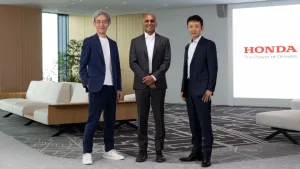
Honda is bringing in Silicon Valley software company Applied Intuition to help accelerate development of its next generation of software-defined vehicles. The partnership will see the two companies work on a centralised and upgradeable software platform for Honda’s future vehicles, using Applied Intuition’s Vehicle OS as the foundation.
The announcement backs moves we’ve seen from other brands to move away from the increasingly fragmented software development processes that have traditionally been used by car manufacturers. Rather than developing many of the vehicle’s software systems separately for individual models, the companies are aiming for a common architecture that can be reused across Honda’s wider range of vehicles.
According to Applied Intuition, its Vehicle OS will allow the same basic software architecture to work across electric, hybrid and ICE vehicles. That should make it easier for Honda to develop and deploy new software, while also allowing features to be updated throughout a vehicle’s life.
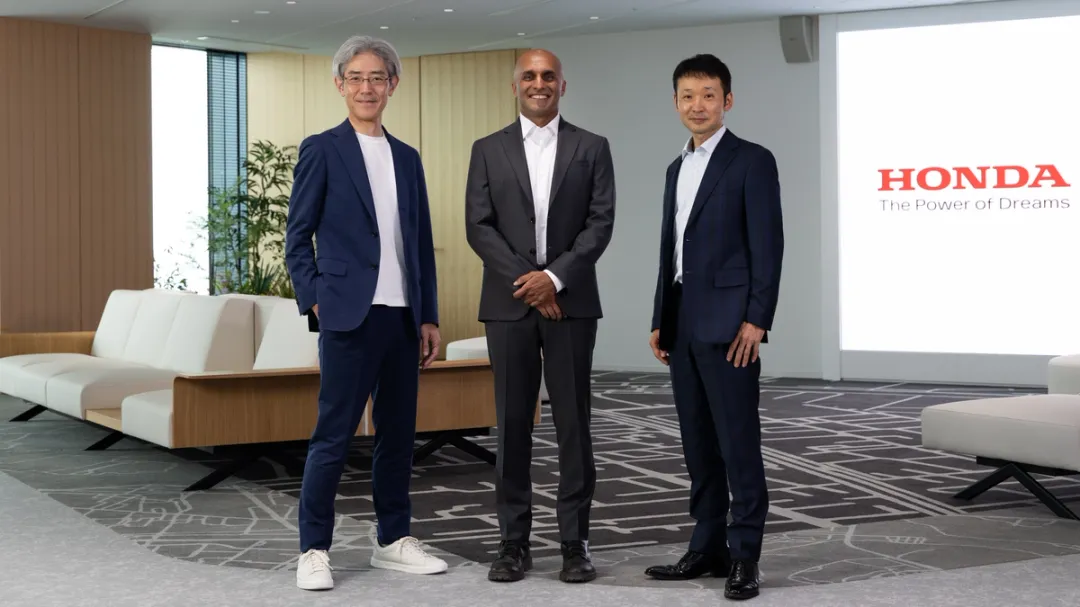
The partnership brings together Honda’s long established vehicle engineering expertise with Applied Intuition’s software and artificial intelligence technology. Engineering teams in Japan and Silicon Valley will work together on the platform.
Honda says the speed at which vehicle software can be developed is becoming an increasingly important competitive advantage, particularly as software-focused manufacturers and newer automotive companies continue to shorten development cycles.
“In the latest generation of vehicles, software is becoming increasingly important,” said Mahito Shikama, chief officer of Corporate Strategy Operations at Honda. “We believe software-defined vehicles will shape the future of the automotive industry and speed of software development will be one of the key competitive advantages for Honda’s vehicles.”
The relationship between the two companies isn’t entirely new, either. Honda became Applied Intuition’s first Japanese OEM customer in 2019, meaning the latest announcement represents an expansion of an existing relationship rather than Honda starting from scratch with the Silicon Valley company.
Honda has already identified software-defined vehicles as an important part of its future strategy, with its own plans calling for a common digital infrastructure capable of supporting continuous vehicle evolution through software updates and data collected throughout a vehicle’s life. The latest partnership suggests Honda is now putting more of that strategy into practice.
Exactly which production Honda models will first use the new platform has not been announced, nor has the company provided a specific launch date for the resulting software architecture, but Honda sees software development speed as an increasingly important part of competing in the modern car market. With Applied Intuition now working alongside its engineering teams, the company is attempting to bring some of the development speed associated with Silicon Valley into an industry where vehicle software has traditionally been much slower to change.