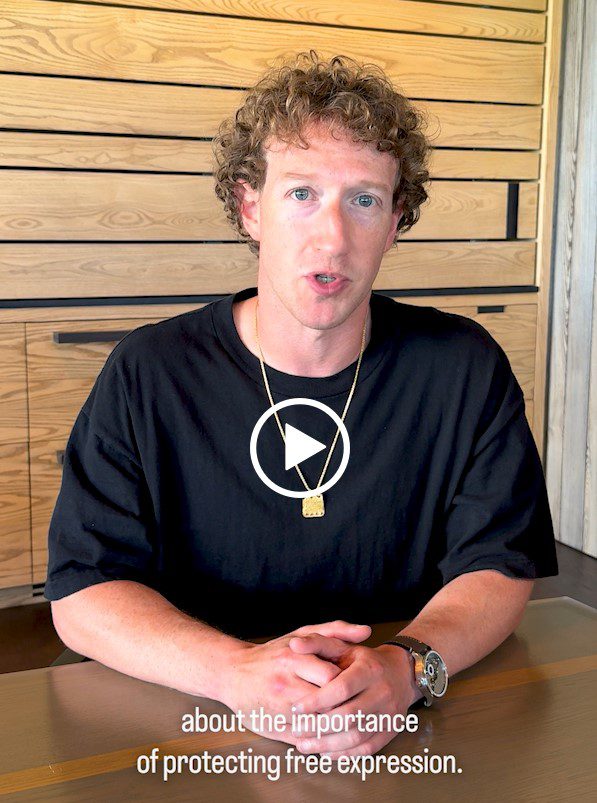
In a dramatic pivot likely to ignite both celebration and controversy, Meta (Facebook etc) has announced sweeping changes to its content moderation and fact-checking policies in what CEO Mark Zuckerberg has described as a move to “restore free expression.” This sea change, meant to overhaul the company’s approach on platforms like Facebook and Instagram, was officially revealed in a video statement.
From its humble beginnings as a social network for college students to its meteoric rise as a global media powerhouse, Meta is now opting for what some might call a nostalgic return to its original ethos: free expression without the heavy hand of moderation. “We’re going to get back to our roots and focus on reducing mistakes, simplifying our policies, and restoring free expression on our platforms,” Zuckerberg affirmed in the video, delivering the news with a tone that was equal parts optimistic and cautionary.
No More Gatekeepers: Fact-Checking Program Scrapped
The most notable change is Meta’s decision to nix its divisive third-party fact-checking program, first implemented in the aftermath of the 2016 U.S. presidential election. While originally intended to combat misinformation, the program has come under fire for what executives admitted was “too much political bias” in fact-checkers’ decisions. Meta concluded that the reliance on external organisations had created more problems than solutions.
In its place, Meta is introducing “Community Notes,” an initiative reminiscent of the collaborative fact-checking model used by X (formerly Twitter). This move shifts the power from select external “experts” to the users themselves, employing a system where community members can attach public notes to potentially misleading or controversial content. According to Joel Kaplan, Meta’s Chief Global Affairs Officer, Community Notes will rely on “the broadest cross-section of users” to attach and endorse notes that reflect collective viewpoints . “Instead of going to some so-called expert, it instead relies on the community and the people on the platform to provide their own commentary,” Kaplan explained, expressing hope that this democratized model can neutralize bias and foster greater transparency.
The Politics of Content Moderation
Among critics—and even some supporters—questions abound over whether Meta’s shift is motivated by more than its recent “back to roots” mantra. Analysts point to years of escalating scrutiny over the company’s moderation practices, including accusations of censorship and biased enforcement of its policies. Kaplan’s remarks on “political pressure” paint a picture of a system that had become unsustainable. After years of operating as a self-appointed arbiter of truth, Meta’s leadership seems to have decided that the best path forward is to take one step back.
The timing of this decision also coincides with broader societal debates about free speech in the digital age. “This is a great opportunity for us to reset the balance in favor of free expression,” Kaplan emphasized during his “Fox & Friends” interview, echoing Zuckerberg’s broader message.
A Divided Reaction
Supporters of the changes view the abandonment of fact-checkers as a bold move toward transparency and user empowerment. Critics, on the other hand, warn that without the oversight of third-party organizations, the platforms could become more susceptible to misinformation. Kaplan, however, remains optimistic. “What we’re doing is getting back to our roots and free expression,” he stated, challenging skeptics to give the Community Notes experiment a chance.
Only time will tell whether this experiment in crowd-sourced moderation will succeed or become a cautionary tale. If nothing else, Meta’s pivot serves as a reminder that even tech giants are not immune to the evolving expectations of users and stakeholders alike.
The Road Ahead
For better or worse, Meta’s decision signifies the beginning of a new chapter in the never-ending saga of digital content moderation. By inviting its 3 billion users to take an active role in policing the platform, Meta is gambling on the wisdom of the crowd to restore the ideals of open dialogue and vibrant debate.
It may not be the “like” everyone was expecting, but it’s certainly one they’ll remember. After all, who needs facts anyway?