In the fiercely competitive arena of the family-sized, three-row SUV, a new challenger from MG Motors has stepped into the ring. Meet the MG QS, a large seven-seat SUV stretching nearly five metres long, squaring up to seasoned heavyweights in the New Zealand market. It’s aiming its sights squarely at beloved family haulers like the Hyundai Santa Fe, the Mazda CX-80, and the ever-popular Toyota Highlander.
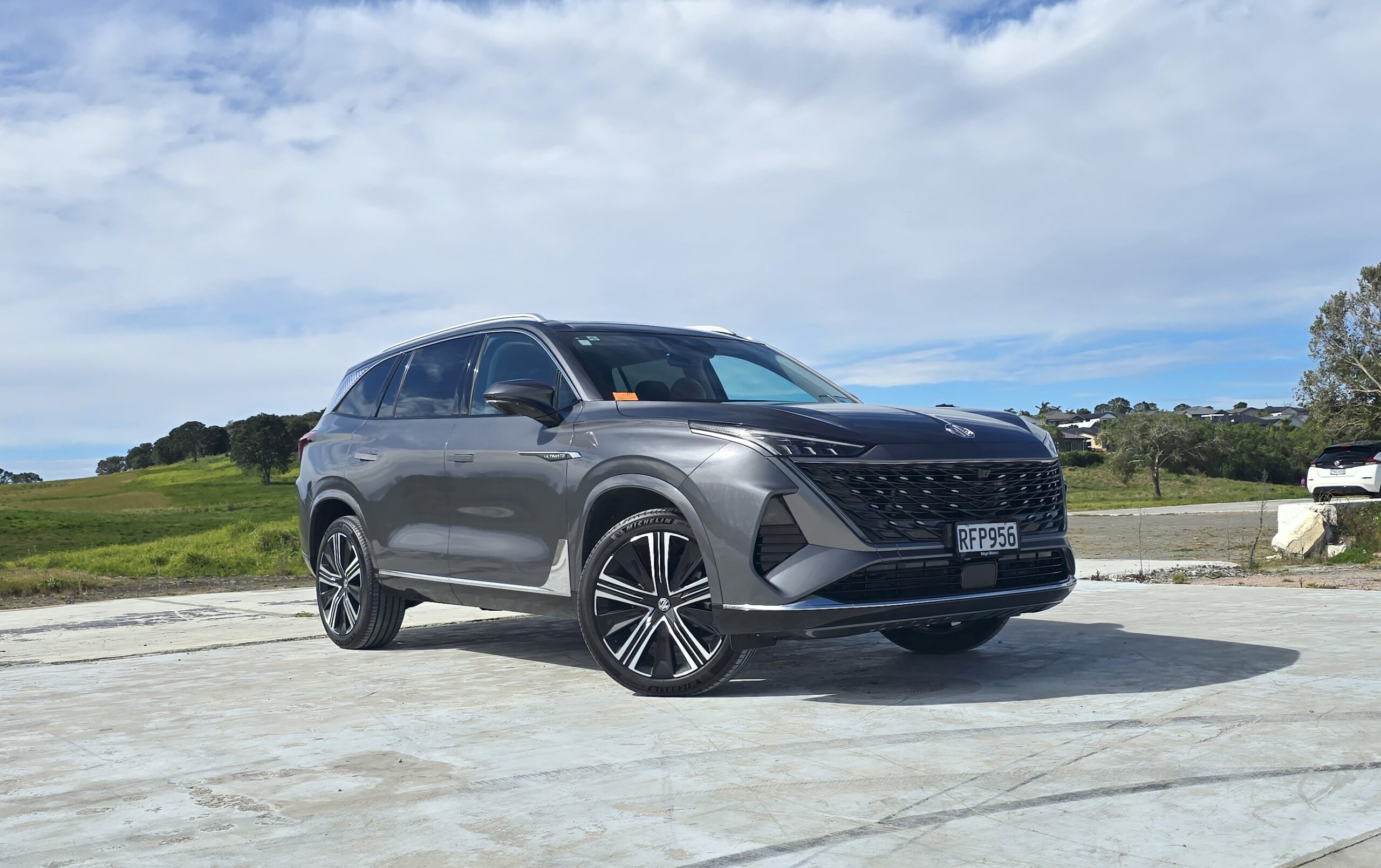
MG’s recent form has been a fascinating mix of brilliance and bafflement; the MG4 and ZS EV have been standout electric hits, while its petrol-powered offerings have sometimes felt like a collection of good parts that don’t quite form a perfect whole. So, the big question is, does the new MG QS have the polish and prowess to genuinely challenge the establishment, or is it just a big, flashy box ticking exercise? We got our hands on the top-spec MG QS Essence to find out if it’s the value champion Kiwi families have been waiting for, or if the compromises are too great to ignore.
The Price is Right… Ridiculously Right
Let’s not beat around the bush; one of the primary weapons in the MG QS arsenal is its price tag. MG Motors is aggressively pushing the value-for-money angle, and on paper, it’s a knockout blow. While the base model ‘Excite’ sits with a $49,990 sticker price, we’re testing the flagship ‘Essence’ model, which comes loaded to the gunwales for a driveaway price of $55,990. Let that sink in for a moment. For $56k, you get a 2.0-litre turbo petrol engine, a capable all-wheel-drive system, and a list of luxuries that would make premium brands blush. We’re talking perforated leather upholstery, heated AND ventilated front seats, a panoramic sunroof, and a whole lot more.
To put that into perspective, a base, front-wheel-drive Hyundai Santa Fe starts at around $84,990 driveaway. The new Mazda CX-80 is $74,990, and an entry-level Toyota Highlander starts at around $72,990.The only real seven-seat rival that undercuts the MG QS on price is something like the Chery Tiggo 8 Pro Max, but that vehicle is considerably smaller. The MG QS is a genuine, full-sized seven-seater, and in terms of sheer spec-for-spec value, MG Motors has a very compelling story to tell.
Styling: Gaping Grille and Questionable Chrome
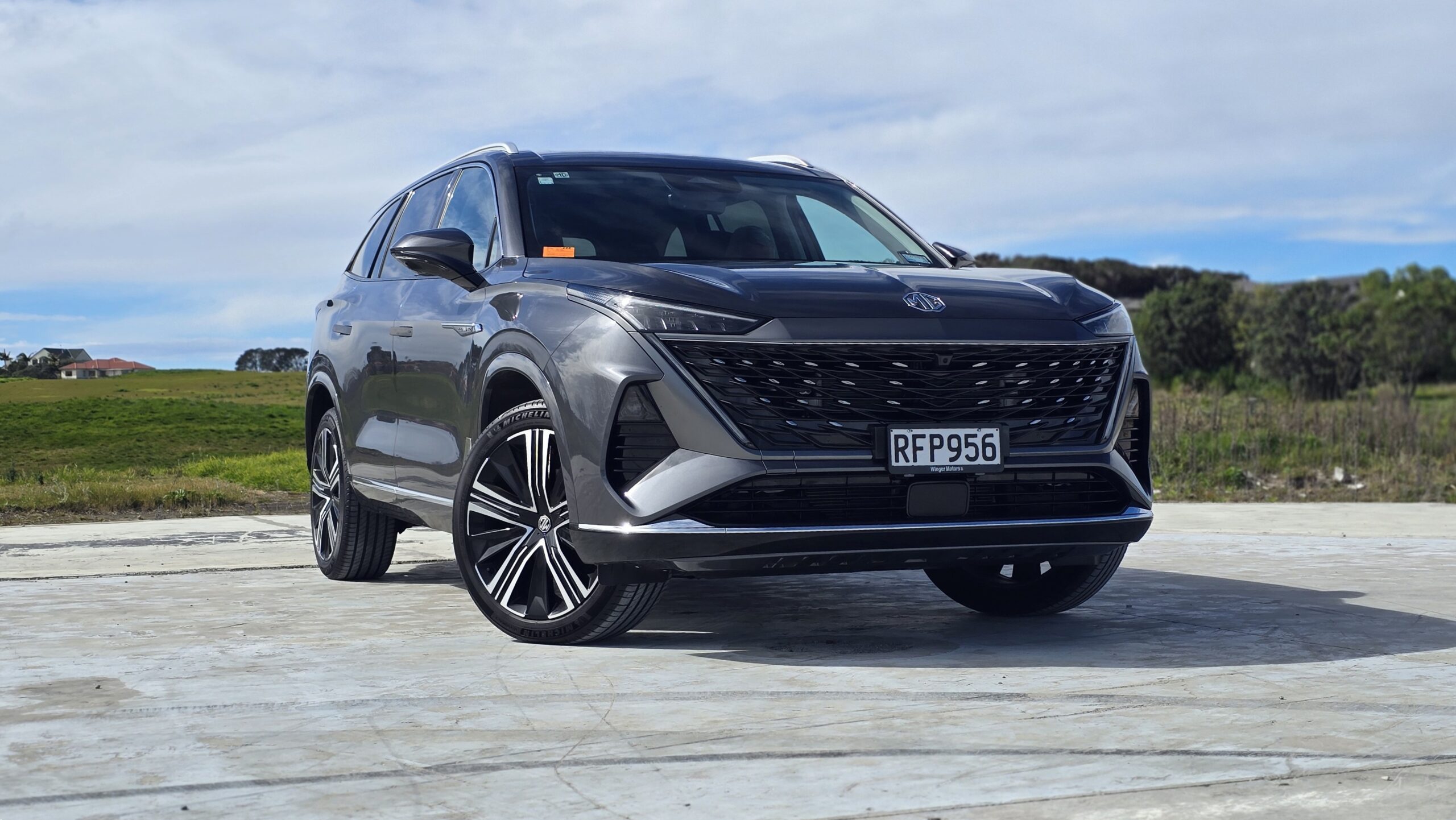
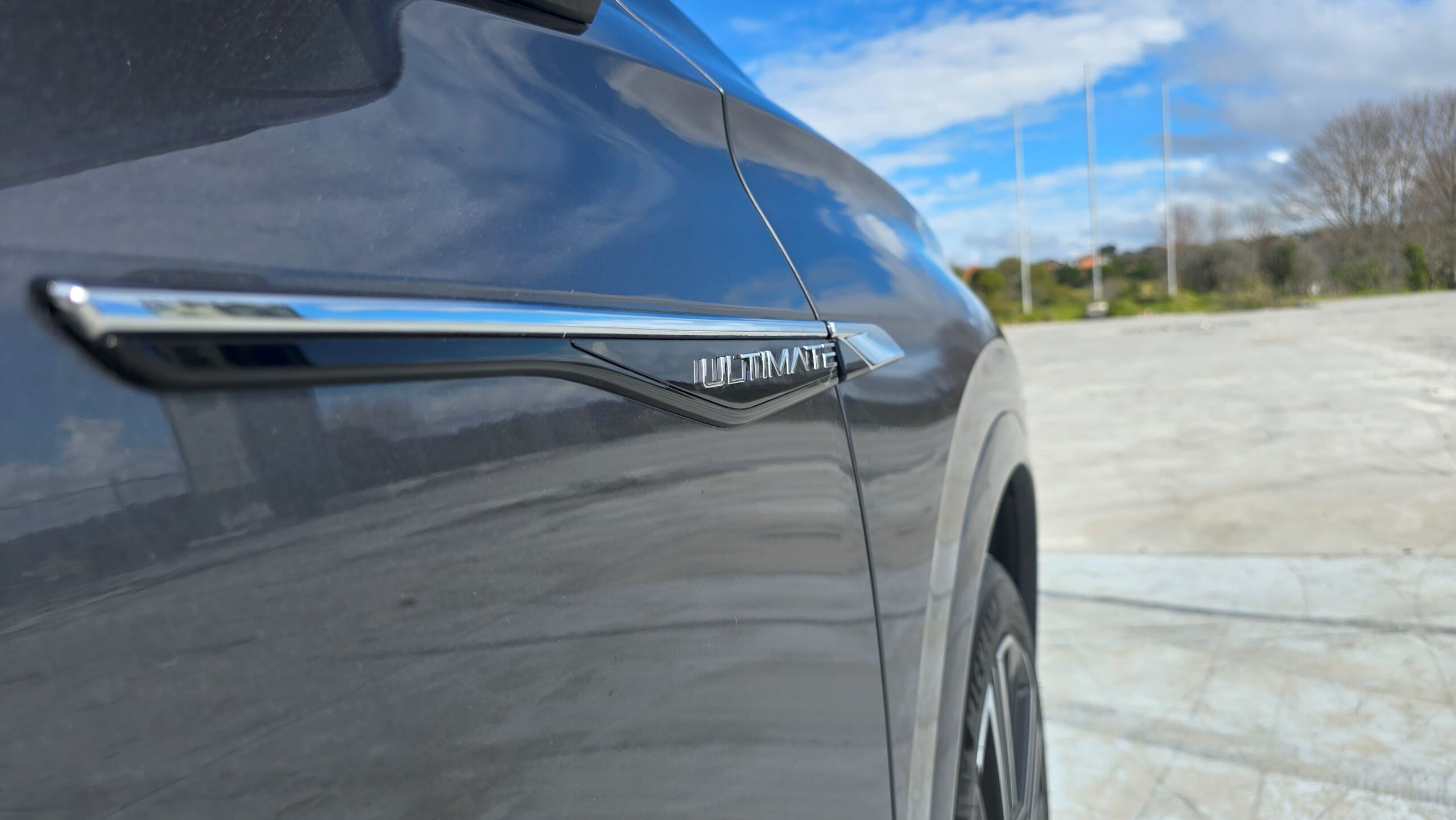
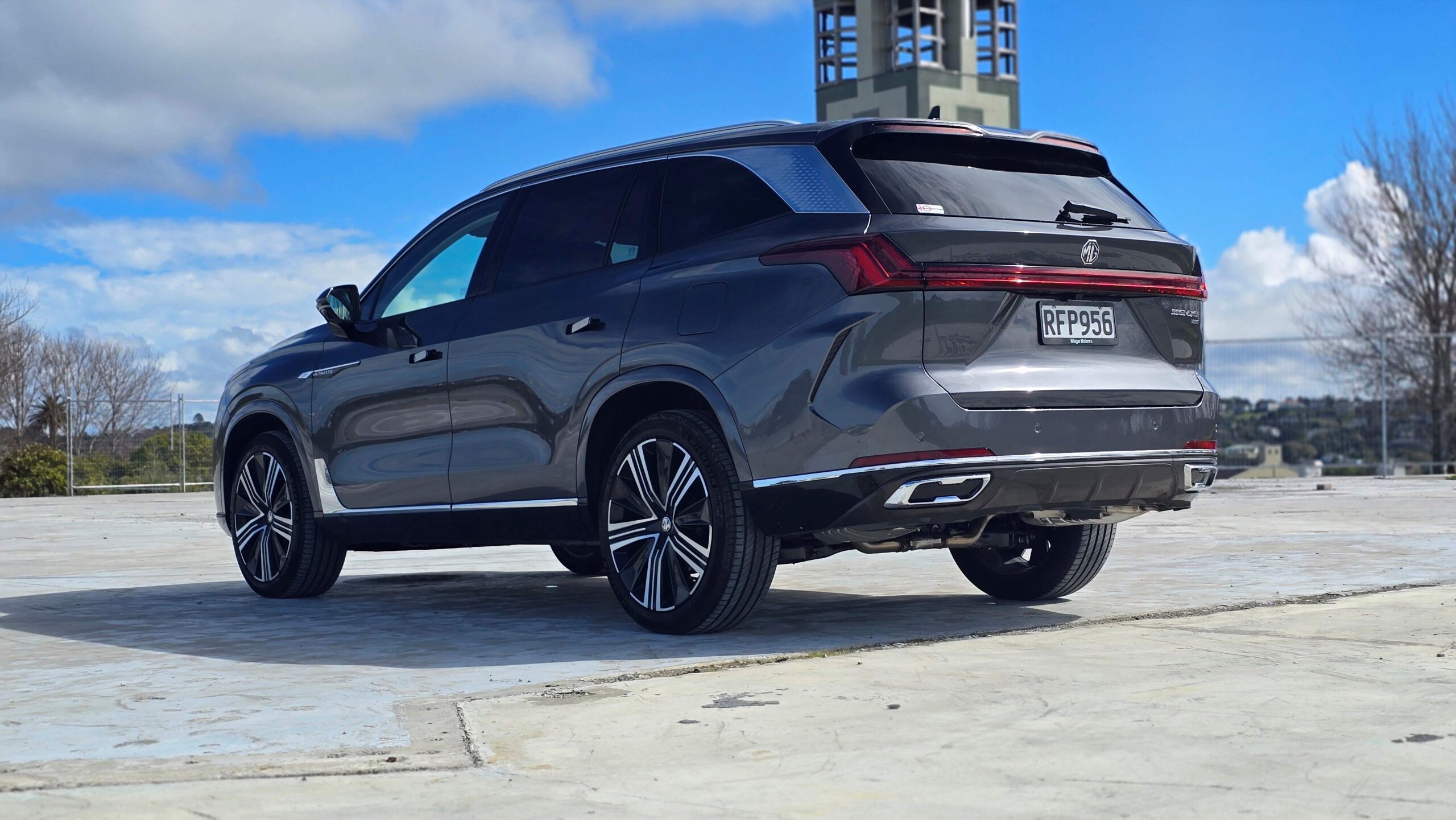
Of course, a car is more than just a list of features on a spreadsheet. You have to look at it every day. Styling is deeply subjective, but the MG QS presents a bold face to the world. To our eyes, it doesn’t seem to share a cohesive design language with the rest of the current MG range, not even its HS stablemate. The front grille is a vast, gaping maw that is hard to miss. The design is further embellished with some rather questionable choices. There is chrome, and then there is plastic chrome. The MG QS has an abundance of the latter. A particularly chintzy-looking stick-on chrome strip runs down the side of the car, looking like a last-minute addition from a budget accessory catalogue. Then there’s the peculiar “Ultimate” badge on the side, which has no connection to the “Essence” trim name here in New Zealand. It’s all a bit confusing.
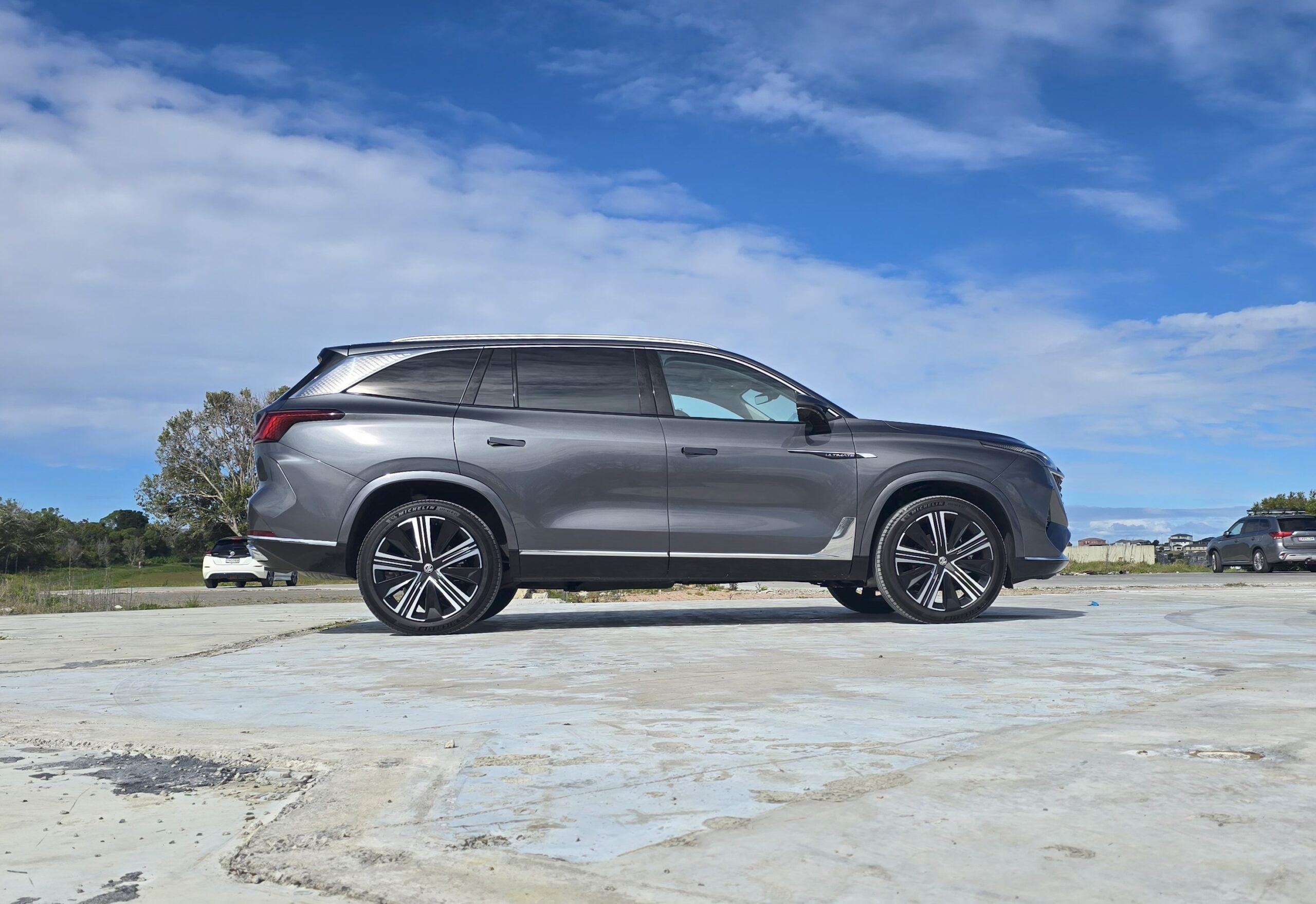
The massive 21-inch alloy wheels have a strange visual effect, managing to look both too big and too small for the car’s vast proportions at the same time. However, in a commendable move, MG has wrapped them in quality Michelin tyres, a crucial touchpoint that many manufacturers skimp on. There are other nice touches, too. The pearlescent paint on our test car was high quality with no visible imperfections, and the crisp LED light signature at the front and rear is suitably modern. Speaking of the rear, a full-width light bar gives it a distinct look on the road, though the effect is somewhat undermined by the return of cheap chrome, this time in the form of horrendous fake exhaust tips.
Practicality, Poked by a Laggy Screen
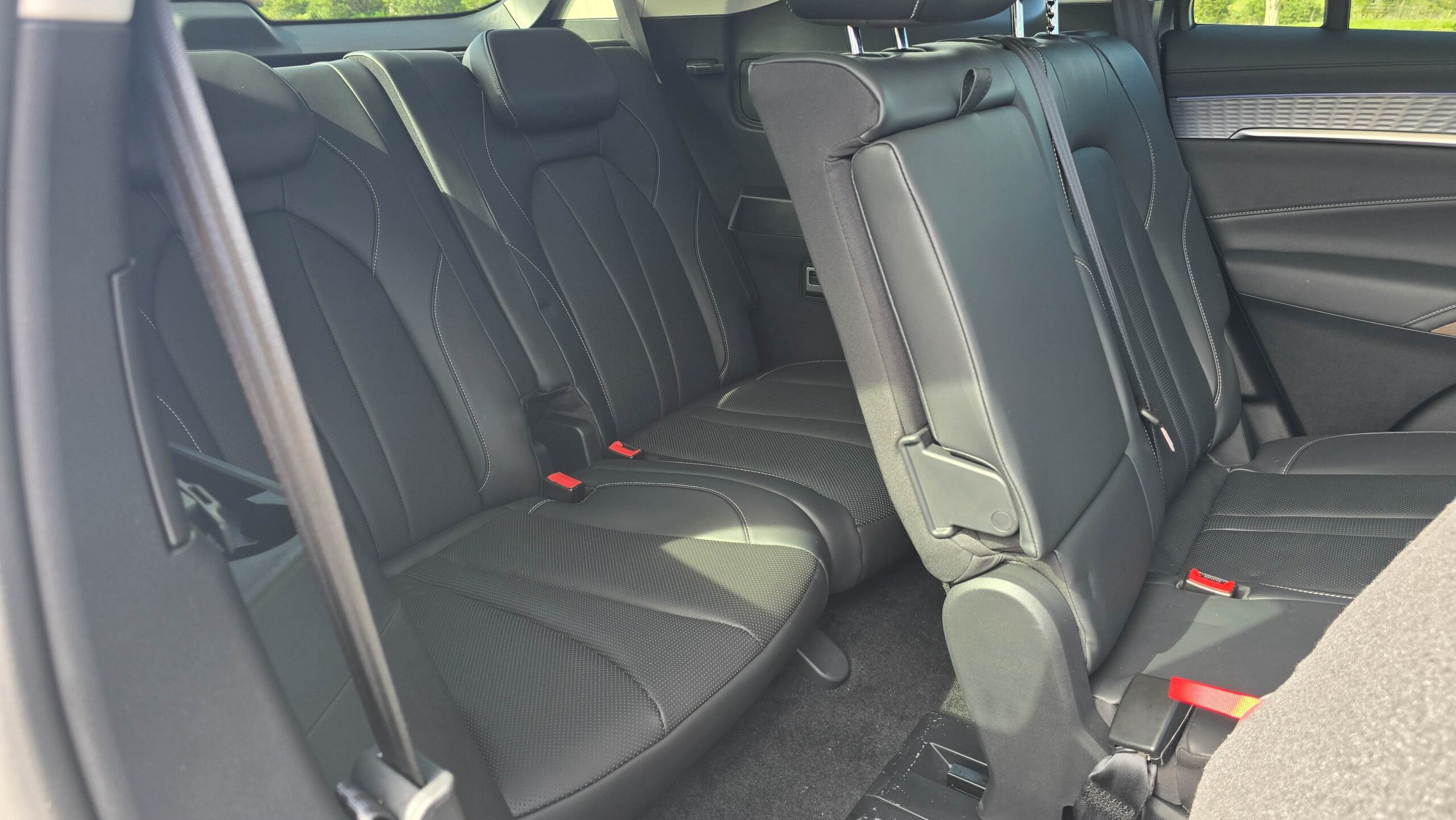
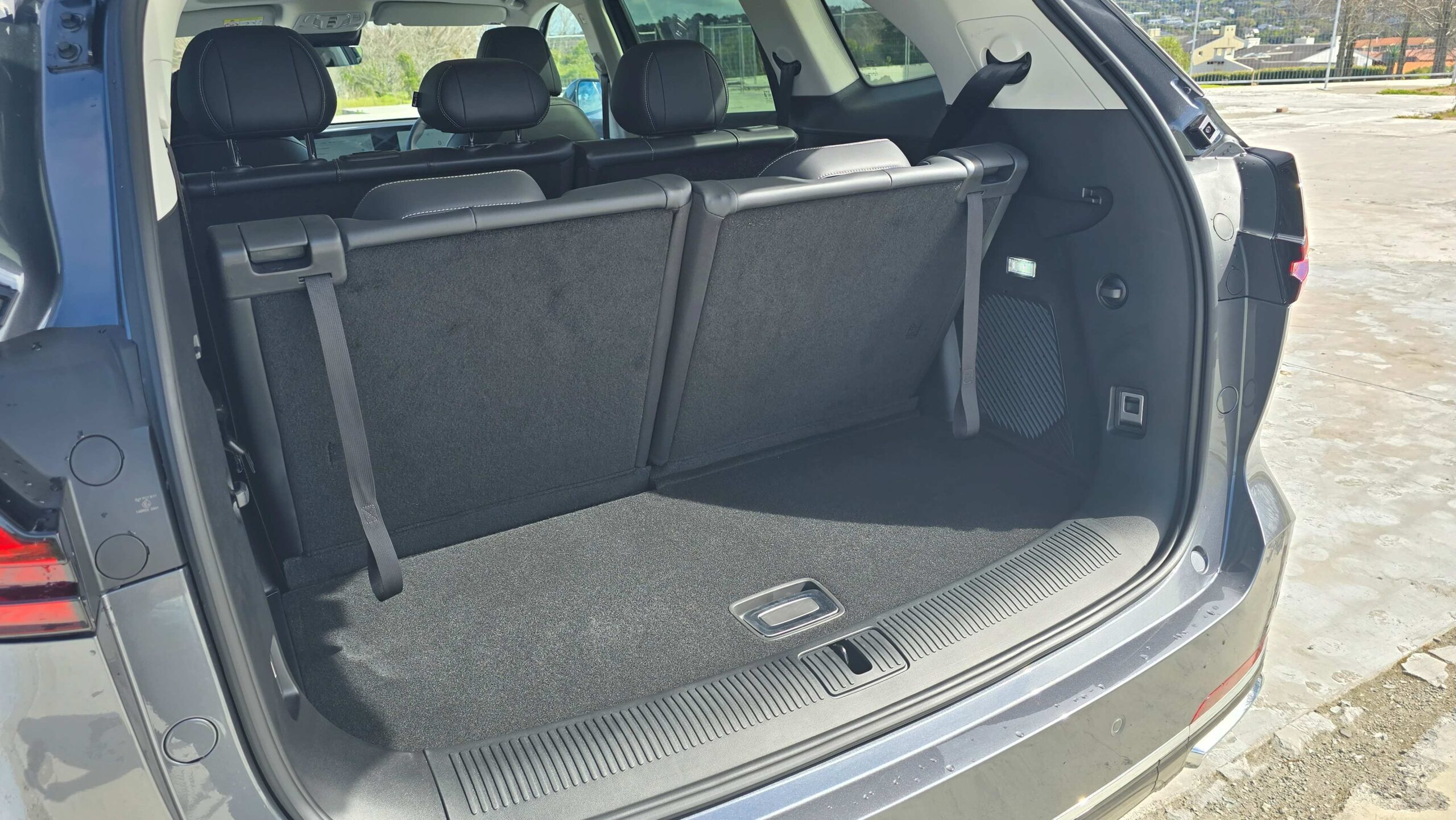
Step inside, and the practicality of the MG QS is immediately apparent. With a powered tailgate (standard on both Essence and Excite trims), you’re greeted by a boot that is genuinely usable even with all seven seats in place, offering a respectable 203 litres of space. You also get amenities like shopping bag hooks, four tie-down points, a 12-volt outlet, and clever underfloor storage for the cargo blind. Folding the multi-position third-row seats is simple, 9but be careful, the spring is harsh) opening up a cavernous 517-litre space. Drop the second row, and you’re looking at over 1,000 litres of capacity, easily swallowing a mountain bike or a surfboard for those weekend getaways. Even third-row passengers aren’t treated like an afterthought. A six-footer can fit for a short journey and is provided with their own USB-A port, speakers, and even a dedicated air vent. Although their knees will be at nose level as the seats are still close to the floor.
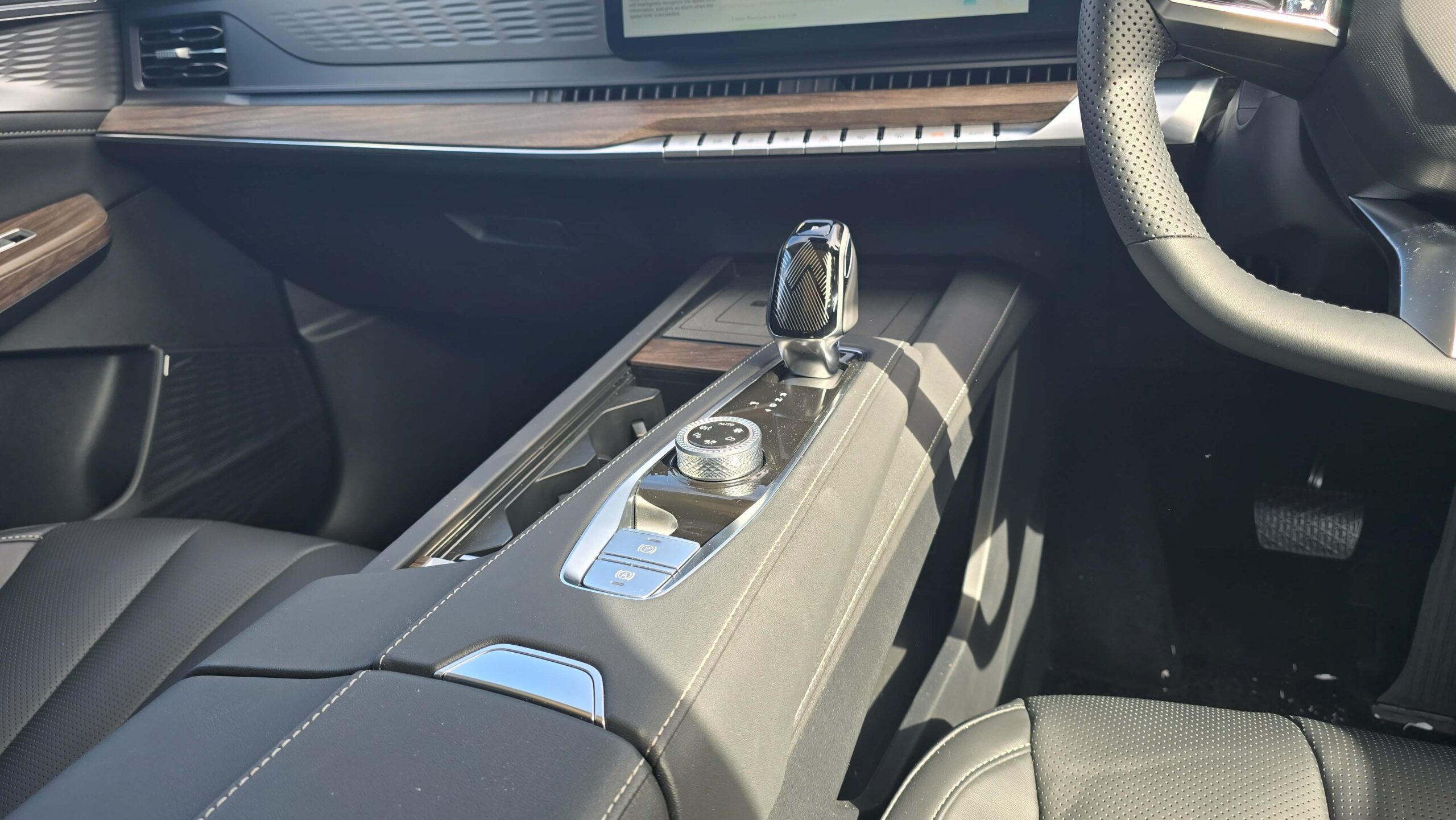
However, this is where the gloss begins to wear off. The cabin is where you’ll find the most telling signs of the MG QS’s origins and its biggest frustrations. The central infotainment screen, while large, is laggy and unintuitive. This becomes infuriating when you try to perform a simple task like adjusting the direction of the centre air vents. Unlike a Tesla, which has a supremely responsive screen to manage such functions, the MG’s system is slow and distracting. You find yourself fumbling through menus while driving, which is a major design flaw.
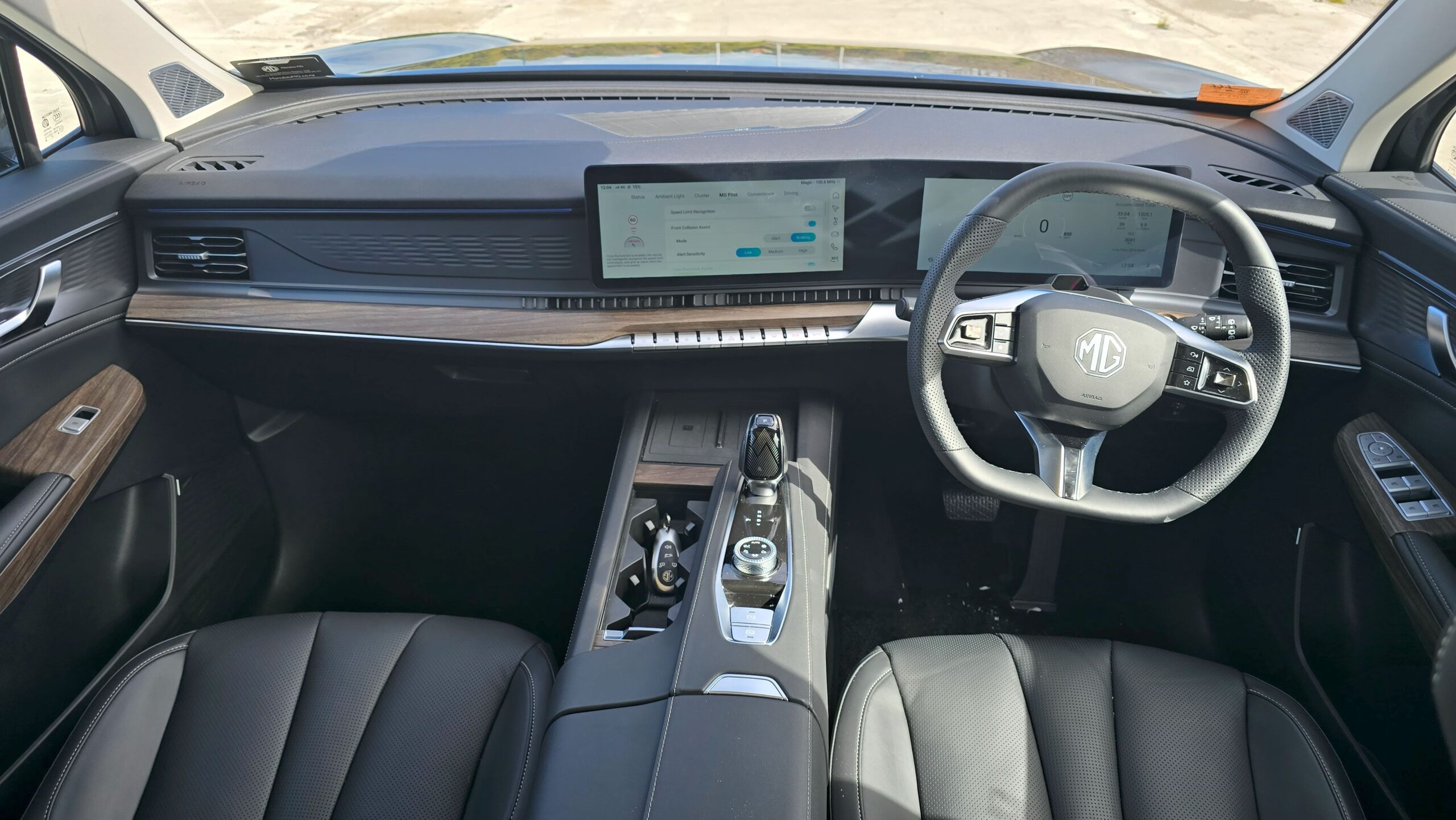
This frustrating interface, combined with other ergonomic quirks, reveals the car’s true age; while it’s new to New Zealand for 2025, the underlying platform (known as the Roewe RX9 in China) has been on sale since late 2022. Worse still are the tell-tale signs of a rushed right-hand-drive conversion. The second-row power seat slide control is located on the driver’s side of the vehicle, away from the kerb here in New Zealand, making it awkward for passengers to use. It’s these small but significant details that betray a lack of holistic development for our market.
On the Road: Surprising Grace, Unsurprising Thirst
If the interior tech is a let-down, the driving experience delivers a genuine, jaw-on-the-floor surprise. The standout feature of the MG QS Essence is, without a doubt, its standard-fit adaptive dampers. We took this behemoth down some truly unpleasant, pockmarked Kiwi country roads, and the way the suspension controlled the body was nothing short of remarkable. It remained composed and controlled, without being harsh, a feat made all the more impressive by those enormous 21-inch wheels on skinny 40-series tyres. That combination is typically a recipe for a ride quality disaster, but the QS handles it with unexpected prowess. That’s not to say it’s perfect. You still feel sharp-edged bumps, and you get the sense the chassis lacks a degree of torsional stiffness, but the damping itself is a huge tick for MG Motors.
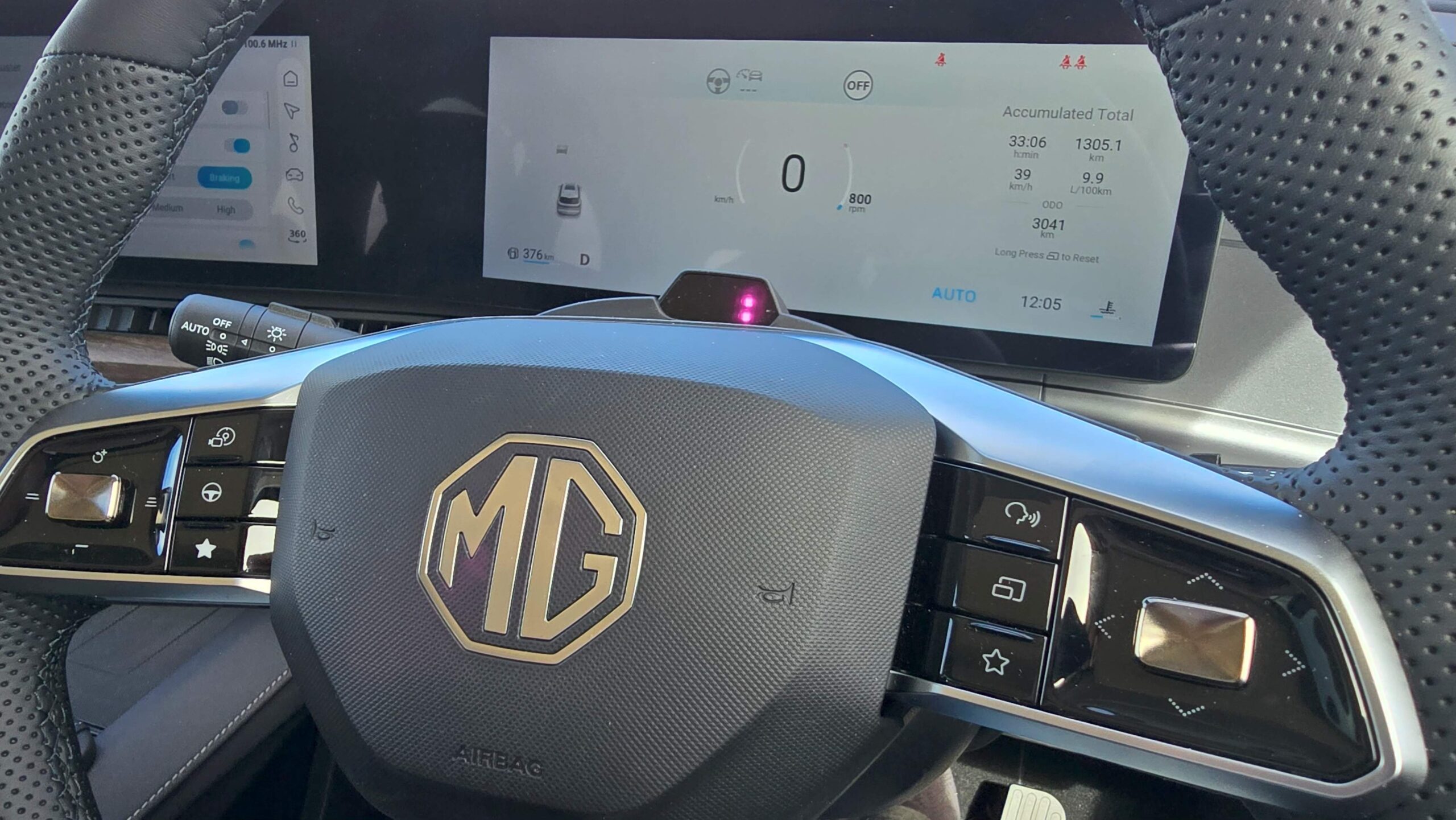
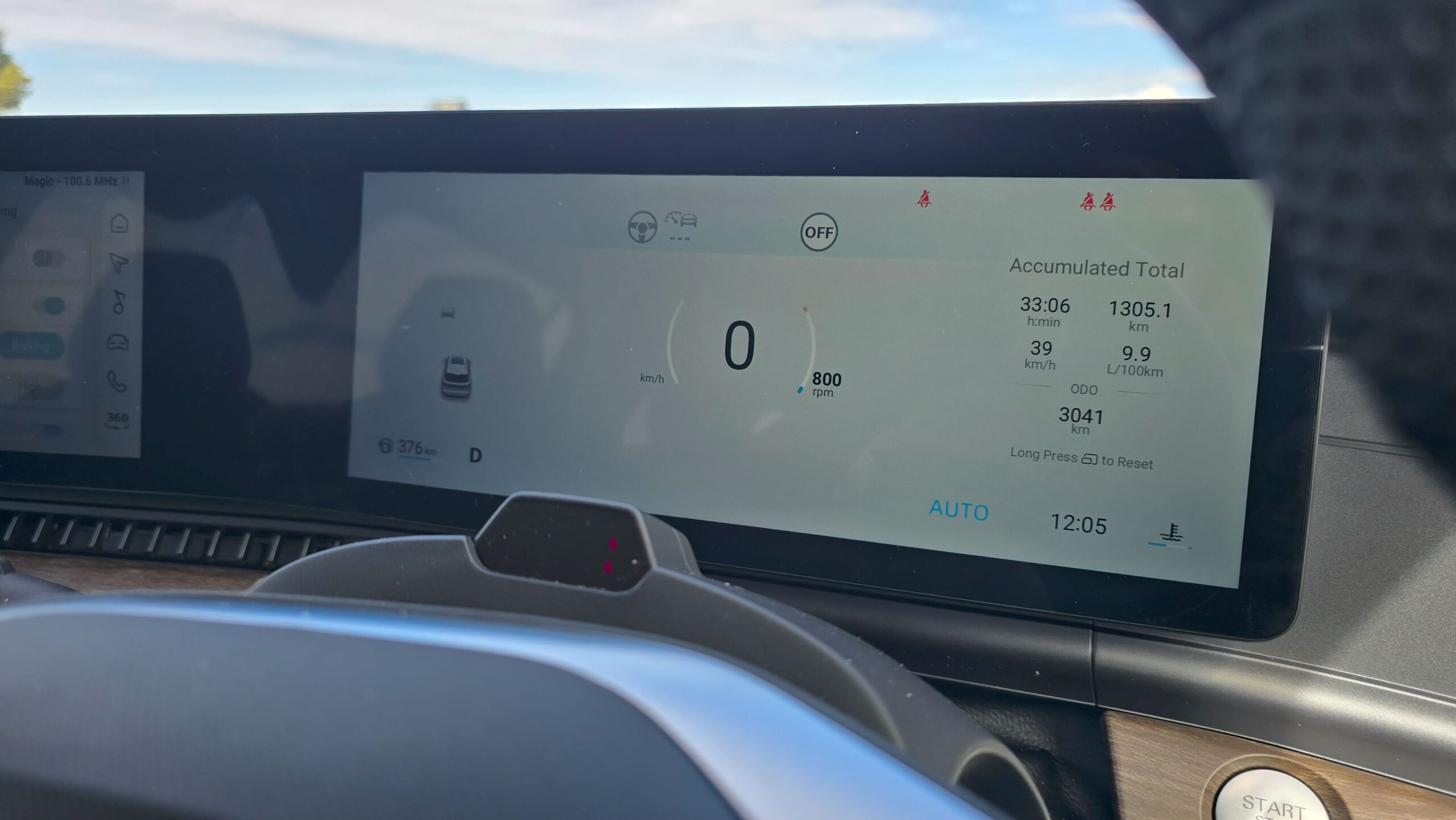
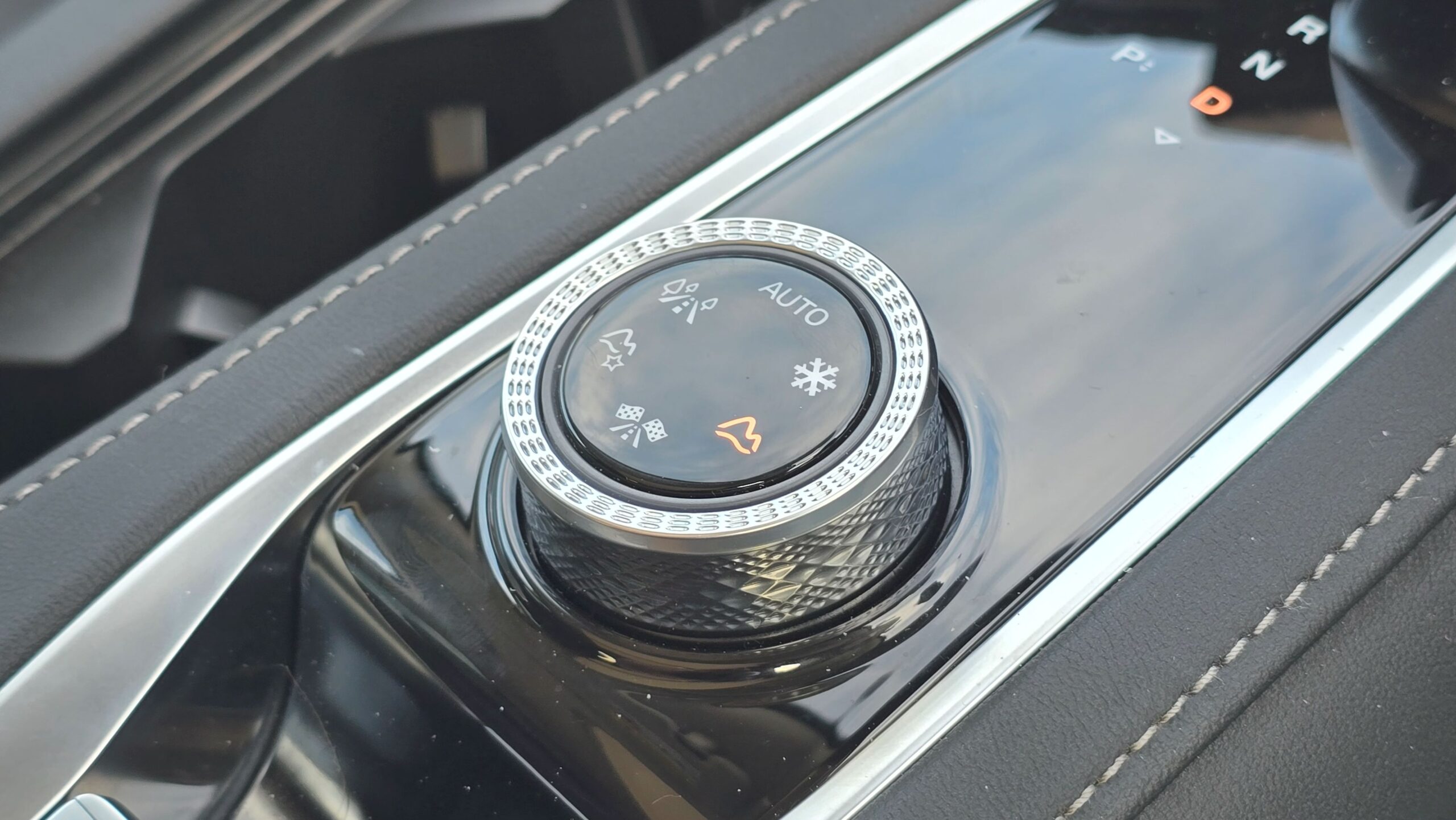
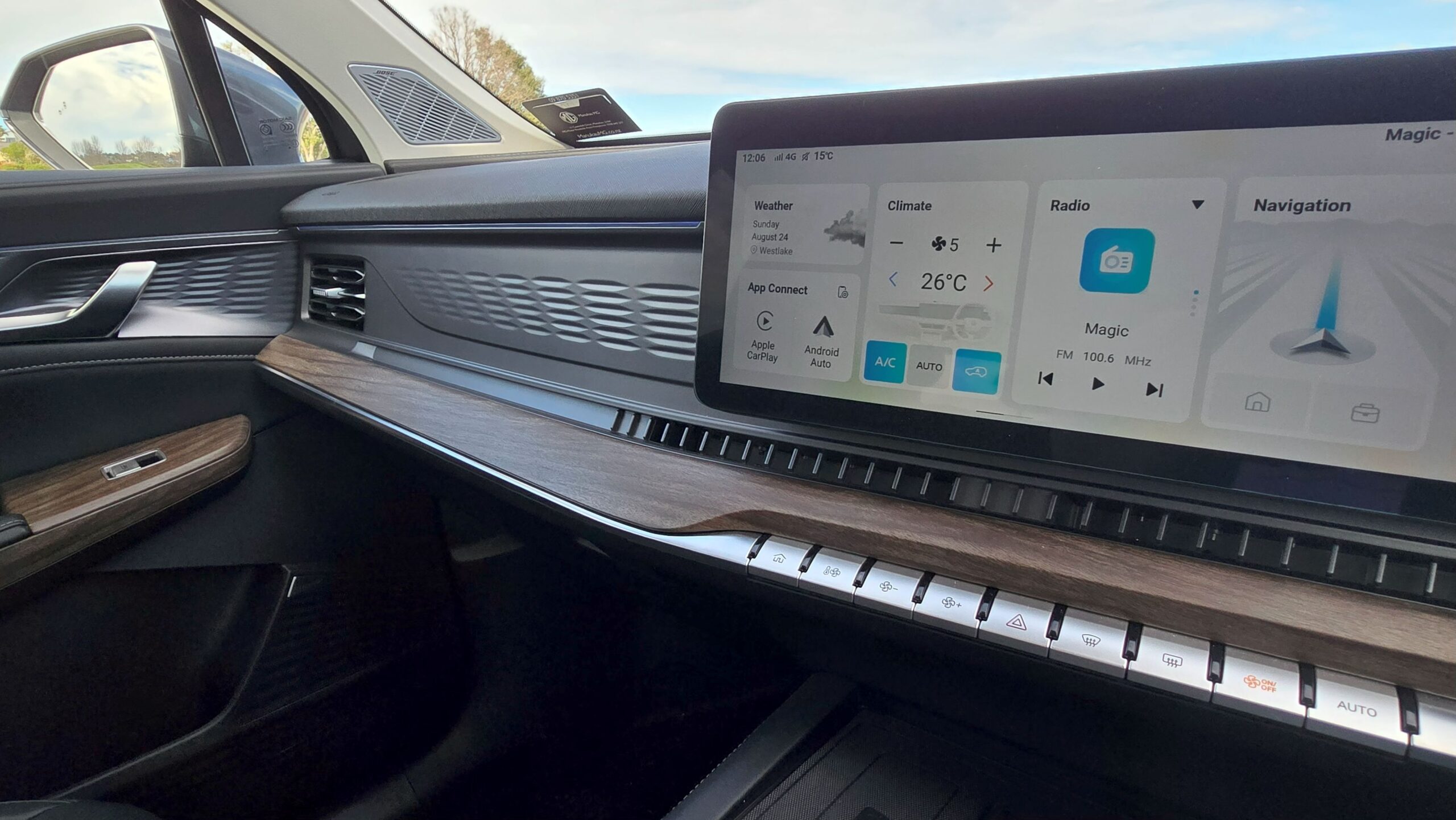
The handling is also surprisingly impressive for such a large vehicle. The powertrain, however, is less heroic. The 2.0-litre turbo engine is adequate but thirsty. It requires 95 RON premium unleaded, and while the official claimed fuel consumption is 8.8 L/100km, our real-world testing painted a different picture. Our test loop returned a figure of 10.4 L/100km, and in typical urban driving, we were seeing numbers closer to 12, 13, and even 14 L/100km. It’s a shame that MG Motors does not yet offer a hybrid version of the QS, as this would make it a much more formidable competitor to the hybrid variant of the Santa Fe.
The Fine Print: Warranty, Servicing, and Safety
MG’s ownership proposition has recently shifted. The brand now offers a 7-year/unlimited-kilometre warranty, which can be extended to 10 years if you commit to servicing the vehicle on time at an MG dealership. But here comes the sting. Servicing the MG QS is not cheap.
Finally, on the critical topic of safety for a family vehicle, the MG QS is yet to receive an ANCAP safety rating.This is a significant unknown that potential buyers must weigh heavily.
Summing up
So, where does that leave the MG QS Essence? It is a vehicle of stark contrasts. There’s no denying the supreme value it offers. The sheer amount of equipment, space, and all-wheel-drive capability is astonishing. The adaptive dampers deliver a ride and handling balance that is genuinely, shockingly good. But that doesn’t mean we can recommend it without serious caveats. The car is let down by some fundamental flaws: a lack of sound deadening, a laggy and infuriating touchscreen, a thirsty engine, and very expensive long-term servicing costs.
If you are a buyer driven purely by the bottom line and can overlook the daily frustrations for the incredible list of features and space, the MG QS is undeniably tempting. For everyone else, its more polished and proven rivals, though more expensive, still represent a smarter buy.