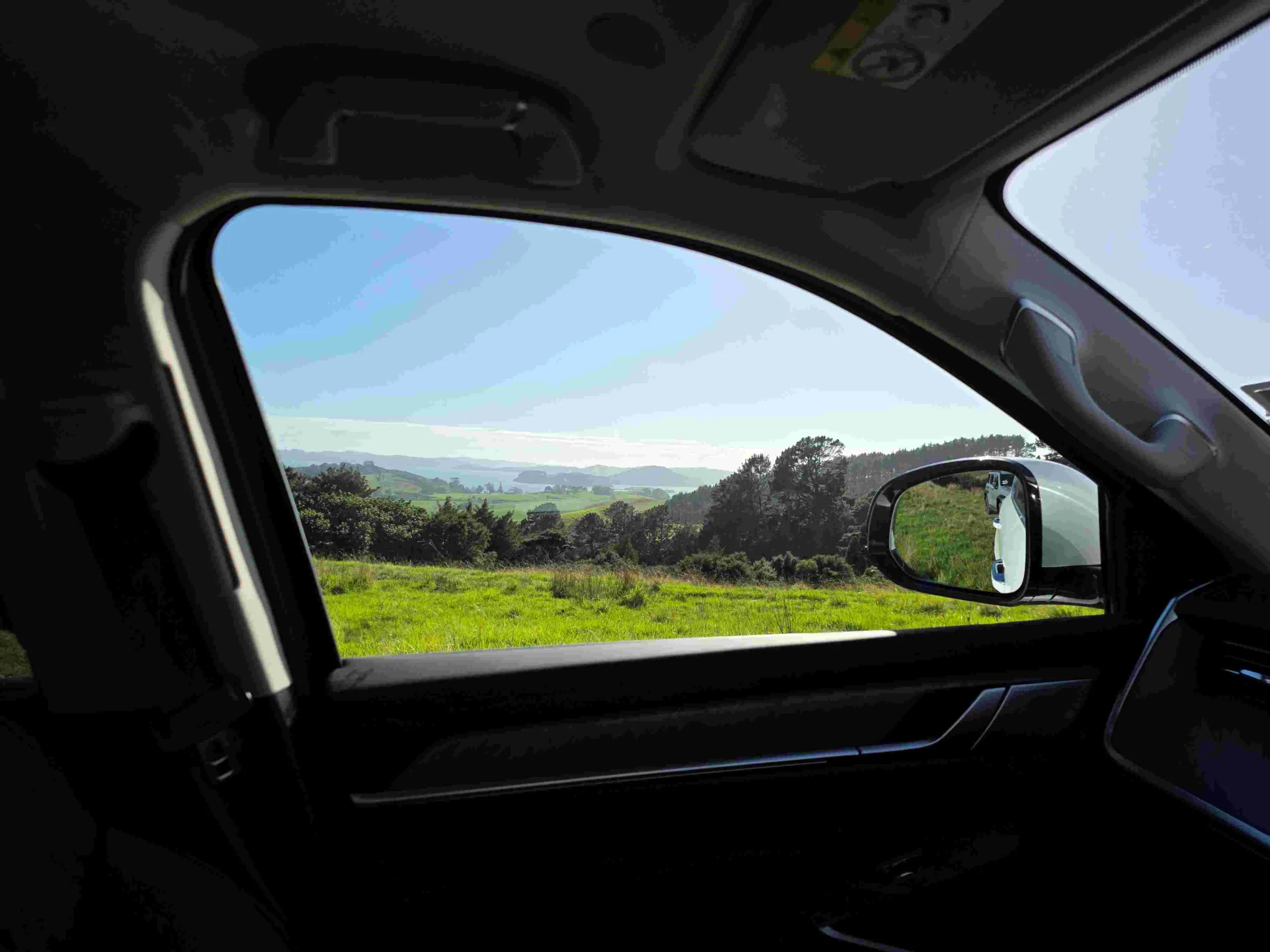
There are some launch venues that immediately tell you what sort of vehicle you’re about to drive. Pulling into Kauri Bay for the New Zealand launch of the GWM Tank 300 Hi4-T PHEV was one of them.
Kauri Bay is a working farm and as such boasts rolling fields, bush, woods and a postcard-worthy coastline. It’s the kind of place where city SUVs start feeling nervous and proper off-roaders begin puffing their chests out. In fairness, at first glance, the Tank 300 doesn’t strike you as the latter, it’s a bit too cute looking, but then you dig a little deeper.
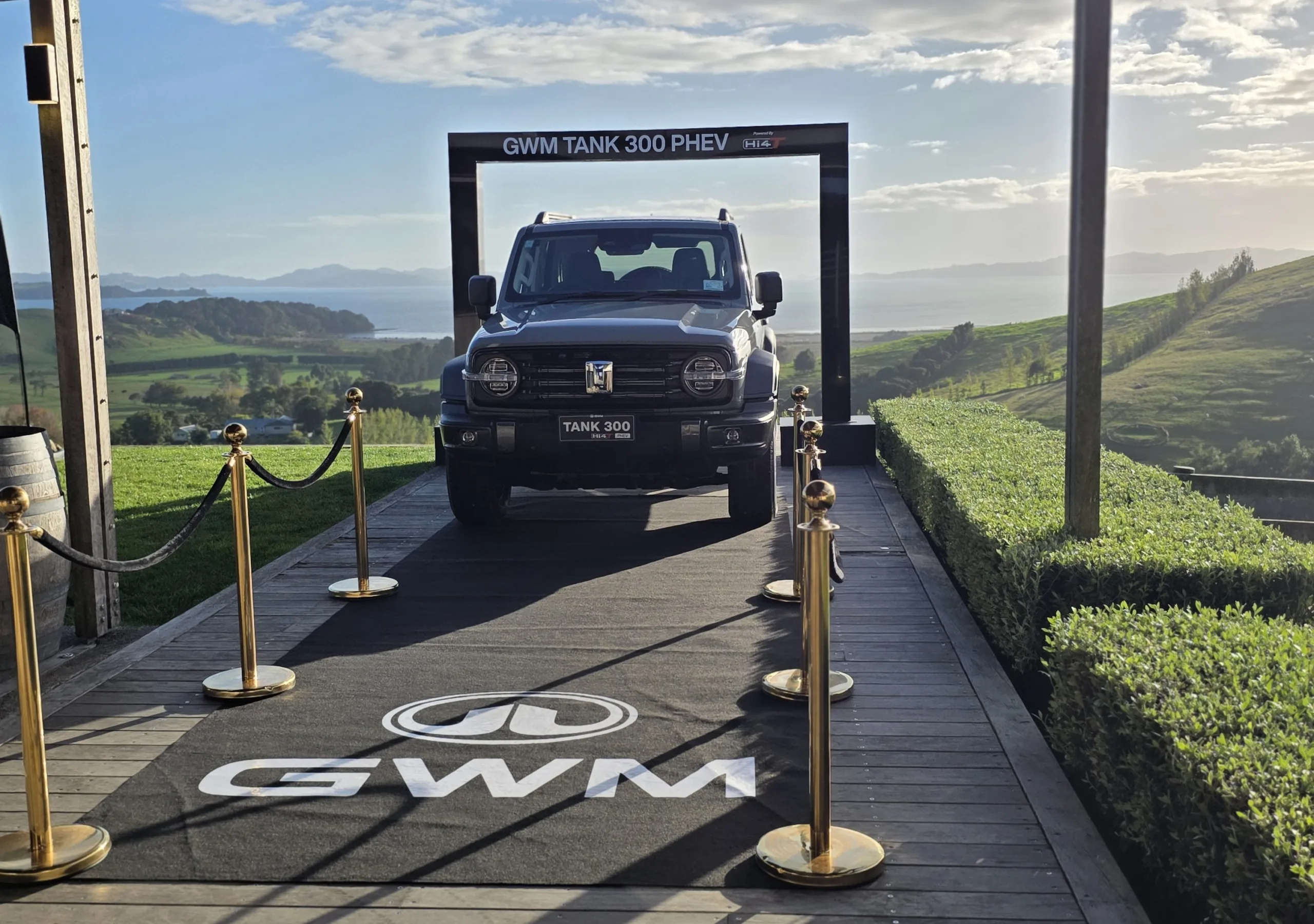
That’s really the genius of the Tank 300 Hi4-T. Although it looks capable, it doesn’t scream “terrain conqueror” or even “green car,” It doesn’t try to be sleek, futuristic or efficient – but it is all of the above, and then some. GWM has taken this retro-styled 4×4 and quietly stuffed in a monstrous plug-in hybrid powertrain that produces 300kW and 750Nm.
And honestly? The result is one of the most interesting new SUVs to hit New Zealand this year.
First impressions – rugged with a touch of attitude
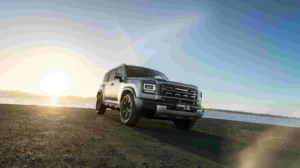
The standard Tank 300 already had road presence, but the Hi4-T somehow looks even tougher. Maybe it’s the knowledge that there’s electrified muscle underneath, or perhaps it’s the subtle details like the revised grille and charging flap, but it feels more premium and purposeful in the metal.
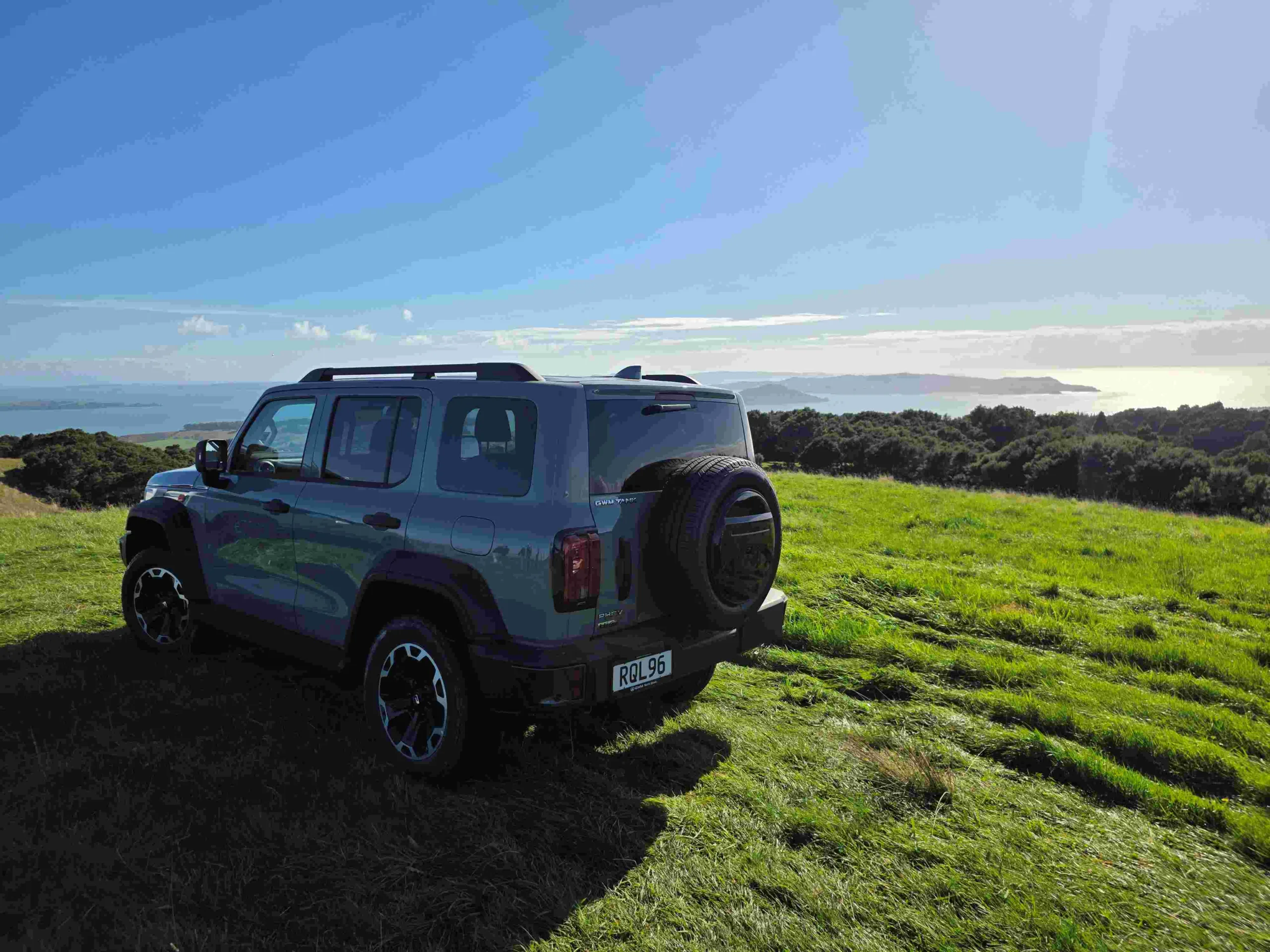
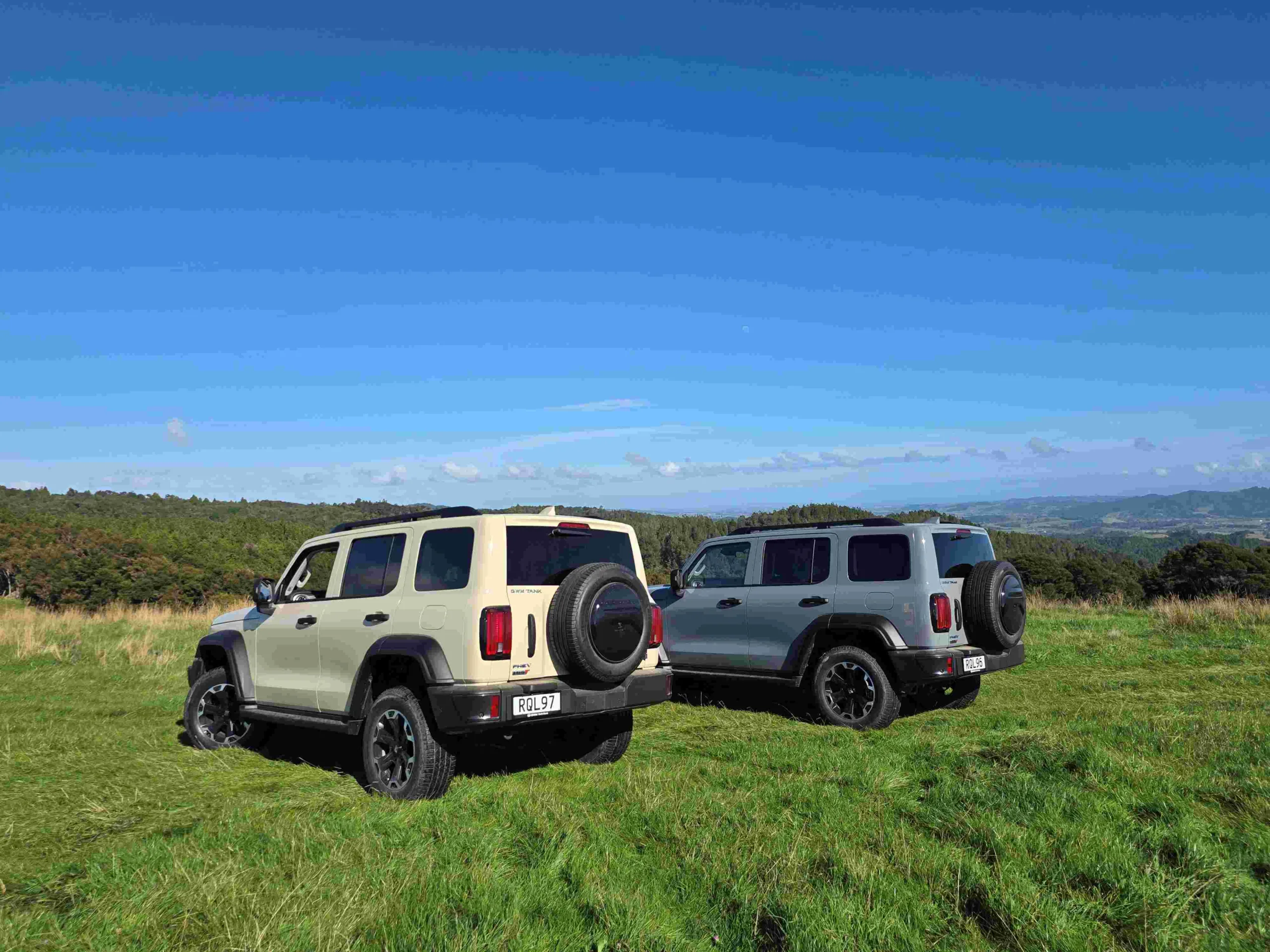
It’s gloriously boxy too. Flat panels, chunky wheel arches, upright glasshouse and those signature circular headlights give it a strong old-school off-roader vibe. Think Jeep Wrangler and a touch of Mercedes-Benz G-Class (but without the eye-watering price tag).
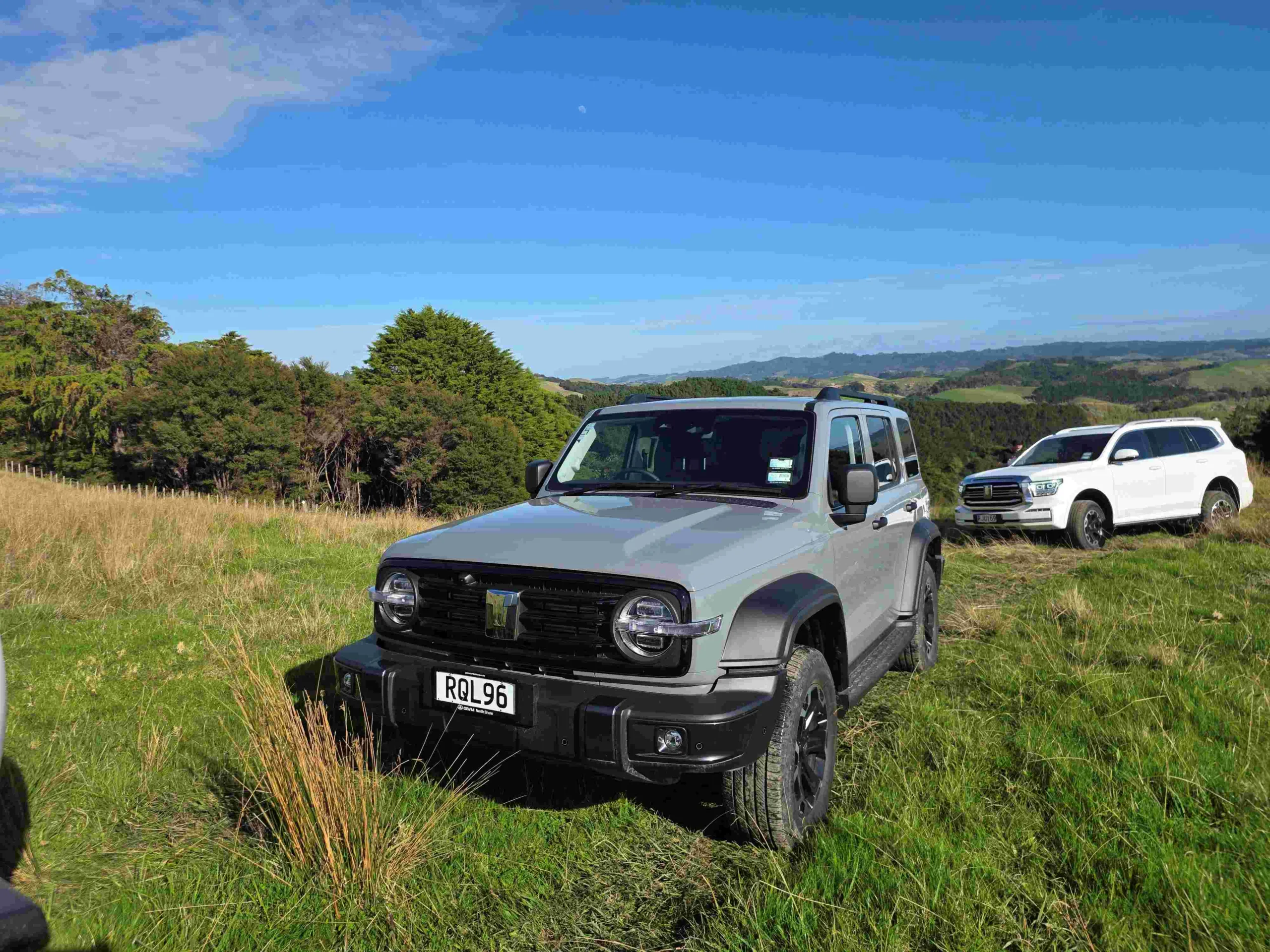
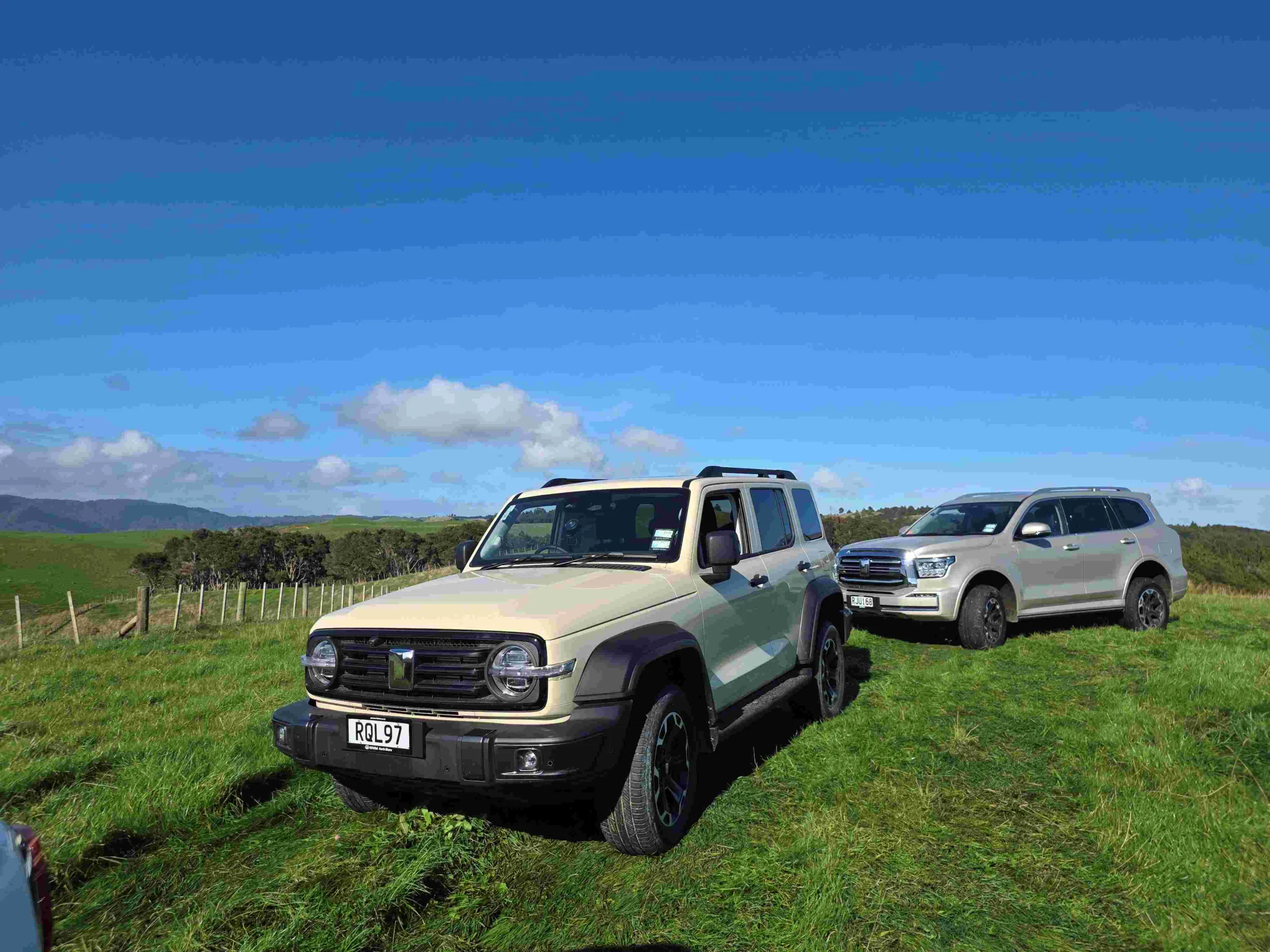
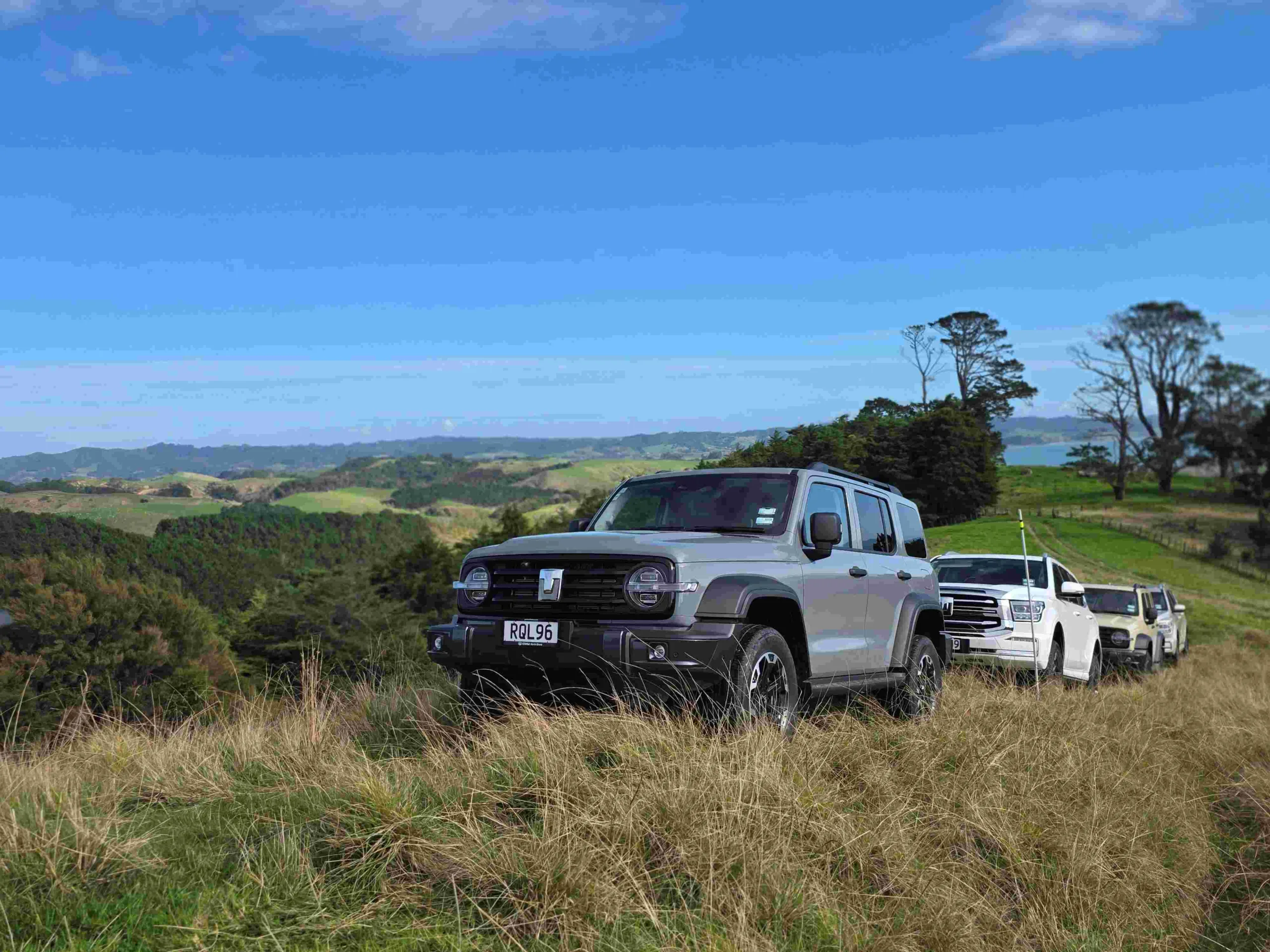
GWM NZ had laid on launch two vehicles, Fossil Grey and the new Sundrift Sand, both looked good under the moody Clevedon skies. They suit the Tank’s adventurous personality perfectly and give it proper expedition-truck energy.
But it’s more than just a cool colour scheme, unlike some modern SUVs that merely *look* rugged, the Tank backs it up with genuine ladder-frame underpinnings, mechanical four-wheel drive, low-range gearing and locking differentials. That authenticity matters, Kiwi’s can smell fake toughness a mile away.
The cabin – surprisingly premium
Open the hefty doors and the Tank 300 Hi4-T immediately changes character. Outside it’s all mud-plugging bravado. Inside, it’s surprisingly plush and frankly, it feels far more expensive than its sub-$70k price tag suggests.
The seats are properly comfortable, wrapped in Nappa-accented leather, there’s soft-touch trim across the dash, metallic switchgear with satisfying click action and a chunky, weird shaped gear selector that feels delightfully over-engineered.
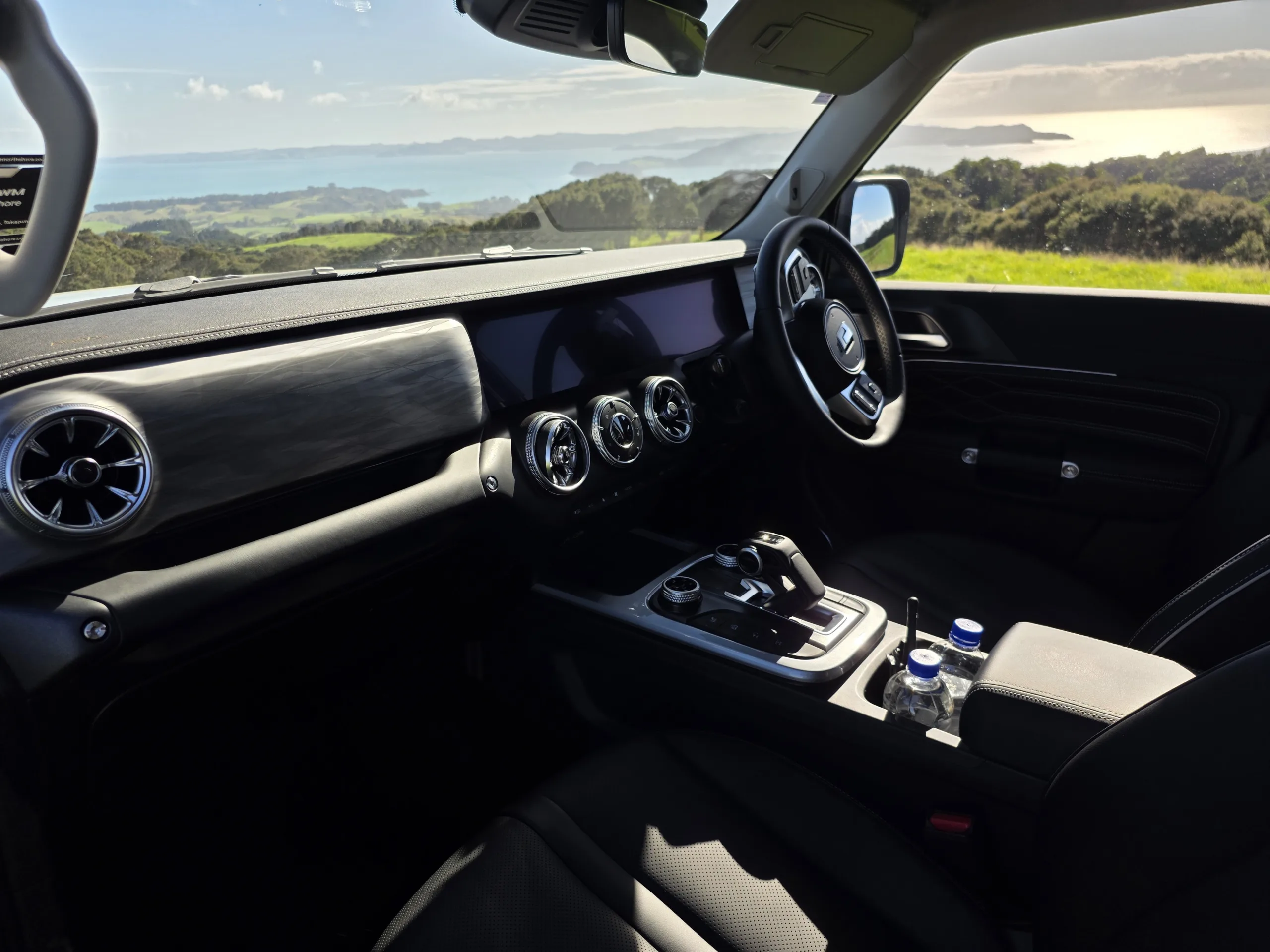
There’s two 12.3-inch displays stretched across the dashboard, but Importantly, GWM hasn’t gone full minimalist nightmare. You still get physical controls for key functions, which means you’re not endlessly stabbing at menus just to adjust the climate control while bouncing down a gravel road. Thank you, GWM.
Visibility is excellent thanks to the upright seating position and big windows, although the squared-off proportions mean it still feels (particularly when navigating the tight wooded area at Kauri Bay). Thankfully the 360-degree camera system is excellent and made the route far less intimidating.
Rear seat space is generous too, with enough headroom and legroom for adults, while the boot remains practical despite the addition of the battery pack.
Infotainment and tech – mostly impressive
Modern Chinese vehicles have rapidly evolved from “good for the money” to genuinely tech-heavy contenders, and the Tank 300 Hi4-T PHEV continues that trend.
It boasts wireless Apple CarPlay and Android Auto (although I didn’t use these during the launch drive), the touchscreen graphics are crisp and responsive, and the digital instrument display is clean and easy to read.
There’s also a ridiculous amount of tech onboard. Ambient lighting, wireless charging, adaptive cruise control, multiple terrain modes, off-road cameras, crawl control, Tank Turn functionality and V2L capability are all packed in. Again, we didn’t use the last two options during our drive.
That V2L system could genuinely become a killer feature for Kiwi campers, boaties and tradies. With up to 6kW available, the Tank can effectively become a giant rolling battery pack capable of powering campsite gear, tools or even coffee machines in the middle of nowhere.
There are still a few quirks though. Just quietly, I have spent some on-road time with the Tank 300 Hi4-T PHEV and the driver assistance systems can occasionally feel overenthusiastic, particularly lane-keeping assist on tighter rural roads. But compared to earlier Chinese vehicles, the software integration and overall user experience has improved massively.
Powertrain – this thing absolutely hauls
Now for the headline act. Under the bonnet sits a 2.0-litre turbocharged petrol engine paired with an electric motor and GWM’s Hi4-T hybrid system, delivering a combined 300kW and 750Nm. That’s serious performance even by premium SUV standards.
Plant your foot and the Tank 300 Hi4-T surges forward with genuinely shocking urgency for something shaped like a small studio apartment building. The electric motor delivers immediate torque while the petrol engine piles in with muscular mid-range shove. GWM claims 0-100km/h in 6.3 seconds, and honestly, it feels every bit that quick.
What’s more impressive is how effortlessly it delivers that performance. You’re never really straining the drivetrain. It just leans into its torque reserves and lunges forward with surprising refinement.
For daily commuting, the claimed EV-only range of up to 115km (probably more like 100km real world) means many owners could realistically spend most weekdays driving purely on electricity. That’s a huge advantage in a vehicle category traditionally associated with hefty fuel bills.
Then, when adventure time arrives, you still have mechanical four-wheel-drive hardware underneath rather than an electronically simulated soft-roader setup. That combination feels genuinely unique right now.
On the move – calmer than expected
Body-on-frame SUVs traditionally drive with all the grace of farm machinery, but the Tank 300 Hi4-T is surprisingly civilised. Both on and off-road. Yes, you still feel the ladder-frame roots over rough surfaces, and yes, there’s a touch of body movement compared with a monocoque SUV, but overall refinement is genuinely impressive.
Then there’s its prowess where the tarmac ends. Kauri Bay had organised a series of challenges for the Tank and to be straight, this 300 Hi4-T PHEV variant felt properly engineered. Low-range engagement is straightforward, the cameras are genuinely useful and the instant electric torque gives it excellent low-speed control.
It climbed rutted and loose surfaced steep hills, articulated, pitched, rolled to over 25-degrees and traversed the Clevedon countryside with ease – almost too much soo as I spent most of my time chatting with my co-pilot GWM ANZ’s Head Of Marketing & Communications and not concentrating, thankfully, the Tank meant I didn’t need to.
The suspension setup does a commendable job balancing off-road articulation with on-road comfort. The steering is light but accurate enough, road noise is well suppressed and the hybrid system transitions smoothly between electric and petrol power.
What really stands out is the cabin quietness. You expect diesel clatter or aggressive engine noise, but instead you get near-silent progress while shifting through the multiple farmland terrain and exercises like some electrified mountain goat.
It’s also reassuring knowing this isn’t some soft urban crossover pretending to be adventurous. The Tank platform has already proven itself in brutal Australian off-road testing, including tackling Beer O’Clock Hill in factory specification.
Tarmac Takeaway
The Tank 300 Hi4-T PHEV feels like one of those rare vehicles that genuinely shifts expectations. Not just about GWM, but about what a modern electrified 4×4 can be.
It’s fast, loaded with technology, genuinely capable off-road and surprisingly luxurious inside. More importantly, it doesn’t force buyers to choose between efficiency and adventure. You can silently commute during the week, then tow a boat, power a campsite and tackle muddy backroads on the weekend. That’s a seriously compelling package.
Sure, some buyers will still hesitate at the GWM badge (why?), and others may question long-term durability simply because it’s Chinese, (although having been in NZ for over 18-years they have more than earned their Kiwi passport). Either way, the automotive landscape is changing rapidly, and vehicles like the Tank 300 Hi4-T PHEV are exactly why established brands should probably be paying attention.
The Tank 300 Hi4-T PHEV made a strong case for itself. Not as a budget alternative, but as a genuinely desirable SUV in its own right.