There’s no denying that the New Zealand automotive landscape has changed dramatically. Chinese manufacturers have gone from automotive outsiders to serious contenders, bringing increasingly sophisticated vehicles to our shores and forcing established brands to rethink what they charge for their badges.
One of the latest arrivals is Forthing, part of the enormous Dongfeng automotive group. Recently we attended the NZ launch of their Taikon and its two powertrain offerings, and as exciting as our first drive was, we wanted to spend more time with the them, they duly obliged.
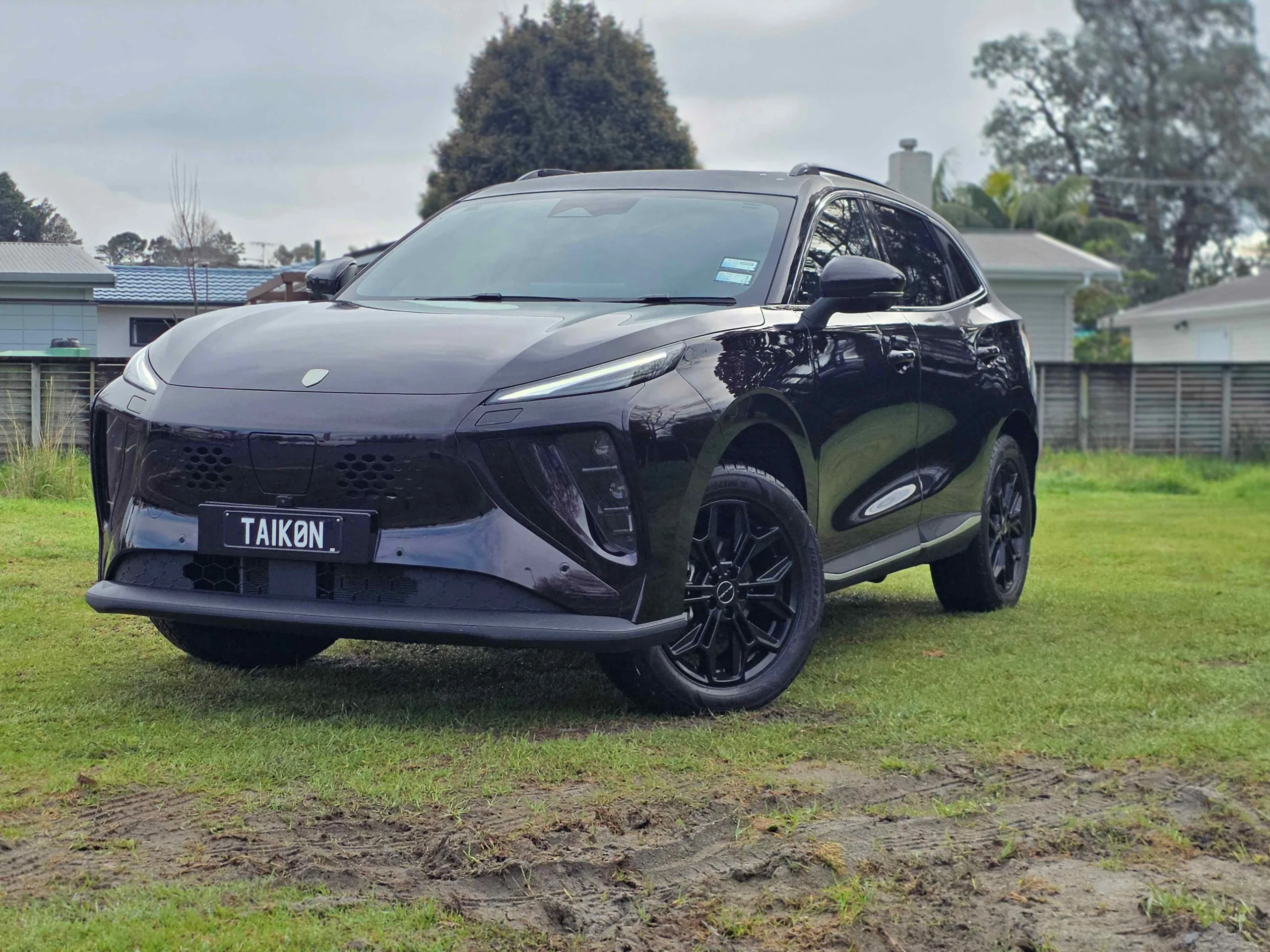
The Taikon is a medium-sized SUV available as either a full EV or the rather more intriguing Super Hybrid. And it’s the latter I’ve been driving in ‘Exclusive’ spec. Priced at $44,990 plus on-road costs, the Taikon Super Hybrid Exclusive packs a 31.94kWh battery, more than 180km of claimed electric-only range, rear-wheel drive, a 1.5-litre petrol engine acting primarily as a range extender and a claimed combined range of more than 1,000km.
So sure that’s a lot of SUV for the money. But the real question is whether the Taikon is genuinely good, or simply a cheap car wearing an expensive battery.
Modern without trying too hard
The Taikon makes a pretty good first impression. At 4.6 metres long and 1.86 metres wide, it occupies similar real estate to a Toyota RAV4, although its proportions make it look slightly larger. But what I like about the design is its restraint.
Chinese manufacturers have become increasingly adventurous with exterior styling, sometimes to the point where there’s more going on than a Saturday night in Ponsonby. The Taikon takes a different approach. There’s a confident front end with a wide lighting signature and contemporary LED treatment, but the body isn’t covered in unnecessary creases, fake vents or styling gimmicks.
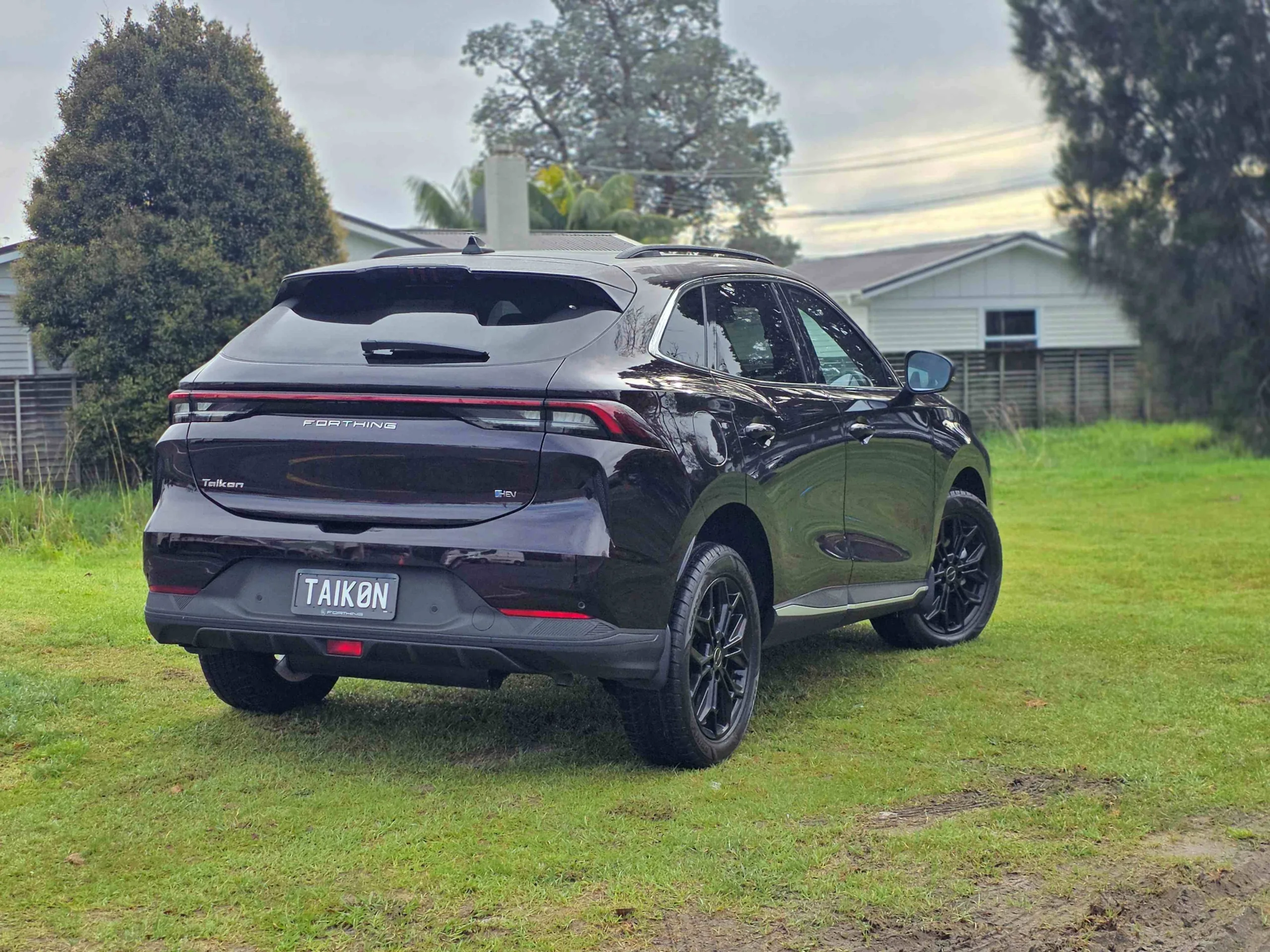
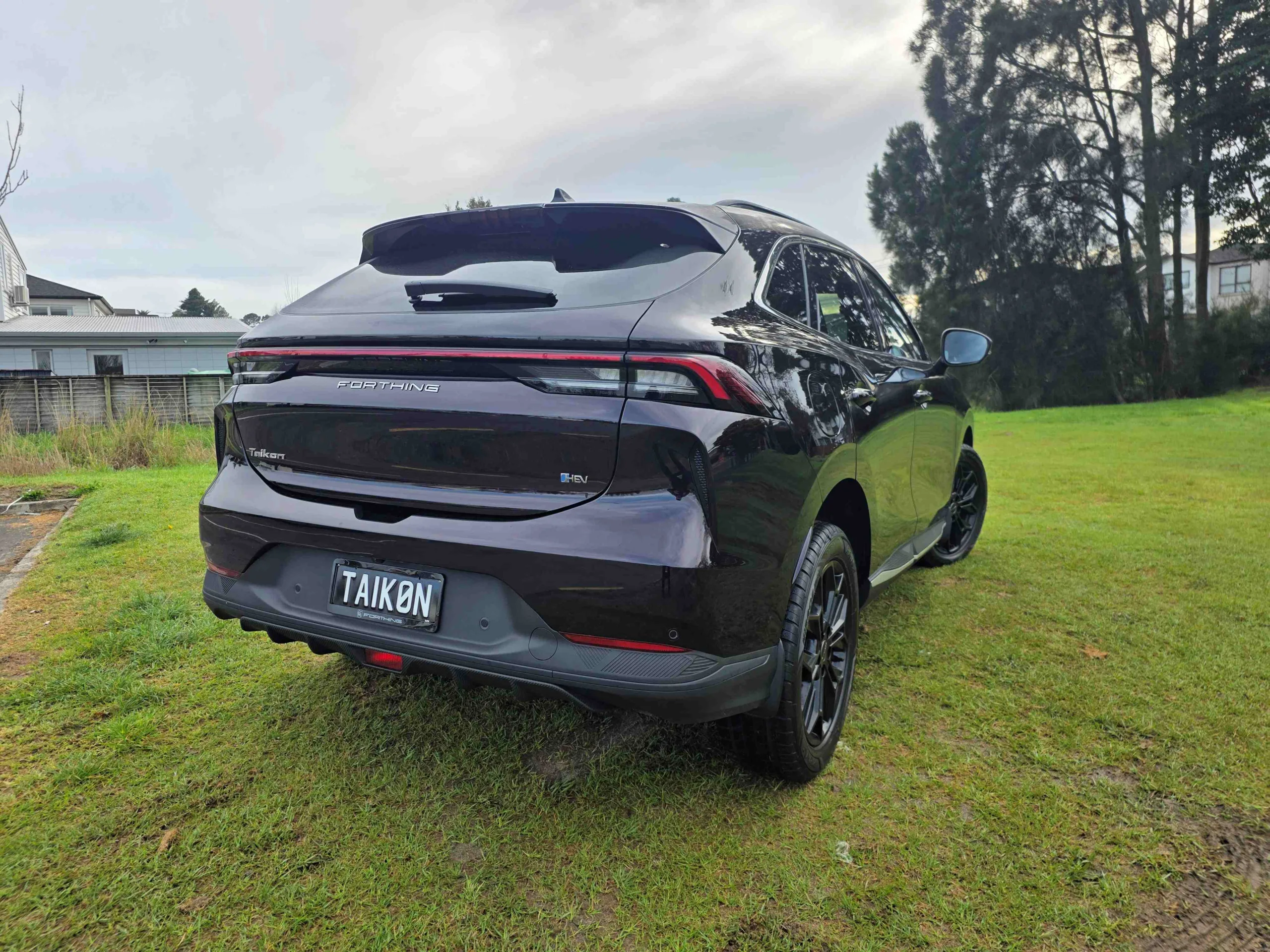
The side profile is clean, the 19-inch wheels fill the arches nicely and the roof rails add some genuine practicality, while around the rear, the sloping roofline gives the Taikon a sportier appearance, although this is one of those occasions where style comes with a small price. Rear visibility isn’t brilliant, with the roofline and rear headrests restricting the view.
Fortunately, Forthing has an answer. The Exclusive gets a pretty decent 360-degree camera, which quickly becomes your best friend in tight Auckland car parks. There’s also a panoramic opening glass roof, sunscreen glass and a powered tailgate.
Inside is where the value story gets interesting
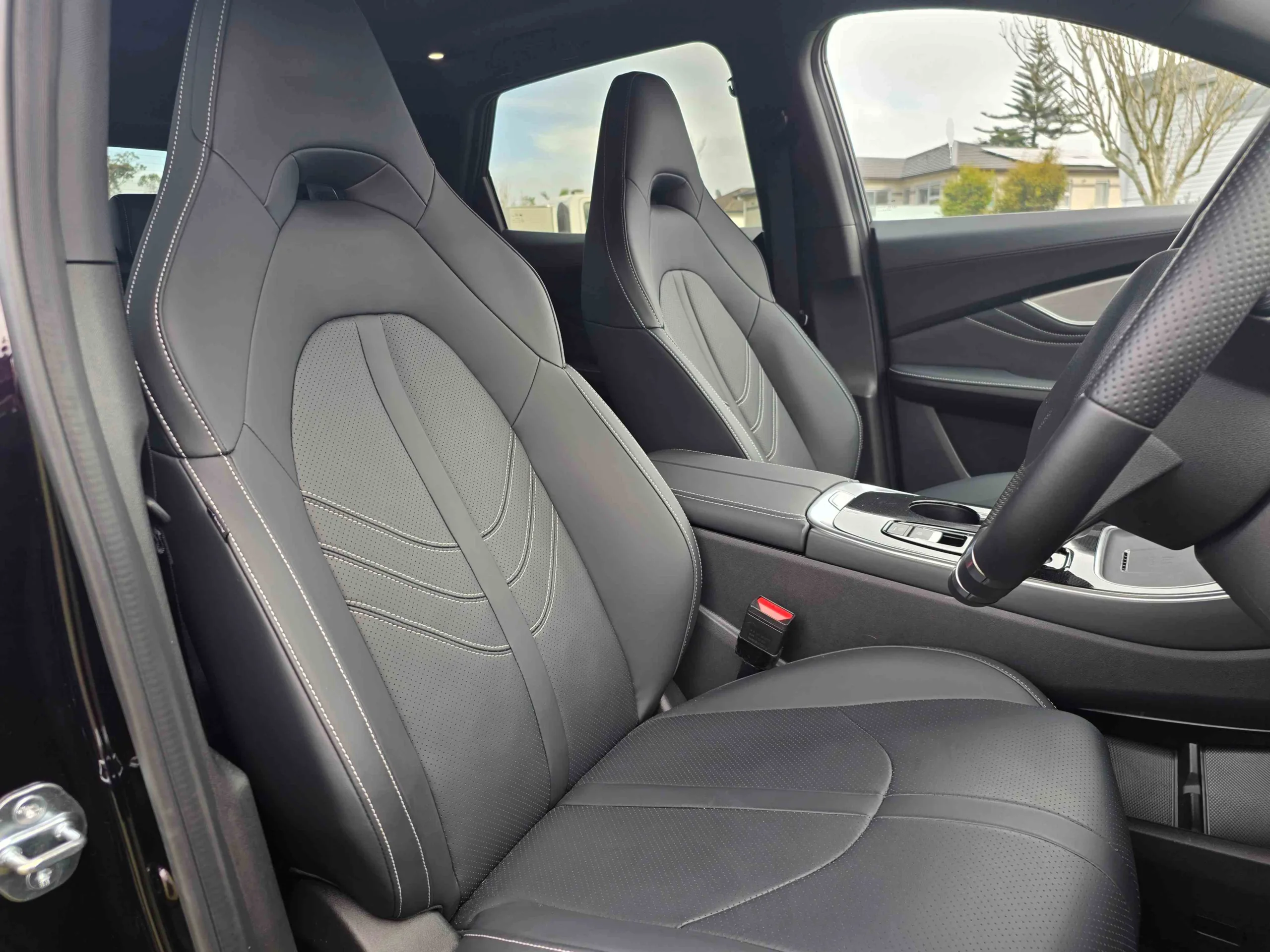
The cabin is spacious and airy, with comfortable, well-bolstered seats and plenty of room for occupants. The relatively upright SUV architecture gives everyone a reassuring amount of space, while rear passengers get good legroom and useful headroom despite the sloping roof.
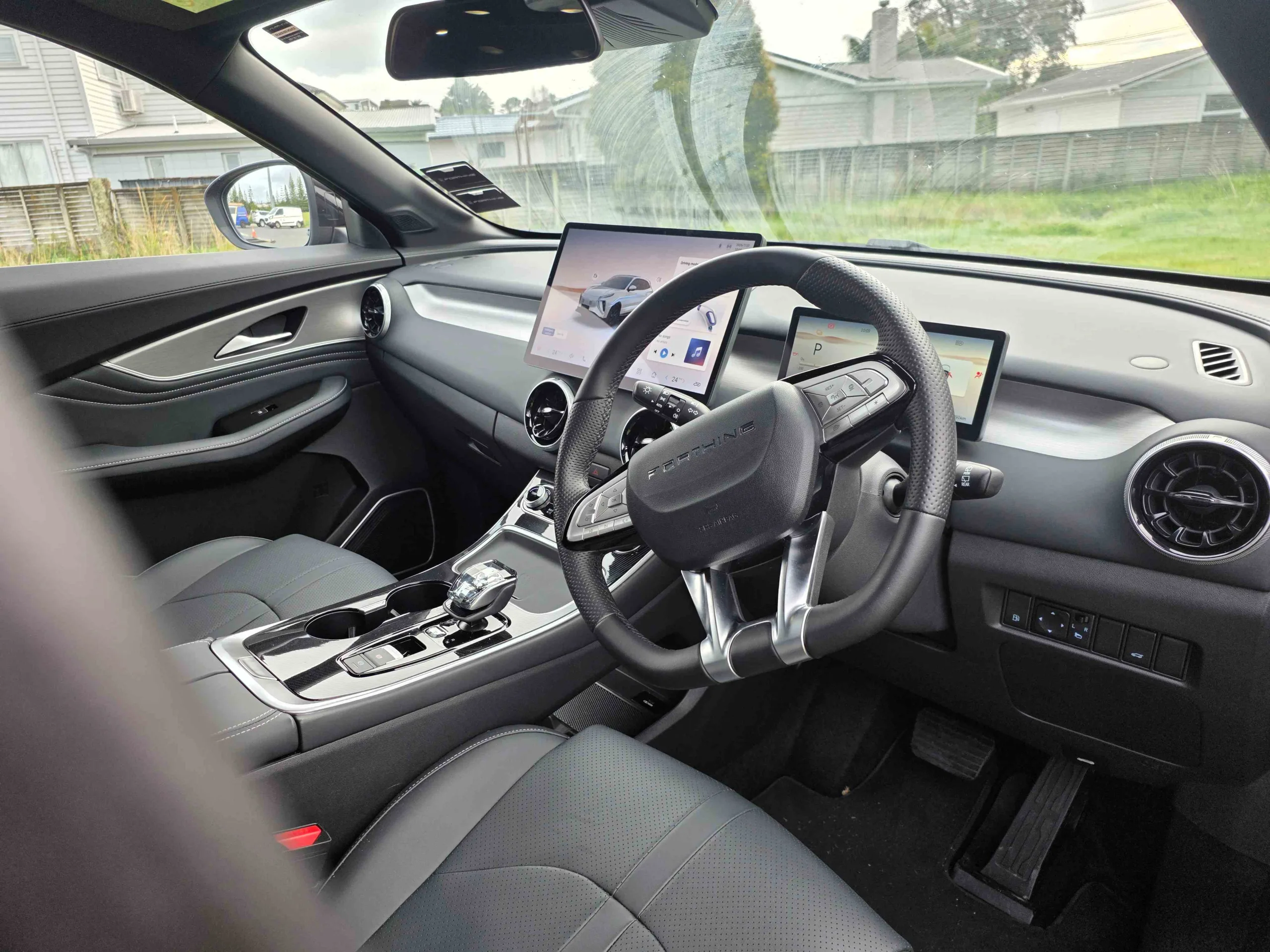
Forthing has also done a decent job of creating a premium ambience. There are stitched-look surfaces and smart detailing that initially make you think you’re sitting in something considerably more expensive. Spend a little more time examining things, however, and the harder plastics become apparent.
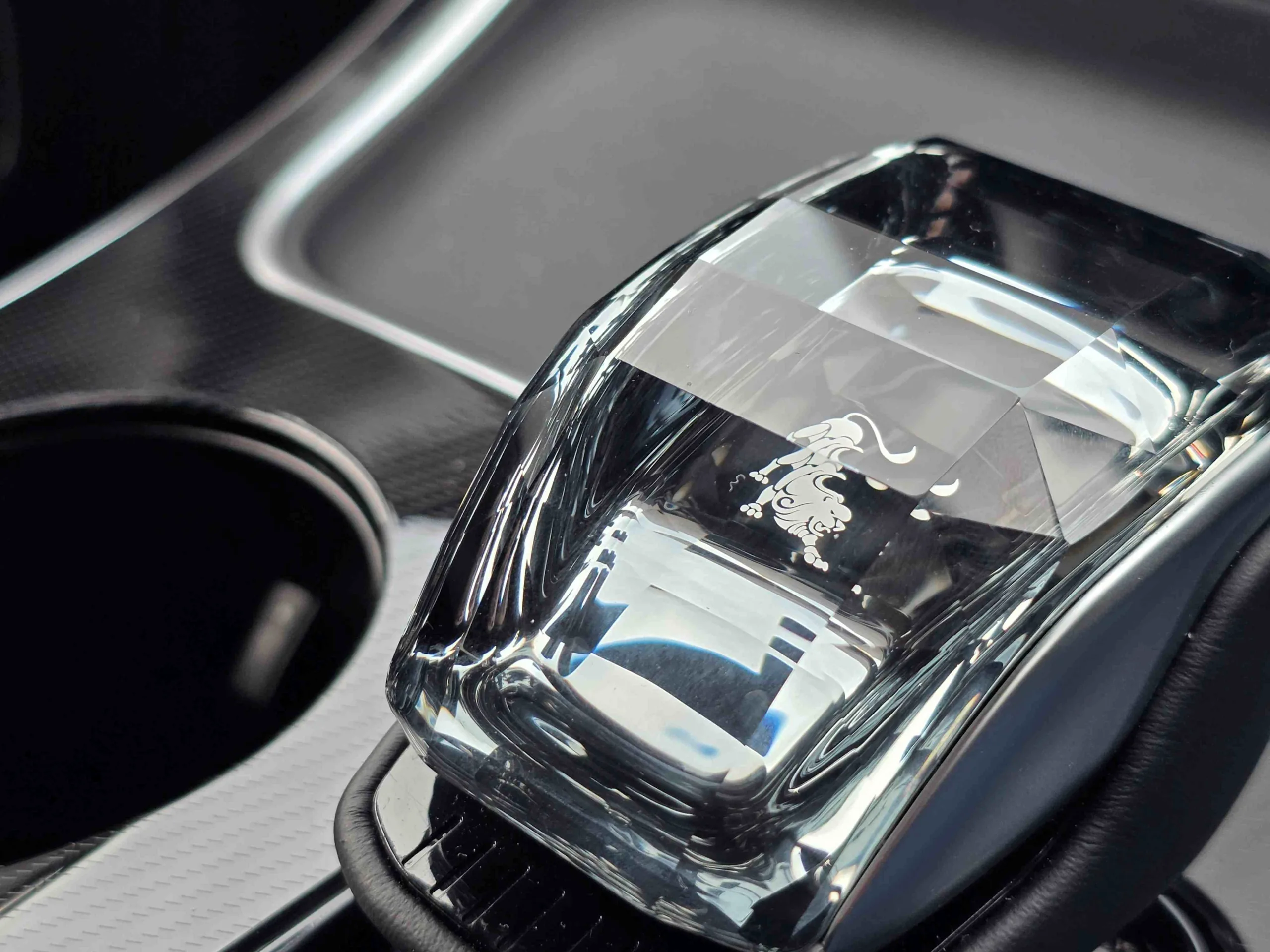
That’s not necessarily a criticism at $44,990, rather, it’s a reminder that Forthing has concentrated on making the Taikon feel expensive rather than pretending it actually is. One of my favourite details is the glass-effect gear selector, which looks like a little piece of jewellery in the centre console and feels considerably more upmarket than some of the surrounding switchgear.
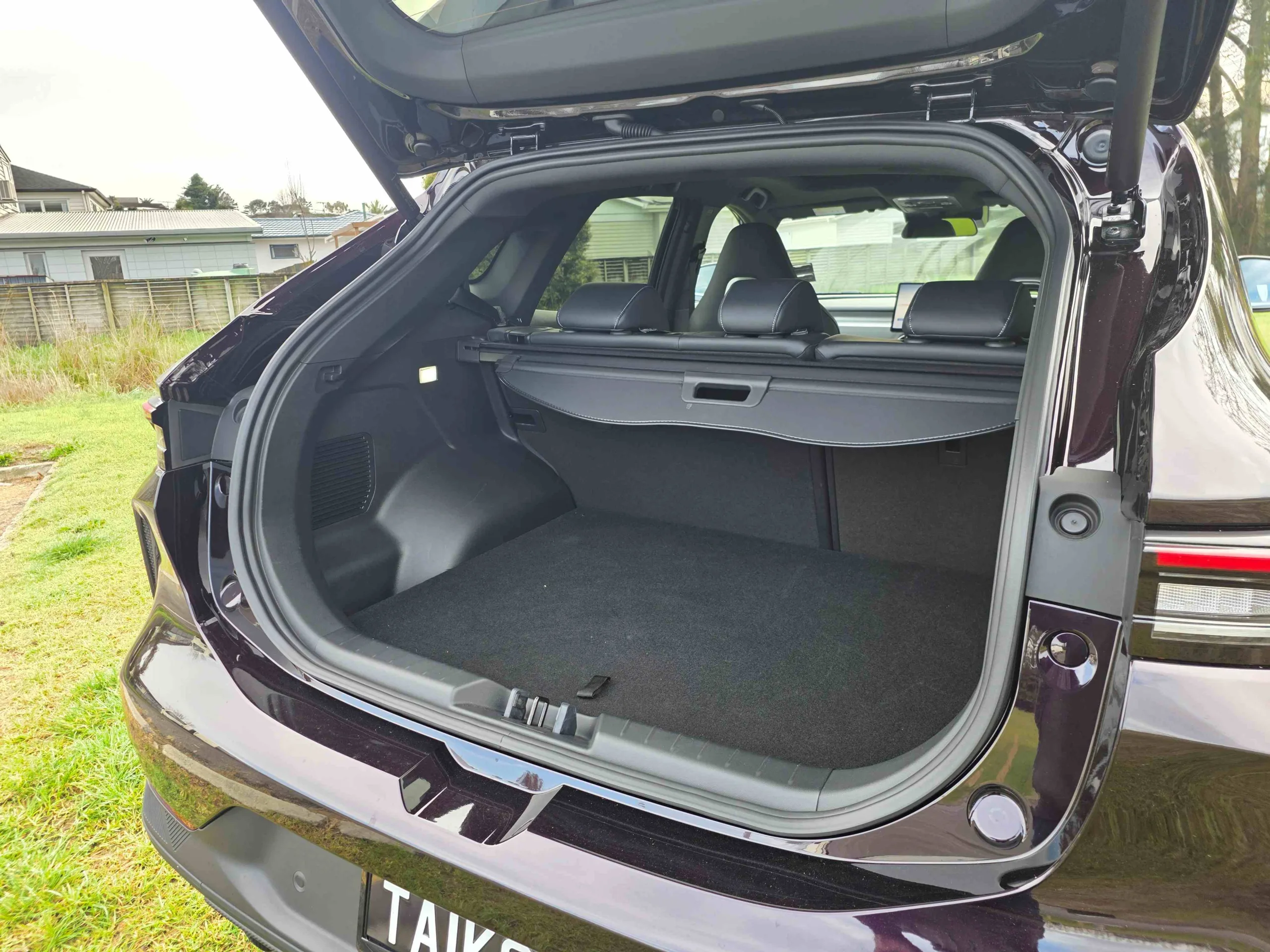
Then there’s the driver’s seat. It’s heated, ventilated and has a massage function. Yes, a roughly $45,000 SUV has a massage seat, it’s clear that new-car pricing has officially gone weird. The rear bench folds 60/40 and luggage capacity is approximately 510 litres, expanding substantially with the seats folded.
There are, however, a few areas where the Taikon reminds you that Forthing is still establishing itself. Some interior plastics and switchgear don’t have the tactile sophistication of more established Japanese, Korean or European rivals. There are also occasional interior rattles and minor/slow electrical/software niggles.
For me, the more obvious issue is simply refinement: some of the buttons and controls feel a little agricultural compared with the slick presentation elsewhere. It’s a bit like buying a flagship smartphone and discovering the buttons came from a calculator.
Big, bright and mostly sensible
The centrepiece of the dashboard is a 14.6-inch infotainment touchscreen, backed by an 8.8-inch digital instrument display. It’s big, clear and generally straightforward to use. Thankfully, Forthing hasn’t completely surrendered to the modern philosophy that absolutely everything must be controlled through a touchscreen. Important functions such as ventilation retain physical controls, which makes a considerable difference when you’re driving rather than sitting stationary trying to find a menu.
Wireless Apple CarPlay and Android Auto are supported, while the Exclusive also gets a 50W wireless charging pad. As I mentioned before, the 360-degree camera is another genuine highlight. Its image quality is good and it takes much of the stress out of positioning a reasonably substantial SUV into tight spaces.
The clever bit
The Super Hybrid combines a 1.5-litre petrol engine, 31.94kWh battery and 120kW/240Nm electric motor, with the electric motor driving the rear wheels. The petrol engine primarily functions as a generator rather than driving the wheels through a conventional gearbox. That means the Taikon behaves much more like an EV than a traditional petrol hybrid.
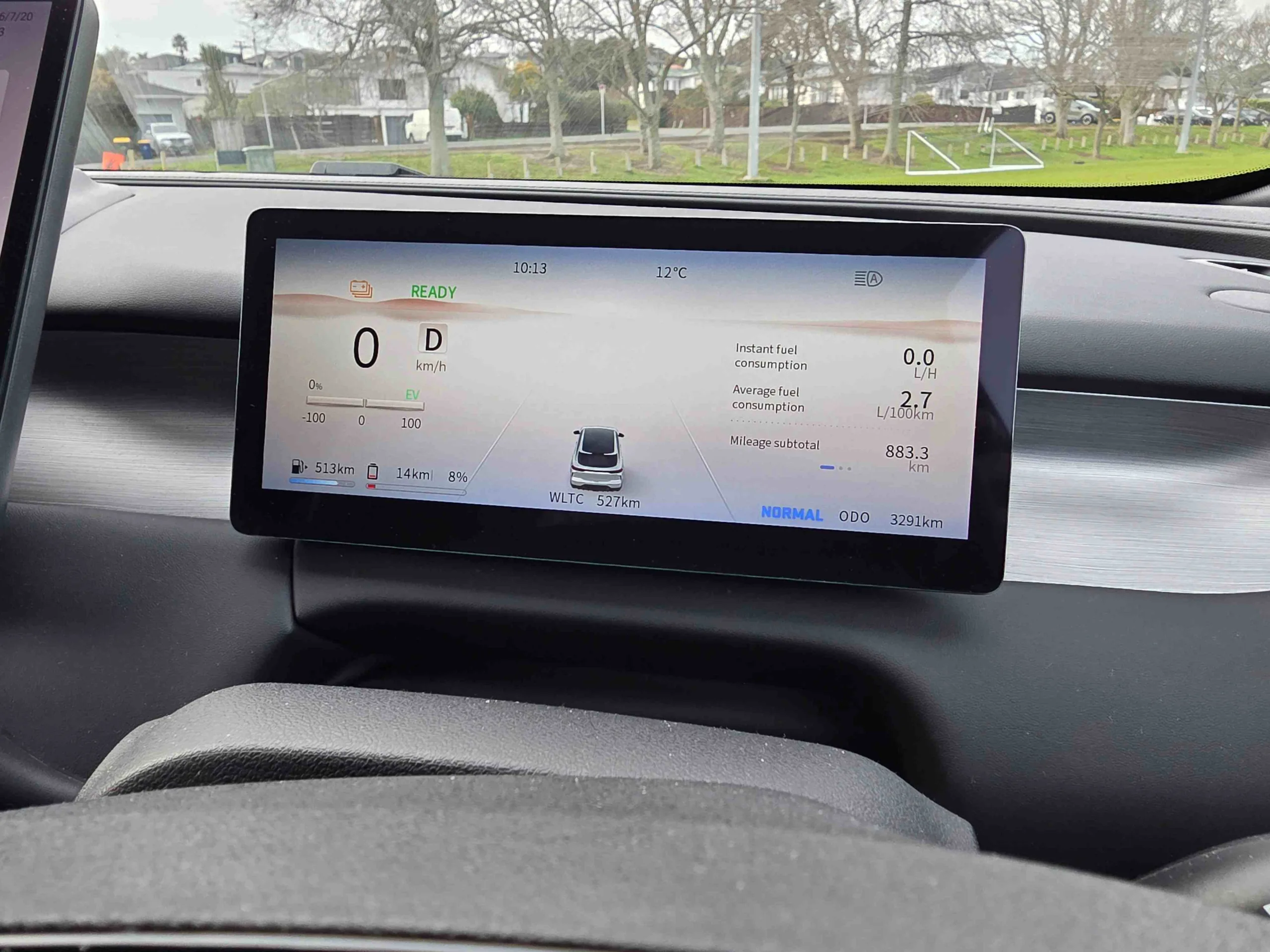
Forthing claims more than 180km of pure electric range and a combined range exceeding 1,000km, depending on conditions and operating mode.
Basically, your daily commute might be completed almost entirely electrically, while the petrol engine provides a safety net when you decide to point the nose towards Taupō, Rotorua, Queenstown or anywhere else that happens to be considerably farther away than the nearest fast charger.
It’s essentially trying to deliver the best bits of an EV and a hybrid without forcing buyers to choose between the two. And, importantly, the system works.
Comfortable, smooth and surprisingly accomplished
The electric motor provides immediate torque at lower speeds, making the vehicle smooth and effortless around town. A 0-100km/h time of around 12.5 seconds won’t trouble anything wearing an M, AMG or RS badge, but acceleration figures aren’t really the point here. Around town, the Taikon feels more responsive than that number suggests.
Electric torque arrives immediately and power delivery is smooth. The hybrid system transitions between electric driving and petrol-generated power without making a huge song and dance about it. The petrol engine is audible when called upon to generate more power, but generally remains unobtrusive.
There are three driving modes (Eco, Normal and Sport) although none transforms the Taikon into a sports car. The rear-wheel-drive layout does, however, give it a nicely balanced feel. Steering is reasonably responsive and, in its more heavily weighted setting, provides a decent amount of feedback.
The Taikon is happiest cruising. The ride is comfortable, the cabin is spacious and the electric drivetrain makes urban progress pleasantly relaxing. There is some wind and road noise that rear’s its head at highway speeds, although I wouldn’t describe this as a defining (or deafening) problem.
A compelling alternative for Kiwi buyers
The Forthing Taikon Super Hybrid Exclusive gives buyers a lot of vehicle, a lot of equipment and make electrification genuinely useful. At $44,990 plus on-road costs, it isn’t the cheapest Taikon (the Luxury starts at $39,990) but the Exclusive makes a strong case for spending the extra.
You get the panoramic roof, powered tailgate, 360-degree camera, wireless charging, electric seats, upgraded equipment and, most importantly, a battery large enough to make EV driving genuinely useful rather than merely theoretical.
The seven-year/200,000km vehicle warranty and eight-year/200,000km battery warranty are also reassuring, particularly when you’re buying from a relatively new brand in New Zealand.
There are still some rough edges though. The switchgear doesn’t always match the sophistication of the cabin presentation, rear visibility isn’t brilliant and the infotainment/software experience isn’t quite at the seamless level offered by the established heavyweights. More broadly, Forthing simply doesn’t have the decades of NZ ownership history, servicing experience and resale data that brands such as Toyota, Hyundai and Mitsubishi can offer.
But none of that changes the fundamental appeal. The Super Hybrid system genuinely works. It’s smooth, clever and particularly well suited to the way many Kiwis actually use their SUVs.