When a nine-person development team arrived in New Zealand from Foton back in 2018, they had a deceptively simple mission, and that was to understand what the local market wanted in a ute. Eight years later, that homework has apparently paid off – big time.
We were invited to Foton NZ Hamilton HQ to find out the what’s what of the all-new Tunland V Series.
But first some history. Back in ‘18, the (now long-departed) previous generation Tunland had already proven itself in New Zealand, but there were still many challenges or hurdles to jump. So at Claudelands Event Centre, engineers methodically examined every double-cab competitor of the time, cataloguing what worked and what didn’t.
The resulting ‘wish list’ was ambitious but focused, strong design, quality that lasts, fair pricing, and genuine performance, essentially no half-measures. What ultimately emerged is something that Foton believed the market was quietly waiting for – namely, the all-new Tunland V Series.
Their feedback was concise, traditional utes have limits. American-spec pickups are oversized and expensive. So the Tunland V Series (V7 and V9) is positioned to occupy the space between, large enough to matter, small enough to be practical, and priced accordingly.
Its Looks
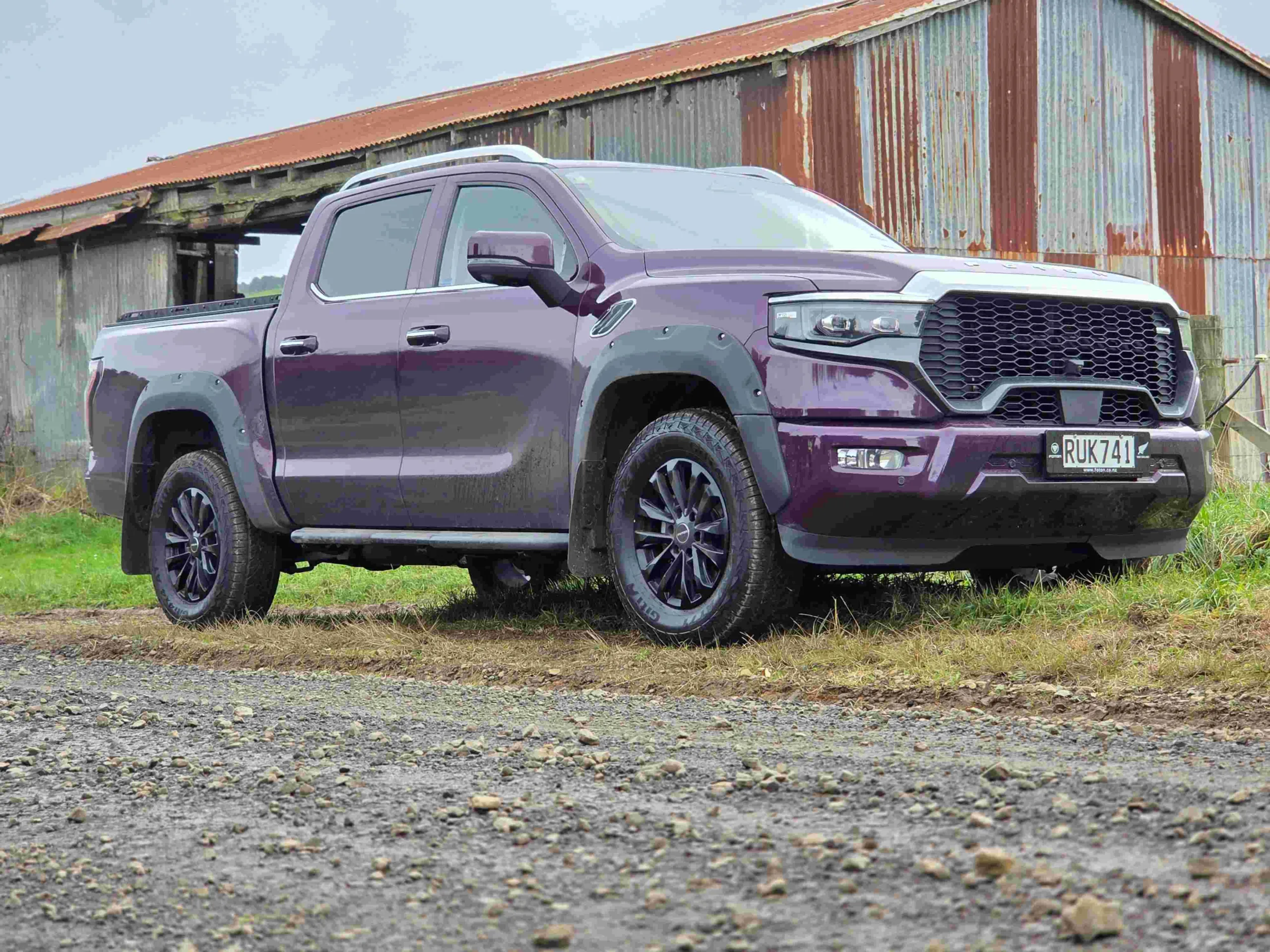
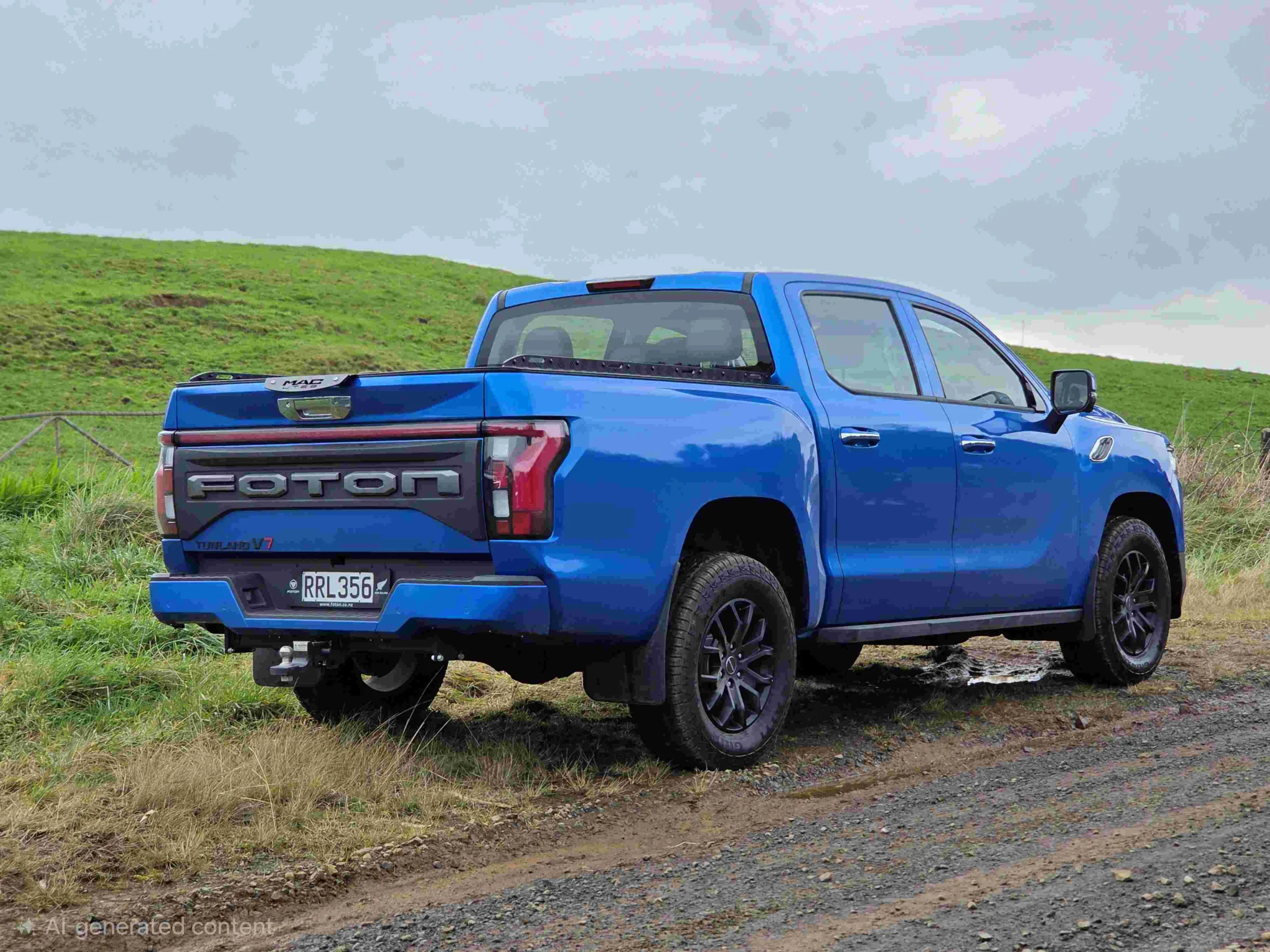
Two distinct personalities have been created (and yes, you can be forgiven for seeing some similarities to the ute establishment). The V7 reads modern while the V9 sports some attitude. The gGrille, headlights and bumpers are model differentiated, yet both share a purposeful stance without the posturing.
When it comes to size, the numbers impress. At 5.6 metres long with a 3.3-metre wheelbase (longest in class), there’s genuine room for all. The tray stretches 1.5 metres long, 1.6 wide, and 530mm deep. That means 1.2 metres between the wheel arches, so a standard pallet fits comfortably.
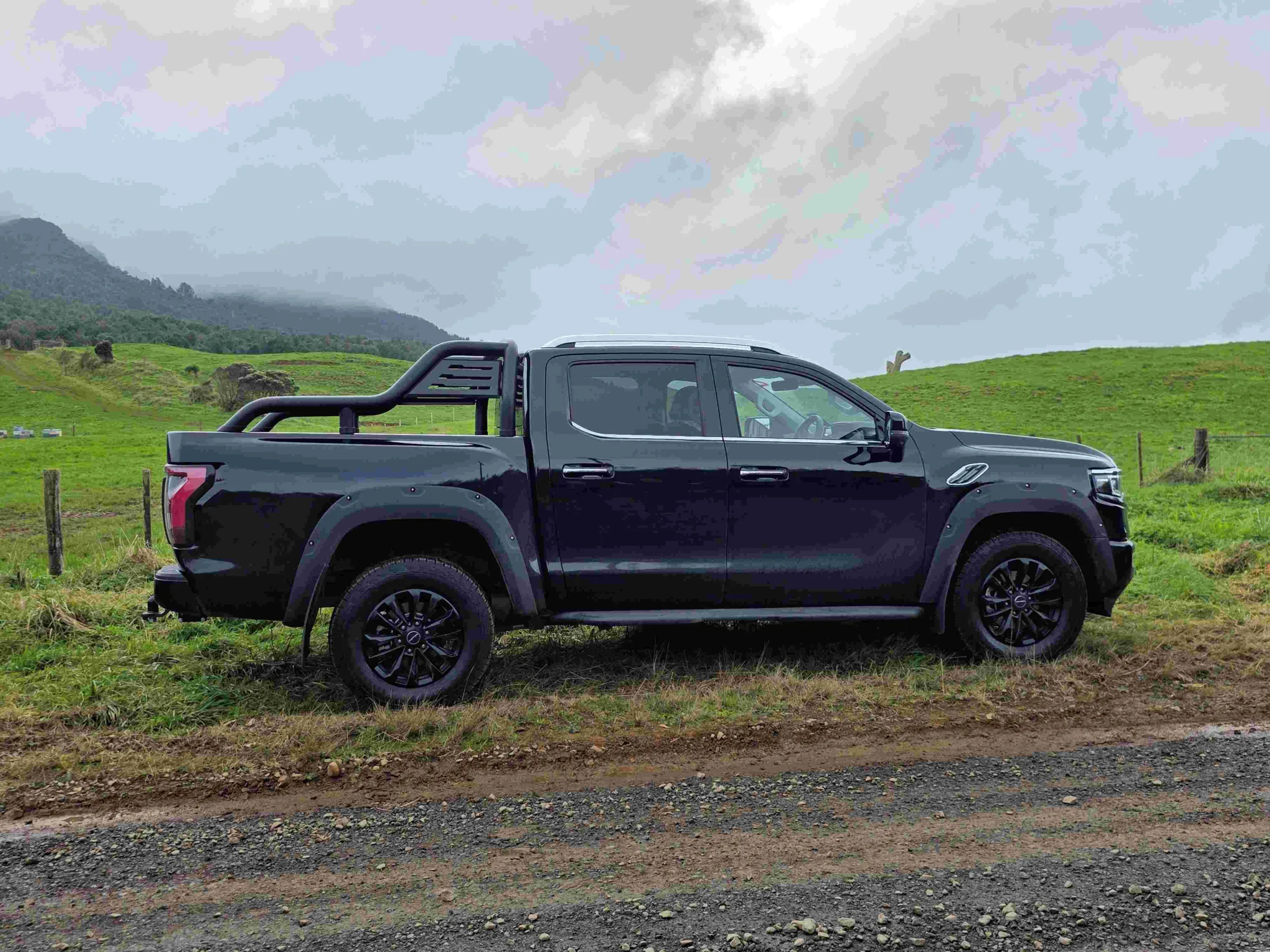
Ground clearance sits at 240mm with approach and departure angles of 28 and 26 degrees respectively, basically figures that are ideally suited for actual farm tracks and boat ramps.
The suspension strategy differs too and quite meaningfully. The V7 uses heavy-duty leaf springs for payload capacity. The V9 opts for multilink coil springs, prioritising ride refinement, so you can basically pick the one matching your actual needs, workhorse or highly-competent plaything.
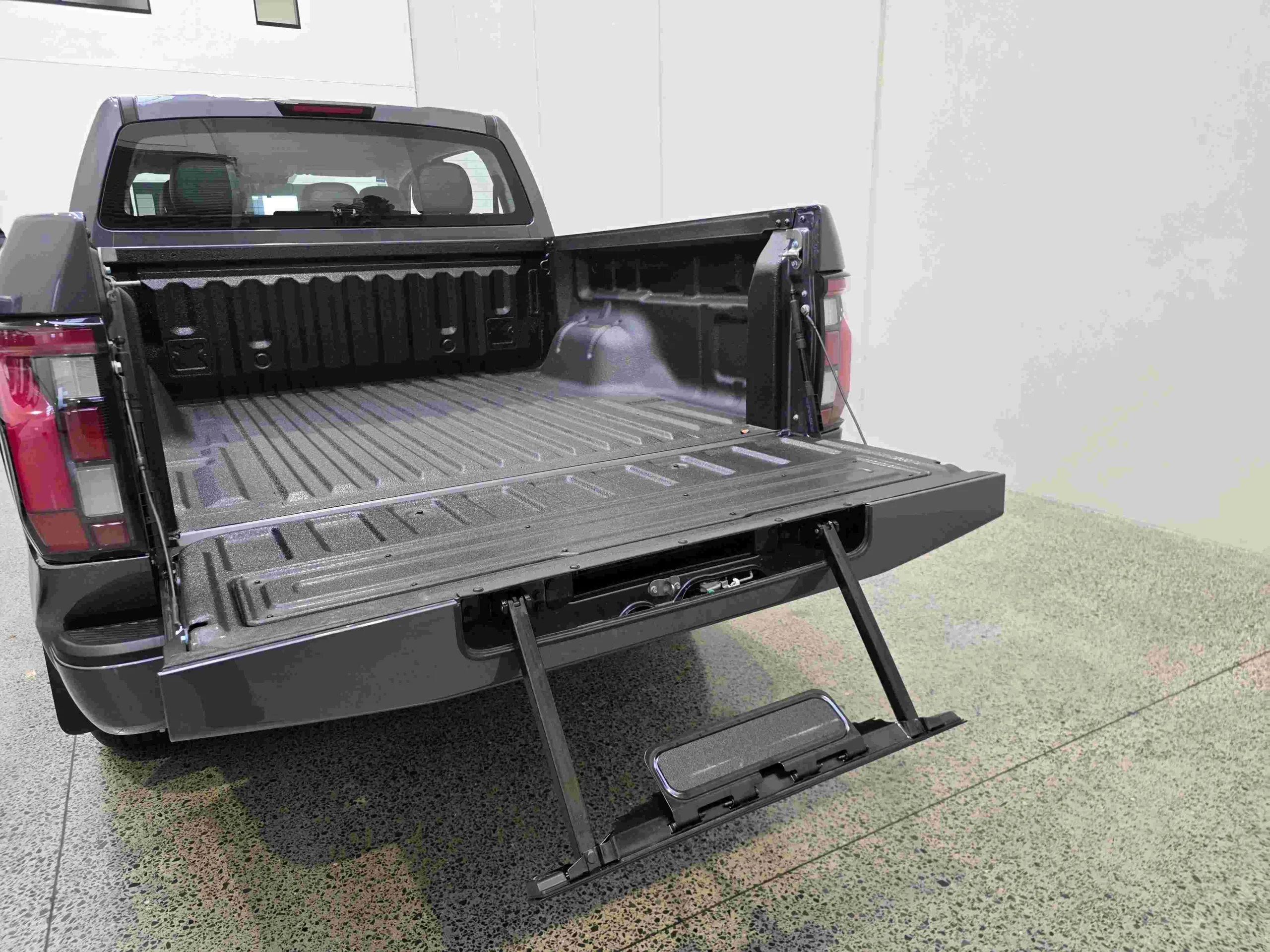
Cabin Credentials
The previously mentioned 3.3-metre wheelbase translates to surprising legroom both front and rear, with the cabin width approaching SUV proportions, you’ll undoubtedly thank Foton for this if you’re spending hours working inside the vehicle.
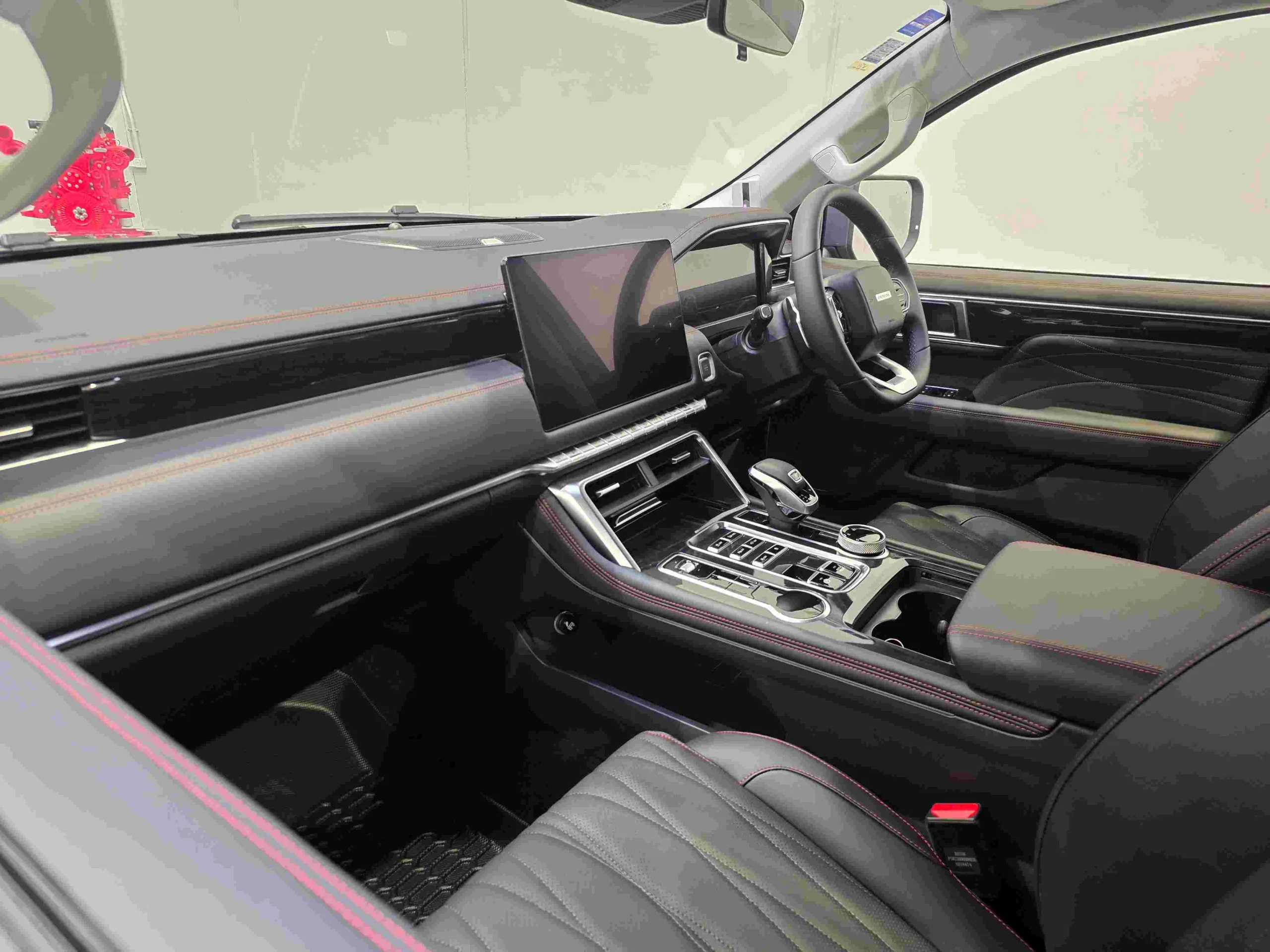
Foton’s engineers grasped something fundamental, ute drivers deserve decent ergonomics and quiet cabins too. The controls feel tactile; displays are large and responsive and Voice control lets you summon functions by saying “Hi Foton.” It’s worth pointing out here that the system doesn’t respond to ‘other brand names’, that’s how thorough my reviews are – you’re welcome.
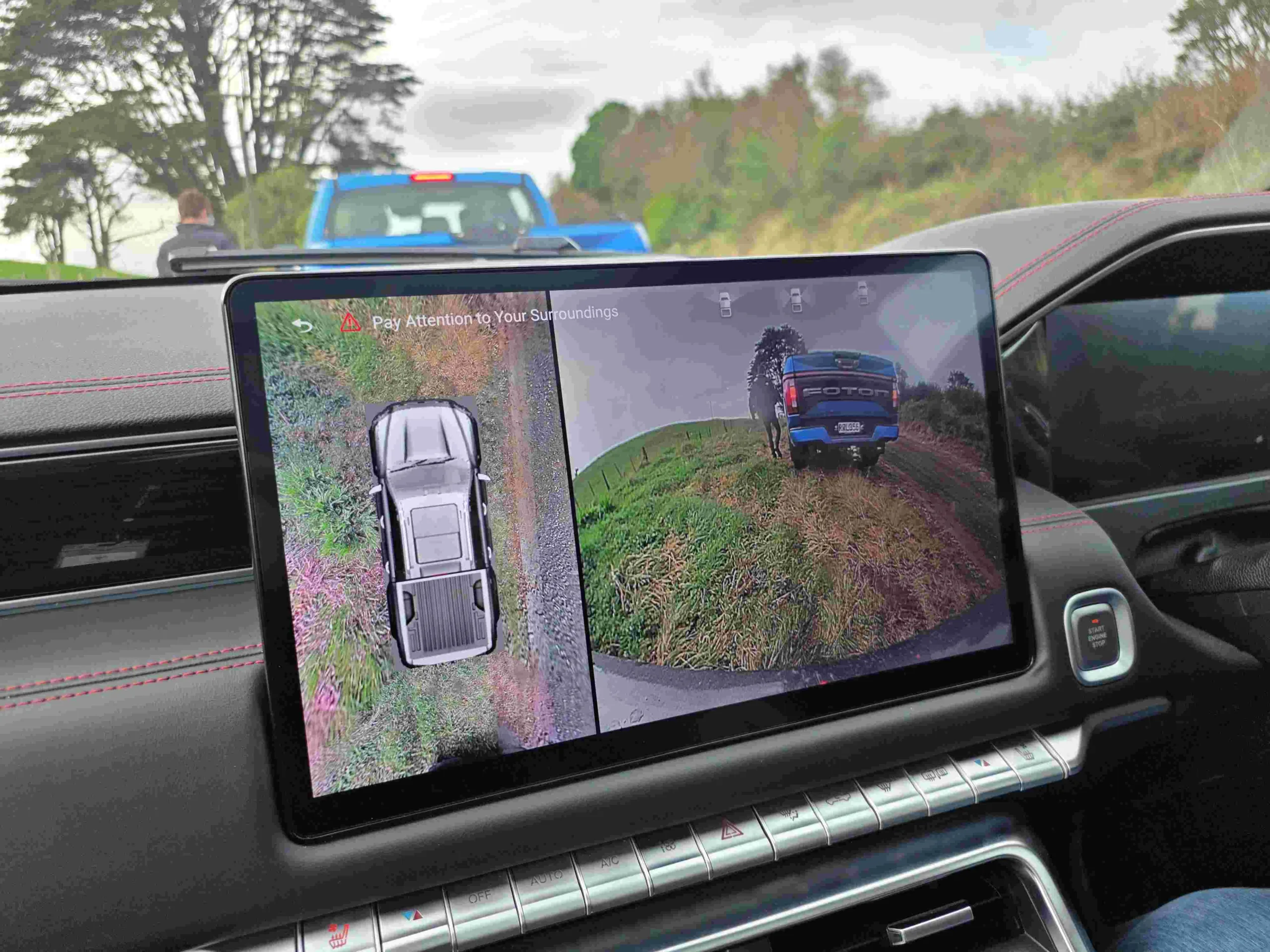
It’s also loaded with Active safety systems (there is room after all). Autonomous emergency braking, lane centering, adaptive cruise, rear cross-traffic alert, blind-spot monitoring, all handle the heavy lifting on fatigue-inducing highway runs. While a 360-degree camera system with interior displays adds genuine utility for work sites and city maneuvers.
The Powertrain
Under the Tunland’s big bonnet sits a A 2.0-litre turbodiesel with 48-volt mild hybrid assistance and eight-speed ZF automatic. Together they produce 120kW and 450Nm. These numbers sound modest until you understand how Foton implemented them.
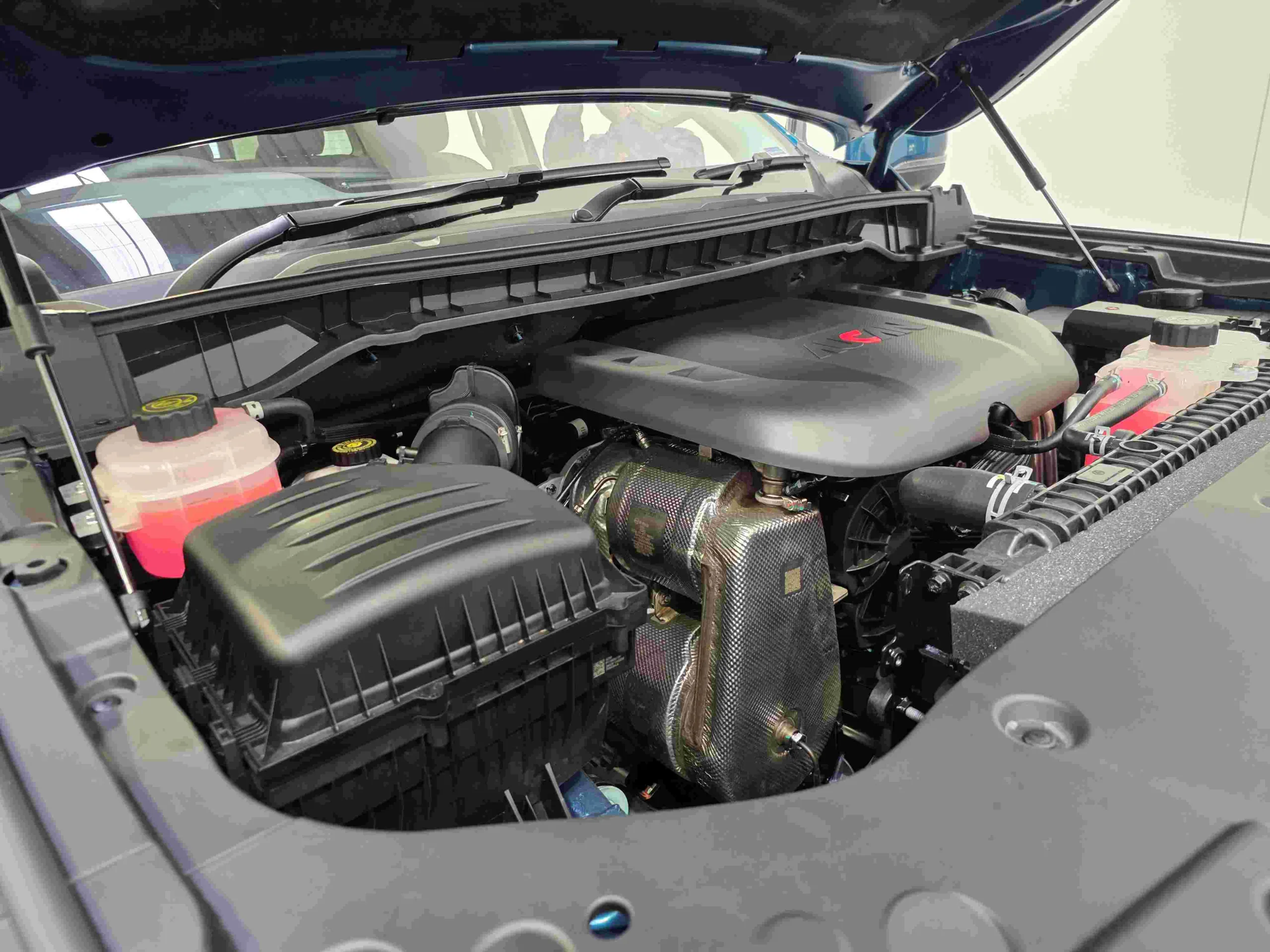
The hybrid system assists low-RPM performance when towing or heavily laden; while the turbo delivers smooth power across the range. The result is 3.5-tonne towing capacity and one-tonne payload. The powertrain feels effortless whether you’re genuinely working or cruising highway, and we even tested its pulling power with a 2.5 tonne digger and trailer combo – it worked a treat.
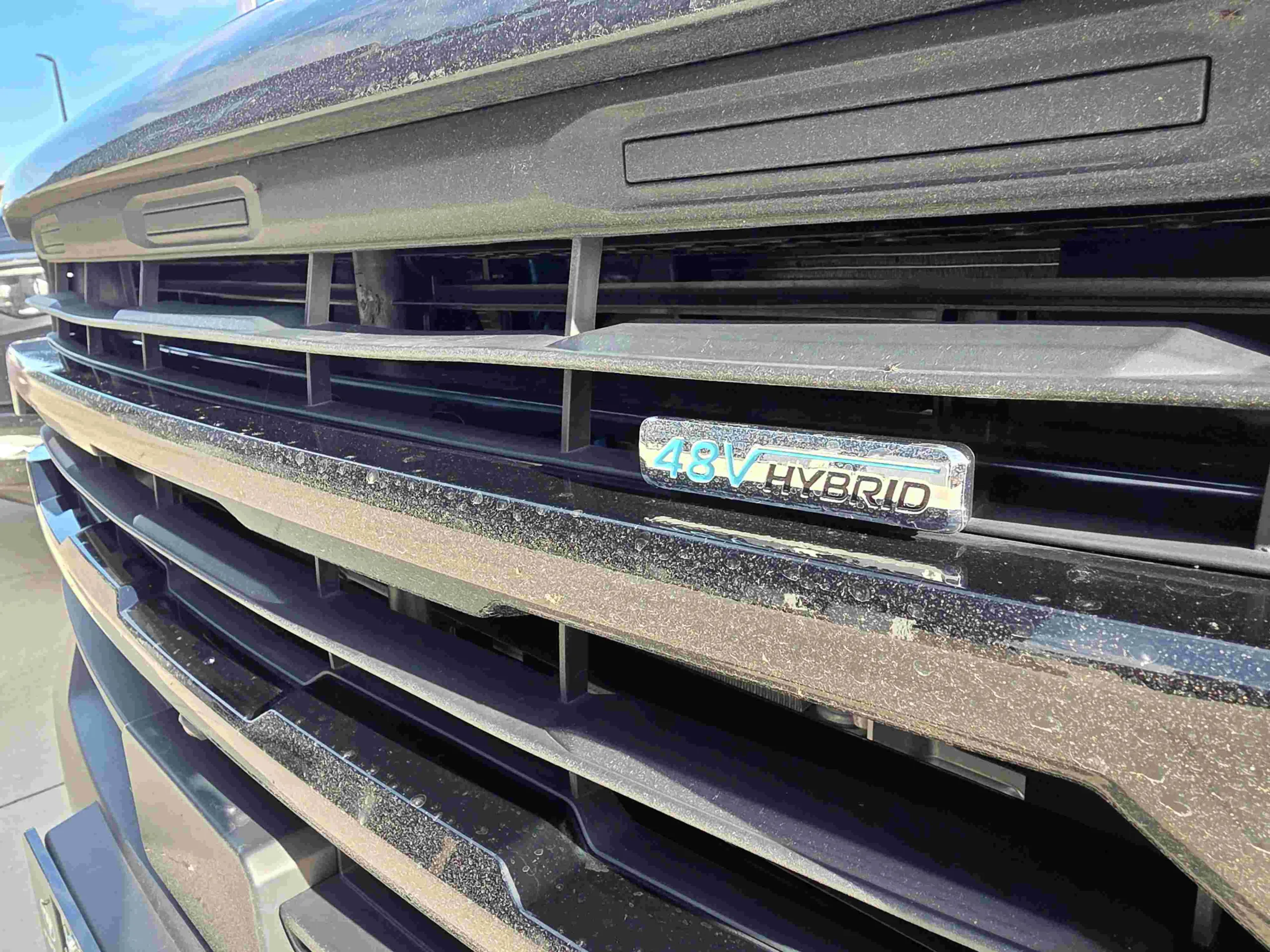
Underneath sits a ladder-frame chassis, Foton has built commercial vehicles in China for three decades and they sit at #1 in their local market, that experience shines brightly.
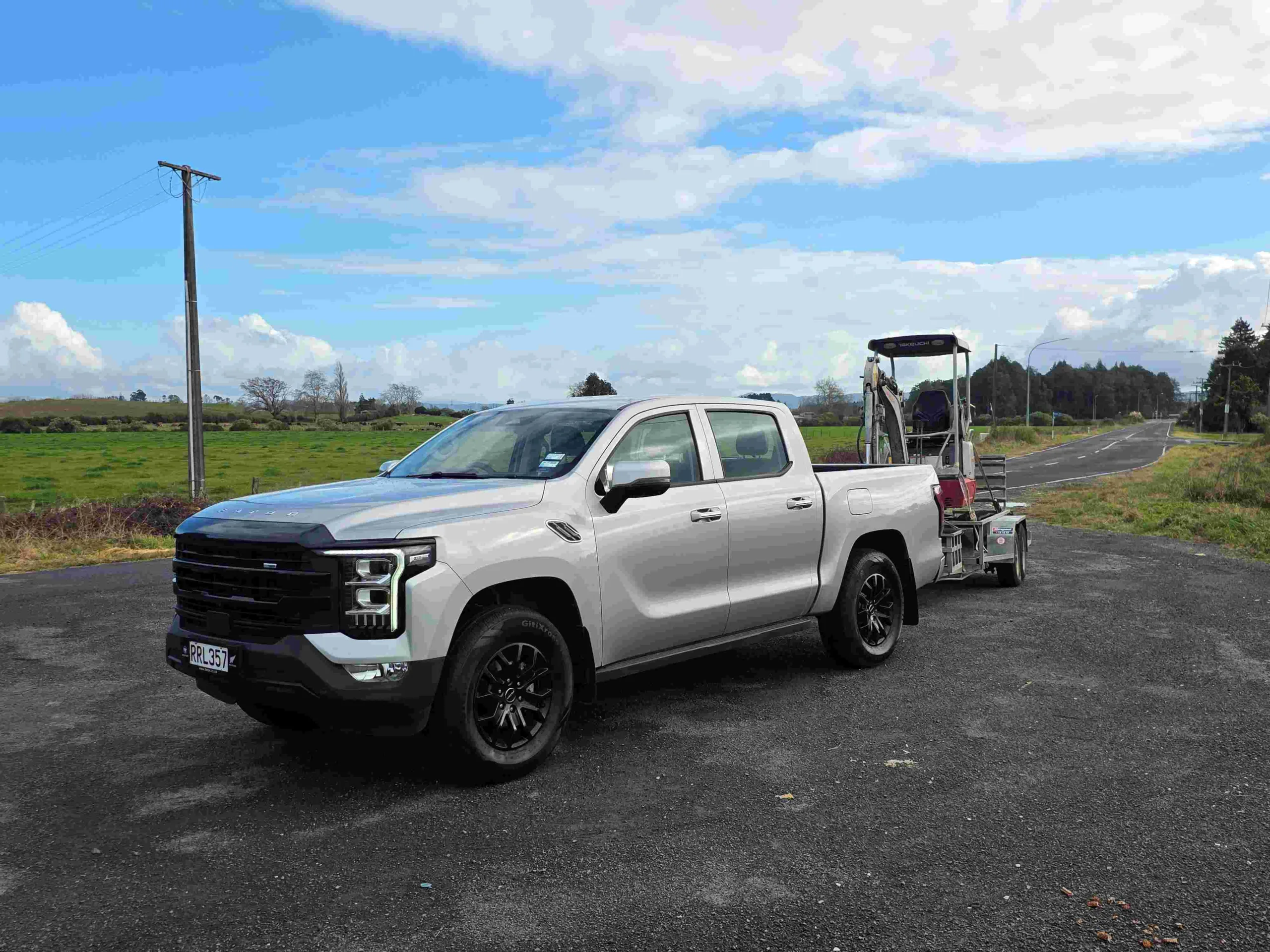
Enough chat, how does it drive?
Our drive route was a return trip from Hamilton to Raglan, encompassing both sealed and un-tarmac’d surfaces.
Climbing on-board, the first thing that strikes you about the new Tunland is the cabin space, they weren’t kidding. The seats are comfortable and happily accommodate sizable occupants, but even then, there’s more than ample space between driver and co-pilot, and even more for those in the rear – with legroom to spare.
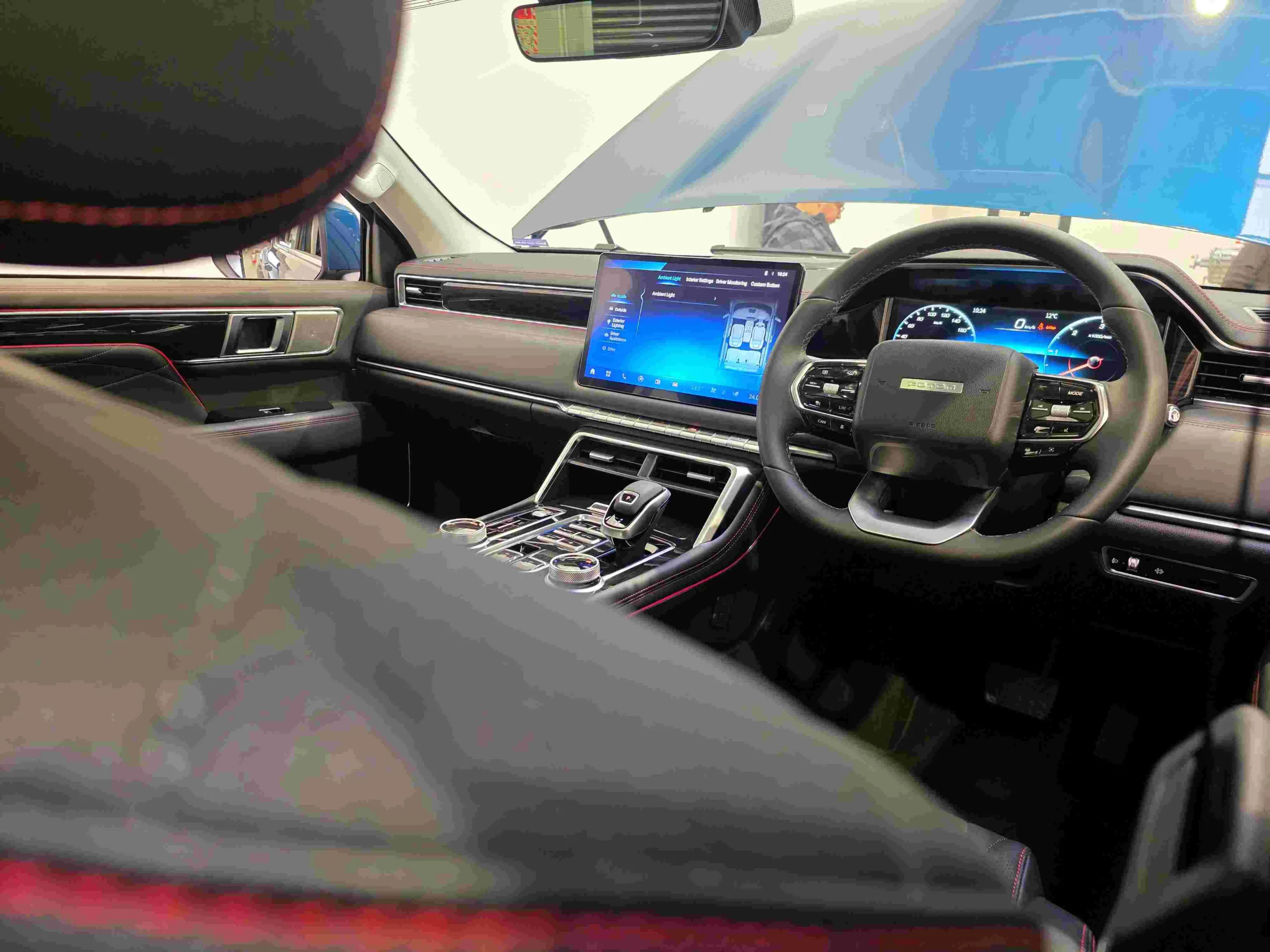
The fit and finish is a few steps above utilitarian, but you still get that durable feeling, so great for both workmates and family. The infotainment comes via a 14.6” screen while the instrument cluster is 12.3”. Both are customisable to suit and clear as a fog-free day in the Tron.
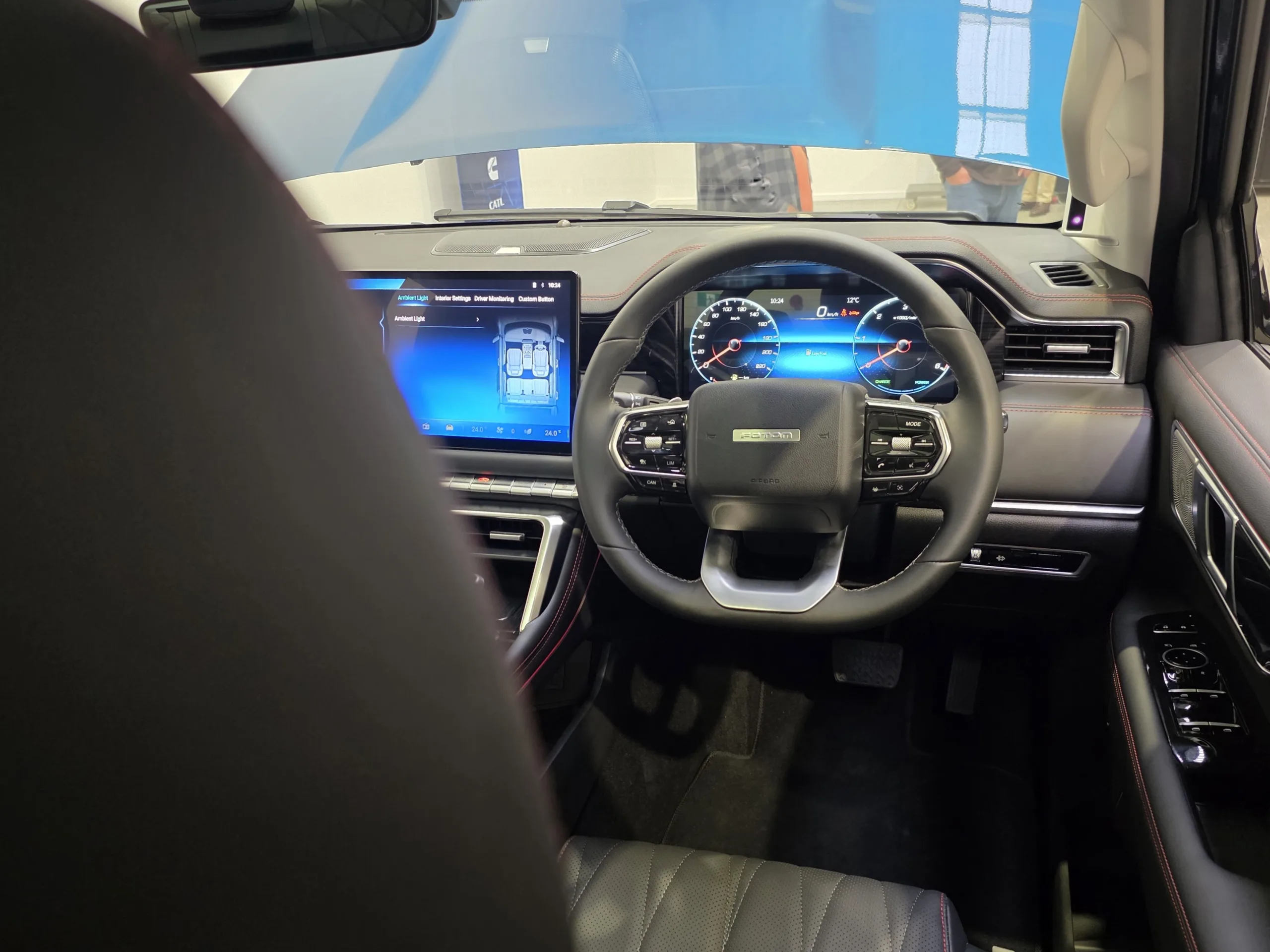
There are also switches, buttons and dials for those of us traditionalists that don’t want to scroll through countless menus just to heat up the place. Apple users can rejoice with wireless access, while those of us with (superior) Android devices must use cables. The voice control is quite responsive (provided you address it properly) but when I asked it to open my window, the Tunland decided to open them all, and when I was trying to catch it out in the V7 by asking it to open the sunroof it doesn’t have, it told me it couldn’t and questioned my intelligence (or at least that’s how it felt.
For the drive to the coast we opted for the coil-springed V9 and I have to say that on both surfaces, the suspension offered a comfortable and even malleable drive, absorbing the lumps and bumps and sitting nicely on the road.
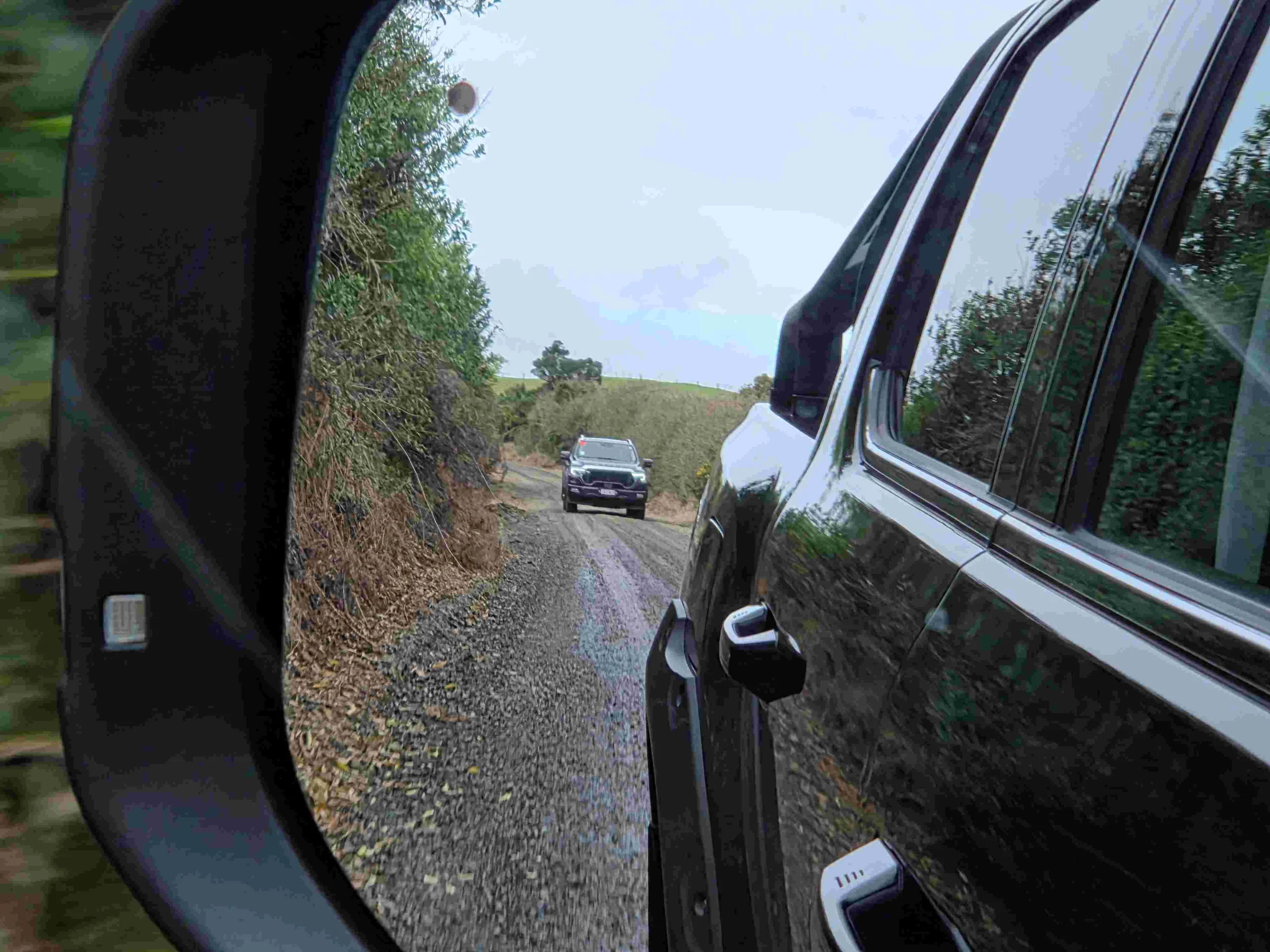
The engine sound is noticeably muted and the drive modes, offered distinctive throttle inputs, particularly more responsive in sport. I found the steering a little heavy, but discovered you can change this to suit and (joy of joys), you can switch off many of the ADAS beeps should you so choose and they will stay off. In saying that, I didn’t feel the need as they were far from naggy.
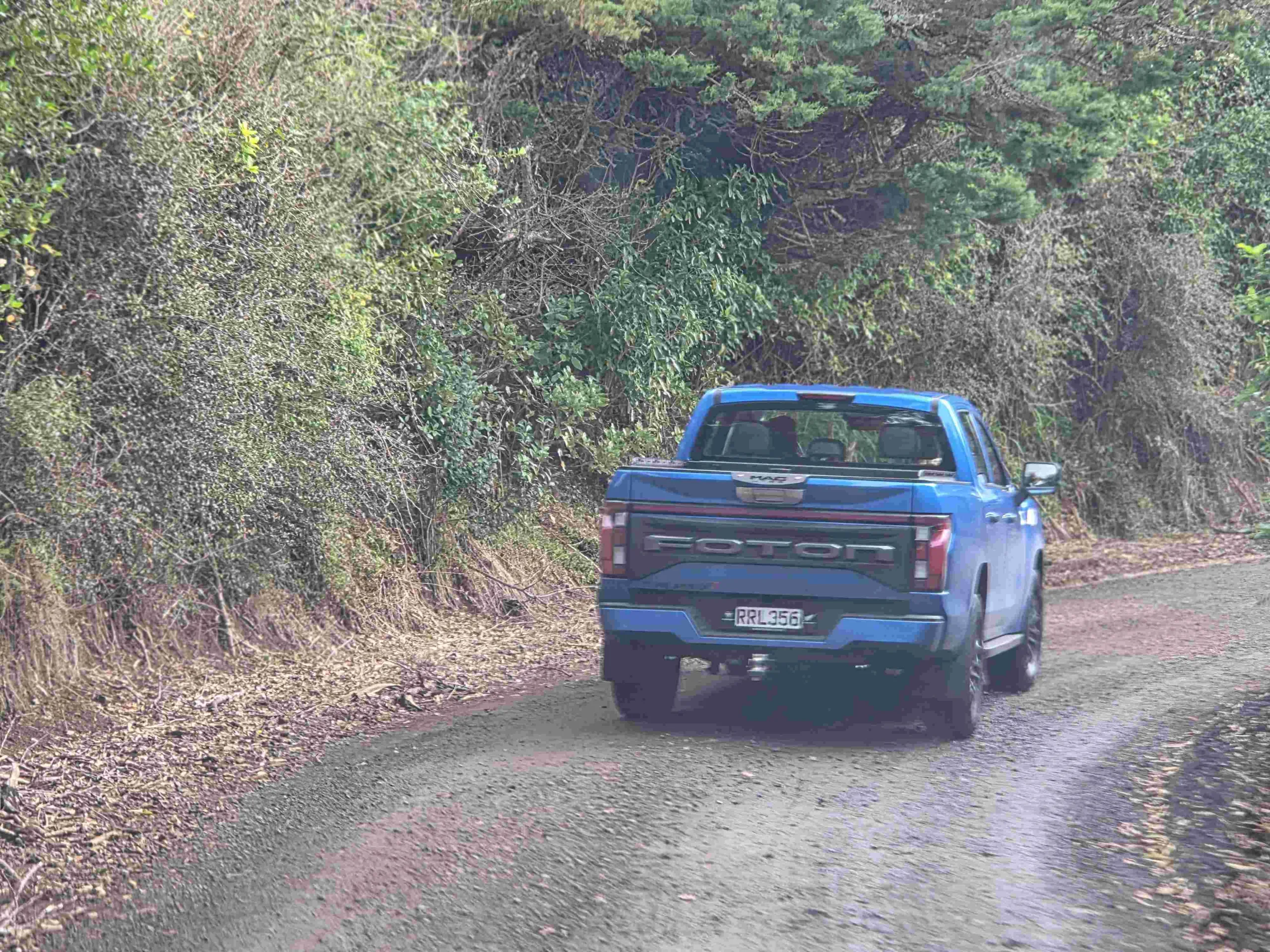
For the return trip, we jumped into the more ‘tradie’ leaf-springed V7 and although the ride was marginally firmer, it still offered a composed ride and most of the trimmings.
Tarmac Takeway
Quite simply, the Tunland V series offers heaps. For tradies who work hard, business owners who explore, families wanting versatility, this delivers. More importantly, it arrives with infrastructure. Foton New Zealand maintains purpose-built national headquarters and demonstrable after-sales commitment (basically they have a huge parts department – based on years of experience with big trucks).
For those in the market for a c$50k ute, it’s a genuinely considered alternative worthy of serious deliberation.
Key Specs
Dimensions: 5.6m length, 3.3m wheelbase, 1.5m × 1.6m × 530mm tray
Engine: 2.0L 4-cylinder diesel + 48V mild hybrid, 120kW, 450Nm
Transmission: ZF 8-speed automatic
Capacity: 3.5-tonne towing, 1.0-tonne payload
Clearance: 240mm ground, 28° approach, 26° departure, 21° ramp-over
Warranty: 7 years unlimited kilometres plus 7 years roadside assistance