
Two car brands most Kiwi families have never heard of just landed in New Zealand. Both are owned by the same group as Volvo. I spent a few weeks living with three of their family SUVs, kids and hockey gear and all, to find out whether the badge you don’t know deserves a place on your shortlist.
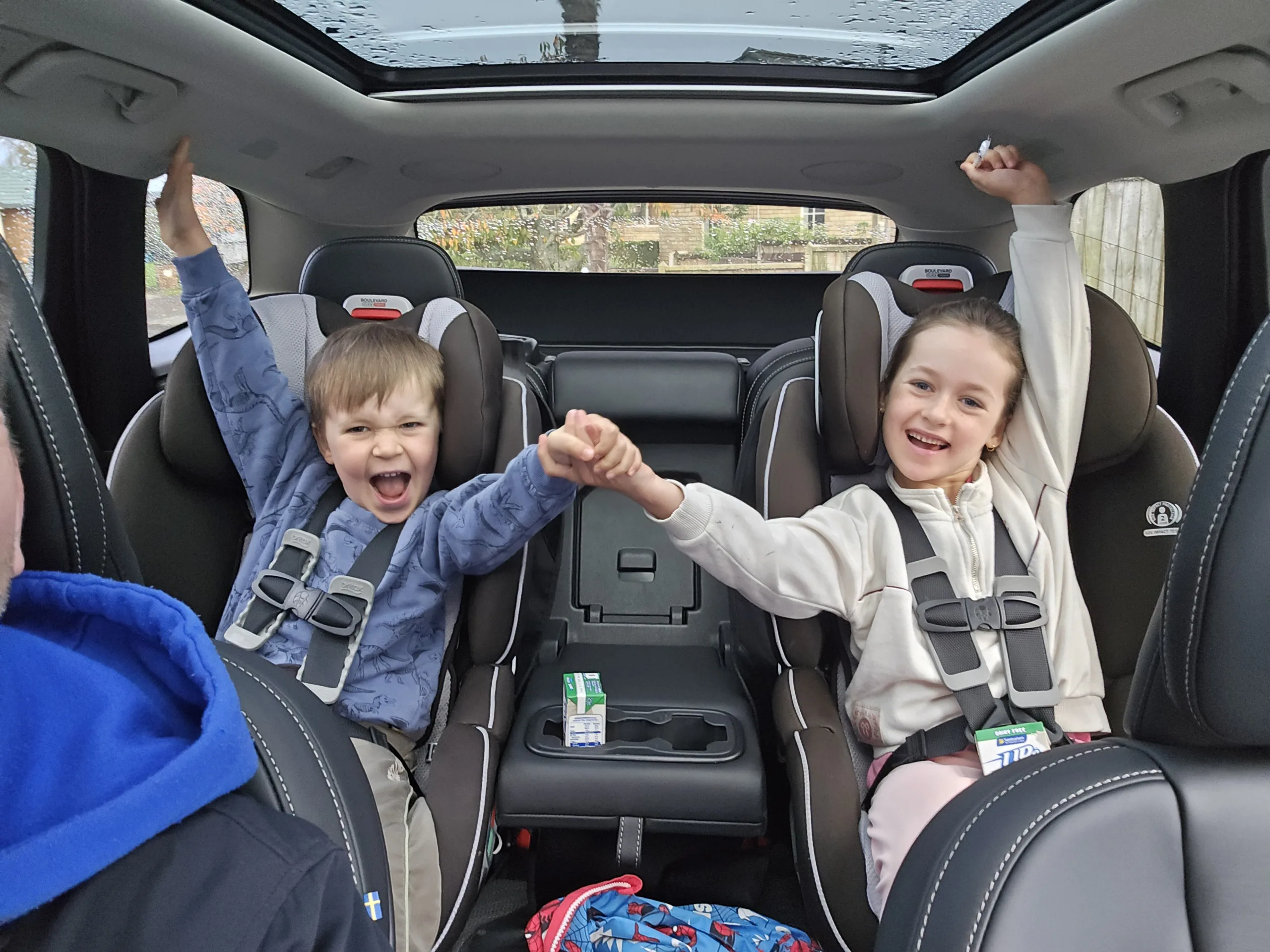
Last weekend my four-year-old, Mikko, threw both arms in the air in the back seat and yelled “again!” the second we pulled out of the driveway. His six-year-old sister Maija was next to him doing the same, the pair of them grinning up at a panoramic glass roof while I tried to remember whether I had packed the hockey kit. This is family motoring as it actually is. Loud, joyful, slightly chaotic, gear everywhere.
I am a Hamilton dad of two. My wife Anjali plays international hockey across two codes, so the boot of whatever we are driving is permanently half-full of skates, sticks and bags. We are exactly the family the New Zealand car market is built for: active, time-poor, child-seat-juggling, weekend-tripping. And over the past few weeks I have been living with three cars wearing badges most Kiwis have never heard of. Geely. Zeekr. Both new here. Both, it turns out, far more familiar than they first appear.
Here is the line that got my attention, and it is the one I want to plant in yours.
The brands you don’t know own the ones you do
The group behind Geely and Zeekr already owns Volvo. And Polestar. And Lotus. It holds roughly a 17 percent stake in Aston Martin, builds the London Black Cab, and runs a joint venture with Mercedes-Benz that makes the electric Smart cars.
Long-time readers will recall I’m a big fan of the Volvo XC40 Recharge, I’ve owned a Volvo V50 wagon before and, for completeness, we also drove the Volvo XC60 and Volvo XC90 as part of researching for this story. I wanted to draw current parallels between the brand everyone knows, and the new kids on the block with unfamiliar names.
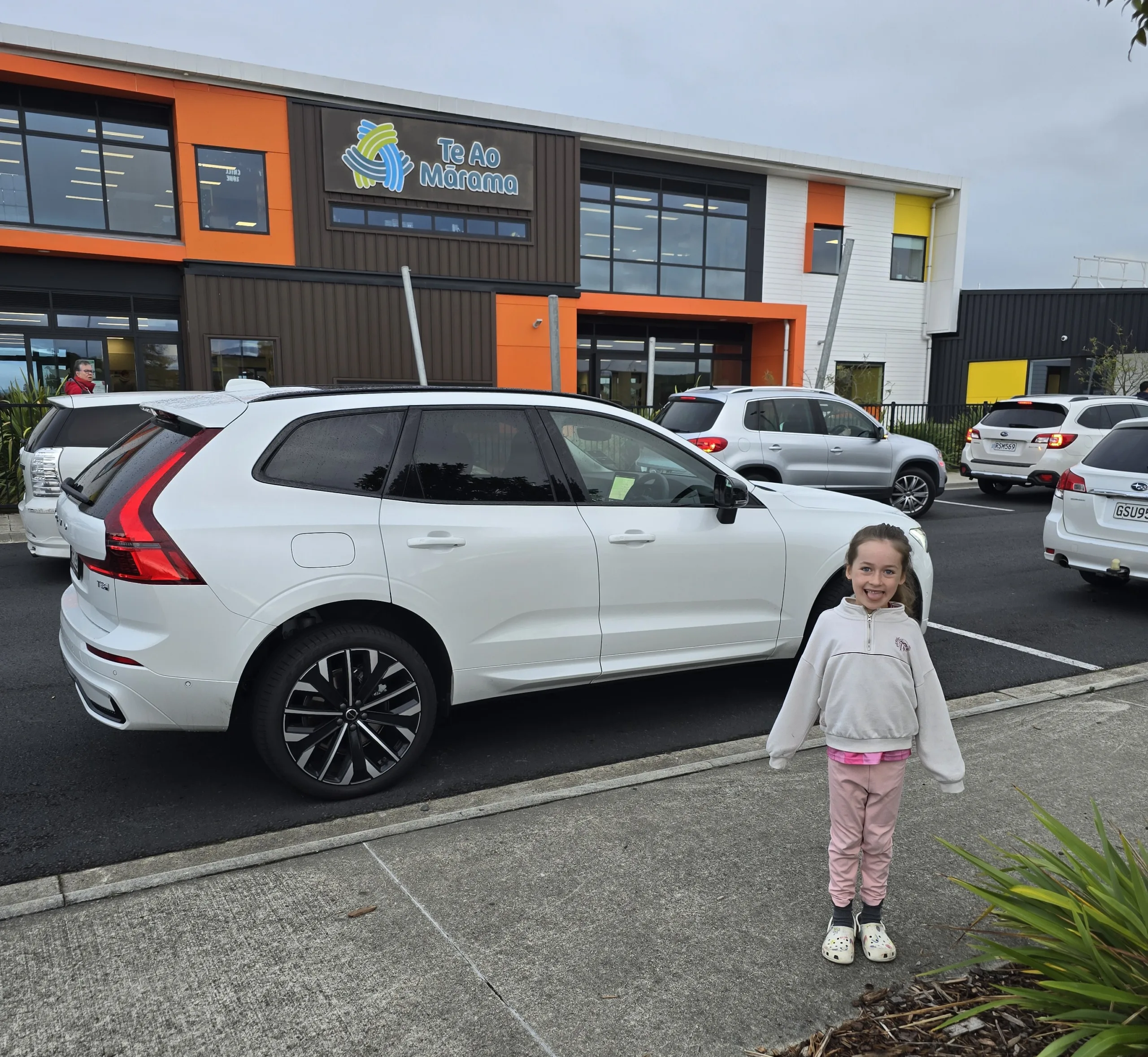
Zhejiang Geely Holding Group was founded by Li Shufu in 1986 and has spent fifteen years assembling one of the most significant car families on earth. It bought Volvo Cars from Ford in 2010 for USD 1.8 billion. It took over Polestar in 2015 and Lotus in 2017. It founded Zeekr as a premium electric brand in 2021. The two badges now arriving in New Zealand showrooms, value-focused Geely and premium-electric Zeekr, are the youngest members of that household.
So these are not unknown newcomers who turned up off a container ship last Tuesday. They are the quiet relatives of brands you already trust. Hold that thought, because it changes how you read everything that follows.
The three cars, and what they are like to live with
There are three Geely Group cars in the family-SUV bracket that Kiwi mums and dads actually shop in. Here they are, plainly.
Geely Starray EM-i, from $45,990. A mid-sized plug-in hybrid. A 1.5-litre petrol engine works mostly as a generator, paired with an electric motor and an 18.4kWh battery. You get 83km of pure-electric range, which covers most Kiwi commutes without burning a drop, and a combined 943km when the petrol engine joins in.
I drove the Starray from Hamilton to Tauranga and back to visit the Tauranga Home Show, a run that includes the climb over the Kaimai Range. The tripmeter read 1.7L/100km over 392km. That is not a laboratory figure or a press-release claim. That is my own dashboard, over real Waikato and Bay of Plenty roads, with a hill range in the middle. And here is exactly how I got it, because the method is the whole point. I left Hamilton on a full charge and plugged in again while the car was parked at the Home Show, so I started both legs full. That is simply how you live with a plug-in: you charge whenever the car is standing still, and the petrol engine barely gets a look in. Stop bothering and the picture changes. Run the battery flat and the Starray settles to around 6.4L/100km, which is still respectable for a mid-size SUV. The everyday truth for most families sits somewhere between those two numbers, and it depends entirely on how diligently you plug in. My figure seems to line up with what other reviewers have published, and with the car’s growing reputation for sipping fuel. Geely even sent a Starray EM-i the length of Australia’s most iconic road trip and came home with a world record for hybrid efficiency. My Kaimai run was, in its own small way, the family-sized version of the same story. There is more on what this car is like to live with in our full Stargazing Starray EM-i review.
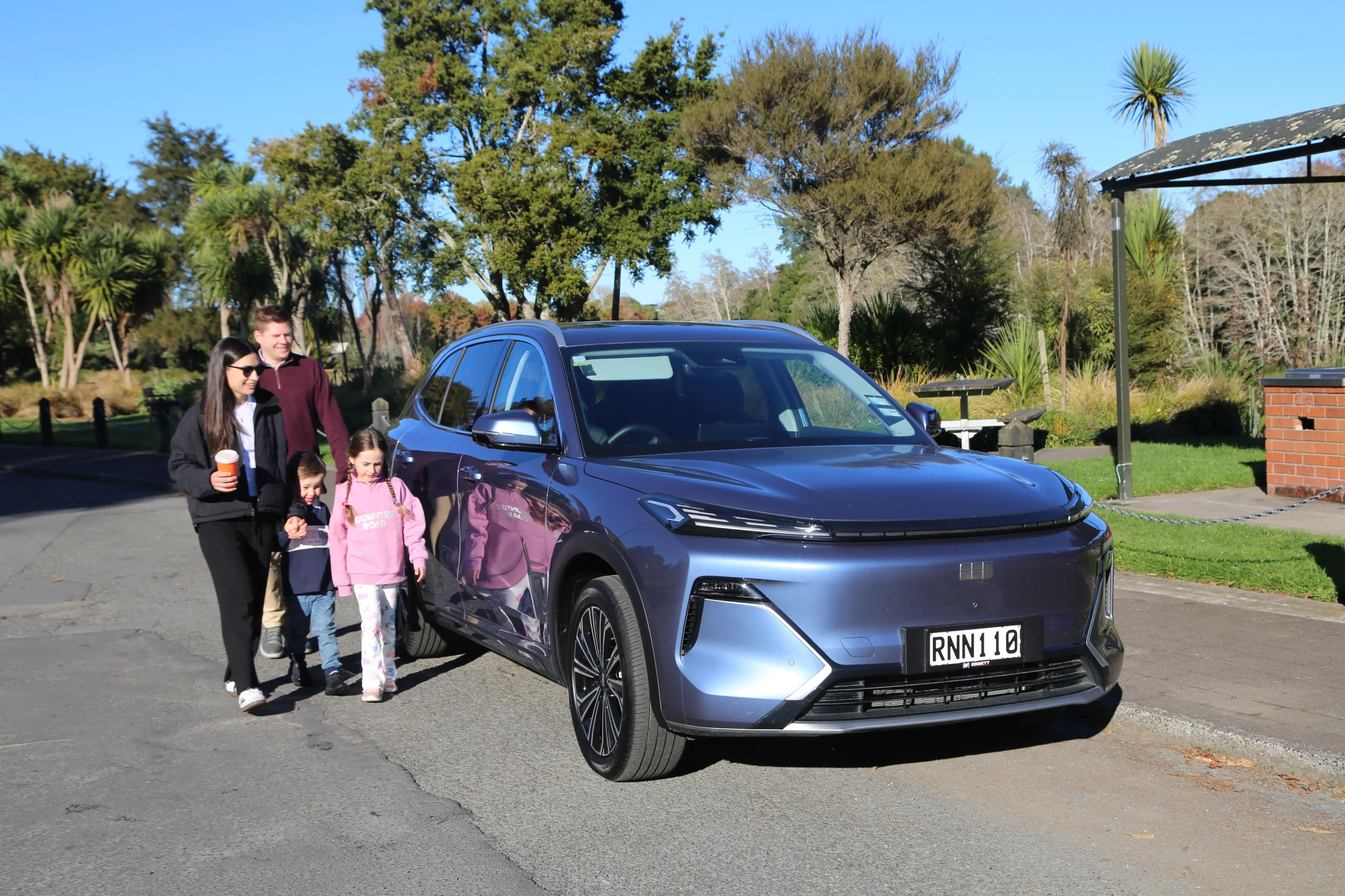
Geely EX5, from $49,990. A mid-sized pure-electric SUV. The Complete gives 430km of range from a 60.2kWh battery, with an Extended Range version stretching to 450km. It fast-charges from 30 to 80 percent in about twenty minutes, and it can power your campsite or even charge another EV through its Vehicle-to-Load and Vehicle-to-Vehicle outputs. The 160kW motor makes light work of merging and overtaking, and the cabin punches well above the price, as we found on Geely’s first New Zealand drive. Mikko’s verdict, delivered from his car seat, was that the ambient lighting “looks like a disco”. High praise.
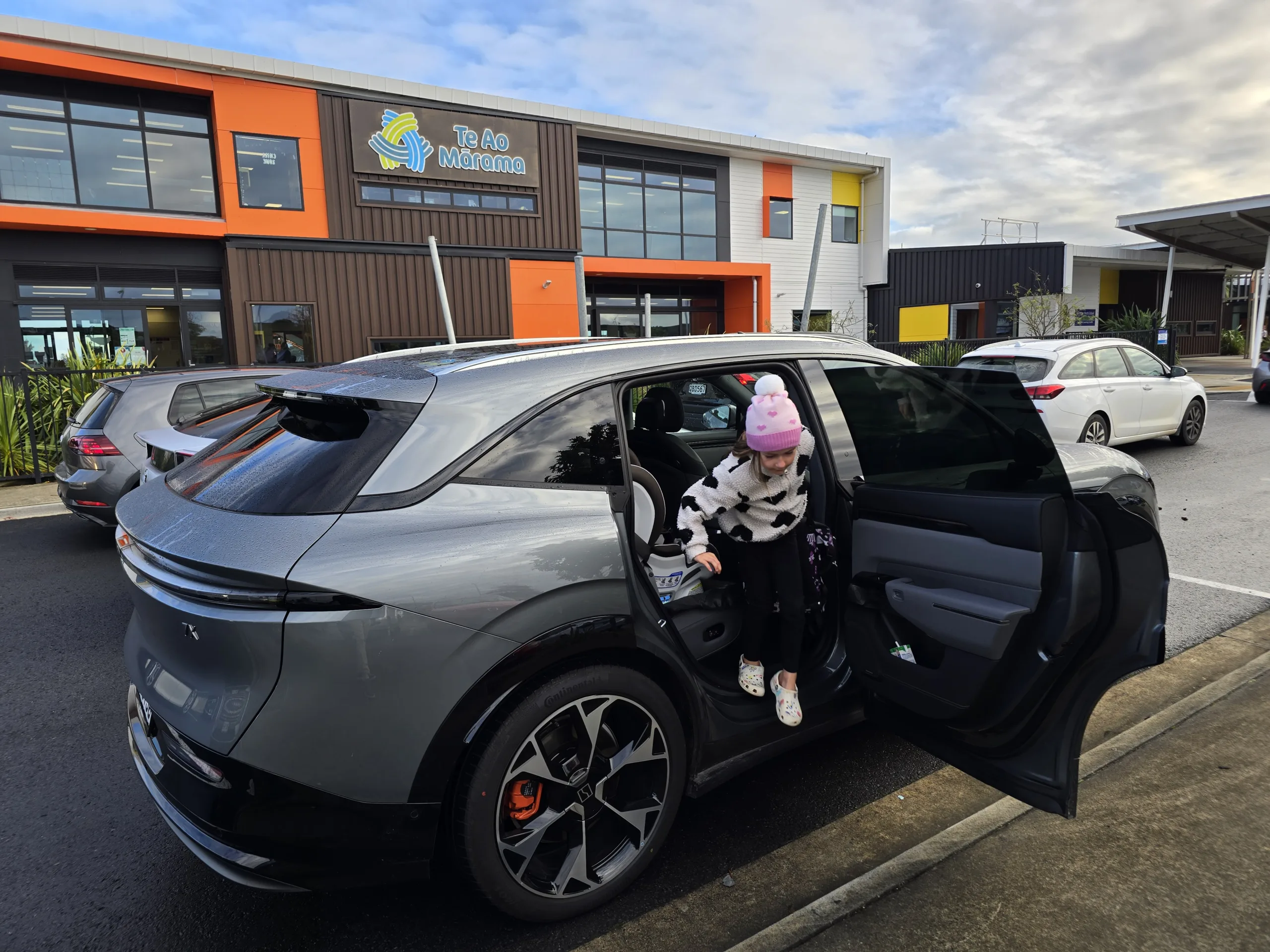
Zeekr 7X, from $69,990. The premium one. Designed in Gothenburg, the same Swedish city as Volvo, and it shows in the cabin and the ride. The entry car uses a 75kWh battery good for 480km, while the Long Range version reaches 615km, and an 800-volt system means it can claw back a serious chunk of range in the time it takes to order a flat white. The rear doors open wide enough that Maija can clamber in and out herself without me folding myself in half, which after six years of wrangling child seats I can tell you is not a small thing. There is a deeper look at the car in our Zeekr 7X New Zealand launch story, and a run-through of its clever G-Pilot driver-assist and self-parking tech if that is your thing.
Here’s a quick comparison for the spreadsheet-minded among us.
| Geely Starray EM-i | Geely EX5 | Zeekr 7X | |
| From | $45,990+ORC | $49,990+ORC | $69,990+ORC |
| Type | PHEV | BEV | BEV |
| Range | 83km electric, 943km total | 430 – 450km WLTP | 480 – 615km WLTP |
| Safety | 5-star ANCAP | 5-star ANCAP | 5-star ANCAP |
| Vehicle warranty | 7yr / unltd km | 7yr / unltd km | 5yr / unltd km |
| Battery warranty | 8-years | 8-years | 8-years |
All three carry the top five-star ANCAP rating. All three are backed by an eight-year battery warranty. More on what that backing actually means shortly, because it matters more than the spec sheet suggests.
Think of it like the Volkswagen Group
If you are wondering how three cars at three very different prices can share so much, here is the analogy that made it click for me.
We all understand that a Volkswagen Golf, a Skoda Octavia, an Audi A3 and a SEAT or CUPRA Leon are essentially the same car underneath. Shared platform, shared hardware, shared engineering. What separates them is positioning, design and price. A Skoda is not a poor person’s Audi. It is a Skoda, with quietly excellent engineering underneath.
The Geely Group works the same way, spread across a far wider price range. Zeekr’s European engineering centre sits in Gothenburg, the same city as Volvo’s headquarters. Known until recently as CEVT and now as Zeekr Technology Europe, it was set up by Geely in 2013 in the heart of Volvo’s home town, drawing on a deep pool of Swedish engineering talent, much of it from Volvo and Saab. Zeekr’s design, too, is led from Gothenburg, under Stefan Sielaff. When Zeekr says the 7X carries Swedish engineering and design, that is not marketing fluff. It is the same engineering culture, the same city, the same talent pool.
And this is where I want to be careful, because the prices might give the wrong impression. Nothing is being given away. A Zeekr is a Zeekr. A Geely is a Geely. A Volvo is still a Volvo, and still meaningfully more expensive than its newer siblings for very good reasons: design pedigree, residual values, decades of brand equity and craftsmanship. What the family shares is platform investment, engineering principles and a safety philosophy. The cheaper brands are pulled up by the association. The expensive ones are not pulled down.
Michael Giltrap, an executive director of the group bringing all of this to New Zealand, put it simply at the NordEast launch last year. “Volvo is the cornerstone,” he said. “It’s the brand that introduced us to Geely.”
The safety story, and why it should reassure a parent
Volvo’s safety reputation is not mythology. In 1959 its engineer Nils Bohlin patented the modern three-point seatbelt, and Volvo gave the patent away free to every car maker on earth on the grounds that it was too important to keep. It is estimated to have saved more than a million lives. The first rear-facing child seat from a manufacturer, the first booster cushion, side-impact protection, city auto-braking: all came from Gothenburg.
That philosophy now cascades through the family. And here is the single statistic I would put in front of any safety-conscious parent. The $45,990 Geely Starray scores higher for adult occupant protection than the much pricier Volvo EX30 (90 percent against 88 percent). The Zeekr 7X scores 91 percent, one of the best results in its class, ahead of cars costing twice as much. Safety in this family is genuinely not a function of price.
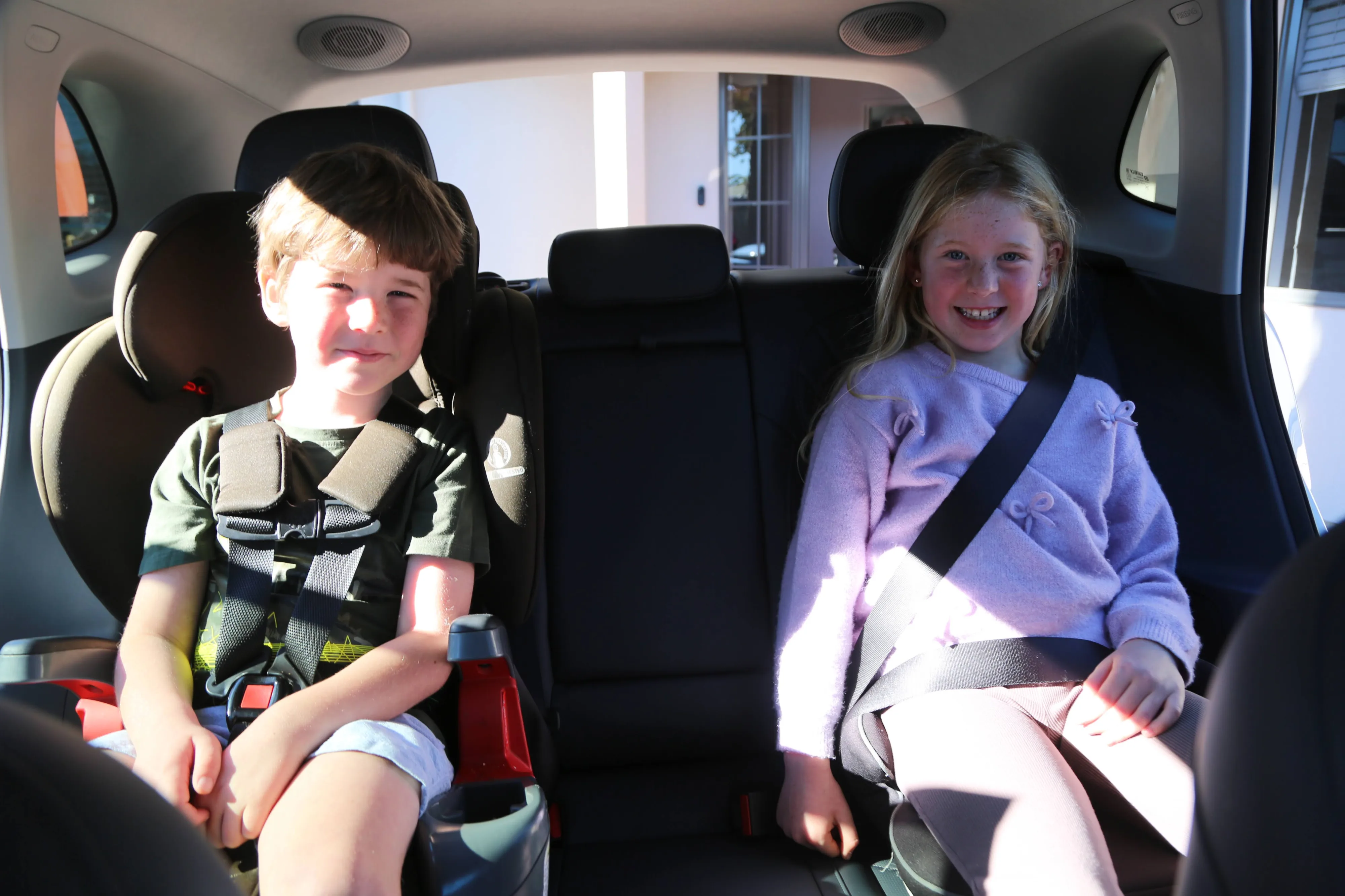
When I had both kids buckled into the back of each car, three across was never going to be an issue for us with two, but there is a flat floor and enough room that nobody was elbowing anybody. Our Britax One4Life seats went in cleanly in all three, belt-installed with the top tether anchored at the back, and there was room to spare behind the front seats. For a family that lives in the back seat as much as we do, that is the test that actually counts.
The bit that keeps so many Kiwis buying Toyotas
Let me address the elephant, because I know it is the question. What happens in five years? Chinese-brand resale in New Zealand is still an unknown, and if you keep cars for a decade like a lot of us do, that uncertainty is real and I am not going to pretend it away.
But here is what is not uncertain. These cars are not sold by a fly-by-night importer working out of a leased unit near the port. They are distributed by NordEast, a division of Giltrap Group, the New Zealand automotive establishment since 1966, the same group that has imported and serviced the likes of Volvo, Porsche, Bentley and Range Rover for decades. New Zealand is, in fact, the first country in the world where all six Geely Group brands sit under one distributor. Locally to me that network includes Ebbett in Hamilton, with other showrooms nationwide. The same people who service a Volvo will service your EX5. The seven-year, unlimited-kilometre vehicle warranty is genuinely generous, and the battery is covered for eight years. To be straight with you, that eight-year battery cover is now the going rate rather than a standout: Toyota and Nissan both match it, and both will stretch their overall vehicle warranty to as long as ten years, though only if every service is done in their own network and within set kilometre limits. Where Geely’s pitch is cleaner is the seven years with no distance cap and no strings tying you to a service plan. Either way, that is the reassurance the sensible sceptic is looking for, and it is real.
That infamous middle class squeeze though
The pricing here is a genuine disruption. The Starray undercuts a Toyota RAV4 PHEV by around $14,000. The EX5, at $49,990, lands right alongside the BYD Atto 3 Superior on price. Worth knowing, though, that the Atto 3 is sitting at a runout price as BYD clears the current model ahead of a new version, so you are weighing an outgoing car against a brand-new one. The Atto 3 is a deservedly popular EV, but for the same money the EX5 gives you a newer design and a little more room. The Zeekr 7X squares up to the Tesla Model Y at a similar price, then hands you a noticeably more premium cabin for the money.
And this is not a fringe story. Chinese brands have rocketed past a fifth of New Zealand passenger vehicle sales, more than double where they sat a year earlier. Geely and Zeekr are only just getting going, which means the choice and the downward price pressure are only going to grow. For families like mine, weighing up a family SUV, the bench of credible options is deeper than it has ever been. If you can buy a brand-new, five-star, seven-year-warranty SUV for the price of a three-year-old used one from a legacy brand, the calculation has changed.
The family verdict
So where does this leave a Kiwi family standing in a showroom, weighing up the school run, the weekend away and the budget?
The Starray is the one I would put in front of a family not quite ready to give up petrol. Plug it in at home, drive electric all week, and let the engine handle the long weekend without a moment of range anxiety. My 1.7L/100km over the Kaimais was not a fluke. It is what this car does when you live with it properly.
The EX5 is for the family ready to commit to a daily EV but not the premium price ladder. It is roomy, it is well equipped, it will run your campsite, and at $49,990 it costs less than plenty of three-year-old used SUVs from brands you already know.
The Zeekr 7X is the surprise, though it should not be: Zeekr is a premium brand and the 7X carries itself like one. The cabin and the ride have that Gothenburg engineering built into them, and it asks a serious question of the European marques charging far more for the same kind of car.
All three are five-star safe, all three are backed by a warranty and a service network that most newcomers cannot match, and all three are within reach of any family that could stretch to a good used SUV. That is the whole point. These are not compromises you settle for. They are genuinely good family cars that happen to wear unfamiliar badges.
The Geely and Zeekr names are new to most of us. The engineering underneath them is not. They are the quiet relatives of Volvo, Polestar and Lotus, they are safer than their prices suggest, and they are sold by the most established distributor in the country. Go and sit in one. Bring the kids. Let them try the disco lights. You might be surprised how familiar it all feels.
Mikko, for the record, gives the push-button doors in the Zeekr infinity million stars and two thumbs up.
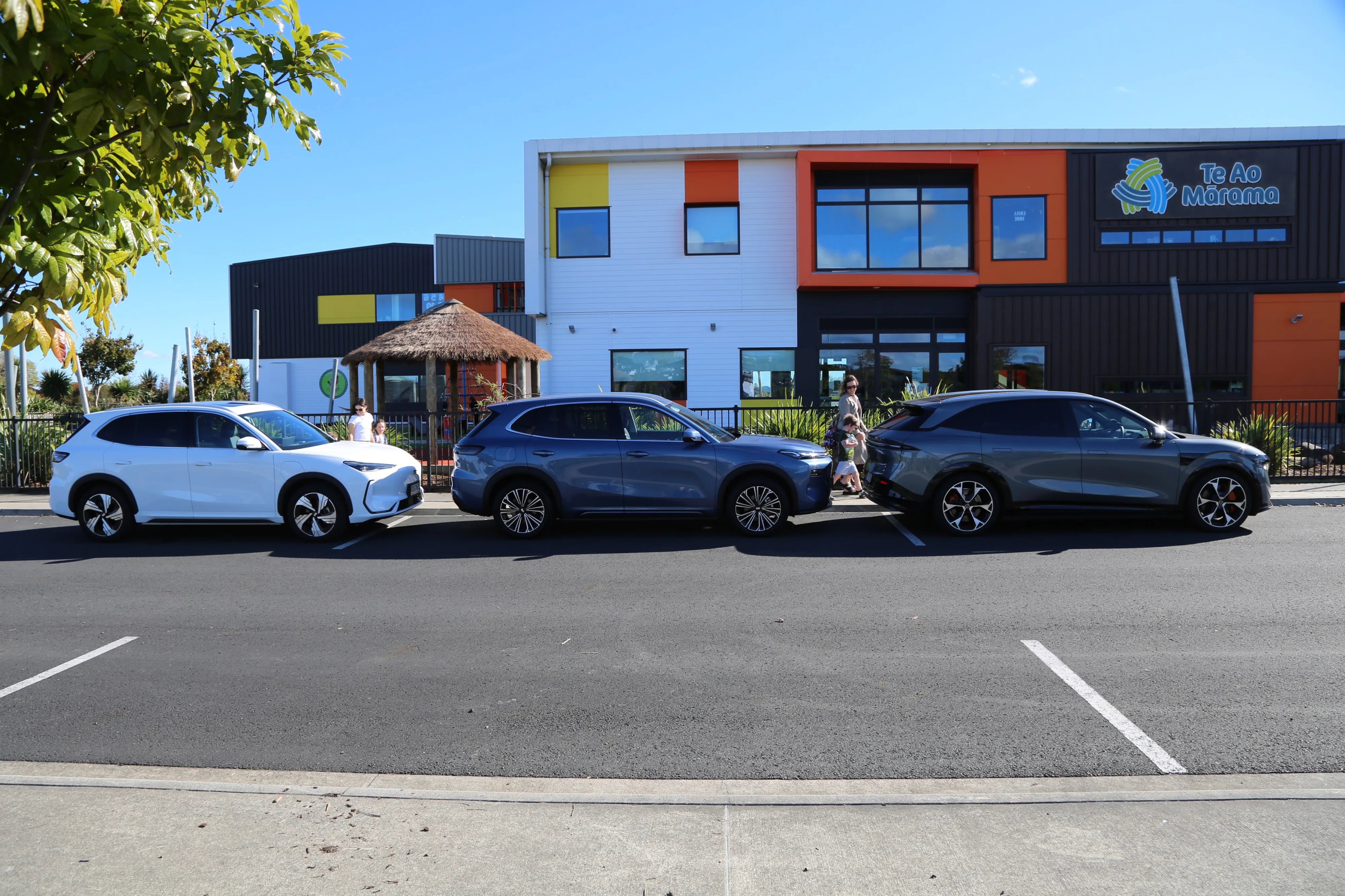
All cars for this story were supplied by Ebbett The Base and Ebbett Hamilton. Research, driving, conclusions, writing and photos taken with a potato are all me. The good photos and borrowed bigger kids herein are thanks to my friend Peter, the creative genius behind Night Owl Productions. Thank you!




4 Responses
Brooo that headline hits. Had NO idea Geely owned Volvo Polestar and Lotus. Completely changed how I see these badges and the Skoda/Audi comparison makse sense. Sent it to my brother who’s been sneering at cheapo Chinese EVs for months so bro can eat his words n all lol
Thanks for the comments – there’s a whole world of inter-connectivity out there. What did your brother say??
Didn’t think scoring higher than Volvo on safety was a thing. Certainly wouldn’t have picked a Chinese car to do it either. That Zeeker looks nice.
Volvo has been the benchmark of safety since forever – same way IKEA is the benchmark in flatpack furniture 🙂 Zeekr is very nice, we agree.