To tell the story of the Toyota Hilux is almost like telling that of New Zealand’s. We’re an unassuming little country on the edge of the world that does mighty things! Often found on global podiums when it comes to sporting, business and farming, being renowned for both humility and (Kiwi) ingenuity. In fact, primary industries make up more than 60% of New Zealand’s exports to the world. What has this got to do with the Hilux you might ask? Only everything! Visit one of the farms, factories or forests that feeds the aforementioned primary industry and you are more than likely to spot a Toyota Hilux of some kind on the site.
2026 is a special year too because the trusty Hilux is celebrating 50 years since its local debut. It was 1976 when the second-generation vehicle first turned up here, being assembled ‘SKD’ at a facility in Thames. The Hilux quickly earnt a reputation for rugged reliability, being able to endure the same ‘hard yakka’ that our farmers did (city folk didn’t buy utes back then). And with an estimated 135,000+ Hiluxes still in service today, it’s clear that it has built a loyal following in the half a century that has since passed.
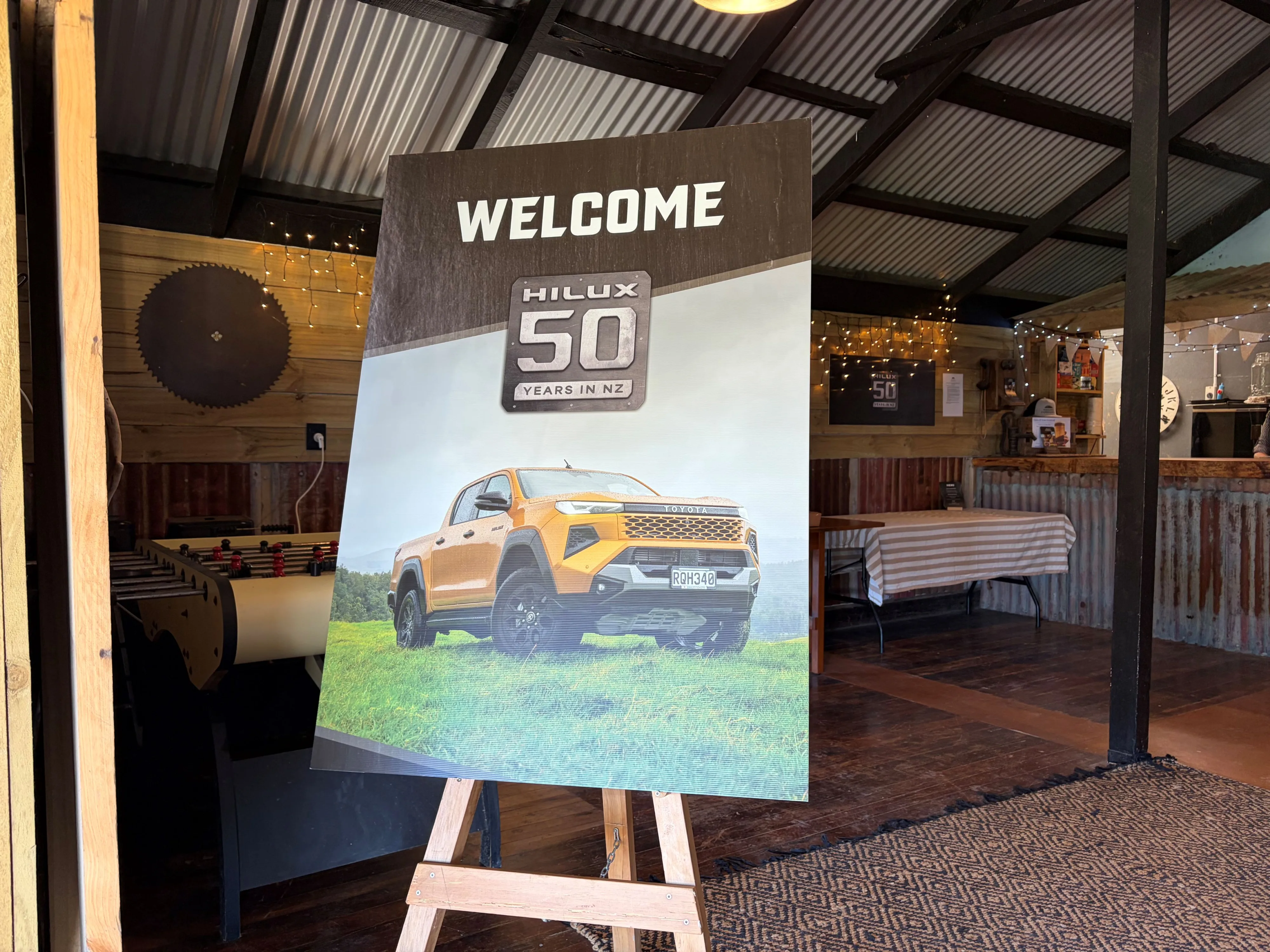
While every new generation Hilux has endured its share of market challenges, it is fair to say that the launch of this ninth-generation vehicle comes at a particularly challenging time for the automotive industry. There’s uncertainty around the future of diesel engines, increasingly stringent emissions regulations and then the question of going fully electric, is that really an acceptable option for a ute?
Clearly, Toyota New Zealand would have to employ some of that famous ‘Kiwi ingenuity’ to prove that this new Hilux was up to scratch, in fact, it has to be the best Hilux ever in some respects! An incredibly important launch then as this is a vehicle that has been described as the “backbone of New Zealand.”
Day One
In true ‘Kaizen’ fashion, the Toyota NZ team had prepared a seamless itinerary for us over the one and a half day launch event. The first day was supposed to begin early with breakfast and a much needed coffee awaiting us on the other side of a short flight down from Auckland to Palmerston North, the home of Toyota New Zealand. However, if there’s a predictable thing about life and the weather, it is its relative unpredictability! There I was, sitting at the airport, staring squarely at the big red ‘cancelled’ sign against the flight I was supposed to be on to kick start this event.
Remember though, this is Toyota we’re talking about! Within no time, Steph had the Auckland contingent on a flight to Wellington with a rental car booked to journey us from there to Palmerston North. The weather interruption meant we were on the ground a mere few hours later than scheduled, an incredible feat considering the flight delays that happened earlier on in the morning, see what happens when you mix Japanese philosophy with Kiwi ingenuity!
The shuffle in plans did mean that we would get behind the wheel of the new ninth-generation Hilux before actually sitting through a product presentation. A plan that worked out for the better because we were now able to assess the vehicle’s capabilities in real life first rather than on paper.
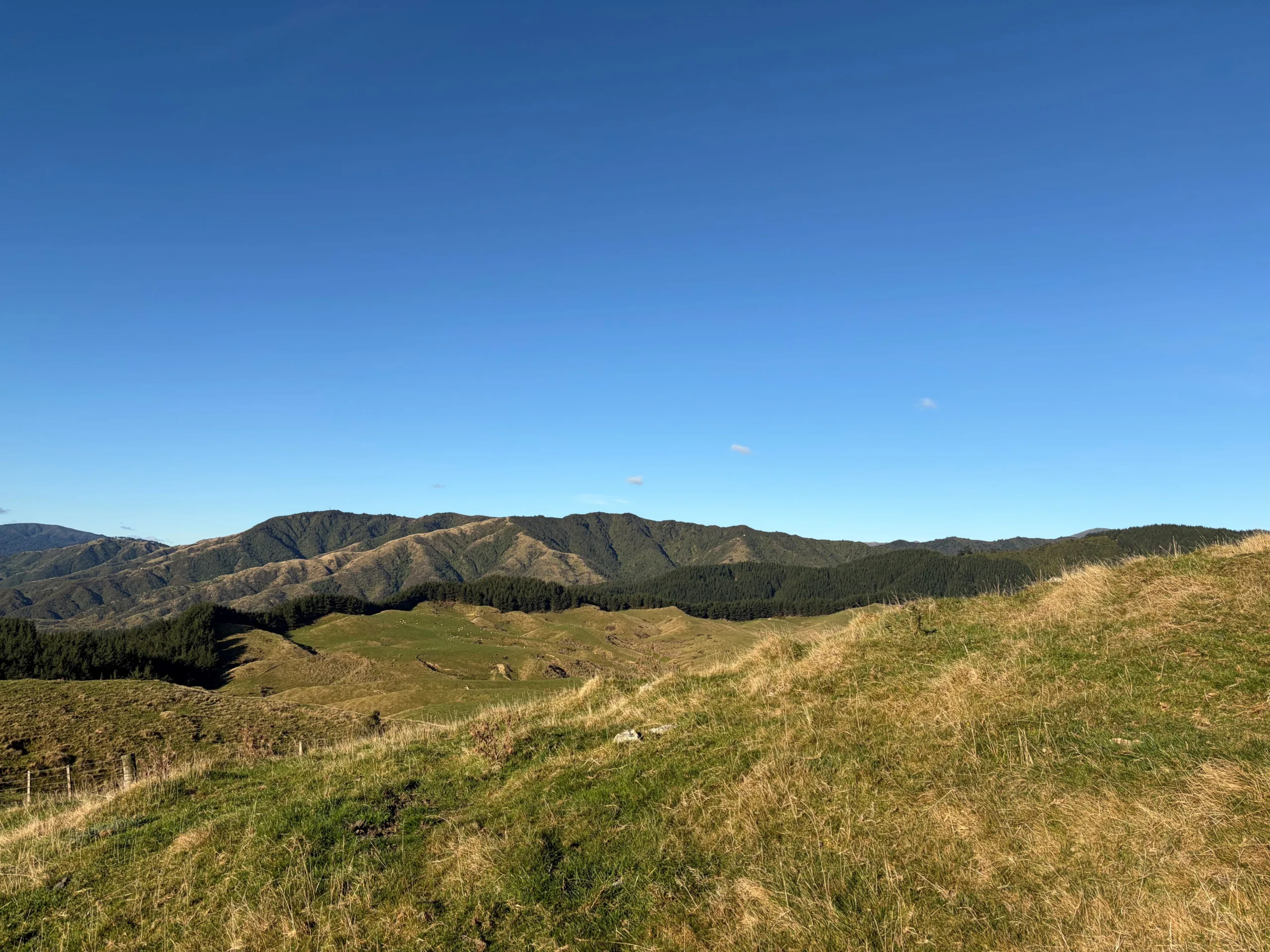
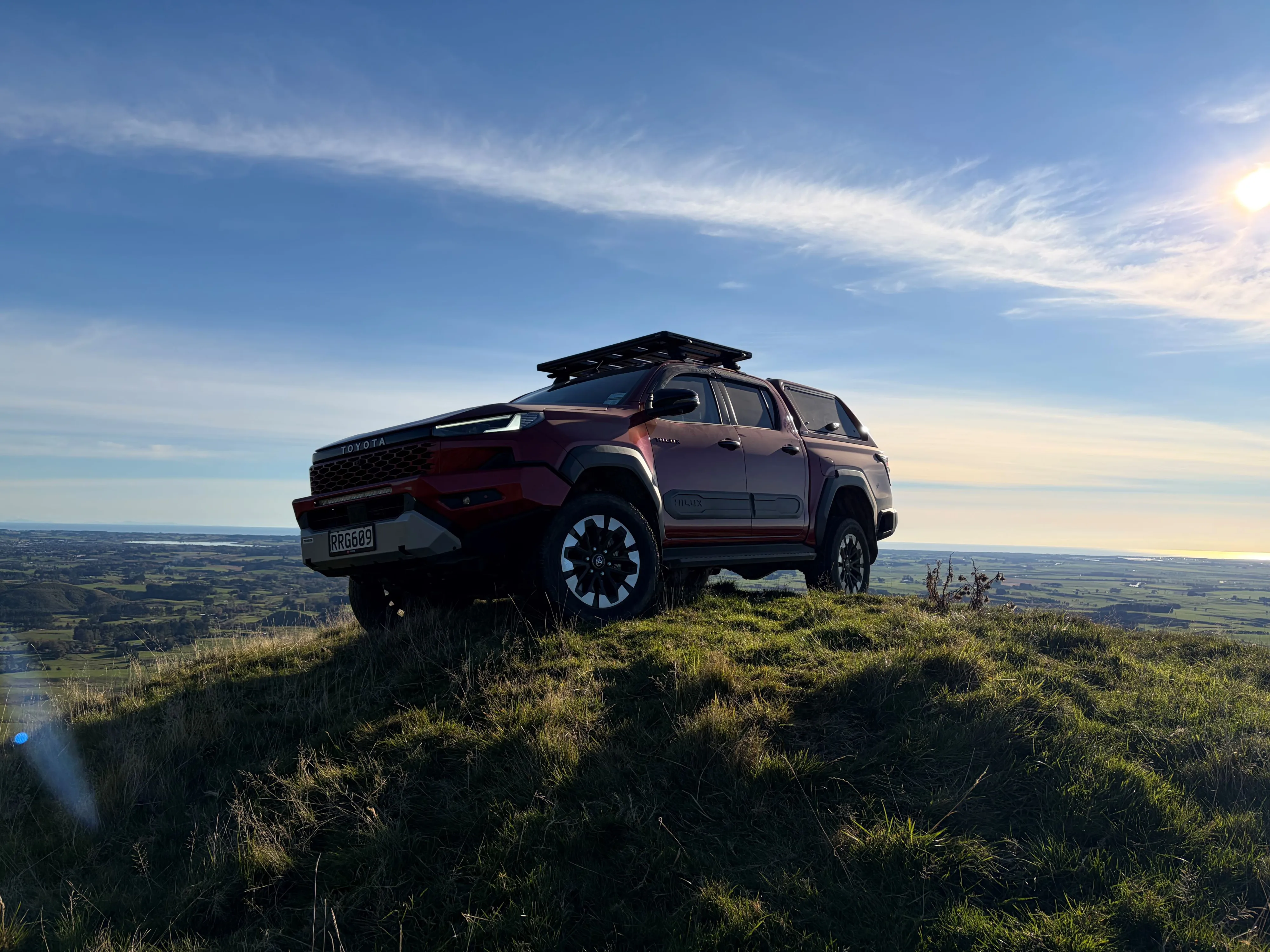
Heights Experience in the Tararua Ranges would play host to the bulk of our activities on day one of the launch, mainly centered around off-road drive time behind the wheel of the new Hilux. A broad lineup had been readied for our upcoming exploration, this included everything from the entry level SR to the plusher SR5 and then the range topping Adventure model as well as the new Hilux BEV in both SR and SR5 trim levels. Similarly, a range of colours, accessories and tray types were fitted to the vehicles, giving us a well rounded impression of what the new Hilux was capable of as well as what it might look like when optioned up, an especially important consideration for those city based buyers!
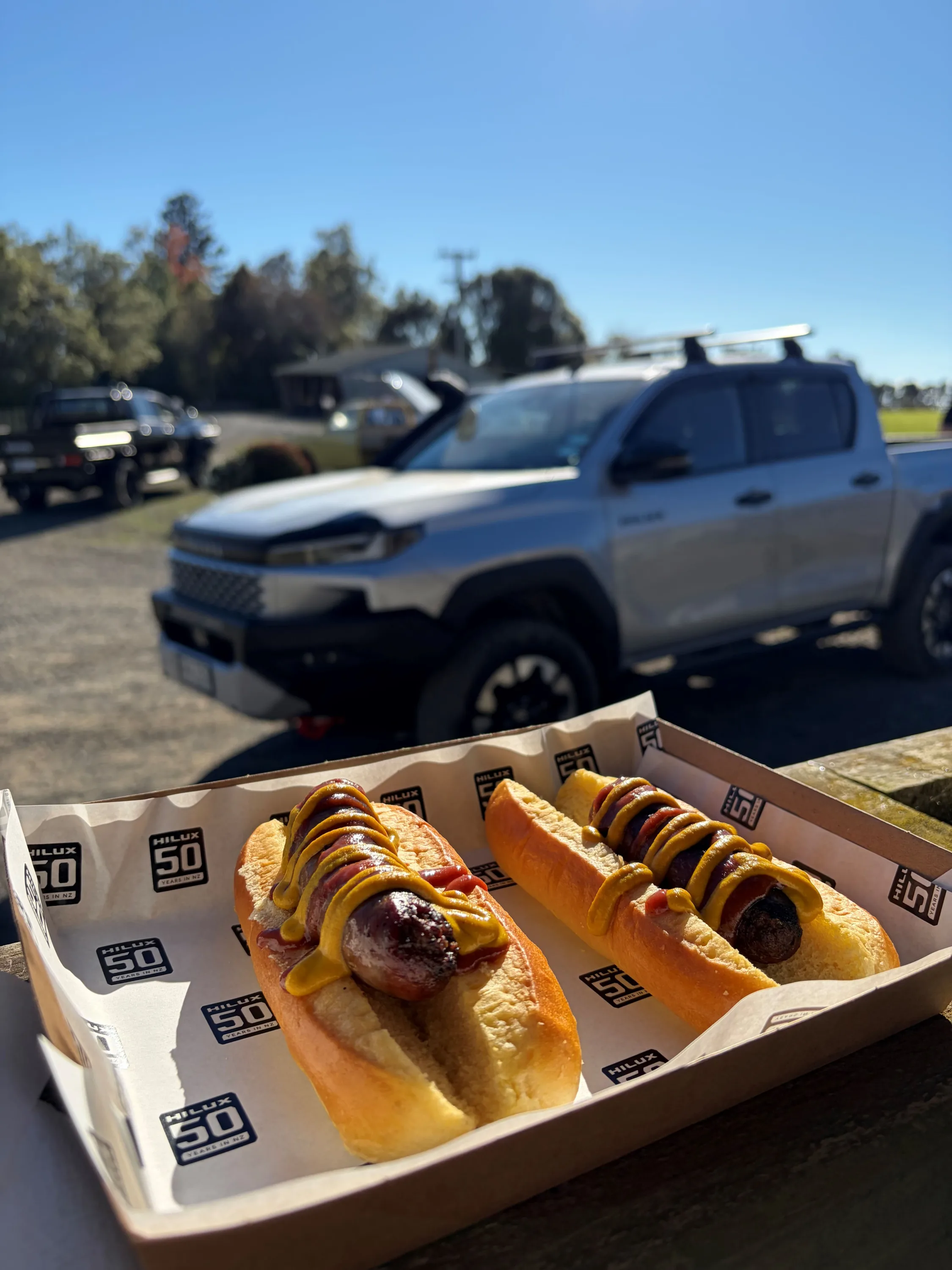
Though I was disappointed not to see a ‘Sulphur’ coloured Hilux Adventure, I was pleasantly surprised to hear there was a manual SR floating around! Yes, even in 2026, Toyota will still sell you a manual SR double cab ute, the last of a dying breed but a testament of their commitment to the trade. I was also enthused to see the presence of the Hilux BEVs which would be joining us for the off-road drive component.
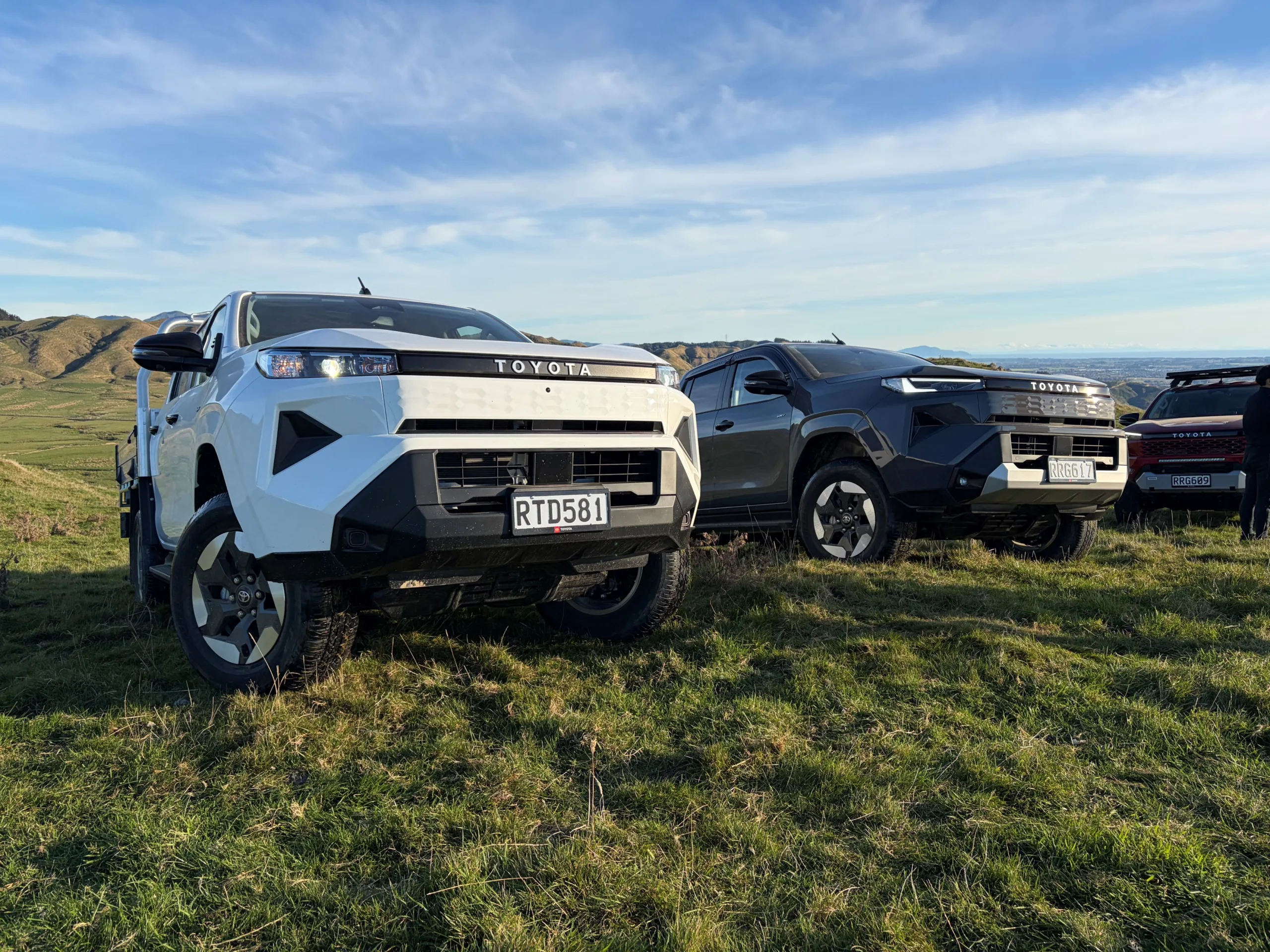
There was a very good reason for that. In fact, Toyota anticipated what doubters of the new Hilux BEV might say, particularly accusing it of not being a real Hilux. So, the approach was taken to make this a Hilux that happened to be an EV, not the other way around. The upside being no compromise to its off-road ability but before taking it for a drive, we first got the chance to appreciate exactly what this nameplate meant to its owners.
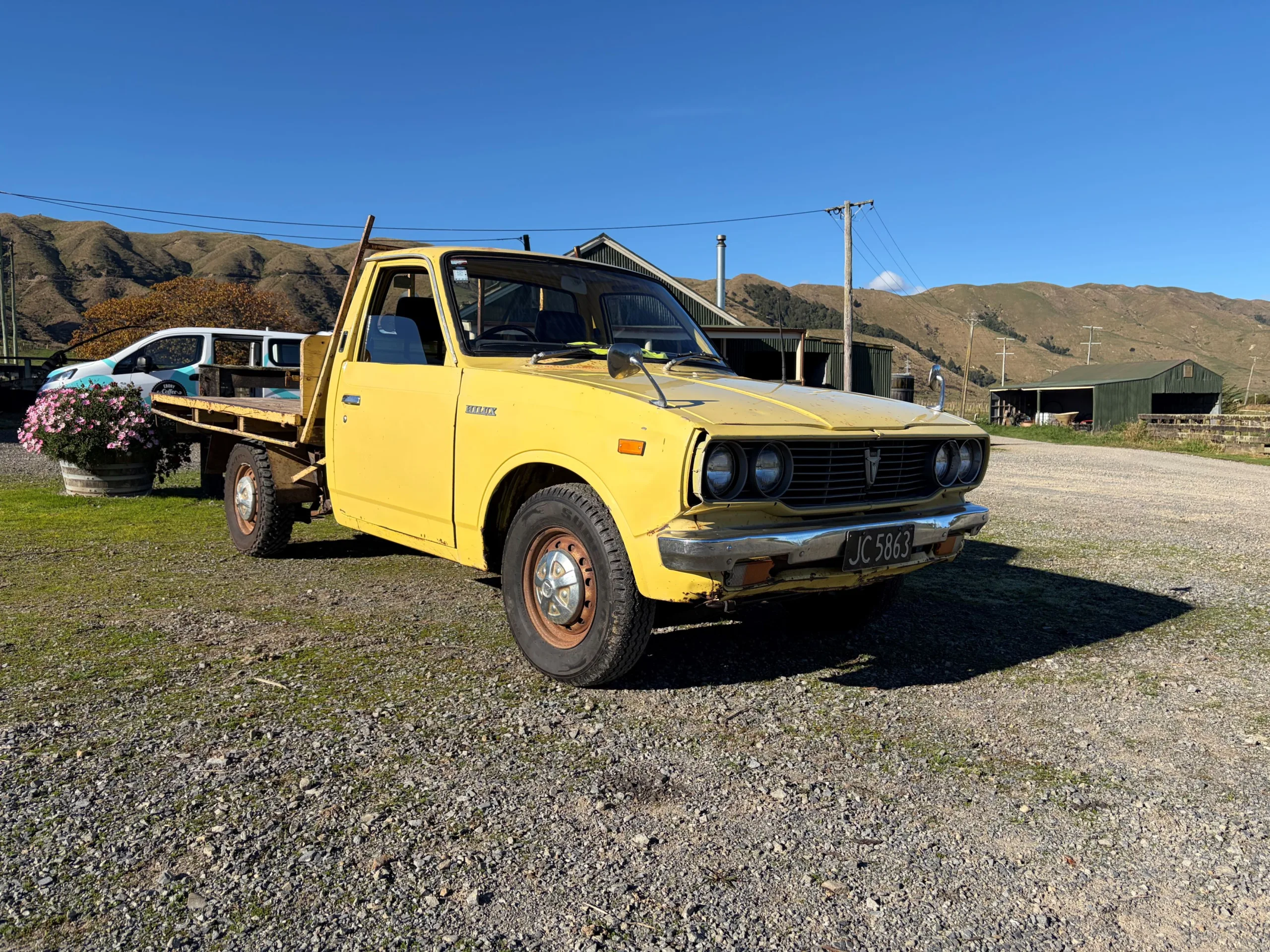
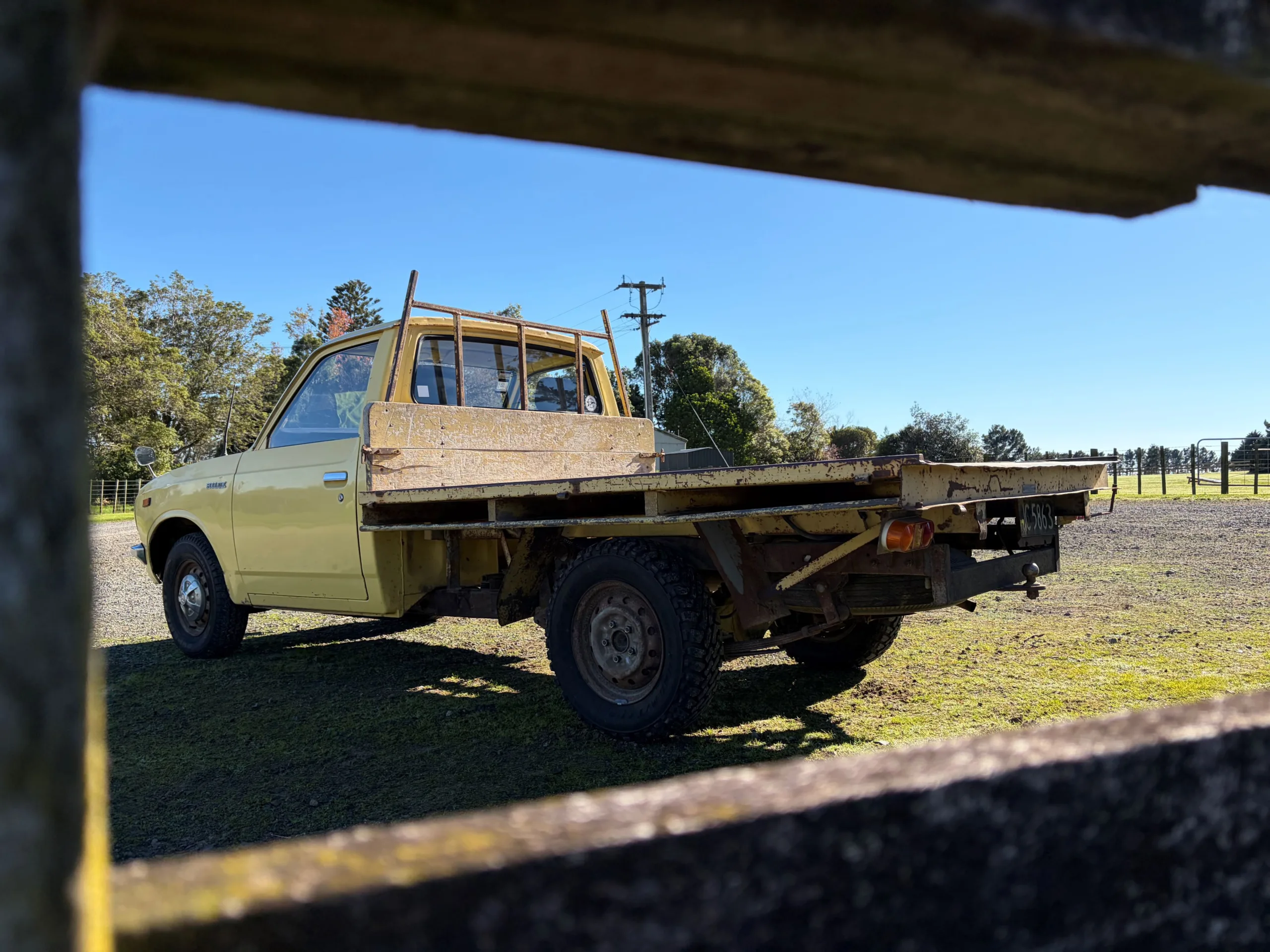
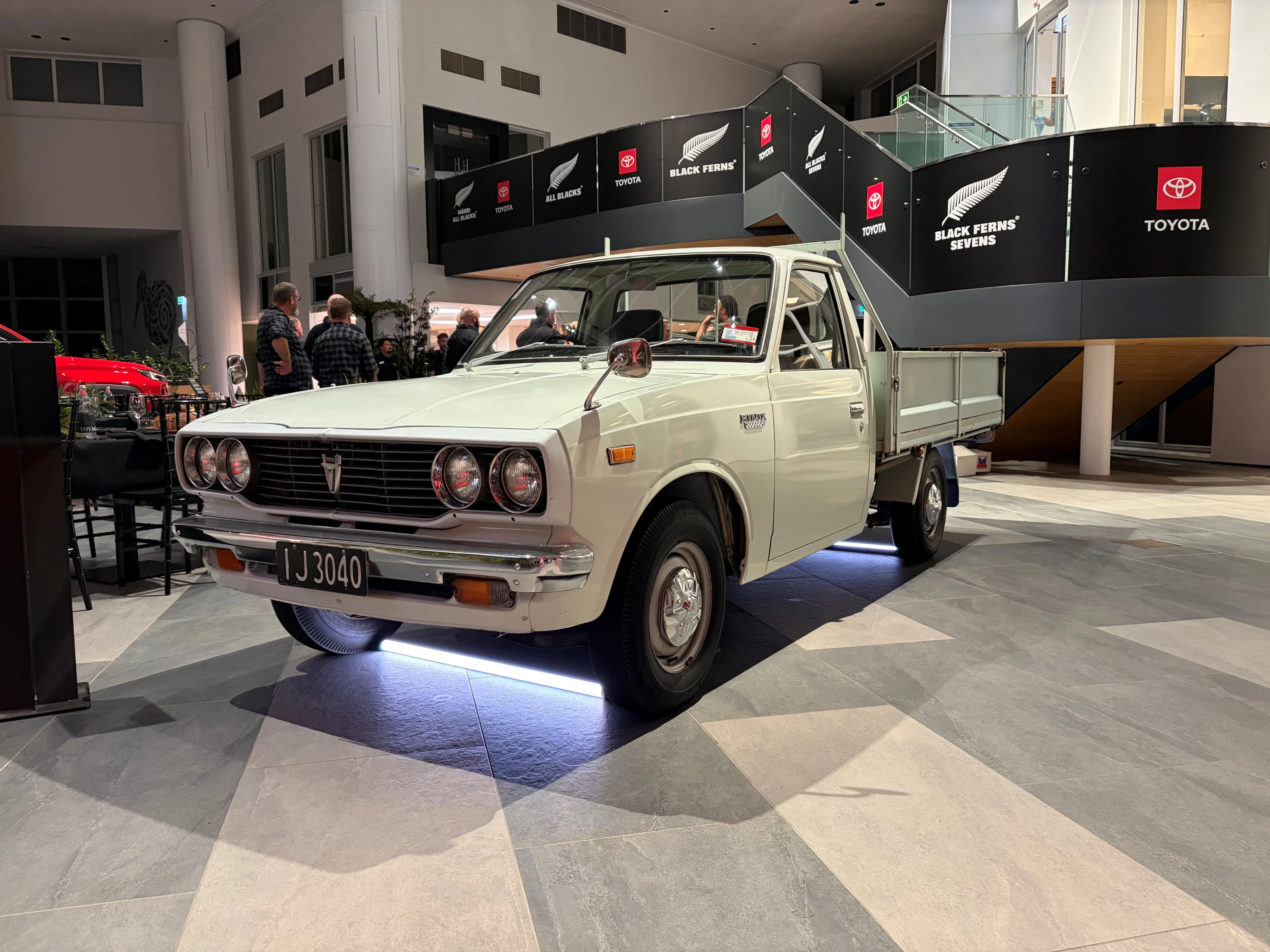
For the purpose of this launch, Toyota managed to source the two oldest working Hiluxes in the country, one belonging to the host family that owned Heights Farm, a 1979 NZ new model that is still on its first owner who has driven it for nearly 50 years! Mind you, it has spent all of those years and 100,000kms+ on this farm. This yellow example was the second oldest working Hilux in the country, the owner was also particularly enthused to see the shade return in some form on this latest generation vehicle. And what of the oldest? Well, we’d have a chance to view that example later on in the evening. But first, some driving!
I was fortunate to get drive time in the BEV first, prior to the diesels. And let me tell you, it is the weirdest feeling ever! The off-road course would see us climb wet, grassy hills, traverse muddy tracks and ford streams, all of which was done in complete silence. It was only when the going got particularly tough could you hear the electric system searching for grip in the wheels. Climbing up hills was a particularly eerie experience because all the while I was waiting for the noise of a strained diesel, the EV was quietly yet confidently conquering the obstacle in sight, ‘Mogul’ is the recommended drive mode for this sort of thing in case you were wondering. Although thanks to Toyota’s ‘DAC’ or ‘Downhill Assist Control’, coming back down is equally a breeze, although you do have to trust the system to do its job, often easier said than done!
When putting the Hilux BEV through its paces, the vehicle will noticeably eat through range briskly, I noted losing 30-40kms in range over the course which begs the question of its use case. Of which there are many actually! Think Australian mines, construction sites, seaports, airports, local councils, conservation activities and farm vehicles to some extent, most of which will rarely exceed 200kms per day and some of which may have charging facilities on site, making them ideal for the Hilux BEV.
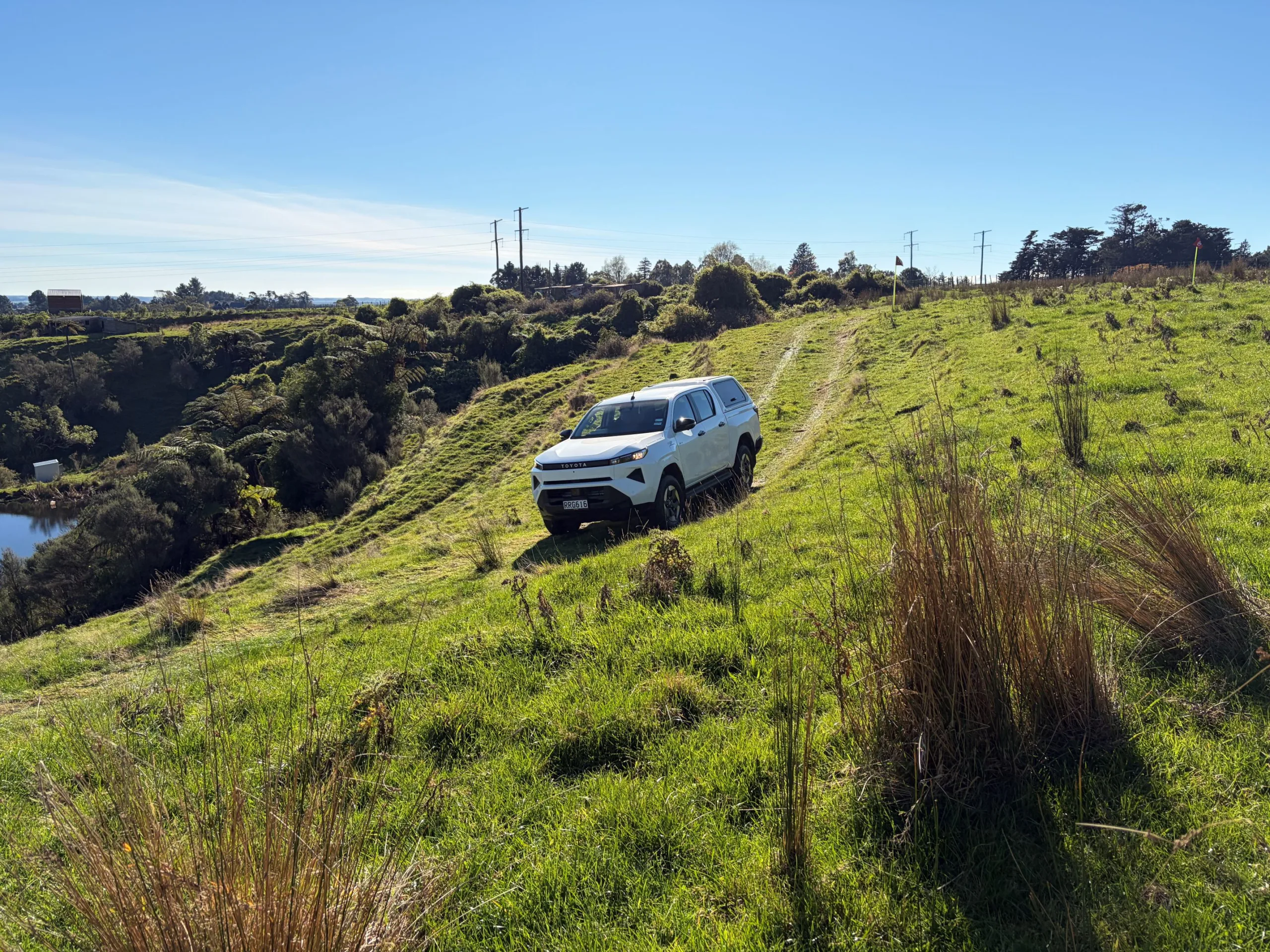
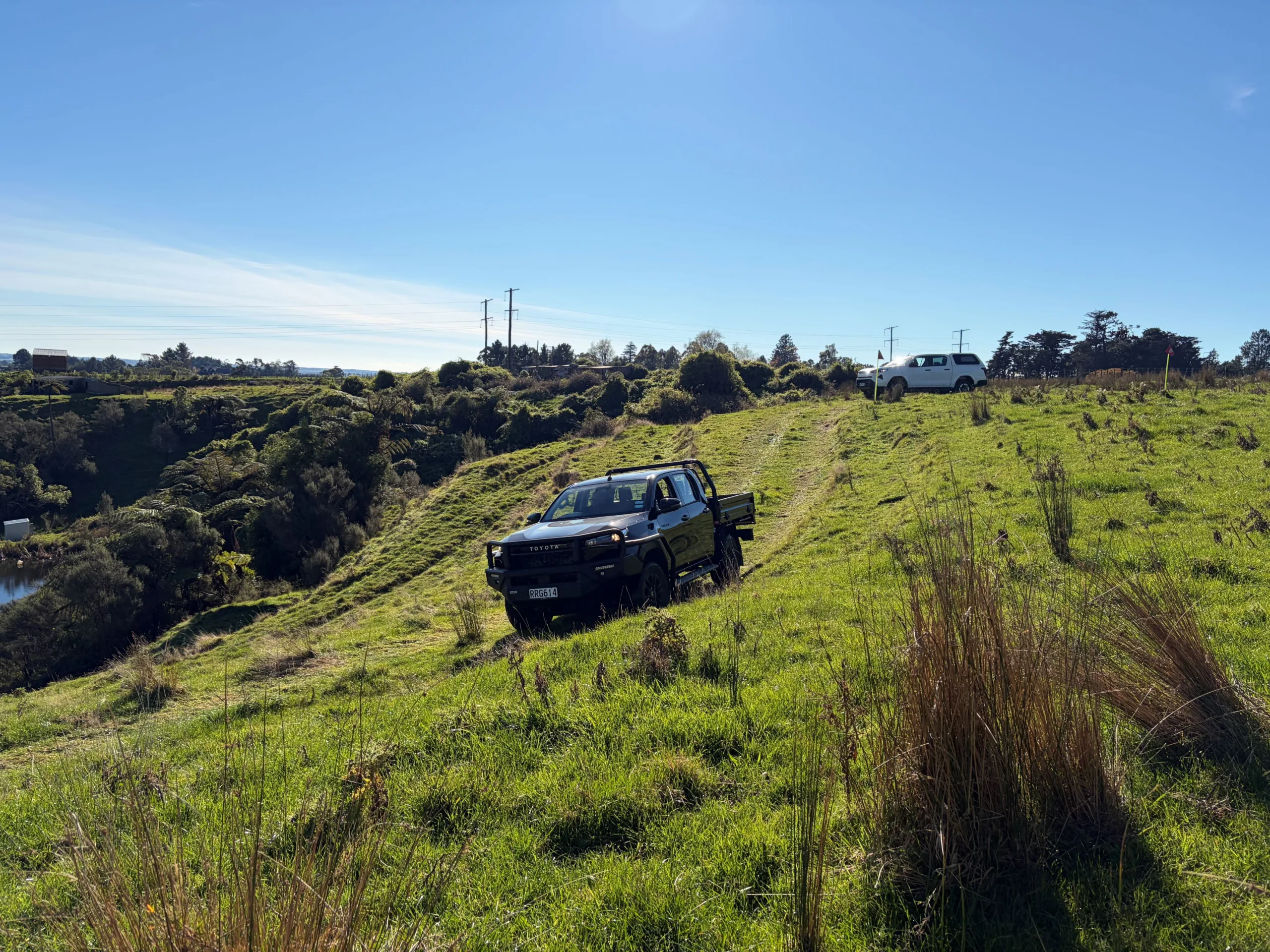
As you can see though, Toyota were intent on ensuring that the Hilux BEV could face up to its doubters. Despite having a battery slotted in between its ladder frame chassis, it still maintains the same 700mm wading depth as the diesel, the same approach/departure angles and is in fact the only ninth-gen Hilux with permanent all-wheel drive! Towing is the only area where it falls short of its diesel counterpart, with a braked capacity of 2000kg and 750kg unbraked, compared to the diesel’s 3500kg braked capacity.
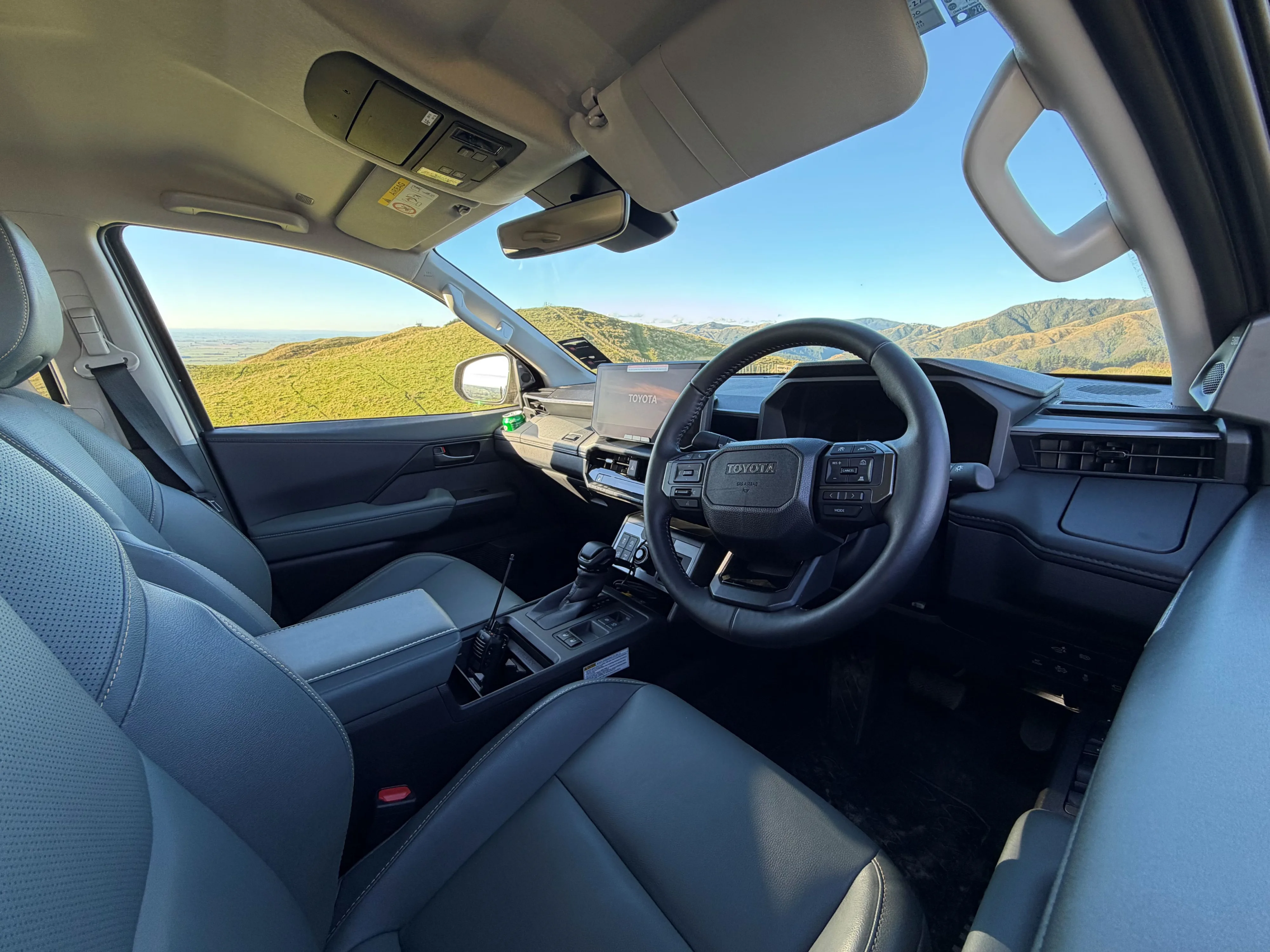
Despite the EV’s excellent capabilities, I still yearned for the diesel, perhaps because I am both a traditionalist and a petrolhead! Although following my stint in the BEV, it seemed weird to have to stop and lock the differentials or to change between the various hi/lo modes, it’s all so much more seamless in the EV but then it would be! Back to the diesels, I would spend the rest of the afternoon journeying my way through the Hilux lineup eventually ending up in the inviting ‘Mineral Leather’ seats of the Adventure spec vehicle.
Regardless of the trim, we could all appreciate Toyota’s staunchness in maintaining physical buttons for things like the HVAC controls as well as the off-road modes. Hopefully we’ve seen the back of those touch screen dominated dashboards but it was still equally reassuring to see Toyota remain a proponent of the analogue driving experience. Mind you, the infotainment screen alongside the new digital instrument cluster will still sort the navigation, phone connectivity (CarPlay & Auto) and audio but the vital controls are all still a button push away rather than buried deep in some sub-menu.
With significant drive time behind the wheel completed, we wrapped up for the day, heading back to our accommodation for a brief stop before returning to Toyota New Zealand’s headquarters for dinner and a show. We were treated to a three course meal, mine begun with a salmon entree, followed by roast mains before culminating with a zesty Kiwifruit drizzled deconstructed pavlova, a very Kiwi flavour indeed! Our presentation was an equally light-hearted, fireside chat if you will between some of the Toyota NZ team, namely Andrew Davis, VP, Susanne Hardy, Assistant VP, Steph Brunt, Comms & PR Manager and Sven Tulicic, Product Manager, all of whom were joined by Matt Watson, the fishing legend himself!
With 50+ years of Toyota experience behind them, Andrew and Susanne were able to recount on Hilux’s journey through the years, how it transformed from a rugged ute to the well-rounded vehicle that it is now, almost offering something for everyone, while still remaining true to its hard working history. With more than 135,000+ still on the road and an average vehicle age of 15 years, Andrew described it as a vehicle that’s often spotted “doing a job for someone that only a Hilux can do.”
However, the vehicle’s cult following hasn’t just come from its legendary dependability. Great advertising has also had its part to play! Susanne touched on its noteworthy campaigns, including ‘Crumpy and Scotty’ as well as the ‘bugger’ ad which to this day remains the most complained about advert ever to air on New Zealand TV, I still can’t fathom why! The evening’s discussion was also an insight into the warm team culture that exists at Toyota New Zealand, a place where a one/two year tenure sees you barely broken in, just like their cars!
Day Two
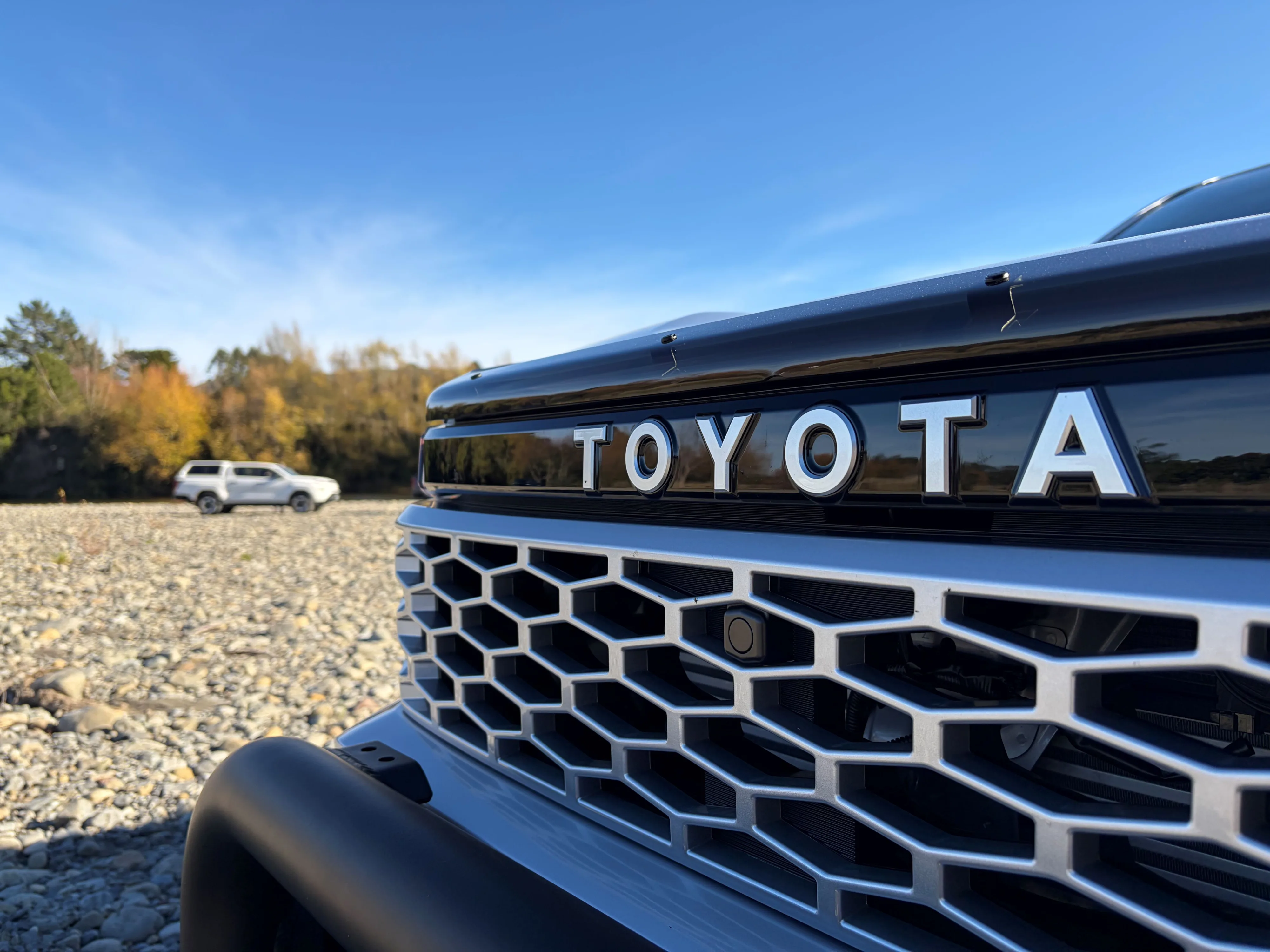
We departed Toyota New Zealand’s headquarters after dark on day one and arrived back before light on day two, no weather related delays this time! Following a warm breakfast, we were away for a presentation from the Product Specialist team of Sven Tulicic and Lisa Kleinheinz. Through this session, we explored everything from the Hilux’s deep connection with New Zealand to its all-new ‘Cyber Sumo’ face.
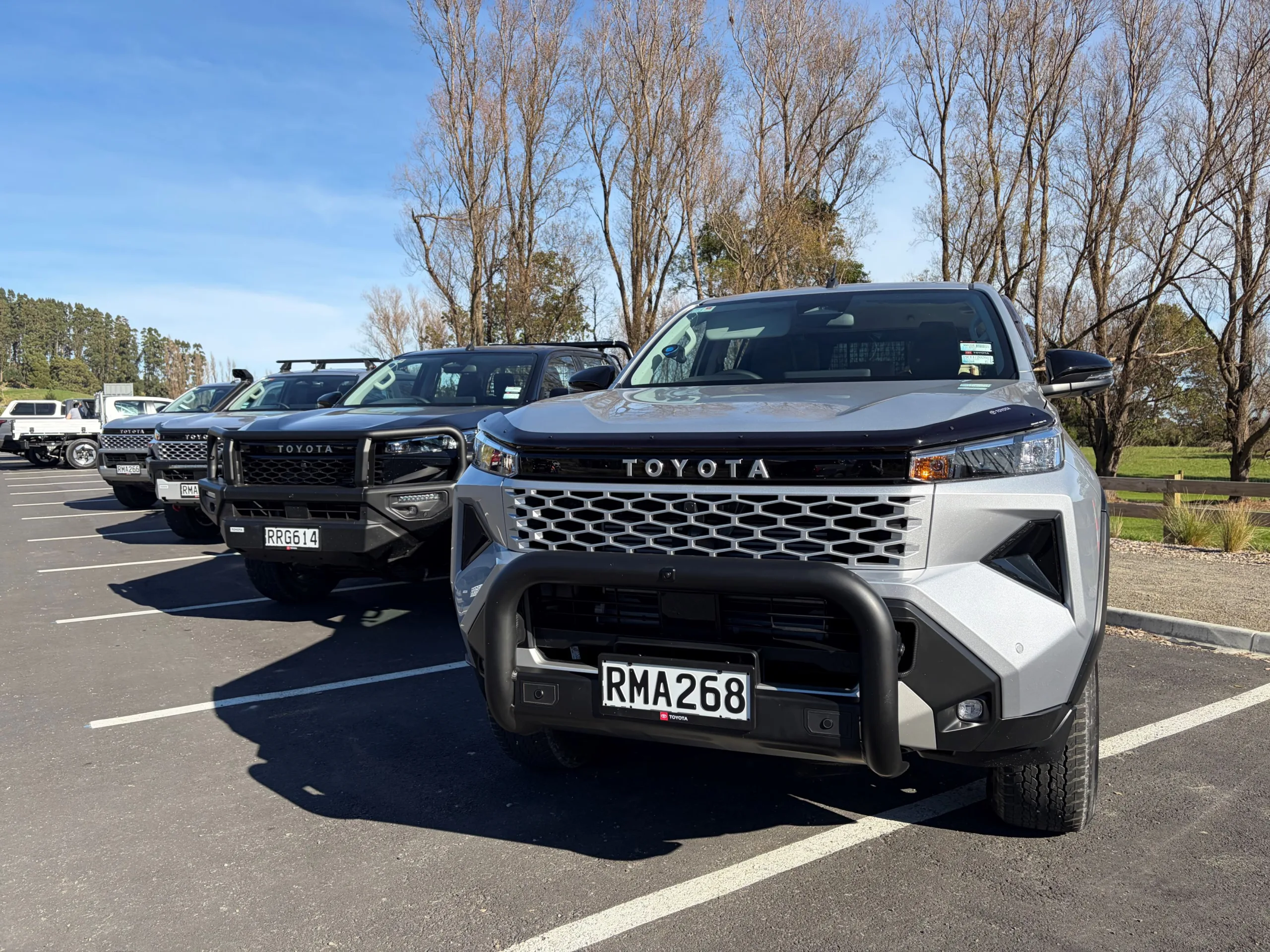
On the outside, key changes for the new generation vehicle include more pronounced wheel arches and stronger lines. Although the chassis is shared with the outgoing model, additional spot welds have made it 20% stiffer with the SR model now tuned for heavy payload based work while the SR5 takes a more well-rounded approach to things, so much so that the former even has drum brakes at the rear with a physical handbrake! The SR5 instead features discs coupled with an electronic parking brake.
Also a first for Toyota is the fact that the brand now only offers one diesel engine the world over, that 2.8L turbo unit from the new-gen Prado delivers 150kW and 500Nm of torque on the automatic variants, with the manual offering a reduced 420Nm figure. Developing a new diesel engine post Euro 7 emission changes might prove to be impossible and so Toyota are ready with a “multi-powertrain strategy”, including diesel mild-hybrids, BEVs and eventually a Hydrogen fuel-cell powered vehicle as well!
However, the above isn’t the most surprising part about the new Hilux, it also comes with electronic power steering for the first time, the effectiveness of which was really hammered home on the previous day’s drive, highlighting just how direct it is. Improvements to the ‘NVH’ (noise, vibration, harshness) have also seen an refinement in driving experience on the new-generation Hilux. Speaking of improvements, apparently Kiwis like to personalize our utes upfront, even more so than Aussies! It was just as well then that we had Accessories Manager, Clint Beaumont on hand to talk us through the new range.
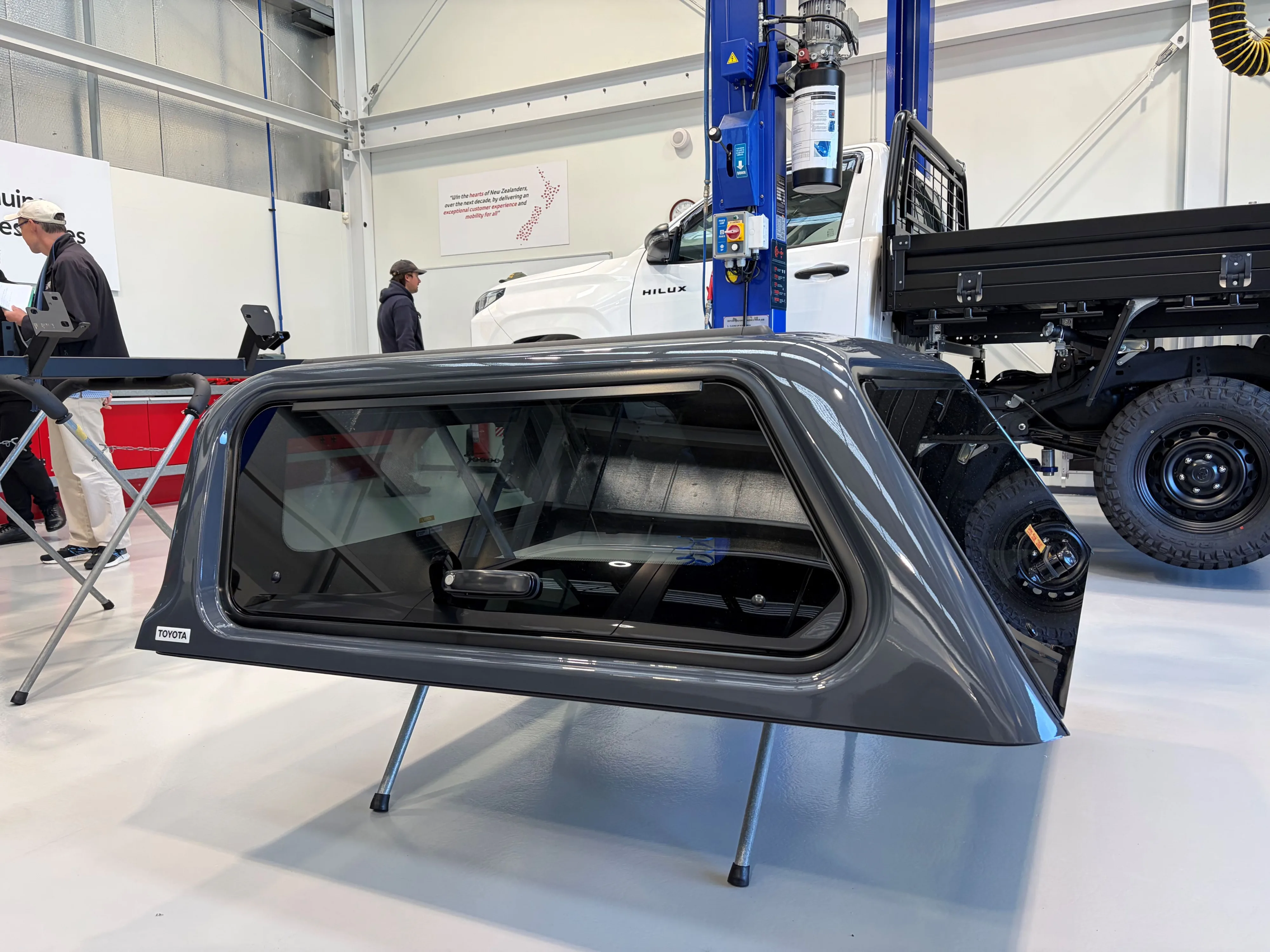
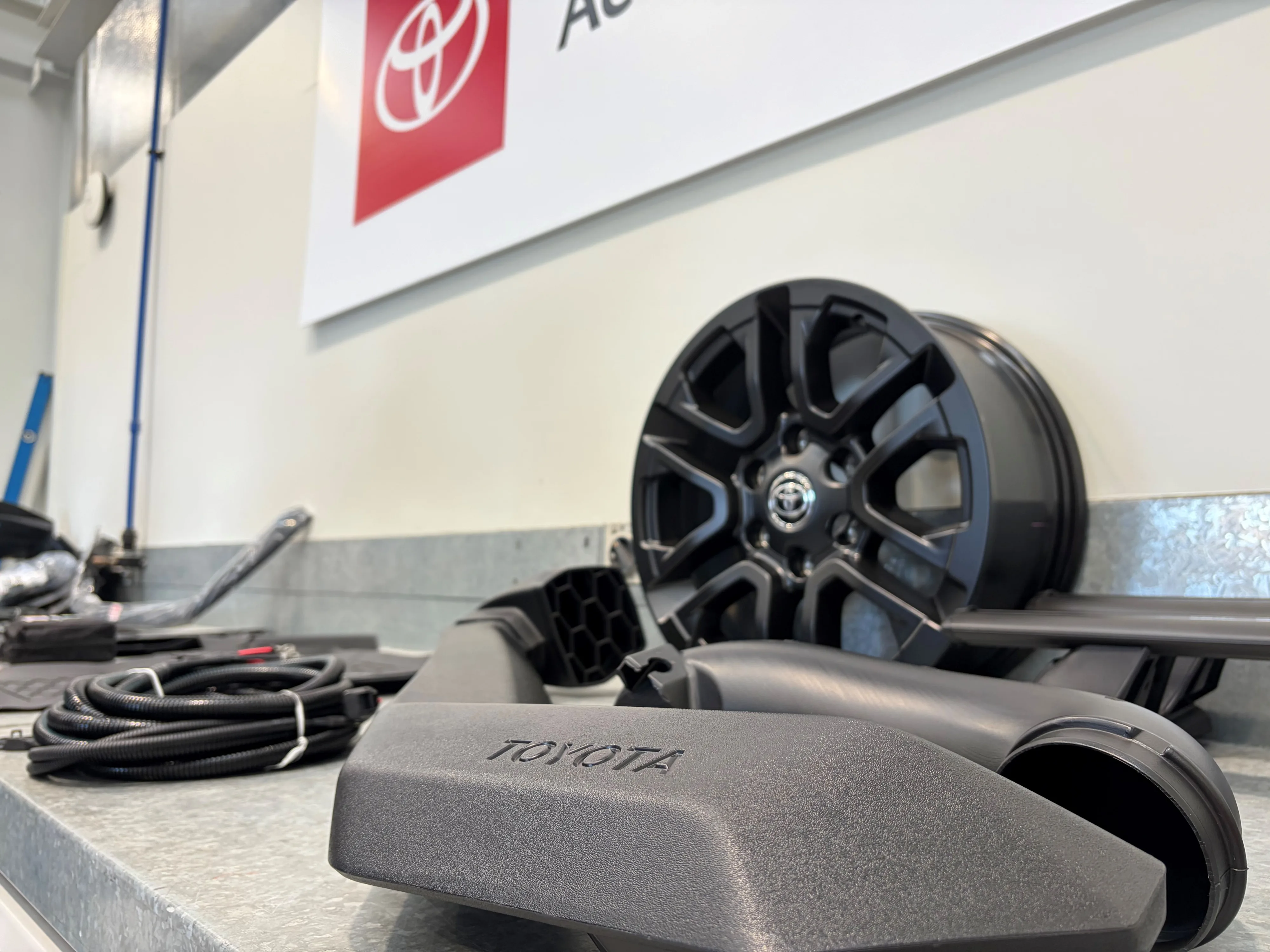
It’s not just canopies and snorkels which by the way don’t actually improve wading depth but that’s a topic for another day, buying genuine Toyota accessories means that customers can be assured that the bull bar they’ve optioned works with their vehicle’s airbags. In fact, the standard is so high that the glass used in the canopies is the same quality as that of the vehicle, all of which can be fitted at the local dealership by the way!
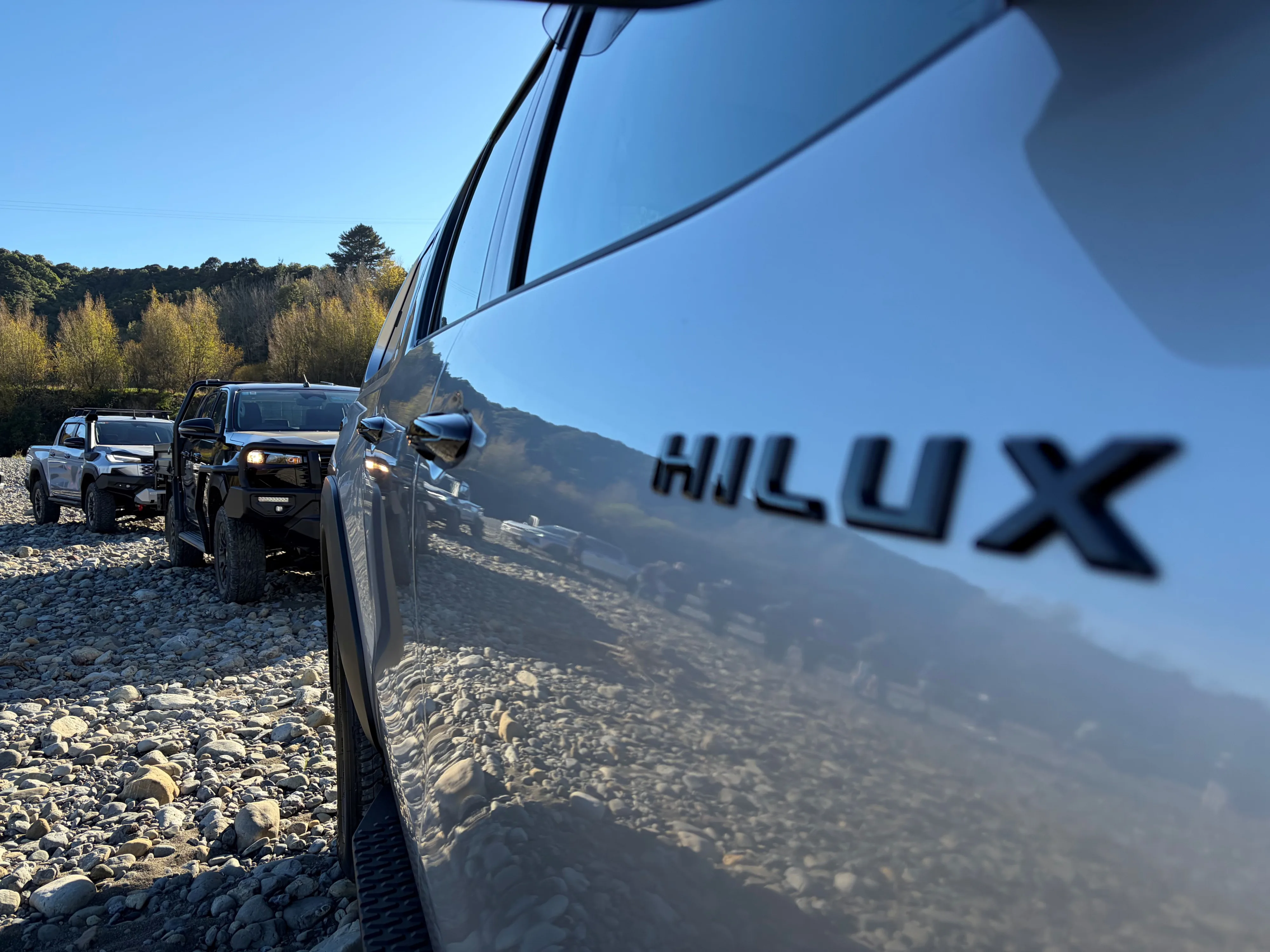
After being wowed by how much work goes into developing the range of accessories that are often spotted on the Hilux (I mean when have you ever seen one with an exposed tray), we were back behind the wheel of the ninth-generation vehicle, this time for some on-road driving, a more in-depth review of which will come later on in my road test. For now though, what you need to know is that all those additional spot welds and improvements to the cabin actually make a difference on the road where the Hilux is much more compliant. By no means though has it lost sight of its roots because an unladen tray over a rocky riverbed will still make for a very bumpy ride and as proved on day one, it’s still very much capable of enduring the ‘hard yakka’ it always has.
The Verdict
Launching at a time of great uncertainty for the automotive industry, Toyota’s multi-powertrain approach to the new ninth-generation Hilux will hold it in good stead. The diesel option still lives on for those traditionalists while a mild-hybrid opens up the field, and the revolutionary BEV proves that a Hilux can still be hard at work, just quietly. With a range starting at $49,990 for the SR PreRunner and climbing up to $63,990 for the Adventure, Toyota have a Hilux for every Kiwi, from Palmerston to Ponsonby.
Thanks for reading! For more Toyota news and reviews, visit Tarmac Life.
Special thanks to Toyota New Zealand for inviting us on the launch!
Pictures and words by Matthew D’Souza.