Great Wall Motor’s Solid-State Gamble – Why Real-World EV Breakthroughs Will Take Time, and Why That’s Exciting
Great Wall Motor (GWM) has been teasing a future powered by solid-state batteries (SSBs), but the company’s chairman, Wei Jianjun (Jack Wei), has been blunt: wide commercial use of GWM’s SSBs is likely at least five years away as the technology still needs development, verification and cost breakthroughs before it reaches volume production and real-world value . This honest call-out is exactly the kind of pragmatic, long-view thinking the EV world needs, and it makes the road ahead all the more interesting for enthusiasts and investors alike.
Where GWM stands today – GWM’s push is focused on sulfide-based solid electrolytes. The company says it has achieved kilogram-level sulfide solid electrolyte capabilities and produced 20 Ah SSB cell samples, and it’s committed to continuing R&D to climb the remaining technical ladder. GWM’s subsidiary Svolt already developed a 20 Ah sulfur-based SSB prototype back in 2022, claiming 350–400 Wh/kg energy density and survival of aggressive safety tests like nail-penetration and 200°C high-temperature exposure, impressive lab feats that still need to be turned into mass-market reality.
How GWM’s timeline compares with rivals – Notably, some Chinese rivals are racing ahead. GAC Group says it has completed a large-capacity SSB production line producing 60 Ah cells on a small-batch test basis and is eyeing mass production between 2027 and 2030. CALB has showcased 60 Ah SSB cells with a claimed 450 Wh/kg energy density, while other firms have recently announced 60 Ah developments too, signaling a rapidly accelerating arms race in high-capacity SSBs . That context partly explains why GWM expects a multi-year stretch before its SSBs are commercially competitive: the bar keeps rising.
GWM’s pragmatic parallel approach – GWM isn’t putting all its chips on one battery technology. At CES 2026, the company revealed a “liquid-solid” battery for mid-to-high-end cars with pack-level energy densities around 245 Wh/kg, and it plans high-volume installation of 100 kWh liquid-solid packs at 188 Wh/kg with 6C charging capability later this year, real-world solutions aimed at near-term customer needs while SSB work continues. Meanwhile, the firm continues to develop ICE technology including new petrol V8s and diesel V6s, a diversified engineering stance that keeps options open as markets transition.
Why five years is believable (and healthy)
- Technical hurdles: Solid electrolytes (especially sulfides) promise higher energy density and safety, but they pose challenges in cost, long-term stability, interface compatibility with electrodes, and manufacturing scale-up — issues Wei pointed to directly
- Manufacturing scale: Moving from lab samples (20 Ah) to reliable, high-capacity cells (60 Ah and beyond) at automotive quality requires new production lines, yield improvement and supply-chain validation — the same steps rivals are racing through now .
- Safety and regulation: Auto makers must satisfy rigorous safety and lifecycle testing. Passing a nail test in lab conditions is promising but not a shortcut to certification and consumer confidence .
What this means for drivers and the market – Expect incremental gains rather than an overnight revolution. GWM’s liquid-solid systems and current battery roadmap could improve vehicle range and charging speed in the near term, while true SSB-backed leaps in range, weight reduction, and charging might arrive later in the decade as tech matures and costs fall . For automotive fans, the next few years will be a fascinating overlap of refined lithium chemistries, hybrid solutions, and the slow-but-steady rise of solid-state tech.
Bottom line – GWM’s candid timeline (at least five more years to reach commercially valuable SSBs) is a sober but sensible forecast in a field where lab hype often outpaces production reality . Their dual-track strategy (pushing SSB R&D while shipping improved liquid-solid packs today) hedges risk and keeps consumers on a path to better EV performance without waiting for a single “miracle” battery. If you’re following the EV race, buckle up: the next chapter will be won as much by manufacturing smarts and cost control as by chemistry breakthroughs.
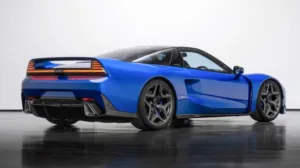
In the meantime – here’s the GWM V8