I remember when the Enyaq was first released here in NZ. It was this big EV, that came as a first effort from Skoda, sporting some new design, technology, and some cool colours. Fast forward to now, and we’re getting a facelifted version of the Enyaq, arriving with a clear mission: modernise, sharpen, and reinforce what was already a very competent electric SUV.
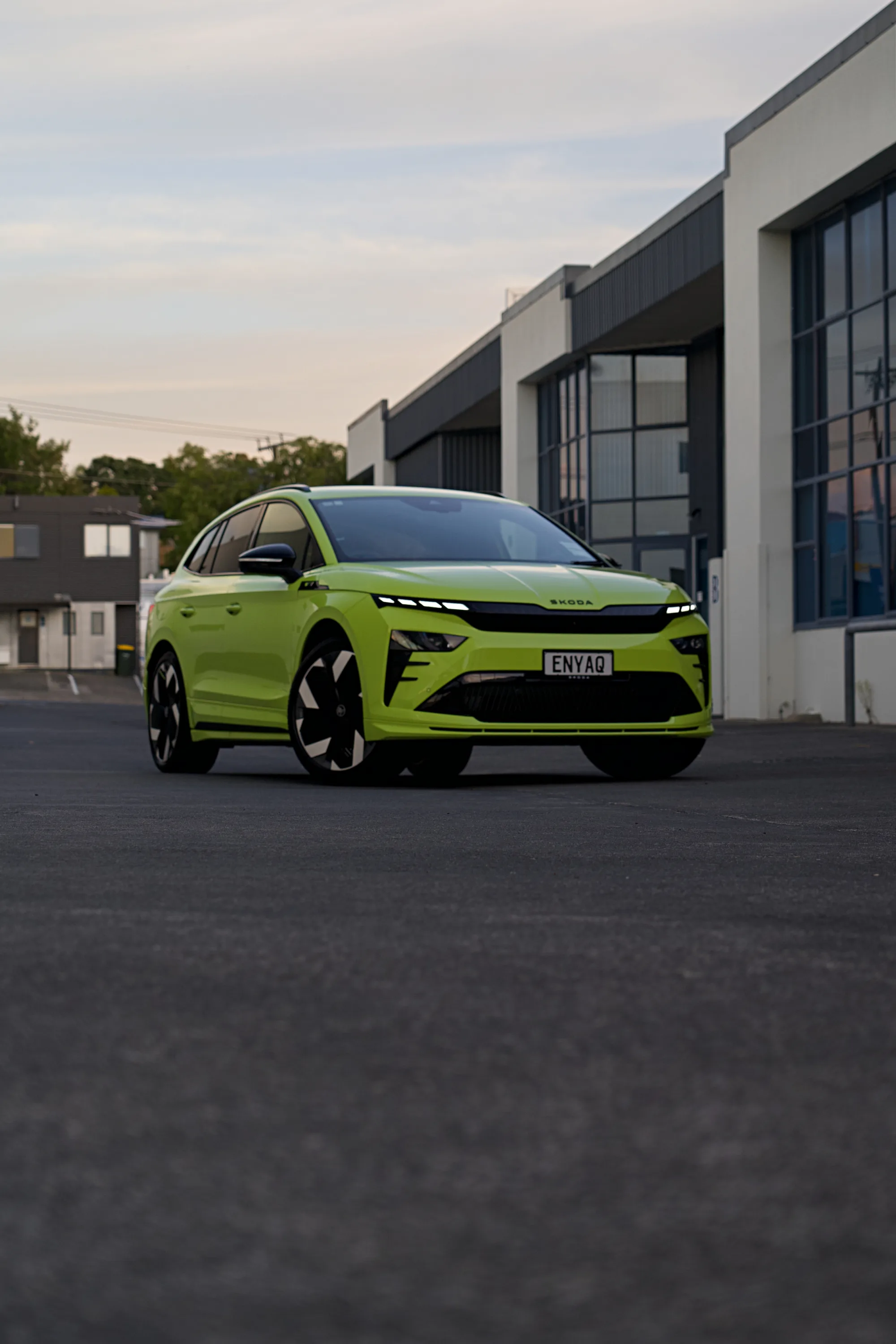
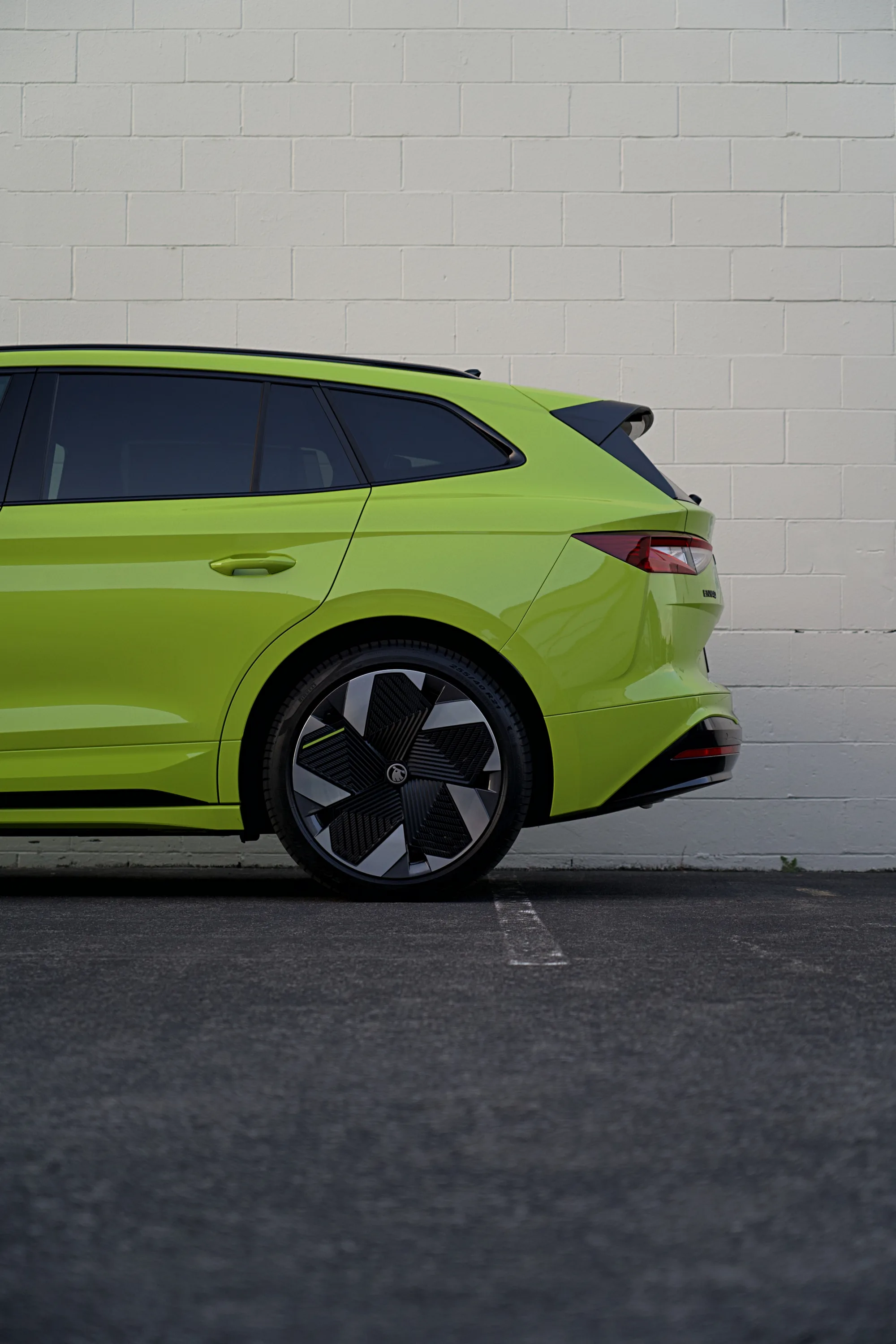
And in many ways, it succeeds, especially when finished in something like this Mamba Green, which drew plenty of attention during my time with the car. The colour is absolutely a statement, but even in more subdued tones, the updated design carries a clearly distinctive visual identity from before.
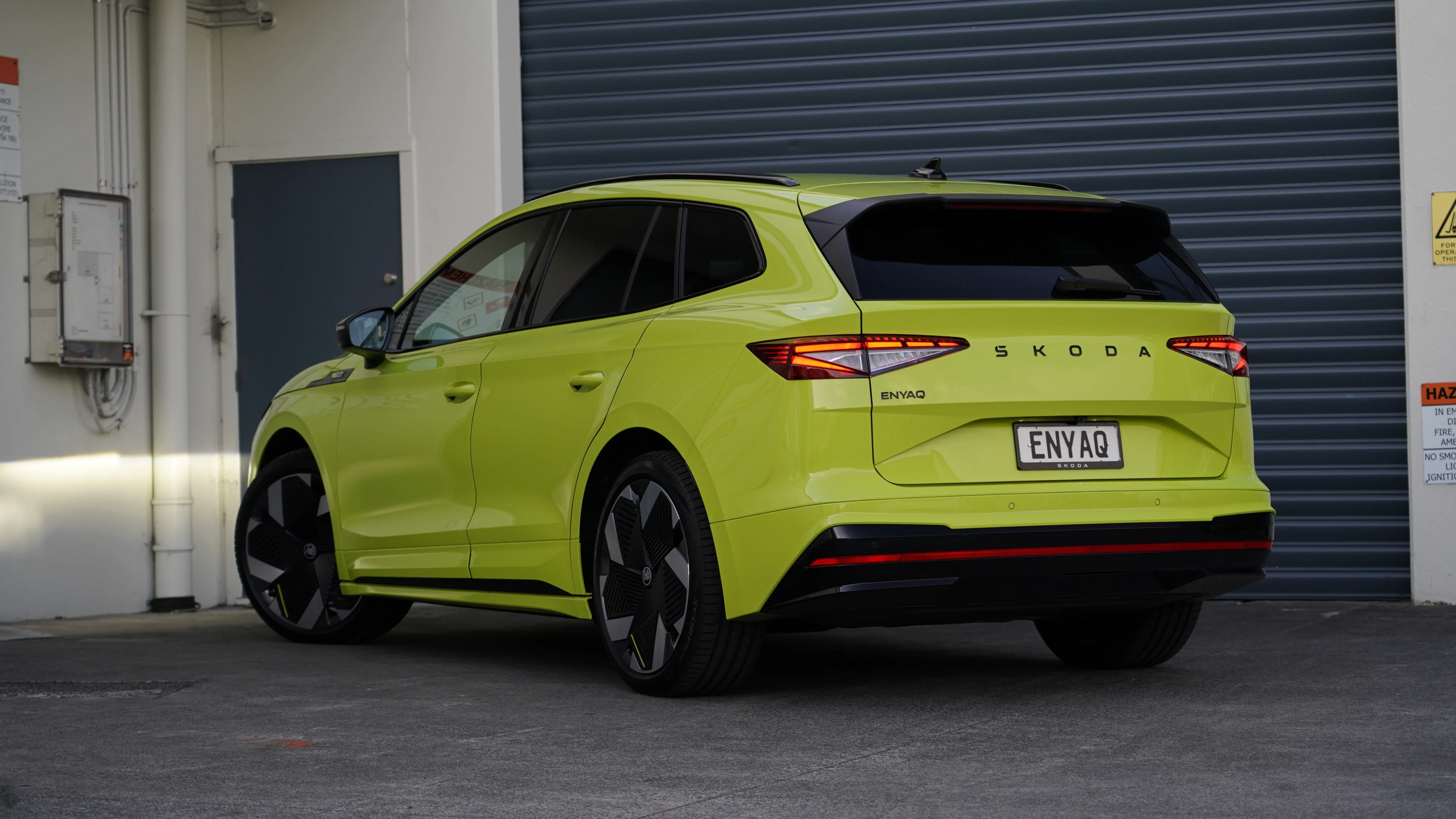
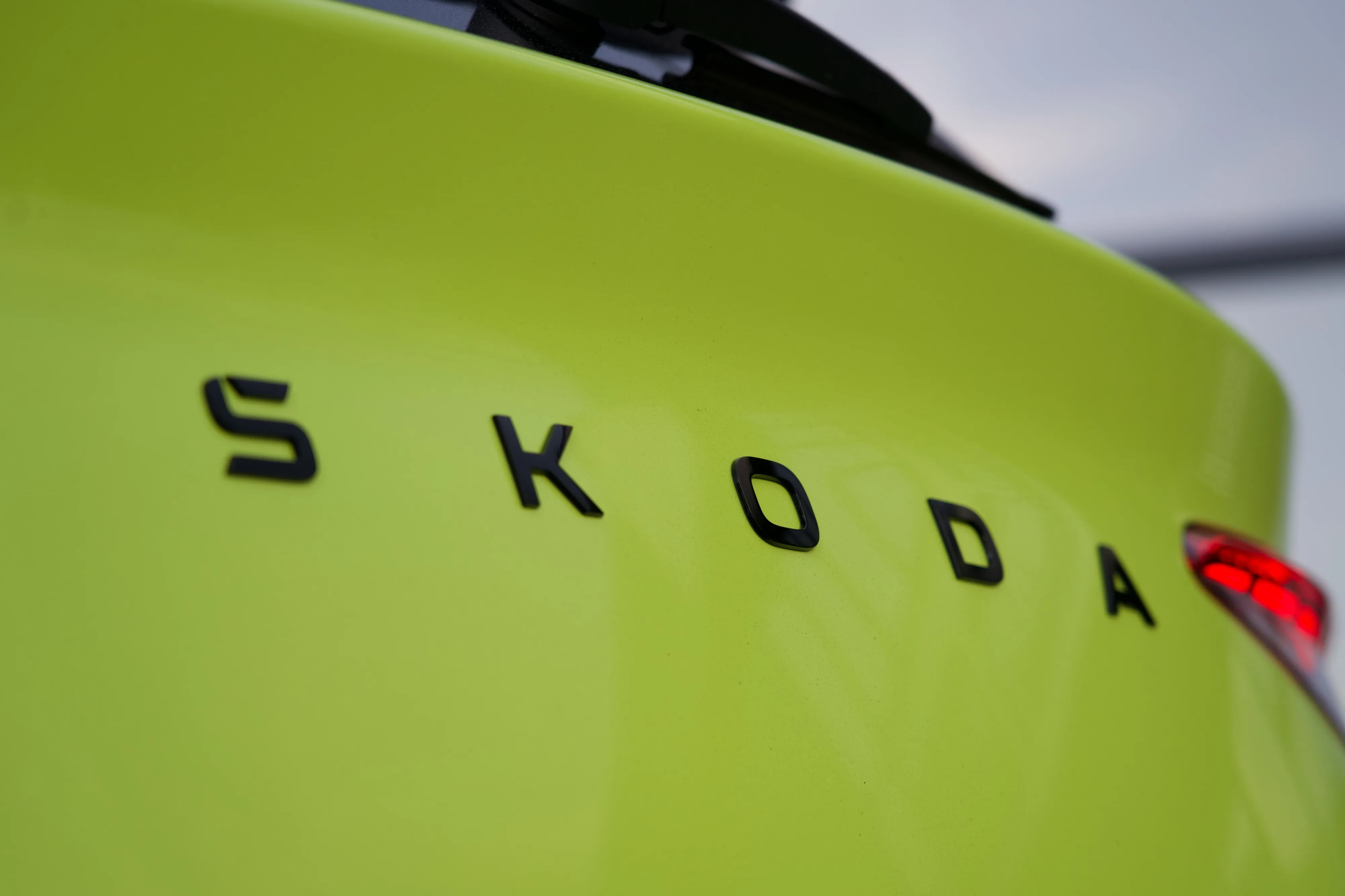
The new front-end treatment introduces Skoda’s latest design language, and while it arguably moves away from the more familiar, softer look of the original Enyaq, it replaces it with something more contemporary. There are chiseled lines, small lights, and body-coloured everything to give it a modern, urban look. The branding shift is also evident: the Skoda name is now spelled out front and rear, with the traditional badge relegated to the wheels.
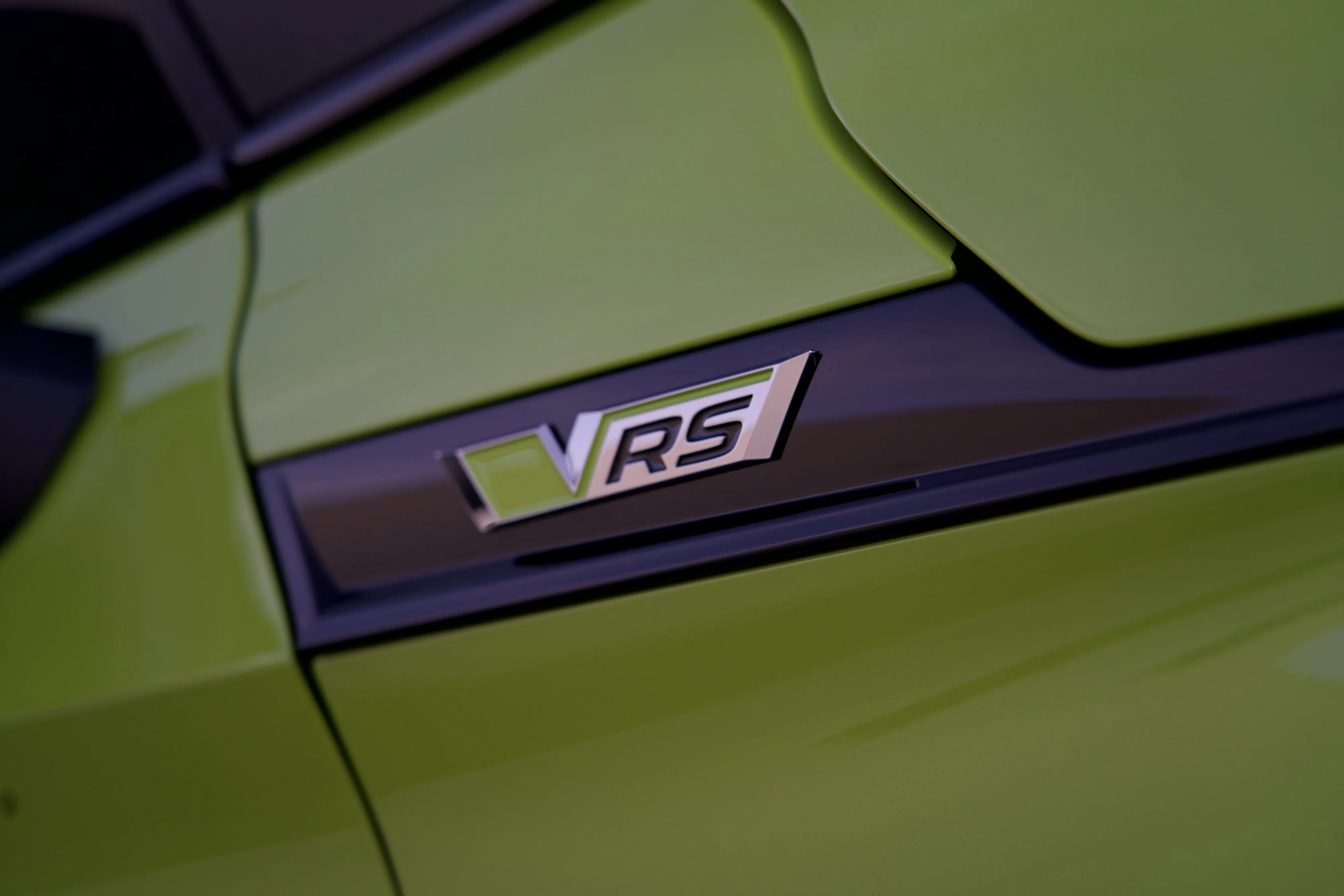
This loaner being the RS model, this is the Enyaq at its most assertive when it comes to design. Larger wheels, more aggressive bumpers, and a more distinctive interior treatment all work together to elevate the experience. In regular VAG manner, it is still somewhat subdued, but adds just enough visual and tactile flair to make it feel special.
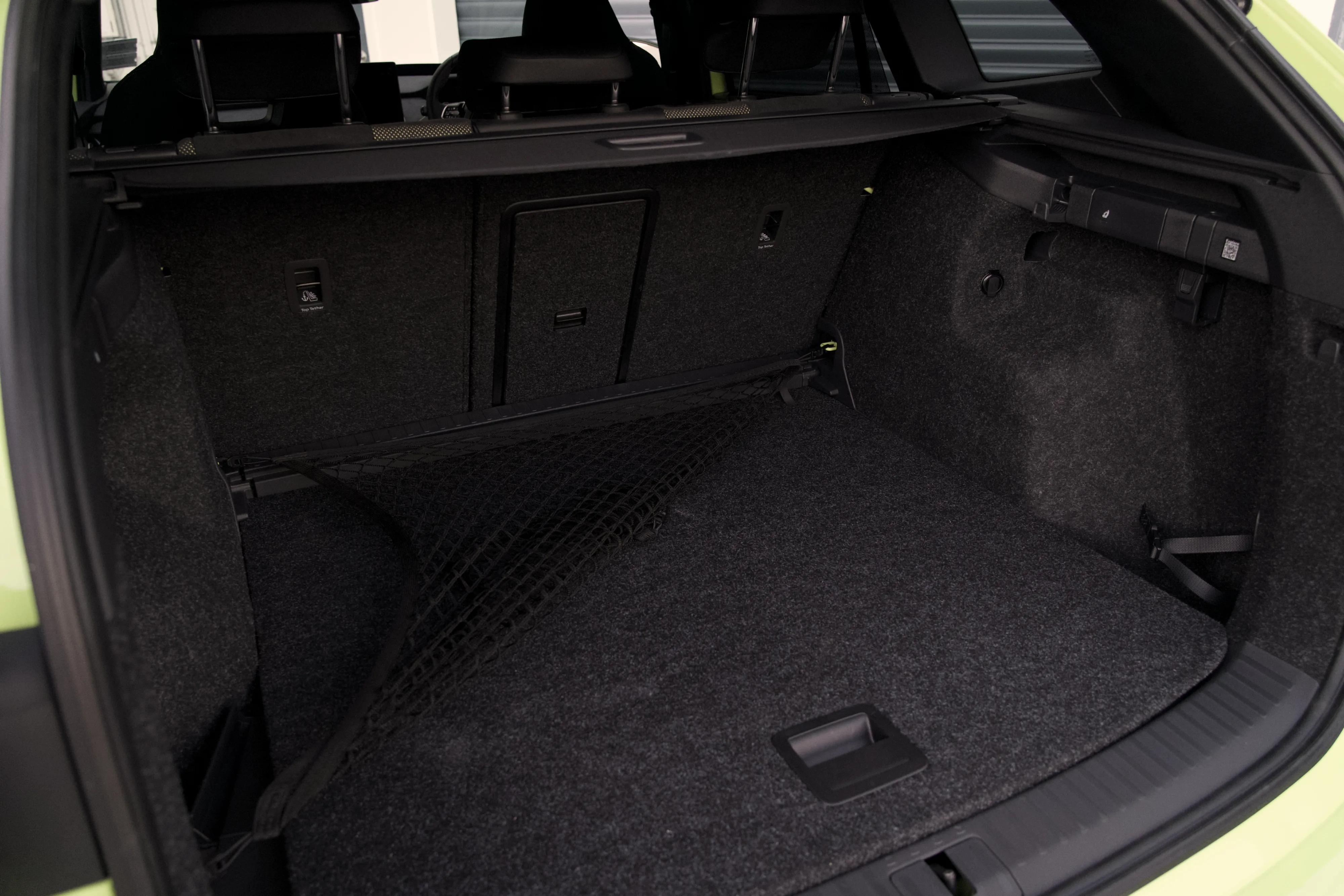
Underneath, it rides on the familiar Volkswagen MEB platform, shared across a wide range of EVs within the group. That includes the smaller Skoda Elroq we had recently, but the Enyaq feels like the more substantial product. Despite sharing the same wheelbase (hats off to the Elroq for having so much interior space in a small footprint), the larger size of the Enyaq, due mostly to the longer overhangs, translates not only into a product that looks more premium, but also a more spacious and more practical vehicle, especially when it comes to boot capacity.
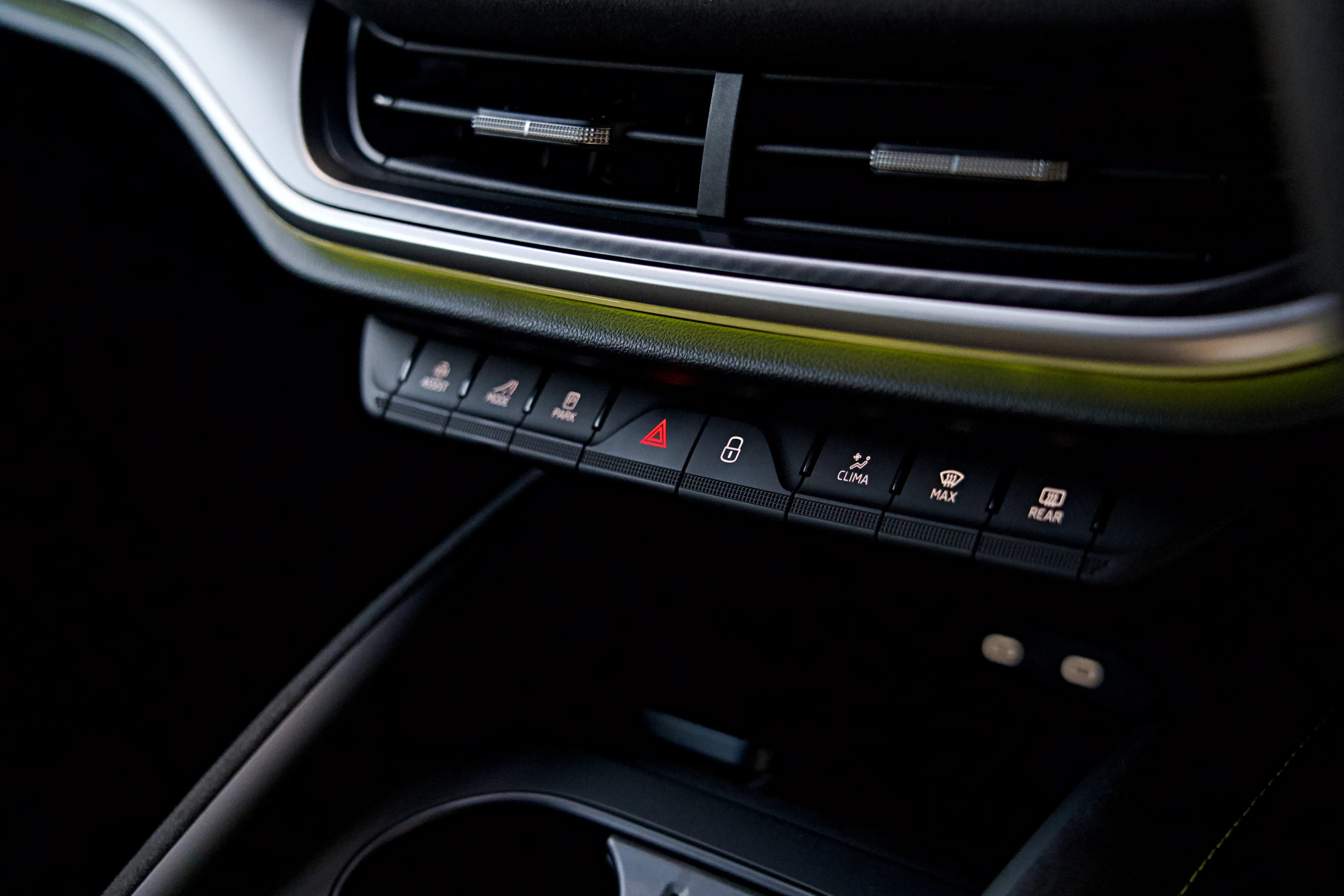
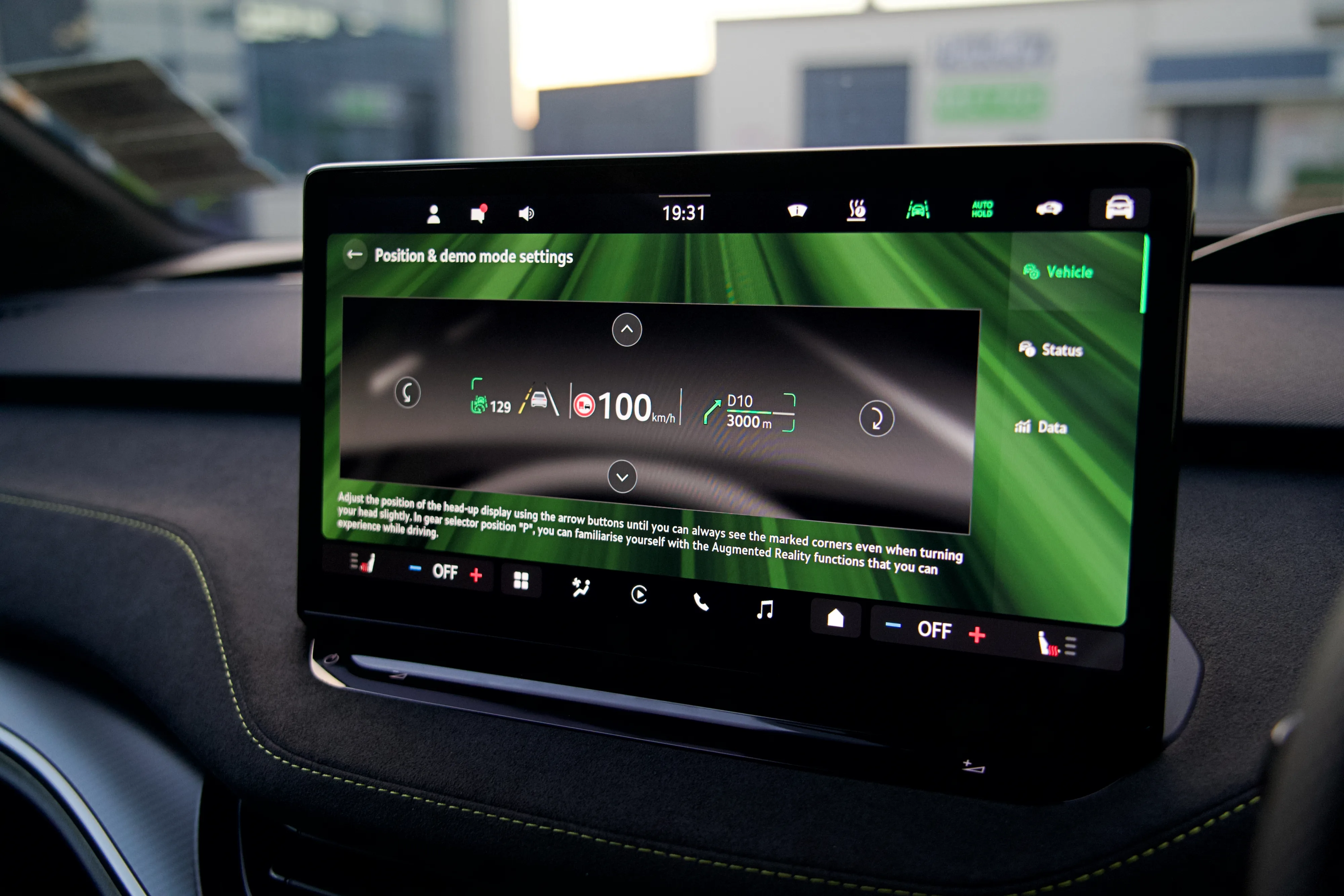
Inside, the Enyaq continues to follow the broader Volkswagen Group playbook. A large central screen dominates the dashboard, perched in that familiar “tablet-style” layout. It may not be the most integrated design in the segment, but the improvements to the software I mentioned in other reviews are immediately noticeable. The system is quick, responsive, and refreshingly straightforward. It does not overwhelm you with features or deep layers of customisation, but it nails the fundamentals, and in daily use, that matters far more.
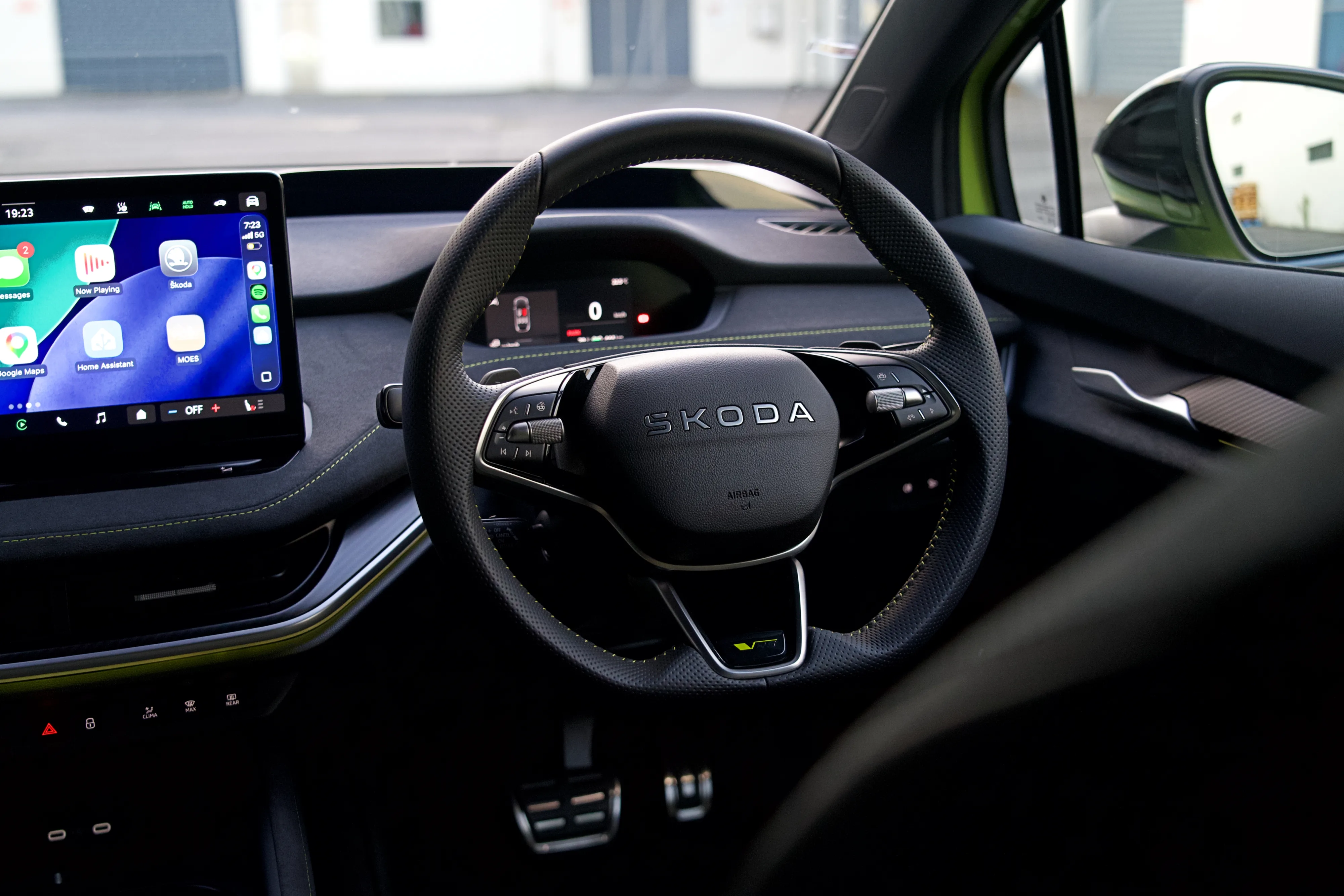
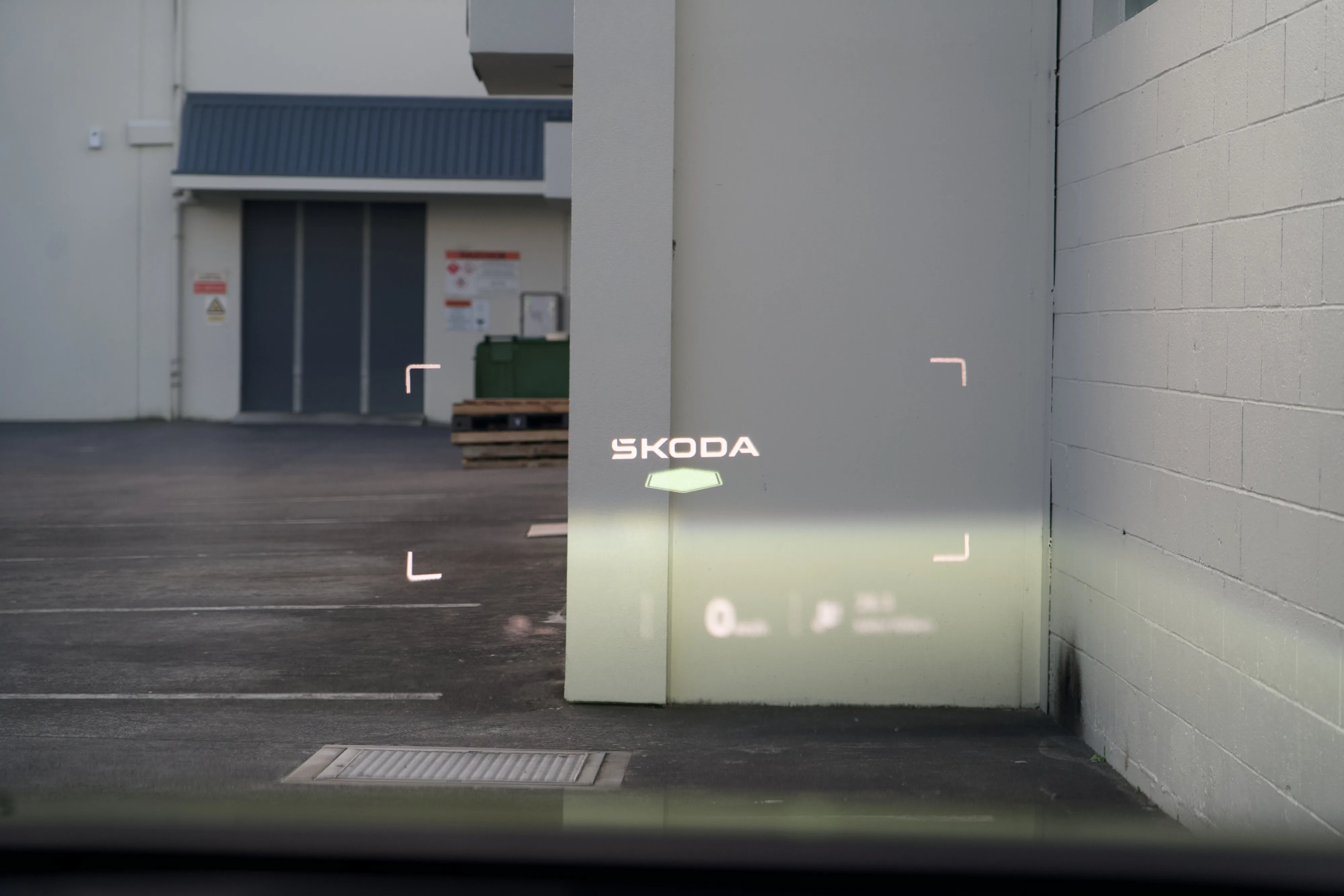
The drivers display is better integrated than in the VW ID.4, for example, but it is still very, very small. Thankfully, the Enyaq features a massive heads-up display, that mixes fixed information with navigation/cruise control overlays that are projected in perspective (augmented reality) to really take things to a next level.
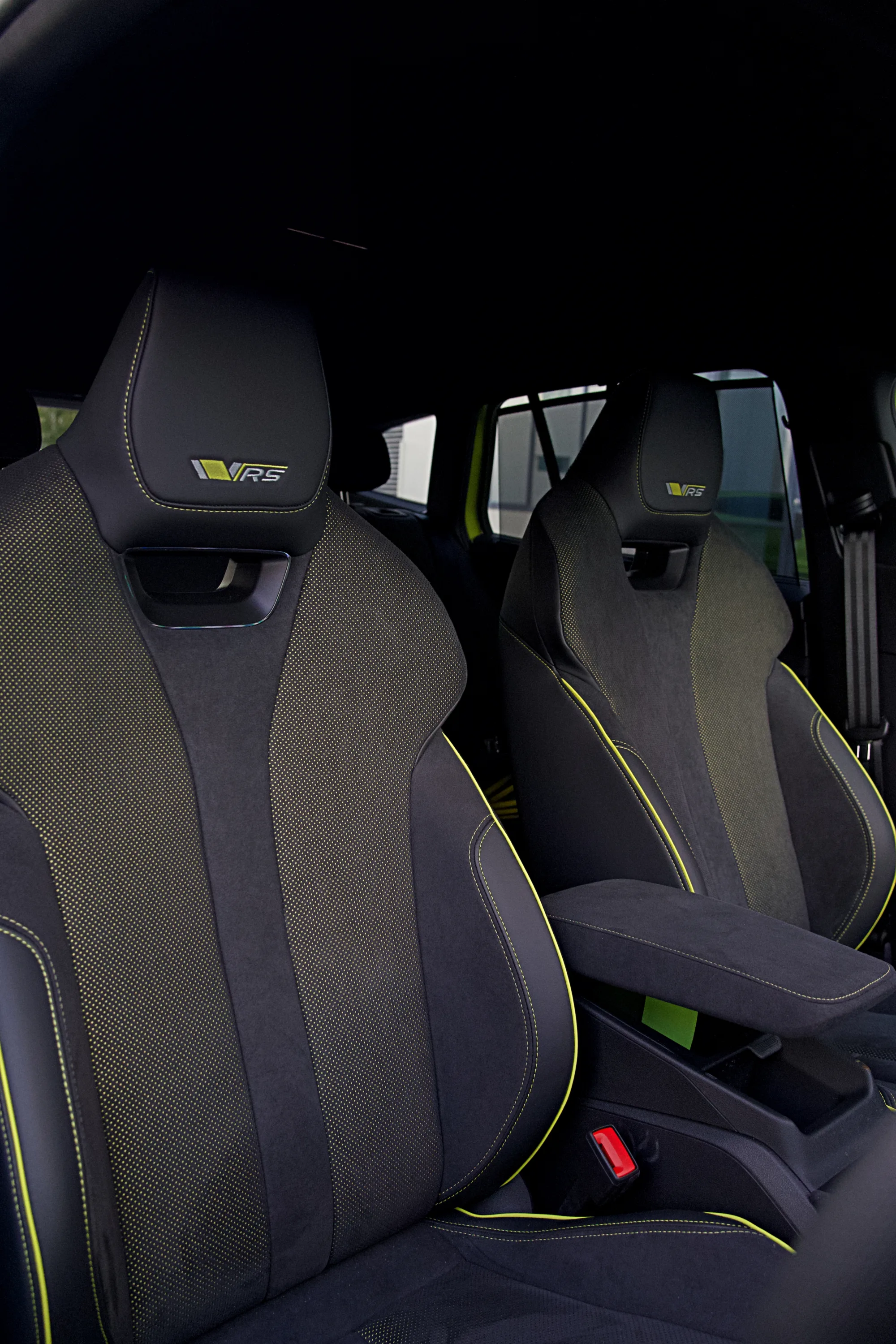
Material quality and style is where this RS trim keeps differentiating itself. The cabin feels genuinely upmarket, with generous use of suede across the dashboard and seats, complemented by distinctive bright stitching and detailing. The seats themselves strike a great balance: supportive enough to reflect the sportier intent, yet comfortable enough for long drives. Add in multiple memory settings and even a massage function (as soft as a cat walking on your back) and the Enyaq starts to edge into near-premium territory.
On the road, it delivers exactly what you would expect from a modern VW Group EV. The driving experience is composed, predictable, and confidence-inspiring. It is not boring, and doesn’t fall apart when pushed, but even though there are Driving Modes, it is not trying to be playful or overly dynamic. Instead, it focuses on consistency and ease of use.
With all-wheel drive and 250 kW on tap, the RS has more than enough performance for everyday driving. It is never enough to overwhelm the chassis (there is more chassis than power here) but it provides that instant, effortless acceleration that defines well calibrated EVs. The responses are clean, linear, and easy to modulate.
You also get a reasonable degree of control over how the car behaves. Multiple regeneration settings are available, along with a stronger “B” mode for increased regen (my immediate go-to), although it still stops short of delivering true one-pedal driving. It’s tuned for familiarity rather than outright innovation, and I like it for that regard. Shaving off speed using regen before a bend is satisfying, and the low centre of gravity (for a car of this shape) gives you the confidence to go back to accelerating earlier.
Efficiency and range are solid. Even though the kWh/100km figures are not eyebrow raising, the 75 kWh battery gives the Enyaq around 520 kilometres on a full charge, which aligns well with real-world expectations. Where it falls slightly behind is in charging performance. The charging speeds are not class-leading at 185kW, and at this price point, that becomes harder to overlook.
Because pricing is where the Enyaq finds itself in a challenging position. Sitting around the $99,000 mark, it occupies an awkward middle ground. It is more expensive than many offerings from newer or less established EV brands, yet it overlaps with entry-level options from established premium manufacturers. That makes it a tougher sell on paper, even if the product itself is undeniably strong.
And that is really the story of the Enyaq RS. It is a very well-rounded electric SUV: it looks and feels modern, drives with confidence, offers excellent practicality, and delivers a polished, high-quality interior experience with all the “Simply Clever” bits we’ve come to expect. With their push to make their cars stand out, the brand doubled down on what the group does well, and the result is a very competent product, even if it now has to fight a little harder to earn your hard earned. Thanks, Skoda, for the opportunity, and thank you for reading this far!