During the 1980s, Chrysler Corporation experienced a significant resurgence. Under the leadership of Chairman Lee Iaccoca—well known for his role at Ford Division and his involvement with the Mustang—Chrysler began generating profits after a prolonged period of financial difficulty. The introduction of the Chrysler, Dodge, and Plymouth K-cars, as well as the development of the minivan, contributed substantially to the company’s success. However, despite these achievements, the product line lacked a distinctive flagship model. Chrysler sought to introduce a vehicle with exceptional appeal and sporty characteristics, reminiscent of the innovative work Carroll Shelby accomplished with the Cobra.
That is exactly what company President Bob Lutz wanted so Chrysler’s Design Studio was given the greenlight to create a Cobra of Chrysler’s own. A concept car was unveiled at the 1989 North American Auto Show in Detroit. It was called Viper and it was the birth of an icon.
With the help of wide team of designers, engineers and even Carroll Shelby himself, Chrysler set to work on turning the Viper into a production ready, no-frills sports car. Lamborghini, who were owned by Chrysler at the time were asked to create an all-aluminium block for what would be an incredible 8.0L V10 engine. Radical styling, simple interior and drive mechanicals and the pre-production Viper made its debut driven by Shelby at as the pace car for the 1991 Indy 500.
The Viper had well and truly arrived and was already making waves in the hearts and minds of the buying public. Production started in 1992, and people went nuts for the new car. The first-generation Viper RT/10 Roadster’s 8.0L V10 produced 298kW and a hefty 630Nm of torque, resulting in a zero to 100km/h time of 4.3 seconds and a top speed of 266kph, all while returning 20L/100km. This new snake loved to drink, but buyers didn’t care, they just wanted more, and more they got.
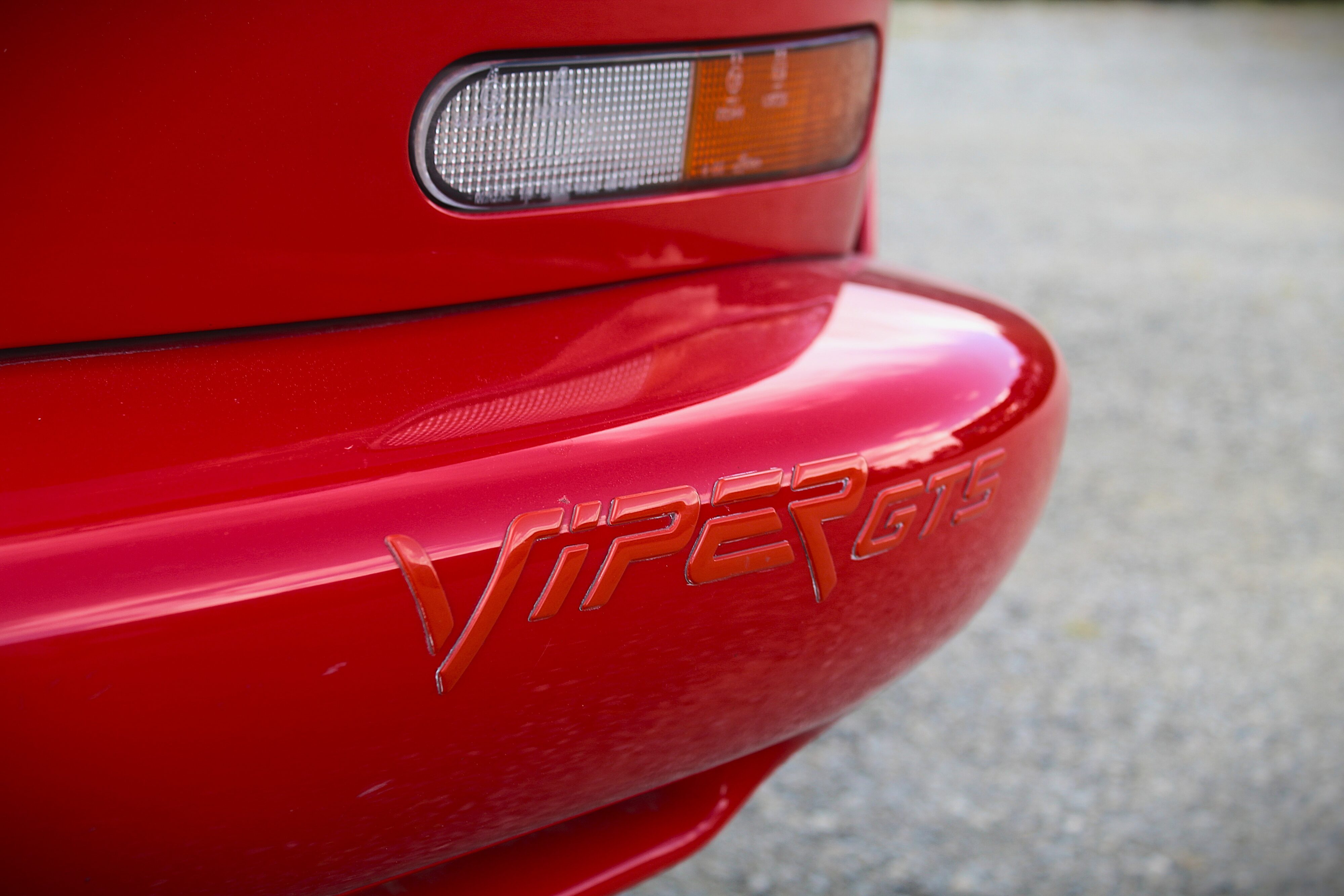
In 1996, after the immense success of the first generation, the Viper was revamped for what would be know as Gen 2. Aside from a lighter all-alloy V10, slightly more power and styling tweaks, the biggest change was the introduction of the Viper GTS Coupe.
The double bubble coupe styling for the Viper GTS is said to have been largely influenced by yet another product bearing Carroll Shelby’s name, the Cobra Daytona coupe. Power went up to 339kW and torque to 664Nm. Zero to 100kph went down to just four seconds.
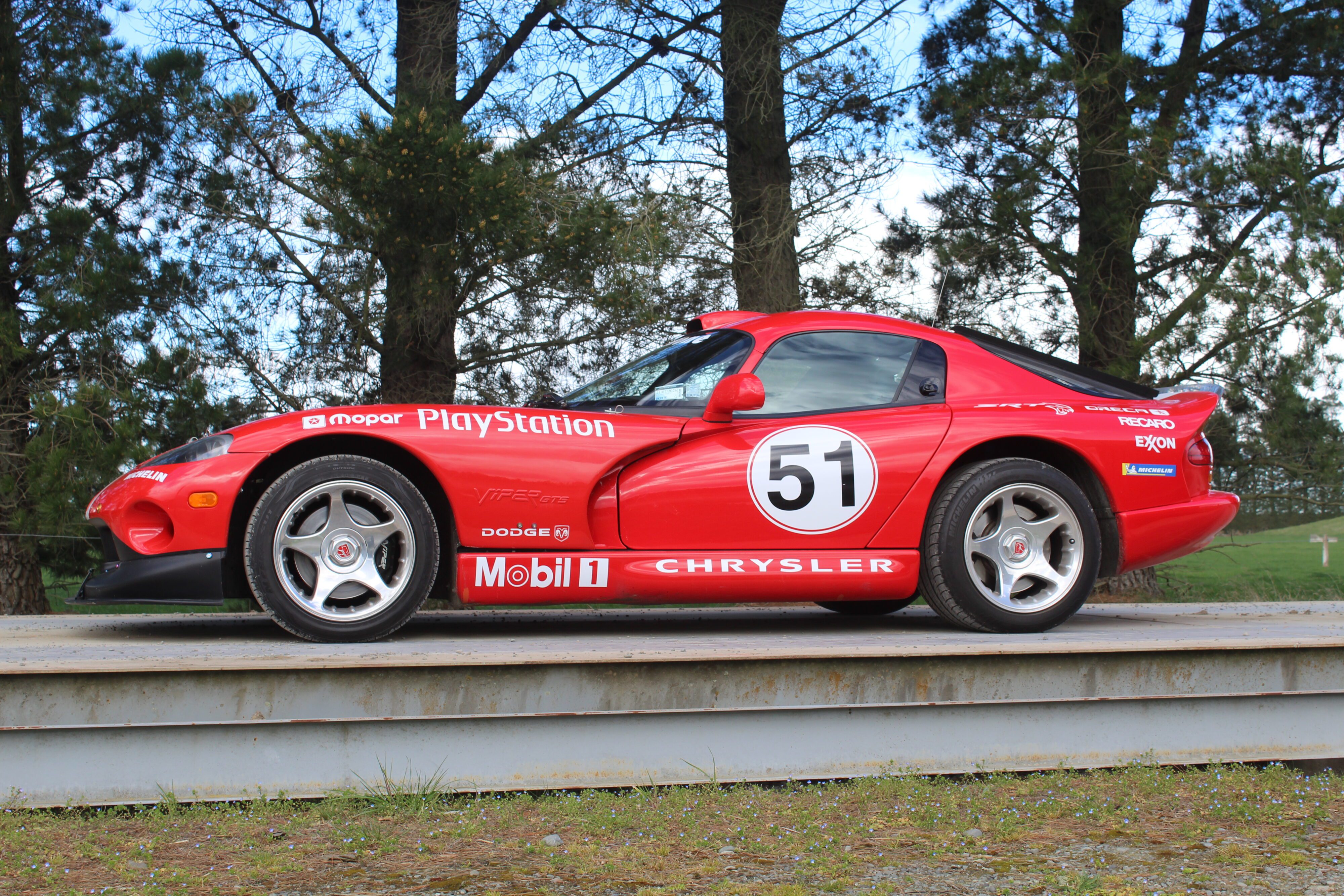
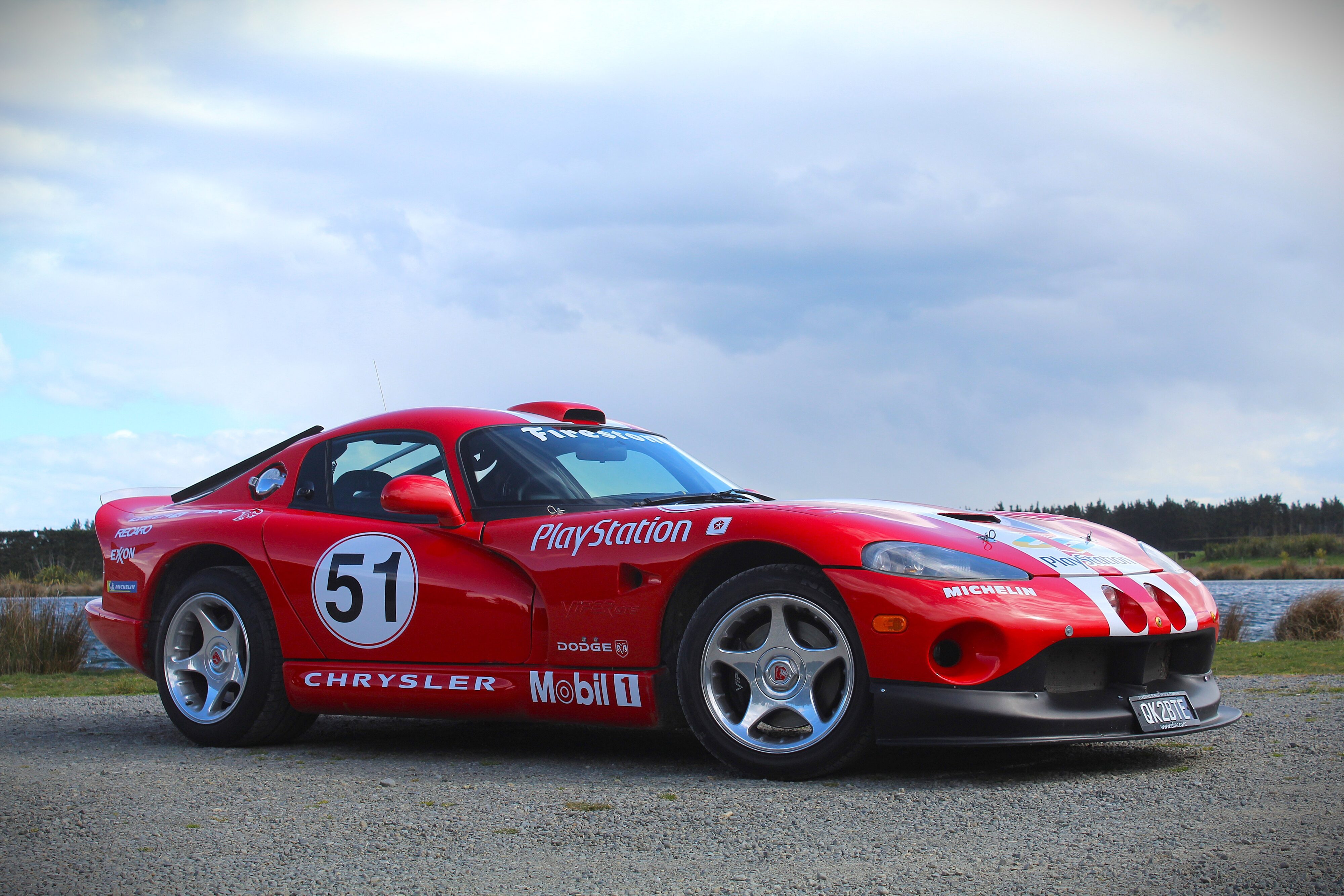
This 1997 second generation Viper GTS has been in the care of custodian Andrew from Eyrewell Forest Motor Company for many years and prior to Andrew, was used by the previous owner as a track car. It was a long process of converting the car from racing special to road legal, but the end result speaks for itself. The Viper has a distinctive past racing at Le Mans, Daytona, Sebring and other legendary sports car endurance races. The fact Andrew decided to keep the Team Oreca Viper GTS-R inspired livery is pretty cool, especially as said car has been etched rather heavily in the mind of this writer since having “driven” it electronically in “Gran Turismo 3” on the PlayStation 2.
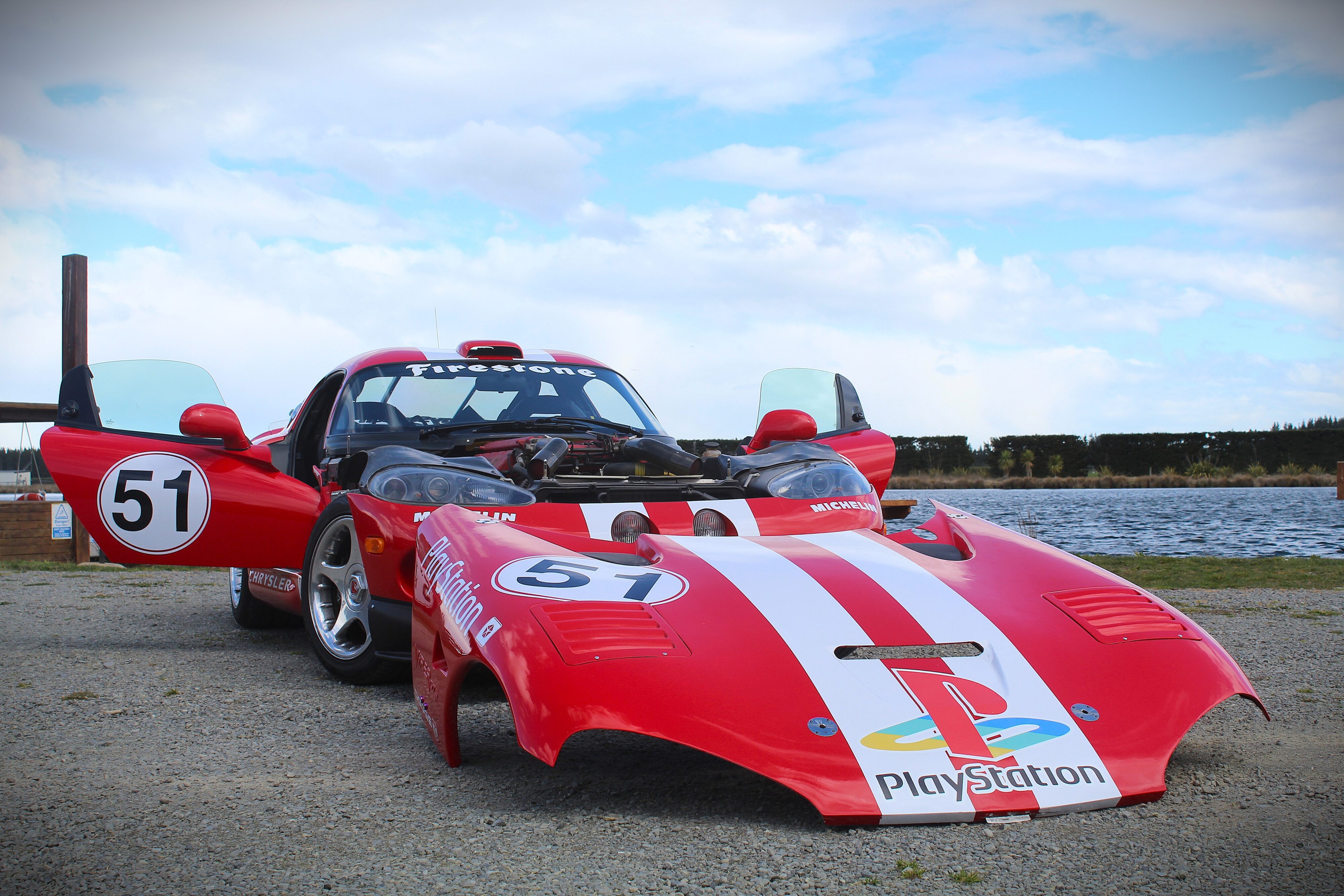
The tell-tale signs of a previous life on track are obvious. Aside from the decals, you have a fibreglass spoiler, rear window strengthening beams and a bonnet which requires two people to remove via the four bonnet pins.
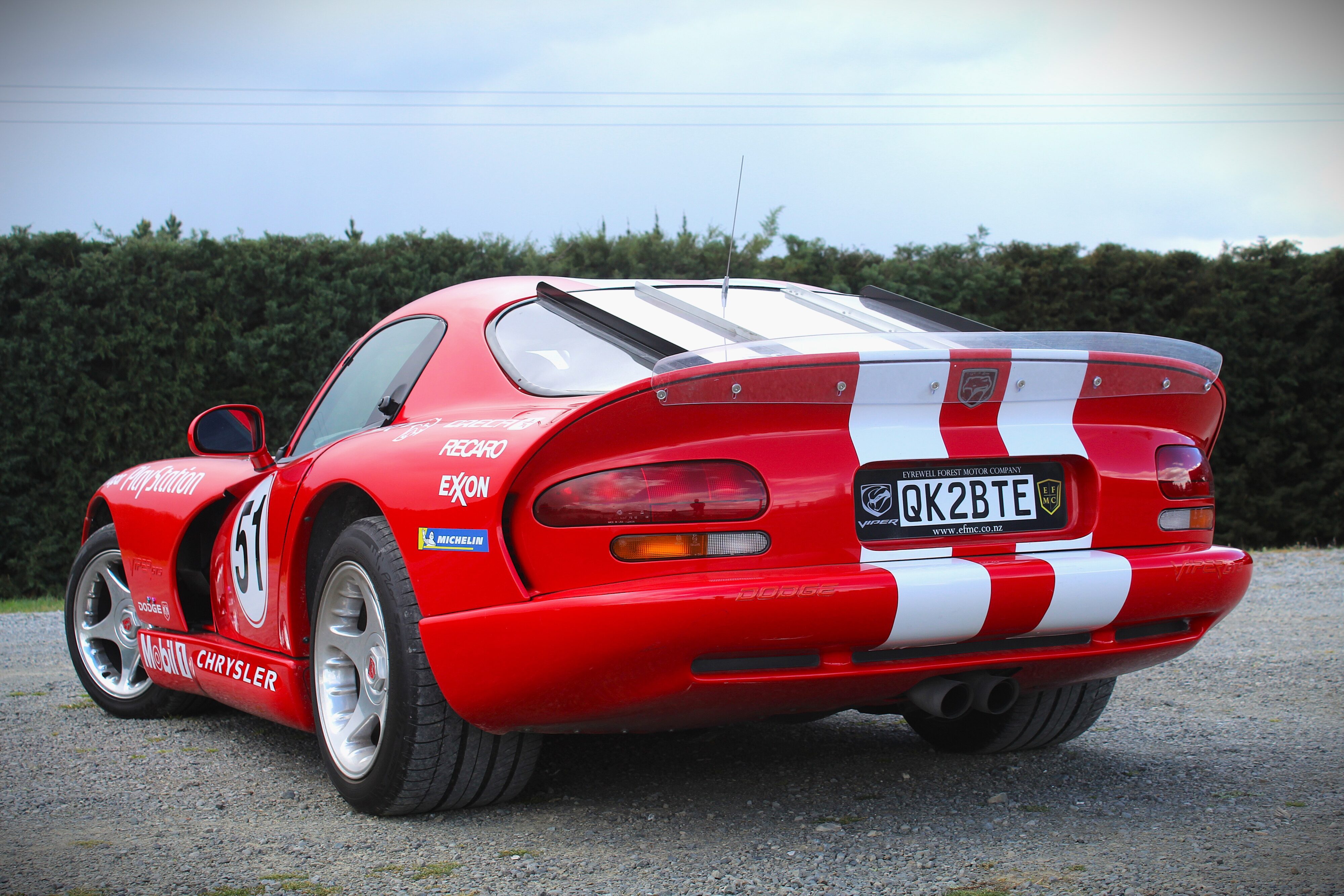
Racing motif aside, the Viper GTS is still a sports car of menace and aggression, though I reckon it’s one of the most perfectly proportioned looking American cars ever built. Plus, those 335mm wide rear tyres are also some of the widest you will find on any production car
Pull back the driver’s door and say hello to a classic, no-frills throwback to nineties American automotive cabins. Lots of grey plastic for sure, but everything you need and nothing you don’t. No traction control or electronic gadgetry of any kind, that is if you don’t count the CD stereo system. In fact, by Viper standards of the day, its air-conditioning and electric windows could almost be considered luxury items as the first-generation RT/10 Roadster had none of this.
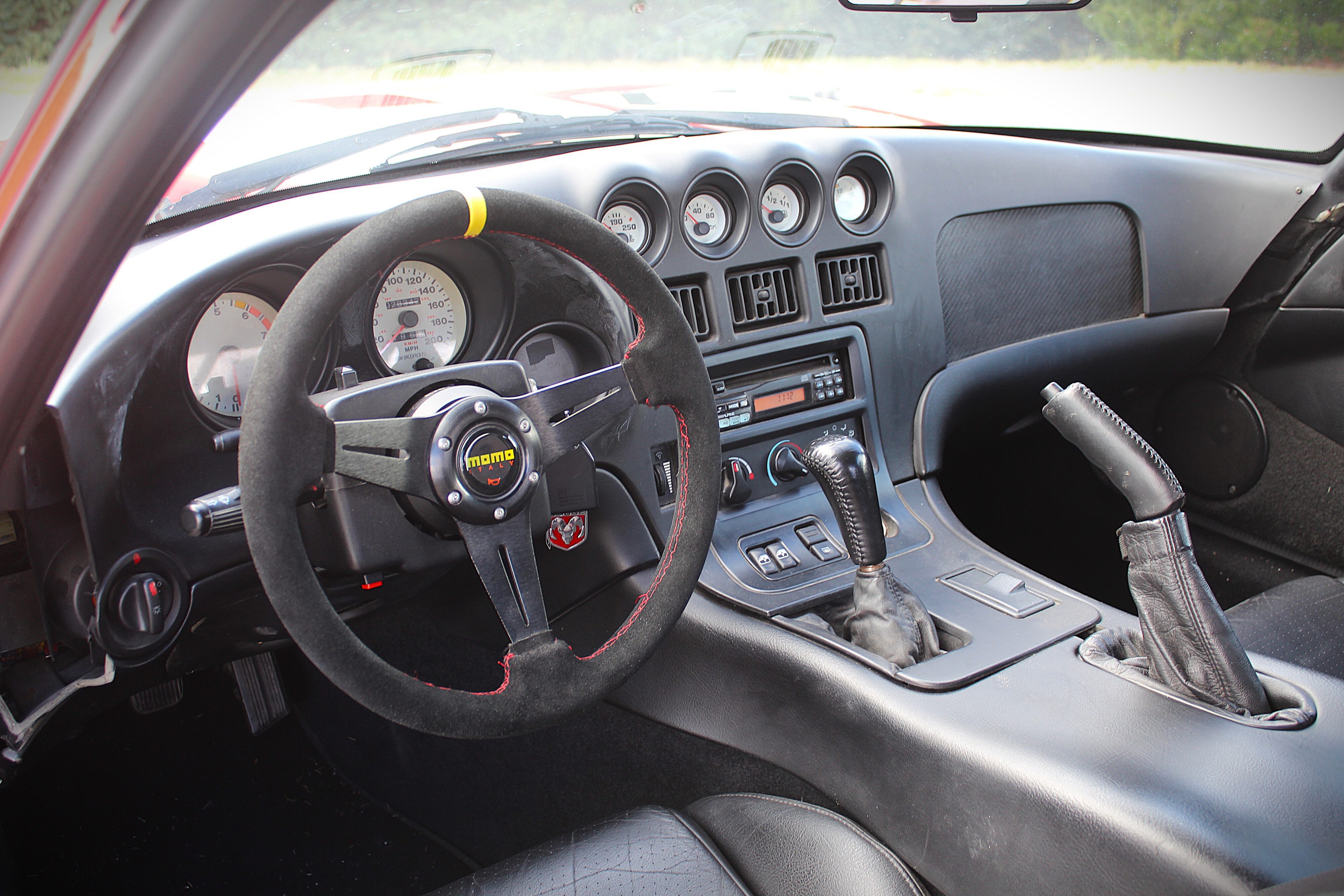
The dash itself is quite vast. Atop this a cluster of gauges depicting oil pressure, engine temperature, battery voltage and fuel level, the latter of which makes for curious reading after many full bore starts. Once inside, the combination of that wide transmission tunnel and small pedal box which is slightly off set to the left means you feel rather cosseted by your surroundings. There really isn’t much room to move here, mind you once you get going, you aren’t going to want any distractions from the job in hand.
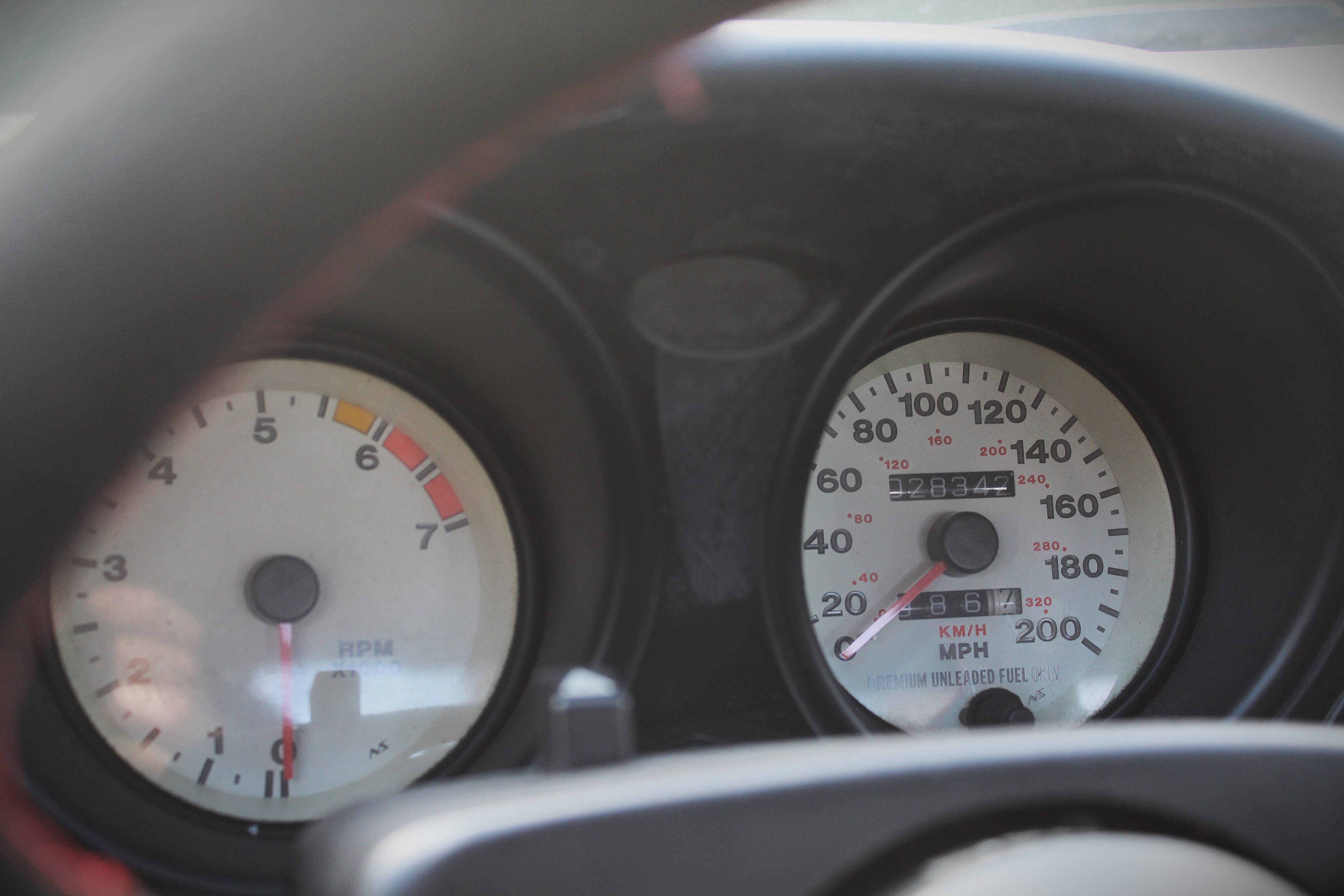
Ahead of you are a classic black on white speedometer and rev counter with a 6,000rpm red line. Naturally, the MOMO steering wheel is not factory but another reminder of this Viper’s track-focused background. At one point it did have some racing bucket seats and a roll cage, but they have since been removed and Andrew has fitted some factory leather seats with conventional and all-important seatbelts.
Turn the ignition key and the Viper wakes up from its slumber, with all 10-cylinders burbling away in unison. Its probably not the most flamboyant engine note at idle, but a few taps from your right foot on the go-pedal and the Viper magic well and truly begins.
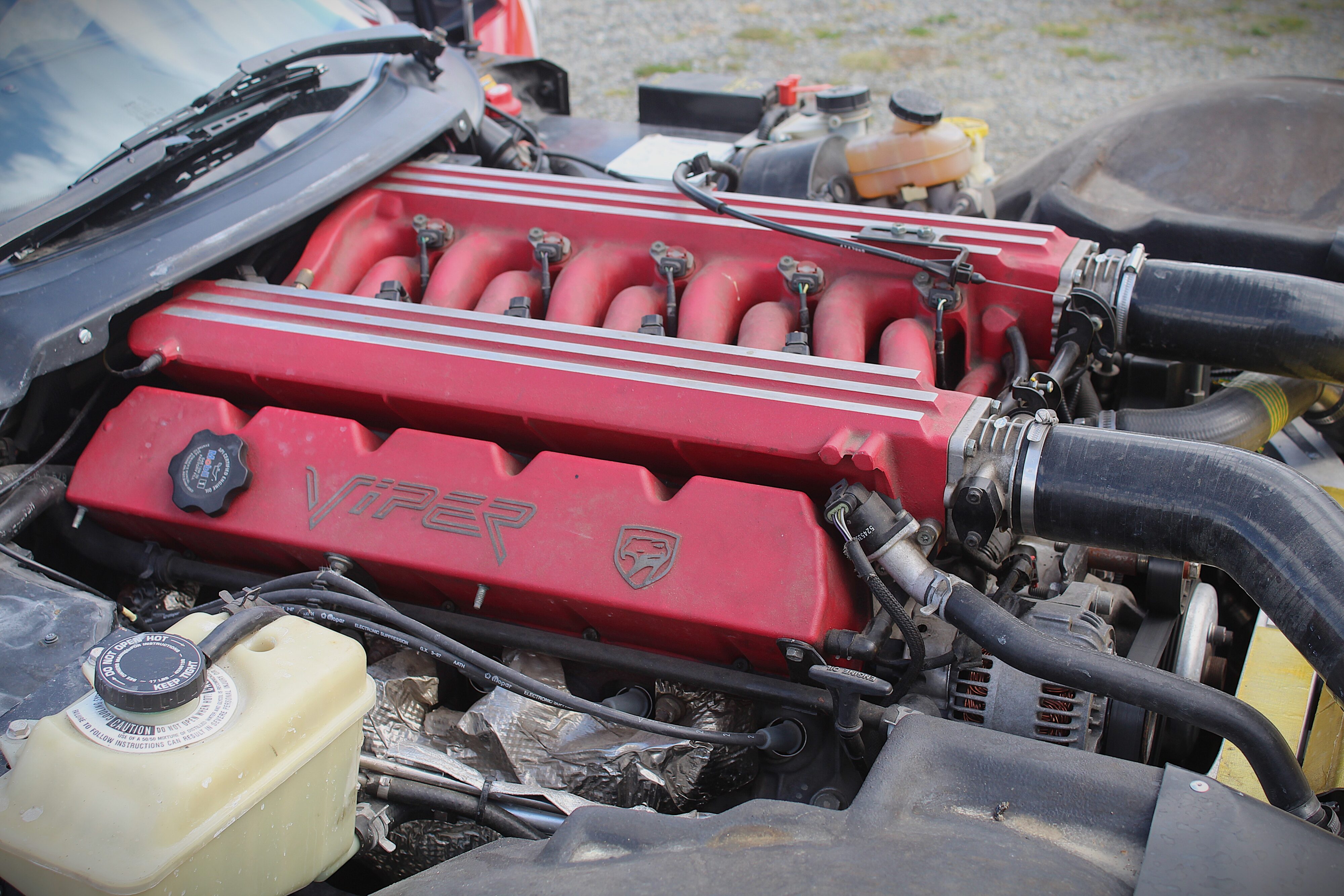
Moving off and heading through the gears and one finds the lever for the six-speed manual box is angled sharply towards you, meaning its ideally placed for quick shifts with minimal time for your right hand to leave the wheel and find the next gear. Finding the next gear is also something which happens rather quickly in Viper world. Many times, I forgot about the low 6,000rpm redline.
Even at half throttle, the acceleration is relentless. The mammoth amount of power and torque means it just never lets up, despite tipping the scales at 1500kg. That long vented bonnet surges towards the horizon with you basically hanging on for dear life. Sure, there are plenty of modern performance cars which have greater success in re-arranging your fillings with neck-snapping acceleration, but even for today, the Viper serves up a roller coaster sensation which is epic to say the least. Just imagine what it would be like back in 1997.
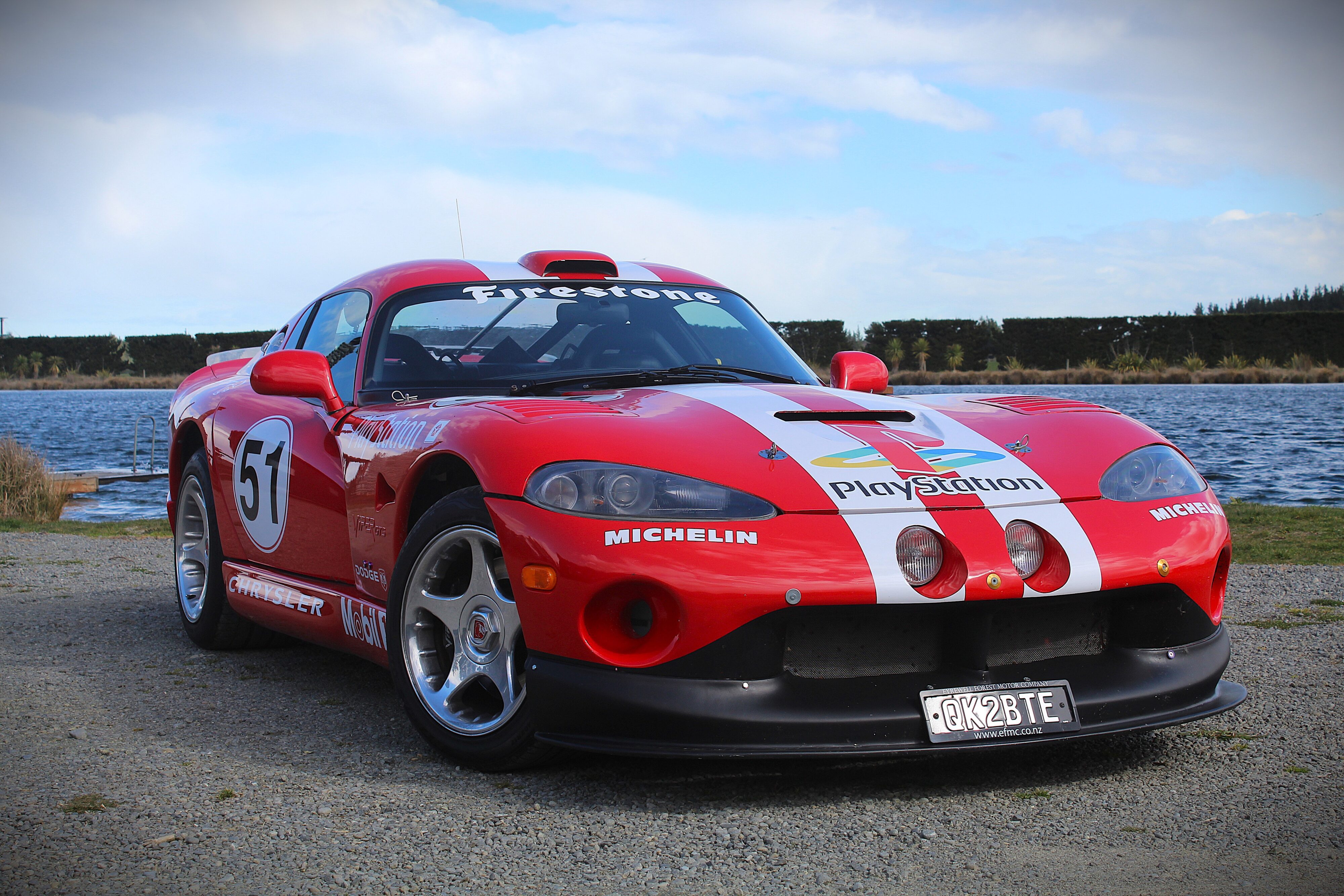
It commands respect though. Helming a Viper at speed is not really a relaxing experience. As a wild driver’s car, it requires total commitment and if you mistreat it, it will likely, as the rego plate says, be “quick to bite.” Every application of power, brakes or steering must be thought of well in advance on the corners or straights. Once you get the “green light” from all the above, then you can have some serious fun with that V10, which is about as subtle as kick in the guts, bellowing away in front of you.
The Viper remained in production and survived in numerous generations and special editions, each more advanced than the last till 2006 before being brought back from 2008 to 2017. During this time the snake has been firmly etched in the public psyche thanks to numerous appearances in pop culture. Heck, there was even a TV show in the nineties called “Viper” which featured a car based on a Viper with full financial backing from Chrysler.
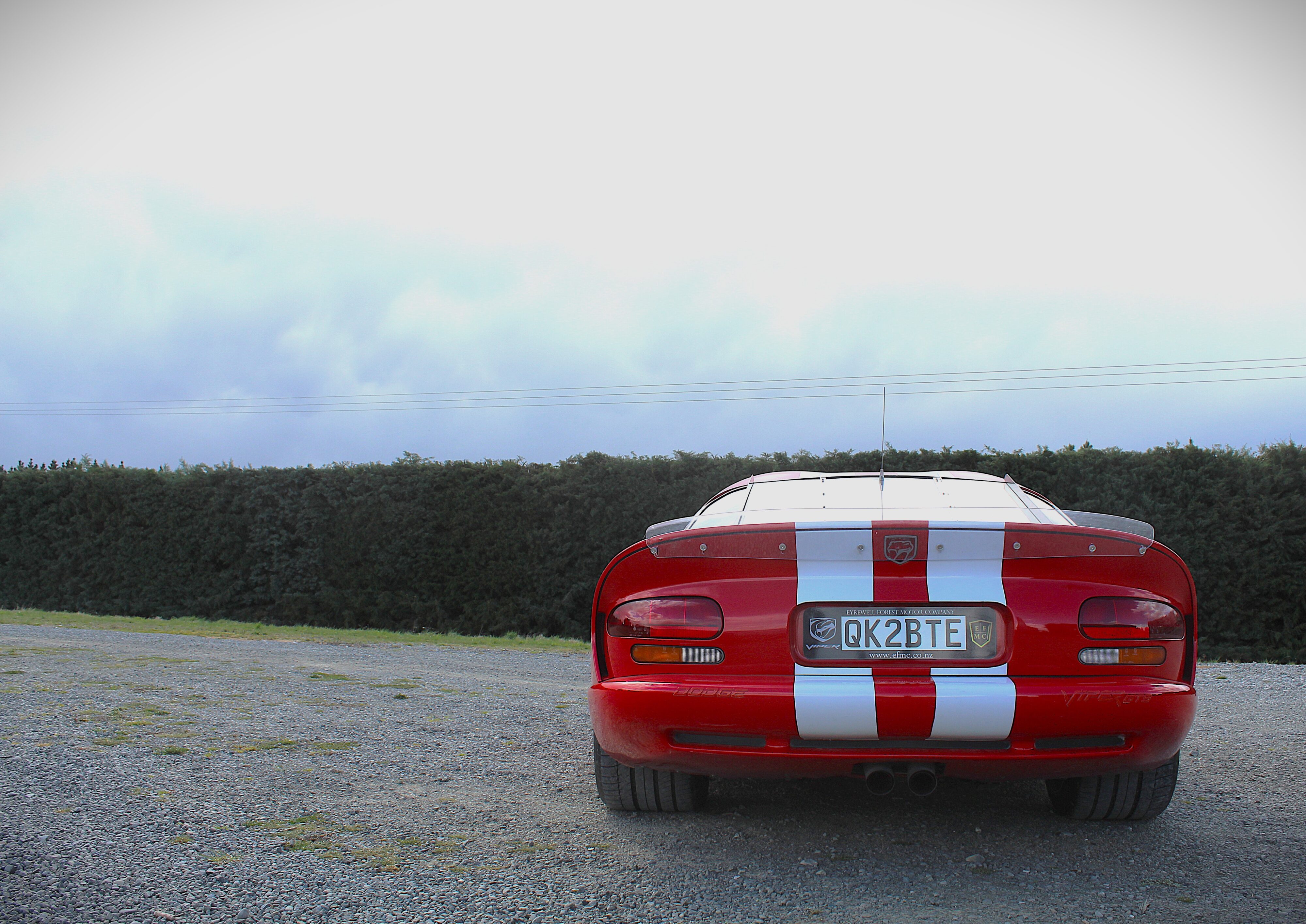
Lee Iaccoca once said that if the Viper doesn’t excite you then “check your pulse, because you are not well today.” Never was there a truer testimony to the legend created by one of the most coveted of all American sports cars. Basically, I defy anyone to drive a Viper and not laugh from start to finish.