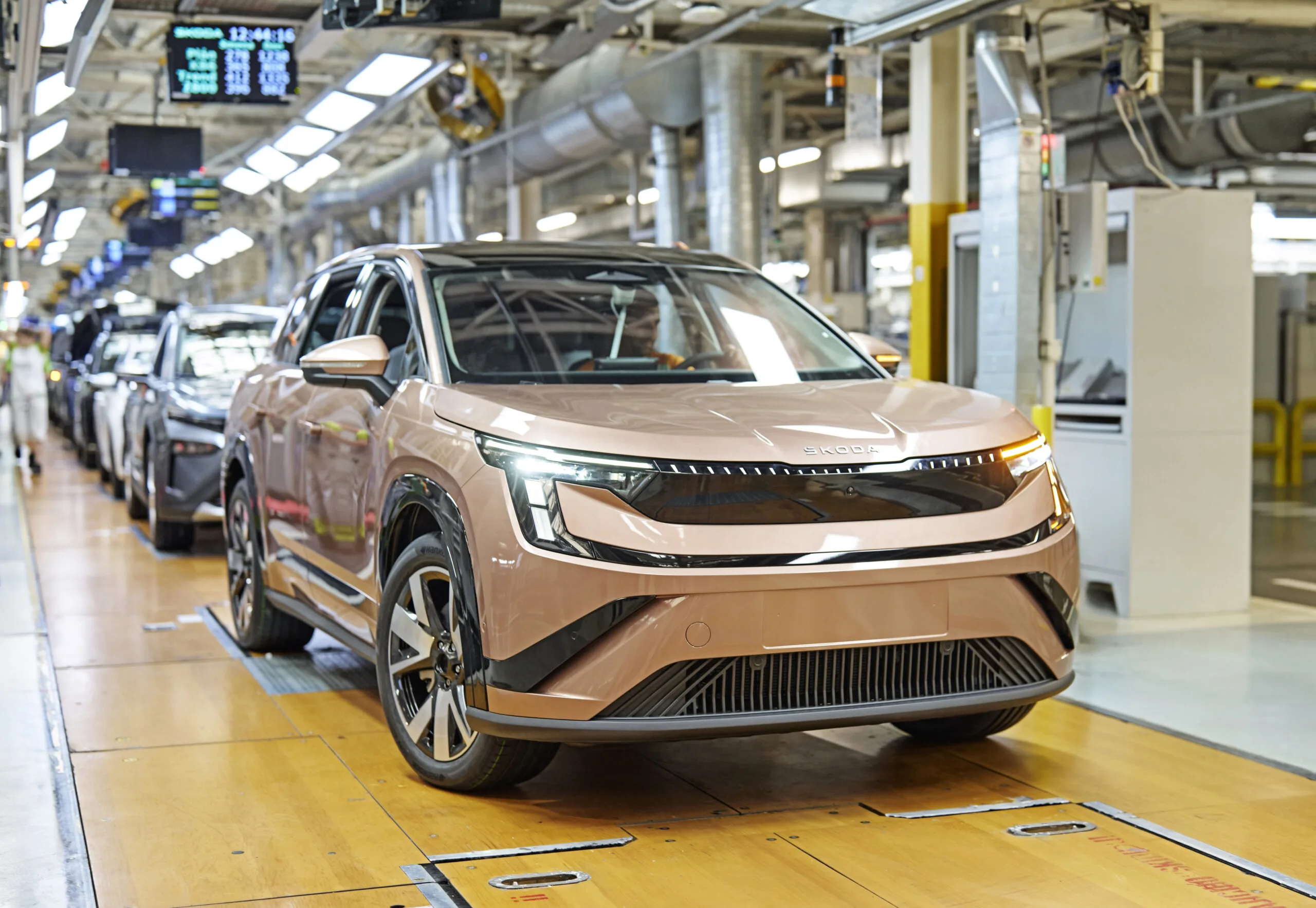
Launching a new model is never straightforward, but Škoda has made things considerably more complicated for itself — deliberately. The brand’s new Peaq electric SUV has entered series production at Mladá Boleslav, sharing one assembly line with three other models: the combustion-engined Octavia and the electric Elroq and Enyaq. It is a genuinely unusual arrangement, and pulling it off required years of preparation.
One Line, Four Models, Two Powertrains
The Mladá Boleslav plant now produces three distinct electric vehicles alongside a petrol-powered model on a single line. Škoda’s production planning team describes the goal as achieving maximum flexibility and efficiency across all models. That is a reasonable ambition, though the practical challenges involved were substantial.
The Peaq is roughly 20 centimetres longer than the Enyaq, which was previously the largest vehicle built at the plant. That size difference forced modifications to conveyors, handling equipment, and paint shop infrastructure. The body-in-white alone is 20 kilograms heavier than the Enyaq’s, and the largest available battery adds further weight, both factors requiring their own engineering responses.
A new handling unit for the second and third rows of seats was also added to the line. Previously, no vehicle built there required one.
A Platform Variant Škoda Had to Develop Alone
There is an additional layer of complexity here. The version of Volkswagen Group’s MEB platform used in the Peaq had previously only been deployed in China. Škoda therefore had no internal Group template to follow and had to develop its production processes independently.
That meant new press tooling and in-house manufacture of two sections of the MEB platform’s rear floor assembly. Work on the press tools began in mid-2024. The most intensive line modifications took place during the summer 2025 factory shutdown, when Škoda traditionally pauses production for company-wide holidays.
Before those changes were complete, engineers found a practical workaround: by positioning the smaller Elroq ahead of the Peaq on the line, they created enough spacing to begin building trial vehicles without waiting for the conveyor extensions to be finished.
Years of Preparation Behind the Launch
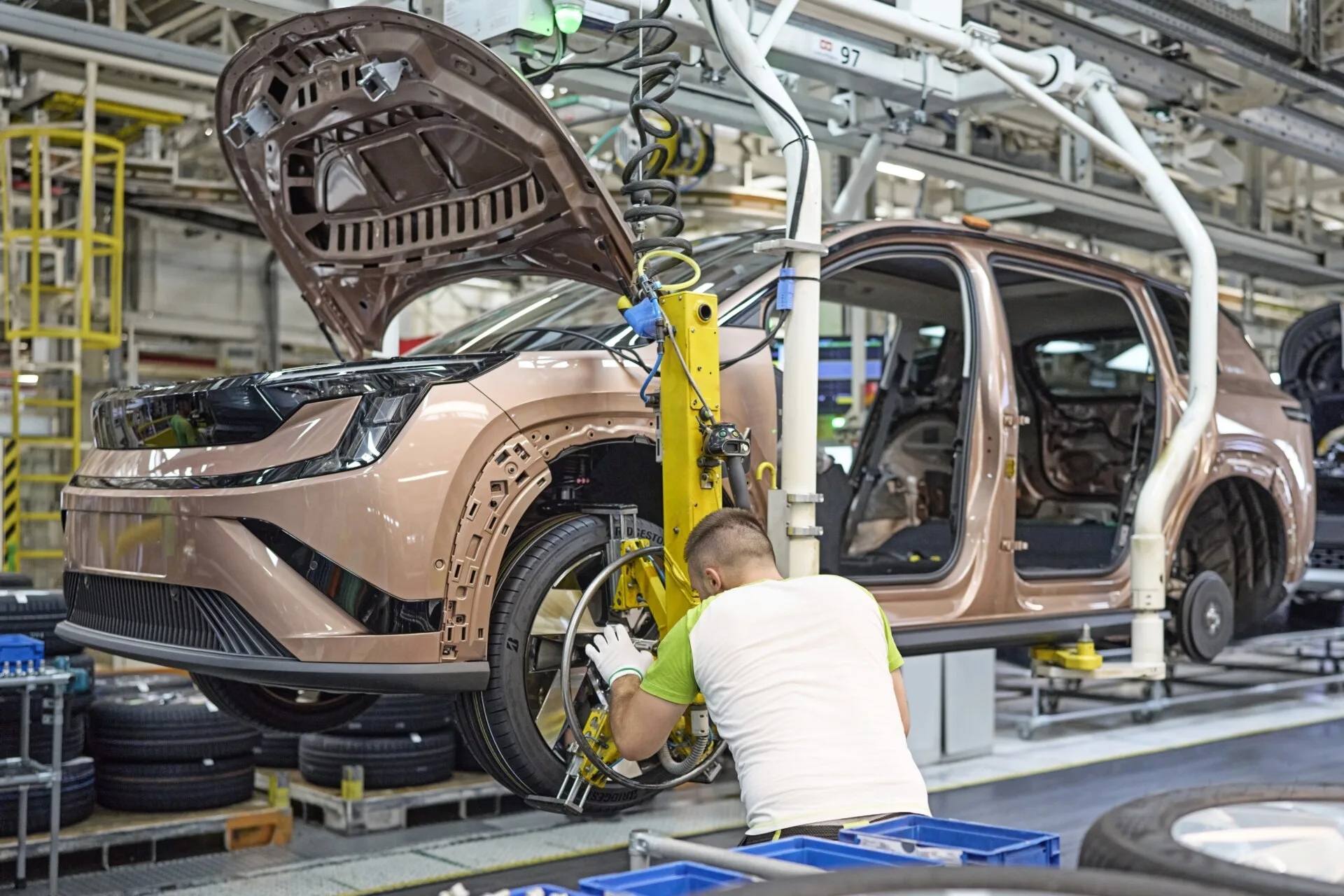
Prototype vehicles were assembled individually in Škoda’s prototype workshop before the process moved to the Pre-Series Production Centre. Specialists there learned the Peaq’s manufacturing process step by step, then passed that knowledge to colleagues on the main line.
The body shop required an entirely new vehicle flow to accommodate the Peaq as an additional model. Paint shop conveyors and handling equipment were also modified. Crucially, the technology for installing combustion powertrain components into the Octavia remains in place throughout, the line has not been converted, it has been expanded.
What Škoda has built at Mladá Boleslav is a production environment capable of handling genuine powertrain diversity without dedicating separate lines to each model. As manufacturers across the industry wrestle with uncertain EV demand and the need to keep combustion models viable, that kind of flexibility has real strategic value. The Peaq may be the immediate beneficiary, but the infrastructure built around it will matter well beyond this single model launch.