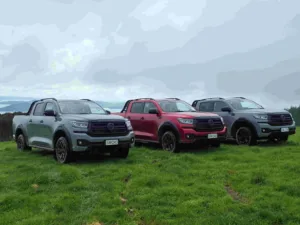
GWM’s Cannon Alpha Hi4-T has 310kW, 750Nm, real low-range 4×4 hardware and about 100km of everyday EV running, and it’s coming straight for the Shark.
Few films ruined a summer at the beach quite like Jaws. Spielberg’s great white had a whole generation of Kiwi’s eyeing the water with suspicion. It also gave us one of the most quoted lines in cinema history: “You’re gonna need a bigger boat.” Fast forward to today and there’s a new shark circling the local ute market (BYD’s aptly named Shark, in case you’ve been living under a rock pool). It seems GWM has decided that what’s needed isn’t a bigger boat at all, or even a hunter for that matter – I’ll let you look that up.
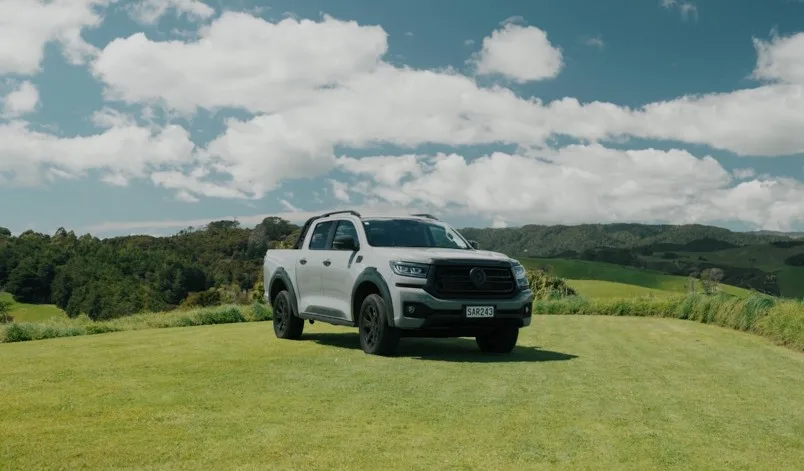
The GWM Cannon Hi4-T PHEV arrives just as the ute market is ebbing away from diesel-only dominance. Two trims are on offer, Lux and Ultra, and GWM New Zealand let us take the Ultra (the ‘full Monty’, if you will) for a first drive. We drove it on the tarmac around Clevedon and then off the beaten track at Kauri Bay.
Let’s get one thing out of the way early. This isn’t just another ‘green’ ute with a plug socket and a sticker, it’s a proper mud-plugging, heavy-hauling machine that happens to be a PHEV. Rather than going down the decoupled route, GWM has kept the ute’s mechanical soul. There’s a full mechanical 4×4, a rear diff lock and a BorgWarner low-range transfer case. In other words, this is no sissy soft-roader dressed up in high-heel work boots.
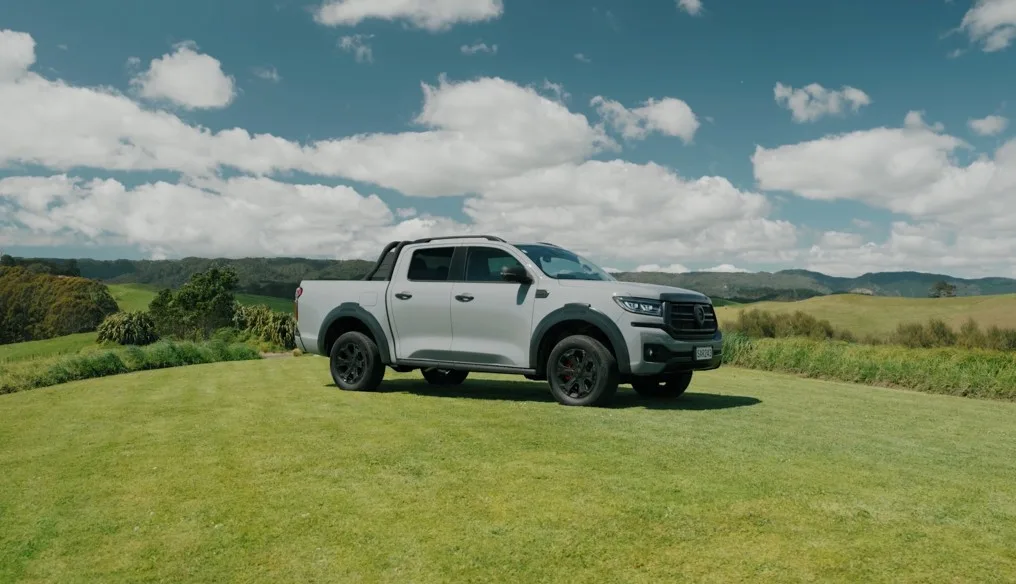
From the outside, GWM has given the Cannon PHEV a lot of black accents, and they do a good job of lifting the look. The Ultra is a big, square-shouldered ute that looks the part parked up at the boat ramp or the building site. Then there are the red brake calipers. Do they make any difference to performance, no, but who doesn’t want red brake calipers? They give the big ute a sporty appeal it otherwise wouldn’t have, and just quietly, I’m a fan.
There are some sensible changes around the back too, and it’s clear GWM has taken ANZ feedback to heart. The global model uses coil springs at the rear, but ours gets leaf springs. That’s the right call for a vehicle that’s expected to carry a load (and let’s face it, most Kiwi utes are). The reversing camera has moved from its previous offset position to the centre, which makes lining up a trailer an absolute breeze. No more “left a bit… no, your other left” from whoever’s been roped in to wave you back. The battery sits below the tub and the structure still feels plenty rigid. The tub itself takes 835kg of payload.
Under the bonnet sits a 2.0L turbo petrol engine paired with GWM’s own in-house nine-speed hybrid automatic. Together they produce a combined 310kW/750Nm, and that’s just monstrous. It’s roughly 30-40% more torque than its diesel rivals, and it gets this ute from zero to 100km/h in 6.4 seconds, which is pretty quick for something that can tow your house. It also outperforms the diesel Cannon it sits alongside in the lineup. Do I know anyone who actually needs that kind of grunt in a ute? Not really. But I’ll take it. Claimed fuel economy is 1.7L/100km, a number that should make the diesel diehards sit up and take notice.
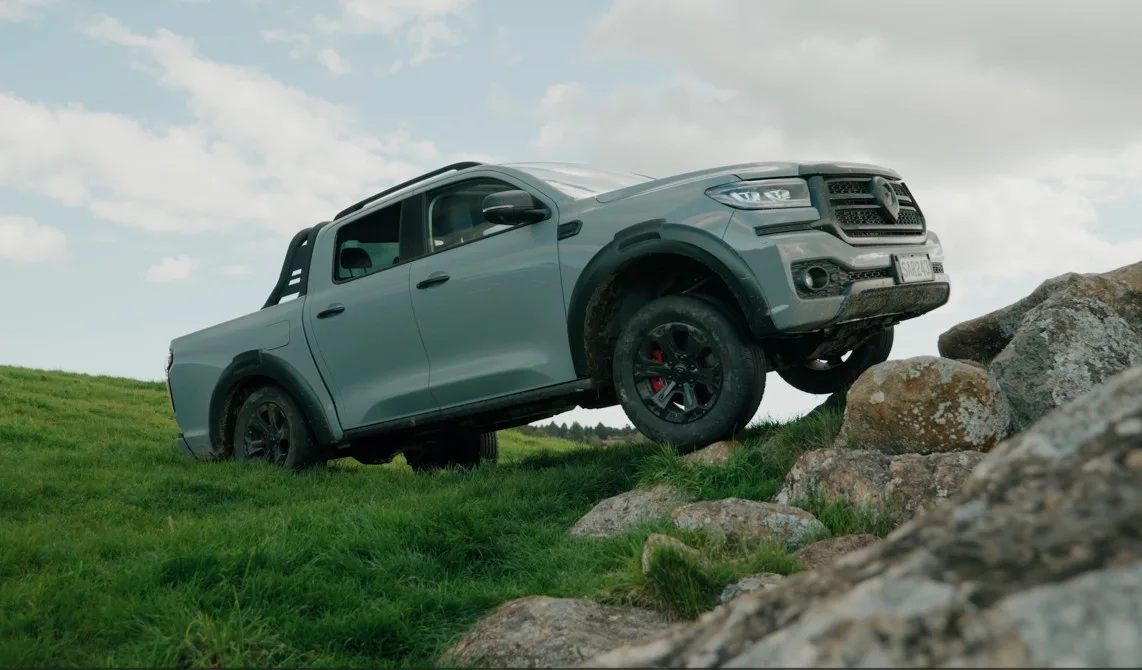
The aforementioned battery is a 33.1kWh LFP unit made by SVolt (a GWM subsidiary). It’s IP68-rated, and GWM put it through 35 river crossings at Crooked River in Australia to prove it, so it’s not going to throw a wobbly at the first sign of a ford (Ranger or otherwise). The really clever bit is the EV-only mode. Here the engine is completely isolated, but the electric motor still drives through the transmission and the transfer case. That means you get genuine 4×4 capability without burning a drop of fuel. Claimed EV-only range is around 115km (NEDC). In the real world I’d expect about 100km, which is still more than enough for most commutes. You could do the bulk of your daily driving on a charge from home and save the fun, the power and the petrol for the weekend.
It’s a strong working ute too. Towing capacity is a massive 3.5 tonnes. Then there’s the party trick, V2L, which offers 2.3kW of output. Think electric BBQs in the middle of nowhere, or powering a caravan off-grid. Sausages on the barbie at the end of a gravel road with no generator chugging away in the background? Oh yeah!
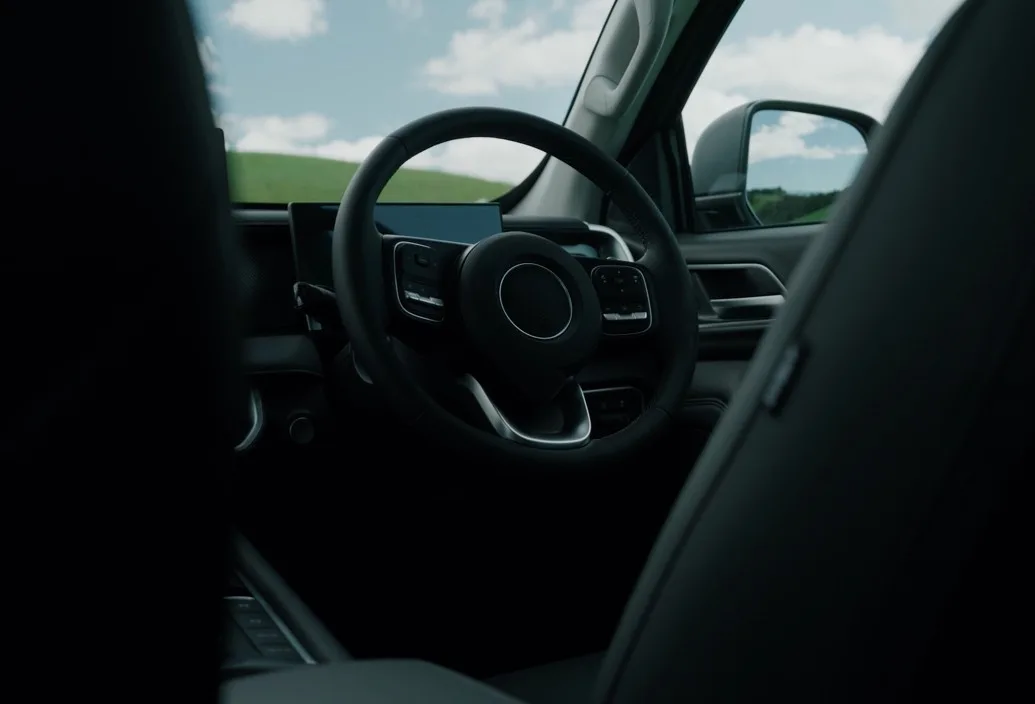
Step inside and it’s clear the cabin has had a massive upgrade. The Ultra is really well finished, with nice touches like contrast stitching and soft-touch materials all over the place, and the fit and finish is very nice indeed. If you’re feeling brave there’s an optional apricot interior too (only available to Black and White exterior colour though). The seats are electric, and the steering wheel feels lovely in the hands. It’s very round, wrapped in soft-touch material and heated, which is great on a frosty morning.
The screens are brilliant, and big. The 15.6-inch head unit runs Coffee OS (no, it won’t make you a flat white, I checked… ok, I didn’t check). It’s snappy and user-friendly, which makes the 360-degree camera genuinely useful rather than a gimmick you forget about. A nice instrument cluster feeds plenty of information your way as well. Personally, I really like that GWM has kept physical buttons for the air conditioning, they make it easy to adjust things on the move, even wearing gloves on a cold day. It’s well connected too: the app lets you set the cabin temperature before you get in or find the vehicle (handy for the old brain again in a big carpark). The sunroof is really nice touch as well.
Cabin space is good, and the rear is one of the big highlights. There’s more legroom and more headroom than before, which is great news for anyone ferrying the crew to site or the family to the beach. GWM has also gone to town on refinement, with more than 100 NVH additions including double-layer glass and extra door seals.
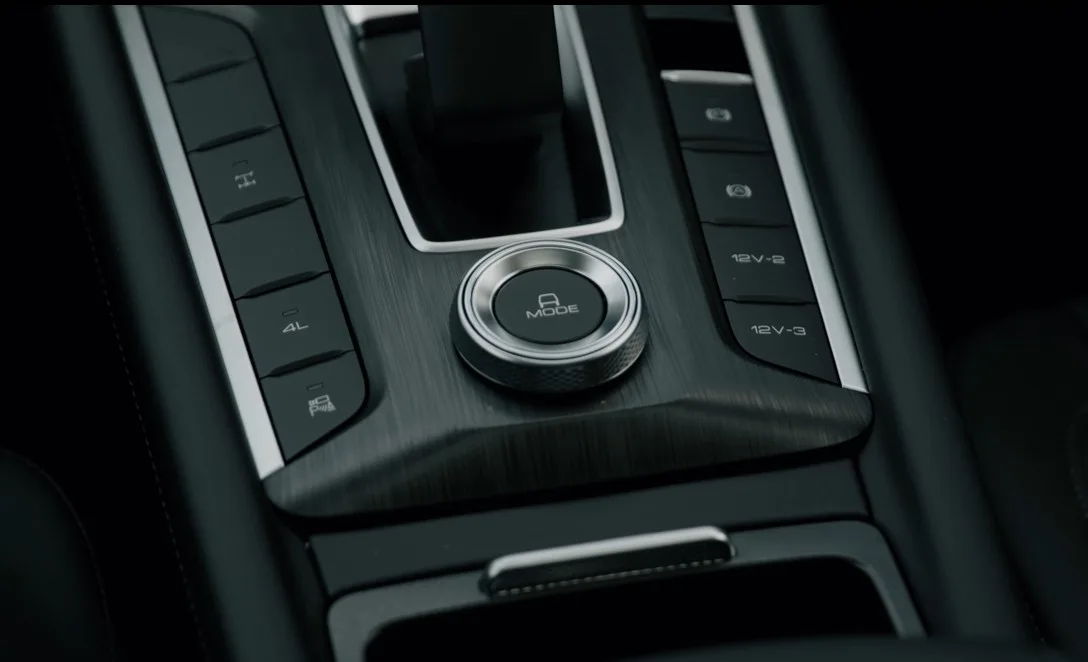
As part of the launch, I first headed out on the roads around Clevedon, and that NVH work paid off. The cabin is quiet and refined. You can hear the engine popping through every now and then, but with the stereo going you wouldn’t notice it at all. The big thing I was watching for was how the Hi4-T flips between power sources, because that’s where plenty of hybrids get clunky. This one does it very smoothly, which is a big plus. On the tarmac it’s quick, the throttle feels really responsive, the brakes are strong and the steering feels nice. There are plenty of drive modes to choose from, including Sport, Snow, Mud, Sand, 4H and 4L as well as 2H, so you really do get a lot of options on and off-road. Even with the roads slightly damp, I stuck with 2H for a fair amount of the drive and it never felt short of grip or composure (ok it did slip the rear wheels at junctions – so it does add a sense of fun).
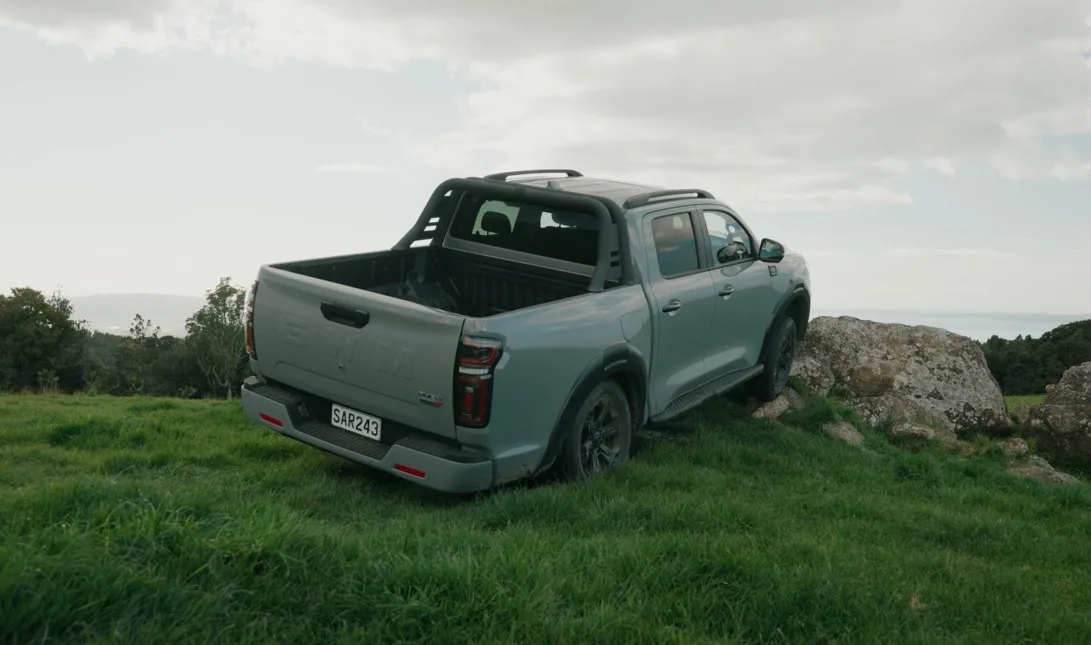
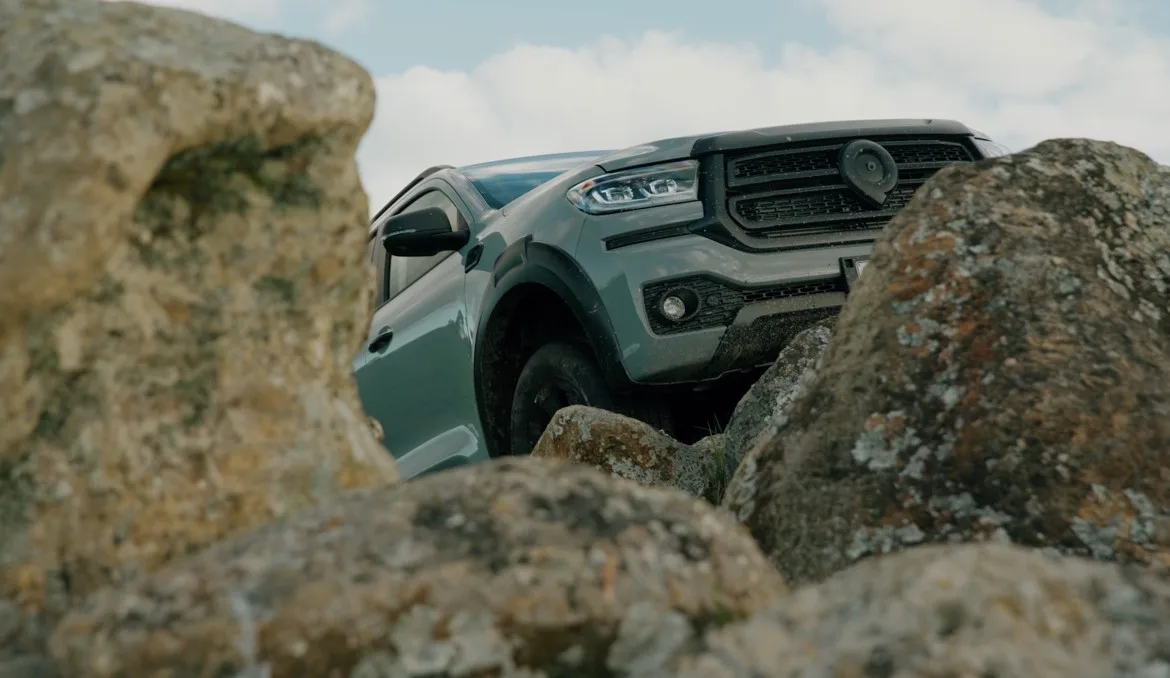
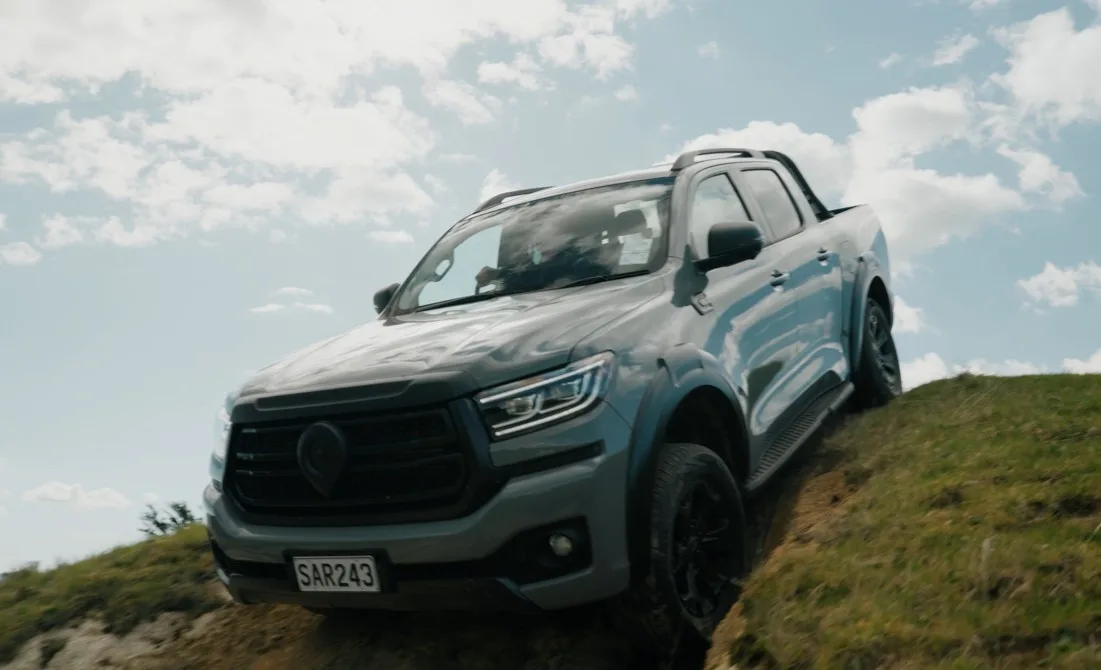
Then it was over to Kauri Bay, where the Hi4-T’s credentials were properly put to the test. We did downhill descents, hill climbs, mud, forest trekking and wet grass, all on road tyres (yes, road tyres). As expected, the Hi4-T system performed without a hint of fear. The one criticism, and I’m just being picky, is that the highly responsive throttle can deliver a little too much power at times (did I say that?). On the road that’s great fun, but for slow, precise manoeuvres off-road it could do with being pared back. In fairness, this ute hasn’t had GWM’s local AT-1 tuning yet, so I’d expect that to improve before long.
So, my verdict? It’s a Shark hunter. The Cannon Hi4-T PHEV is priced to undercut the BYD Shark and offers a compelling alternative to the Ford Ranger Hybrid. It’s also arriving at the perfect time, with the market shifting from 4×2 to 4×4 and demand for PHEVs on the rise. GWM is positioning it as the ‘most versatile ute’ on the market, and after my time with it I can see why.
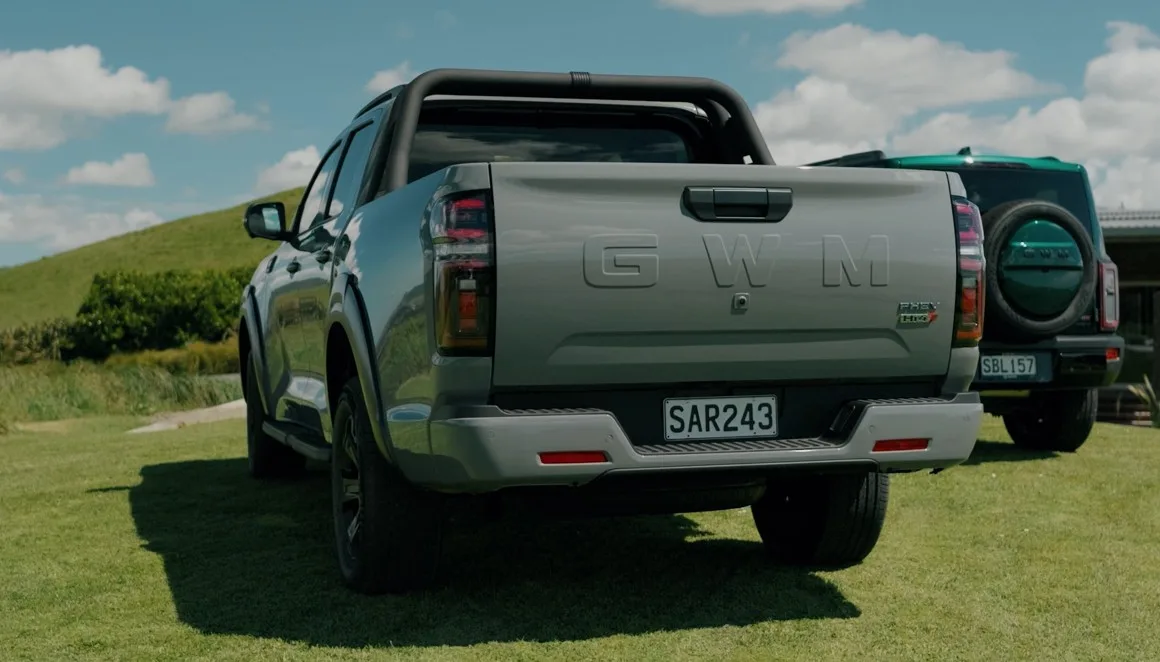
Whether you’re looking to balance your fleet’s emissions or you just want a ute that can tow 3.5 tonnes and still give you around 100km of real-world EV range for the daily commute, the Hi4-T makes a very strong case for itself. It’s the right product, at the right time, in the right market. Turns out GWM didn’t need a bigger boat after all, although with 3.5 tonnes of towing on tap, it could certainly pull one.
You might also like: Big name, bigger ute – GWM Cannon Alpha Ultra HEV review · GWM Tank 500 Hi4-T PHEV Review – Luxury Meets Off-Road Prowess · GWM Haval H6 GT PHEV Review – The Shock and Awe Coupe