Relatability is a big thing for me. If an ultra-expensive, unobtanium supercar is parked beside a modified, barely-legal street hack, I already know which one I’m going to be drawn to. But every now and again it is nice to break that cycle and jump into something that I knew very little until not too long ago. This presented me to products – and even brands – that just out of not having them around growing up, I didn’t think too much about. Land Rover, and some other Euro-centric products follow that thinking.
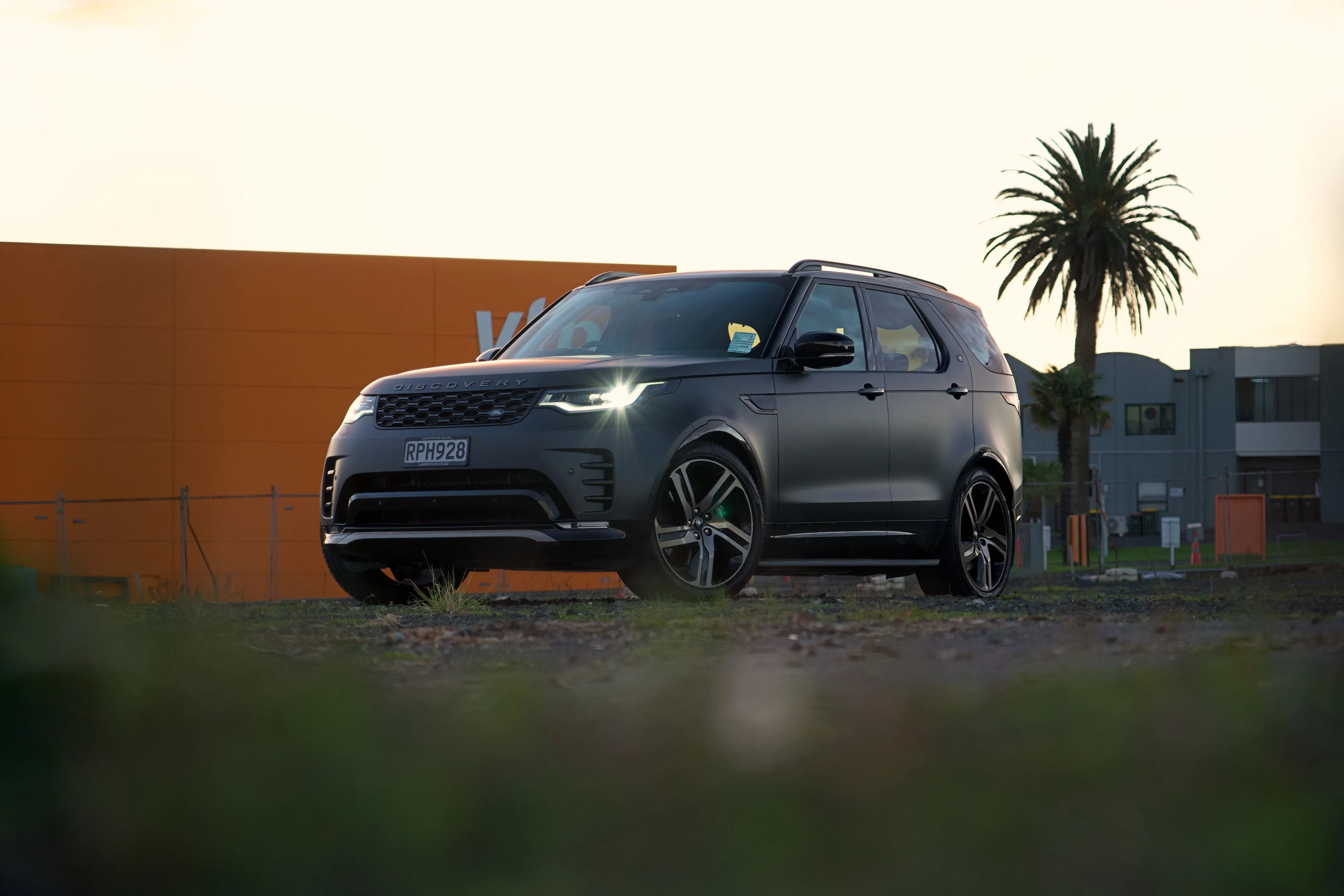
After spending time with the newer Defender and the Range Rover Sport in separate occasions, finally stepping into the Discovery Tempest challenged one of my own assumptions about what this type of vehicle actually represents. Luxury SUVs today have become very good at pretending to be rugged: huge wheels, fake skid plates, chunky bodywork and aggressive detailing all contribute to a visual language that suggests capability more than actually backing it up. Yet Land Rover has always occupied a slightly different space, not adopting off-road styling cues later in life, but building its identity on vehicles that genuinely earned them, crossing muddy paddocks, towing horse floats, climbing mountains, and then pulling up outside a five-star hotel without ever feeling out of place.
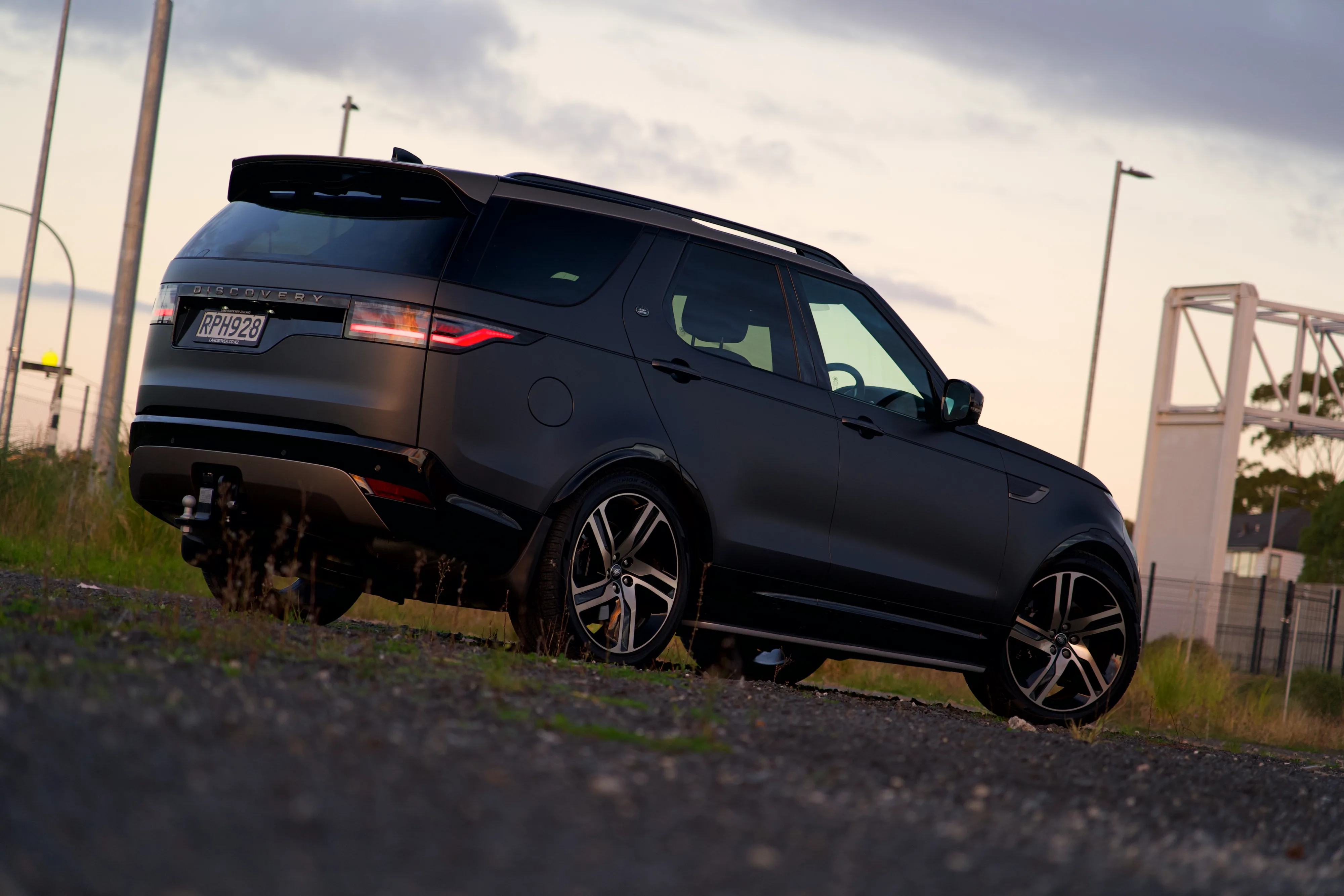
Within that lineage, the Disco has always been an interesting proposition. It sits between worlds, being less overtly luxurious than a Range Rover Sport and less utilitarian than the modern Defender, and somehow still managing to bridge the gap between family SUV, luxury cruiser and genuine off-roader in a way very few vehicles manage convincingly. The term “quiet confidence” is something that AI models love to interject in text, and I bet they were trained on Land Rover reviews, because it’s the perfect way to define them.
It starts with the exterior design, which is as Land Rover as it gets. The other members of the team struggle with the asymmetry at the rear, that harks back to the days when an external spare tyre required it. I think it is great, breaks the otherwise subdued design, and adds some instant recognition to the model.
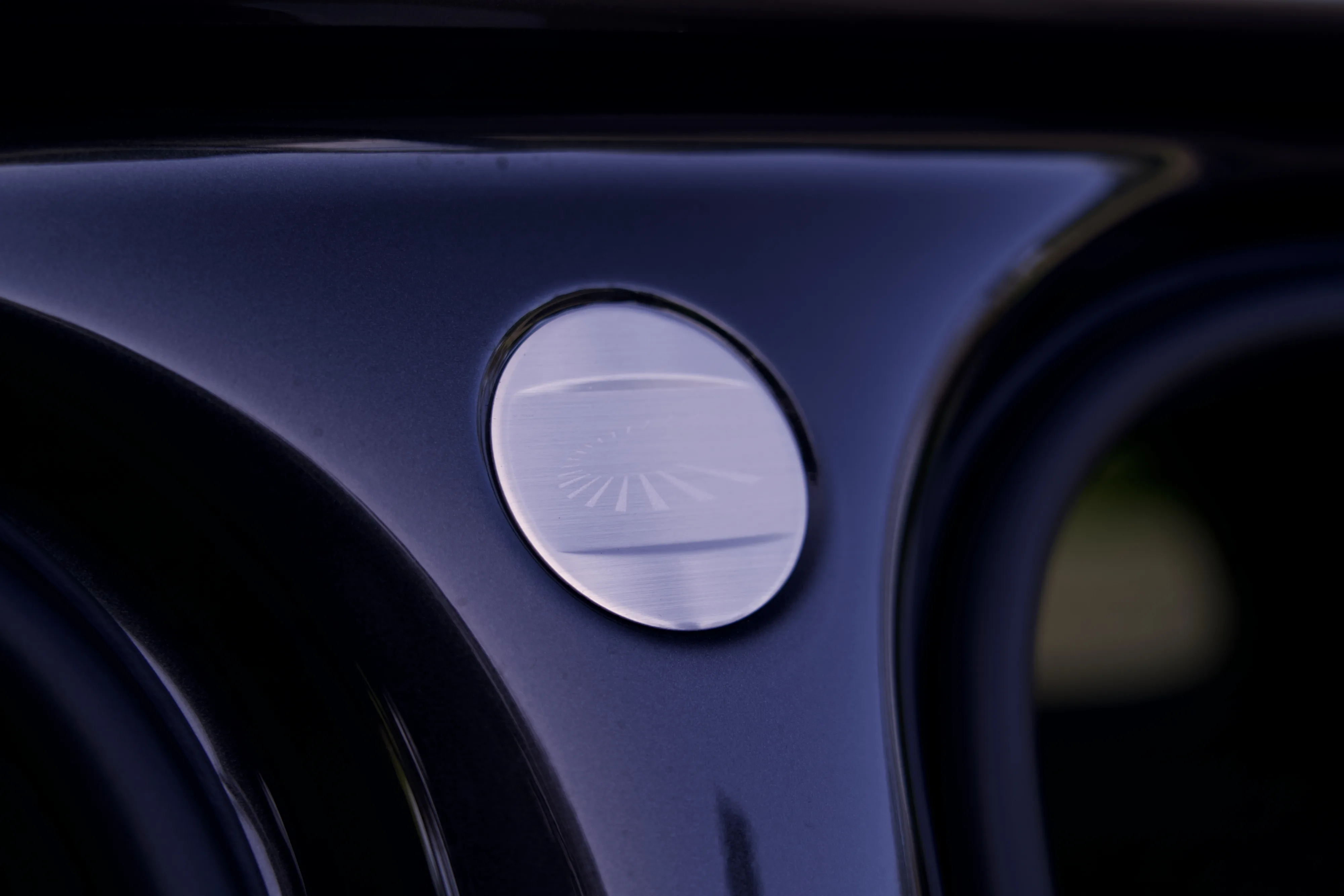
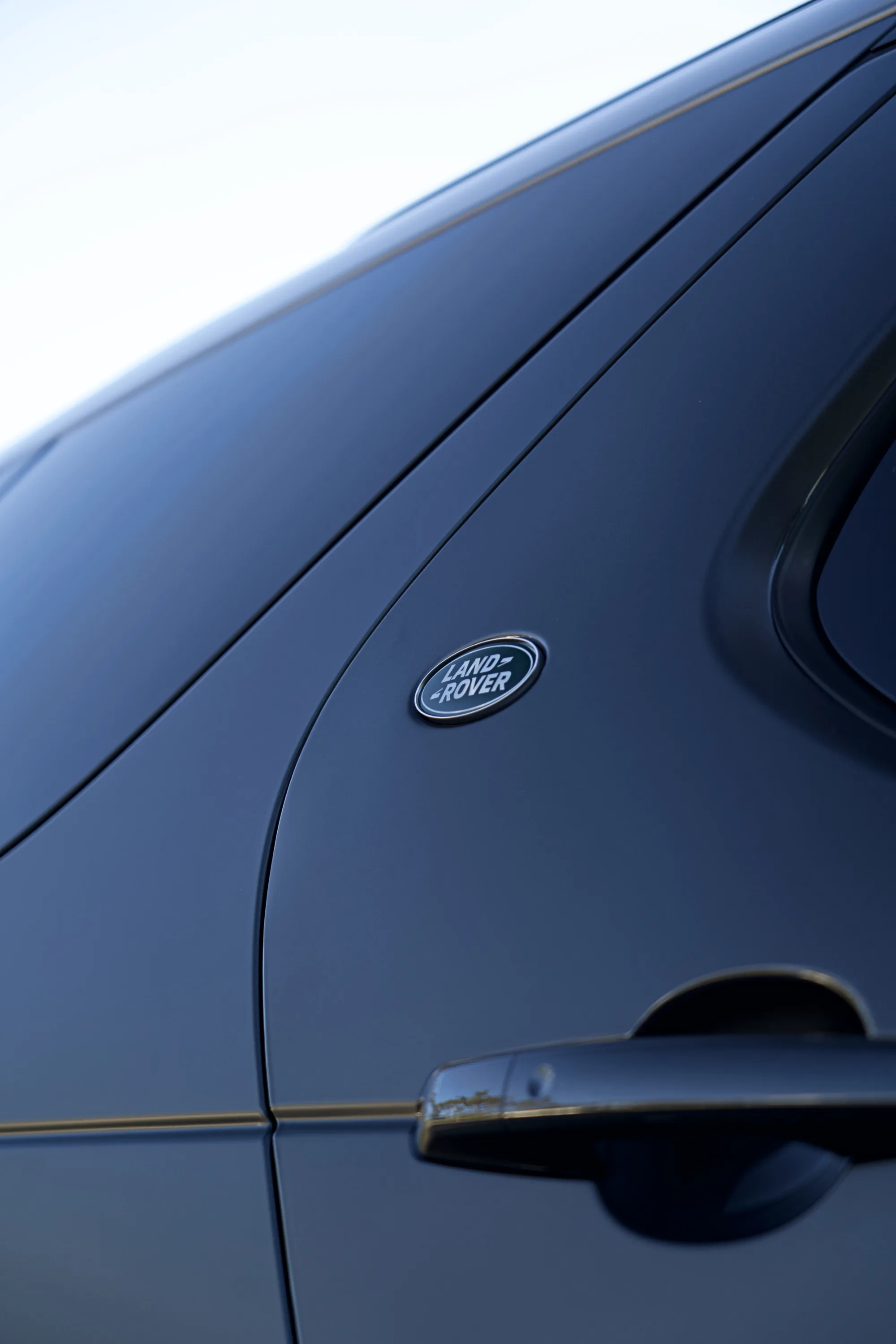
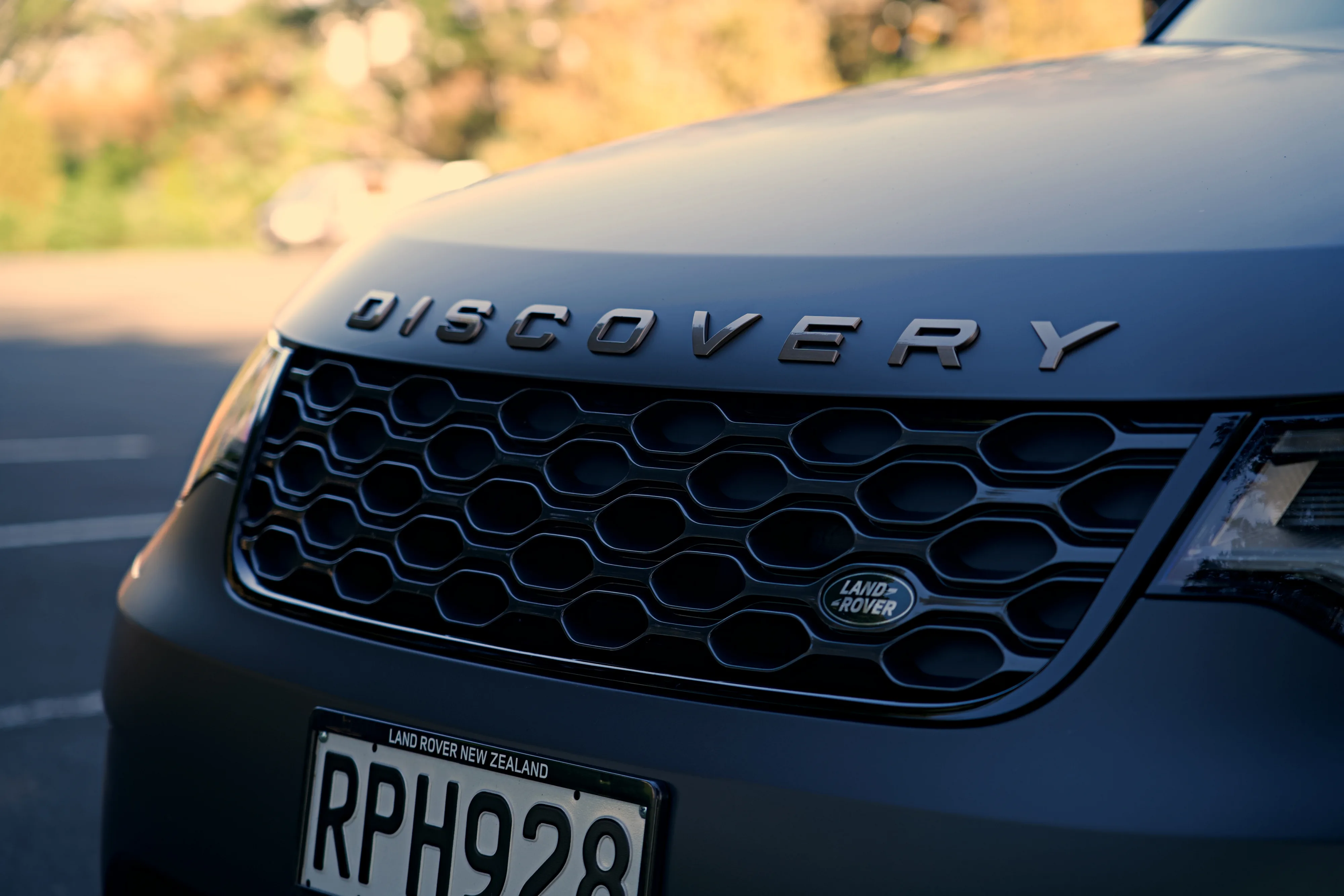
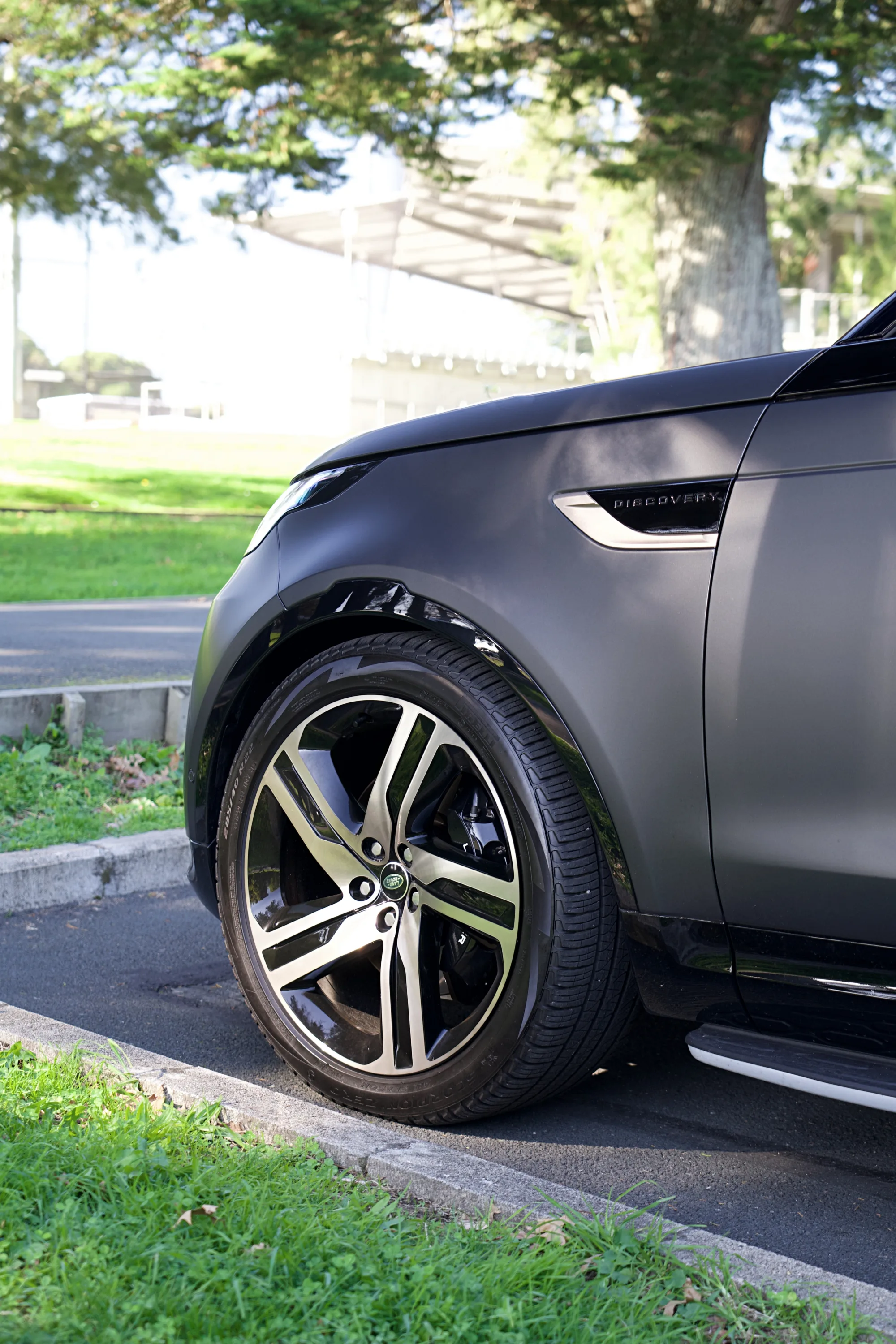
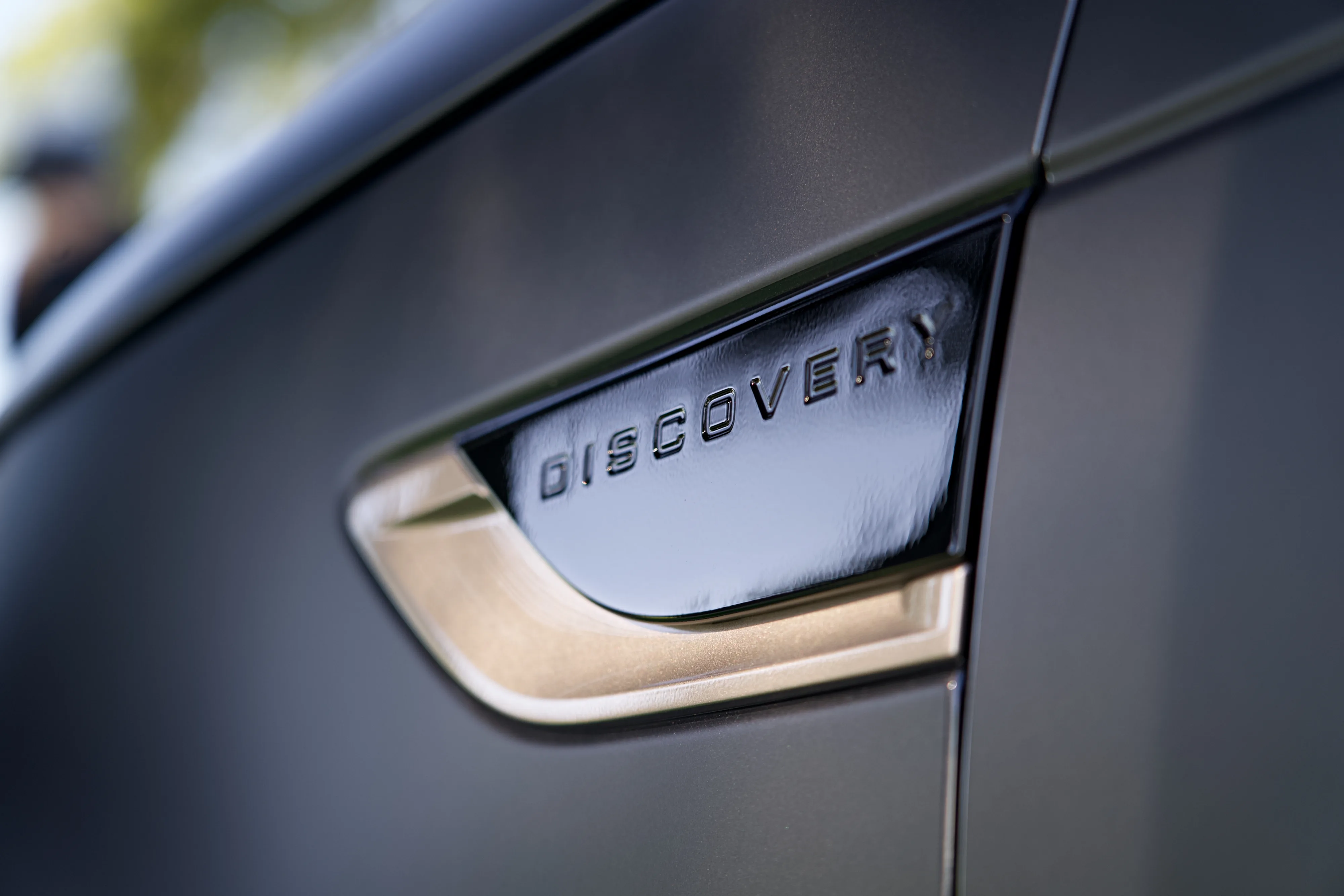
The matte finish combined with the subtle gold accents, both part of the Tempest Edition, give it an understated presence that feels expensive without becoming flashy. There are no oversized grilles in sight, no unnecessary creases or dramatic lighting signatures trying to dominate the design. Instead, the Discovery relies on clean surfacing, tight panel gaps and proportion to create its sense of luxury.
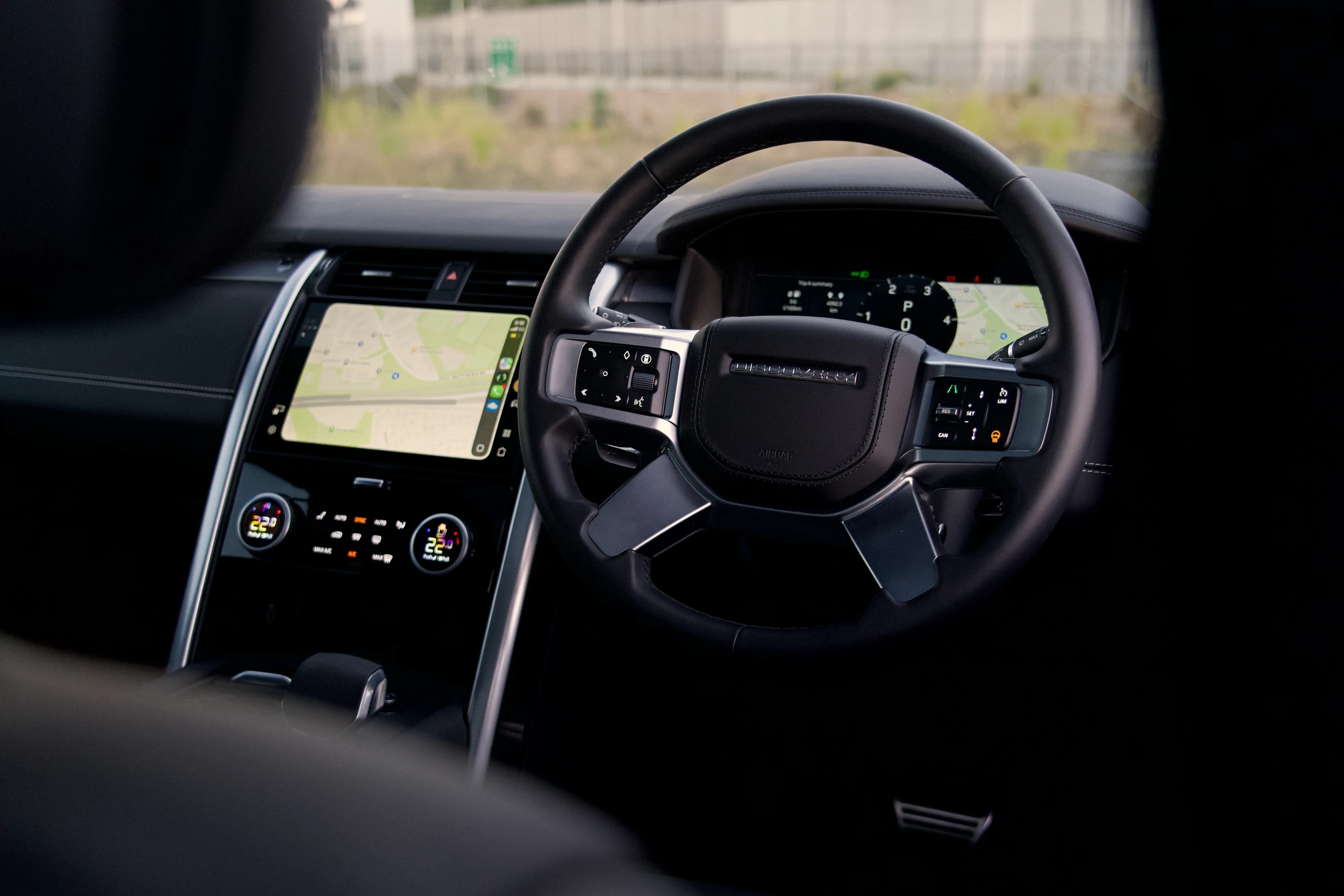
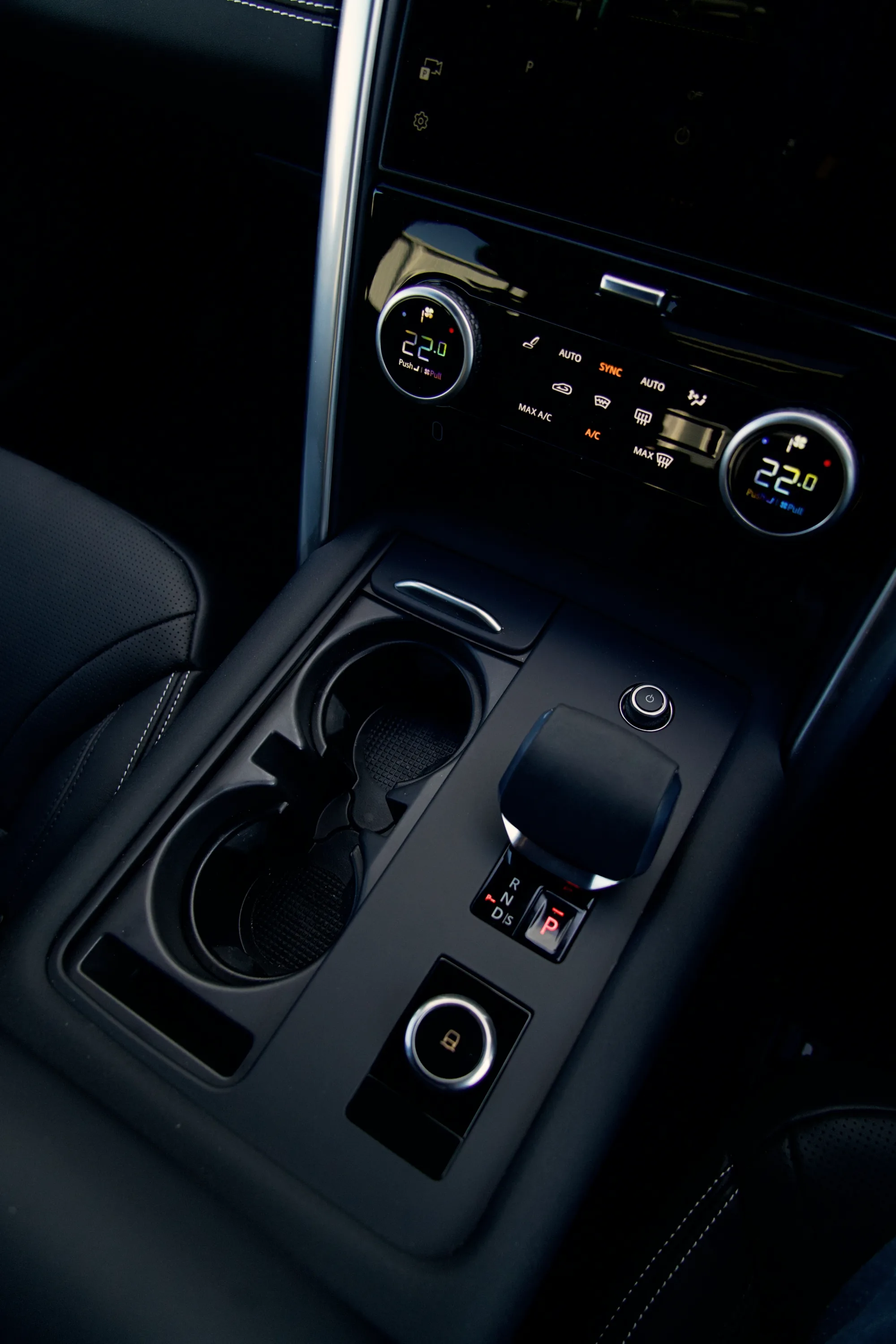
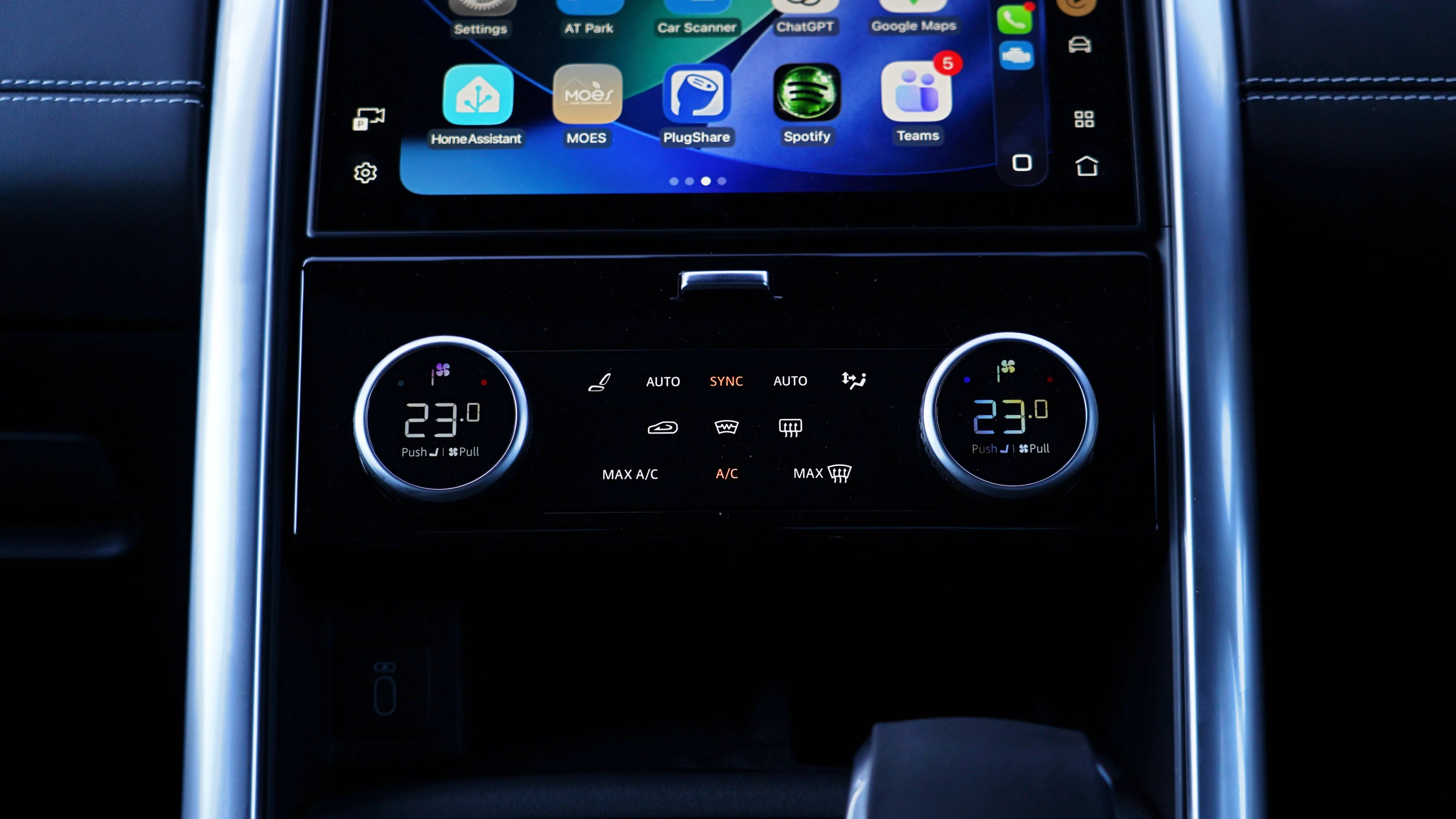
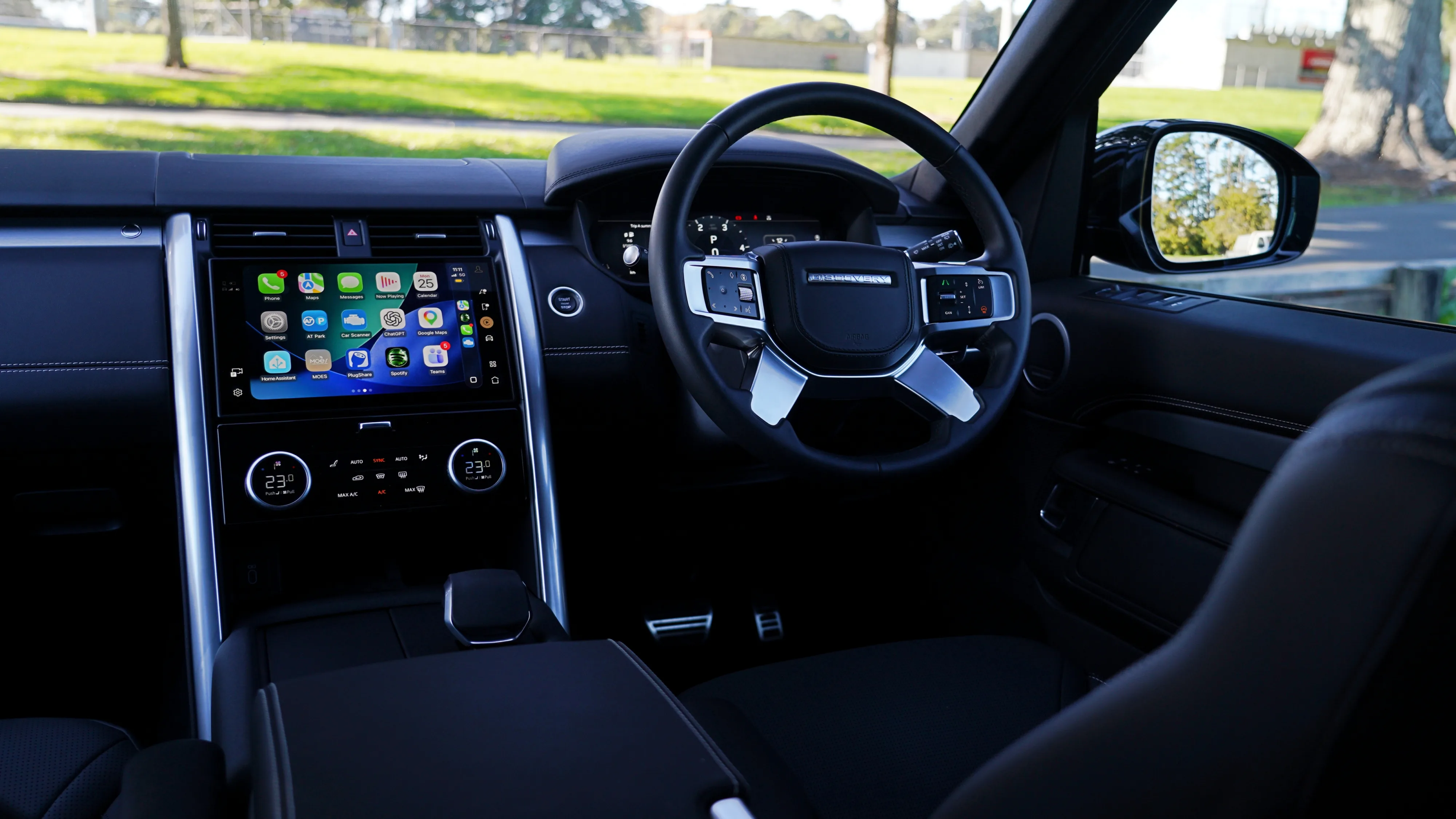
Inside, the experience immediately backs up the price tag. The quality of the materials and touch points is impressive, almost every surface you interact with feels wrapped, lined or padded in some way. Leather stretches across the dashboard with exposed stitching everywhere, the steering wheel material feels fantastic in your hands, and even smaller details like the felt-lined door bins reinforce the idea that somebody obsessed over the tactile experience of using this car daily. The rotary dials for the A/C temp, fan speed and seat heating and ventilation are a smart use of the space, an opportunity to wow occupants and easy to build muscle memory. I enjoy interacting with them, even though I know they have been replaced by a screen in more modern iterations of their interiors – sad face.
The seats deserve special mention too. They are not excessively soft or lounge-like, but are very comfortable and adjustable. Lumbar support moves in every direction, headrests adjust electronically, and even the side bolsters can be fine-tuned depending on how cocooned you want to feel, and giving it this long-distance comfort that feels essential for the target buyer. And it really is designed around usability, with storage everywhere, two gloveboxes, large cupholders, wireless charging, USB-C ports throughout the cabin, a chilled centre armrest fridge that doubles as phone storage, plus clever little trays and compartments spread around the interior.
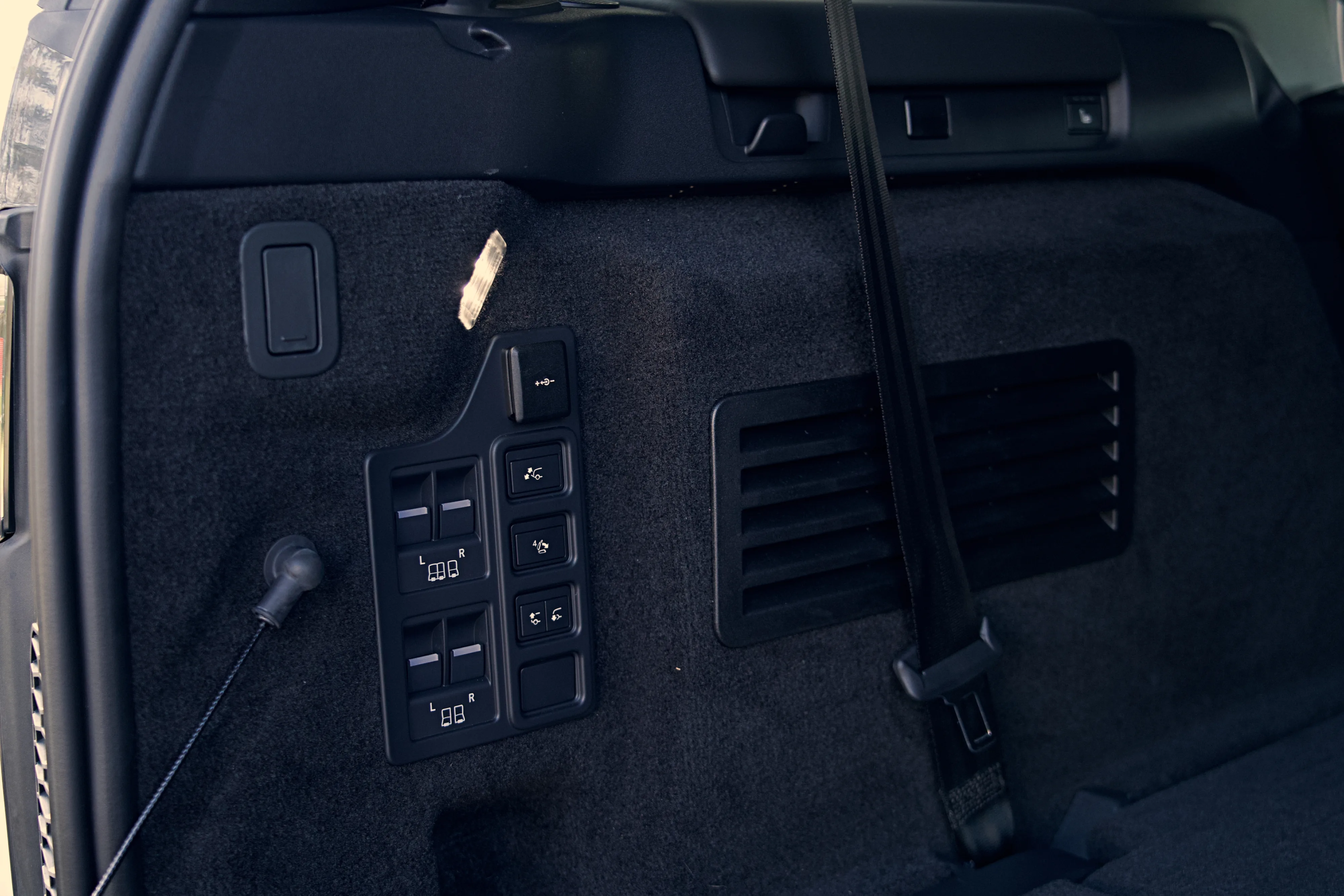
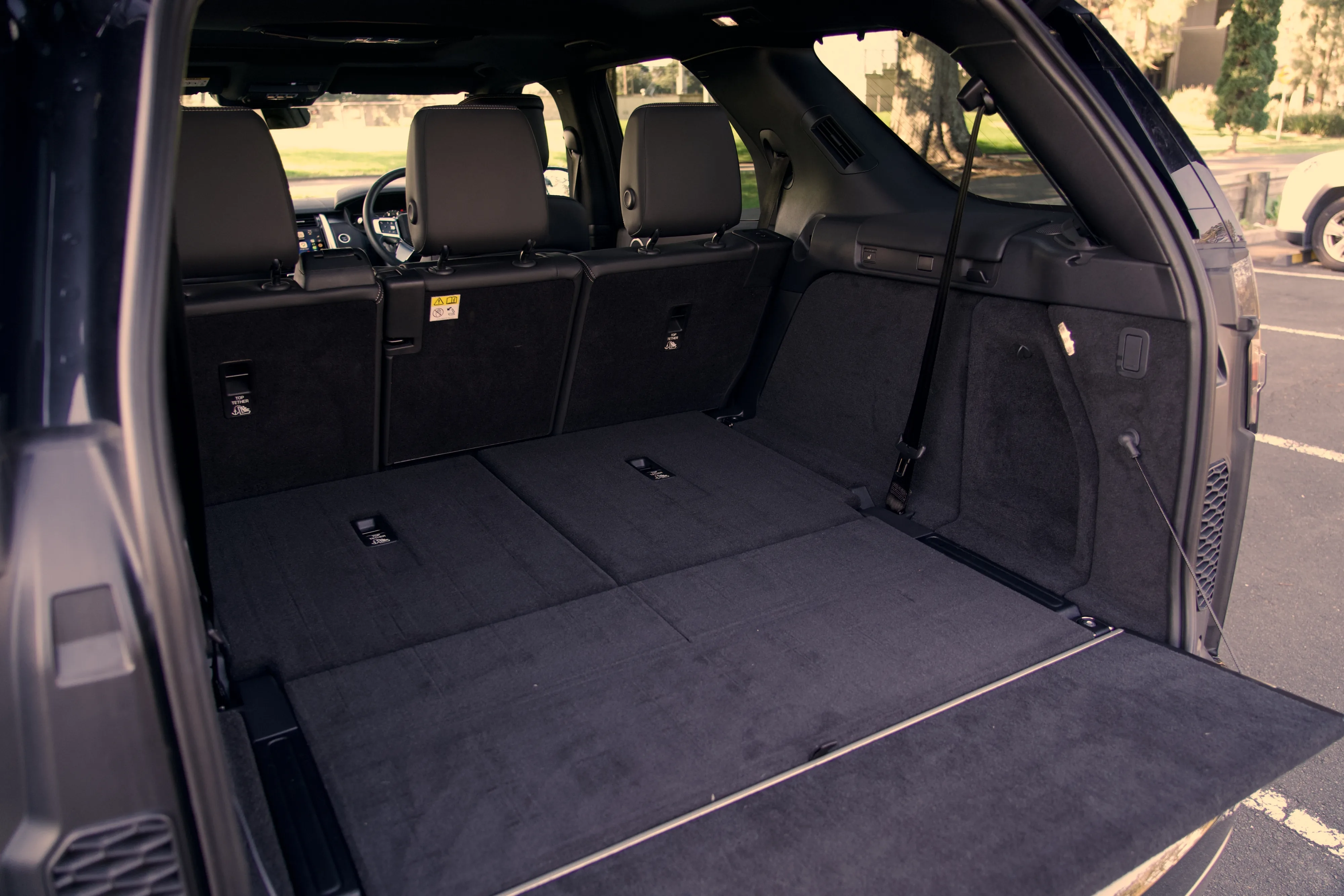
The second row gets four-zone climate control, while passengers in the third row still receive heated seats and dedicated air vents from the roof, flanked by a double panoramic sunroof setup that contributes to the sense of space. Speaking of seven seats, at the very rear, you can electronically control the second and third rows directly from the boot using a dedicated panel of buttons, allowing the seats to fold or rise without needing to climb around inside the vehicle. Combine that with the adjustable air suspension that can lower the rear for loading, and you quickly wish every other big SUV had all of this. Access is not the easiest out there, but once in, I could sit behind myself sitting behind myself (not a typo), which I think I had only experienced before in a bus. It is not ideal for someone my size, and eats into valuable boot space, but it can be done.
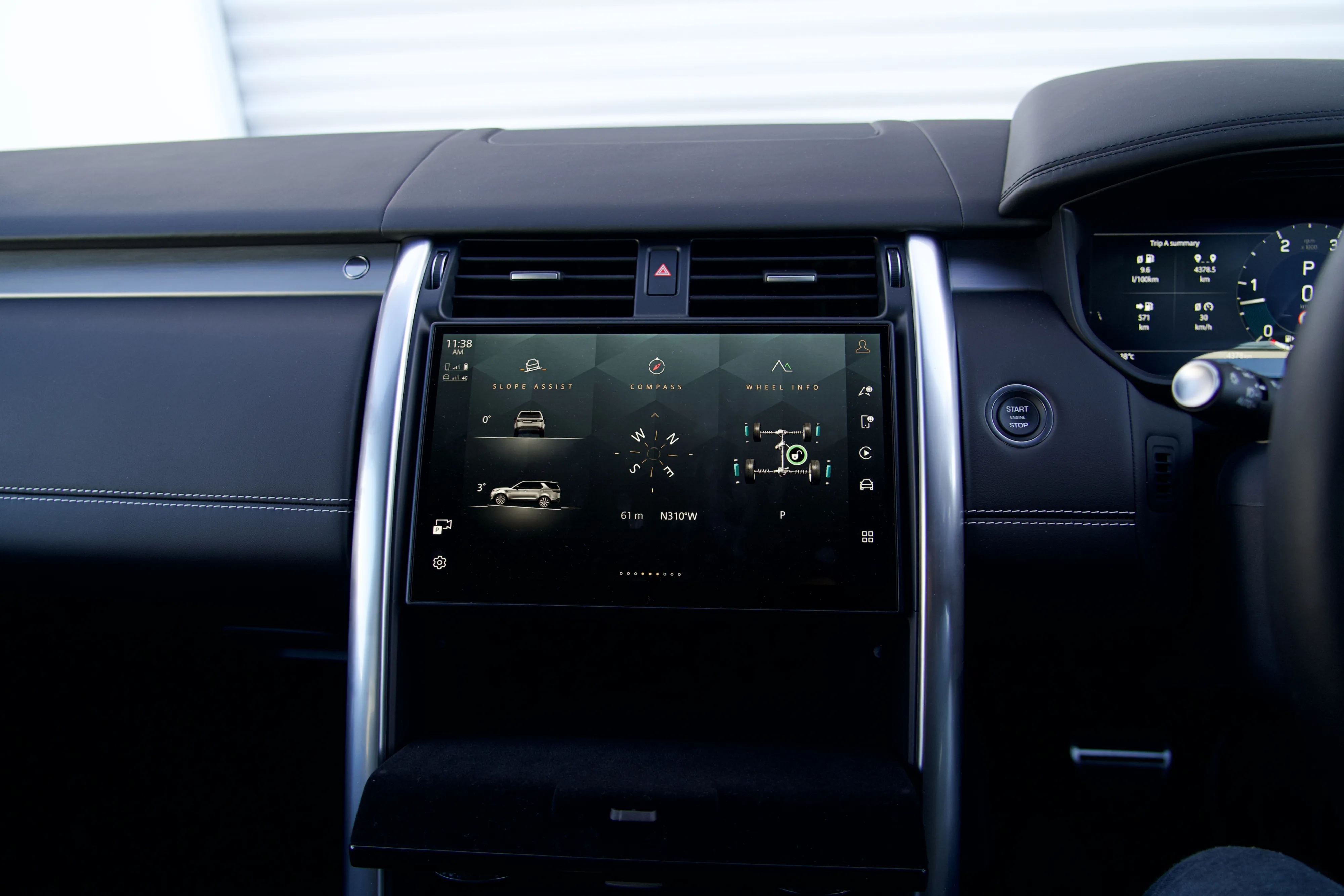
Technology is another area where the Discovery impresses, particularly because it avoids overcomplicating things. There is still a strong physical element to the cabin layout, something I increasingly appreciate in luxury vehicles: climate functions sit on their own dedicated control panel, the infotainment display is beautifully integrated into the dashboard rather than feeling tacked on, and the whole system simply works the way you expect it to. Phone projection behaved flawlessly throughout my time with the car, which also made it easier to appreciate just how good the Meridian sound system is.
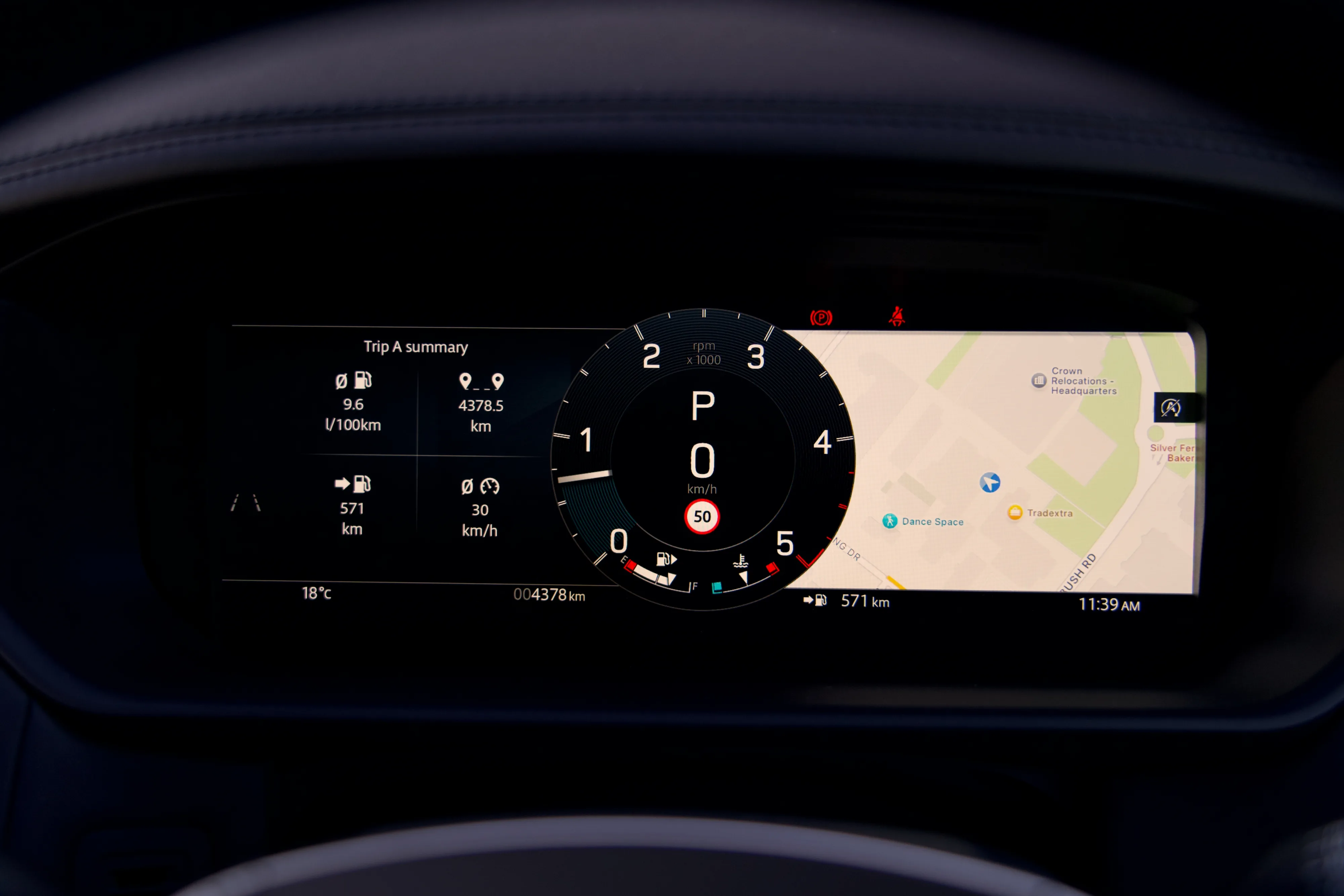
The screen itself looks excellent too, with deep black levels, sharp graphics and a layout that makes good use of the available space. But the real highlight might actually be the driver’s display, which is how digital clusters should be done: the level of customisation available is fantastic, with options for navigation, off-road information, trip data, dial layouts, media and driving information all arranged exactly how you want them, and unlike many modern systems, it never feels confusing or over-designed. Add the heads-up display, and the final result for the driving environment becomes incredibly cohesive.
Out on the road, though, the Discovery reveals its true character, one so genuine that at a certain point I questioned myself whether this was a ladder frame. Of course, it isn’t, but despite riding on a unibody platform, there is still a noticeable amount of body movement here. The air suspension delivers plenty of softness and isolation, but because there is no aggressively sporty calibration hiding underneath, the Discovery always feels slightly wallowy, slightly floaty, and large. Personally, I mean all these in the best way possible, and think they suit it perfectly.
This is because it is not trying to disguise its mass or pretend to be something smaller or sportier. It is designed to carry seven people and their belongings in complete comfort, regardless of surface. On gravel, that philosophy makes perfect sense, with a ride that remains composed, predictable, and the isolation from surface harshness is genuinely impressive. The steering carries a surprising amount of precision, likely influenced by its Jaguar lineage, but there is no escaping the physics of its size. Weight transfer is always present, and tighter body control would improve confidence on more challenging roads. That said, the trade-off is clearly deliberate.
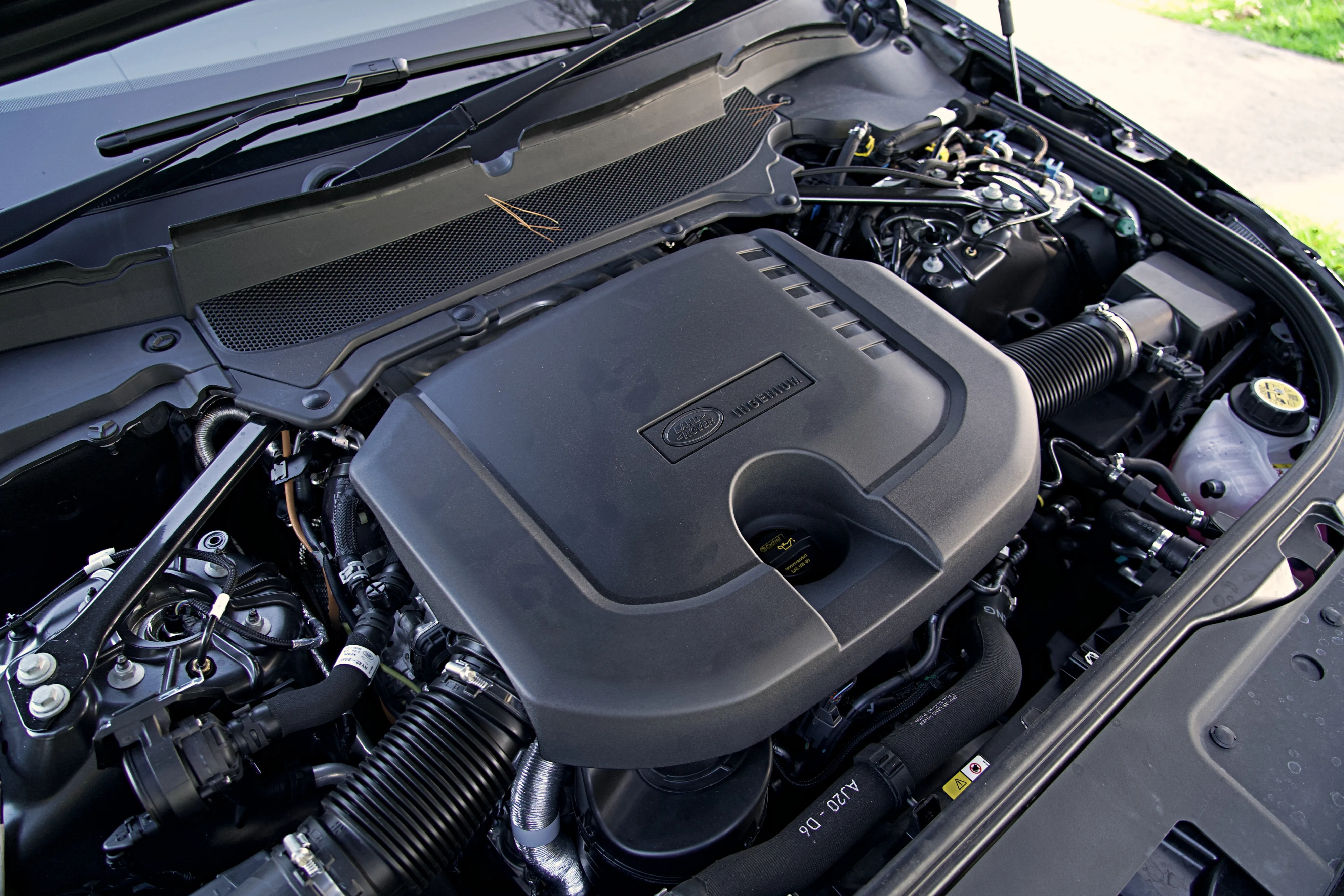
Under the bonnet, the Ingenium inline six diesel is an excellent match for the Discovery’s character. Producing a substantial 700Nm of torque, it delivers smooth, effortless performance that suits it like a glove, all while sounding warm and smooth. It never feels strained or unrefined, and provides the kind of low-end shove that makes towing, overtaking and long distance touring feel completely natural.
Despite its size, efficiency is also surprisingly strong, achieving over 800 kilometres of range unladen, reinforcing the idea that this is a vehicle designed for distance as much as capability. You see many of these traversing New Zealand from top to bottom and with all these credentials, it is very easy to understand why.
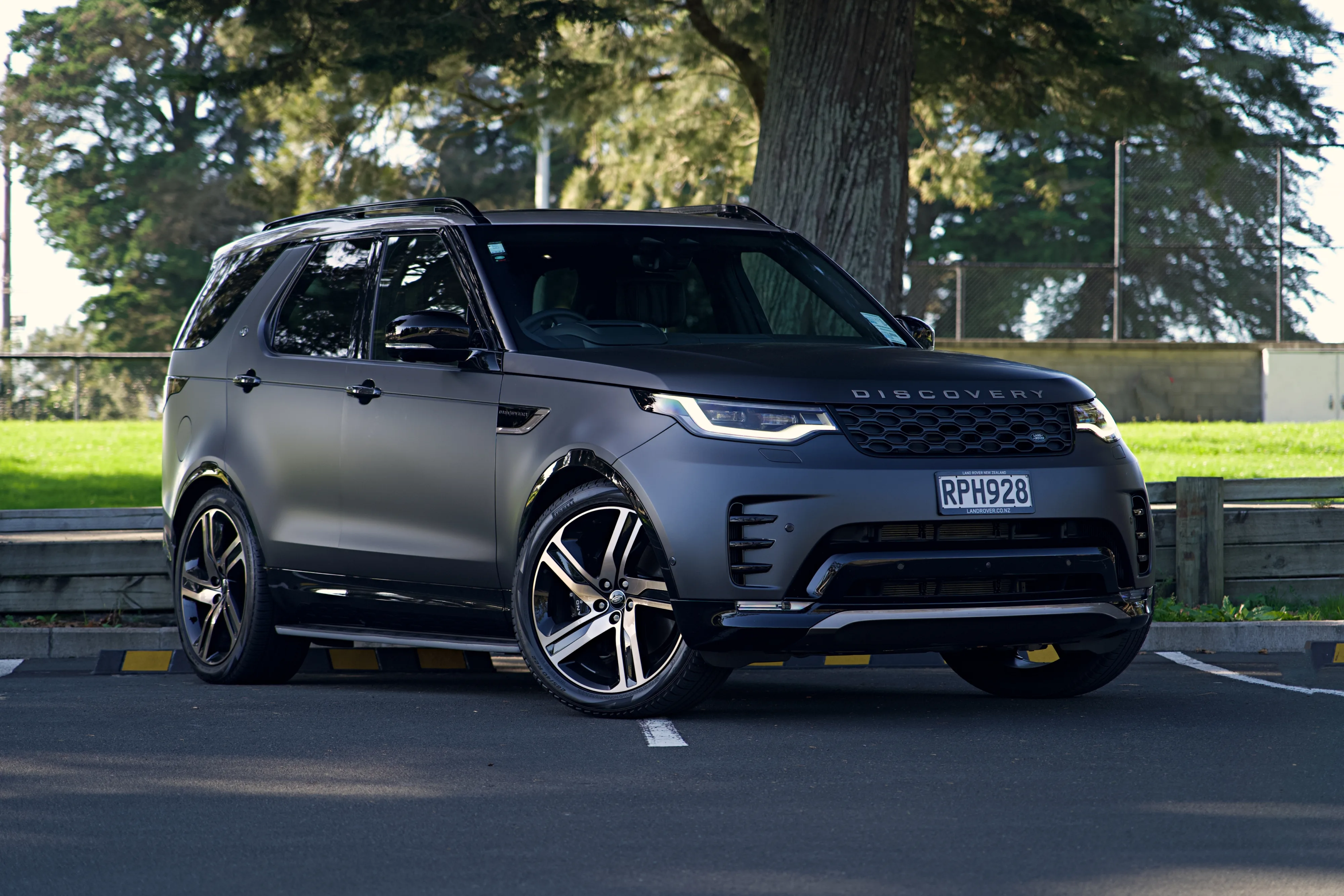
Ultimately, that is what makes the Discovery Tempest so compelling. It is expensive, undeniably so, but it exists in a space where logic alone doesn’t define the purchase. It brings together luxury, seven-seat practicality, genuine off-road ability, long distance comfort, towing competence and that stealth wealth presence in a single package. Many try, but very few brands do it as convincingly as Land Rover, and that’s why they are still the benchmark. Thanks, Land Rover, for the opportunity, and thank you for reading this far!