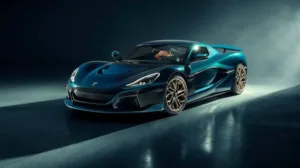
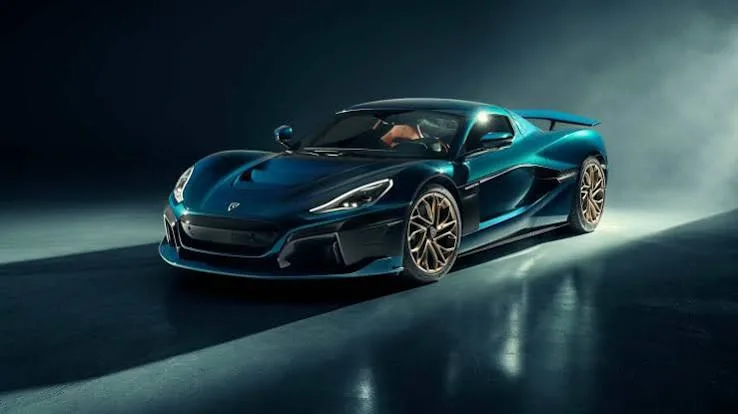
Mate Rimac has ended production of the Nevera hypercar early, after 71 cars were built against a planned 190.
Rimac planned to build 190 examples of its Nevera hypercar. It will finish with 71. Company founder Mate Rimac describes the outcome as a success rather than a shortfall.
Production Falls Short of Plans
Rimac has confirmed that production of the Nevera will end ahead of schedule. The final car is due to leave the production line by the end of 2026. The standard model was planned at 150 units, but 51 will have been built by then.
The sharper Nevera R, introduced in August 2024, was planned at 40 units. Only 20 will be completed. Ten of those belong to the limited Founder’s Edition, which customers configured together with Mate Rimac. Deliveries of that edition began in January 2026, and the other ten are still in production.
Why Demand Faded
Performance does not appear to be the cause. The Nevera produces 1,408 kW, or 1,550 kW in the Nevera R, and is credited with several records. These include a Nürburgring lap of 7:05.298 as a production electric vehicle and a top speed of 431.45 km/h.
Demand began to ease from mid-2024. At a price of at least two million euros, the car faces a buyer who has many options. Mate Rimac has acknowledged that sheer acceleration no longer sets a hypercar apart, since more affordable saloons can now reach 100 km/h in under three seconds.
Reporting on the decision suggests that wealthy collectors now look for emotional appeal. The comparison drawn is with Swiss luxury watches, which keep their following even though smartwatches are functionally superior.
A Mission Accomplished
Rimac does not see the early end as a setback. In a post on Instagram, Mate Rimac said the Nevera has “done its job.” He argued that the car enabled the company to reach its current position.
He also said the Nevera is the most sold electric hypercar in the world. Without it, he suggested, there would be no Tourbillon and no factory. These are the company’s own claims, and they are not independently verified.
A Broader Business
Rimac’s output now extends well beyond hypercars. The company builds the V16 hybrid Bugatti Tourbillon at the joint venture Bugatti Rimac, and that model is already sold out. In early 2026, Rimac also launched a new campus in Zagreb to produce high-voltage battery systems.
Its subsidiary Verne began commercial autonomous shuttle operations in Zagreb in spring 2026. Mate Rimac has also said that road emotion will come from a V16 combustion engine in future.
For enthusiasts, the Nevera’s story shows that a hypercar’s appeal depends on more than numbers. It also shows that Rimac is becoming a technology group, with electric record-breaking as only one part of the picture.