We recently headed to Australia’s Capital, Canberra to test out the all-new, 5th Generation Nissan Navara. It was an extensive program both on and off road and it’s fair to say that the new, locally-tuned ute performed admirably on all terrains (especially since it was unladen and running on road tyres)
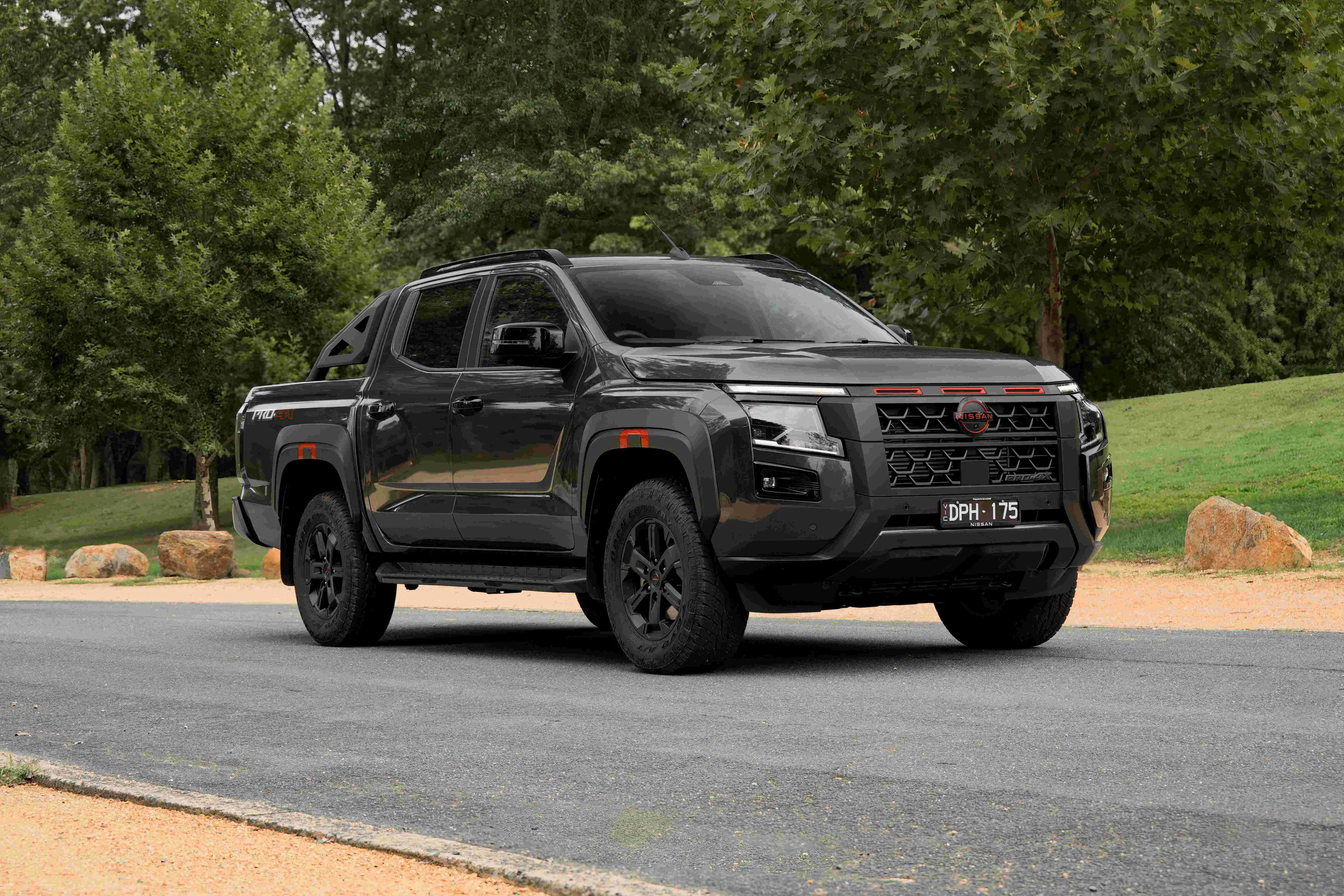
The fifth-generation Nissan Navara arrives as a globally engineered, locally-tuned ute that marries rugged intent with everyday usability. Nissan has leaned on its 40+year heritage while refining the package for contemporary buyers, tougher styling, improved powertrain figures, and suspension work that aims squarely at local conditions.
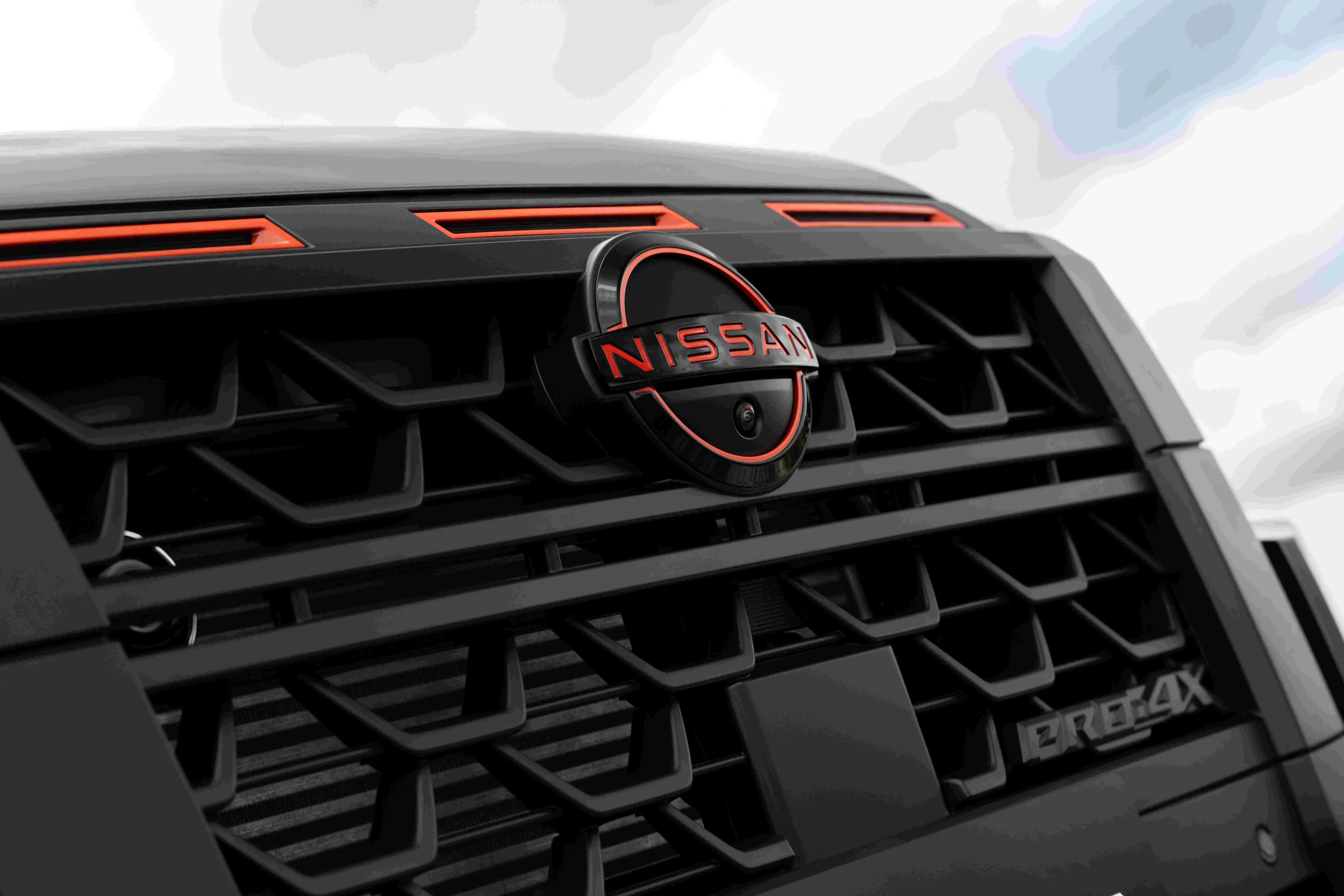
Bolder, yet recognisably Navara
At a glance the new Navara is unmistakably Nissan but more assertive than before. The front fascia uses a modern interpretation of the brand’s classic elements, namely three slats that harken back to the D21, strong V-struts and a bullbar-like treatment that gives the face greater visual bite and perceived toughness. The C-shaped headlamp signatures provide a contemporary, robust look that suits a ute aiming to be both work-ready and lifestyle-friendly.
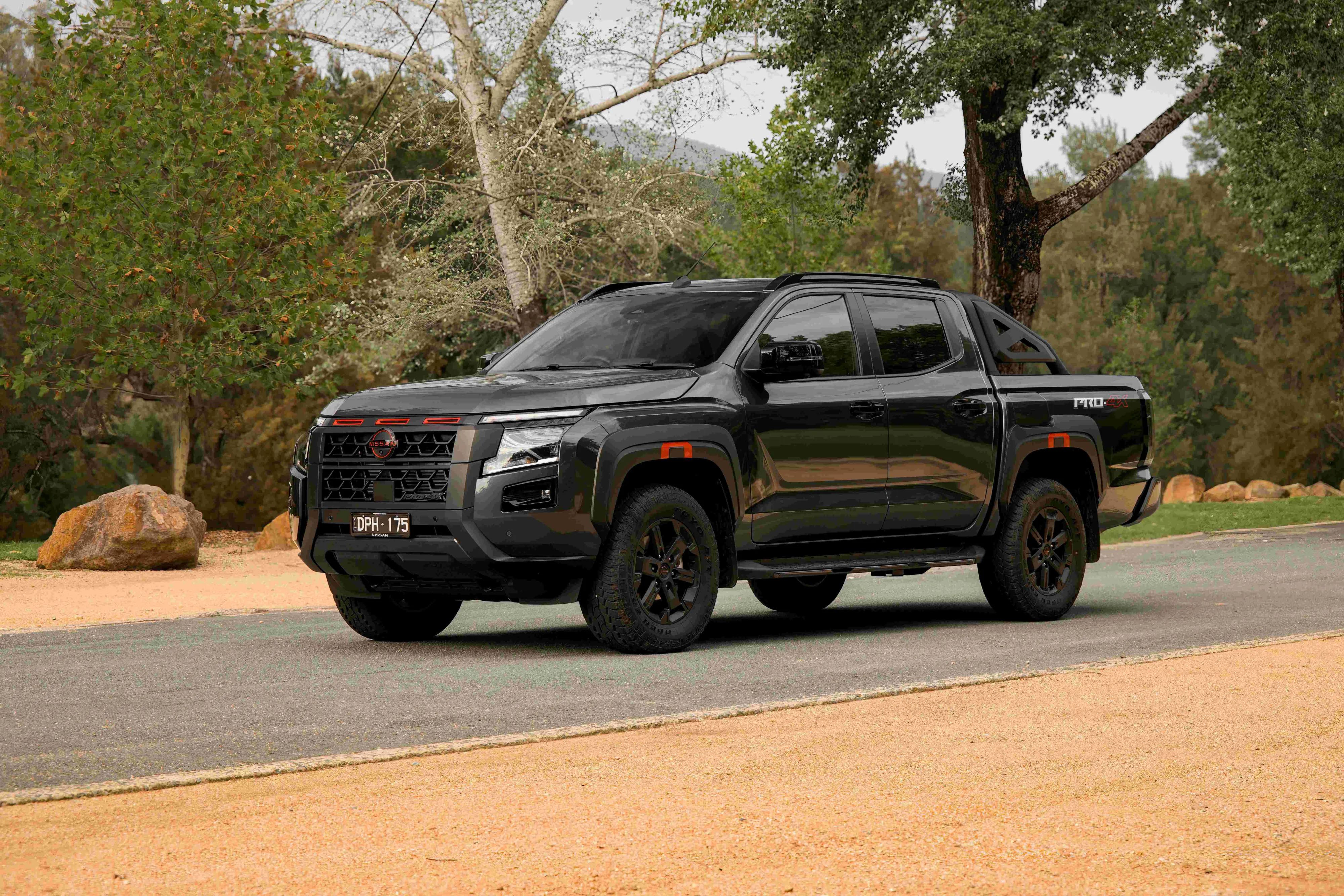
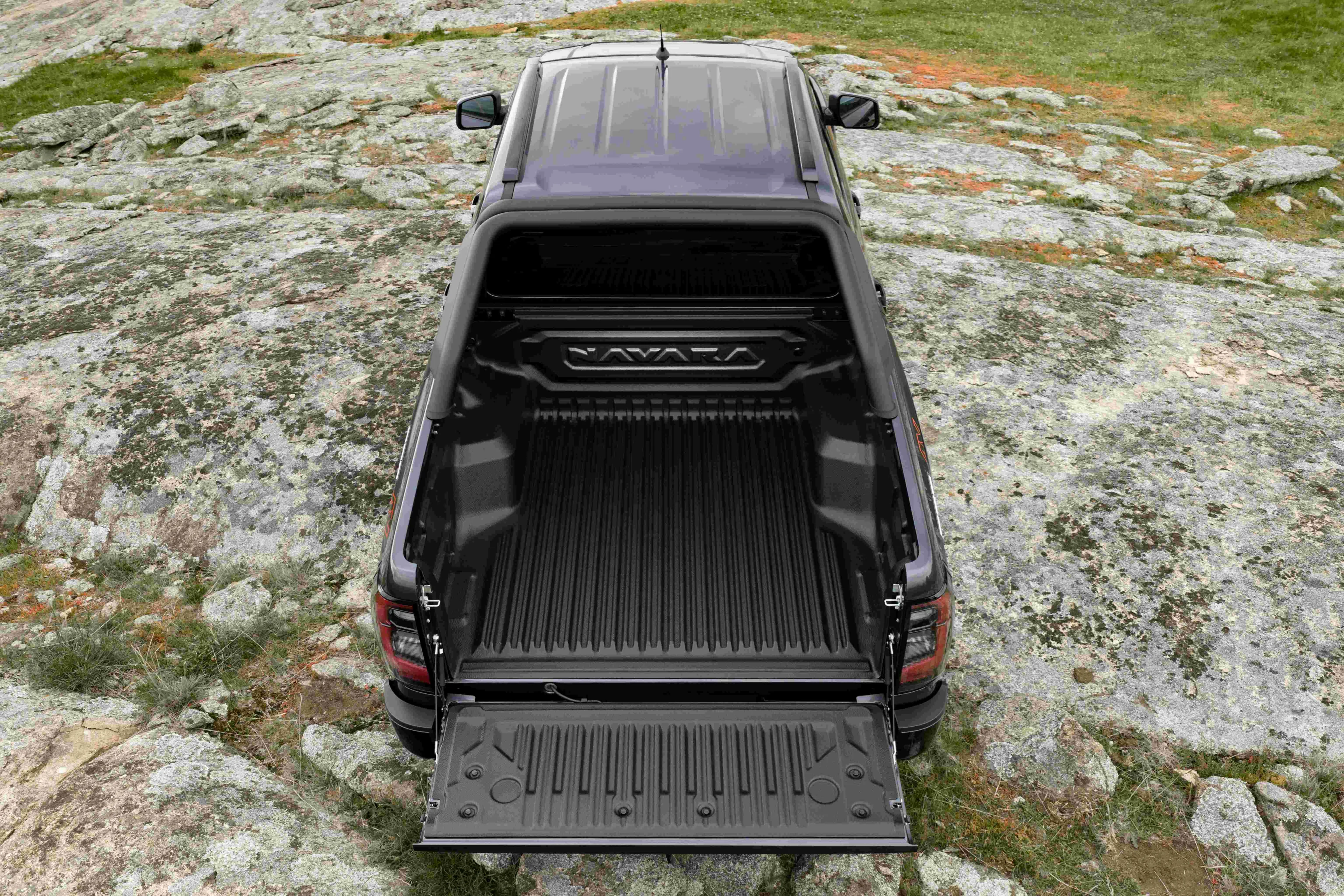
Dimensional changes are subtle but sensible, the new Navara is slightly longer (+9 mm), significantly wider (+55 mm) and a touch shorter in height (-40 mm) compared with the outgoing model, tweaks that translate to a more planted stance without drifting into SUV-softness. Wheel options in mainstream spec sit on 18-inch rims wrapped in all-terrain friendly Maxis on test cars, and ground clearance is competitive at 228 mm with a 34° approach and roughly 20° departure angle, reaffirming its off-road intentions. The load bed remains pragmatic (able to take a Euro pallet and 46 mm longer than before) while retaining a 3.5-ton towing rating for serious towing work.
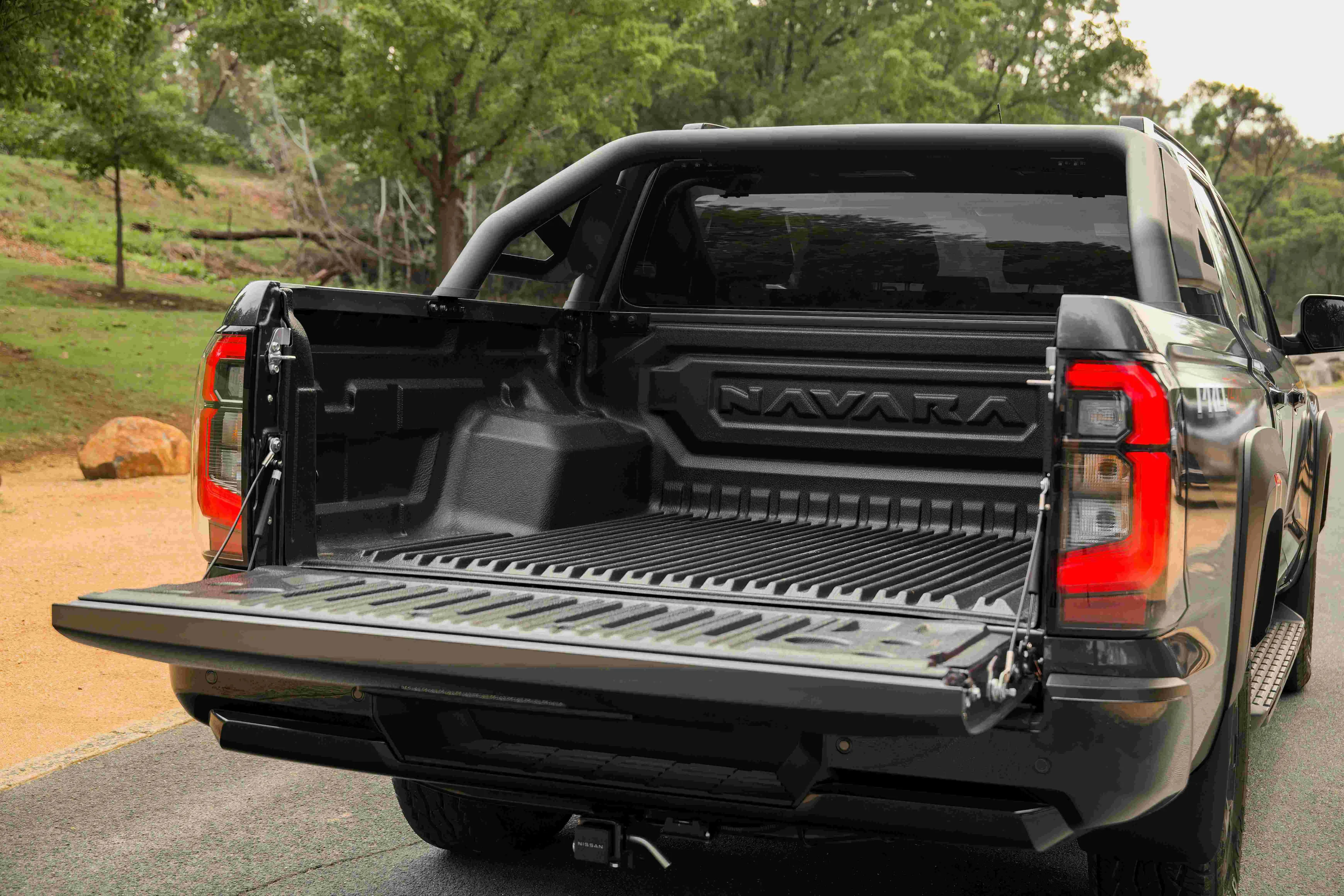
Robust, more spacious, and practical
Inside the Nissan Navara has sensibly prioritised usability over fussy luxury. The cabin keeps a tactile, robust character that feels at home both on a farm track and in city traffic; there’s a deliberate mixture of touchscreen controls and physical buttons so you don’t fumble with menus while driving.
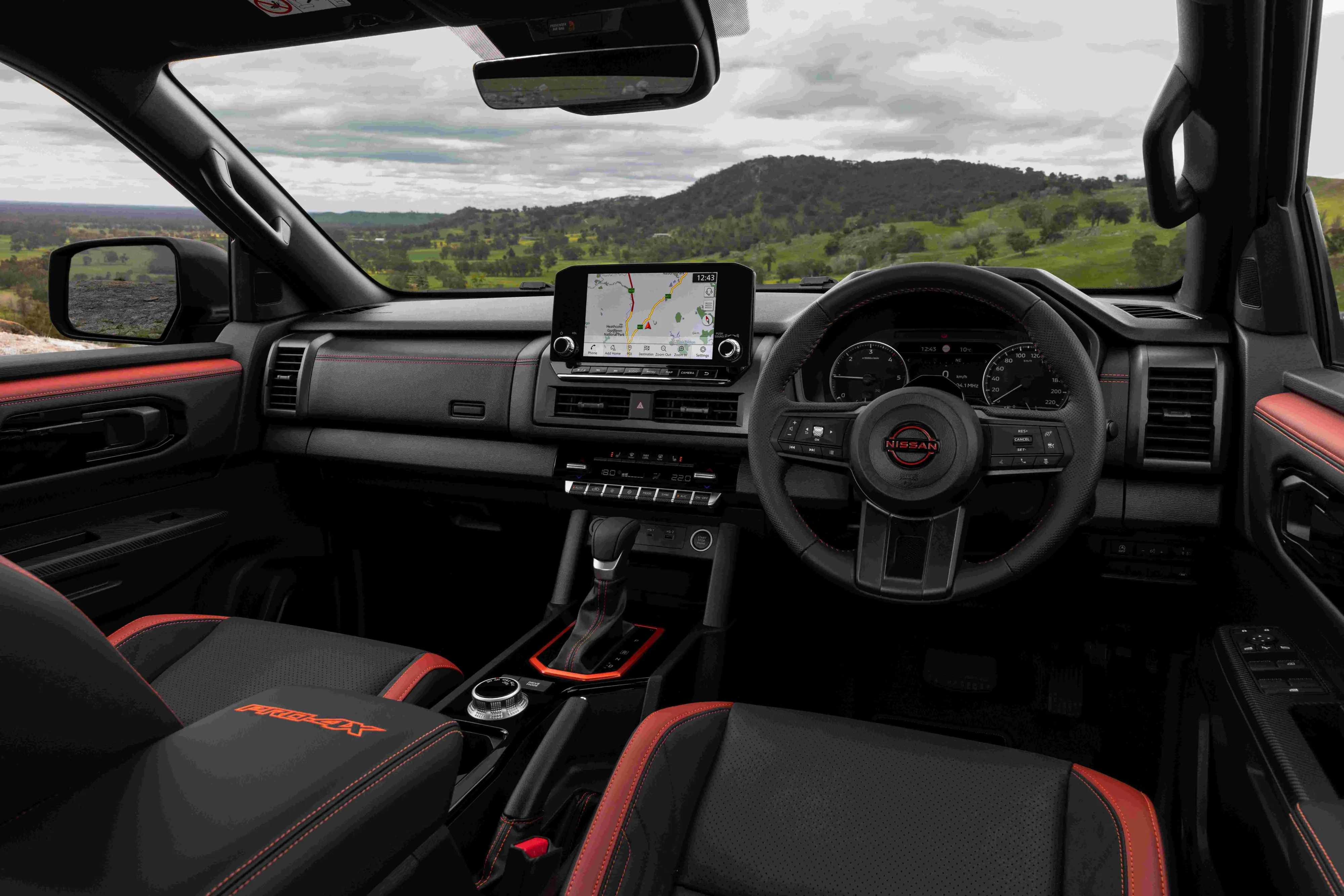
Nissan’s claim of increased shoulder room up front and more rear legroom is immediately noticeable, making the double-cab layout a better fit for long stints or crew work. The seats are heated in higher specs and the interior layout puts quick-access buttons across the bottom of the centre stack for camera and audio functions, small touches that matter when you’re swapping between daily tasks and off-road use.
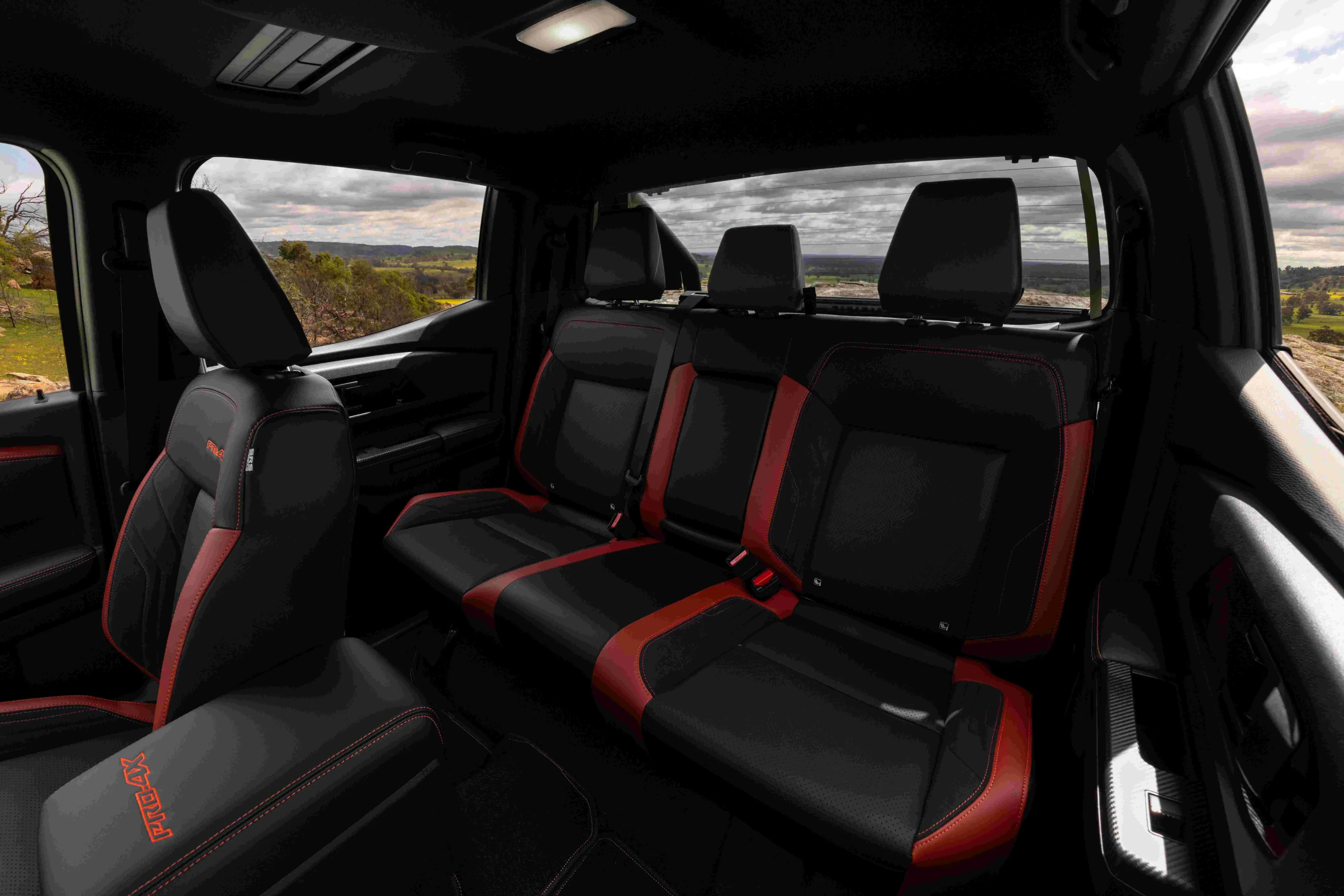
Practicality is a focus, substantial cupholder real estate, wireless phone charging, and plenty of storage make the Navara a useful daily driver. The driver-monitoring system also receives praise for not being overbearing too, indicating a thoughtful calibration of ADAS alerts and alerts that don’t constantly distract. The overall feel is of something built to take hard work and not feel fragile while doing it.
Modern enough tech, with sensible trade-offs
Infotainment has been upgraded with a larger 9-inch touchscreen while the instrument cluster is a readable 7-inch unit, bringing the Navara in line with modern expectations in connectivity and screen real estate. Wireless Apple/Android connectivity is included and the physical control strategy keeps frequently used functions simple and quick to operate.
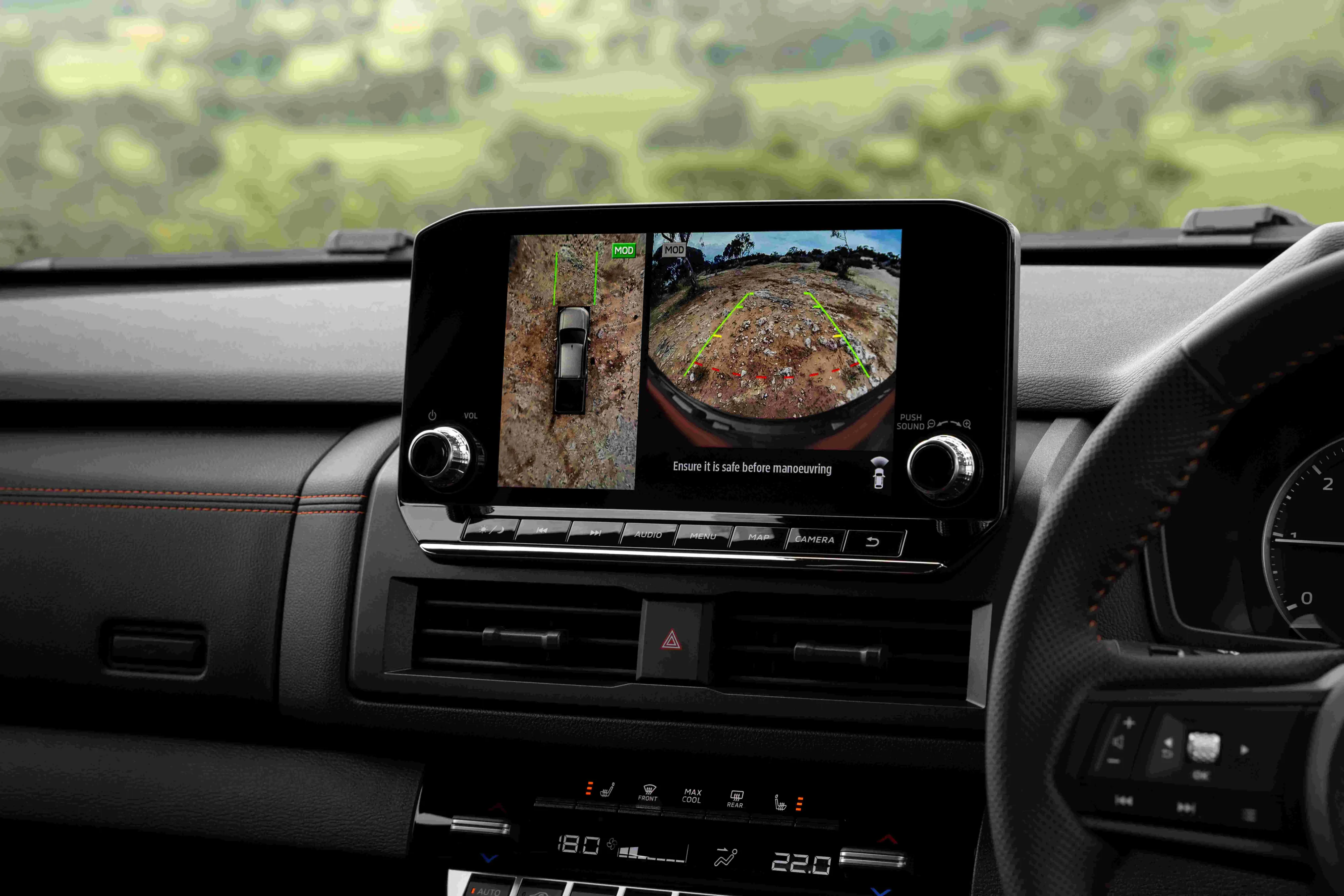
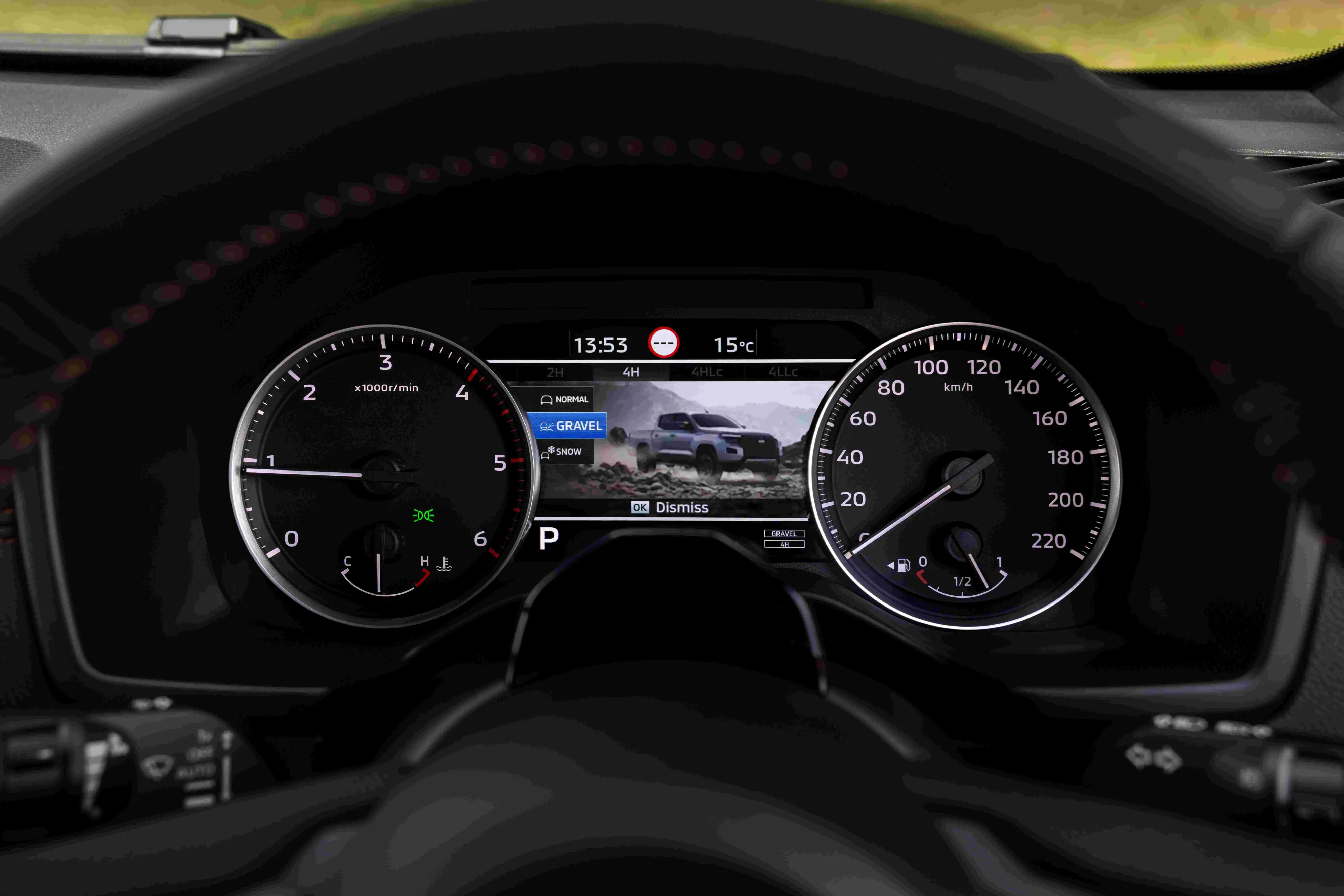
Safety and driver aids are comprehensive for a ute, lane-keep assist, driver monitoring, and road-sign recognition comprise a contemporary ADAS suite that elevates the Navara beyond old-school tool-truck tech into territory more typical of modern SUVs. One notable omission for hardcore off-roaders is the lack of a 540-degree camera or “transparent bonnet” view, Nissan offers ‘just’ a 360-degree system, so be careful when venturing deep into the bush.
More torque, sensible economy
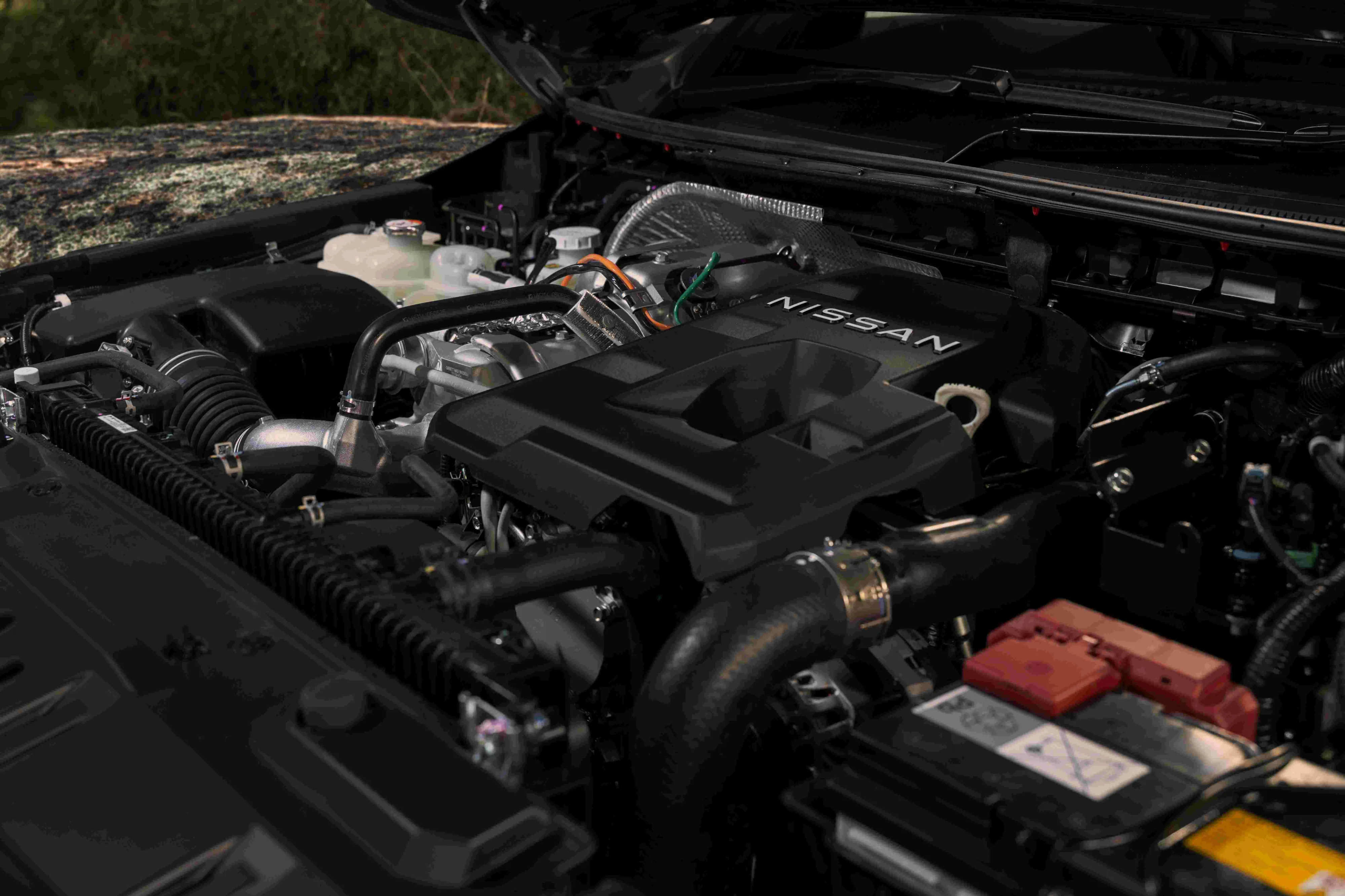
Under the bonnet you get a 2.4-litre bi-turbo diesel paired to a six-speed automatic. Output is quoted at 150 kW and 470 Nm (an increase of roughly +10 kW and +20 Nm over the previous model) and Nissan claims combined fuel economy in the high single digits (around 7.7 L/100 km) with CO2 roughly 203 g/km. The net result is a unit that delivers stronger mid-range shove without punitive fuel consumption, and the six-speed auto is tuned for smooth delivery rather than sporty shifts.
The Navara retains traditional ladder-frame underpinnings rather than moving to a monocoque crossover style; that choice preserves towing, payload, and durability characteristics that many buyers still prioritise in the segment.
Premcar, locally-tuned suspension shines
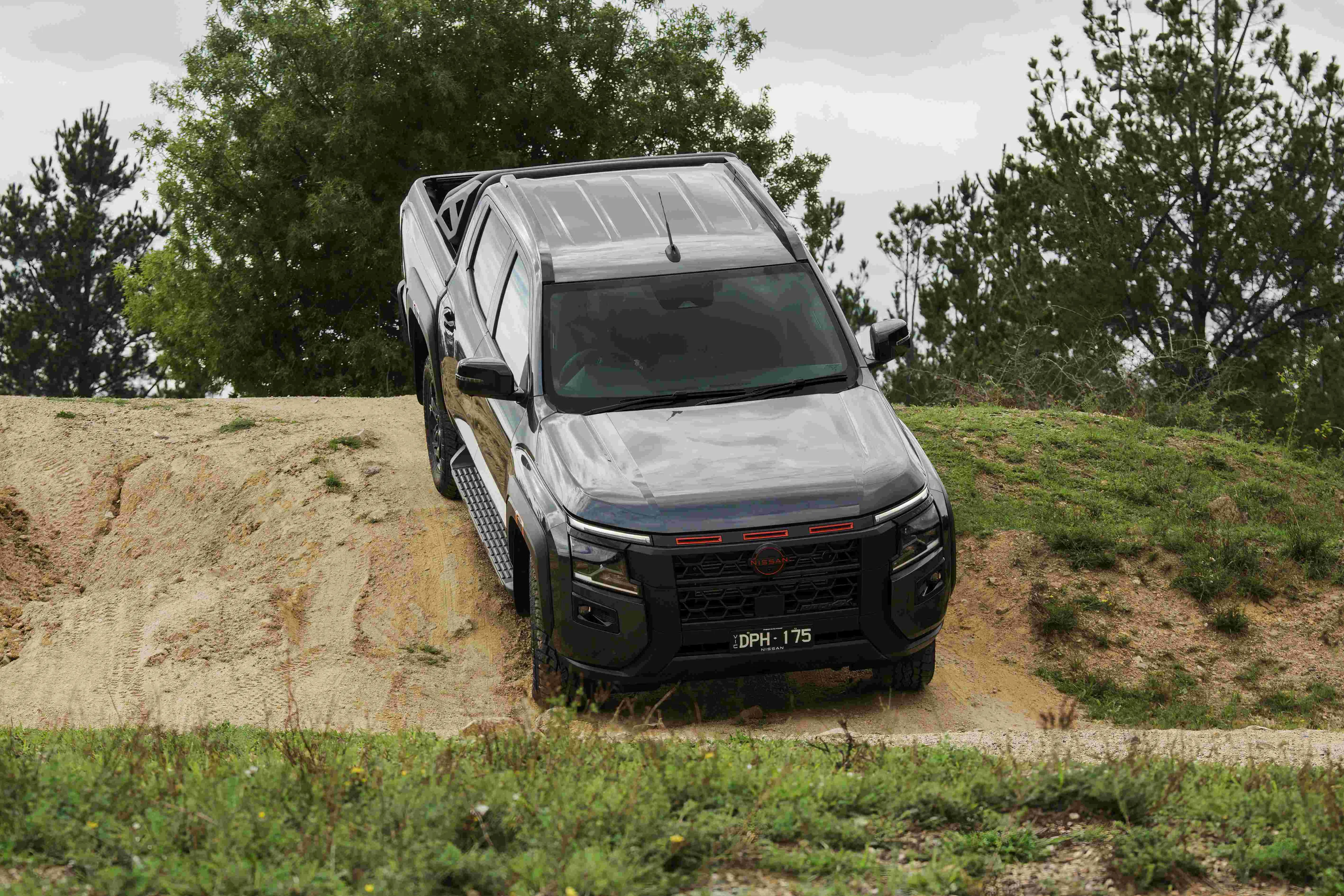
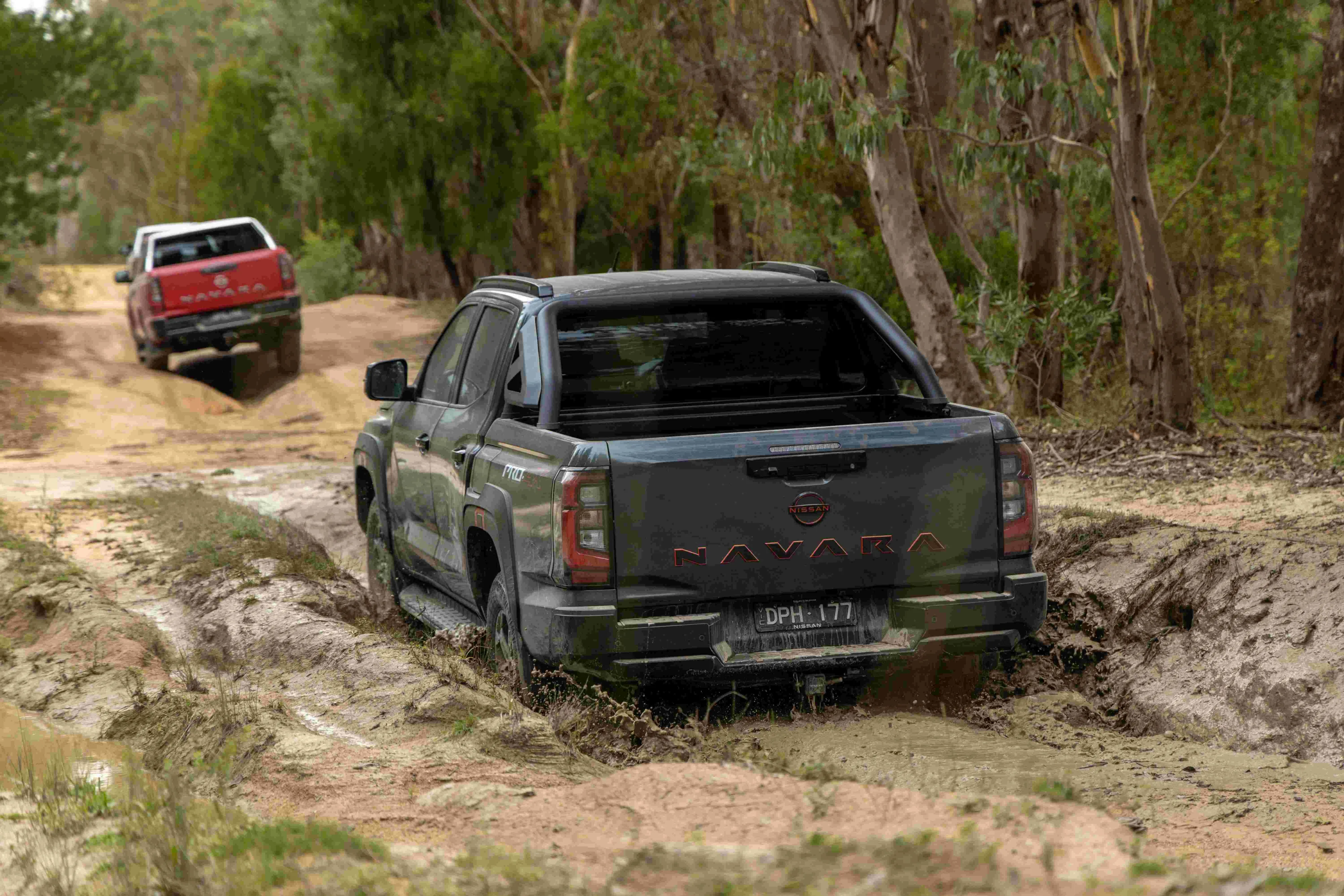
What really separates this Navara from many badge-sharing rivals (and that includes the Triton) is the extent of local suspension development. Nissan’s partner Premcar reportedly spent 12 months developing the suspension and then a further 20,000 km refining it for local conditions, swapping dampers and tuning the system to reduce roll and pitch while improving steering feel. On the dusty, rutted tracks we used for testing the suspension soaked up loose rocks and corrugations with composure; while the cabin remained steady, meaning occupants were not getting thrown about. And that sound ride manners contributed to confident progression up and down hills too. Steering is well-weighted and communicative, you get useful ground feedback without every pebble being telegraphed into the wheel.
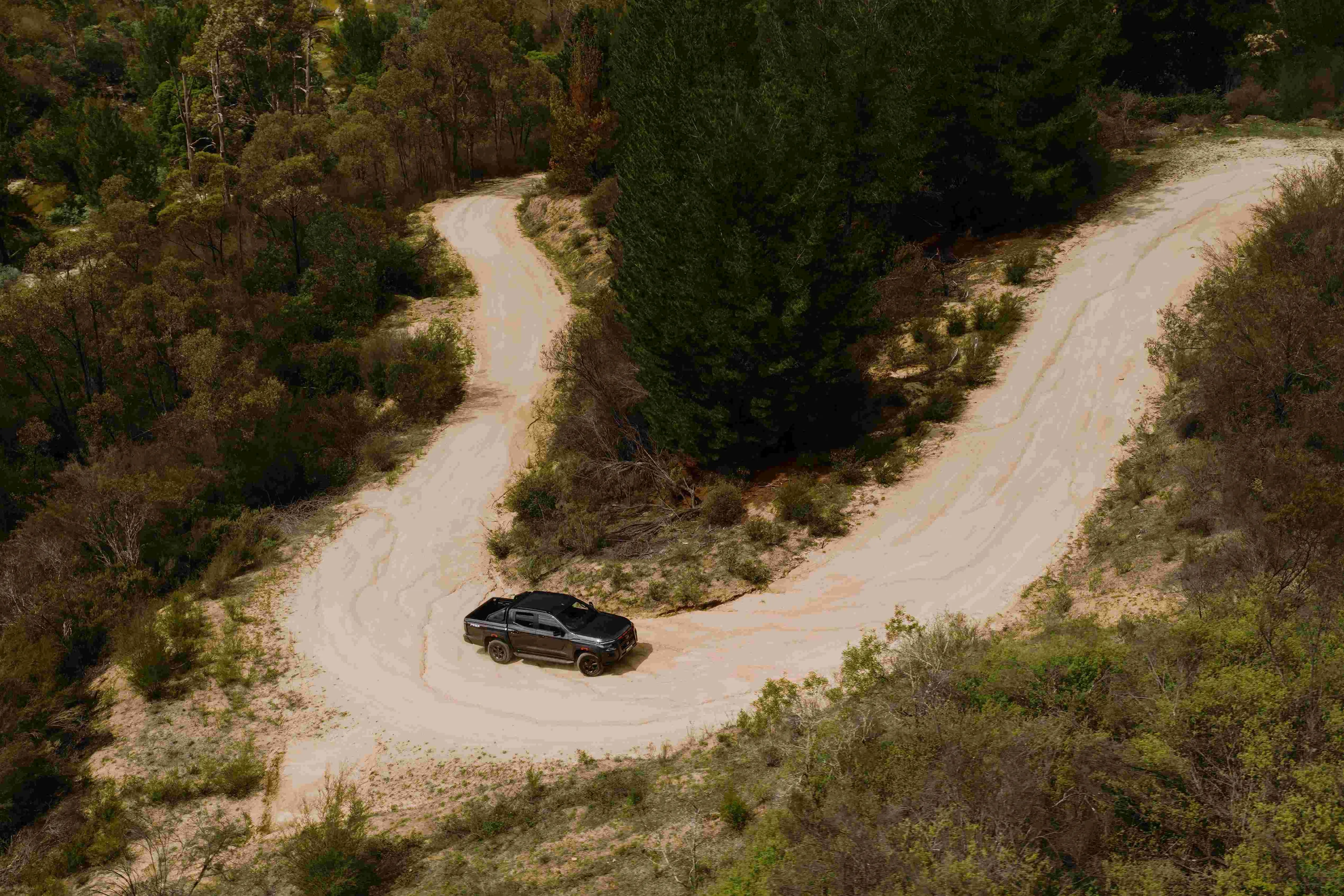
Off-road angles, descent control and low-speed articulation worked as intended, while the ladder-frame resists flex, a reassuring trait when you’re hauling a trailer or carrying heavy cargo one can assume. The transfer case allows switching from 2WD to 4WD at speeds up to 100 km/h, which is a handy real-world convenience when road surfaces change unexpectedly. The engine/gearbox combination is tuned for smoothness rather than pace; power delivery is described as linear and tractable through the six-speed auto, which suits the Navara’s dual-role nature as both a workhorse and family transporter.
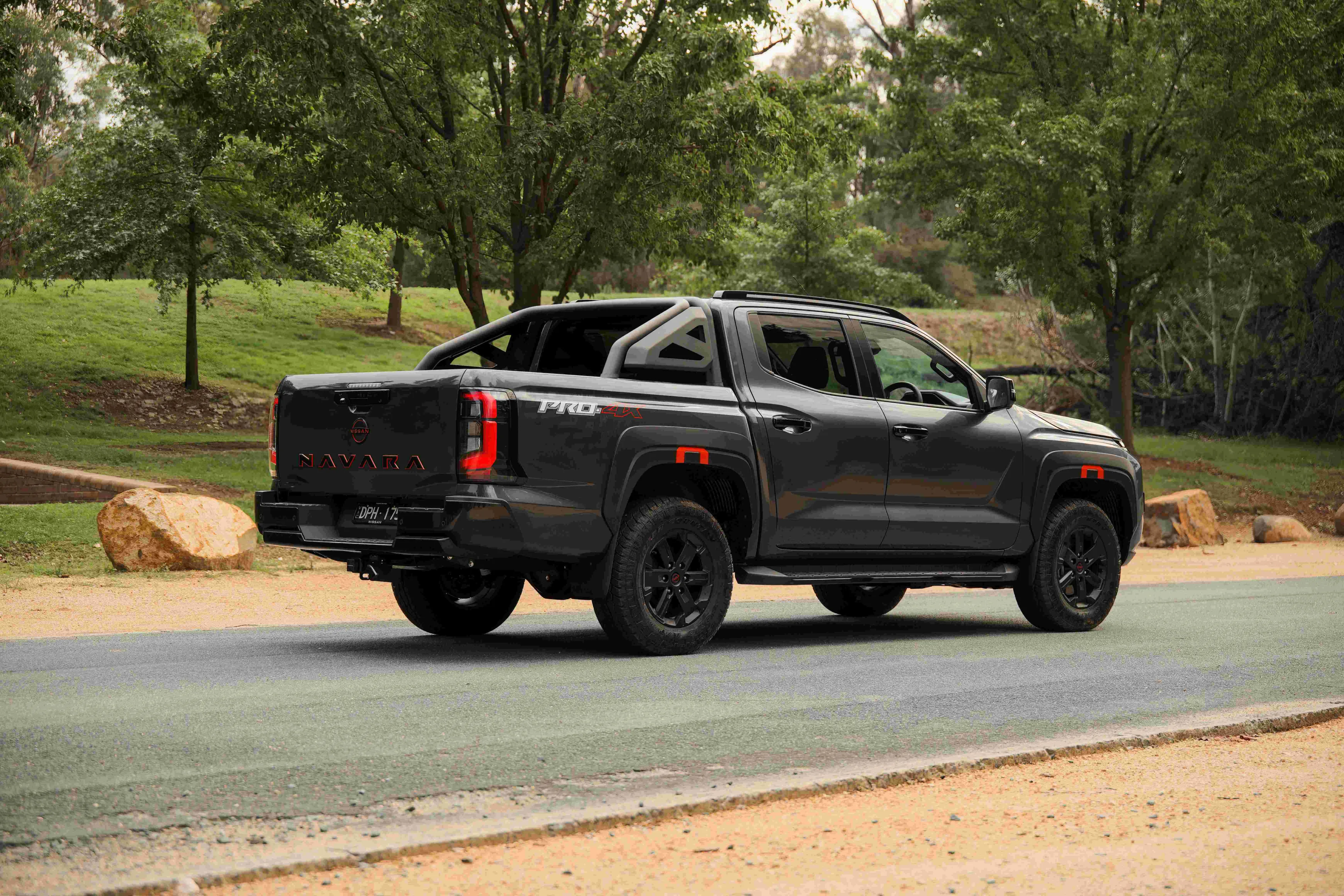
On-road the chassis changes (mainly damper swaps) reduce body roll and improve composure at cruising speeds without dulling the ute’s character. It’s actually a compliant ride that somehow manages to forget that it’s a highly capable truck. Creature comforts are good and the isolation and insulation from the outside world is commendable.
Competitors and context
The new Navara lands in a crowded mid-size ute segment where buyers want durability, capability and comfort in equal measure. Its locally tuned suspension and muscular styling give it a clear identity in markets where previous Navaras were already popular (yes NZ is one of those markets), and Nissan’s strategy to focus on double-cab variants reflects buyer preference in these regions (90% double-cab demand is cited).
Tarmac Takeaway
The all-new, fifth-generation Navara balances a tougher, more modern exterior with a practical, well-laid-out interior. Arguably, the real headline is the chassis tuning: locally developed suspension calibration and upgraded dampers deliver a ride and steering feel that’s rare in a ladder-frame ute. While hardcore off-roaders might crave more advanced camera views for extreme trails, most buyers will appreciate the mix of towing capability, improved torque, modern safety aids, and everyday comfort.