Some engineering ideas age poorly. The transaxle concept, which Porsche developed at its Weissach Development Centre more than 50 years ago, is not one of them. The German manufacturer has revisited the story behind the layout, and it remains a compelling piece of automotive thinking.
What the Transaxle Actually Does
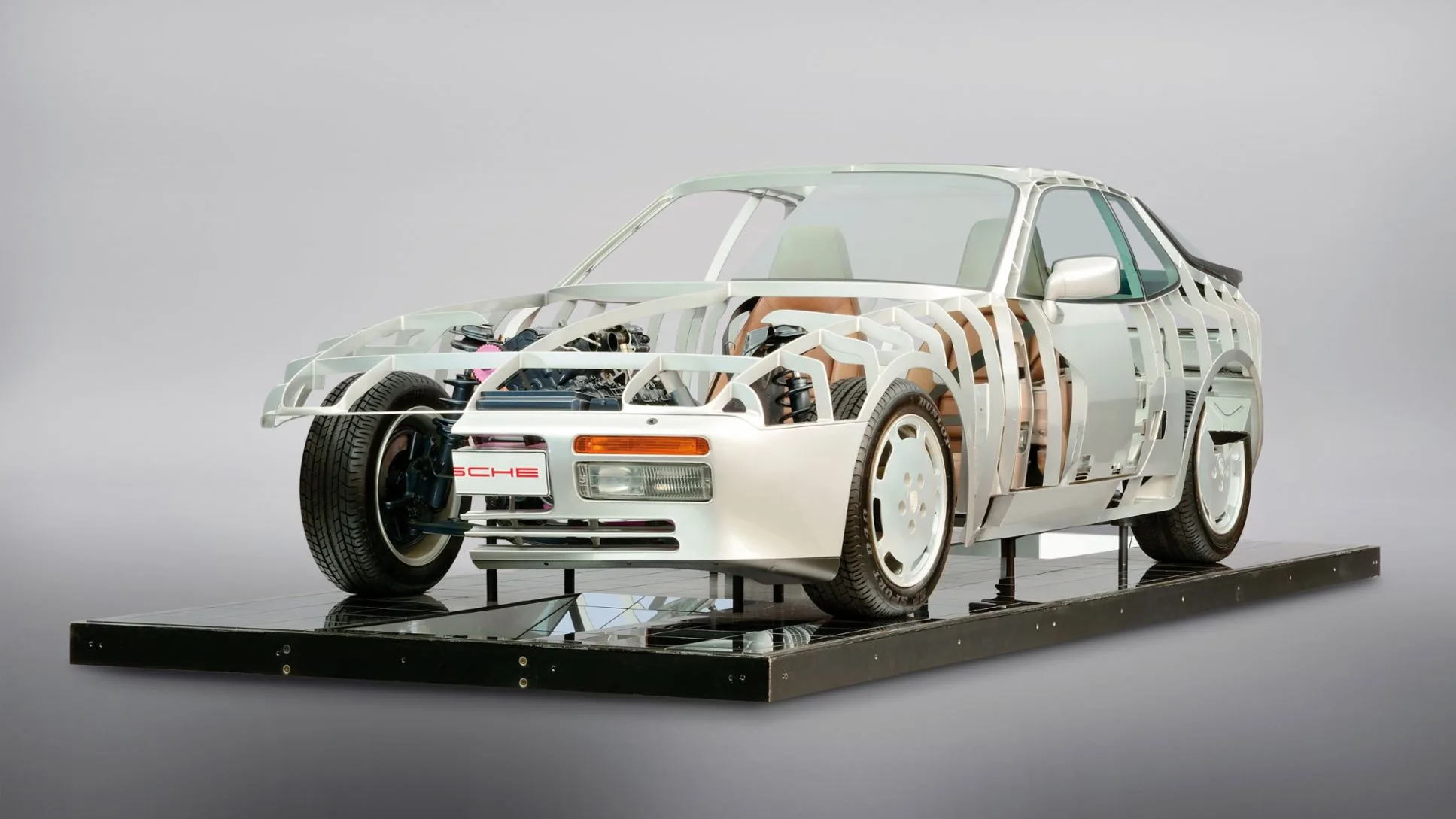
The principle is straightforward in theory, harder to execute in practice. A water-cooled engine sits above the front axle. The transmission and differential sit at the rear. Between them runs a slender driveshaft (20 to 25 millimetres in diameter and roughly 1.5 metres long) rotating inside a rigid central tube that passes between the two front seats.
The result is near-perfect weight distribution across both axles. Place the two heaviest components at opposite ends of the car, and the physics largely take care of themselves. A 50:50 axle load ratio reduces both understeer and oversteer, and makes the car more predictable for drivers without a racing background.
Crucially, all of this was achieved before electronic driver aids existed. The neutral handling came from engineering alone.
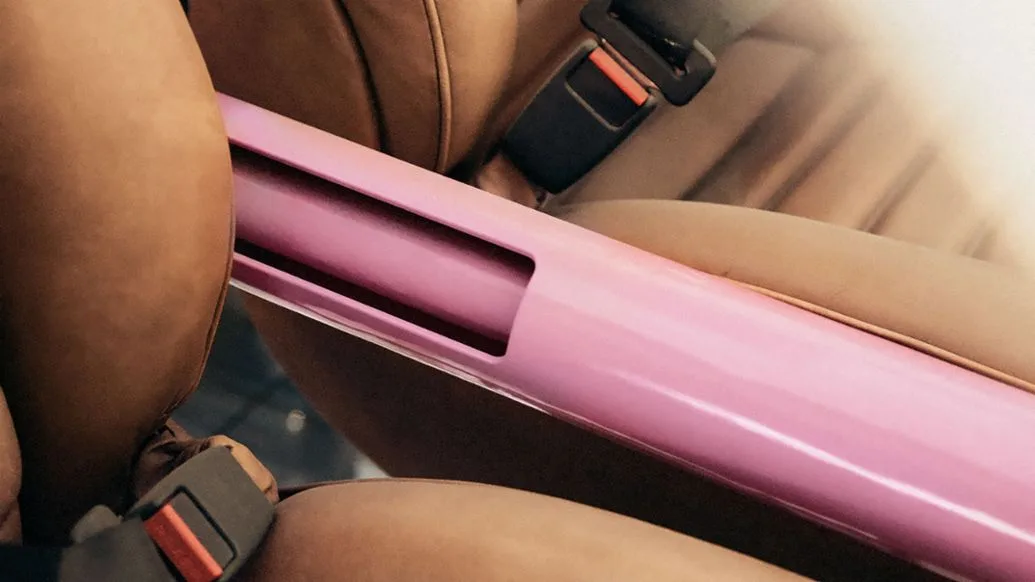
The Cars That Carried the Concept
Porsche launched the 924 with this configuration in 1976. The 928 followed in 1977 and won the Car of the Year award in 1978, the only sports car ever to do so. The 944 arrived in 1981, and the 968 brought the transaxle era to its peak in 1991.
The 944 S2, introduced in 1988, carried a three-litre four-cylinder engine producing 155 kW (211 PS). At the time, it was the largest-displacement four-cylinder fitted to any production car. Frank Babler, a Porsche engineer who has driven his own 944 S2 for 22 years, describes the car’s roadholding and tracking stability as extraordinary — and says the driving behaviour still feels fresh.
The transaxle tube also contributed to passive safety. In a collision, forces absorbed by the crumple zones travel along the rigid central structure, dissipating energy around the passenger cell rather than through it.
Practical Benefits That Broadened the Audience
Beyond dynamics, the layout freed up interior space in ways a rear-engined or mid-engined car simply cannot. The transaxle models offered four seats and a luggage compartment more than twice the size of the 911’s. That combination of sports car handling and everyday usability attracted buyers who might never have considered a Porsche before.
At the 924’s launch in the south of France, press materials noted the car delivered 80 per cent of the speed of Porsche’s most powerful model at the time, using half the power. That framing was defensive, but the underlying point was valid: the transaxle layout was doing the work that extra horsepower would otherwise need to cover.
Why It Still Matters
The transaxle concept belongs to a rare category of engineering solutions that address multiple problems simultaneously without obvious compromise. Weight distribution, handling balance, interior packaging, and structural safety all improved together.
Porsche never returned to the layout after the 968, and no current model uses it. But the principles it demonstrated (that balance and architecture matter as much as outright power) remain as relevant as ever to anyone thinking seriously about what makes a sports car work.