There are moments in the automotive world when you realise the EV rulebook has been quietly shredded. When it comes to Porsche, the first time was when they showed us the Taycan, it rewrote what an electric sports sedan could be. Then the Macan Electric proved to us that EVs could (thankfully) still have a pulse.
But what happens if you cross the high-performance Taycan, the unmistakable DNA of a 911 and the Porsche-family ‘pulse’ of the Macan – well you get a 2.5-tonne physics experiment disguised as a family SUV – and Porsche calls it the Cayenne Electric.
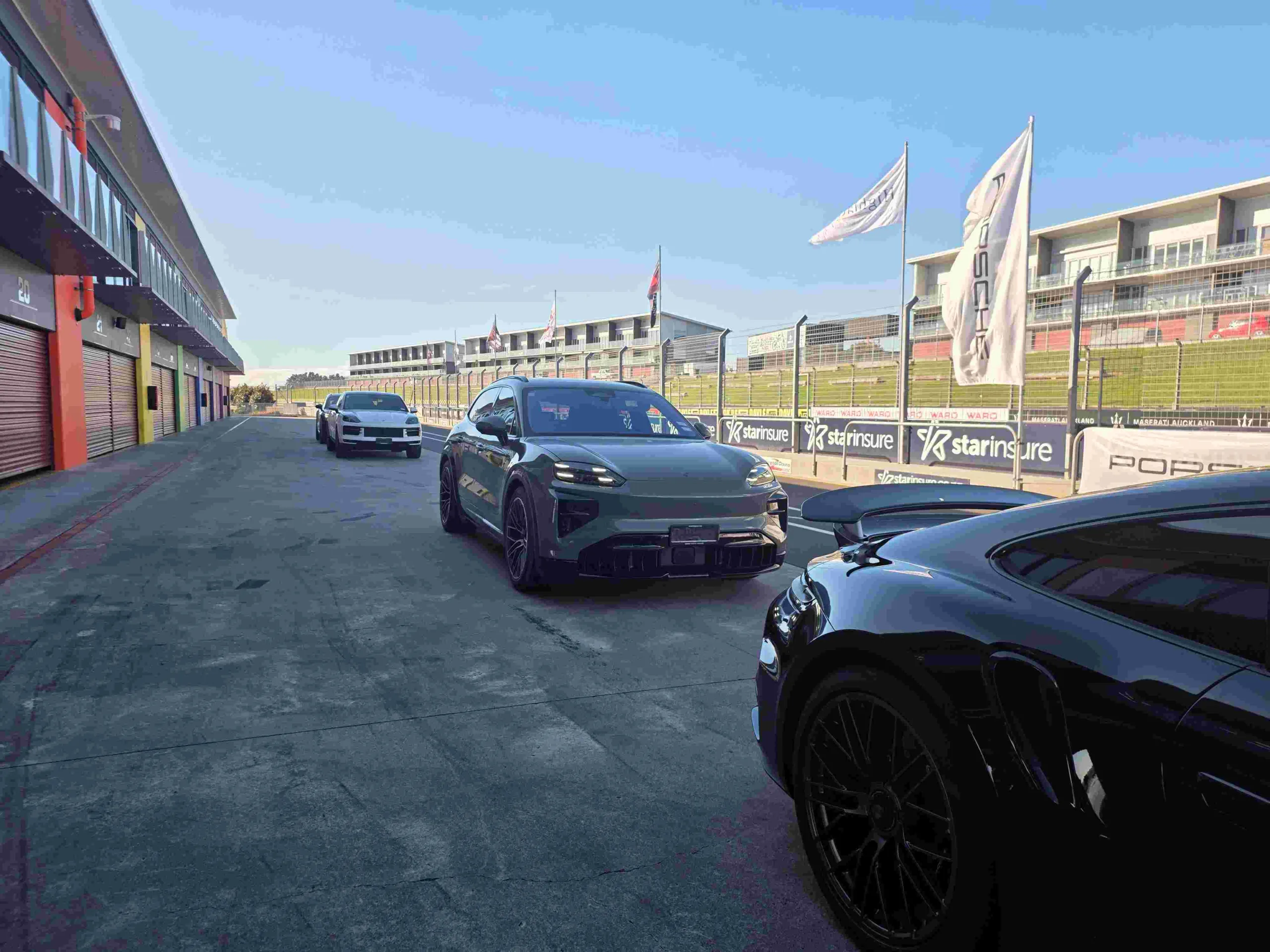
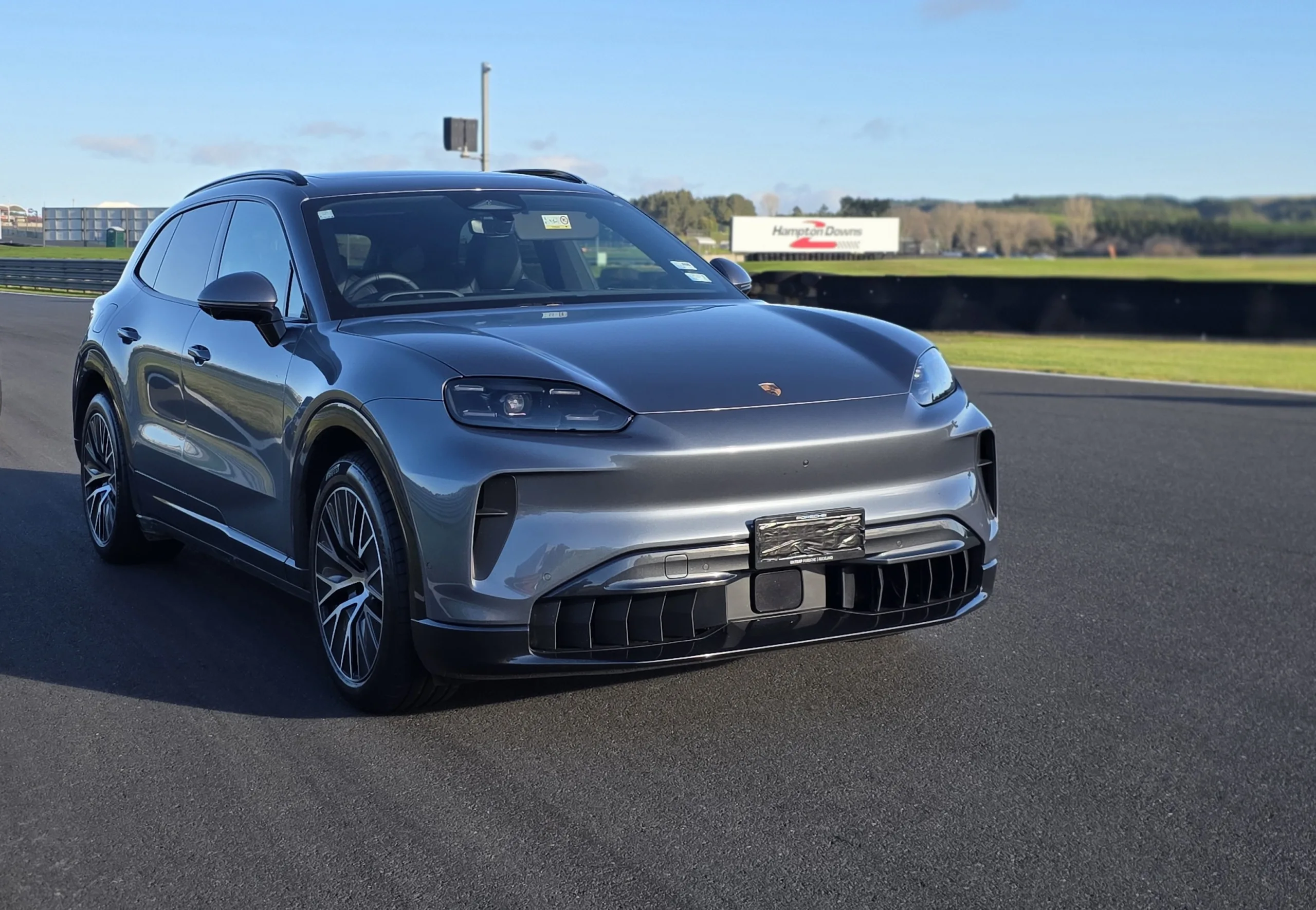
And after a half day behind the wheel at Hampton Downs racetrack I’m convinced Stuttgart has lost the plot, but in a truly magnificent way. Track driving an electric SUV sounds about as sensible as entering a Sumo wrestler in a sprint race, yet Hampton Downs was the perfect venue to demonstrate what Porsche has achieved.
Welcome to the 1,156hp Family Wagon
Let’s get the numbers out of the way first because they’re frankly ridiculous. The range-topping Cayenne Turbo Electric produces up to 850kW (1,156hp) and launches from 0-100km/h in just 2.5 seconds on paper, but seems even quicker in reality. That’s Hypercar territory in a family SUV.
In fact, Porsche themselves drew comparisons with their legendary 919 Hybrid Le Mans racer during the technical briefing, and remarkably, the road-going SUV isn’t far behind in outright power. And for context, a current Porsche 911 Carrera produces around 290kW, so this family carting EV has the equivalent grunt of three 911s having a tug-of-war in the same direction.
I kid you not, during one of our ‘exercises’ at Hampton Downs’ back straight, that off the line power delivery is less “acceleration” and more “teleportation”. You squeeze the throttle and the braking cones arrive at mind-warping, stomach-churning speed.
The sensation isn’t dramatic in the old-school V8 sense. There’s no roar, no vibration, no theatrical gear changes, instead, there’s simply an overwhelming certainty that the laws of motion have been temporarily suspended. ‘You cannae push it any faster Jim’ said Scotty on Star Trek, well you can in a Porsche Cayenne Electric!
The Sound of the Future… With a Hint of V8
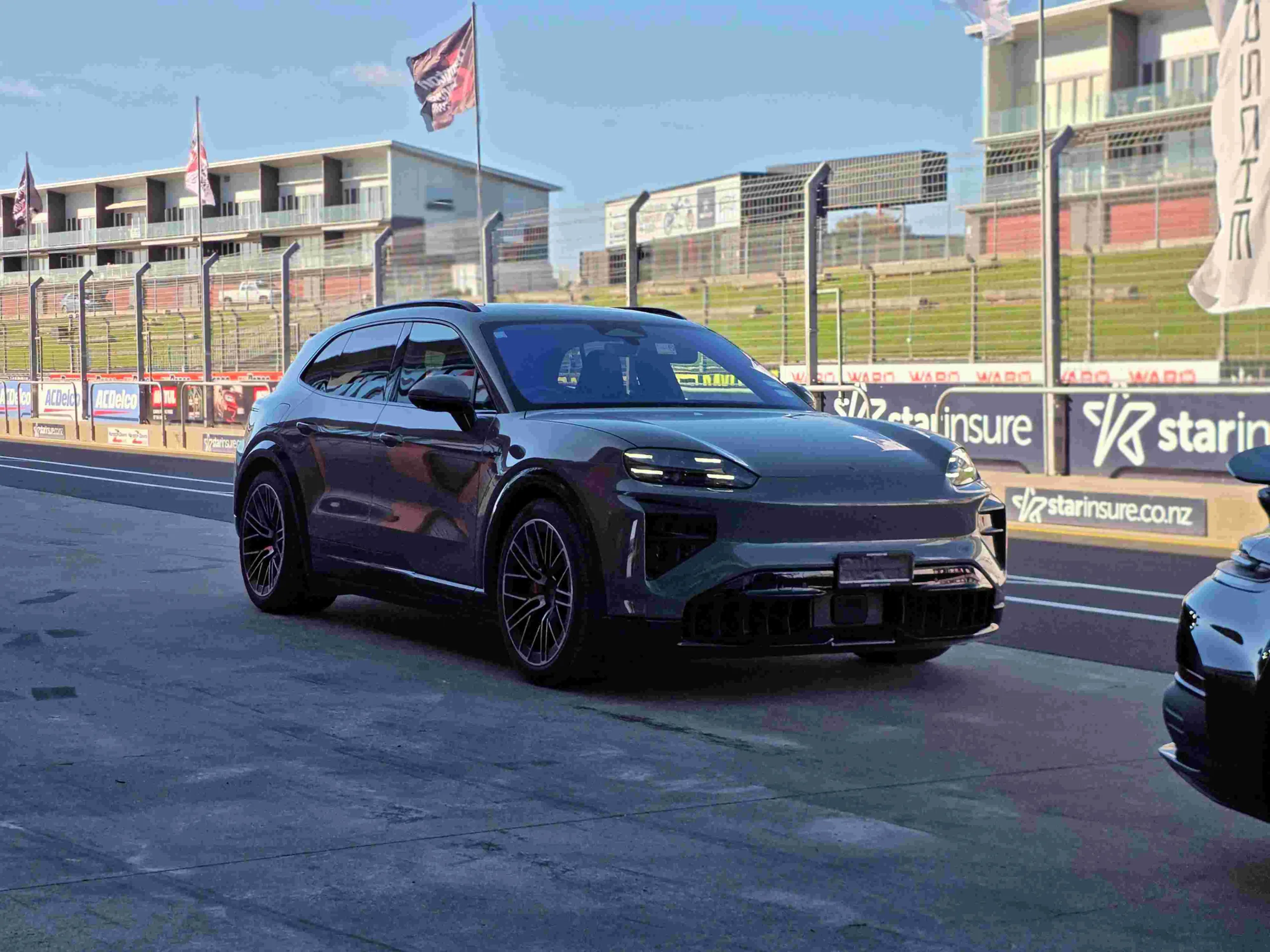
Now before the petrolheads start angrily typing comments about electric cars sounding like kitchen appliances, Porsche has been listening. The new Sport Sound system has evolved significantly from previous Porsche EVs. It now has a deeper, more aggressive character that genuinely hints at a big-capacity V8. On deceleration, it even develops a grumbling soundtrack that feels surprisingly emotional.
No, it’s not going to fool anyone into thinking there’s a twin-turbo eight-cylinder under the bonnet, but unlike many synthetic EV soundtracks that feel like they were designed by someone whose only exposure to cars came through a PlayStation controller, this one actually adds character. Trust me, it’s worth switching on.
Active Ride – Witchcraft in Suspension Form
But the biggest revelation of the day wasn’t the acceleration (ok it was) but also, it was the suspension. Porsche Active Ride might be the most impressive piece of chassis technology I’ve experienced in a production vehicle.
Each corner uses electro-hydraulically controlled dampers that continuously adjust wheel loads and body movements. The system actively manages the lumps and bumps in the road and also how YOU decide to drive this EV marvel.
Heading through a slalom exercise and around Hampton Downs’ faster corners, the Cayenne performed a trick that felt utterly unnatural, instead of leaning away from a corner like a normal SUV, it actually leaned into it, like a motorcycle. Yep, this large luxury SUV leaned into corners.
The result is bizarre at first. Your brain expects lateral forces to push you sideways, but instead you’re held comfortably in your seat. Motion sickness sufferers will probably love it (once they’ve recovered from the acceleration test).
But it doesn’t stop there. In Sport Plus mode, the system changes personality completely. The body remains virtually flat while cornering, keeping all four tyres loaded and working together. The effect is remarkable. This EV changes direction with the eagerness of a ferret chasing a rabbit, you keep expecting the mass to catch up with you and it never really does.
Hampton Downs Reveals the Real Magic
During track laps the Cayenne Electric doesn’t feel like it’s compensating for battery weight, it feels like it’s exploiting it.
The battery pack itself is a substantial 113kWh unit integrated directly into the vehicle structure, and that lowers the centre of gravity dramatically compared with a traditional Cayenne. Combine that with all-wheel drive, rear-wheel steering and Porsche’s latest traction management system and you end up with something that shrinks around the driver.
It’s worth pointing out that the rear-wheel steering turns up to five degrees and makes a huge difference. In tighter sections of Hampton Downs, the Cayenne suddenly felt several sizes smaller than it actually is, because it’s still a large SUV. But it’s a large SUV with the agility of something that’s skipped a few growth spurts.
Regeneration That Could Power a Small Town
Here’s another statistic from the technical presentation that genuinely made my mouth drop, the Cayenne Electric can recuperate up to 600kW under braking. That’s roughly the combined power output of two base-model 911s just through regeneration.
So when you lift off the throttle or brake, the vehicle is harvesting enough energy to rival the output of two sports cars. Porsche says much of the technology has direct links to lessons learned from Formula E and endurance racing programmes. But the impressive part is how natural it feels.
Many EVs can feel grabby or inconsistent during regenerative braking, the Cayenne doesn’t, the transition between regeneration and conventional braking is beautifully calibrated, just as you’d expect from Porsche I guess.
Slippery Aerodynamics, Clever Engineering
Despite its substantial size, the Cayenne Electric is packed with aerodynamic tricks too. Active rear aero blades deploy from around 55km/h, helping create a cleaner airflow and reducing turbulence. Porsche claims this contributes to an additional 10km of range while improving efficiency.
The rear electric motor also features direct oil cooling around the stator, allowing sustained high-performance driving without the power fade that can plague some high-performance EVs. In other words, you can repeatedly abuse it at a track day (as we did) without it having an electronic meltdown. A useful feature for those Kiwi’s who regularly take their six-figure luxury SUVs racing.
Inside – Peak Porsche
The interior feels familiar yet futuristic. The standout feature is Porsche’s new curved “Flow Display” setup, which integrates seamlessly into the dashboard and is paired with a clever hand rest beside the central touchscreen. The arrangement makes operating key functions surprisingly intuitive while driving.
There’s also a delightfully nerdy feature called ‘surface heating’. Rather than simply blasting warm air around the cabin, heating elements are embedded into the door panels and centre console, radiating warmth directly to occupants. Porsche says it’s more energy-efficient than traditional cabin heating. I have to admit I didn’t try this out, things were already too hot on the track.
Another clever future feature (heading to production later) is power-operated doors with obstacle detection, potentially saving countless supermarket carparks from enthusiastic child-induced door dents. I can sense parents everywhere just nodding approvingly.
Tarmac Takeaway
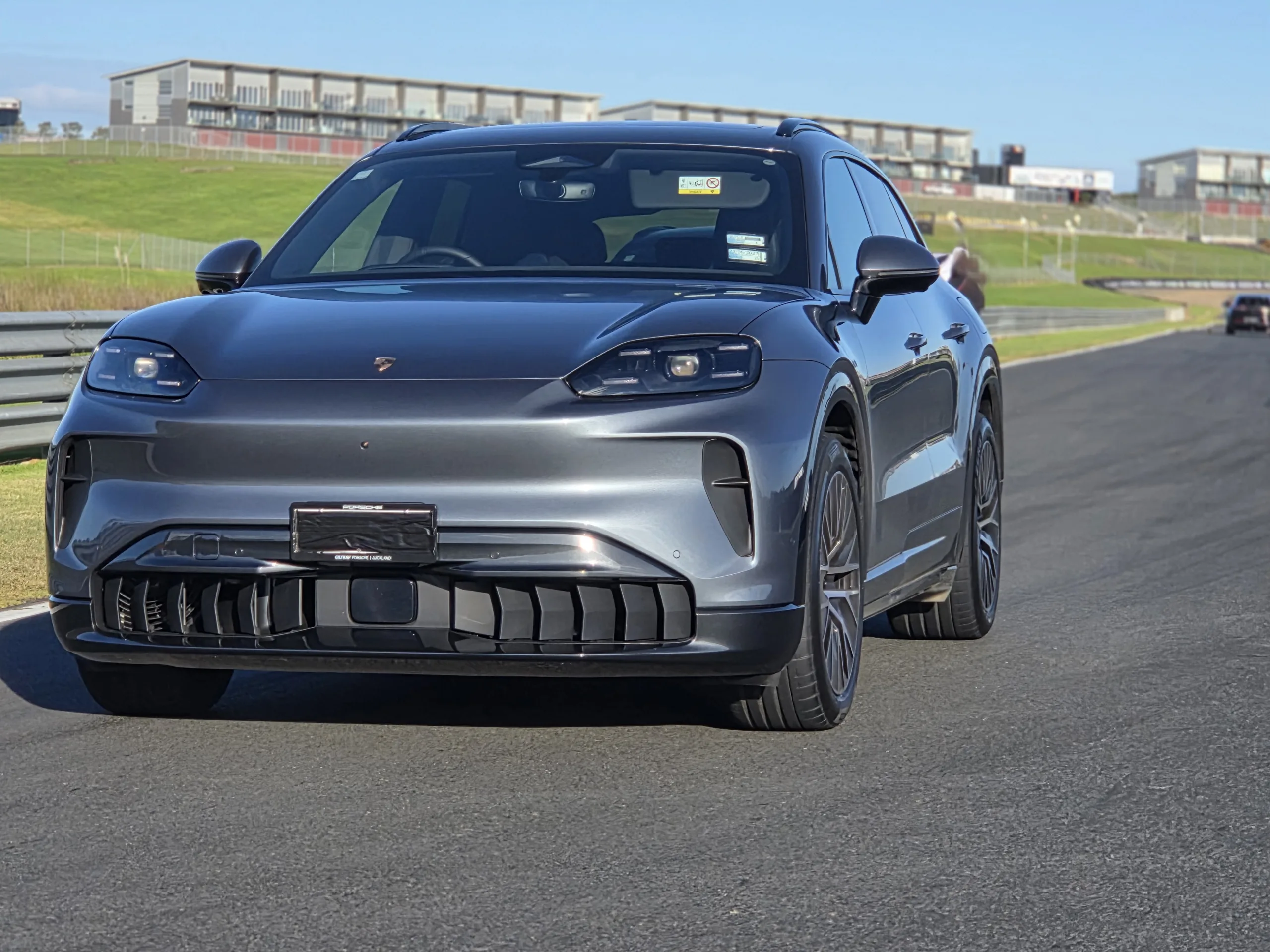
The easy headline would be “Porsche builds fastest SUV ever,” but that would miss the point. The truly impressive thing about the Cayenne Electric isn’t the acceleration, the power figures or even the technology (although I could go on and on about them), it’s how cohesive it all feels.
At Hampton Downs, this wasn’t an EV trying to convince us it could be a Porsche, it was us driving a Porsche that happened to be electric. The steering had feel, the chassis communicated, the braking inspired confidence. The SUV encouraged you to drive harder and rewarded you when you did.
Yes, the numbers are outrageous, yes, the technology borders on science fiction, and yes, the Turbo Electric’s 1,156hp output is enough to make even seasoned performance car drivers question their life choices.
But after my time behind the wheel, the biggest takeaway was surprisingly simple, the Cayenne Electric is absolutely, gloriously bonkers. It delivers genuine Porsche DNA, while silently rearranging your internal organs.
We seriously can’t wait to spend more time with it, are you listening Porsche NZ?