Let’s be honest, you’ve probably seen it. A colourful meme pops up on your social media feed, sandwiched between a video of a cat falling off a couch and your cousin’s holiday snaps. It tells a wonderful story, in Stockholm, Sweden, there’s a “speed camera lottery.” If you drive at or under the speed limit, you’re entered into a draw to win cash, and the prize pool is funded by the fines paid by lead-footed drivers.
For Kiwi motorists who often feel like Waka Kotahi’s speed cameras are little more than revenue-gathering cash cows, the idea sounds like a utopian dream. Finally, a system that rewards good behaviour instead of just punishing the bad! It’s a story that feels right. The only problem? It’s not true. At least, not anymore and not exactly.
This viral tale is a classic example of internet “fake news” a kernel of truth that’s been distorted, simplified, and shared until it’s taken on a life of its own. But before you dismiss it as just another piece of online junk, it’s worth asking a different question. While the story is fake, the idea behind it is brilliant. This is a rare case where a fake news story might actually be a good thing, because it keeps a genuinely revolutionary concept in the public conversation.
Debunking the Dream: What Really Happened in Sweden
The claim that circulates online is simple: Sweden currently operates a speed camera lottery system. However, the reality, as uncovered by fact-checkers, is a bit more complicated and a lot less current. The “speed camera lottery” was a real, but very temporary, road-safety experiment that ran for just three days in Stockholm way back in September 2010.The initiative was a collaboration between the Swedish road safety organisation NTF and the German car giant Volkswagen.
It was born out of a VW competition called “The Fun Theory,” which sought fun and engaging ways to change human behaviour for the better. The winning idea came from an American game producer, Kevin Richardson, who wondered if he could get people to obey the speed limit “for fun.” His concept was exactly what the meme describes: ticket the speeders as usual, but enter the law-abiding drivers into a lottery to win cash prizes funded by the speeders’ fines.
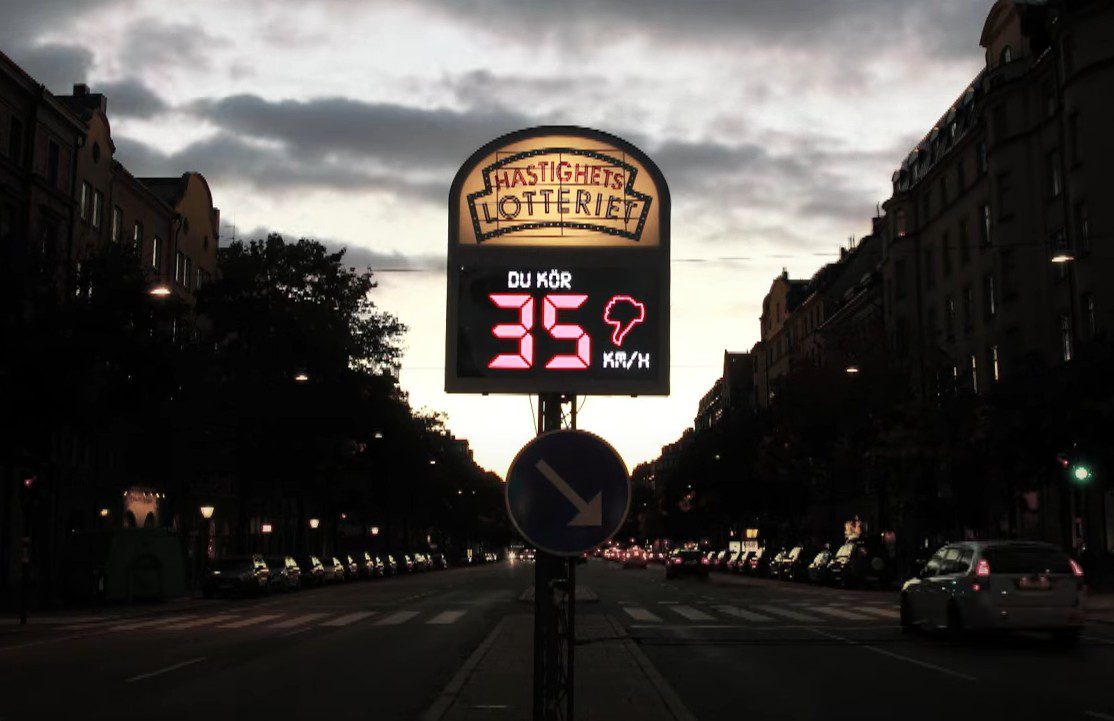
The initial trial was set up in a school zone in Stockholm. Over three days, almost 25,000 cars were monitored. Five lucky drivers won cash prizes, with one Bengt Holmström scooping the major prize of 20,000 Swedish krona (about NZ$3,200).The lottery was later tested in five other Swedish cities in 2011.However, there are two crucial details the viral meme always gets wrong. First, the experiment ended over a decade ago; it is not an ongoing program in Sweden.
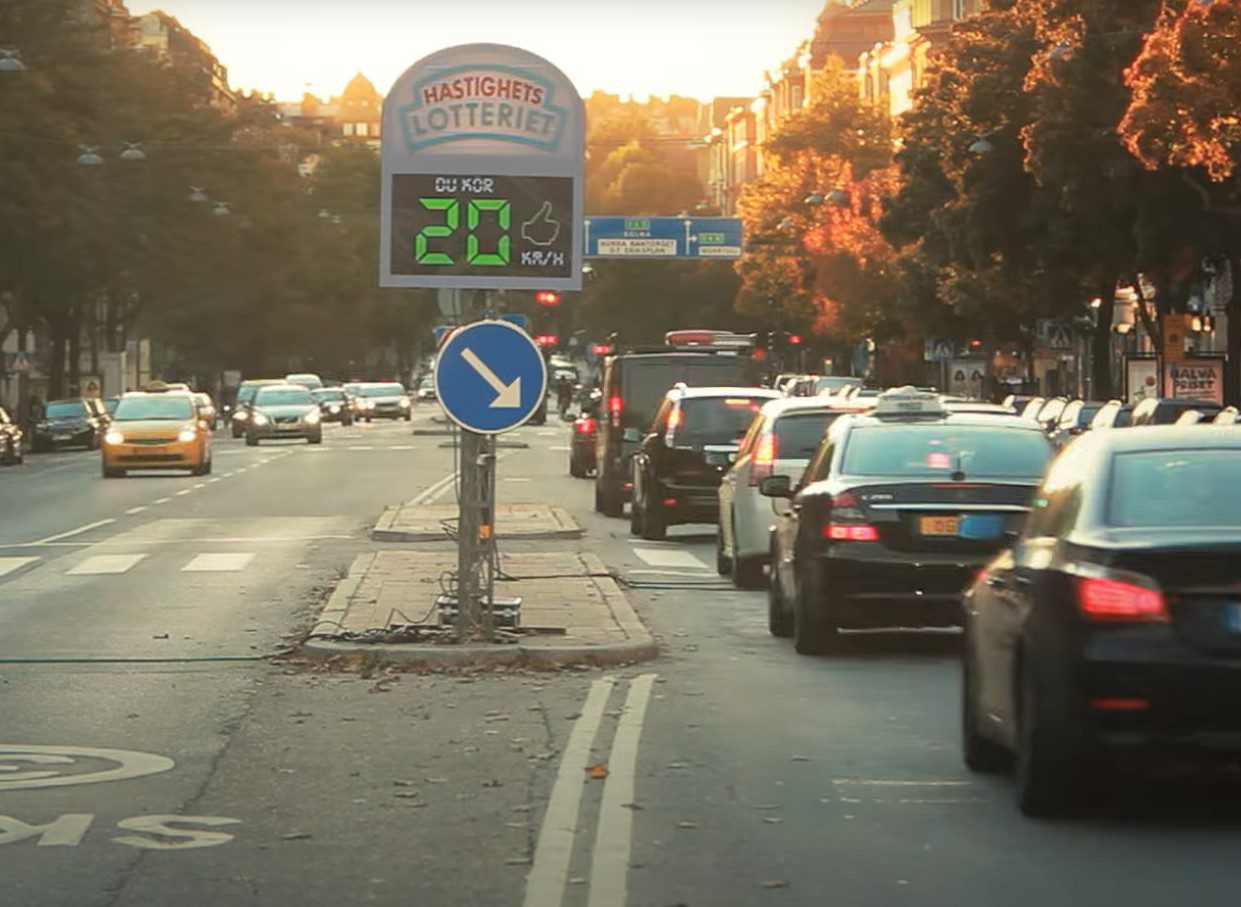
Second, despite the brilliant concept, the prize money during the trials was not funded by speeding fines. The whole project was bankrolled by Volkswagen as part of their marketing campaign.
The Fun Theory: Why Carrots Beat Sticks
So, the meme is busted. But the truly fascinating part of this story isn’t the debunking, but the result of the experiment itself. It worked. And it worked spectacularly.
During the three-day trial in Stockholm, the average speed of traffic through the monitored zone dropped by a whopping 22%, from 32km/h to 25km/h.This wasn’t achieved with more warning signs, bigger fines, or hidden cameras. It was achieved by introducing an element of fun and positive reinforcement.
The head of the NTF at the time, Jan Sandberg, explained the philosophy perfectly: “We have a saying that you should use both ‘whip and carrot’ to get the best result from people.”For decades, road safety has been all whip and no carrot. The speed camera lottery was the carrot—a small, tangible reward for doing the right thing. It gamified the mundane act of driving to the speed limit. Instead of feeling like you were being watched by a punitive Big Brother, you felt like you were participating in a game you could win.
The genius of “The Fun Theory,” the brainchild of ad agency DDB for Volkswagen, was demonstrating that positive behavioural change doesn’t have to be a drag. The campaign was a massive success for VW, boosting their market share and sales in Sweden. It proved that creating ideas people want to participate in and share is not only good for society but also good for business.
If It Was So Good, Why Did It End?
This is the big question. If the experiment was so successful at reducing speeds, why did it disappear? Why isn’t this the global standard for traffic management?
The answer, sadly, lies in the usual culprits: bureaucracy and practicality. The former head of NTF confirmed that Swedish “authorities and politicians didn’t (go) further with the idea.” In a telling admission, a spokesman for the official Swedish transport agency, Transportstyrelsen, told fact-checkers he had “high doubts” the lottery even existed and had never heard of it, highlighting the disconnect between an innovative trial and the official bodies that would need to implement it. The idea’s creator, Kevin Richardson, also suggested a more practical hurdle: novelty. He speculated that the experiment likely ended because of the cost and logistics of constantly moving it to new locations to ensure the fun didn’t wear off. Once a lottery becomes a permanent fixture on your daily commute, the initial excitement might fade.
Despite this, Richardson noted that he’s been contacted by governments all over the world asking how to implement the idea.The desire is there, but bridging the gap between a clever, privately-funded experiment and a large-scale, publicly-funded policy is a challenge that, so far, no one has overcome.
Why We Want to Believe – The Story That’s Too Good to Be False
This brings us back to the persistent “fake news” story. Every year or two, the meme gets a fresh coat of paint and does the rounds again, racking up thousands of shares from hopeful drivers across the globe.Why does this particular myth have such staying power?
It’s because the idea is simply too good to be false. It taps into a deep-seated feeling among motorists that the current system is unfair and purely punitive. The concept of using fines from rule-breakers to reward those who follow the rules feels like a perfect, closed-loop system of justice. It’s elegant, simple, and empowering.
In this light, the constant revival of the speed camera lottery story is less about spreading misinformation and more about collective wishful thinking. Each share is a vote for a different approach. It’s a grassroots digital protest against the endless proliferation of speed cameras that seem to do little more than sting our wallets. The “fake news” story survives because it keeps a genuinely good idea alive in the public imagination, prompting us to ask, “Why don’t we do this here?”
So, the next time this meme lands on your feed, don’t just roll your eyes. See it for what it is: a slightly confused but well-intentioned reminder that there are better, smarter, and more creative ways to think about road safety. While the story may be fake, the idea it represents is pure gold. And who knows, maybe if we talk about it enough, some innovative mind at Waka Kotahi or even a forward-thinking brand might just be listening.
What do you reckon? Could a carrot-and-stick approach like the speed camera lottery ever work on Kiwi roads?