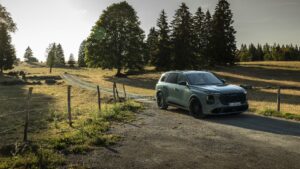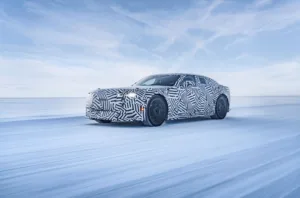
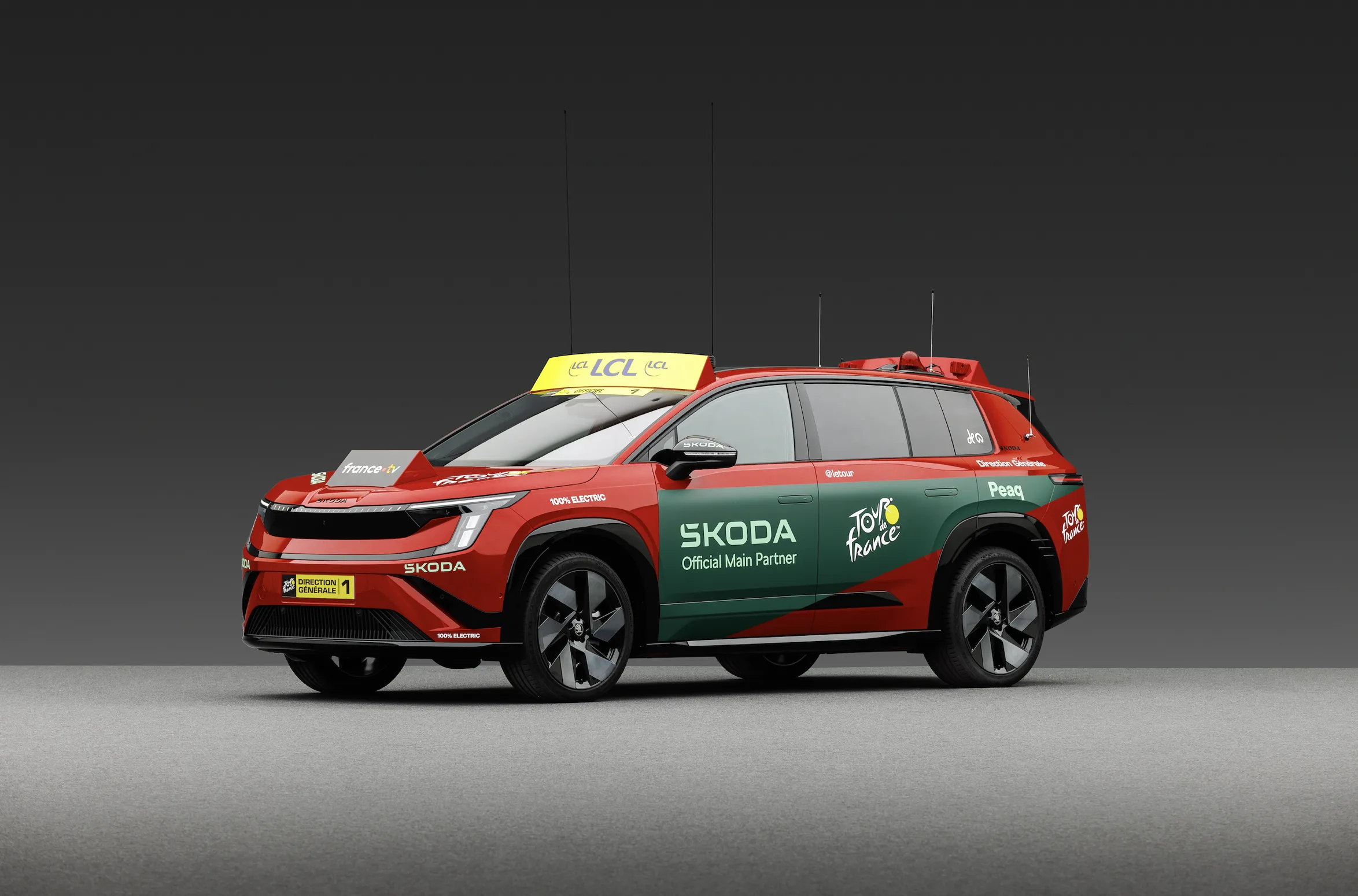
The red director’s car is one of cycling’s most recognisable symbols, and this year it wears a new badge. Škoda’s freshly unveiled Peaq electric SUV makes its Tour de France debut as the race director’s mobile headquarters, joining the Czech brand’s fleet for the twenty-third consecutive year as official vehicle partner.
A Bespoke Build, Not a Simple Wrap Job
The car is far more than a liveried production model. Škoda pulls the Peaq from its assembly line mid-production (after body components are fitted but before painting) to carry out the necessary modifications. It then returns to the line for painting alongside the new elements, ensuring a factory-quality finish.
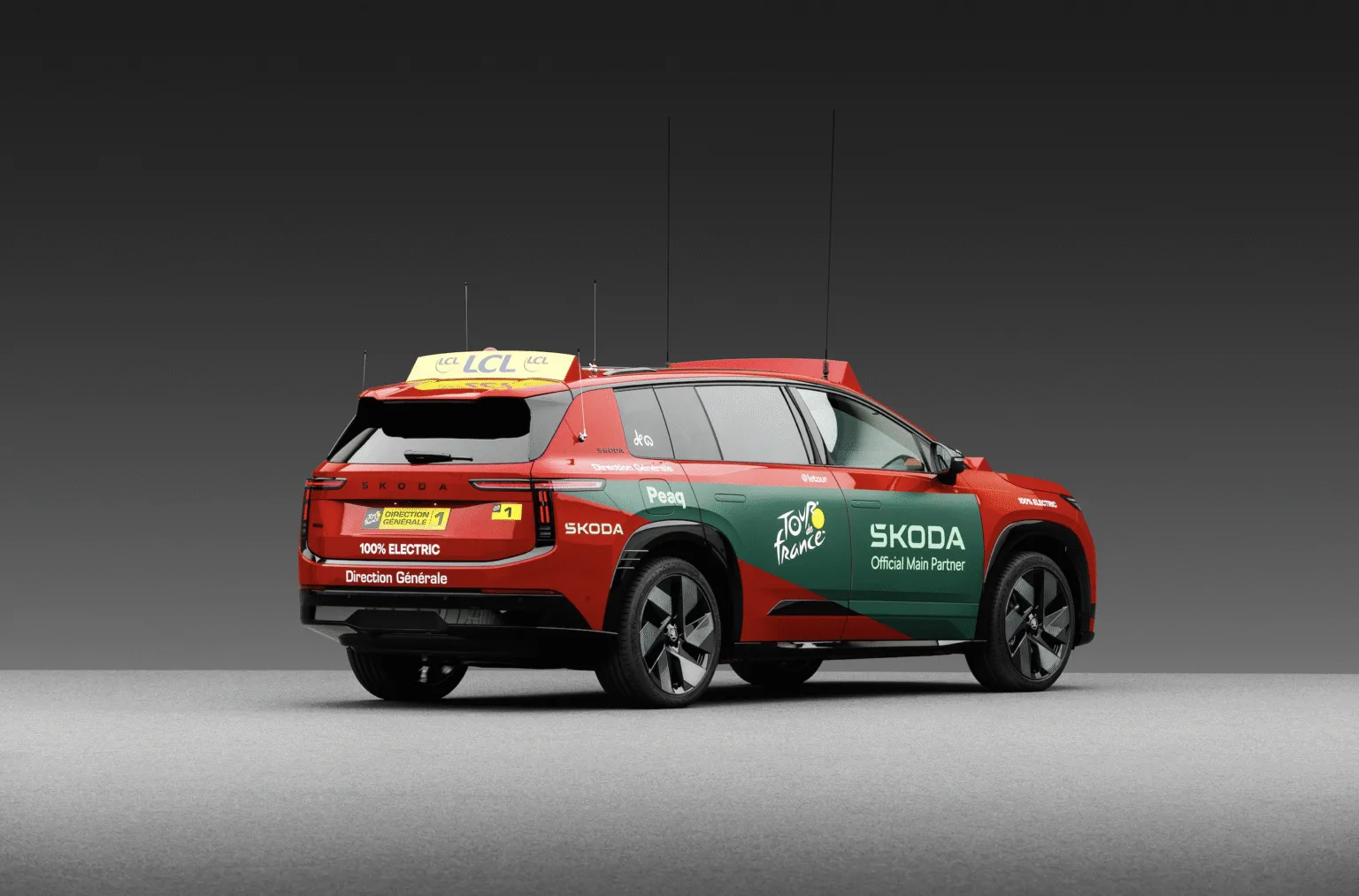
The base vehicle is the all-wheel-drive Peaq 90x Sportline. Six radio antennas are mounted directly into the bodywork, and the communications control unit and battery pack occupy the luggage compartment where the third-row seats would normally sit. That additional equipment adds roughly 150 kilograms to the car’s kerb weight. The system can run for two to three days on a single charge, though the team recharges it daily to avoid any risk of failure during the race.
Permanent supports for advertising banners are fitted above the windscreen and on the bonnet, and bespoke graphics are produced for each car. A windscreen pictogram of three cyclists references Škoda’s origins as a bicycle manufacturer, a detail that has carried through the brand’s Tour involvement for years.
The Roof Modification That Caused the Most Headaches
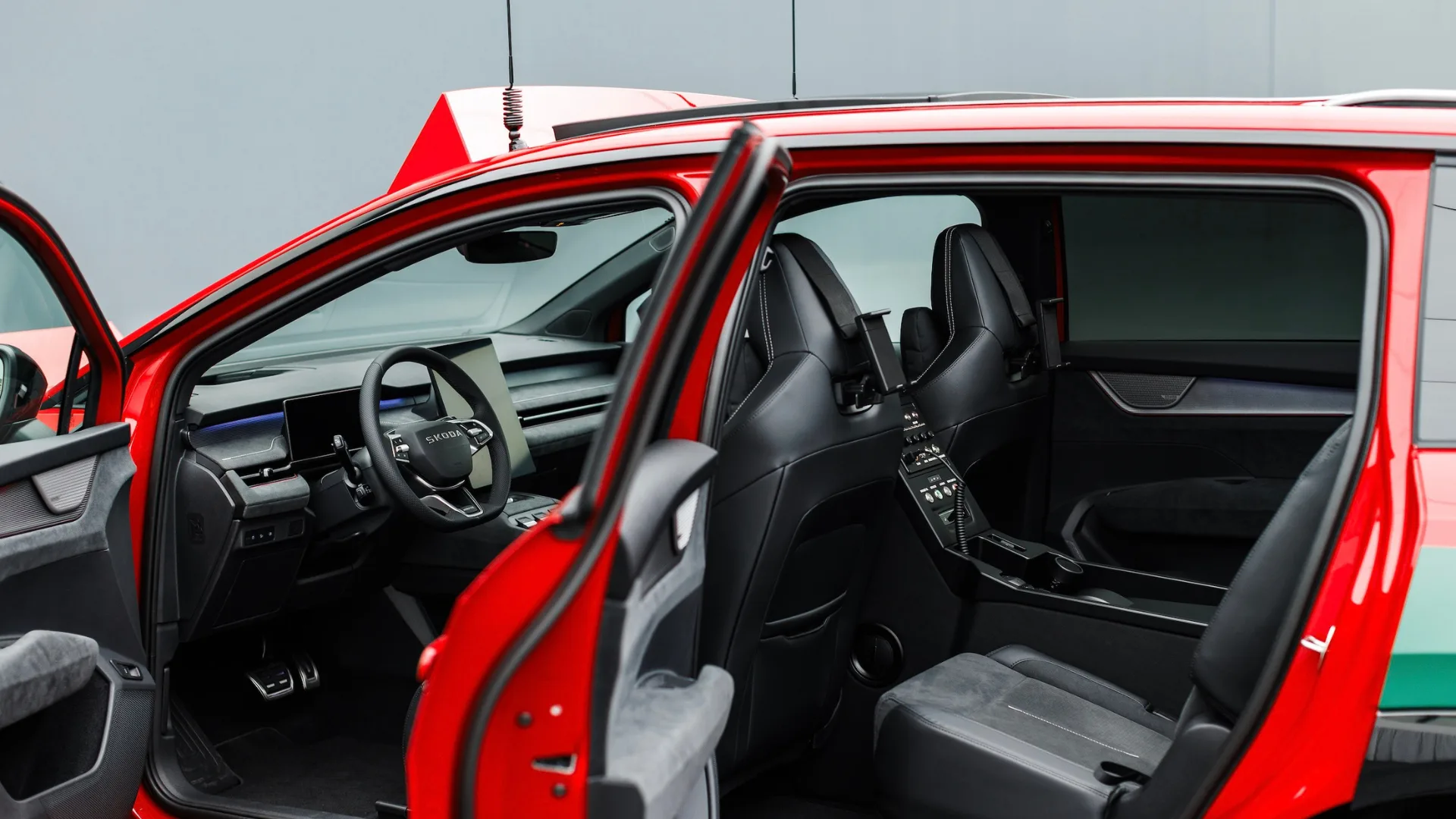
The most technically demanding change involves the panoramic roof. In standard form, the Peaq’s full-length glass roof opens from front to rear. The director’s car requires the opposite: it must open from rear to front, allowing race director Christian Prudhomme to stand safely on the rear seat to officially start individual stages.
Škoda’s solution was to take a roof module from another production model and install it rotated 180 degrees. Engineers had to ensure the reversed mechanism maintained adequate headroom for occupants, a constraint that left little margin for error. It is the kind of detail that sounds straightforward until you are actually doing it.
Inside the Mobile Command Centre
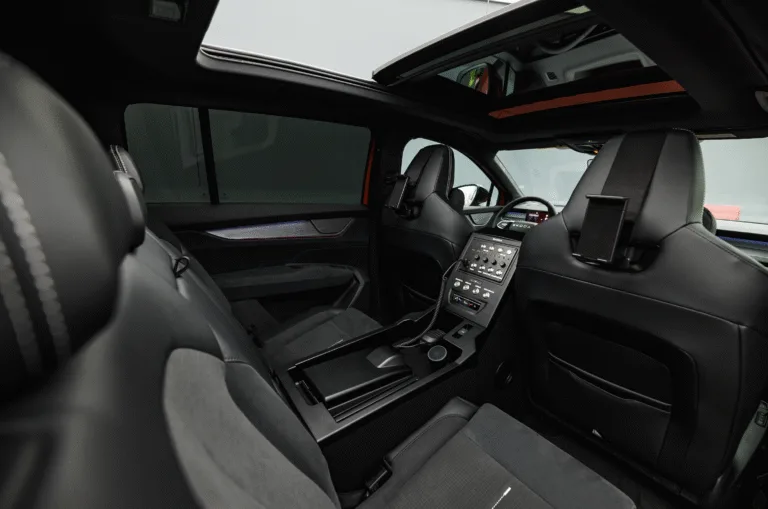
The production Peaq seats up to seven, but the director’s car accommodates only four. Prudhomme sits behind the driver; the centre rear position is replaced by a console housing a table and a refrigerator; and the remaining rear seat is reserved for guests. Past passengers have included the President of France.
A compressed-air horn with a distinctive sound (noticeably different from a standard car horn) allows riders in the peloton to identify the approaching director’s car even at distance. It is a small but practical detail that reflects how closely the vehicle operates within the race itself.
Drivers, many of them former professional cyclists, complete extensive testing before the event begins to familiarise themselves with the car and learn how to move safely within the peloton. Škoda says a pre-Tour test event with the Peaq has already taken place successfully.
Froome Joins from the Other Side of the Windscreen
Four-time Tour winner Chris Froome, now a Škoda cycling ambassador, will follow this year’s race from inside the director’s car rather than ahead of it. He recalls the red car as a key tactical reference point during his racing career, particularly on crosswind stages where positioning behind it was fiercely contested.
The Peaq’s Tour de France role is a meaningful real-world test for the newly launched model. Covering the entire race route under working conditions, in front of a global audience, is a more demanding showcase than any press launch could provide.