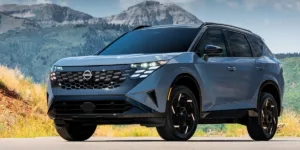
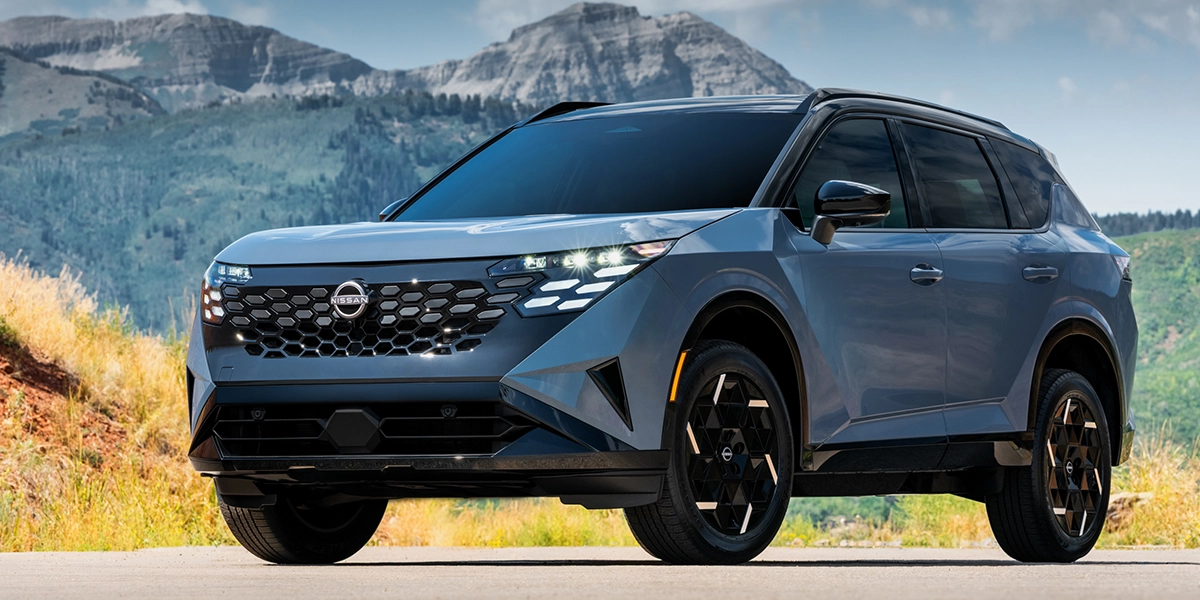
Nissan has outlined the 2027 Rogue Hybrid’s main changes: a quieter cabin, an automated “limo stop” brake feature and a revised ProPILOT Assist with hands-off driving in traffic jams.
Nissan’s plan for winning America’s most crowded segment doesn’t rely on more power or a bigger badge. Instead, it wants the 2027 Rogue Hybrid to be quieter. The brand has set out three areas of focus: a quieter cabin, smoother stopping and a revised ProPILOT Assist driver assistance system.
The stakes are high. According to Nissan, crossover SUVs are the most popular vehicle class in the US, so standing out is hard. Nissan calls the result the most refined Rogue yet. Bear in mind that this verdict comes from its own engineers, not from independent testing.
Engineering Out the Noise
Nissan says a quiet cabin was a top priority. Engineers added sound-deadening material in noise-prone areas such as the wheel wells. The body was also shaped to reduce wind noise, with concealed wipers, door-mounted mirrors and slim roof rails.
The optional ventilated front seats also got attention, with a new design that Nissan says makes less noise. Research and development engineer Derek Johnson says passengers in both rows can talk normally at motorway speeds. Nissan also highlights soft-touch materials, its Zero Gravity seats and what it says is the most front headroom of any hybrid in the class.
A Chauffeur’s Trick, Automated
Professional drivers learn to ease off the brake just before the car stops, so passengers don’t lurch forward. Nissan has automated this “limo stop” with a feature called Smooth Stop, which it says is a first in the class. The driver just holds the brake pedal down and the system adjusts the pressure.
Nice. Anyone who has nodded along in the back seat through stop-start traffic will see the appeal. The Rogue Hybrid also gets e-Pedal, which lets the driver speed up and slow down with the accelerator alone in certain conditions.
Simpler Tech, Smarter Assistance
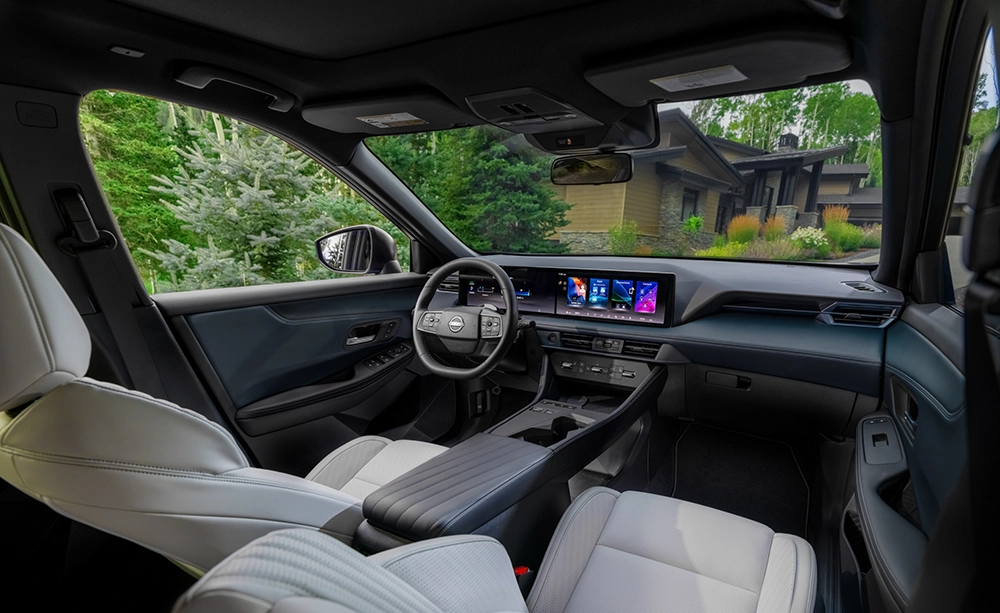
Nissan says ease of use guided the cabin technology. Highlights include optional dual 14.3-inch displays, standard Apple CarPlay and Android Auto, a standard Qi2 wireless charger and a suite of standard safety systems.
The bigger story is ProPILOT Assist, which every Rogue Hybrid gets as standard. Engineers developed it through extensive real-world driving, much of it in California’s traffic jams and on its mountain roads. A front camera with a 20% wider field of view helps the system detect objects up to 33% further away. Nissan says that lets the car respond up to two seconds sooner at 70mph (about 113km/h).
Johnson says the system now speeds up and slows down more smoothly, stays closer to the centre of the lane and works on more types of road. The digital instrument display also has new graphics that show nearby vehicles.
Hands-Off in Traffic Jams
The headline feature is ProPILOT Assist with Hands-Off Traffic Jam Support. It’s optional on the SR and standard on the Platinum. Below 30mph (about 48km/h), it can steer, brake and accelerate without the driver touching the wheel or pedals.
At motorway speeds, one tap of the indicator stalk starts an automatic lane change once the system detects a gap. For this, the driver’s hands must stay on the wheel.
Built for the Daily Grind
None of this will get the pulse racing, and Nissan isn’t pretending it will. The changes target what most crossover owners deal with every day: road noise, jerky stops and long commutes. This announcement doesn’t include powertrain figures or pricing. Still, it shows where Nissan thinks family buyers will notice a difference: in heavy traffic rather than on the spec sheet.