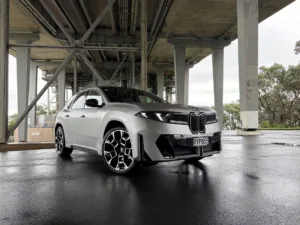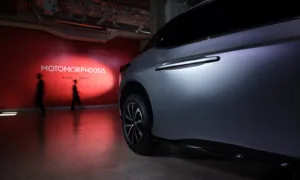
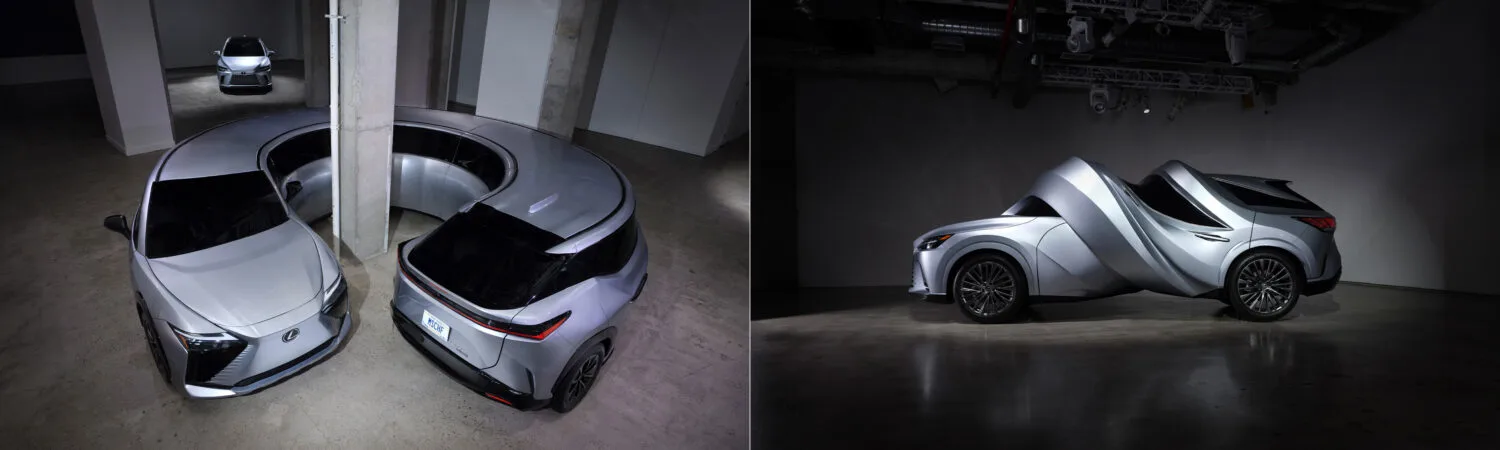
Lexus gave an RZ 450e and an RX 450h+ to Brooklyn art collective MSCHF, which turned them into a looped car and a spiralled car for the MOTOMORPHOSIS exhibition during New York’s Armory Week.
What happens when a car maker hands its vehicles to an art collective and asks it not to build a car? Lexus found out. Brooklyn-based MSCHF bent two of its electrified models into shapes that look like they belong on a computer screen rather than a street.
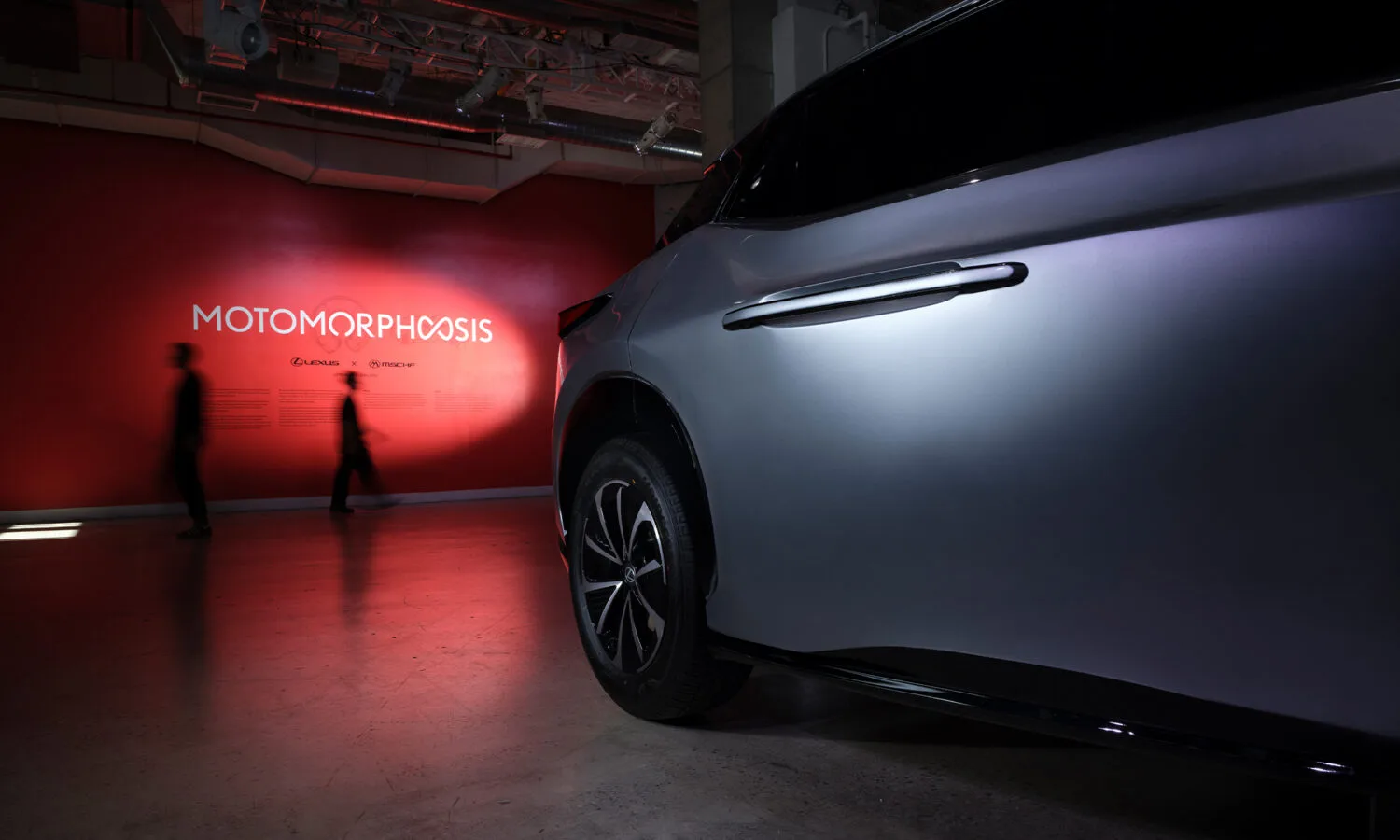
The results went on show at MOTOMORPHOSIS, a joint exhibition held during New York’s Armory Week. Lexus says the project began with one question: could electricity make people feel the way art does?
Two Cars, Two Distortions
MSCHF worked with two production models. It reshaped the all-electric RZ 450e into a continuous loop called Circle Car, meant to suggest endless motion. It pulled the RX 450h+ plug-in hybrid into a sweeping spiral, now known as Twisted Car.
Both pieces stay instantly recognisable as Lexus models. That is the point. The exhibition placed each sculpture beside an unmodified version of its source vehicle, so visitors could compare the familiar shape with its distorted twin.
Flipping the Concept Car
In an interview published by Lexus, MSCHF Chief Creative Officer Kevin Wiesner said the idea grew out of the industry’s concept car habit. Concept cars often explore the future, sometimes with little link to reality. MSCHF chose to reverse that and treat the car purely as form.
His logic was simple: if a Concept Car exists, so must a “Form Car”. It is a neat joke, and also a fair jab at how far some show cars drift from anything buyers can purchase.
Wiesner also linked the project to Lexus’s own approach to electrified vehicles, which he described as sharing themes of reinvention. That framing comes from a commissioned partner, of course, speaking in a brand-published interview.
How the Sculptures Were Built
The unusual shapes still rely on familiar trade skills. Each sculpture starts with a steel armature. Thousands of individual pieces then join together to form the skin.
The paint and clear coat follow much the same process as a typical body shop. According to Wiesner, the toughest part was combining these established methods at scale. The team also had to make the finished pieces transportable enough to install.
Real Objects in an AI Age
Images of impossible objects now tend to get dismissed as AI fakes. Wiesner argued that these forms follow the consistent rules of 3D modelling software. AI imagery, in his view, lacks that underlying logic and is “all surface”.
He suggested that blurred lines between real and unreal online may actually make physical builds like these more powerful. He also said even photos of the cars being moved through New York looked oddly fake.
One reaction stood out to him most. Visitors kept sincerely trying to open the doors.
Why It Matters
There is no new model, no specification sheet and no production plan here. This is brand-building through art, and Lexus is clearly using MSCHF’s reputation to make its electrified range talked about outside the usual motoring circles.
Still, the door-handle detail says plenty. Even twisted into a spiral or a loop, a well-proportioned car keeps its pull, and people still want to climb inside.