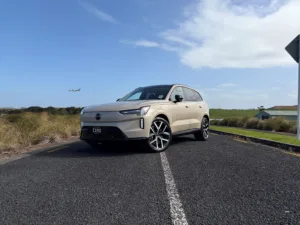
In a challenging New Zealand automotive market, Suzuki continues to punch well above its weight. According to insights from Suzuki New Zealand’s Gary Collins, the brand, a specialist in small vehicles, has carved out a formidable position through strategic planning, a loyal customer base, and a clear vision for the future. Despite market-wide headwinds, Suzuki is leveraging its global strength and a pragmatic approach to technology and regulation to not just survive, but prepare for future growth.

Resilient in a Downturn
While the New Zealand auto market has been sluggish, tracking down 3.1% year-on-year as of May, there is a quiet optimism for a turnaround. Collins anticipates that reductions in interest rates and healthy payouts in the farming and horticultural sectors will eventually stimulate consumer spending. Although he doesn’t expect a return to the stimulus-fueled sales highs seen post-COVID, a recovery is on the horizon, with the passenger and SUV market already showing a 6.8% uptick on the previous year.
This resilience is core to Suzuki’s New Zealand story. At its peak in 2022, bolstered by the Clean Car Discount, the company sold nearly 8,500 units. Today, even with the discount gone and new challenges emerging, Suzuki has retained the sixth position in the overall market and fourth in the crucial passenger and SUV segment. This is a significant achievement, placing it ahead of brands with far more extensive model lineups.

The brand’s success is built on key models and customer loyalty, consistently recognised with Canstar Blue awards for both sales and dealership servicing. The Suzuki Swift remains the company’s “dominant model range” and the clear leader in the light passenger segment, a position it has held for 19 of the last 20 years. The strategy is to double down on this strength by retaining the popular third-generation Swift while introducing a new Swift Hybrid range. The Jimny lineup has also been a major success, expanding to include a 5-door variant and becoming the brand’s second-largest offering.
Global Strength and a Sustainable Vision
Suzuki New Zealand’s local success is backed by a powerful global corporation that is experiencing record growth. Following a leadership transition to Dr. Toshihiro Suzuki, the company built on the legacy of Osamu Suzuki, whose most important decision was entering the Indian market, now the “cornerstone to Suzuki’s international success”.

In the 2024 financial year, Suzuki International hit record highs with 3.24 million units sold (across both automobile and motorcycle divisions) and revenues reaching NZ$65 billion. This growth is being supported by investment in new production facilities, particularly in India, which now with 4 plants, has the capacity to produce 2.6 million units annually.
Guiding this global expansion is a unique philosophy: “Sho-Sho-Kei-Tan-Bi,” meaning “smaller, fewer, lighter, shorter, beauty”. This principle is Suzuki’s answer to sustainability, focusing on compact, lightweight vehicles that reduce resource consumption during production and lower emissions during use. A tangible result of this is the new, highly efficient Z12E engine found in the new Swift, which achieves an impressive 40% maximum thermal efficiency.
This philosophy feeds into a “multi-pathway approach” to achieving carbon neutrality. Rather than betting on a single technology, Suzuki is developing a portfolio of pure electric vehicles (EVs), hybrids, and vehicles running on CNG and biofuels to suit the varied regulations and energy situations of markets around the world.
Navigating New Zealand’s Shifting Policies
This flexible, multi-pathway strategy is crucial for navigating New Zealand’s “very unstable market,” where emission policies have seen dramatic implementation and alteration. While the Clean Car Discount has been abolished, the Clean Car Standard remains. A recent review of the standard has provided some relief, making the 2026 and 2027 reduction targets “far more achievable”. This has given Suzuki a more suitable timeframe to renew its model lineup in collaboration with the parent corporation.

However, the pressure mounts significantly from 2028, making it “important that we have the mix of electric vehicles incorporated into our model lineup at that time”. Another challenge is that the current penalty calculation formula disadvantages the very small, light vehicles Suzuki specialises in. The brand argues that as all vehicles get heavier due to electrification, this formula needs adjustment.
The Road Ahead: New Models on the Horizon
Suzuki is well-prepared for the future. The company is ready for the implementation of Euro 6d emission standards for new models from December 2025, which will not interfere with its planned introductions.
Exciting new products are on their way to the New Zealand market. The all-new Suzuki Fronx crossover has now just launched, and the highly anticipated all-electric eVitara is slated for introduction next year. Alongside these new vehicles, Suzuki will continue with popular mainstays. The Ignis, a favorite among older demographics for its practicality and efficiency, will continue to be sold well into 2026, even as it is discontinued in Australia.

Through a combination of proven winners, strategic new entries, and a flexible global approach, Suzuki New Zealand is well-placed to continue its legacy as the market’s quiet achiever.