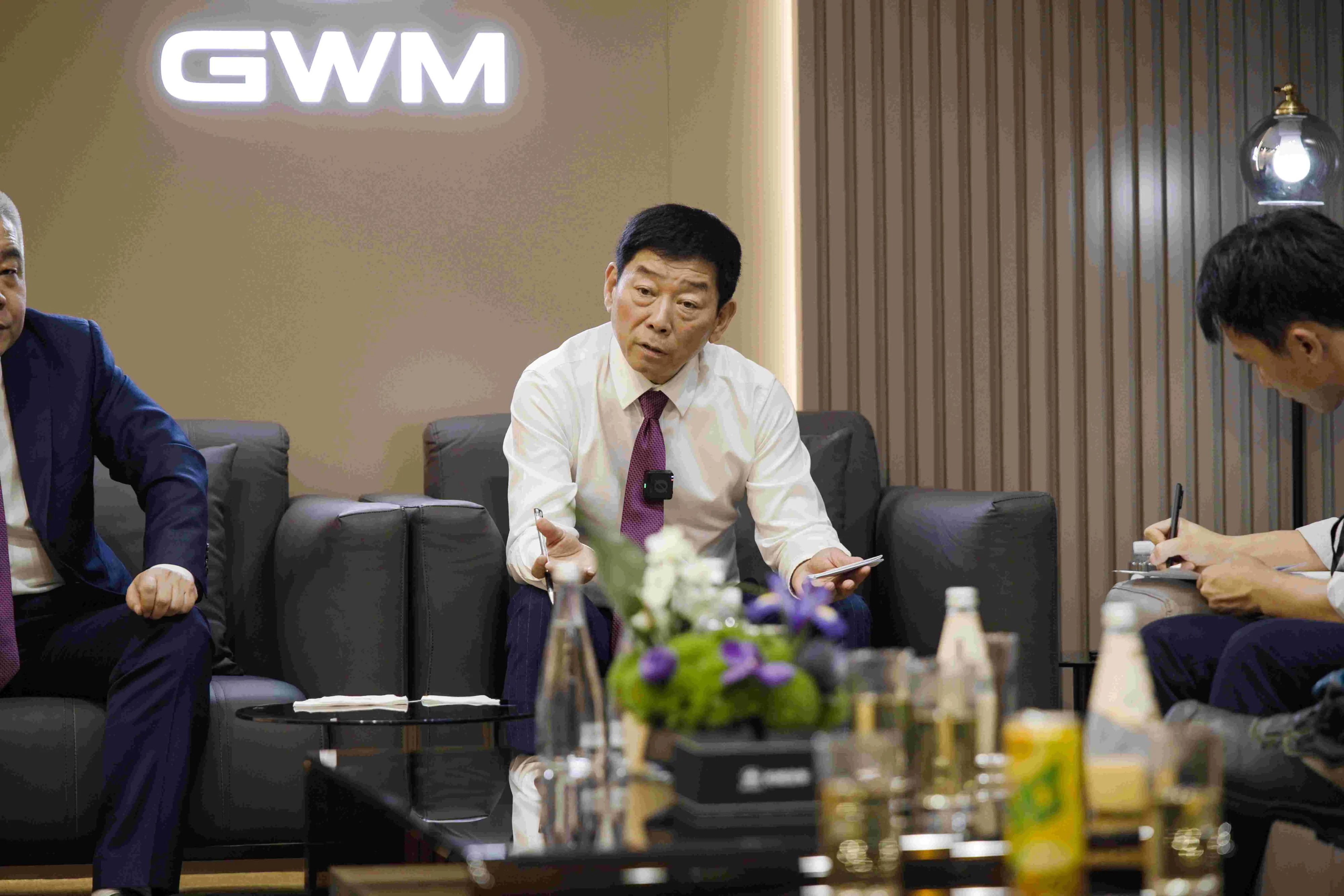
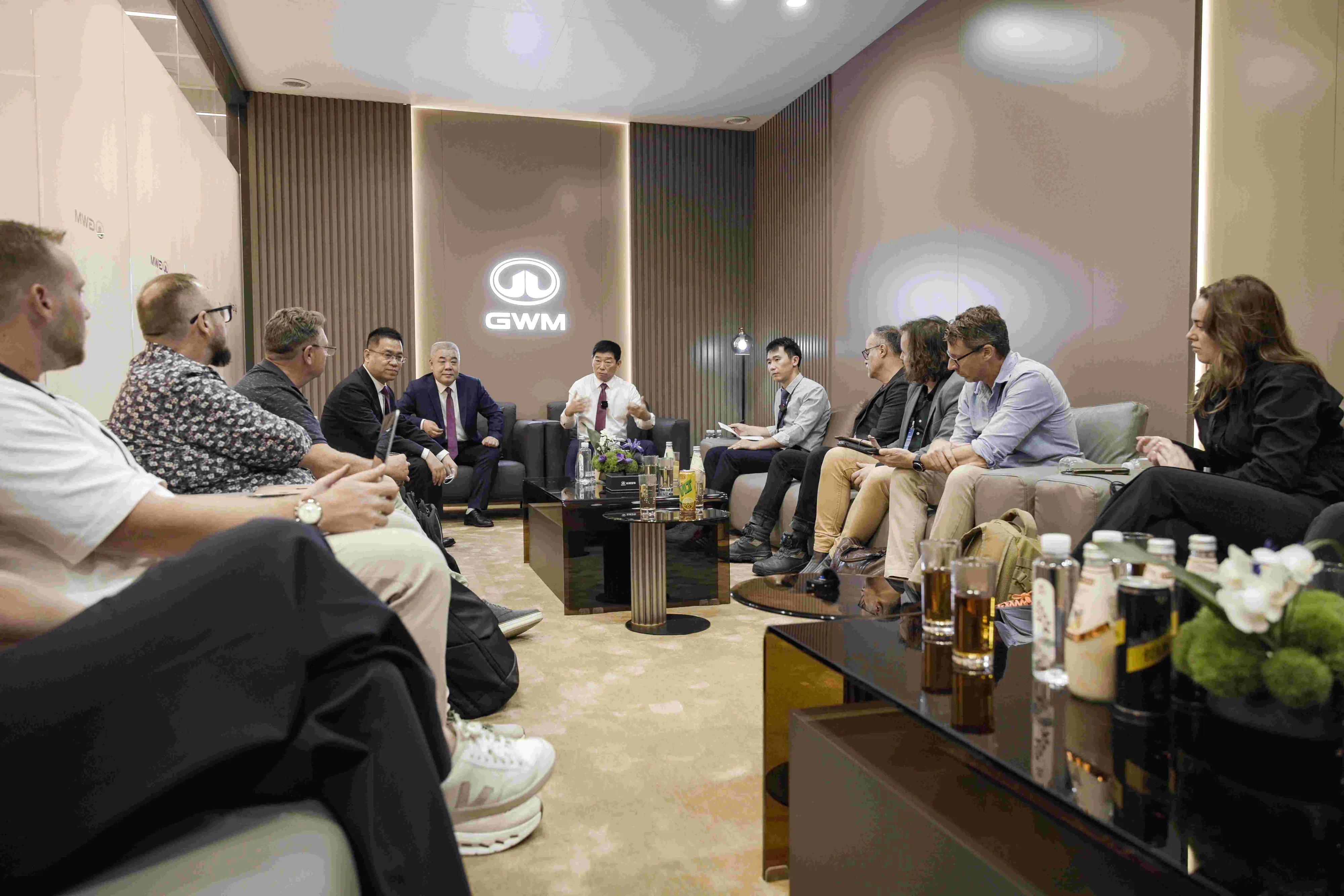
If you were expecting Great Wall Motor to toe the industry line (full EV, minimal noise, maximum compliance) GWM Chairman Jack Wei clearly didn’t get that memo. Because sitting down with him for an intimate interview at Auto China 2026, he laid out something far more interesting, a strategy that zigzags where others go straight.
You see, while much of the global industry is busy funnelling everything into battery electric vehicles, GWM is hedging its bets, deliberately, unapologetically, and with a surprising amount of confidence. And honestly? It might just work.
Playing the Long Game (and Not Chasing Toyota… Yet)
Let’s get the obvious question out of the way. Can GWM take on Toyota?
According to Mr Wei, the short answer is not directly, however, the long answer is, they don’t want to – at least not in the way you’d expect.
Wei’s approach is less about outright domination and more about endurance. He’s not chasing quick wins or short-term volume spikes. Instead, GWM is focused on building something that lasts, market by market, region by region. That means understanding a simple truth that’s becoming oddly rare in the EV gold rush, not every country is ready for the same solution.
For example, Russia is too cold for EV reliability. Brazil? Infrastructure is still catching up. Australia and New Zealand? A mixed bag of long distances, harsh conditions, and varied customer needs. So rather than forcing a single global answer, GWM is building a portfolio, (SUVs, utes, hybrids, EVs) each tailored to where it actually needs to live. It’s less Silicon Valley disruption, more pragmatic world-building.
Powertrain Diversity – The Anti-Hype Strategy
While many Chinese brands have gone all-in on EVs and plug-in hybrids, GWM is deliberately spreading its bets. Wei calls it “powertrain diversity.” In practice, it means everything from traditional internal combustion through to hybrids, diesel hybrids, and EVs, all coexisting. And this isn’t indecision. It’s strategy.
Because the uncomfortable truth is this, the global transition to electrification isn’t happening evenly. Infrastructure, regulation, and consumer readiness vary wildly. GWM’s approach acknowledges that instead of pretending it doesn’t exist. It’s not flashy, but it’s grounded. Some would say ‘common sense’.
Diesel Isn’t Dead (and GWM Wants to Prove It)
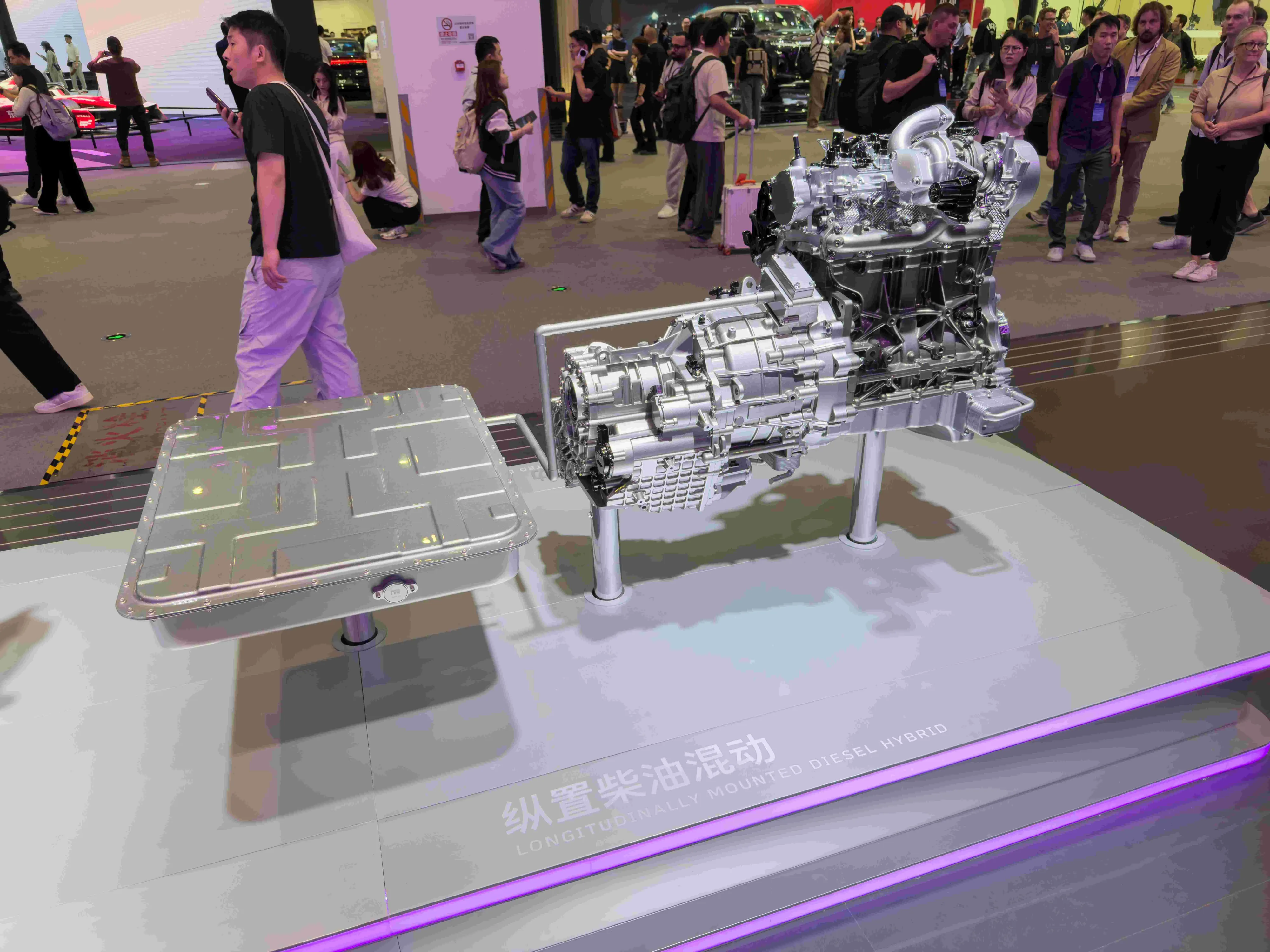
Here’s where things get properly spicy. While Europe has spent the last few years backing away from diesel, GWM is leaning back in,but with a twist. Wei argues that diesel has been unfairly labelled as “dirty,” especially given how modern systems can clean it up. And GWM’s answer isn’t to defend old-school diesel, it’s to reinvent it.
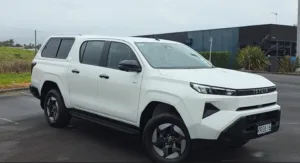
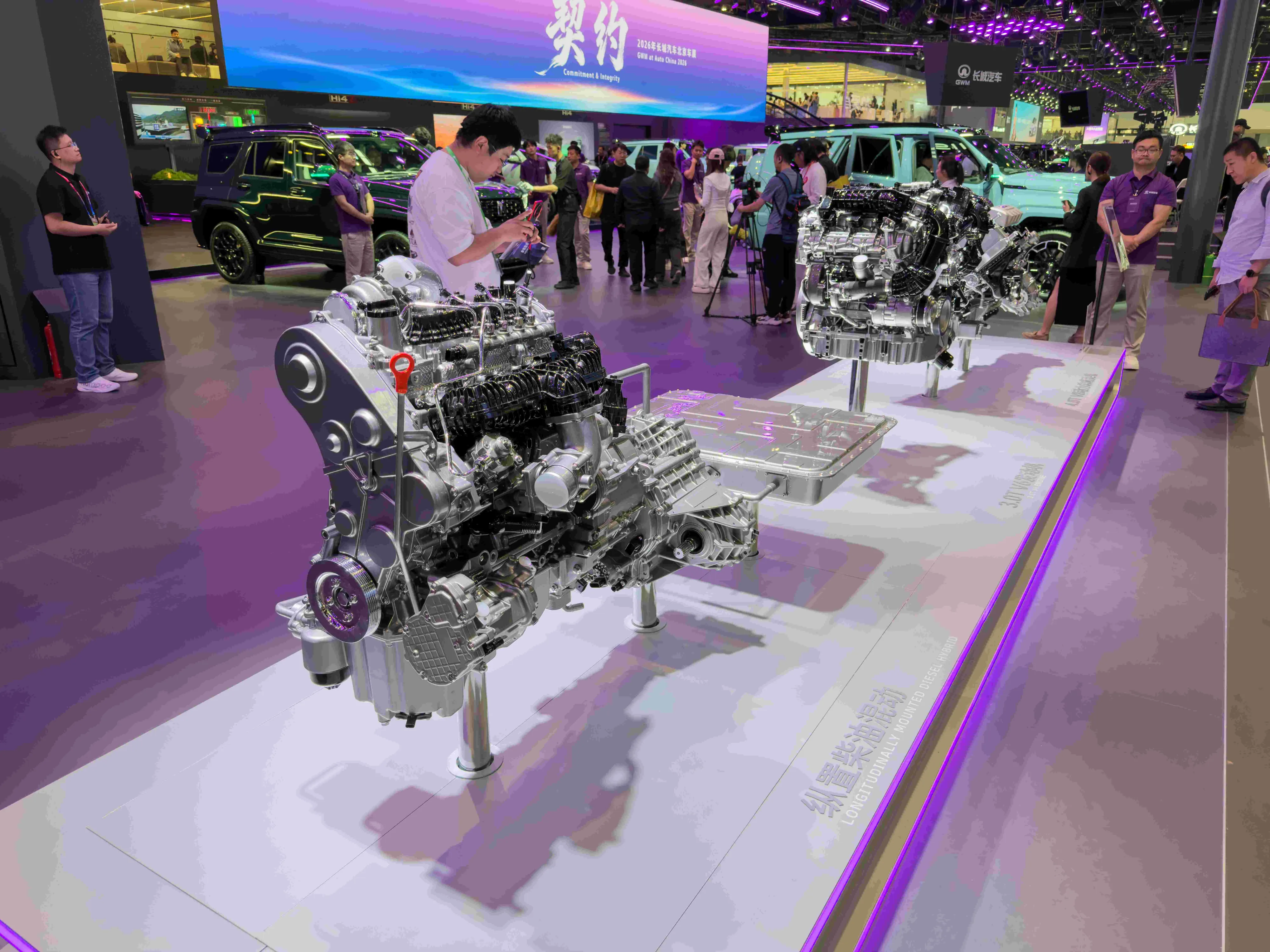
Enter diesel hybrid tech. Their Hi4-T system has been quietly developing for six years, and the results are surprisingly compelling. Around 15% fuel savings in normal conditions, up to 30% in tougher environments (think Australia). Reduced lag thanks to electric assistance. And noise levels comparable to petrol at cruising speeds. In other words, it fixes the classic diesel complaints (slow response and clatter) while keeping the efficiency and torque people love.
In a world obsessed with EV purity, it’s a bit like showing up to a vegan dinner party with a perfectly cooked steak and saying, “Just hear me out.”
EVs… But Not the Way You Think
GWM isn’t anti-EV. Not even close. But Wei is very clear about what EVs should be urban solutions. That means smaller, more efficient, city-focused vehicles (like the Ora range) rather than giant electric SUVs trying to defy physics (and battery weight). It’s a slightly old-school view of EV philosophy, but it makes sense. Big EVs are expensive, heavy, and resource-intensive. Smaller ones? That’s where electrification shines. So yes, GWM will expand its EV lineup, but don’t expect a fleet of oversized electric tanks anytime soon.
Wait… Did Someone Say V8?
Now we get to the part that feels almost rebellious. While the rest of the industry is downsizing engines and whispering about emissions, GWM has been developing a V8. Actually, two. One for high-performance applications. One for off-roaders like the Tank 700.
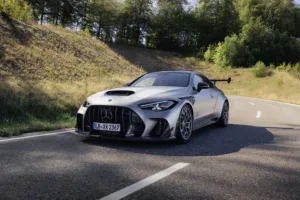
And if that wasn’t enough, there’s also a supercar in the works, benchmarking none other than Ferrari. Yes, really. The performance arm, dubbed GWM GF, is aiming for a 2027 reveal. And while details are still thin, the intent is clear, this isn’t just a halo project, it’s another arm to the brand..
Of course, there’s a catch (because there always is in 2026). These V8s won’t live in isolation. Hybridisation will play a role, helping meet CO₂ targets while still delivering the kind of performance buyers expect. So it’s not a nostalgic throwback. It’s a modern reinterpretation. Still, a V8 supercar from GWM. That’s not something anyone had on their bingo card five years ago.
Motorsport – The Missing Piece (For Now)
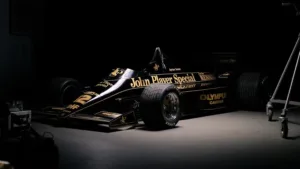
Motorsport is firmly on GWM’s radar, but they’re playing it carefully. They’ve already dabbled in long-distance rallying in China, tackling brutal 8,000km desert events with production-based vehicles. They’ve also stepped into FIA T2 categories. The big prize? Dakar. GWM had considered it before but pulled back due to limited visibility in China. Now, with a stronger global focus, that could change.
And it doesn’t stop there. The upcoming supercar platform is expected to spawn a GT3 racer, and potentially a road-going GT3-style car to match. Motorsport, in Wei’s view, isn’t just about racing. It’s about credibility. Brand building. Proving capability on the world stage.
Tarmac Takeaway – A Different Kind of Confidence
What stands out most from our interview with Mr Wei isn’t any single product or technology. It’s the mindset.
While much of the automotive world feels like it’s converging (toward EVs, toward software-defined vehicles, toward a singular future) GWM is doing the opposite. It’s diverging. EVs for cities, Diesel hybrids for tough markets, V8s for performance and brand building, Motorsport for global credibility.
It’s messy. It’s complex. And it goes against the neat, tidy narrative the industry loves to sell. But it’s also refreshingly honest. Because the road to the future probably isn’t a straight line. And GWM seems perfectly comfortable taking the scenic route.