Ford has admitted that artificial intelligence alone could not fix its vehicle quality problems, and has spent the past three years quietly rehiring the experienced engineers it once let go. It is a candid acknowledgement from one of the industry’s most vocal AI adopters.
The Problem AI Couldn’t Solve
According to Bloomberg, Ford hired 350 veteran engineers over the past three years to address quality issues that have cost the company billions in warranty claims and recalls. Many of those brought back are former Ford employees and supplier specialists with deep product-cycle experience.
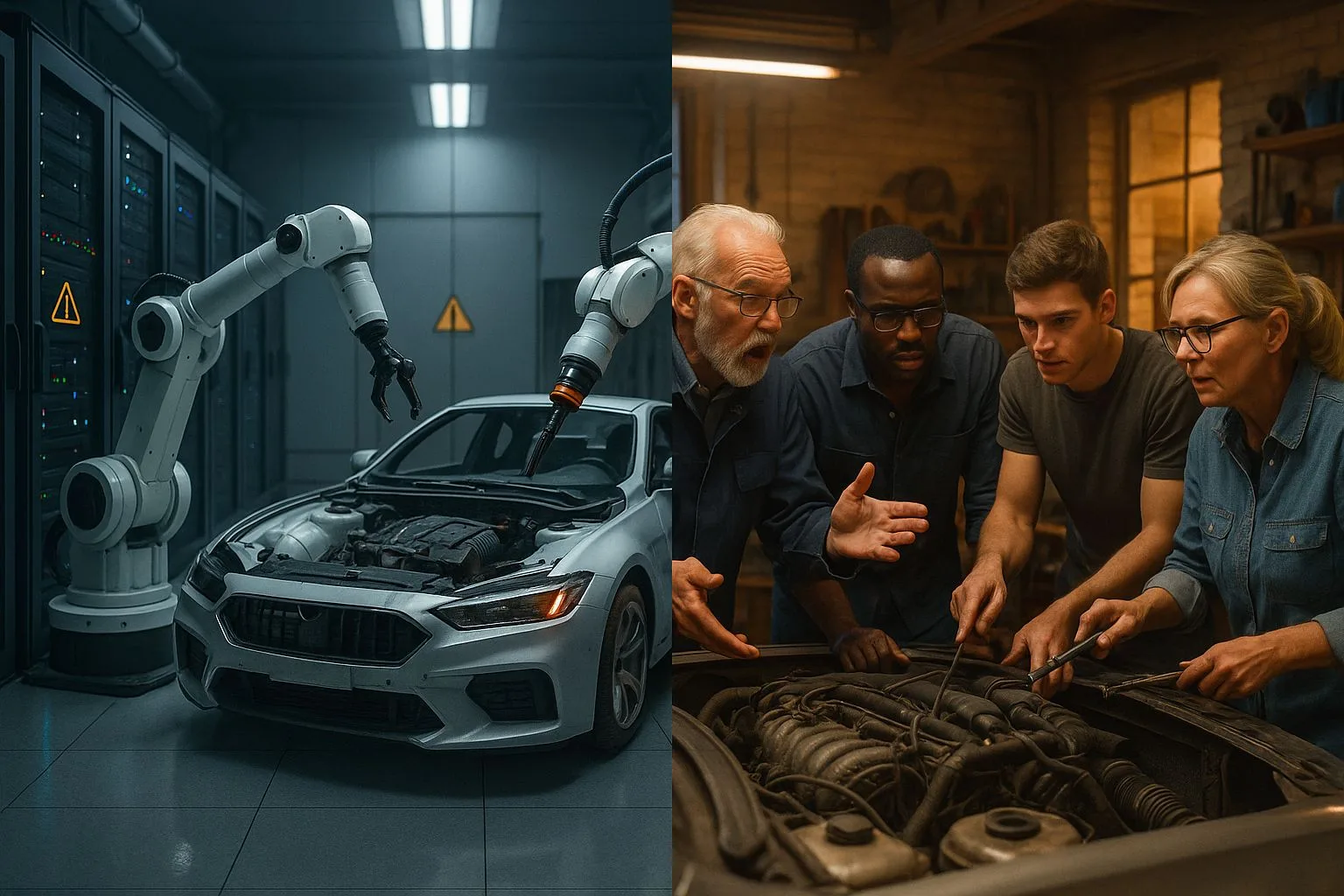
Ford vice president of vehicle hardware engineering Charles Poon was direct about what went wrong. The company had believed that feeding engineering requirements into AI systems would be sufficient to produce higher-quality vehicles. It was not. The AI lacked the accumulated practical knowledge that experienced engineers carry, knowledge built over decades and multiple product generations.
“Artificial intelligence is a fantastic tool, but it’s only as good as the information you use to train it,” Poon said. Ford’s automated quality systems, it turned out, had been trained on incomplete foundations.
Human Expertise Back at the Centre
Ford chief operating officer Kumar Galhotra said the company had become too dependent on automated systems and was not getting the results it needed. The returning specialists now hunt for failure points before parts ever reach the production floor, and they are also retraining younger staff and the AI tools themselves.
That last point matters. Ford is not abandoning AI; it is recalibrating how it uses it. The veteran engineers are effectively teaching the systems what they should have known from the start. It is a more honest model than the one Ford originally pursued.
Poon acknowledged the earlier misjudgement plainly: “Over prior years, we didn’t pay as much attention as we should have to the experience of our most knowledgeable engineers that have been with us through many product cycles.”
Early Signs of Progress
CEO Jim Farley says the revised approach is already delivering financial results. Improved quality is reducing warranty and recall costs, contributing what Farley described as “hundreds and hundreds of millions of dollars” in savings. Ford is targeting US$1 billion in cost reductions this year.
Ford remains the most recalled automaker in the United States, so there is still considerable ground to recover. Galhotra described recalls as a “lagging indicator,” arguing that newer vehicles designed under the revised quality processes will show better results as they enter the market.
A Wider Lesson for the Industry
The admission carries weight beyond Ford’s own balance sheet. Ford has been among the more aggressive adopters of AI in manufacturing, deploying around 900 AI-powered cameras across its factories to detect production defects. CEO Farley has previously suggested AI would replace many white-collar roles.
Ford’s own experience now complicates that picture. Institutional knowledge (the kind built through years of hands-on engineering) is not easily replicated by a system trained on documentation alone. The lesson is straightforward: AI tools are only as useful as the expertise used to build and guide them.