
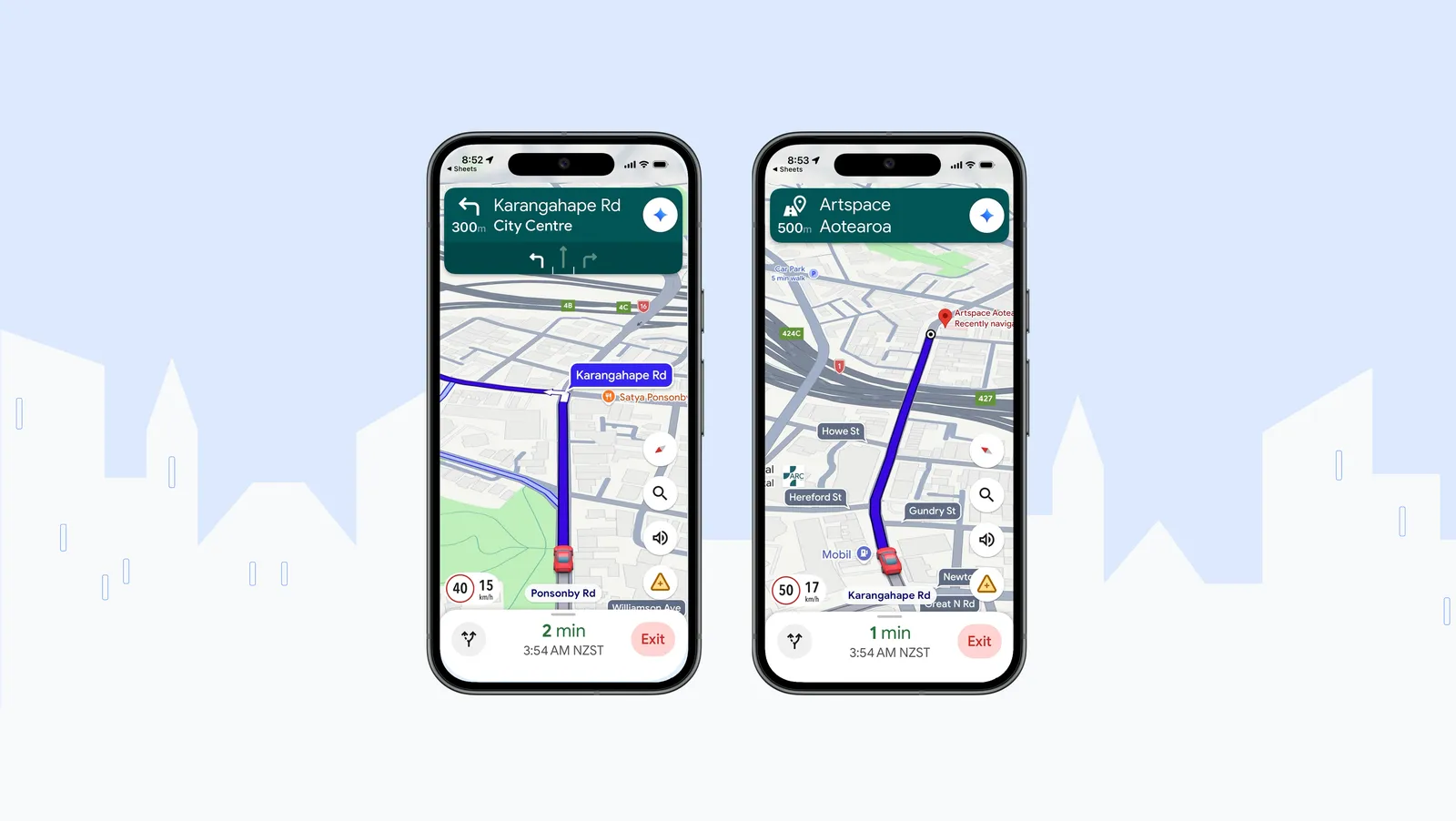
Anyone who has heard a navigation app mangle a Māori place name will understand why this matters. Google Maps has rolled out a new voice for New Zealand users that correctly pronounces te reo Māori city and town names, combining a genuine Kiwi accent with culturally accurate pronunciation.
The update is available now on Android, iOS, Android Auto, and CarPlay. Users need to set their app language to English (New Zealand) to activate it.
Built With Language Experts
Google did not develop this in isolation. The company worked with Te Taura Whiri, the Māori Language Commission, and drew on publicly available data from the New Zealand Geographic Board to build the new text-to-speech model.
Ngahiwi Apanui-Barr, chief executive of Te Taura Whiri, noted that Māori place names carry stories connecting people to their histories and achievements. Correct pronunciation, he said, is the first step to unlocking those stories.
That framing is worth taking seriously. New Zealand recognises te reo Māori as a taonga — a treasure — and one of the country’s official languages. Roughly three quarters of New Zealanders consider it an important part of national culture and identity. Getting “Whangārei” or “Taranaki” right in a navigation context is not a minor detail.
AI and Data Sovereignty
Google says its AI Principles and Māori data sovereignty considerations were central to how the voice model was developed. Te Taura Whiri will initially serve as kaitiaki (guardians) of the te reo Māori lexicon used in the system.
The longer-term plan is to establish a broader group of custodians, ensuring Māori academics, researchers, and communities can access and benefit from the data. That structure matters: it means the pronunciation data is not simply absorbed into a commercial product and left unaccountable.
AI-powered text-to-speech has improved considerably in recent years, but applying it to indigenous languages requires more than raw computing power. Partnering with a dedicated language authority rather than relying on general training data is a meaningful distinction.
Practical Relevance for Drivers
For everyday navigation, the update has clear practical value. New Zealand’s road network includes a large number of Māori place names, many of which have historically been mispronounced by digital assistants.
The rollout is global, meaning New Zealanders using the app anywhere in the world will hear the same voice when their language is set to English (New Zealand). Android Auto and CarPlay compatibility ensures the feature reaches drivers directly in the car, where navigation voices are most frequently heard.
It is a relatively contained update in technical terms, but its significance sits in what it represents: a navigation tool that reflects the linguistic reality of the country it is guiding you through, rather than flattening it.