Thursday, 2 July 2026. Welcome back to another instalment of Cardle of the Day, the series where we play through each morning’s puzzle at Cardle and then spend a little time with whatever car the game has decided to throw at us. And seriously, what is this thing?
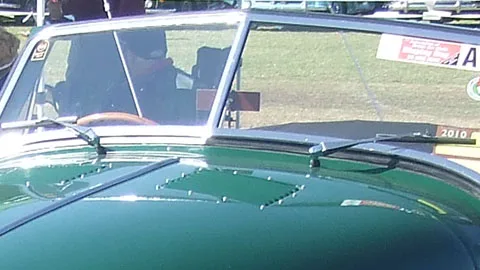
For anyone new here: Cardle presents one car per day through five progressively less cropped photographs. You can guess at any point or skip a clue and wait for a clearer view. The earlier you identify the car, the better your score. Some days the answer jumps out from clue one. Today was emphatically not one of those days. Again: what IS this thing?
Five Clues and a Lot of Squinting
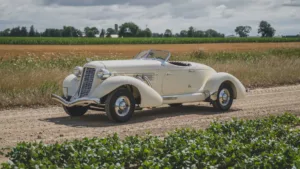
Today’s puzzle opened with a crop so tight it could have been almost anything with a curved body panel and a hint of chrome and a beautiful split windscreen. Clues three and four continued the slow reveal, hinting at a compact, rounded shape that felt distinctly post-war British without giving the game away entirely. At this point, I knew it was going to be a total fail on my side.
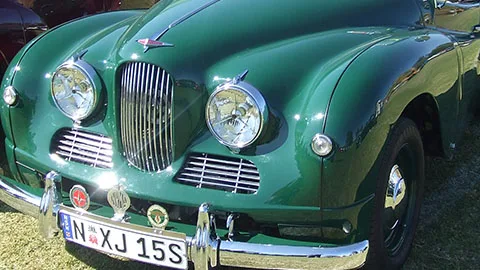
By clue five, not only did I not recognise the model, but I didn’t even know the brand! This is not the first time it happens, and it always stings. It had a very British roadster look to it, so I went out researching the Jowett Jupiter.
Bradford’s Unlikely Sports Car
The Jowett Jupiter is a car historian’s full plate – which explains why Matt got it right second try. Built by Jowett Cars of Bradford between 1950 and 1954, it was a genuine sports car from a manufacturer better known for utilitarian vehicles. The Jupiter used a tubular space frame chassis, advanced stuff for a small British firm at the time, wrapped in a body styled with input from ERA, the pre-war racing concern.
The engineering ambition paid off in competition. A Jupiter won its class at Le Mans in 1950, its first year of production, and repeated the feat in 1951. That is a remarkable result for a car from a modest Yorkshire company competing against far better-resourced rivals.
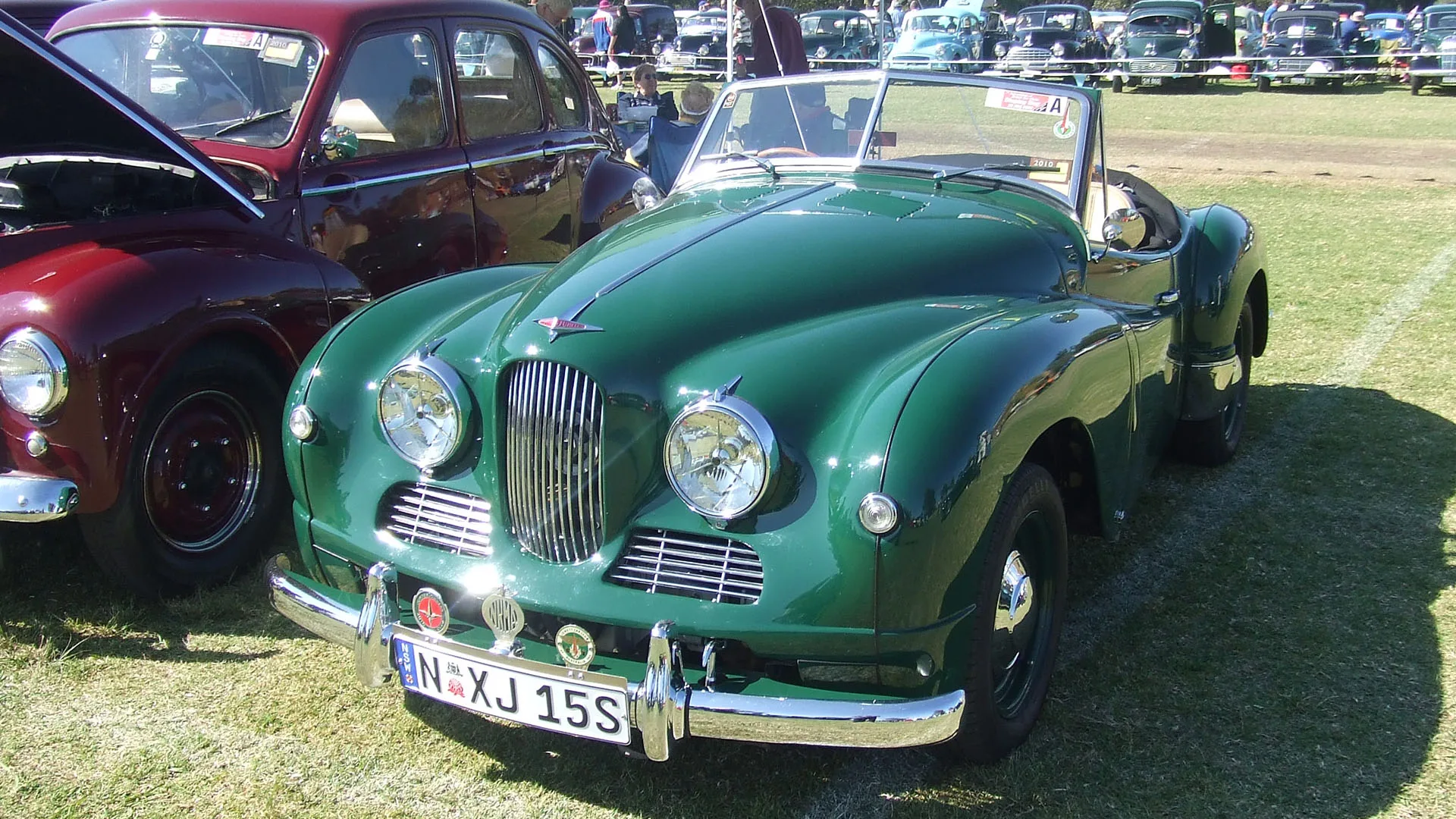
Power came from a 1,486 cc flat-four engine producing around 60 bhp. Approximately 899 Jupiters were built before production ended in 1954, and its class wins at Le Mans in 1950 and 1951 remain among the more surprising results in the race’s history.
Jowett Cars closed in 1954, a victim of supplier problems and the brutal economics of small-volume manufacturing in post-war Britain. The Jupiter went with it, leaving behind fewer than 900 examples and a reputation that has never quite matched what the car actually achieved, justifying my ignorance to a certain degree.
Among pre-war and early post-war British sports car enthusiasts, the Jupiter occupies a specific and affectionate niche. It is rarer than an early Healey (one of my guesses), more technically interesting than many of its contemporaries, and now I know that it carries genuine competition history. The surviving owners’ club keeps the marque alive, and well preserved examples do appear at concours events where they stop people in their tracks, and now I can add myself to that list. See you tomorrow!