How far can a tank of fuel really take you? Nissan New Zealand reckons a lot further than you might think.
To mark the shortest day of the year, Nissan New Zealand decided to embark on a challenge that every Kiwi driver has probably attempted at least once: seeing just how low they could get their fuel consumption.
The result? Some surprisingly impressive numbers, a few raised eyebrows, and one hybrid SUV that absolutely smashed expectations.
Dubbed the “Shortest Day, Long Drive” challenge, Nissan handed over the keys to a selection of vehicles from across its range and invited a group of motoring journalists (our invite must have been lost in the post) to see what kind of economy they could achieve over a 100km real-world drive.
The contestants weren’t driving eco-specials either. The lineup ranged from Nissan’s e-POWER hybrids through to the hard-working Navara ute and even the mighty V8-powered Patrol. And yes, one of them managed to beat its official fuel consumption figure by an astonishing 37 percent.
The Challenge
The premise was simple, take a Nissan, drive it efficiently over a predetermined route, then compare the achieved fuel consumption against the official combined-cycle figure listed on the window sticker. Whoever improved on the official number by the greatest margin would claim efficiency bragging rights.
The fleet included:
- Nissan Qashqai Ti-L e-POWER
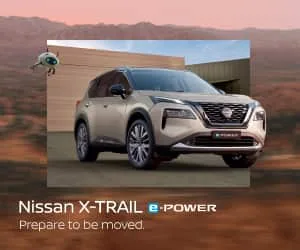
- Nissan X-Trail ST-L e-POWER
- Nissan X-Trail Ti-L e-POWER
- Nissan Navara ST-X
- Nissan Patrol
The results proved that careful driving can make a genuine difference, regardless of what you’re behind the wheel of.
The Surprise Winner
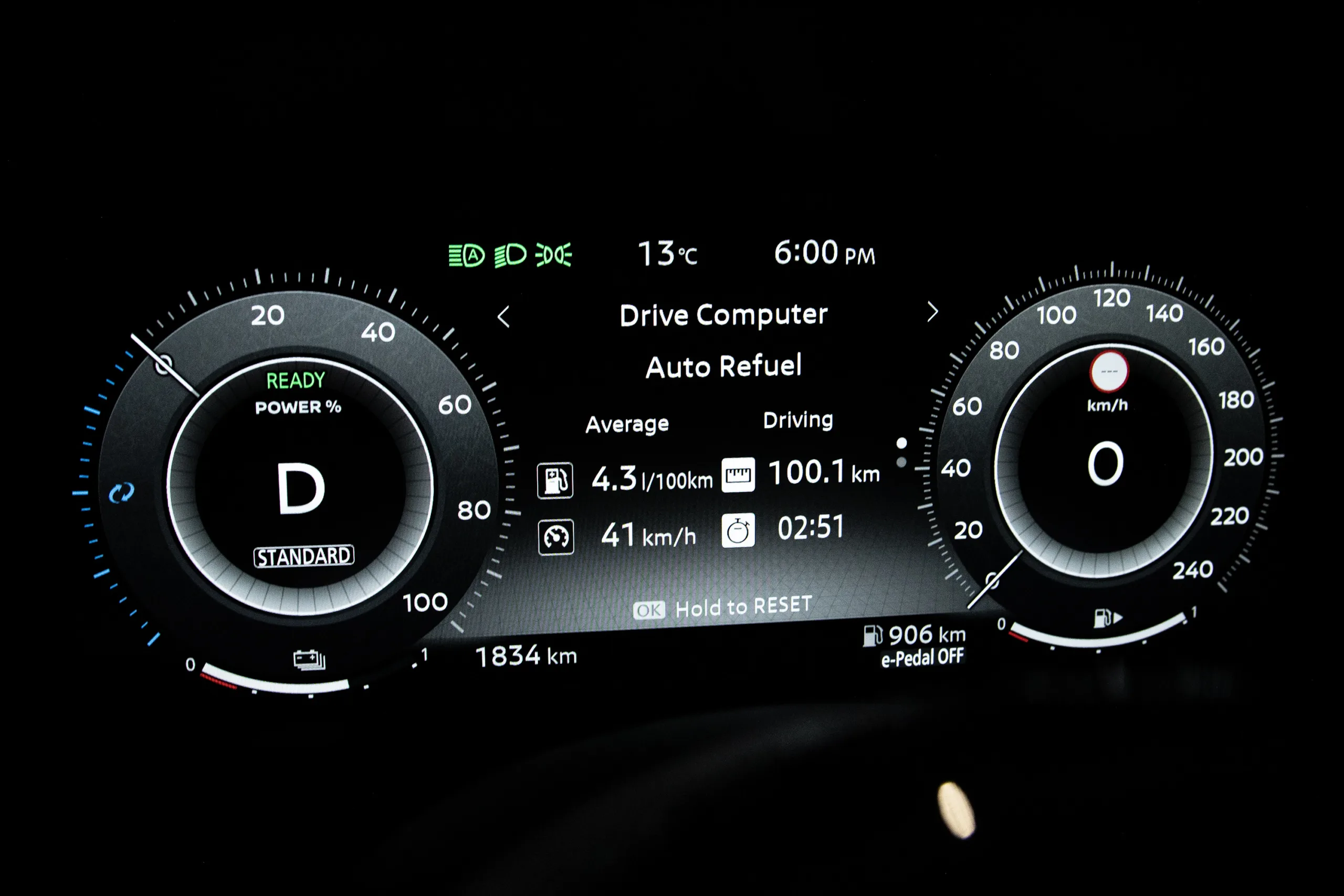
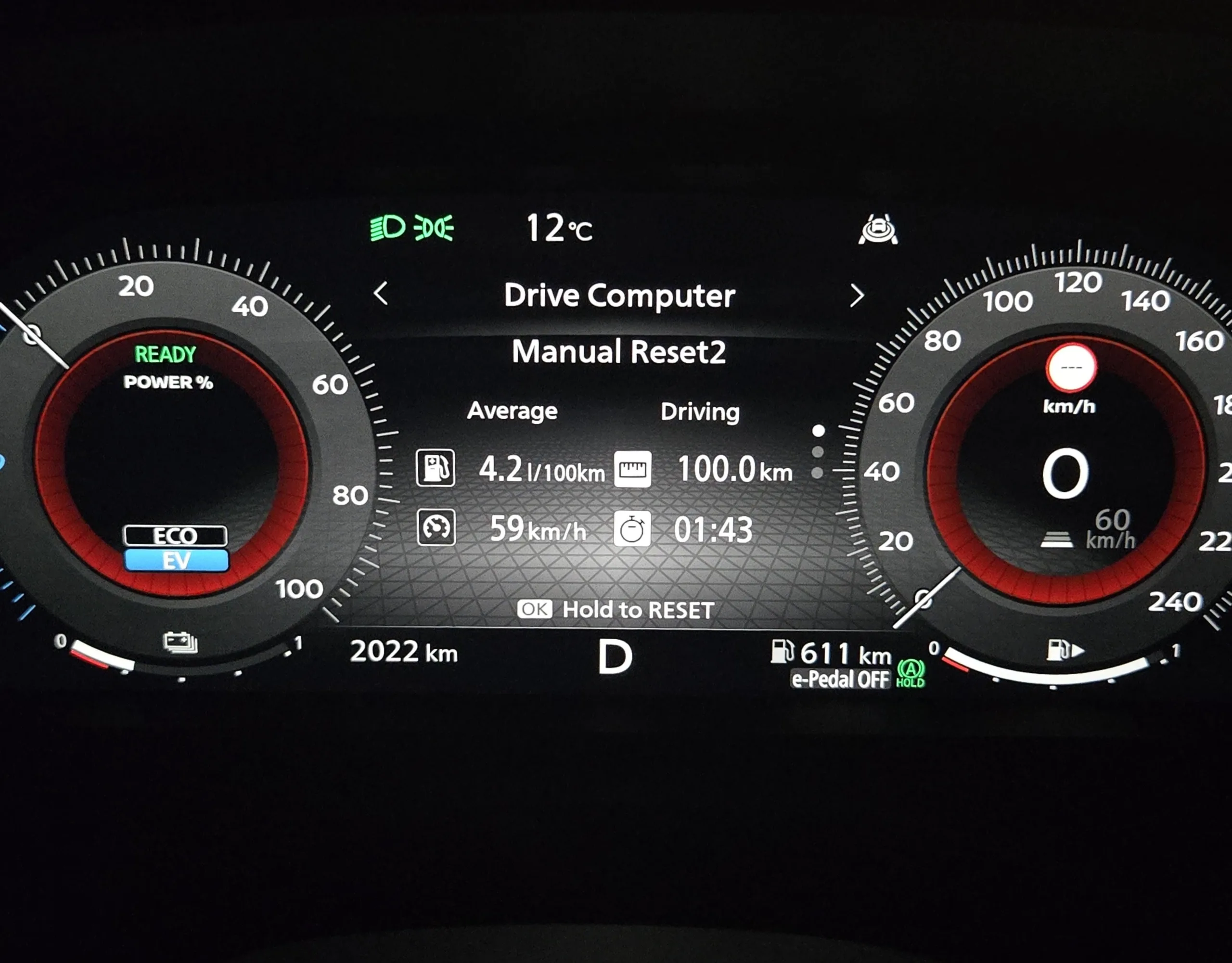
If you guessed one of Nissan’s electrified models would come out on top, you’d be right. The standout performer was the Nissan X-Trail ST-L e-POWER. Officially rated at 6.1L/100km, the SUV returned an impressive 4.2L/100km during the challenge. That’s a remarkable 37 percent improvement over its published figure.
To put that into perspective, that’s the sort of fuel economy many small hatchbacks would be proud of, yet it came from a family-sized SUV.
Close behind was the legendary Nissan Patrol. Now, nobody buys a Patrol expecting Prius-like economy. Its naturally aspirated V8 engine is better known for towing boats, hauling caravans and conquering remote backcountry tracks than sipping fuel.
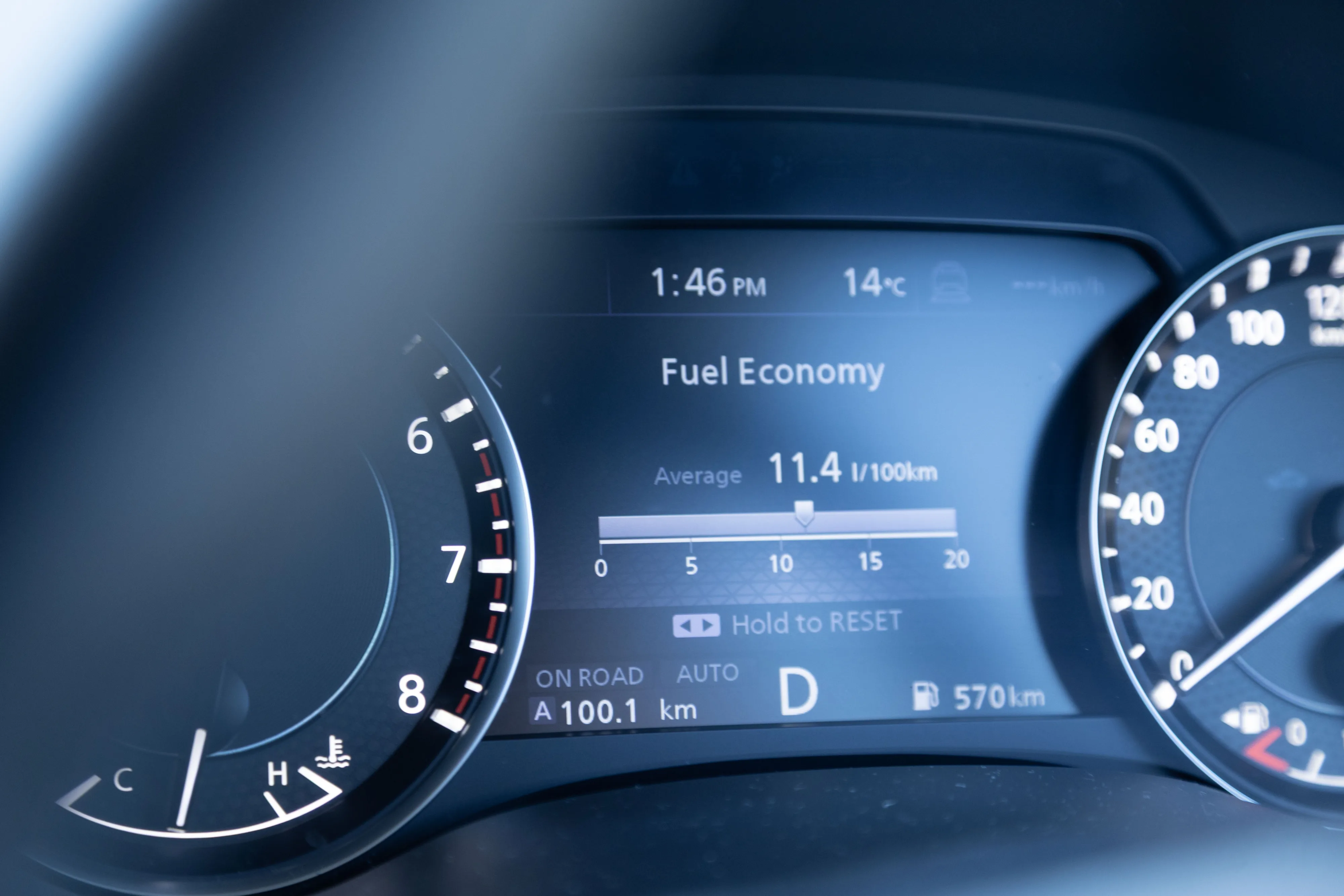
Yet during the challenge it achieved 11.4L/100km compared with its official rating of 16.2L/100km, an impressive 35 percent improvement. That’s arguably one of the most eye-opening results of the entire exercise.
The Full Results
| Model | Official Consumption | Achieved Consumption | Difference |
|---|---|---|---|
| X-Trail ST-L e-POWER | 6.1L/100km | 4.2L/100km | +37% |
| Patrol | 16.2L/100km | 11.4L/100km | +35% |
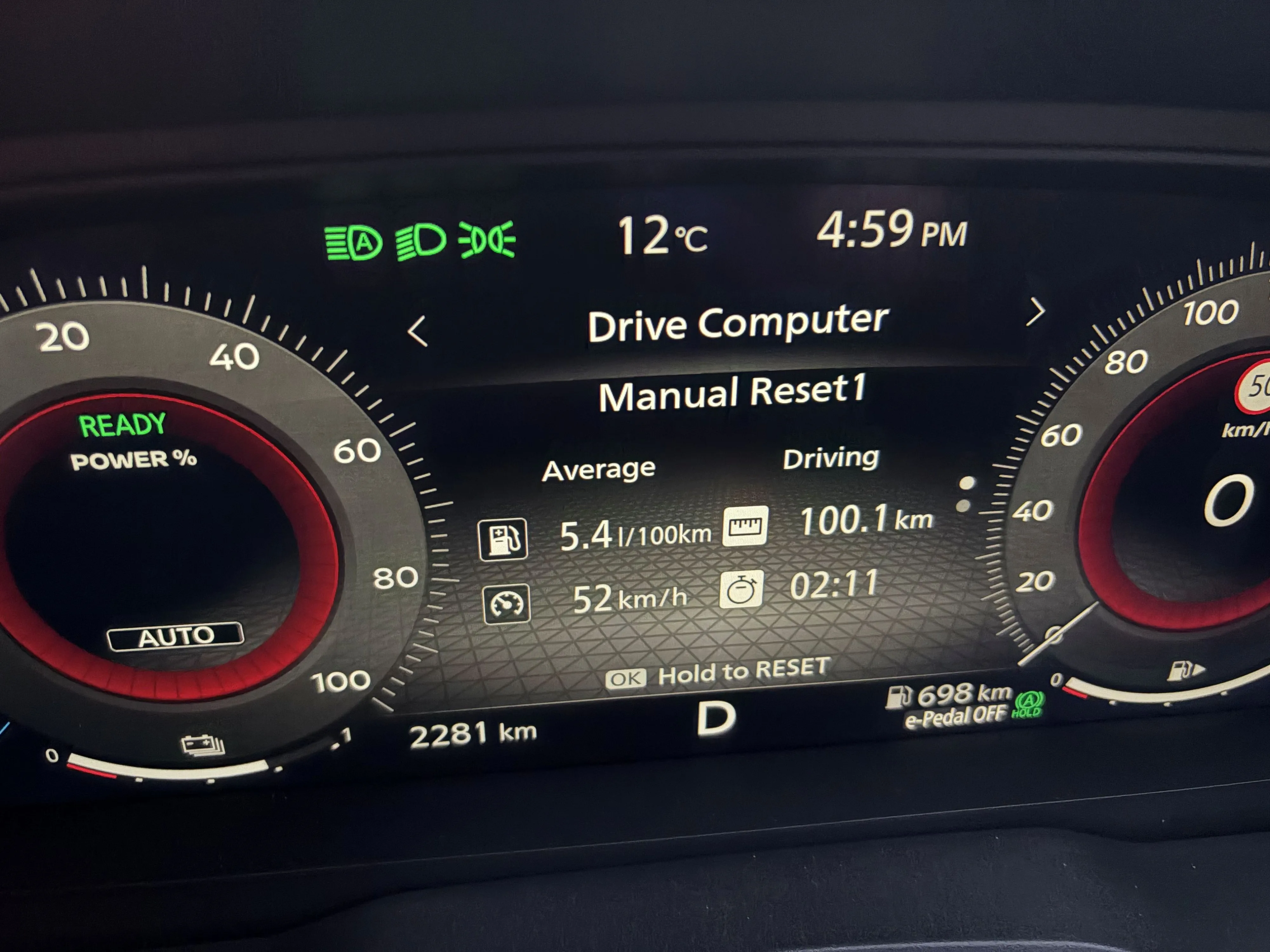
| X-Trail Ti-L e-POWER | 6.1L/100km | 5.4L/100km | +12% |
| Navara ST-X | 7.7L/100km | 7.6L/100km | +1% |
| Qashqai Ti-L e-POWER | 4.1L/100km | 4.3L/100km | -5% |
It’s worth noting that the Qashqai actually remains the most fuel-efficient vehicle on paper, with its official rating of just 4.1L/100km. The challenge measured improvement relative to each vehicle’s official figure rather than outright fuel use.
What Exactly Is e-POWER?
Much of Nissan’s attention naturally falls on its unique e-POWER technology. Unlike a traditional hybrid, where both the petrol engine and electric motor can drive the wheels, e-POWER works differently. The wheels are driven exclusively by an electric motor.
The petrol engine’s sole job is to act as a generator, producing electricity when needed. That electricity either powers the motor directly or tops up a small battery. The result is a driving experience that feels remarkably similar to an EV, complete with instant torque and smooth acceleration, but without needing to plug anything in.
For many Kiwi motorists who aren’t yet ready to make the leap to full electrification, it offers an interesting middle ground. You get much of the EV driving feel while retaining the convenience of simply filling up with petrol when required.
Why Did The Numbers Improve So Much?
Official fuel consumption testing provides a standardised benchmark, allowing buyers to compare one vehicle against another. Real-world conditions, however, are rarely standardised. Traffic, weather, road surfaces, driving style and terrain all play a major role in determining fuel consumption.
Nissan’s challenge highlighted something many experienced drivers already know: smooth inputs, anticipation and steady driving can dramatically improve efficiency.
A heavy right foot can quickly destroy economy figures. Conversely, careful throttle application, minimising unnecessary braking and maintaining momentum can produce surprisingly positive results.
The fact that almost every vehicle in the challenge bettered its official figure demonstrates just how much influence the driver can have.
More Than Just Economy
According to Nissan New Zealand Country Head Sri Padmanabhan, the challenge wasn’t intended to be a scientific exercise. Instead, it was designed to showcase what can be achieved on a long drive when efficiency becomes part of the objective.
“The results of the unscientific but highly interesting challenge are in, and almost all vehicles were able to better their official fuel consumption ratings,” he said.
For Nissan, the exercise also highlighted the breadth of its current lineup. From electrified family SUVs through to rugged workhorses and full-sized adventure wagons, there appears to be an efficiency story to tell across the entire range.
Could You Do Better?
That’s the real question. Could you beat 4.2L/100km in an X-Trail e-POWER? Could you coax a Patrol into returning numbers that look more SUV than V8 off-roader?
Every driver likes to think they have a hidden economy-driving superpower. Nissan’s shortest-day challenge suggests there might be more truth to that than we realise. The next time you’re heading out on a road trip, keep an eye on the fuel consumption display and see how close you can get. You might just surprise yourself.
And if you happen to beat the X-Trail’s 37 percent improvement? Let us know — because that’s a benchmark worth talking about.