Fifteen years ago, Bugatti and KPM Berlin produced the Veyron Grand Sport L’Or Blanc, a one-off that used porcelain as both decoration and structural detail. Now, at the end of the W16 engine’s production life, the two have returned to that idea, and pushed it considerably further.
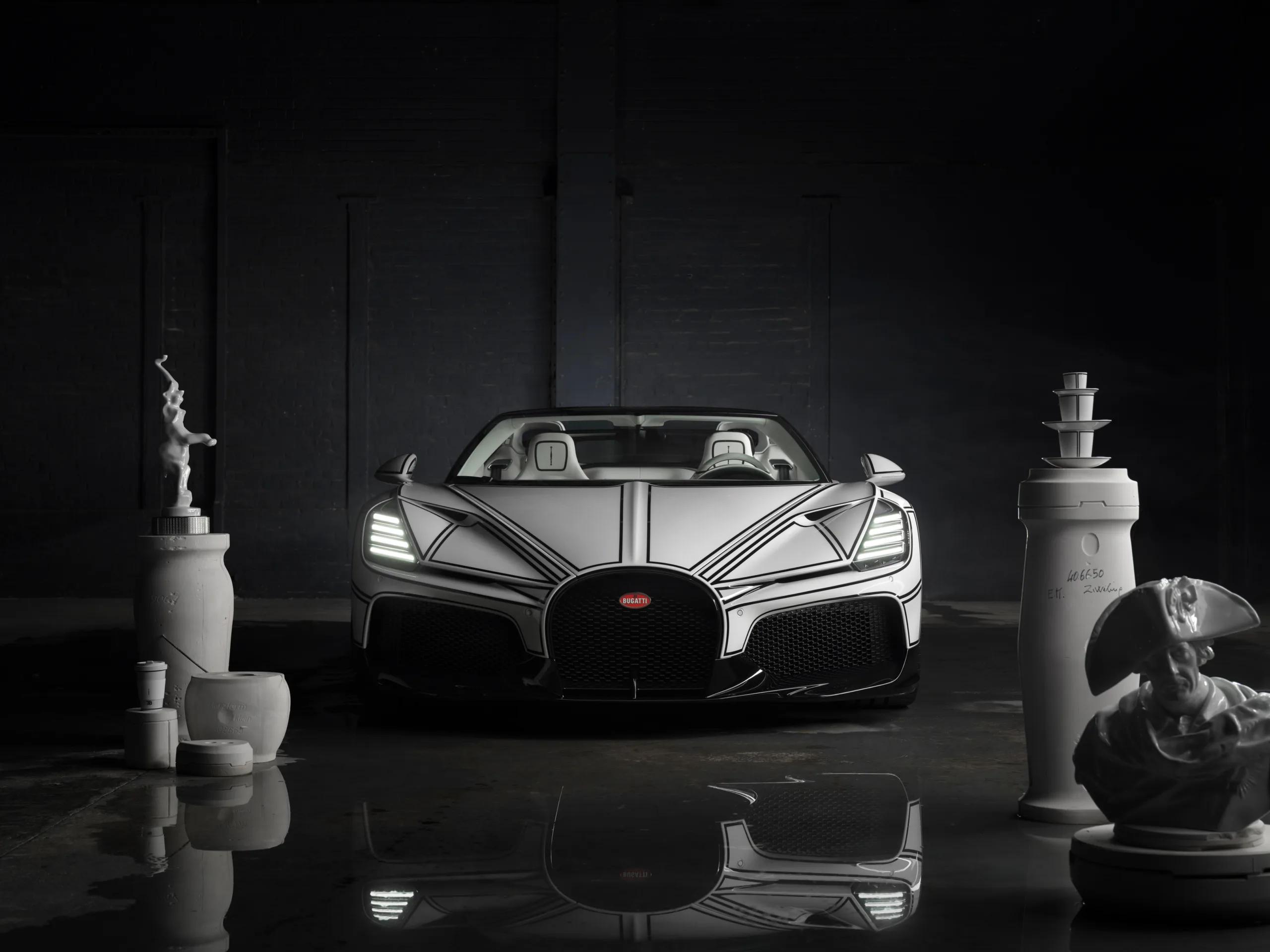
The result is the W16 Mistral Blanc Éternel, a single bespoke commission created through Bugatti’s Sur Mesure personalisation programme. It is, in effect, a farewell to the W16 in the form of a rolling design statement.
A Design Rooted in Digital Process
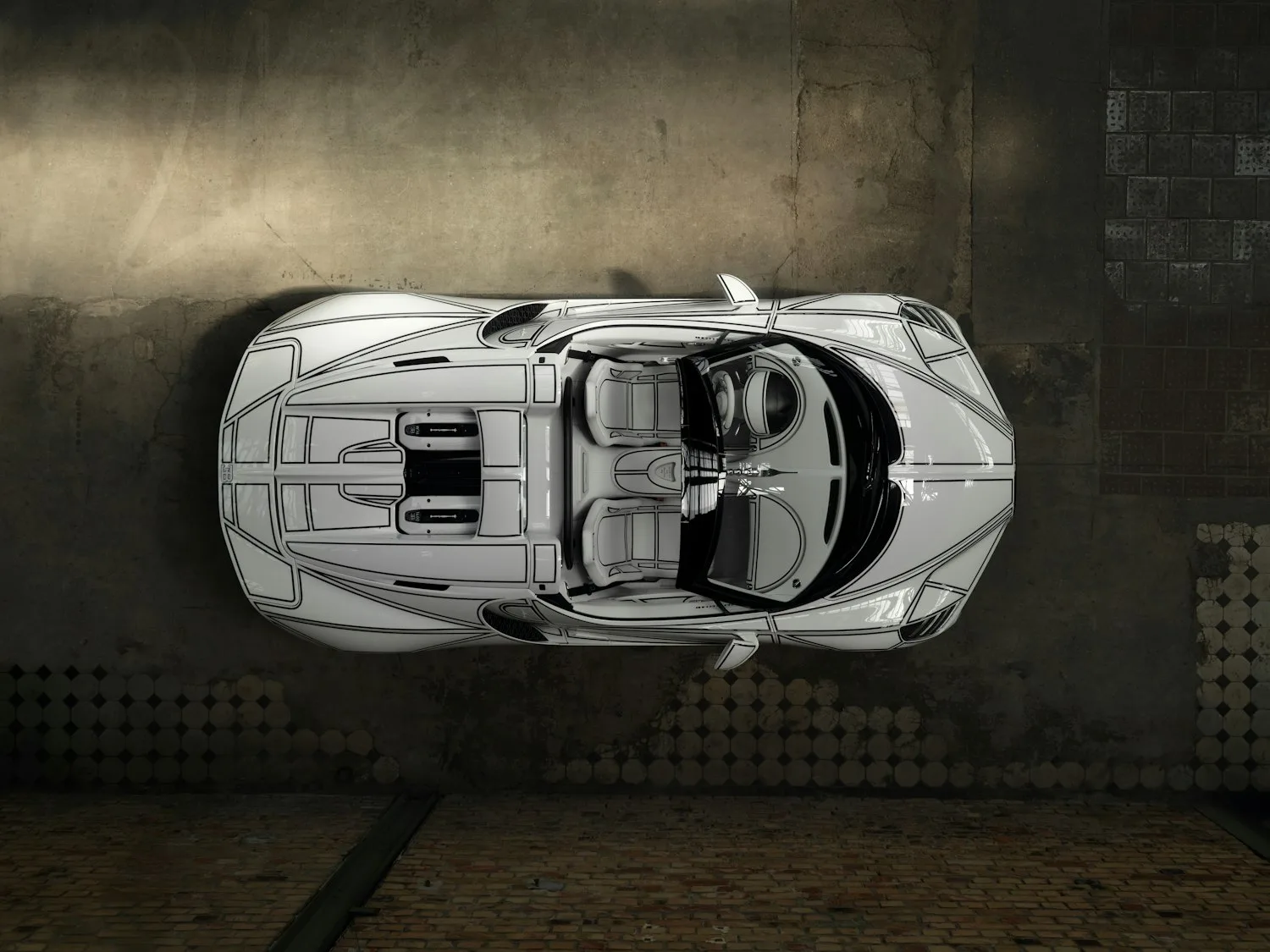
Unlike the original L’Or Blanc, which drew its graphic language from reflected lines of light, Blanc Éternel takes its visual cue from the digital modelling process used to design the Mistral itself. The car’s body was constructed using NURBS (Non-Uniform Rational B-Splines) a network of precisely controlled digital surfaces that define its sculptural form.
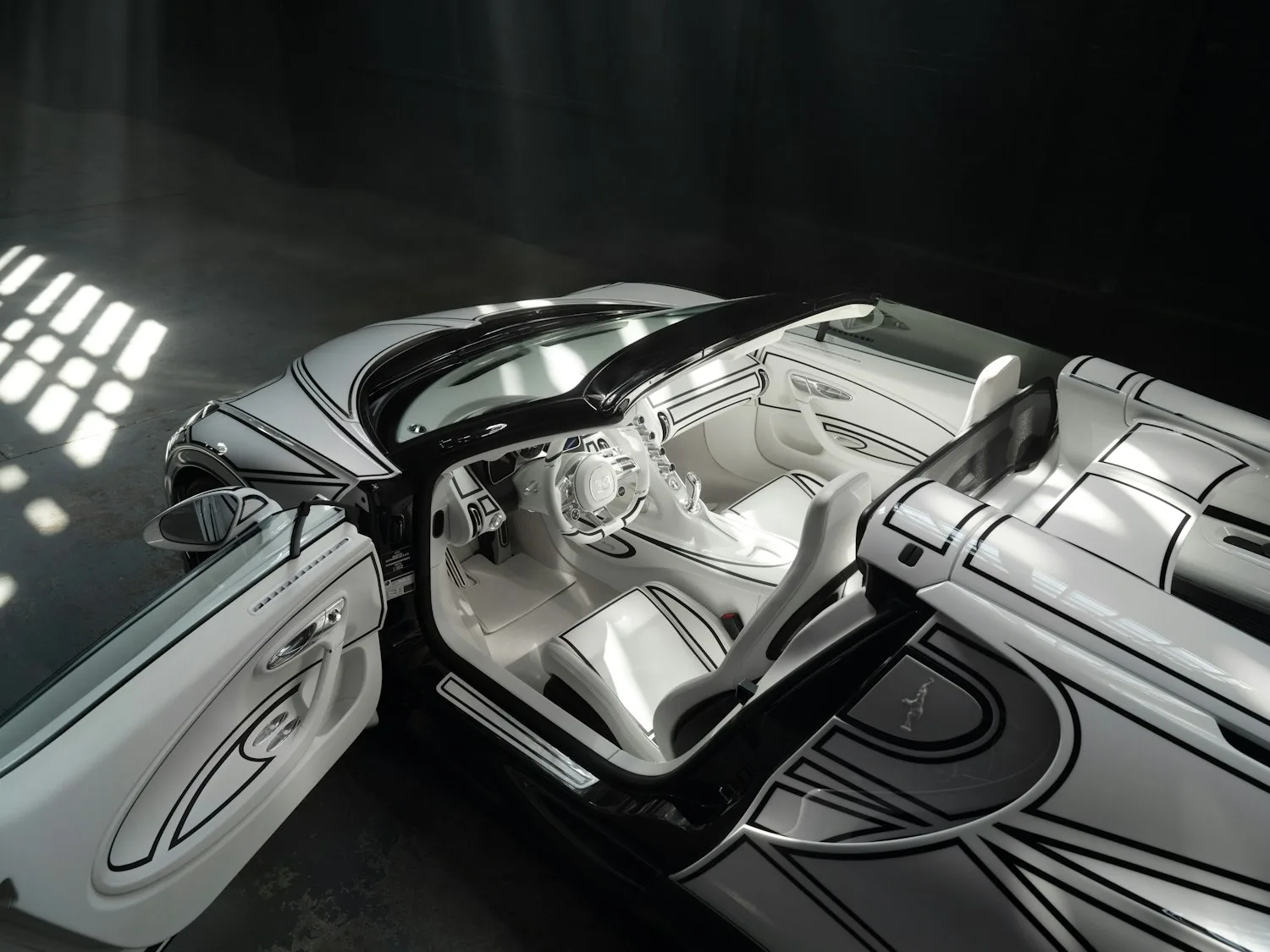
For this commission, those normally invisible surface boundaries become the artwork. Fine black lines trace the underlying digital patch layout across a pure white body, making the geometry of the car’s conception visible on its skin. The contrast is deliberate: black against white, digital logic rendered by hand.
Despite the computational origins of the design, the execution is entirely manual. Bugatti’s craftspeople applied every line using precisely positioned tape directly onto the finished body, counter-masked the surrounding areas, removed the tape, and sprayed the exposed channels in black. It is painstaking work, and the source material makes clear it demands both patience and an instinctive feel for how a line must travel across a three-dimensional surface.
Porcelain as a Functional Material
KPM’s contribution extends well beyond decorative inserts. Porcelain covers the EB emblem, fuel and oil caps, and two engine-cover inlays featuring KPM’s royal sceptre logo on the exterior. Inside, the material appears on the speaker cover, kneepads, gear-shifter shells, centre-console armrest, and window-lifter buttons.
That last point is worth dwelling on. The driver physically touches porcelain every time they change gear or operate a window. Bugatti and KPM describe this as a deliberate expression of their shared belief in real materials with real purpose, not surface decoration applied after the fact.
Working porcelain into a hypercar is technically demanding. The material contracts by 17 per cent when fired, meaning every component must be modelled to account for that shrinkage before it is even made. Each finished piece must then fit precisely into its designated position on the car.
Interior Linework and a Companion Collection
The exterior’s graphic language continues inside the cockpit, where the same black line pattern is applied directly onto white leather. Bugatti developed an entirely new process to achieve the required definition and durability, masking the leather by hand before painting the lines in black.
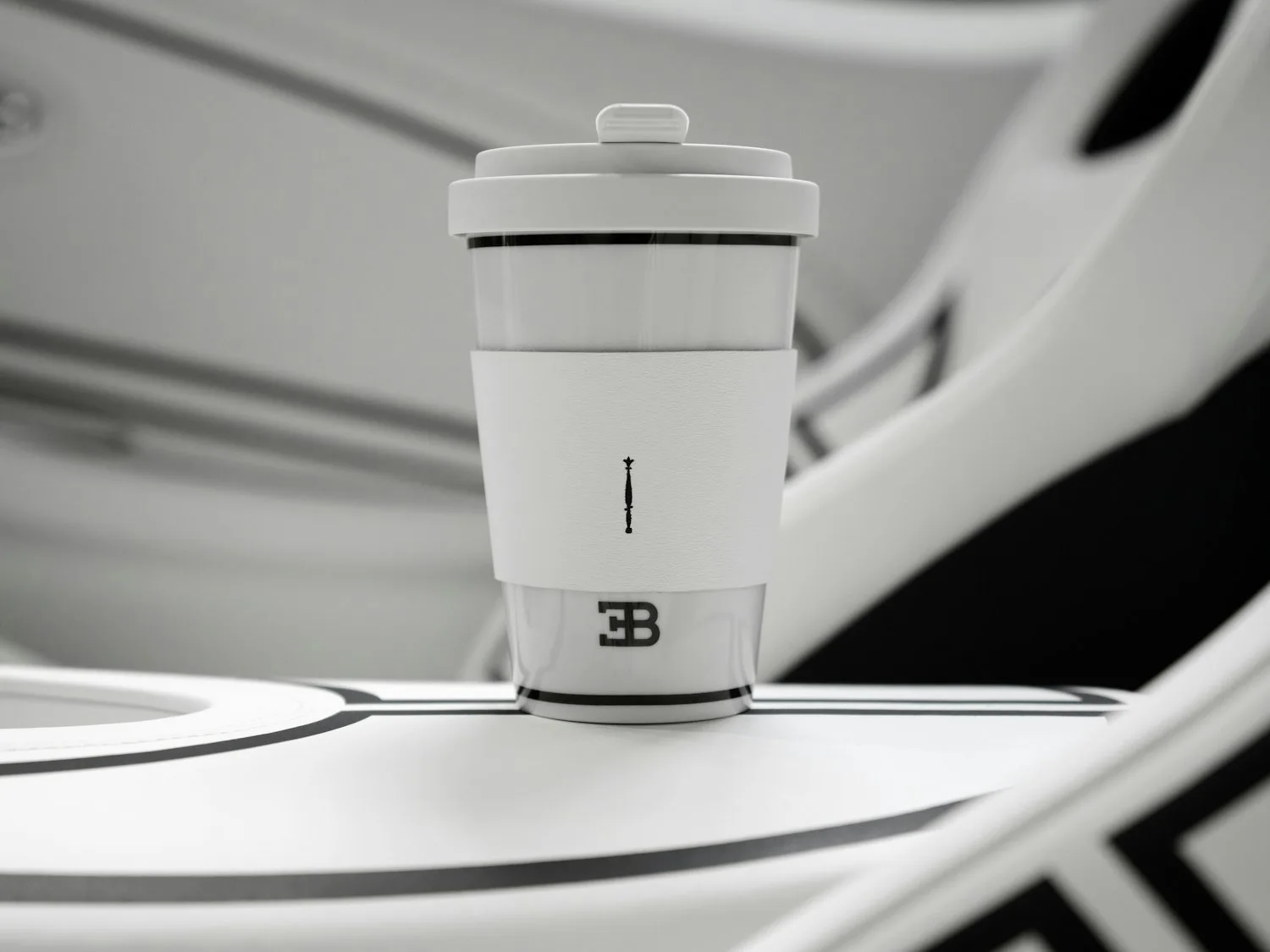
To accompany the car, KPM and Bugatti have produced a limited-edition Blanc Éternel porcelain collection. It comprises the To-Drive Cup and KPM’s Aviator Cup in two sizes, limited to 1,000 handmade pieces in total.
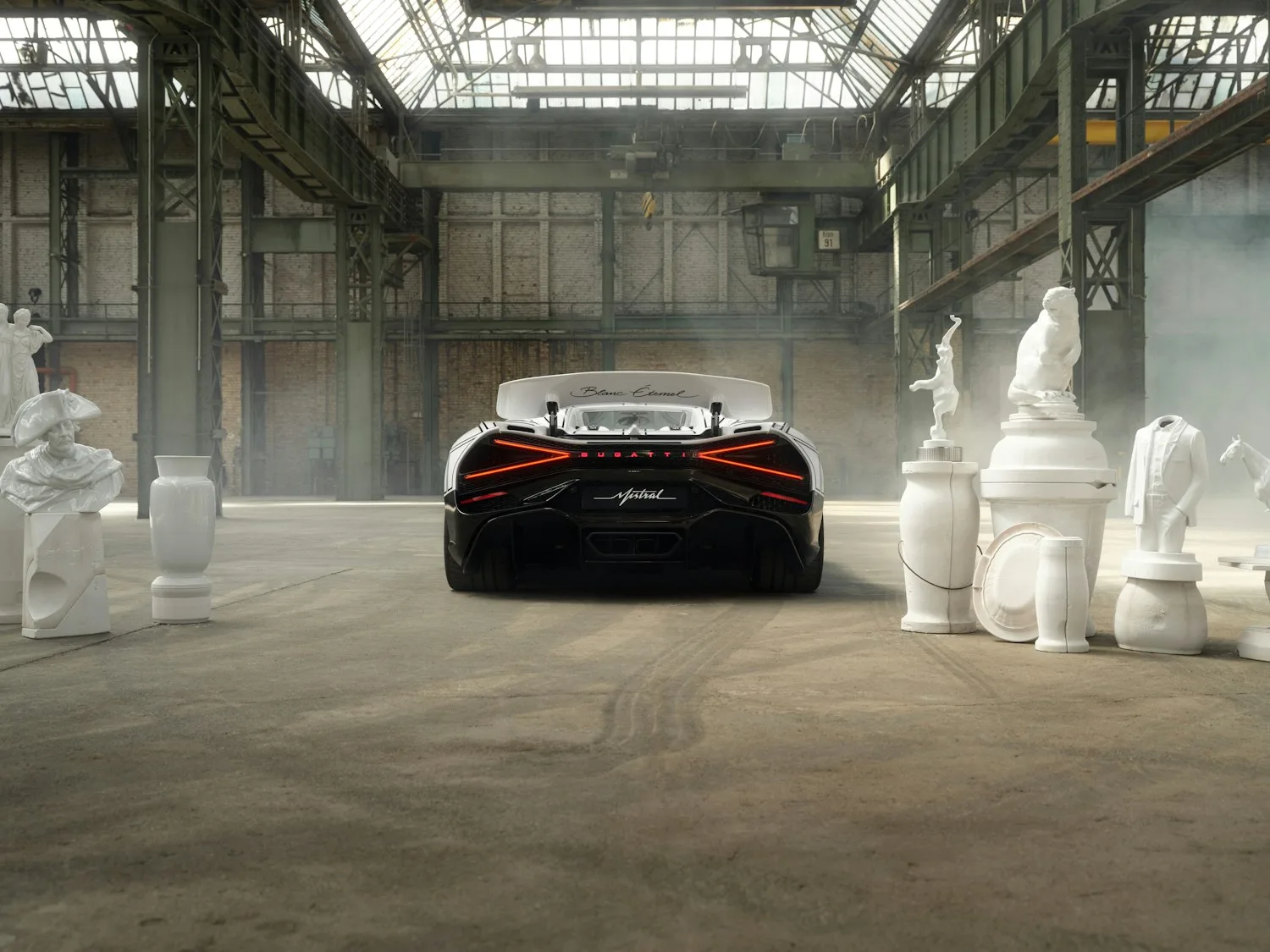
The W16 Mistral is already the final open-top expression of Bugatti’s W16 engine. Blanc Éternel frames that endpoint as a conversation between two institutions (one making hypercars, one making porcelain) that have now collaborated across two generations of Bugatti’s most significant machinery. Whether or not you consider a single bespoke commission a meaningful send-off, it is hard to argue with the craftsmanship behind it.