As a car reviewer, there are plenty of chances for us to jump into cars to review from the standpoint of seeing how they can project their brand or segment forward, due to how objectively good they are, and then there are cars that remind you why you liked cars in the first place. My latest one, the Jeep Wrangler Rubicon is very firmly in the second category.
Growing up in Brazil, Jeep was never an unfamiliar name to me. Renegades and Compasses are everywhere, and my own family went through two Renegades in succession, so I thought I already understood what Jeep was about. Then I picked up the Wrangler for a long weekend, and given this was my first foray into it, very quickly I realised I really didn’t.
I had a choice between taking this or a very competent hybrid family SUV on a long trip. The other car would have been quieter, more comfortable, more efficient and objectively easier to live with. I chose the Wrangler anyway, and I am extremely happy that I did.
That is because the Wrangler occupies a very unusual place in the market. Think of the genuine, unapologetically off-road SUVs and you can almost draw a line through them. At the small end there is the Suzuki Jimny, then the Wrangler, and somewhere much further up the luxury scale sits the Mercedes-Benz G-Class. All three pull on the same emotional strings because they look like proper off-roaders, and crucially, they have the capability to back those looks up.
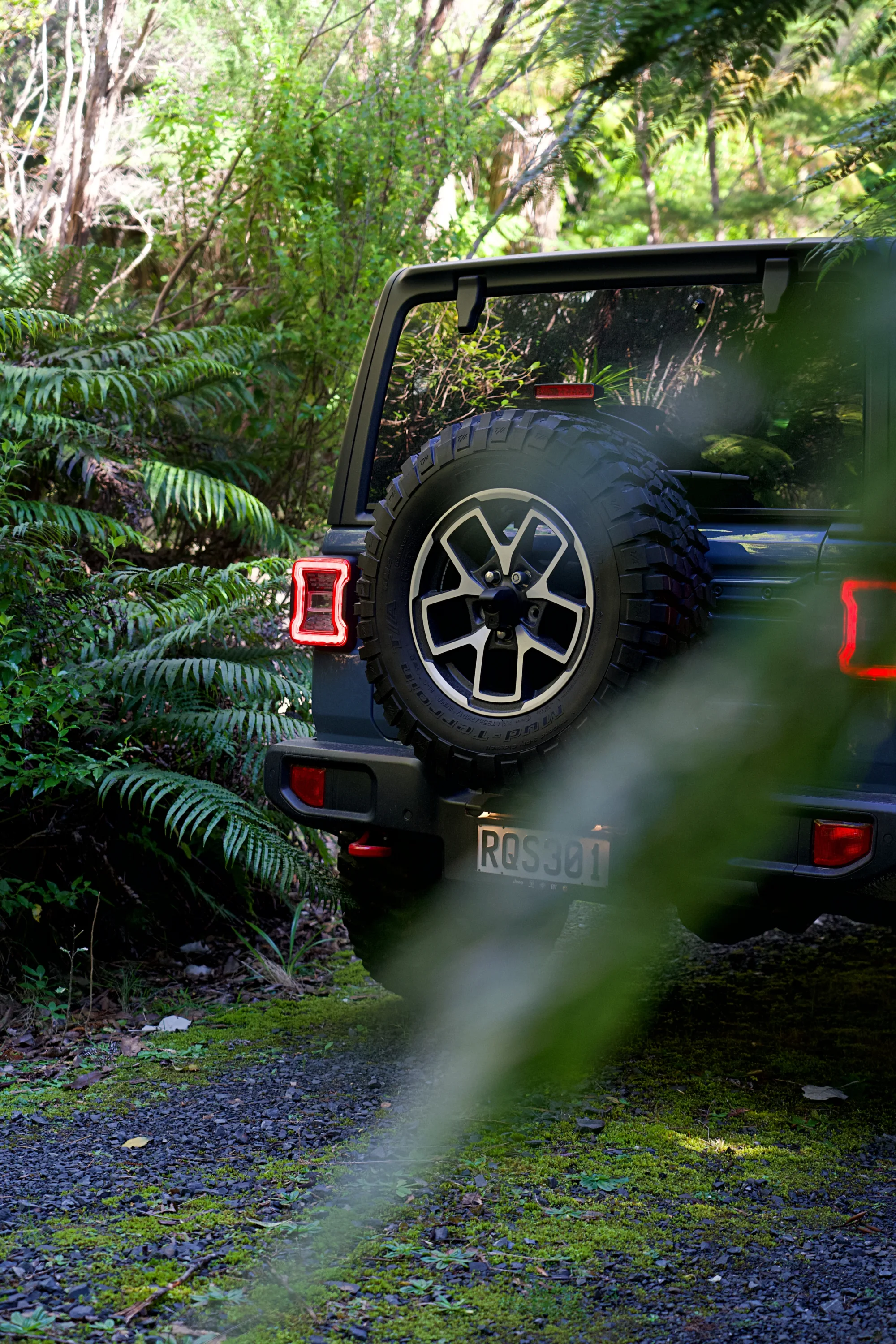
But the Wrangler carves a niched, sweet spot for it, being more comfortable on long journeys than something like a Jimny, while remaining far more likely to actually see serious off-road use than a modern G-Class. Its size also sits right in the middle, only being available in 5 door SUV sizing (gone are the 3 door and the ute), and then Jeep adds something neither of those cars can really replicate: the ability to remove the doors and roof, and that changes everything.
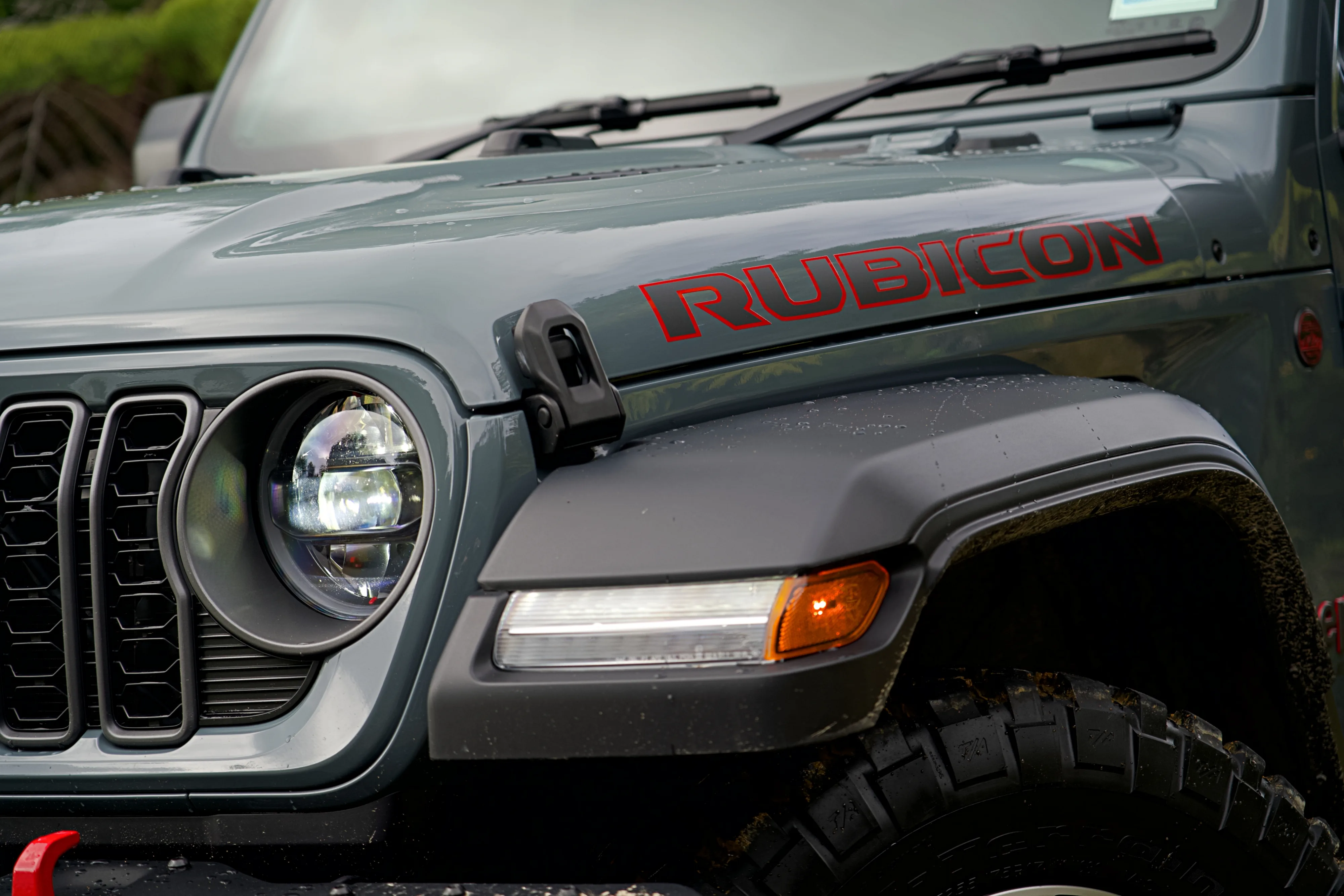
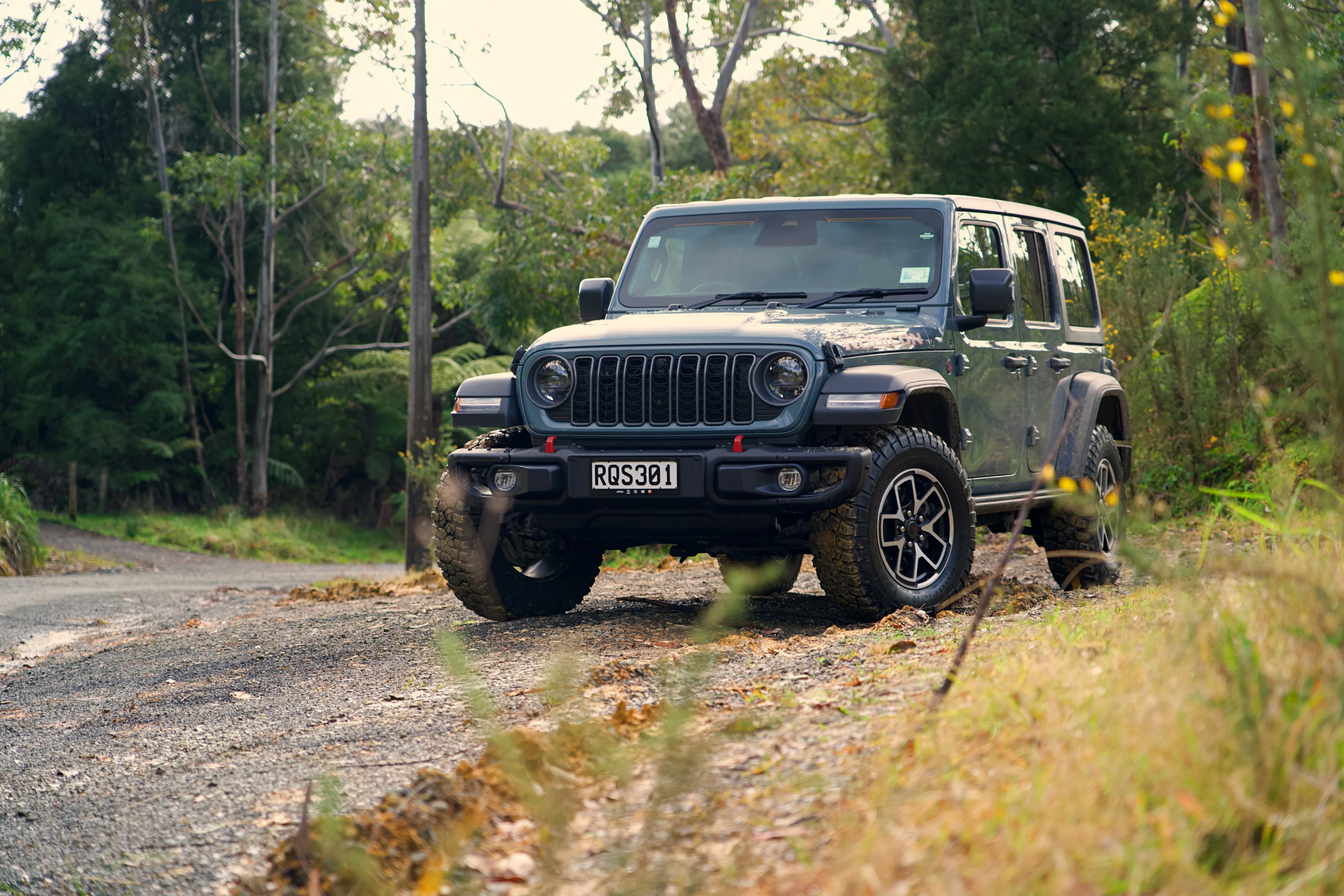
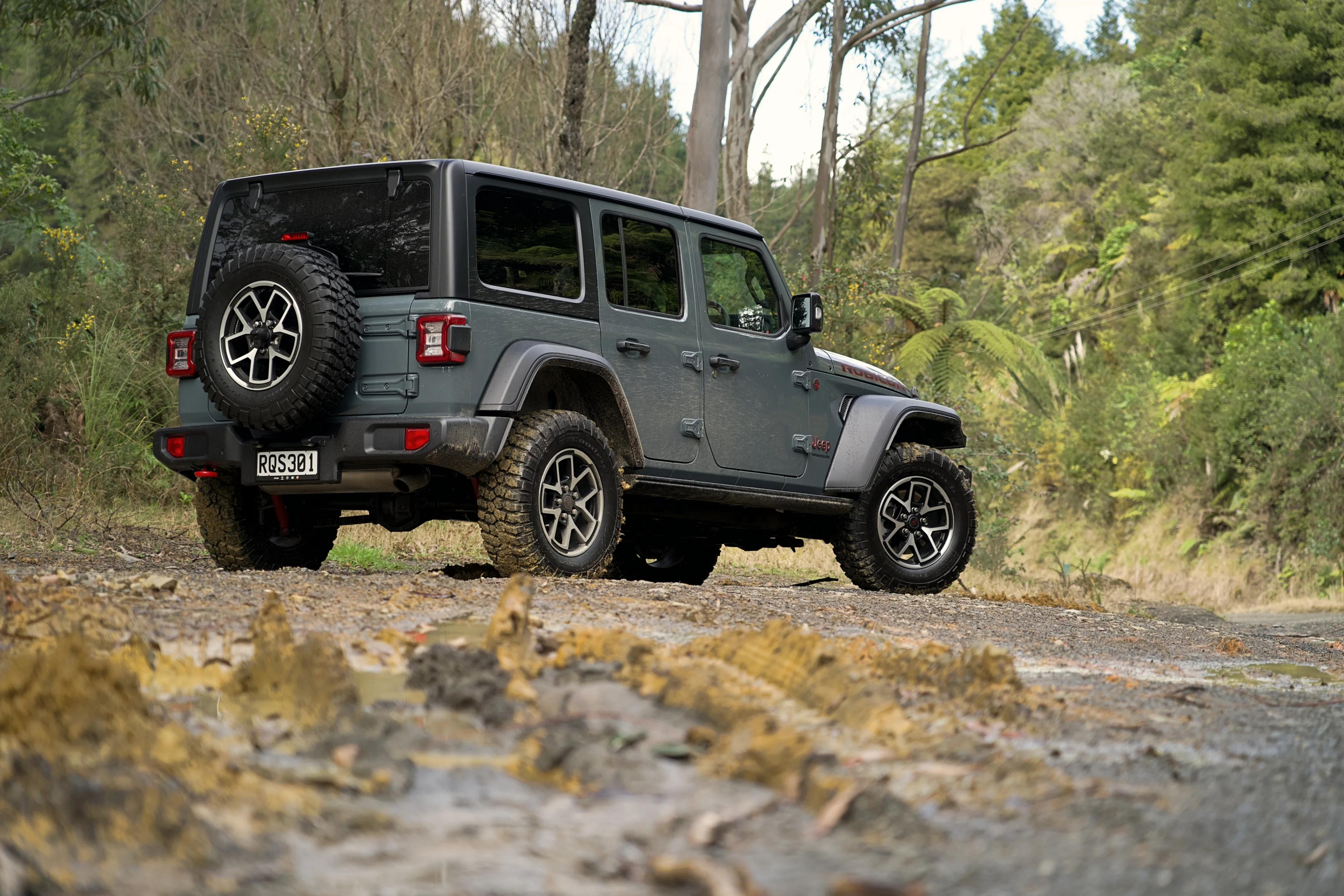
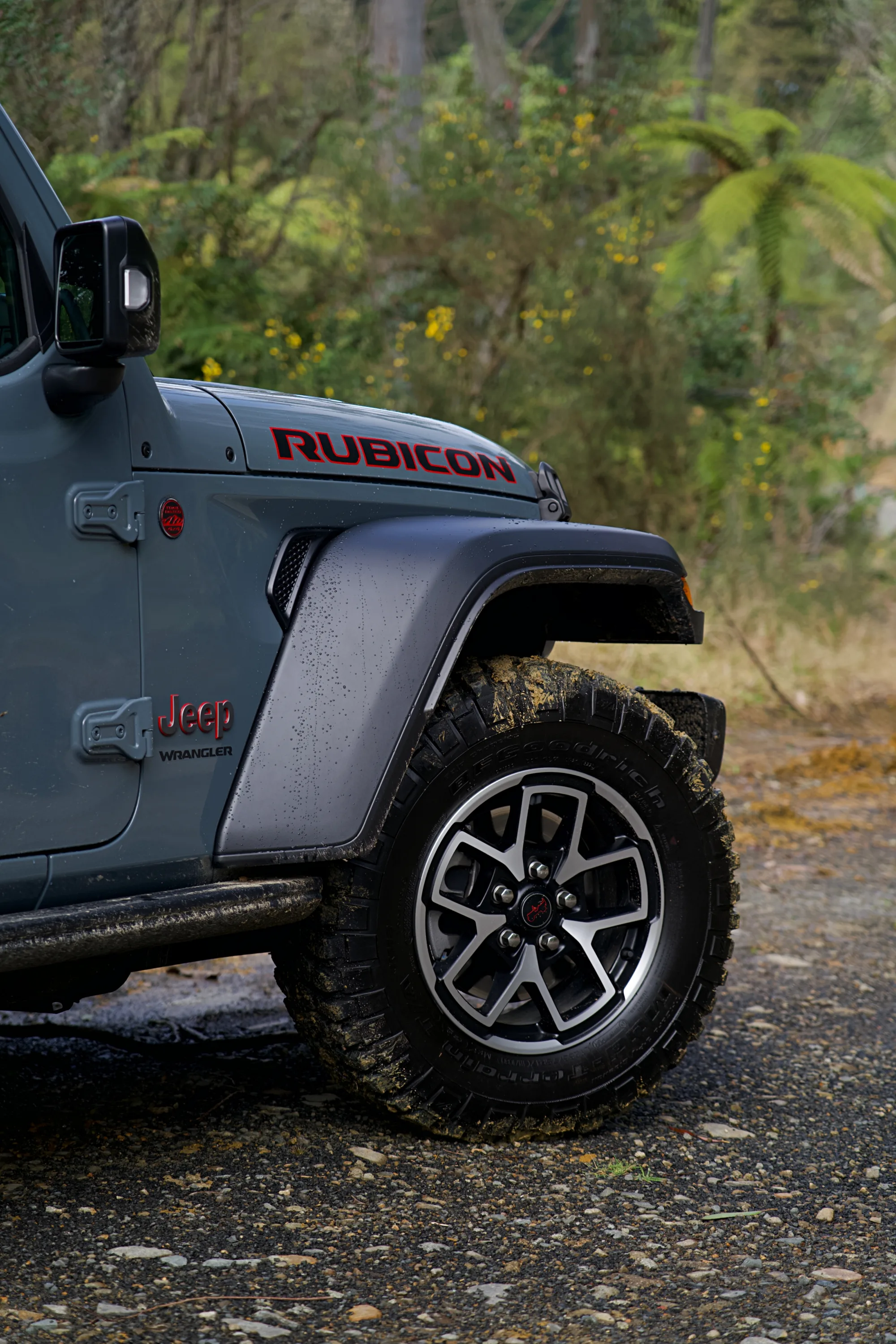
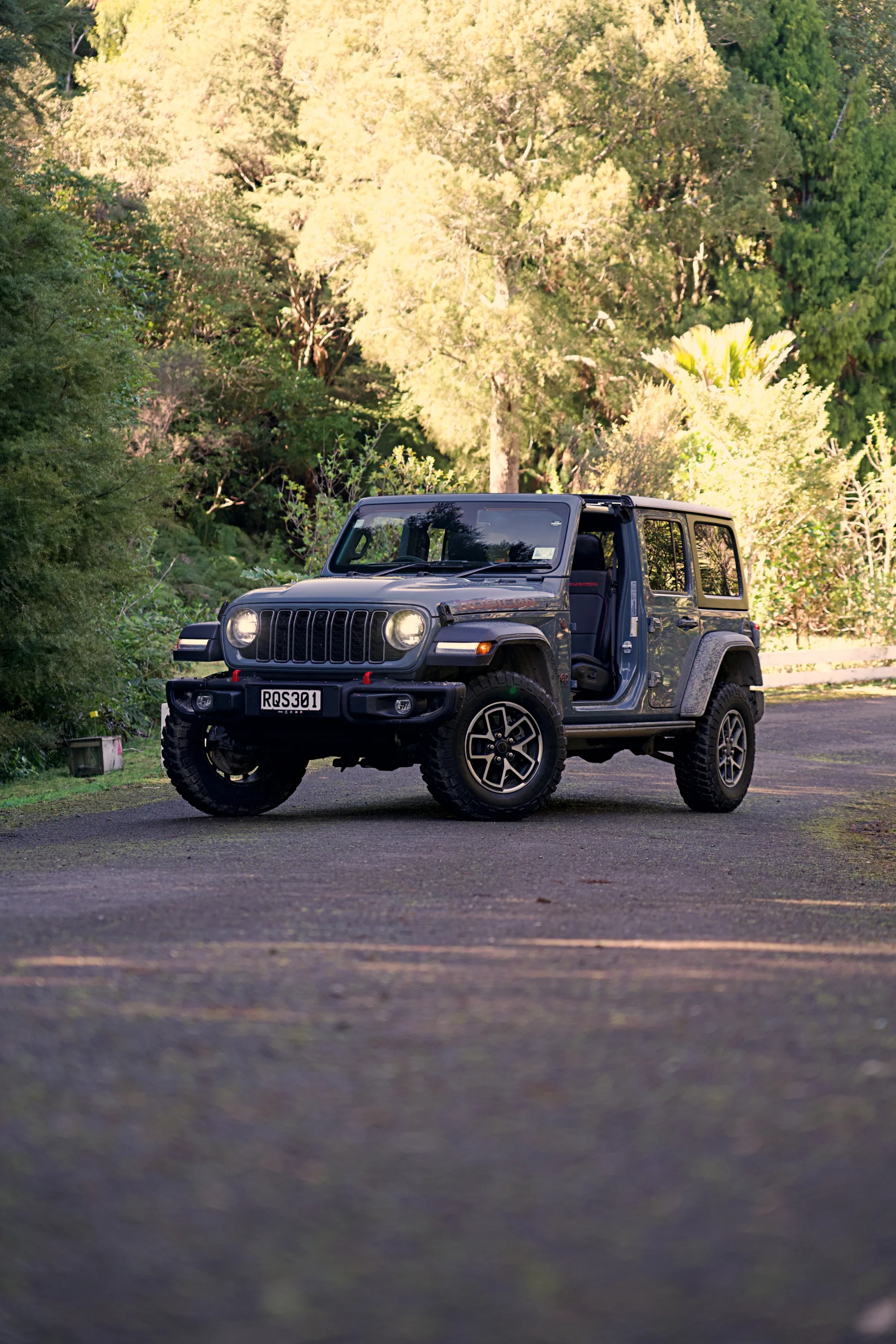
The Wrangler is a very recognisable shape, and while the current generation has been modernised, Jeep has been careful not to dilute what makes it identifiable. The upright (foldable) windscreen, the staple seven slot grille, exposed hinges and boxy proportions are all still there, and in Rubicon specification the large off-road tyres and aggressive hardware make its intentions very clear. The step boards, external spare tyre, metal bumpers with recovery hooks are all elements that constantly reinforce the true intent of this vehicle.
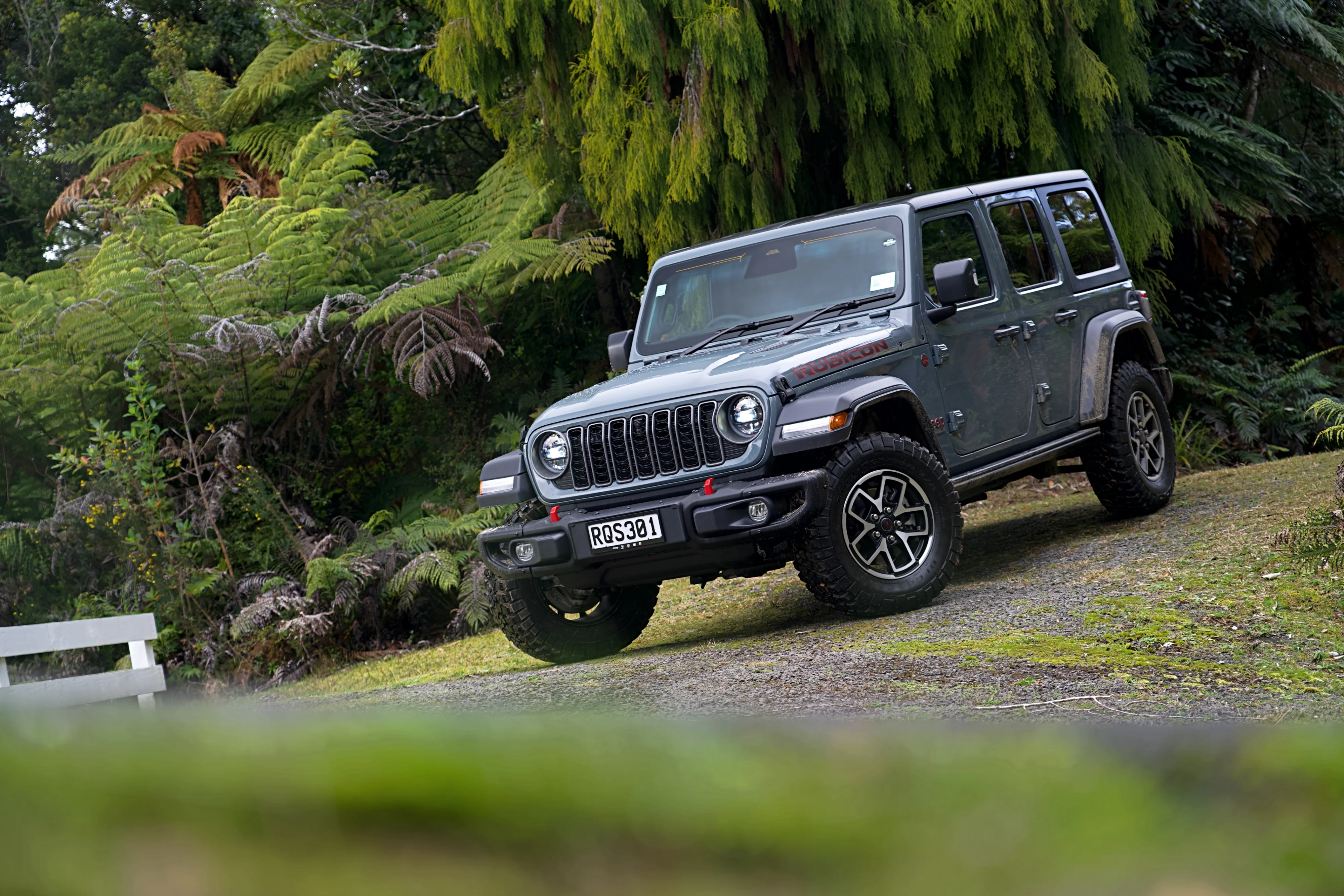
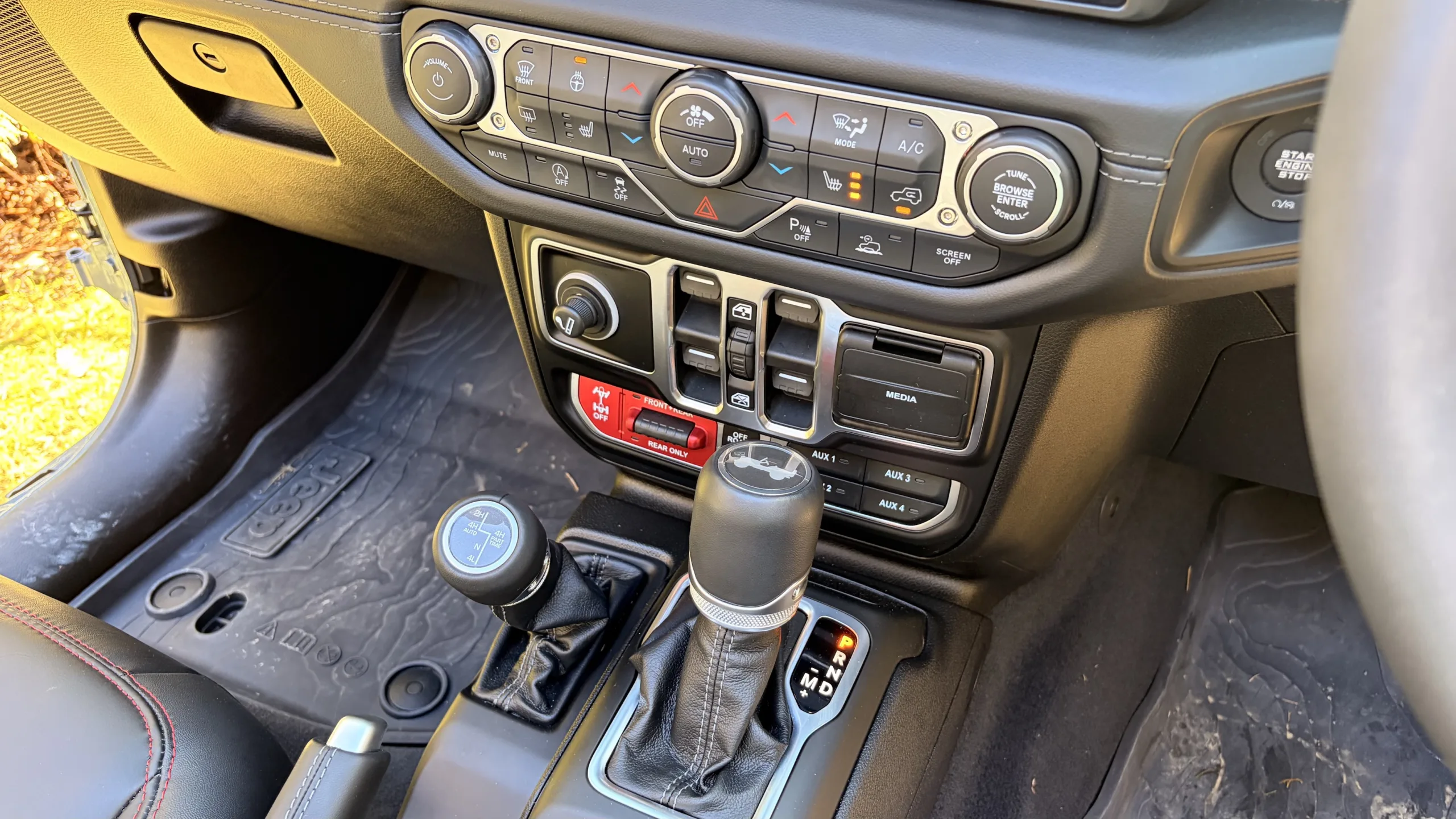
The same genuine philosophy continues inside. You get robust materials everywhere, all-weather mats, there are physical buttons for almost everything, controls are large and easy to understand, and the feedback from the various switches and mechanisms constantly reminds you that this doesn’t need babying.
Even the process of removing the doors and roof panels is deliciously tactile, and has been thought through. Jeep supplies the necessary tools and provides instructions for what needs to be removed, and once you’ve figured it out, the front doors and roof panels can be off in around five minutes. The harder part is figuring out where to put everything once you’ve taken them off. If you can only go doors-off while off-road, where do you put them while you’re actually off-roading? I bet this is something non-posers like myself have figured out, but I was left with this question during my time with it.
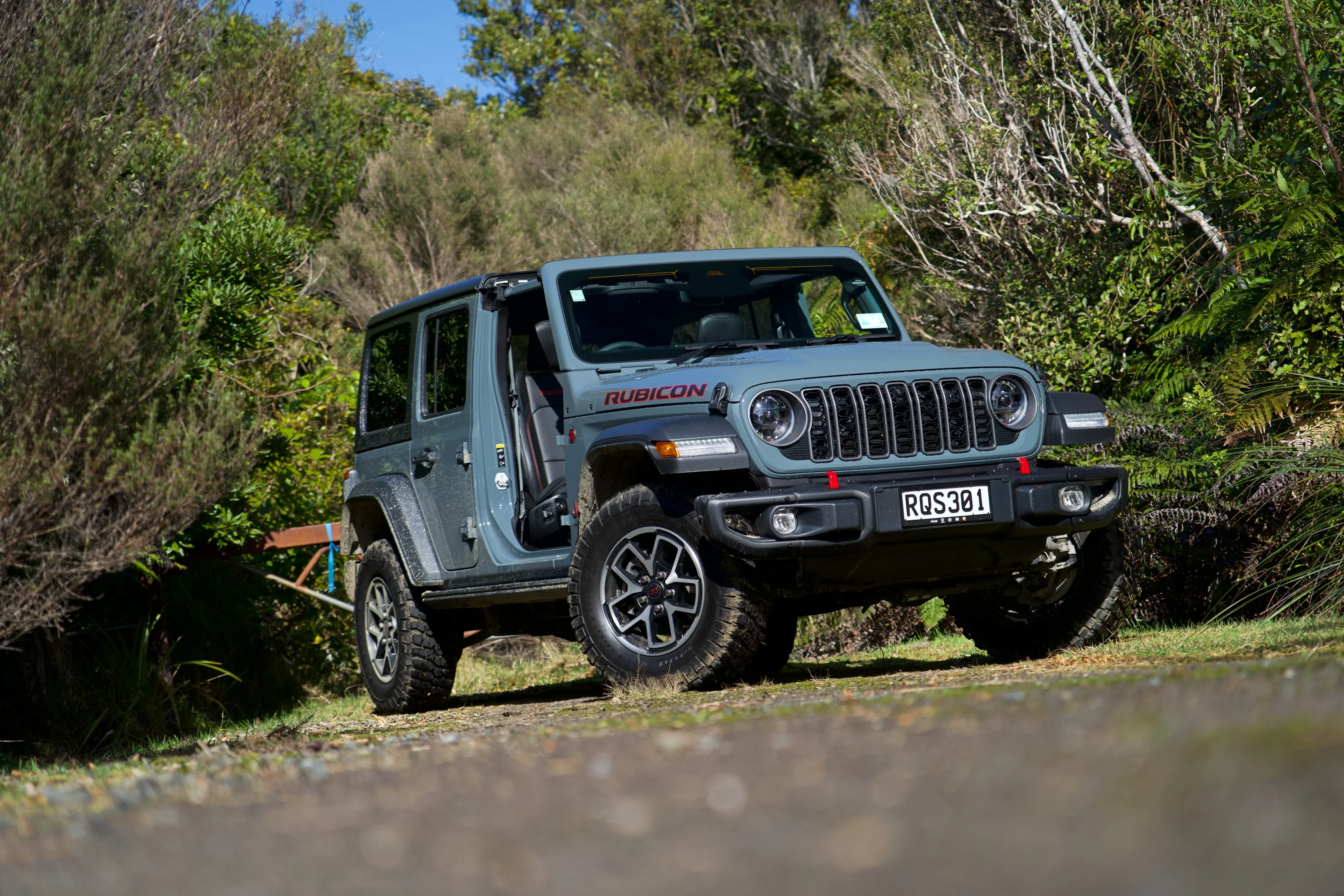
However, in my case, I was lucky enough to have the Wrangler at exactly the right time. A trip to the Coromandel gave me the opportunity to spend a long weekend in an off-grid cabin in the woods, accessed through a 15km gravel section between the town and Whitianga. This meant I could leave the panels there and enjoy a 30km there and back stint of driving with no doors. There is something almost impossible to describe about driving a Wrangler through that sort of environment with nothing between you and the landscape.
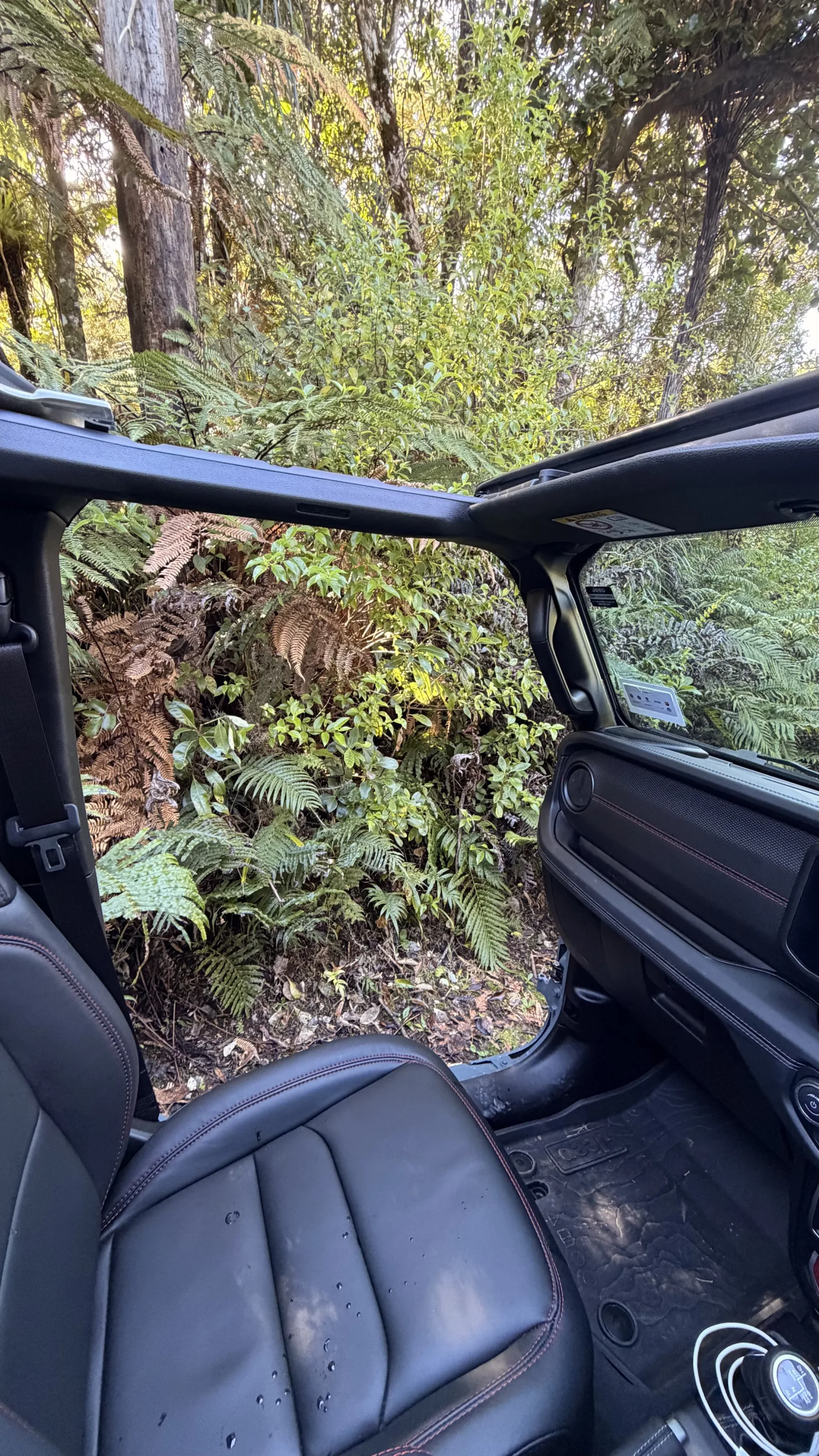
It’s not something another SUV can really replicate, and makes off-roading all that much more enjoyable. You get more sound, smell, and even the freezing winds, even if this comes at the expense of having to rely on the good visibility as the mirrors are now gone. The cabin itself is surprisingly easy to live with, with comfortable seats, plenty of usable space, and despite the rugged brief you still get heated seats, a heated steering wheel and an Alpine sound system. The latter is particularly impressive because Jeep has somehow managed to keep music playing convincingly even with the doors removed.
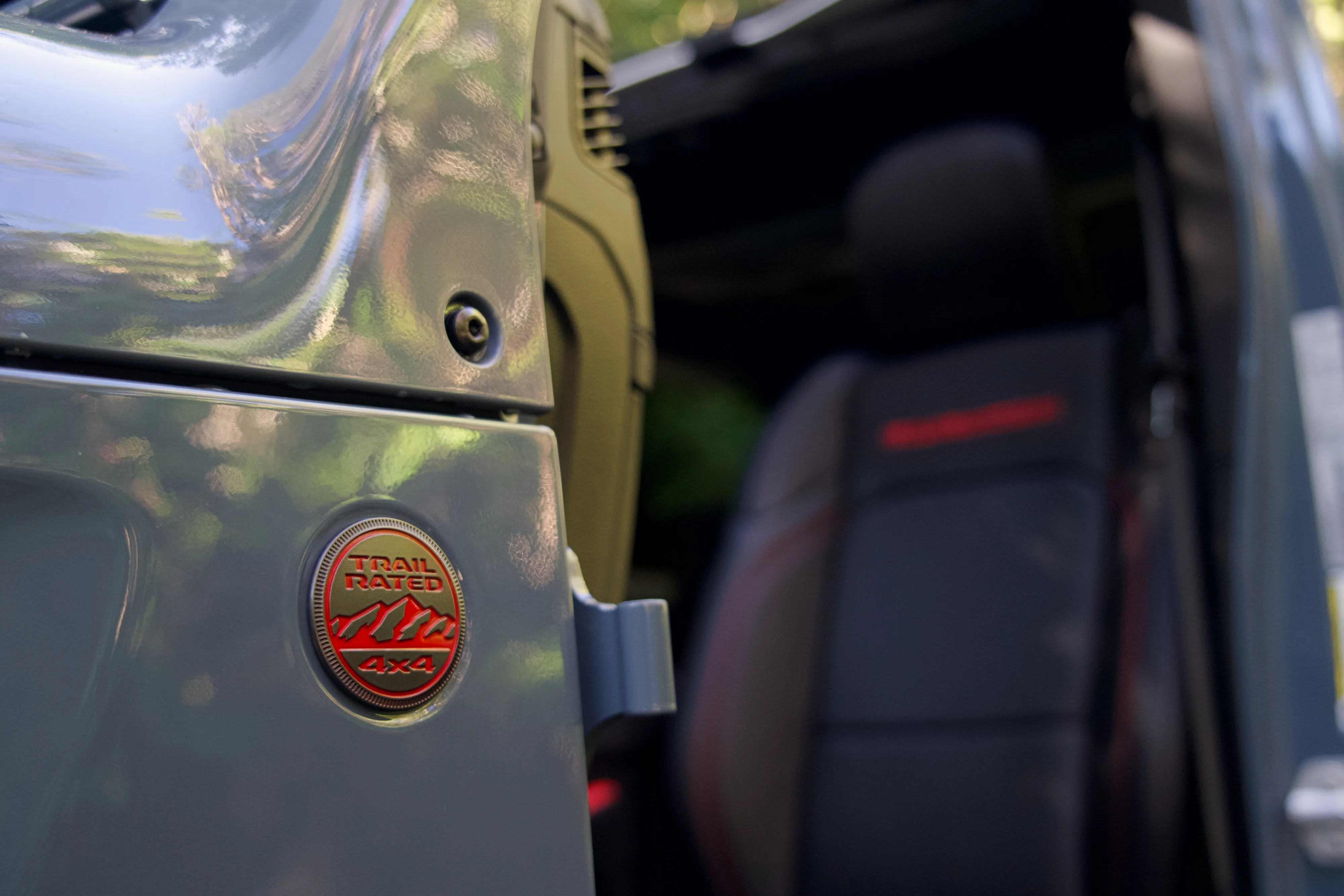
That is partly because the Wrangler’s doors are deliberately simple. Window switches and speakers are not integrated into them in the way they would be on a conventional SUV, making the doors lighter and easier to remove.
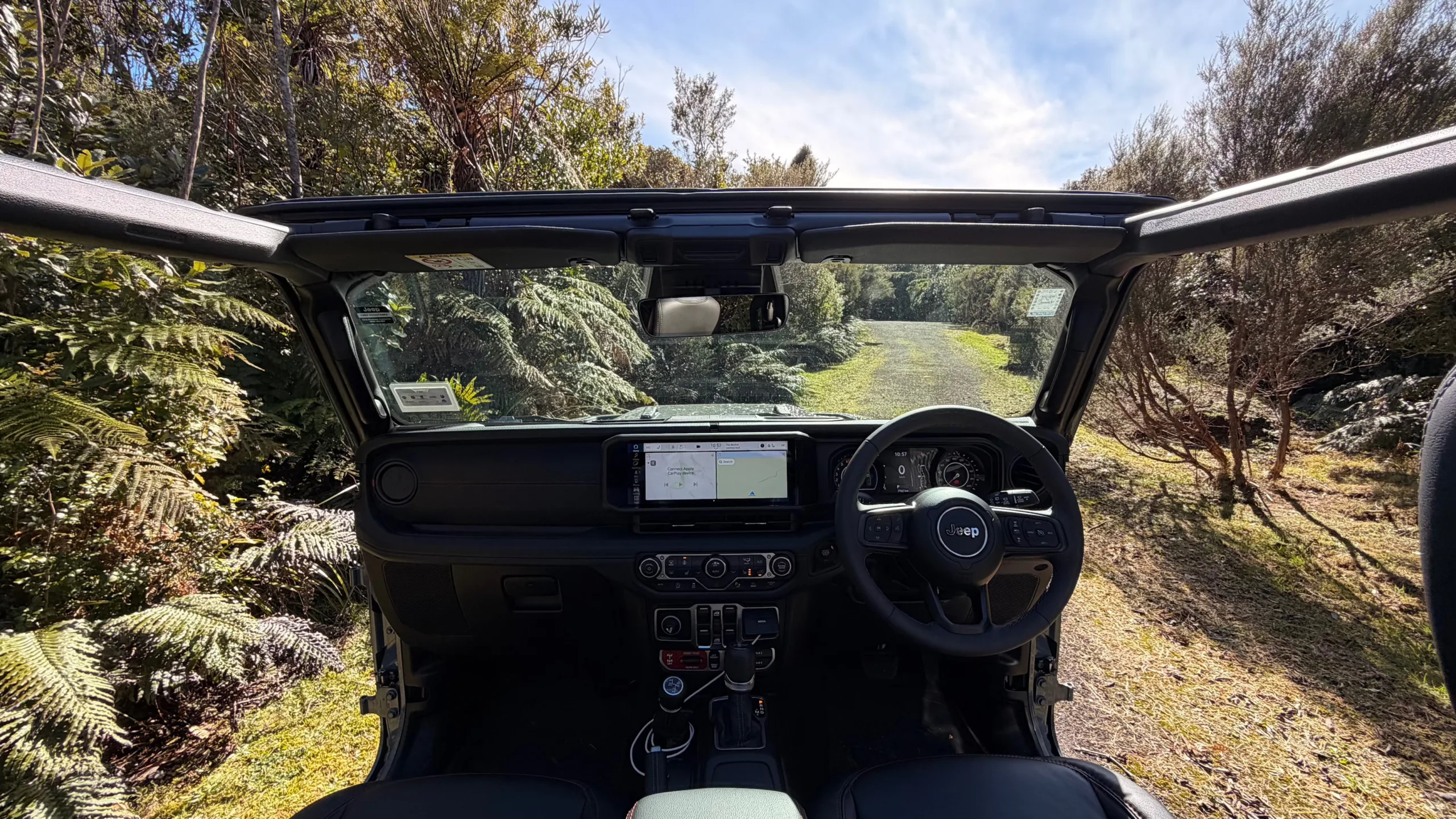
On that topic, technology is more modern than the rest of the vehicle might suggest. You get a wide infotainment display, wireless phone projection and various off-road information screens, all of which are straightforward enough to use. But there are clear signs that Jeep hasn’t prioritised the latest driver assistance technology, as there is no lane keep assist, the camera system only covers the front and rear, and adaptive cruise control doesn’t handle bumper-to-bumper traffic.
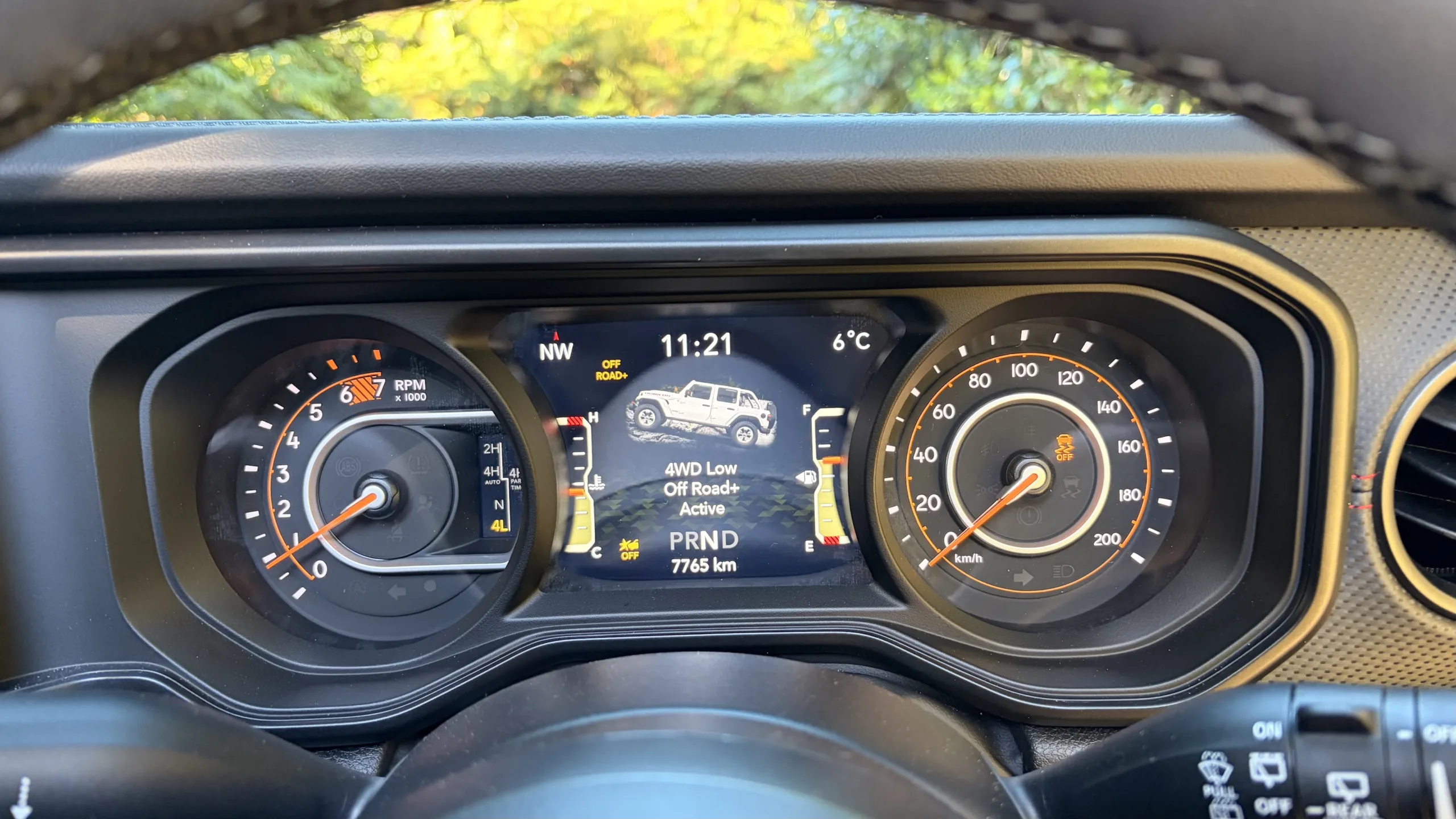
None of this bothered me as much as it probably should have in other cars, because this is not the point of the Wrangler. The 2.0-litre turbocharged four cylinder produces 200kW and 400Nm, and while it gets the job done, it is not an engine you’ll remember fondly – the same thinking as the technology applies here. Fuel consumption hovering around 12L/100km is hardly impressive either, and with the doors removed, there is so much additional noise entering the cabin that the engine’s soundtrack becomes even less relevant (and don’t forget the off-road tyres are also very, very loud).
But you aren’t buying a Wrangler for a stellar powertrain or the last tech, you’re buying it for the style and the hardware underneath, and that’s where it shines, especially in Rubicon form. It gets serious off-road equipment, including low-range gearing, a locking transfer case and locking differentials front and rear. The chunky off-road tyres move from being noisy to becoming one of the car’s greatest assets once you’re in the right terrain. The Wrangler simply finds traction and keeps going, and at that point, all the compromises start making sense.
No, it isn’t quiet. It isn’t particularly refined. It isn’t efficient. It doesn’t have the most sophisticated driver assistance systems and it isn’t the easiest vehicle to manoeuvre around a city. The recirculating ball steering and live axle architecture mean that in tight turns, you have to help the car unwind the steering, and you will be jostled around in busy surfaces, but not a single one of those things are failures.
They are the price of getting something that feels this genuine. Jeep could have softened the Wrangler, added more insulation, made it more aerodynamic and given it every piece of modern assistance technology available. Instead, it has doubled down on the character that makes people want one in the first place. Even the little Easter eggs scattered around the car reinforce the idea that this is supposed to be something you enjoy, not simply something you commute in.
I was used to seeing the latter in the Renegade and the Compass, but without competent, genuine backing. And that is why the Wrangler was such a pleasant surprise: now with cars becoming increasingly capable at doing everything, something so unapologetically focused on doing a particular thing well is refreshing.
The Wrangler is a toy. An expensive, large, very thirsty toy, but a toy nonetheless. It is designed to be used, explored and enjoyed, and once you experience it properly, the compromises become much easier to accept.
I went into this thinking I knew Jeep. I left wondering why it took me so long to drive a Wrangler. And after experiencing it with the doors and roof removed, crawling through the Coromandel and watching people react to it everywhere I went, I genuinely struggle to think of another new vehicle that can offer the same experience. Sometimes, the objectively worse choice is the one you are happiest you made.