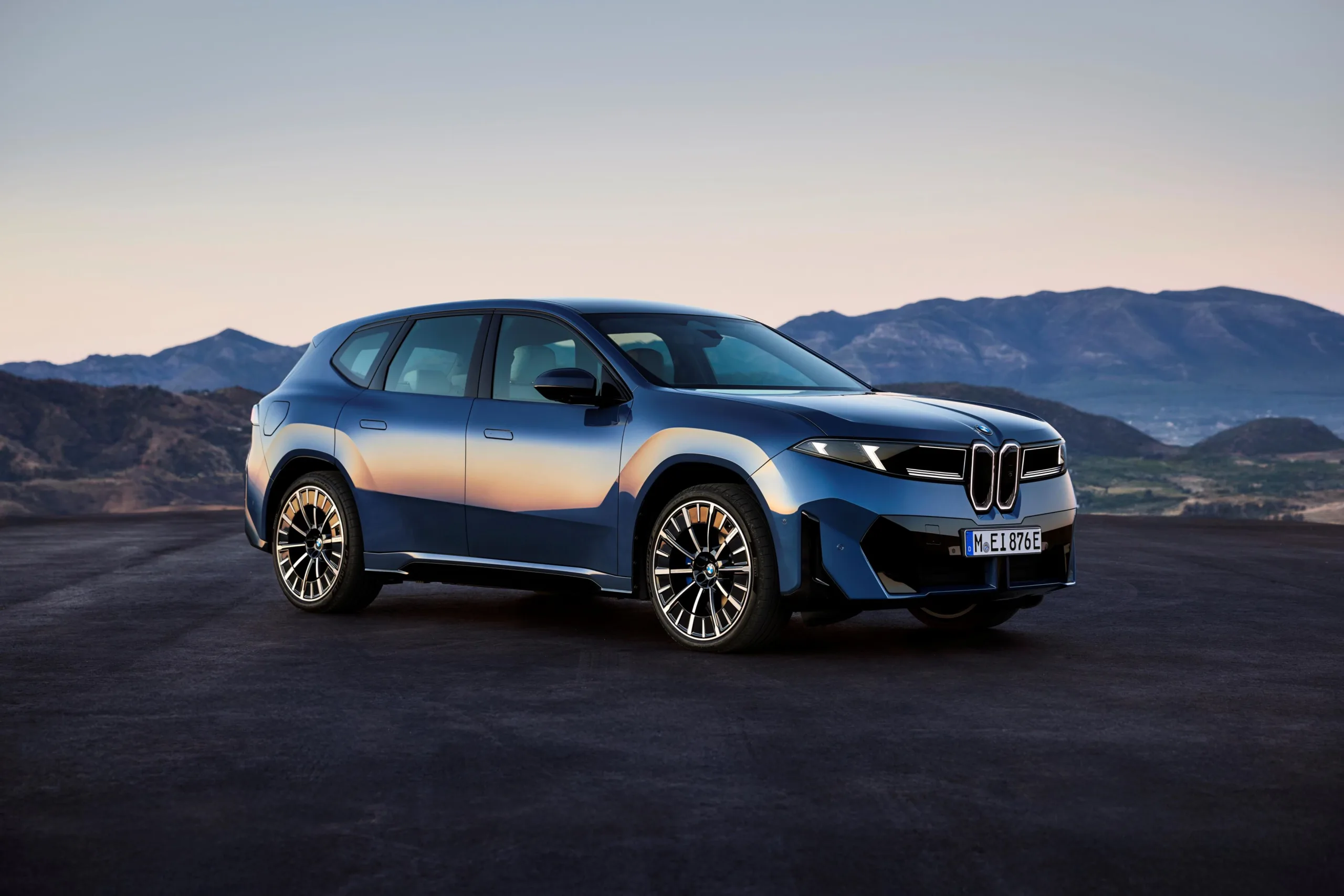
BMW has just rolled a major milestone into the electric era, the two-millionth all-electric vehicle built by the BMW Group is a Tansanit Blue BMW i5 M60 xDrive assembled at Plant Dingolfing, destined for a customer in Spain.
Why this matters (and why it’s exciting)
- Scale of production: Reaching two million battery-electric vehicles (BEVs) shows BMW is no longer a niche EV maker but a mainstream manufacturer scaling up rapidly.
- Dingolfing’s role: Plant Dingolfing has become a BEV powerhouse since starting series production in 2021 with the iX, now producing the widest range of BMW Group BEVs, the iX, i5 (sedan and touring) and i7, accounting for more than 320,000 BEVs from this site alone. That’s almost one in six of BMW’s two million all-electric cars.
- The production strategy: BMW’s “technology-open” iFACTORY approach emphasises flexibility, mixed builds on single lines that can produce ICE, hybrid and all-electric models together. That lets BMW pivot production to EVs without dedicated single-powertrain factories.
What the numbers say about BMW today
Global footprint: The BMW Group operates over 30 production sites worldwide and sold 2.46 million passenger vehicles in 2025, showing EVs are being scaled inside a very large and established automaker.- Business health: The company posted €133.5 billion in revenues and €10.2 billion profit before tax for 2025, with a workforce of 154,540, financial headroom that supports electrification investment.
How Dingolfing became an EV hub
Dingolfing’s transition is fast and deliberate. It switched from introducing the iX in 2021 to becoming the plant with the widest battery-electric lineup within a few years, producing over 320,000 BEVs and seeing more than a quarter of its 2025 output being all-electric. That rapid ramp-up is a strong sign of industrial capability and strategic investment paying off.
What “technology-open” production means for drivers and the industry
BMW’s mixed-build model keeps options open: factories can build cars with different powertrains on the same line, which lowers risk during transitions, improves capacity utilization, and lets BMW respond to shifting customer demand more nimbly than single-powertrain plants. For buyers, it means broader model availability during the EV transition.
Environmental and market context
BMW frames sustainability as central: from supply chains through production to end-of-life, the company emphasizes responsible action as part of its corporate strategy, a message aimed at consumers and regulators alike as automakers scale EV output.EVs represent both an industrial and regulatory pivot across the auto industry, and big-volume manufactures like BMW moving to millions of BEVs helps normalise electric driving across markets.
What’s next
Continued scale-up: With the capability proven at Dingolfing and flexible iFACTORY lines across Germany and beyond, expect BMW to further increase BEV share in its output in the coming years.
Competition and ecosystem: Mass EV production will continue to hinge on battery supply, charging infrastructure, software, and recycling, areas where BMW and peers will invest heavily.
Tarmac Takeaway
Two million BEVs is more than a headline, it’s evidence BMW’s EV program has moved from early-adopter proofs into mass production muscle. Plant Dingolfing’s role shows how legacy automakers can pivot quickly when production systems are flexible and well-funded, and it signals ever-wider availability of premium electric cars for mainstream buyers.