Less time at the testing station, more money in your pocket – but is a two-year WoF really a good thing?
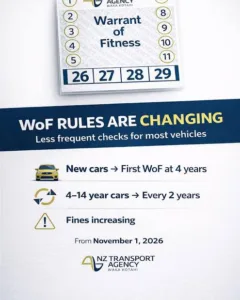
Well, there’s a change coming to New Zealand’s automotive landscape that should put a smile on the faces of plenty of motorists. From today (November 1), some Kiwi cars are officially moving to a two-yearly Warrant of Fitness (WoF) inspection cycle, marking the biggest shake-up of the country’s vehicle inspection system in decades.
Yes, that’s right. For some drivers, the annual trip to the testing station is about to become a biennial affair. Less paperwork, fewer inspection fees and potentially more money left over for fuel, tyres or that ever-growing list of things we convince ourselves the car needs. But before you throw away your calendar reminder, there’s a little more to it than simply doubling the time between inspections.
So, who’s getting a two-year WoF?
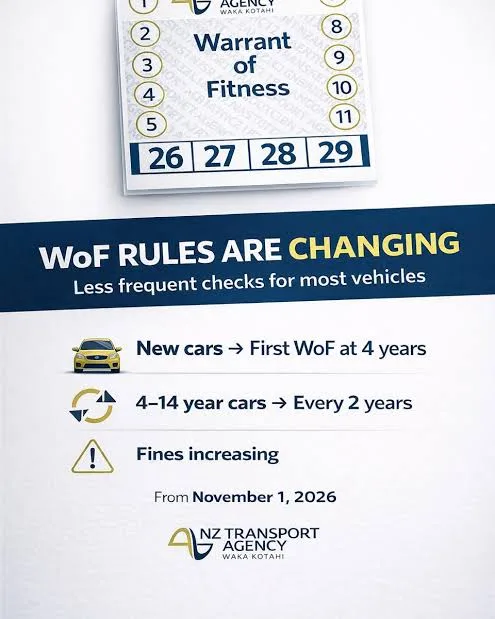
The changes, originally announced by Transport Minister Chris Bishop in April, are being introduced in stages over two years. From November 1, 2026 (again, so today), light vehicles (those weighing less than 3.5 tonnes) that are between four and 14 years old and were first registered on or after November 1, 2019, will move to a two-yearly WoF inspection.
If your vehicle was first registered between November 1, 2013 and October 31, 2019, you’ll have to stick with the annual inspection routine for another year. From November 1, 2027, those vehicles will also qualify for two-yearly inspections.
And there’s even better news for brand-new car buyers. Light vehicles first registered from today will receive a four-year WoF before their second inspection is due, extending the initial period from the current three years. Of course, not everyone gets to enjoy the extended coffee break between inspections.
Older cars? You’re still visiting the testing station
If you’re driving something that’s been around the block a few times, the rules are a little less generous. Vehicles over 14 years old will remain on annual WoFs, while light vehicles and motorcycles first registered before January 1, 2000, move from six-monthly inspections (where applicable) to annual checks.
Light rental vehicles also get a reprieve, with their Certificate of Fitness A (CoF A) inspection frequency changing from every six months to annually. In other words, the newer your vehicle, the less frequently you’ll need to prove it’s roadworthy.
What’s behind the change?
According to Bishop, New Zealand’s vehicle inspection regime has been lagging behind comparable countries such as Ireland, Germany, Japan and Australia.
His argument is relatively straightforward: modern vehicles are safer, more reliable and generally better equipped than the cars our existing WoF rules were originally designed around.
The Government believes the changes will deliver between $2.6 billion and $4.1 billion in net benefits over 30 years, through reduced inspection costs, less time spent complying with regulations and fewer unnecessary repairs.
Apparently, 74% of respondents to the public consultation supported the reforms. That’s a fairly healthy endorsement, although whether the savings will find their way into motorists’ pockets quite as neatly as the modelling suggests remains to be seen.
It’s not all good news – the penalties are getting tougher
While the Government is loosening the inspection schedule for eligible vehicles, it’s simultaneously tightening the screws on drivers who ignore the rules.
From November 1, the infringement fee for driving a vehicle with a WoF that expired more than two months ago increases from $200 to $350. And if you’re running non-compliant wheels or tyres, the penalty doubles from $150 to $300.
So, while you might get an extra year between inspections, don’t mistake that for an invitation to forget about vehicle maintenance altogether.
What about safety? That’s where things get interesting.
Associate Transport Minister James Meager says the revised system will focus inspections more heavily on older, higher-risk vehicles. Government data suggests vehicle-related crash factors begin increasing at around 15 years of vehicle age.
However, there’s a small but important caveat. Modelling suggests the changes could result in an estimated 0.6% to 1.3% increase in defect-related crashes. Meager argues that vehicle defects identified during inspections contribute to just 3.5% of fatal and serious injury crashes, compared with speed, alcohol and drugs, which account for considerably larger proportions.
It’s an interesting argument, although it won’t necessarily reassure everyone who shares the road with a vehicle that hasn’t been inspected for two years. The NZTA is also making certain advanced driver assistance systems (ADAS) part of WoF and CoF A inspections, recognising that modern vehicle safety isn’t just about brakes, tyres and suspension anymore.
Those electronic safety systems are increasingly important, and making sure they function correctly is a sensible addition to the inspection process.
The industry isn’t entirely convinced
Not everyone is celebrating. The Motor Trade Association (MTA) has described the changes as well-intentioned but warned that motorists could ultimately pay more through increased repair costs, insurance and ACC levies.
MTA advocacy head James McDowall points out that around 41% of vehicles currently fail their WoF, while more than half a million vehicles are on New Zealand roads without a valid warrant at any given time. His concern is that extending inspection intervals could make an existing problem worse rather than better.
He also highlights that one in three vehicles between eight and 10 years old already presents with safety-related issues each year. That’s not exactly an insignificant number. And while the original proposal was for two-yearly inspections on vehicles up to 10 years old, the final policy extends that eligibility to 14 years.
It’s a significant change, and one that puts even greater responsibility on vehicle owners to keep their cars maintained between inspections.
The bottom line: A WoF isn’t a maintenance plan
Here’s the thing. A WoF has never been a substitute for looking after your car. It confirms that your vehicle met the required safety standards on the day it was inspected. It doesn’t guarantee that your tyres won’t be bald six months later, your brakes won’t start squealing or that a warning light won’t suddenly illuminate on the dashboard.
NZTA head of vehicle regulation Geoff Williamson is urging motorists to carry out regular checks, particularly of tyres, lights, indicators, windscreen wipers and mirrors. Monthly checks and a once-over before longer journeys are recommended. Surely that’s not unreasonable.
Modern cars might be safer and more reliable, but they’re not indestructible. Nor does a two-year WoF mean you can ignore the service schedule and hope for the best.
So, is this a win for Kiwi motorists?
On paper, absolutely. Fewer inspections mean less inconvenience and lower compliance costs for eligible vehicle owners. The Government gets to bring New Zealand closer to overseas inspection regimes, while drivers get a little more breathing room.
But there’s a trade-off. Less frequent inspections mean greater responsibility between visits, and the MTA’s concerns about vehicle condition are worth taking seriously.
Our advice? Enjoy the extra year, spend some of those saved inspection dollars on keeping your vehicle in good shape, and don’t wait for a dashboard warning light or an unfortunate roadside encounter to remind you that cars still need looking after.
After all, a two-year WoF might be coming, but a two-year holiday from car maintenance definitely isn’t.