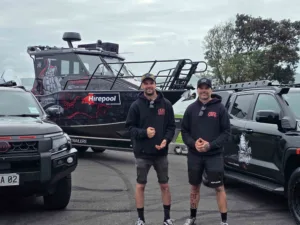
When your fishing adventures involve remote coastlines, challenging boat ramps and a 3.2-tonne fishing boat called Holy Ship, choosing the right tow vehicle is rather more important than deciding whether to pack the chilly bin. We hitch up with Fishing and Adventure to find out if the Nissan Navara is up to the job.
There are plenty of ways to spend a day with a Nissan Navara. You could drive it around town, head off on a weekend escape, tackle some gravel roads or load it up with all the gear required for a serious outdoor adventure.
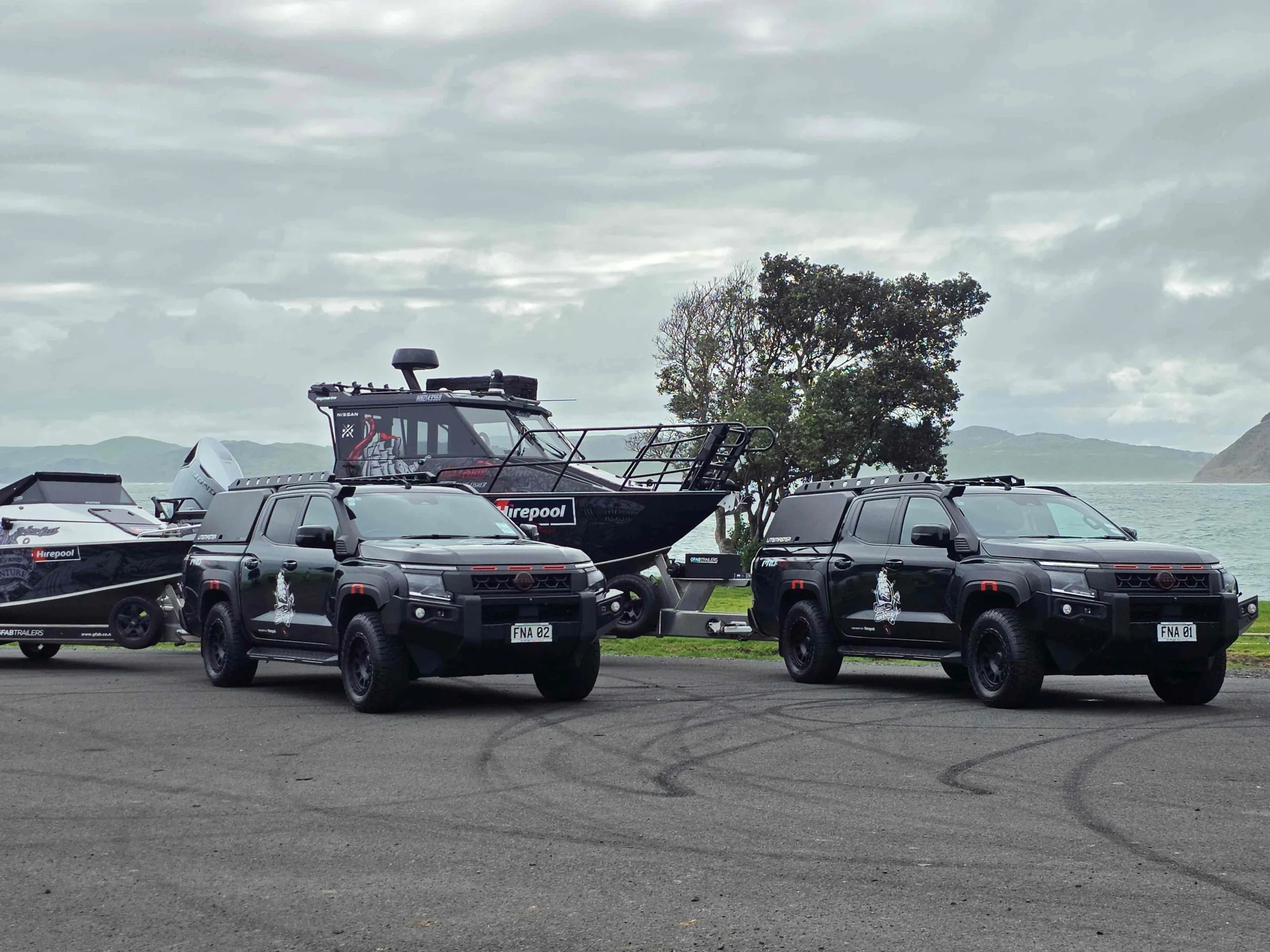
Or, if you’re feeling particularly brave, you could hitch up a 7.6-metre Surtees Game Fisher, load it onto a triple-axle trailer, call it Holy Ship and take the whole lot for a drive. Because why make life easy when you can make it interesting?
That’s exactly what we did when we joined Scott Parry and Mig Rumney from Fishing and Adventure for a day of towing, talking boats, sharing fishing stories and discovering what happens when a Nissan Navara meets a rather sizeable piece of marine engineering. And while there were no enormous fish to wrestle during our outing, there was plenty of weight behind the experience.
Fishing and Adventure: 15 years of Kiwi missions
If you’ve spent any time watching New Zealand fishing television, chances are you’ve encountered Fishing and Adventure. Scott and Mig are cousins who have spent around 15 years bringing fishing adventures to Kiwi audiences, exploring the country’s coastlines, waterways and some seriously spectacular locations.
The show has completed its 14th television season, and while traditional television remains part of the operation, YouTube has opened up another avenue for the pair to share their adventures. Their YouTube content includes a series of Side Missions, with 12 episodes planned each year. These offer viewers a little more freedom to explore the experience beyond the fishing itself, including the travel, accommodation, behind-the-scenes moments and the occasional adventure that doesn’t necessarily fit the conventional television format.
It’s a smart move. After all, fishing is about more than what happens when a line hits the water. There’s the journey, the preparation, the people, the weather and the inevitable debate about who should have caught the biggest fish.
But getting to those fishing destinations requires more than enthusiasm and a decent collection of lures, it requires boats. Big ones. And that means towing.
Meet Holy Ship
Let’s get one thing straight: Holy Ship isn’t the sort of boat you casually hook up behind a ute and forget about until you reach the water.
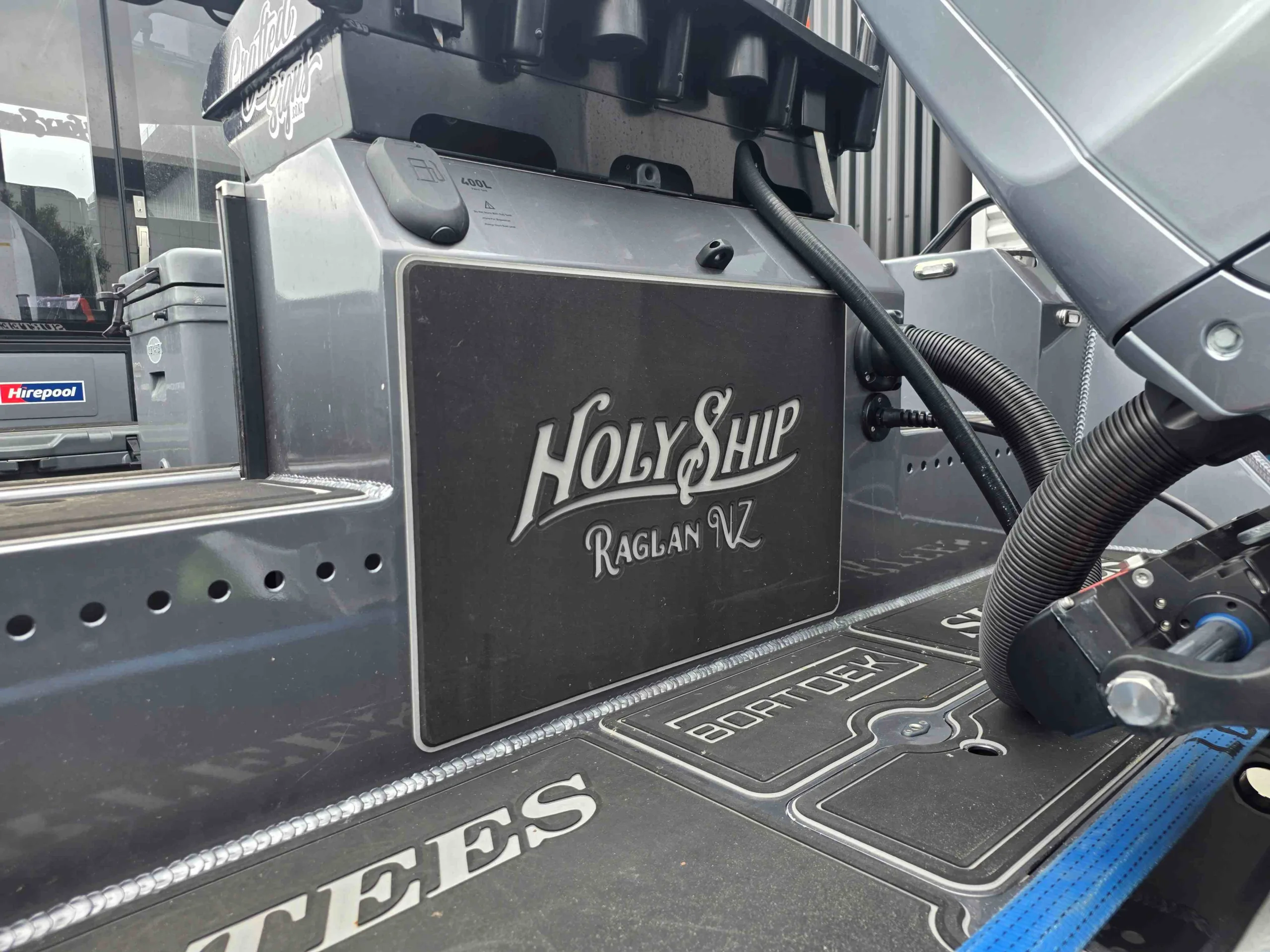
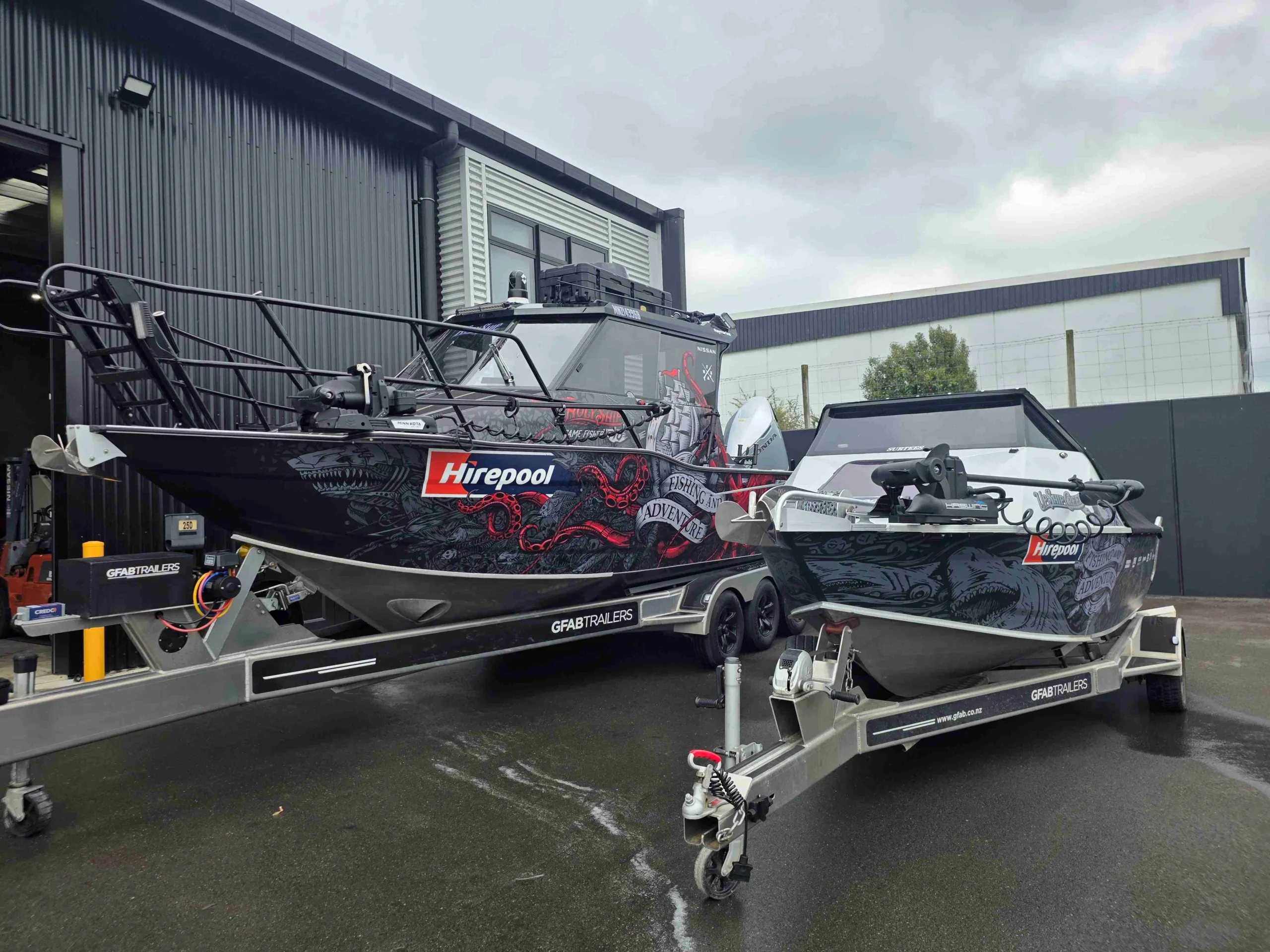
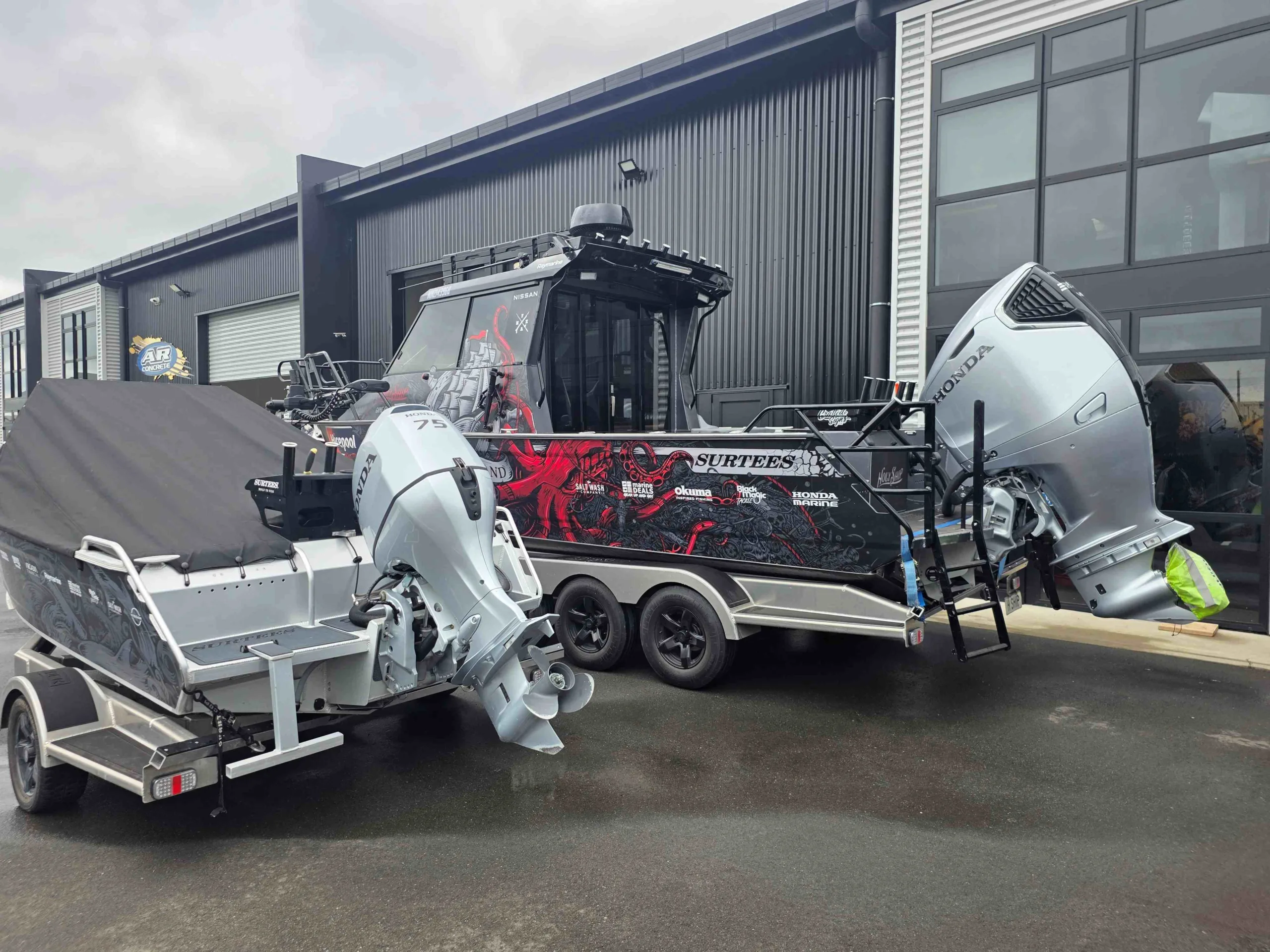
The star of our towing adventure is a 7.6-metre Surtees Game Fisher, built in Whakatāne and sitting on a triple-axle trailer manufactured by GFB. The current rig weighs approximately 3.2 tonnes, according to Scott and Mig, with the boat’s extensive equipment contributing to its substantial mass. And when they say extensive, they aren’t kidding.
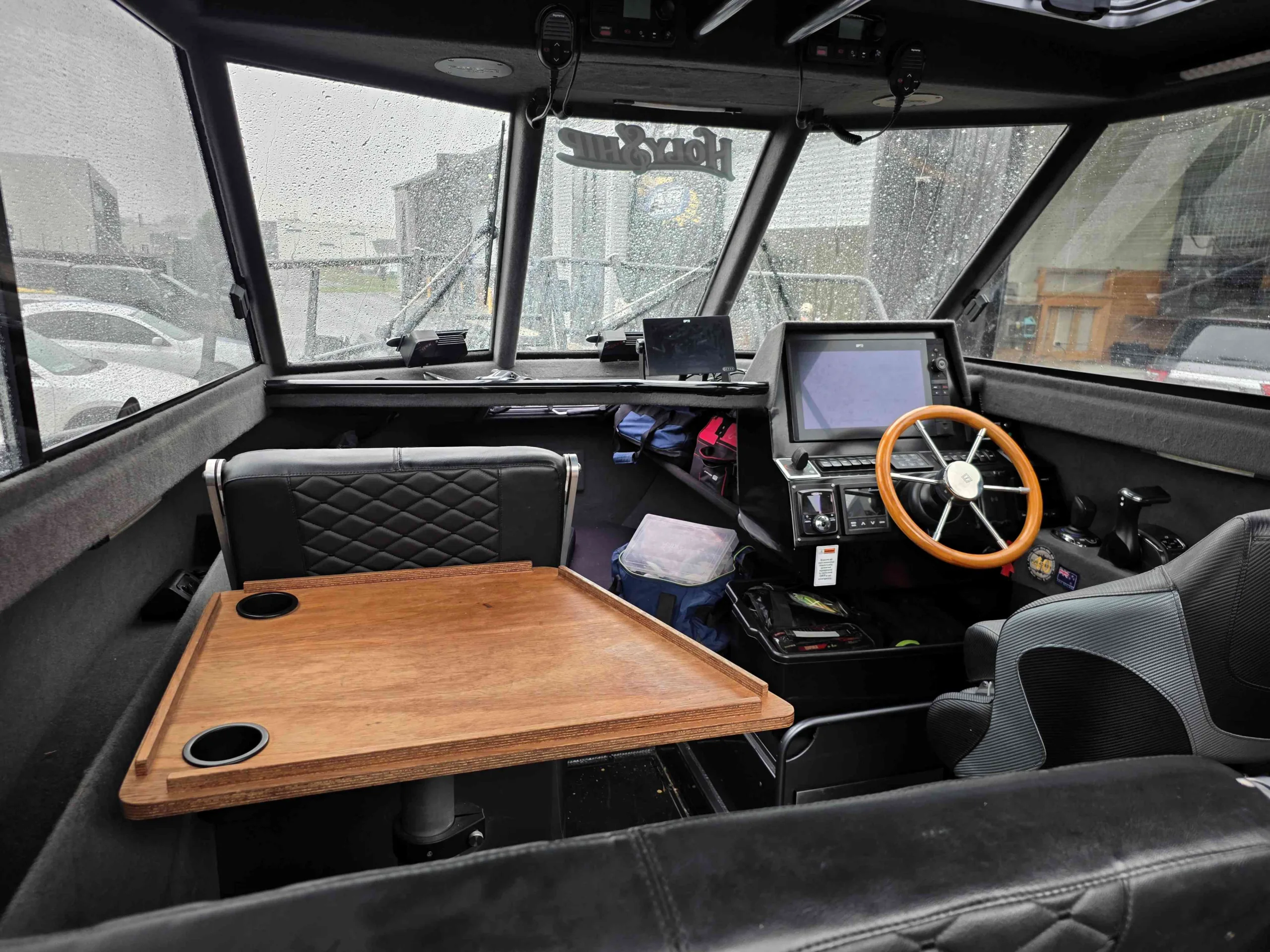
The boat is equipped with an impressive range of fishing and boating technology, including features such as bow thrusters and trolling motors. Many of these items would be optional extras for an ordinary recreational fishing boat, but Fishing and Adventure benefits from a collection of equipment that helps them get the most out of their on-water missions.
The aluminium construction also provides flexibility for modifications, while the cabin has been configured to accommodate the gear the crew needs and allow them to sleep aboard during longer adventures. Although Scott admits that four people sharing the space overnight can become a rather intimate experience, the ability to stay aboard for two or three nights is a useful advantage when exploring remote locations.
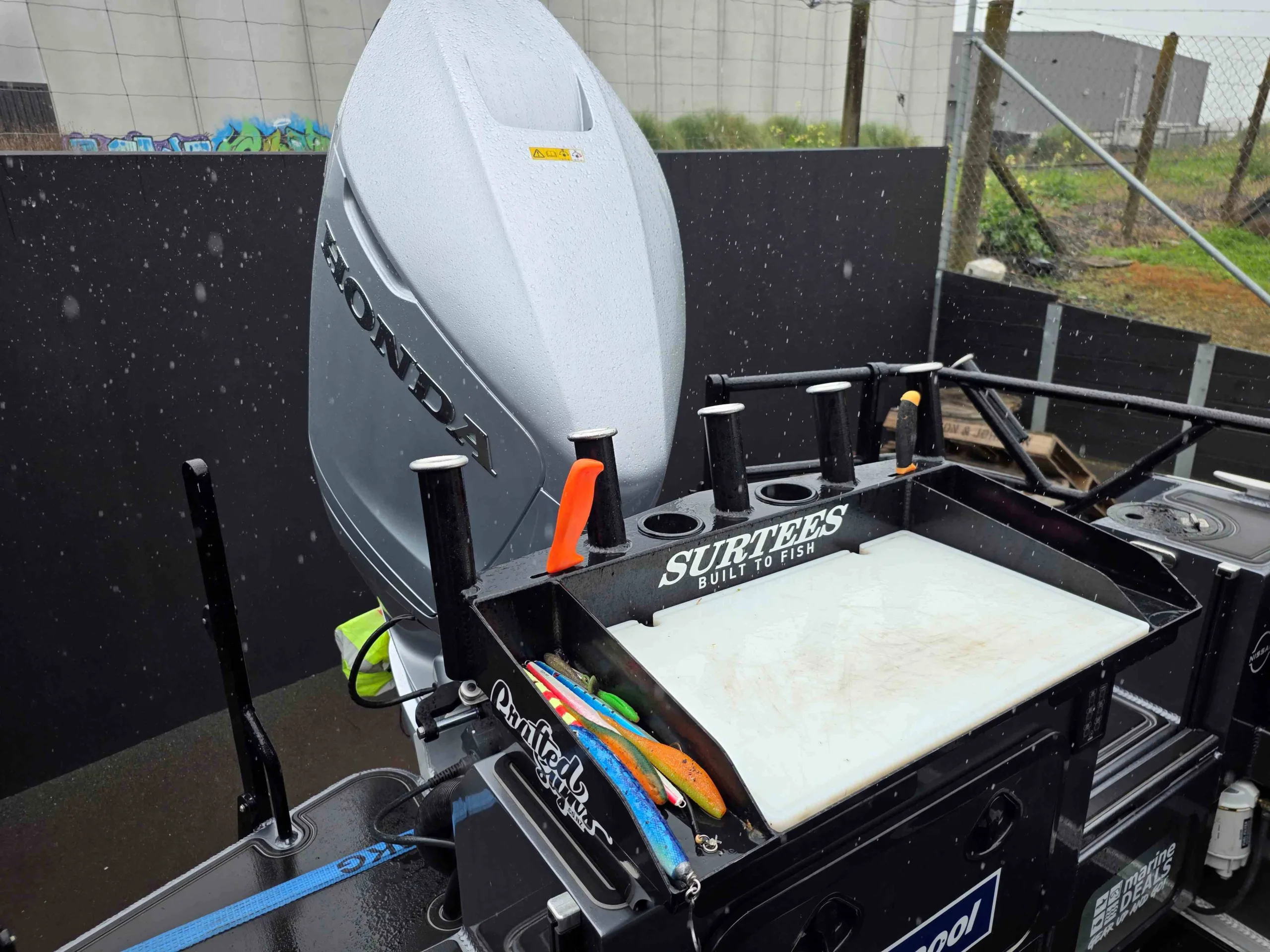
Of course, all that equipment, plus the trailer and the boat itself, adds up to one serious towing assignment, fortunately, Holy Ship has a capable partner.
Enter the Nissan Navara
Nissan’s relationship with Fishing and Adventure officially began in 2024, bringing together a brand with a long association with Kiwi outdoor enthusiasts and a television team whose adventures demand dependable transport.
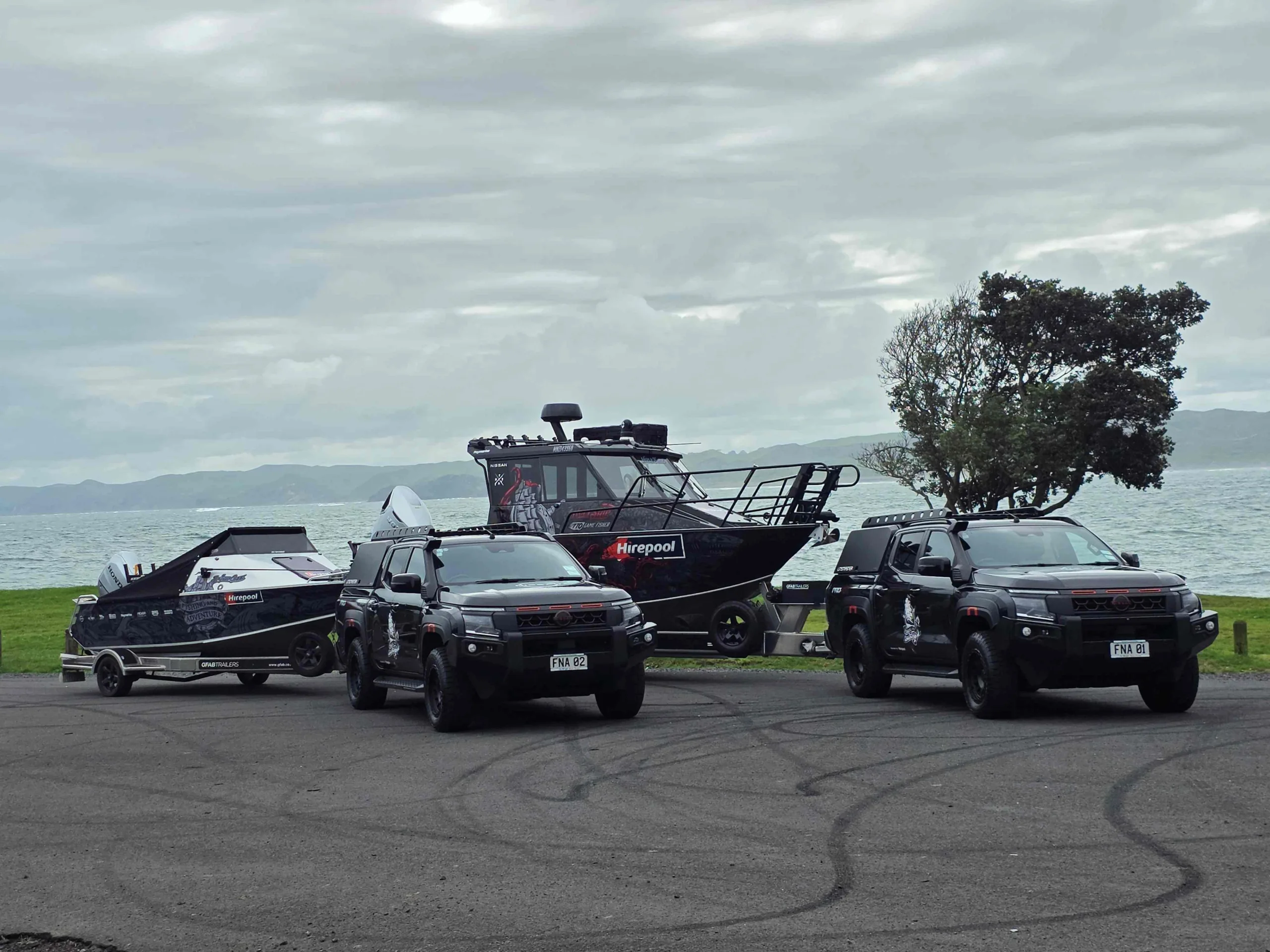
The partnership supplies the crew with two Nissan Navaras to tow their boats around the country. For Nissan New Zealand, it’s an opportunity to demonstrate the Navara’s capabilities in real-world conditions rather than simply relying on a brochure, a carefully staged photograph or a perfectly level piece of tarmac.
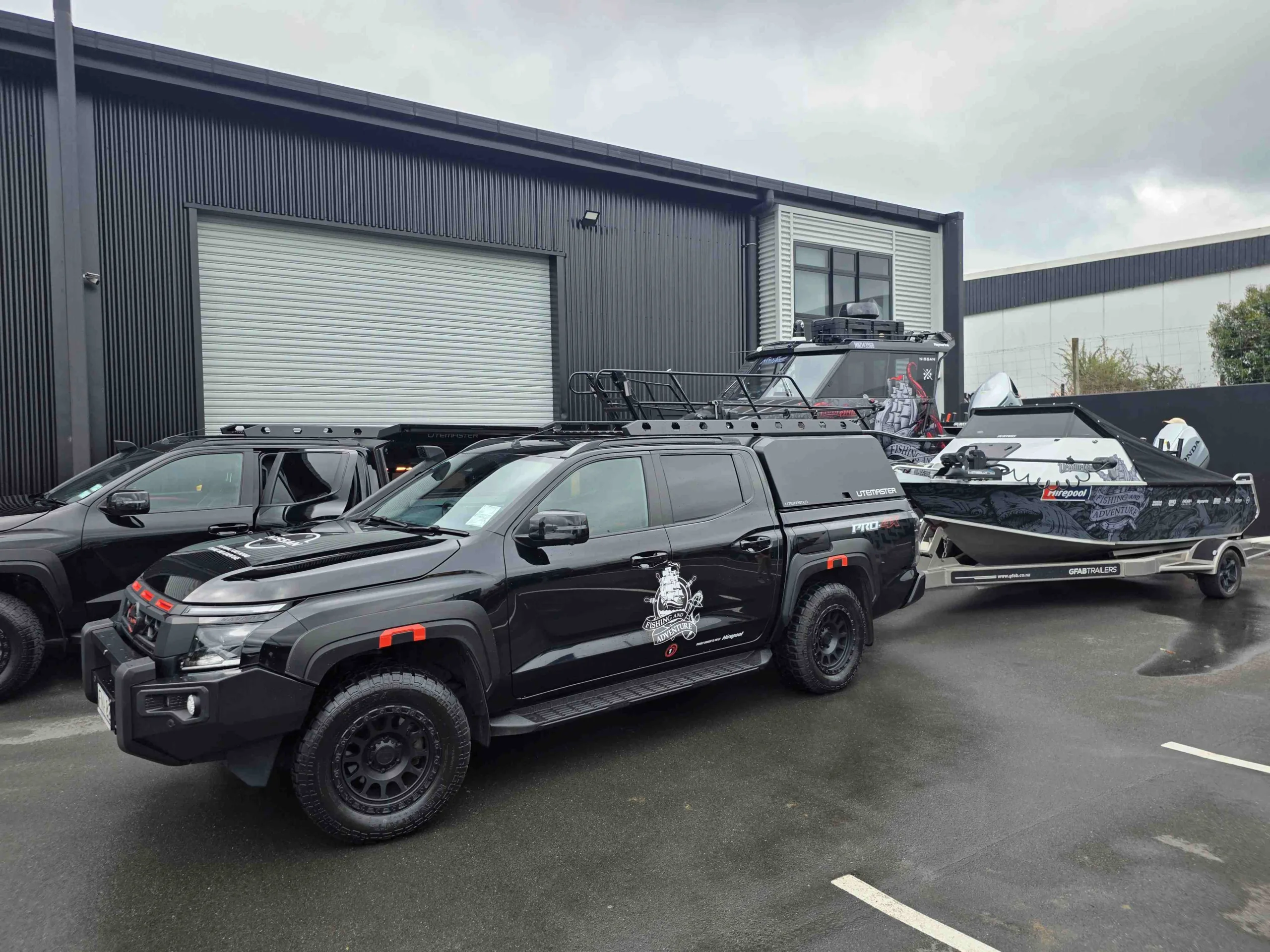
Because towing a boat around New Zealand isn’t always a gentle exercise. There are long motorway journeys, steep hills, gravel roads, slippery boat ramps and tight access points where the driver needs to be particularly aware of the vehicle, trailer and everything surrounding them.
And then there’s the boat itself. Scott says having a tow vehicle capable of managing the weight, equipment and distances involved makes a genuine difference to the way the team operates.
“We’re stoked to have Nissan on board,” he explains. “We’ve owned different Nissan models over the years, so it’s a brand we know and trust.” That relationship goes back further than the current sponsorship, too.
When Fishing and Adventure was getting established around 2012–2013, Scott purchased a Nissan Navara to serve as the team’s original towing vehicle. Back then, the crew was still building its profile, and vehicle sponsorship wasn’t part of the picture.
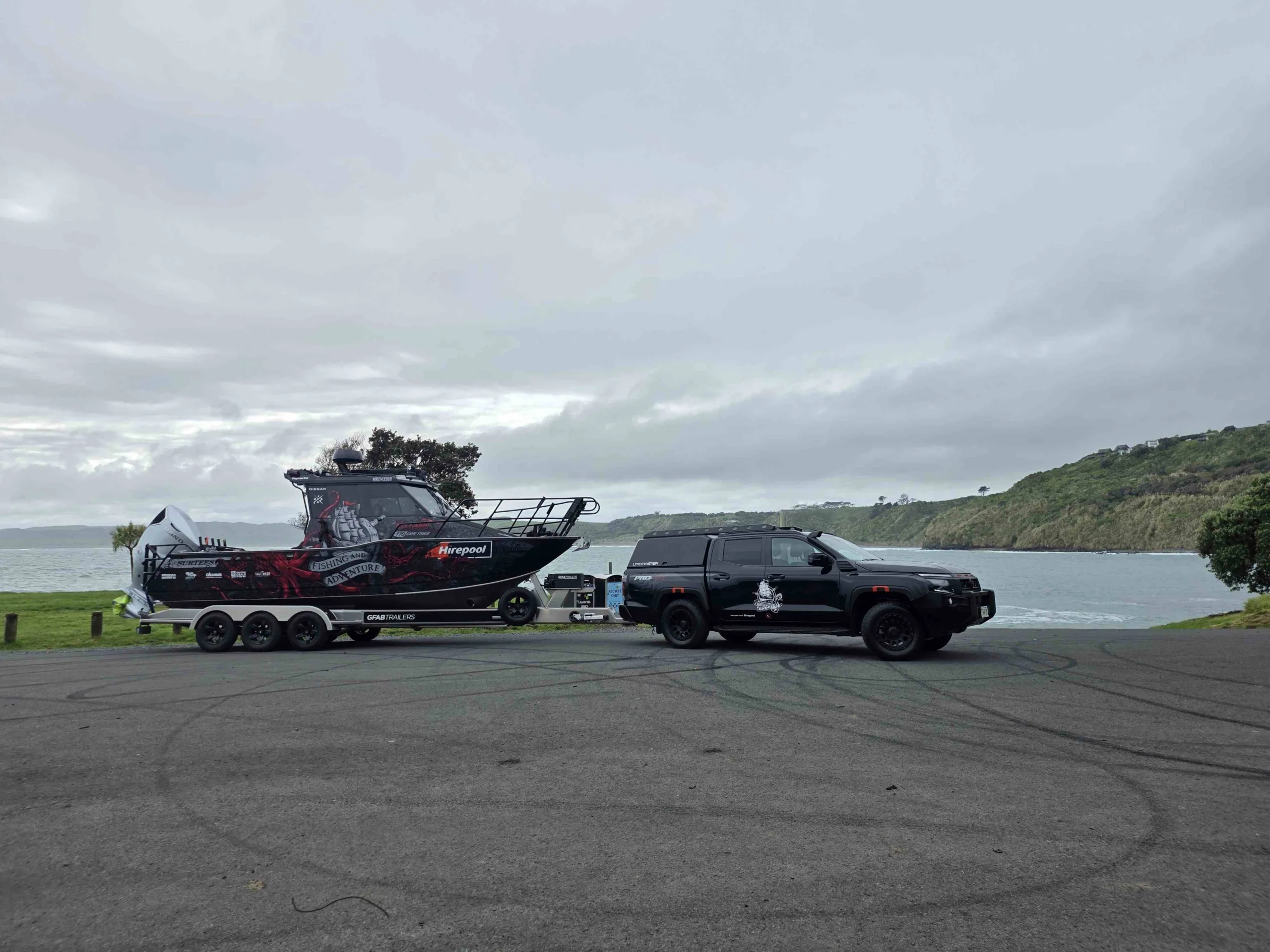
He’d tried to establish a relationship with Nissan before, but the timing wasn’t right. Eventually, the partnership came full circle. Now, several years into the official arrangement, the Navara has become an integral part of the team’s adventures.
Three tonnes of boat, one very important trailer
One of the interesting things we discovered during our conversation was that towing performance isn’t solely about the vehicle doing the pulling. The trailer matters. A lot.
Holy Ship sits on a triple-axle GFB trailer, and Scott credits its quality as a significant contributor to the way the entire combination behaves on the road. That makes sense. A substantial boat needs to be supported by a trailer designed to carry its load properly, with the right balance, running gear and braking equipment.
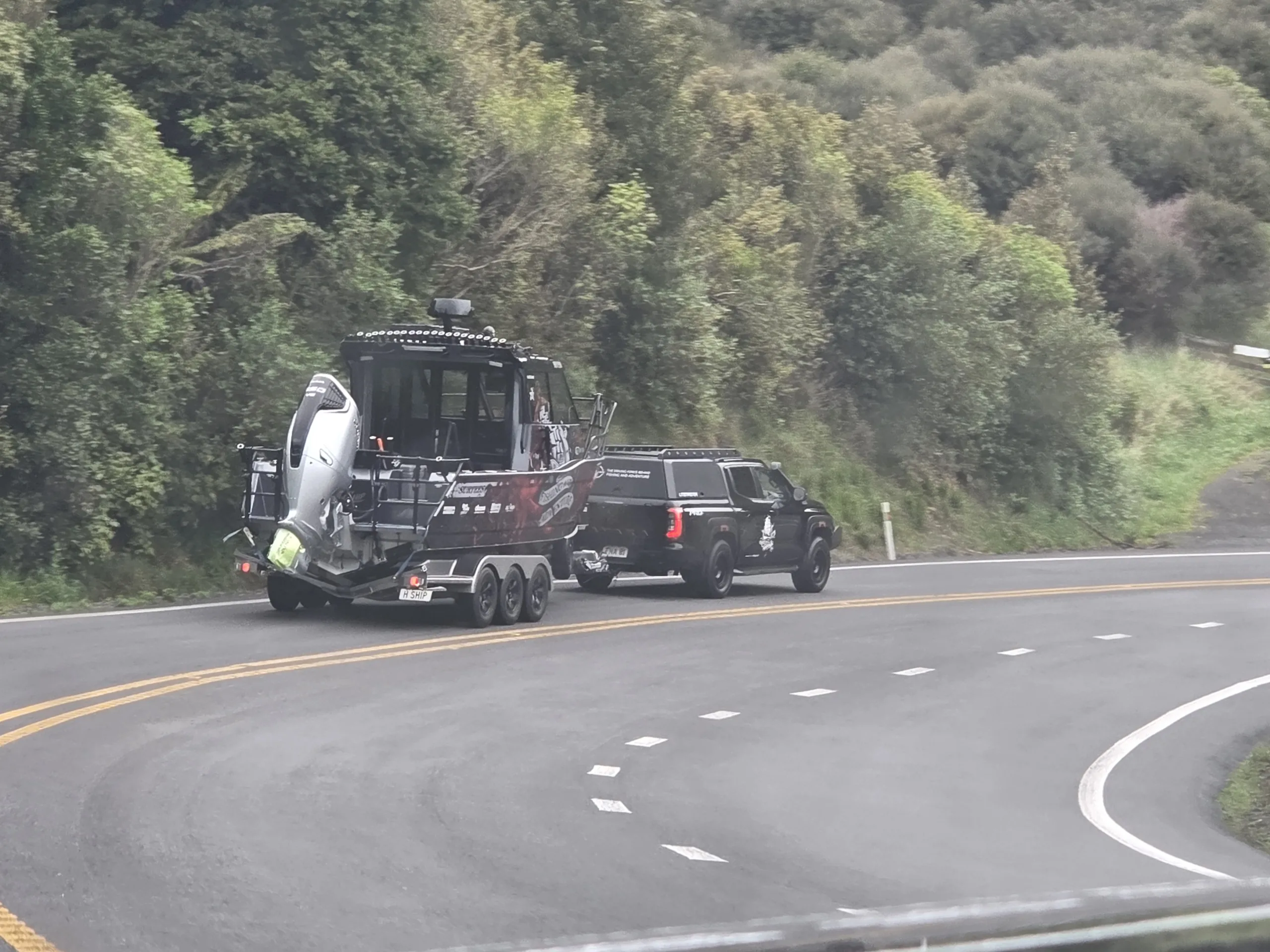
Even the most capable tow vehicle can’t magically compensate for a poorly matched trailer or an incorrectly loaded combination. And with a rig of this size, there’s plenty to think about. It’s not just the weight. There’s the length, the width, the turning circle and the extra room required when manoeuvring. A narrow access road or awkward boat ramp can quickly turn a straightforward trip into an exercise in patience and careful planning.
Scott and Mig were understandably keen to ensure the Navara could handle their requirements before committing to the arrangement. They put the vehicle through its paces and gained confidence in its ability to tow Holy Ship, including the sort of long-distance journeys that make up a considerable part of their working lives.
The result? A ute that the pair say has proved itself capable of handling the job. Naturally, the driver still needs to remain alert. Three tonnes behind you isn’t something to ignore, and even a good tow vehicle can’t repeal the laws of physics.
The smaller boat: Up Ship Creek
Holy Ship might command attention, but it’s not the only boat in the Fishing and Adventure fleet. The crew also operates a smaller boat called Up Ship Creek, which is better suited to harbour fishing and coastal missions. Compared with its considerably larger sibling, towing the smaller boat feels almost effortless. During our outing, it was easy to forget it was even attached. Almost.
That’s one of the advantages of having the right equipment for the job. The smaller boat offers versatility for different types of trips, while the Navara provides the flexibility to transport either boat around the country.
Mig particularly values the ute’s four-wheel-drive capability when the adventures take the team away from sealed roads.
“Getting to some of our fishing spots means dealing with gravel roads, boat ramps and conditions that can change pretty quickly,” he says.
“Having four-wheel-drive capability gives us extra confidence when we need traction, particularly when towing.”
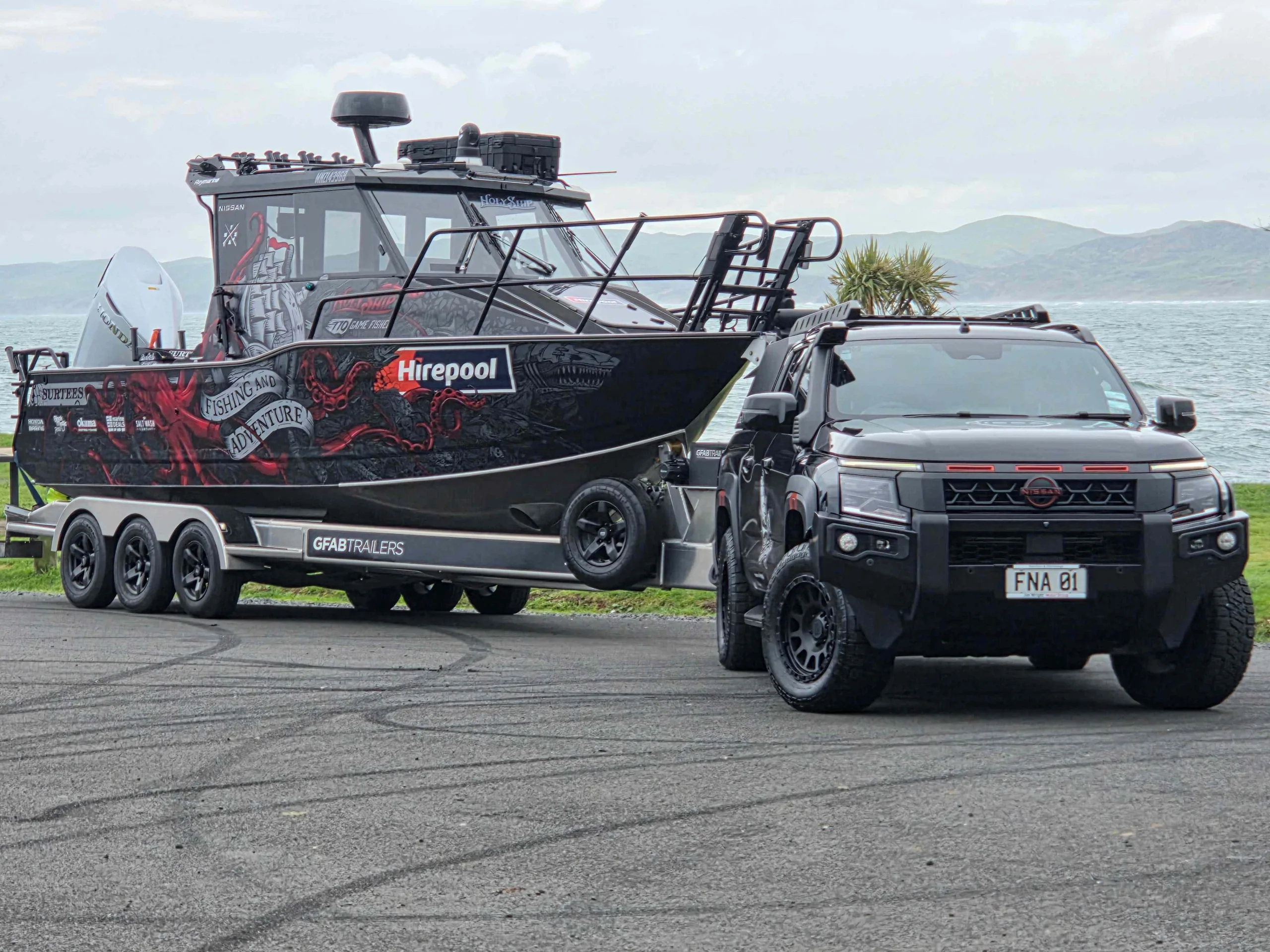
That last point is important. A boat ramp can be deceptively challenging, especially when wet, slippery or covered in loose material. Four-wheel drive can help provide traction, but it doesn’t remove the need for suitable tyres, sensible throttle inputs, careful positioning and an understanding of the conditions.
As Mig puts it, the Navara is an all-rounder: practical for everyday driving, but ready to hitch up the boat when it’s time to escape.
Out on the road: Respect the weight
Our towing exercise gave us an appreciation of the difference between pulling a little boat and moving something the size of Holy Ship. With the smaller boat attached, the combination feels relaxed and easy to manage. Add the larger rig, however, and there’s no pretending it isn’t there. You become more conscious of the width, the additional mass and the need to think further ahead.
Hill climbs and descents require attention, while wet conditions add another consideration to the mix. Braking distances, cornering speeds and maintaining a sensible following distance all become more important. The Navara handled the job well during our drive, but the experience reinforced a point worth remembering: towing is a skill, not simply a matter of attaching a trailer and pointing the bonnet towards the horizon.
Drivers need to understand their vehicle’s rated towing capacity, the trailer’s loaded weight, the permitted gross combination mass, towball download and the requirements for trailer brakes. The vehicle, trailer and load must all be within their respective limits. Those details matter particularly when you’re operating near the upper end of a vehicle’s towing capability.
And if you’re wondering whether you can tow a boat like Holy Ship with your own ute, the answer starts with checking the actual weights and specifications of your particular vehicle and trailer combination. Don’t guess. The boat ramp is a terrible place to discover you’ve got your sums wrong.
The adventures that make it worthwhile
For Scott and Mig, the towing is only part of the story. The real reward is reaching places that offer something special. One of their most memorable logistical missions involved taking an earlier version of Holy Ship towards Doubtful Sound in Fiordland.
The journey required careful planning, including arranging another vehicle and trailer on the opposite side of a lake before tackling Wilmot Pass, a steep and challenging road providing access towards the remote destination. It wasn’t a case of simply entering an address into a navigation system and following the blue line.
That’s the sort of expedition where preparation, suitable equipment and a capable support vehicle become essential parts of the adventure. And once the crew reaches the water, the rewards can be substantial. Scott and Mig recall catching both a marlin and a swordfish weighing around 140 kilograms. Mig was on the rod for both, while Scott handled the helm during the marlin encounter.
Apparently, steering the boat while a large fish does its best to create chaos can be every bit as stressful as fighting one. Who knew?
As for fishing advice, the pair recommend fresh bait, particularly when targeting species such as snapper. Store-bought bait has its place, but using fresh bait caught along the way can improve your chances.
And what about the age-old superstition surrounding bananas on boats? According to Scott and Mig, they take bananas aboard and still catch fish. So, if your next fishing trip produces nothing but a damp sock and a bruised ego, perhaps it’s time to stop blaming the fruit.
A partnership built for the outdoors
The Nissan Navara and Fishing and Adventure partnership works because both have a practical role to play in the same mission: helping people get out there and make the most of New Zealand.
For the crew, the Navaras are working vehicles, transporting boats, equipment and people across considerable distances. For Nissan, the arrangement demonstrates how its utes perform in the kind of conditions that matter to people who tow regularly.
And for anyone who has ever contemplated towing a boat to a far-flung fishing destination, it’s a reminder that the right vehicle is about much more than the advertised towing figure. It’s about confidence, capability, preparation and the ability to get where you’re going without turning the journey into the main event.
Our day with Scott and Mig delivered a healthy dose of all four, along with some fish-and-chip-fuelled conversation and a reminder that the best adventures often begin well before the boat hits the water.
Would we tow Holy Ship with a Nissan Navara? Having experienced the combination ourselves, we’d certainly be interested in another outing. Preferably one that includes getting out on the boat, catching something enormous and letting somebody else take the helm. Because towing a 3.2-tonne fishing boat is impressive enough, but catching a 140kg marlin? Now that’s a different kind of heavy lifting.
HOLY SHIP, indeed.