McLaren’s new logo has barely had time to settle on our minds, and the brand’s already dropped another hint about where its head is at. Buried in the UK Intellectual Property Office’s records are two brand new trademark applications, filed by McLaren Automotive Limited on 22 September 2026, the day before the world got its first look at the marque’s bold new identity. The names on them? Remuera and Muriwai. Two New Zealand place names, both filed word marks, both sitting in the system a full day ahead of McLaren’s big reveal. If you know your McLaren history, then the penny drops.
Both applications were lodged with the UKIPO on the same day, by the same applicant, through the same representative, Reddie & Grose LLP. Both are word marks, not logos or stylised marks, meaning McLaren isn’t just protecting a badge design, it’s locking down the words themselves.
But what stands out is the breadth of the goods and services listed, as this isn’t a narrow filing to cover “cars” or “toy cars.” The classifications stretch across fragrances and cosmetics, computer software and video games, eyewear, vehicles of every description (land, air and water), and beyond, right through to NFTs, wearables and downloadable virtual goods. There goes my thinking of them badging a new model.
Why Remuera and Muriwai Specifically
That’s where the Kiwi connection is maintained. Remuera is the Auckland suburb where Les and Ruth McLaren ran the family service station, the very place where a young Bruce McLaren built his first car before going on to found the team and the road car company that carries his name to this day. McLaren’s own rebrand announcement leaned directly on this history, publishing a photo of that Remuera service station, now wearing the brand’s new logo, as part of the unveil.
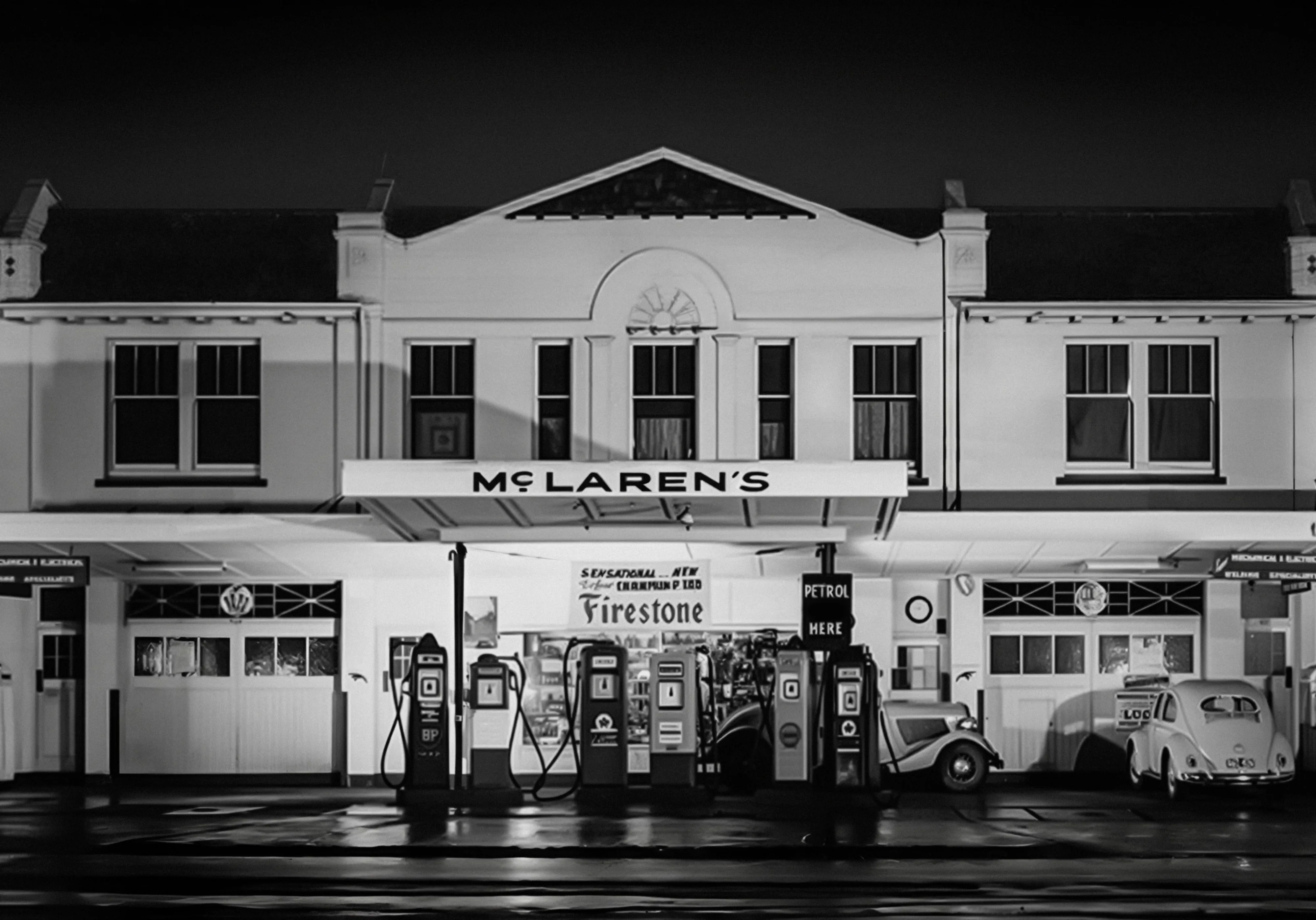
Muriwai carries its own piece of New Zealand motoring folklore. Long before Pukekohe or any purpose-built circuit existed, Muriwai’s hard black sand was where early Kiwi motorists and motorcyclists went to open the taps and see what their machines could do. It’s one of the country’s original speed venues, and a fitting companion to Remuera: one name for where Bruce’s story started, another for the wider culture of speed he grew up around.
McLaren was explicit when it unveiled its new identity: the brand is keeping the Speedmark and the “Speedy Kiwi,” both callbacks to Bruce’s roots, while framing the whole relaunch as “the first chapter of what’s next.” That “next chapter” comes backed by a GBP 500 million investment, an SUV on the way, and an avowed push beyond the two-seater sports car format McLaren has built its name on for the last decade.
Seen next to that context, these filings look like the early groundwork for exactly that expansion. A brand that’s about to step into new product categories, apparel, fragrance, tech accessories, maybe even an SUV, needs names to go with them. And if McLaren is going to keep mining its own history for that naming convention the way it’s already done with the Speedmark and Speedy Kiwi, then New Zealand place names tied to Bruce’s own story are about as on-brand as it gets.
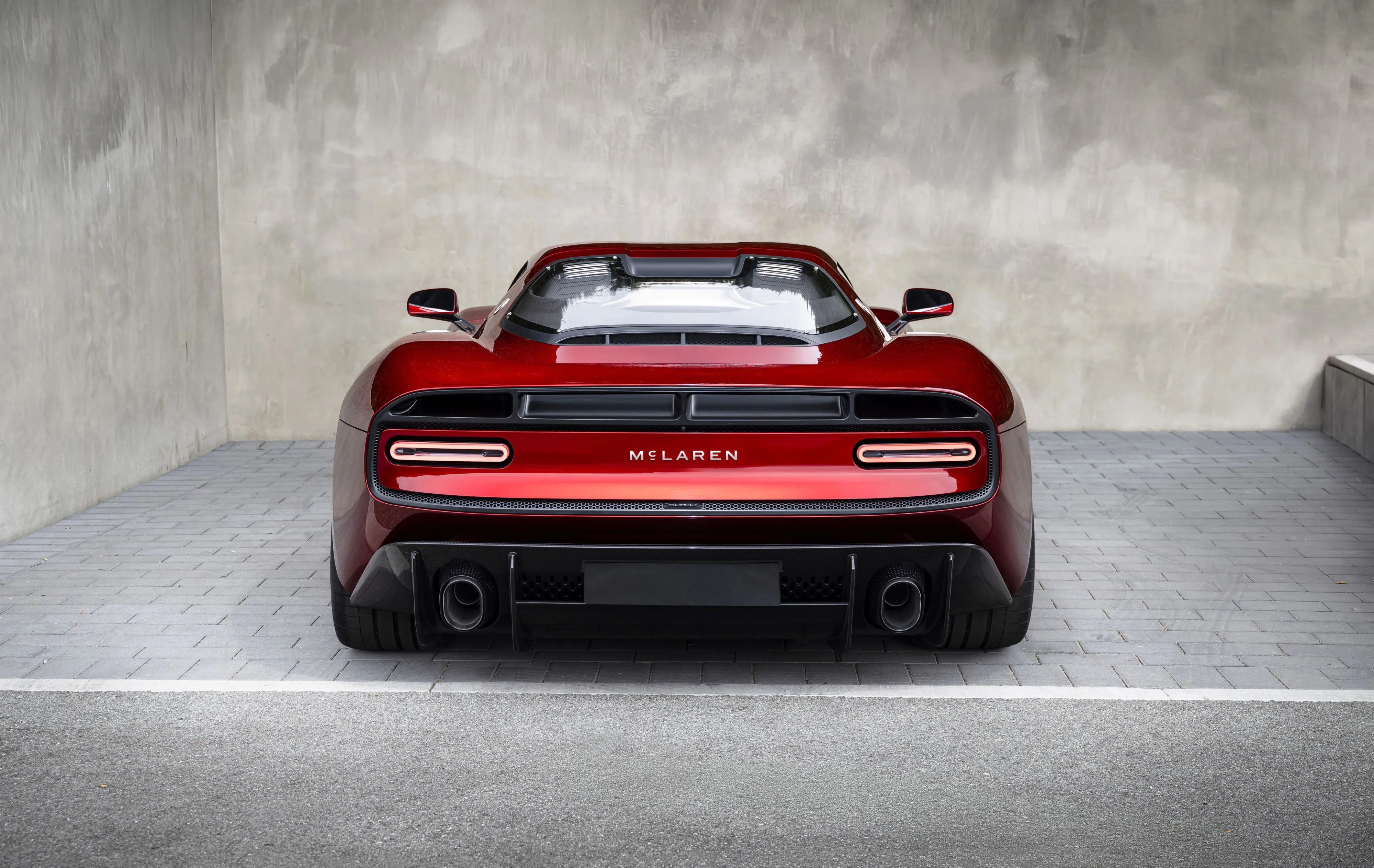
We’ve also just watched McLaren close the book on an entire era with the 788HS, the send-off for the 720S/750S/765LT lineage. Every chapter needs an ending before the next one starts, and it feels like McLaren is very deliberately writing both at once: closing out the old supercar story while filing the paperwork for whatever comes next.
For a brand built by a Kiwi, on Kiwi roads, out of a Kiwi service station, it’s hard to think of a more fitting place to start writing the next chapter than the streets and beaches Bruce grew up on.