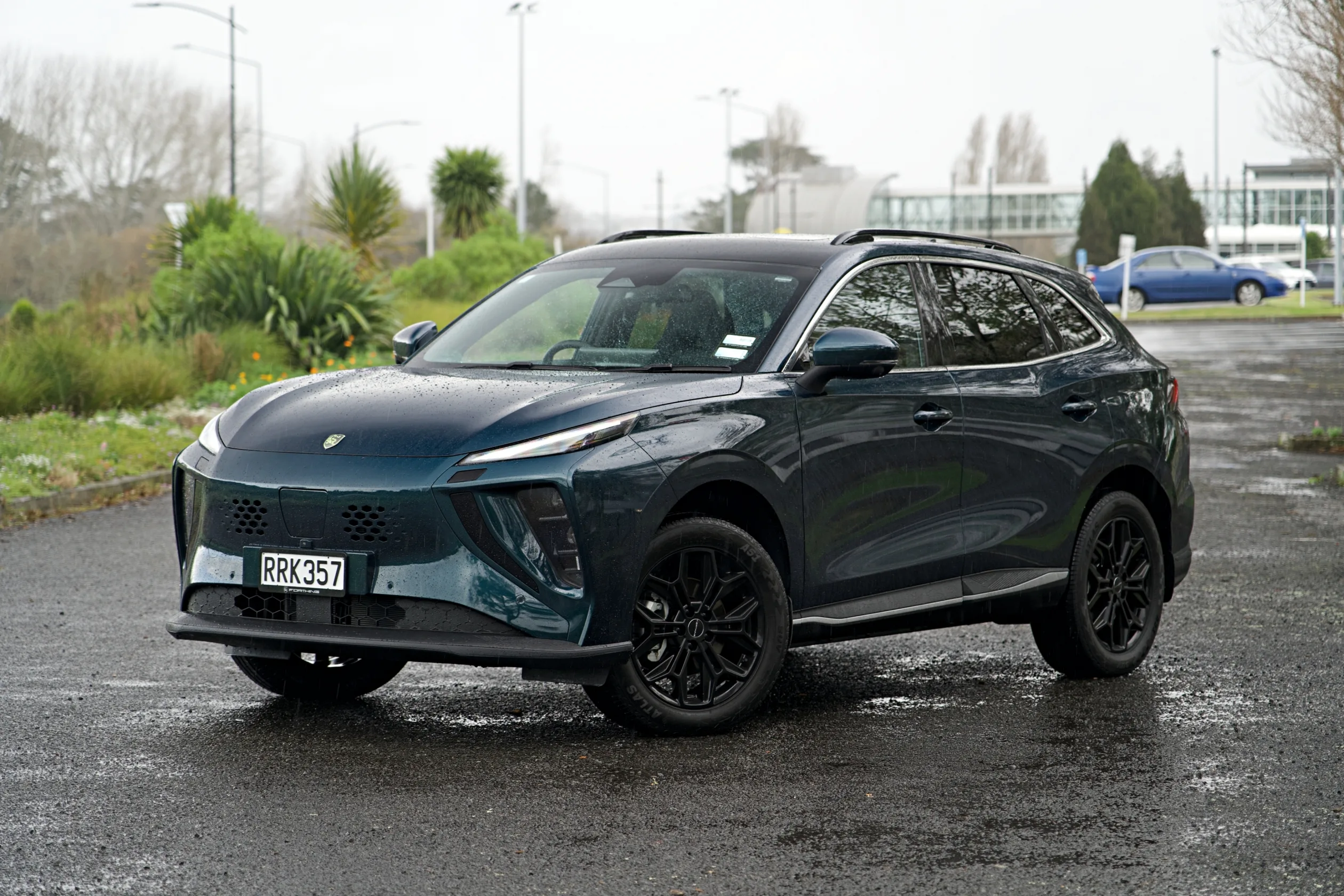
It is no surprise to anyone that the SUV segment is the hottest in many markets, including ours. Add an electric plug to that, and the waters are even more red. So it’s natural that value and space are among the main attractors of new buyers, and the newest player, the Forthing Taikon, arrives in New Zealand with exactly that proposition. At $42,990, it is a sizeable crossover with a 64.4kWh battery, 400km of claimed range and all the talking points that I bet people are searching when doing their research, putting it into a part of the market where sticking out is becoming increasingly important.
Forthing is part of Dongfeng, and even through we’re talking about a new player that sits below a brand that is still relatively unfamiliar to New Zealand buyers, they are one of China’s larger automotive groups.
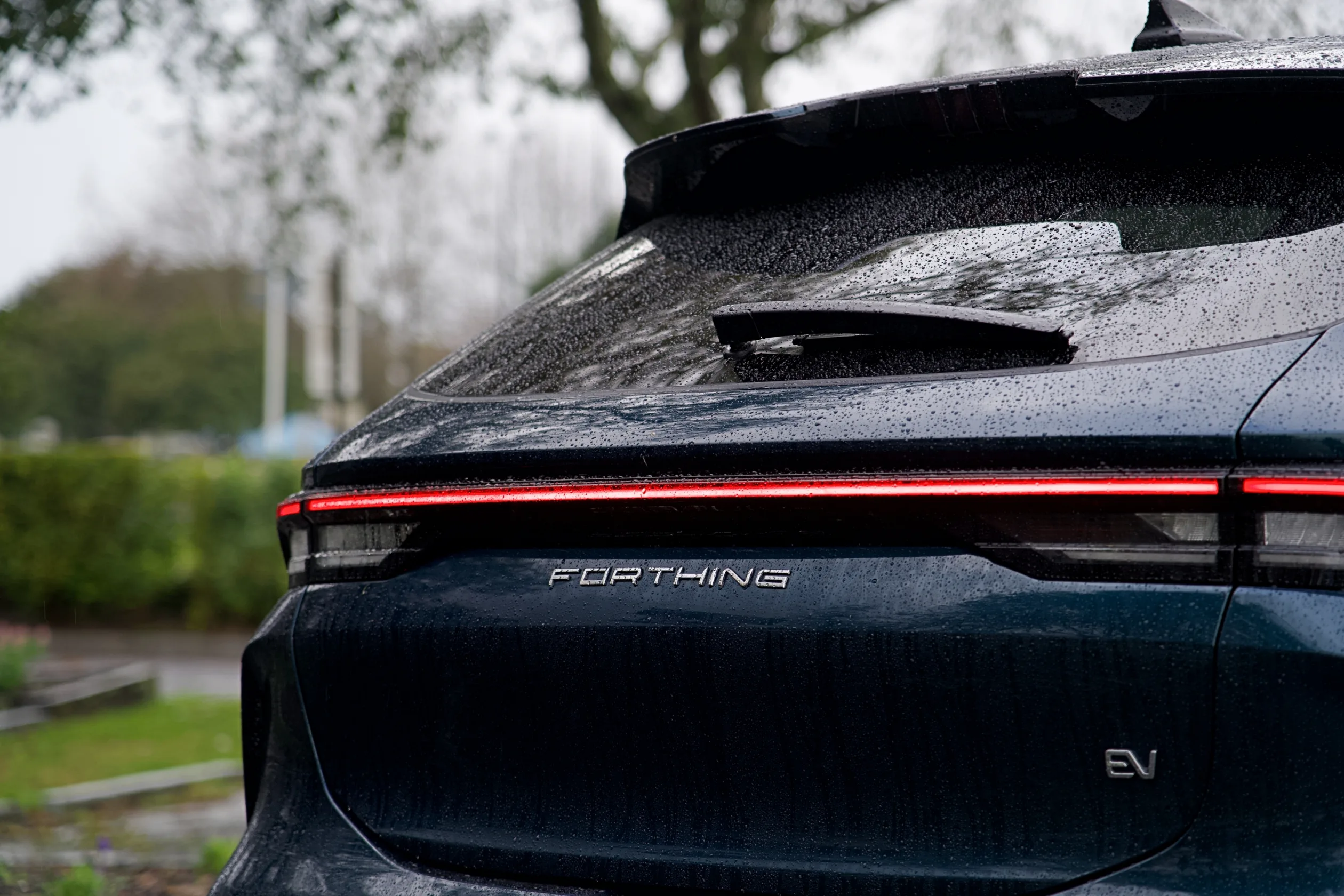
The Taikon has a suitably modern EV appearance without trying too hard to be futuristic. There is a substantial feel to it, helped by its size and upright crossover proportions, while the detailing gives it enough visual interest to stand apart from some of the more conservative options in this price bracket. It has some “token 2026 crossover SUV” visual elements, but it is less generic than some of the competition, with some recognisable signature bits, even.
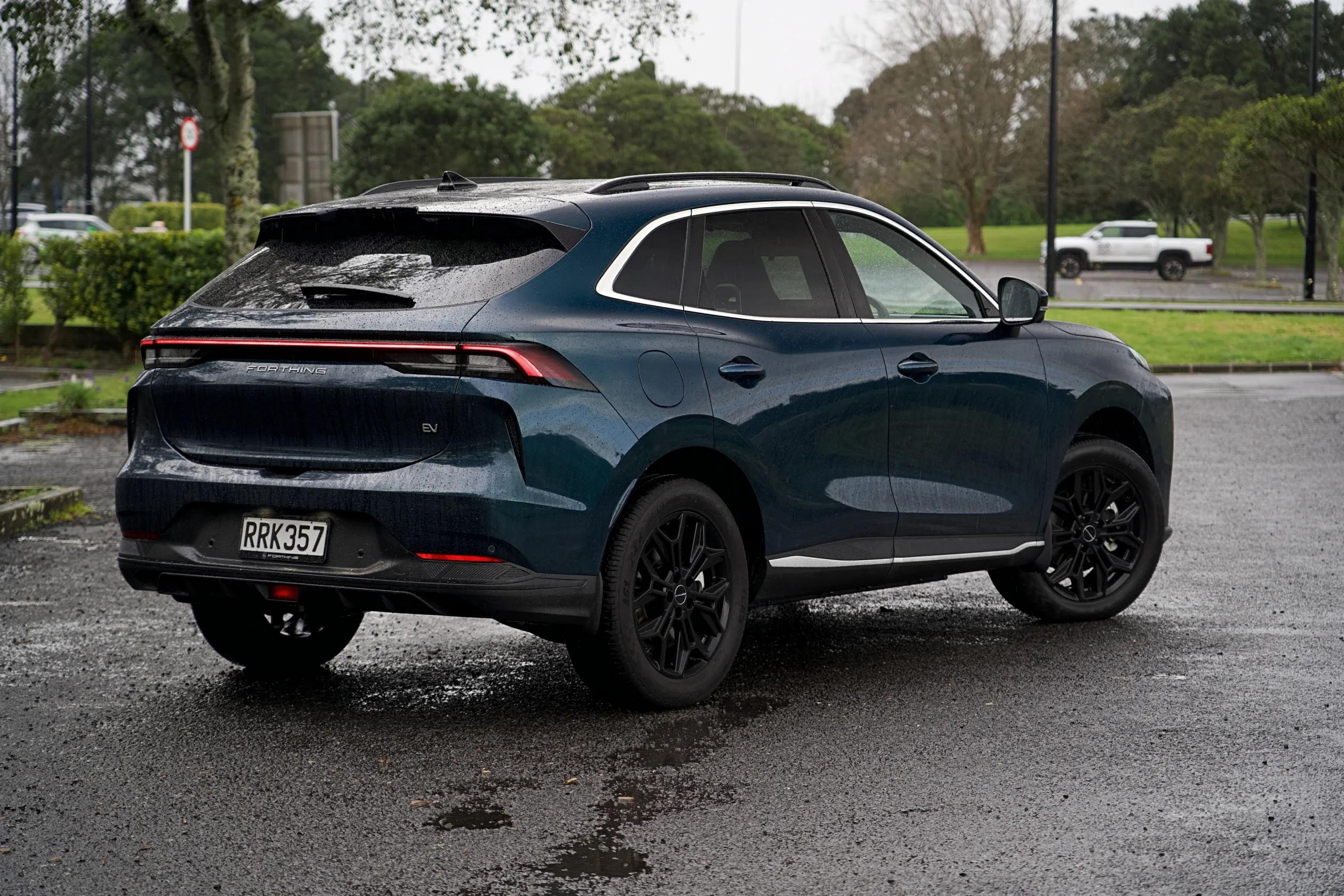
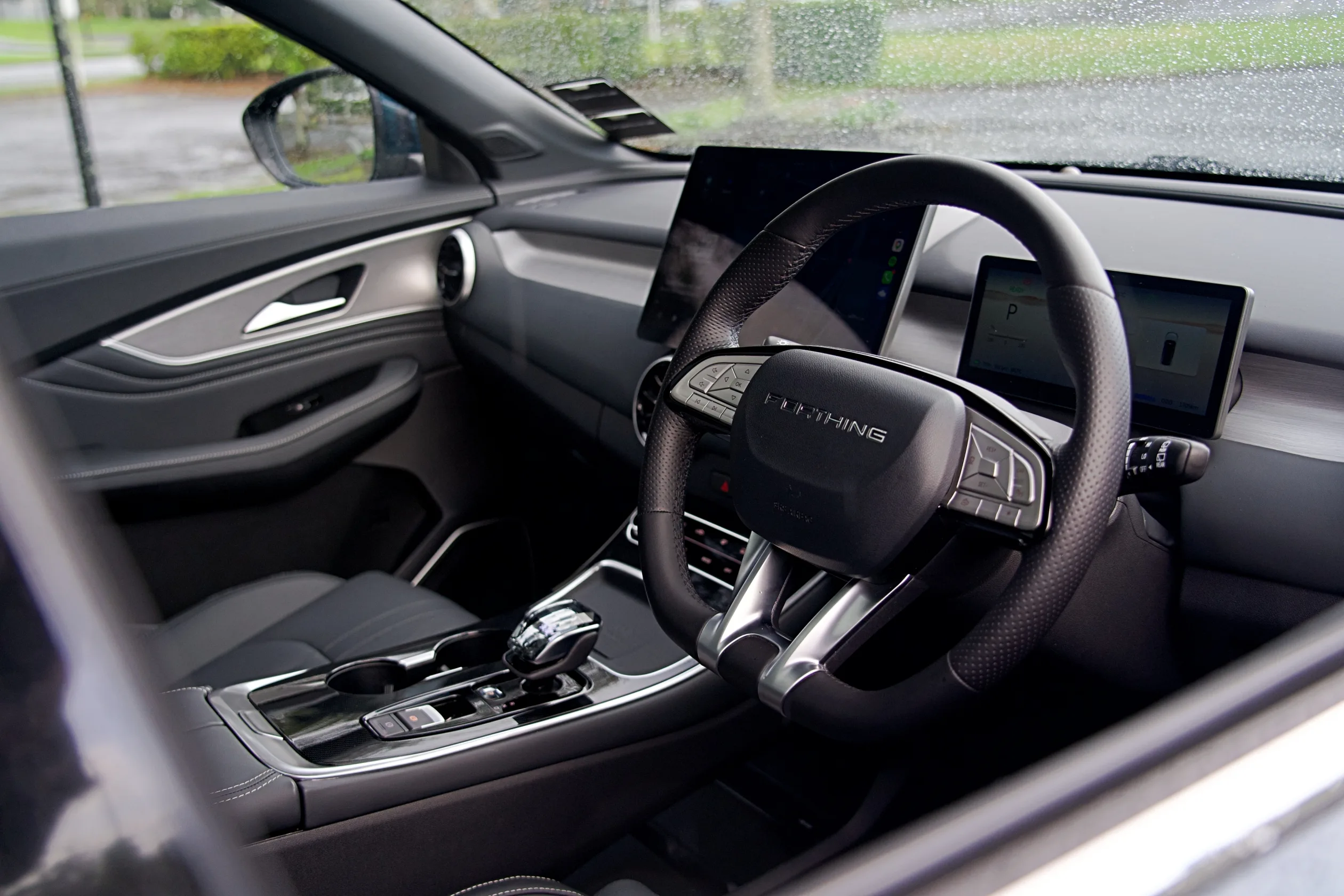
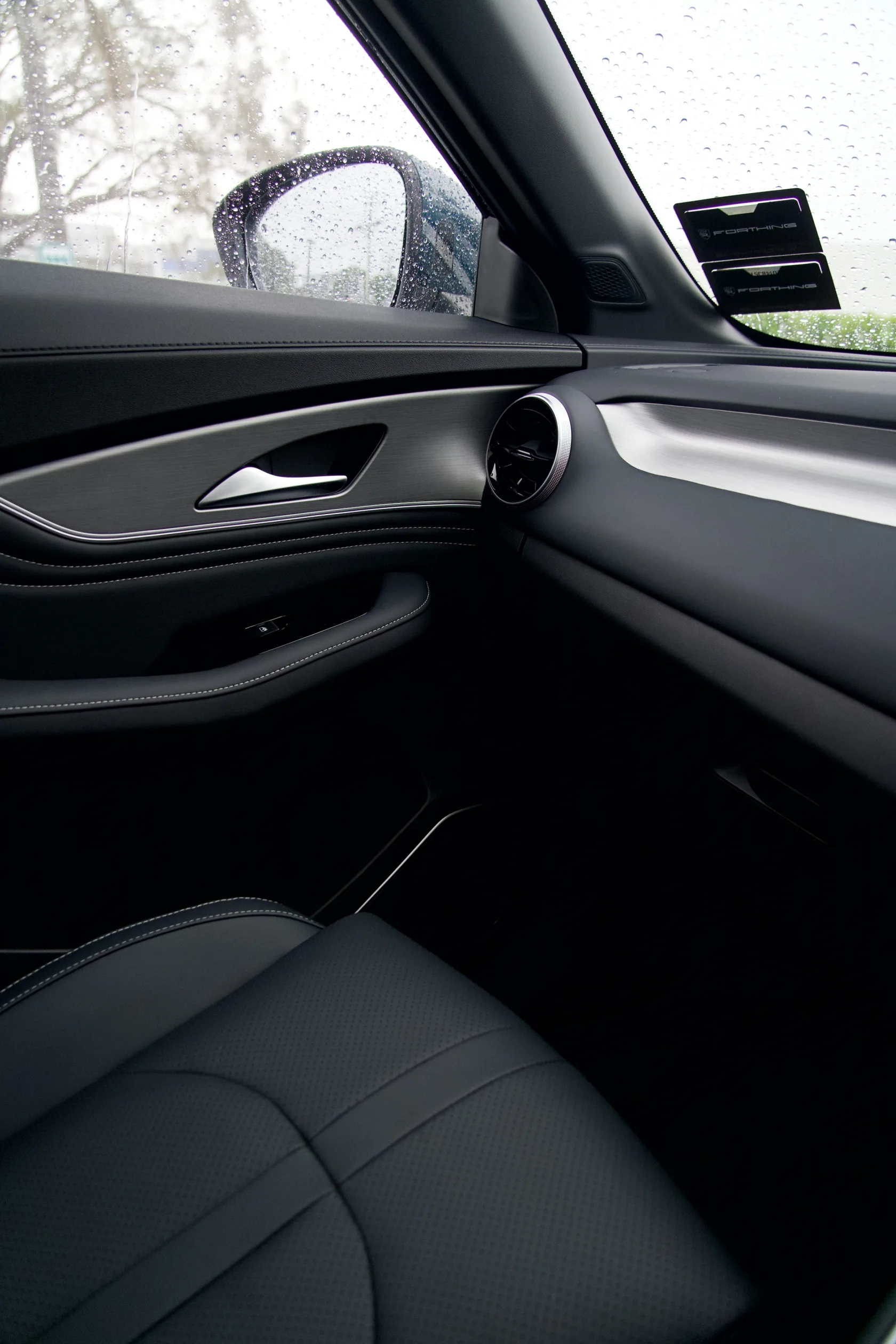
Its dimensions are one of its biggest advantages. At 4.6 metres long and with a 2,715mm wheelbase, the Taikon has genuine medium SUV proportions, despite its sub-$45,000 starting price. And that impression continues as you jump inside: Forthing has made an effort to avoid the bare, utilitarian approach that can sometimes accompany a value focused EV, with different materials used across the dashboard and door cards and faux stitching details adding some visual interest.
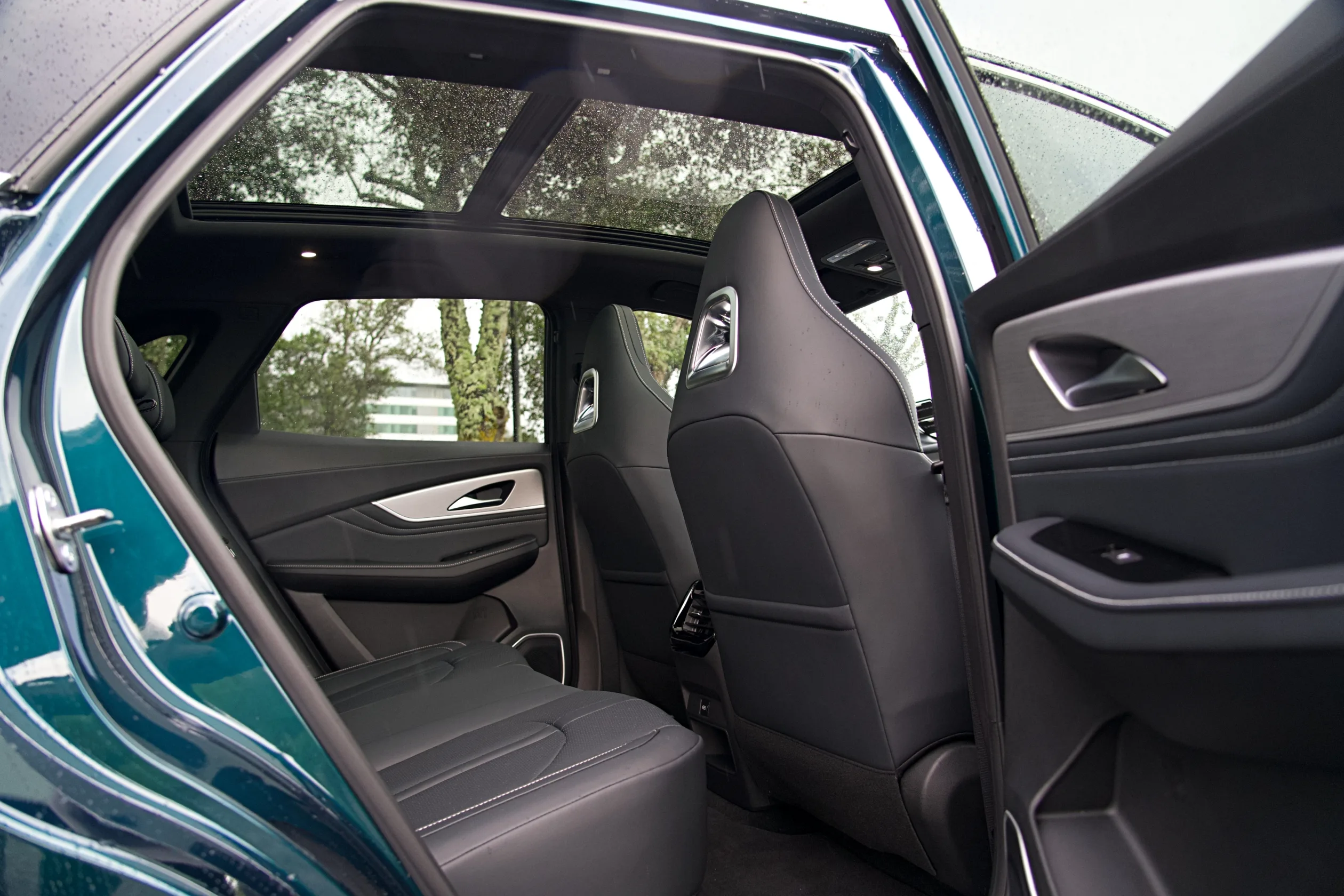
The front seats are mounted quite high, with a massage function that surprisingly strong and feels like something you might actually use, as is ventilation. Both features are only available for the driver, and no heating is to be found, but the rear is arguably where the Taikon makes its strongest case, with plenty of room back there, as the wheelbase translates into genuinely useful passenger space. If you regularly carry adults or simply value having plenty of room in the second row, the Taikon jumps ahead some of the competition; so long as they don’t want to charge anything, as there is only one USB-A port back there. The boot is of useful size and complements the generous passenger space, although the powered tailgate is painfully slow to open.
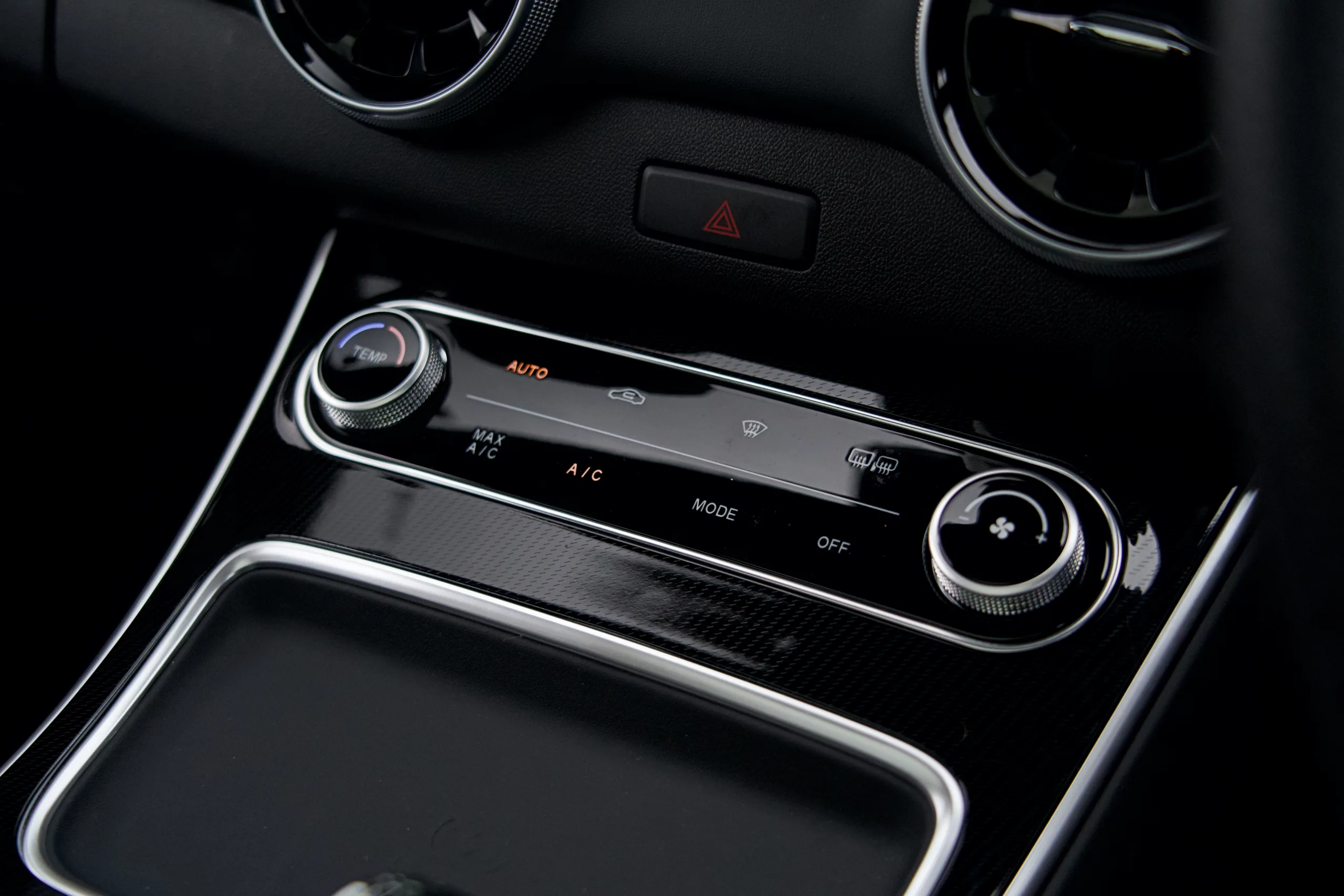
In the tech department, the Taikon is well equipped, with 360 cameras, driving assistances, wireless phone projection and charging, and good screens. But the visuals and the menu layout are not as polished as the competition, making it feel less like a finished product. It is great to have (mostly) physical controls for the A/C, although the confirmation beeps are the same of a $5 fan my parents had 20 years ago, really cheapening the experience. All of this is extremely nitpicky and I know it, but the small things start to add up.
Underneath it all is a 64.4kWh LFP battery feeding a front mounted electric motor producing 150kW and 240Nm. It isn’t an especially ambitious powertrain on paper, but there is enough performance here for the Taikon to feel adequate in normal driving, with a strong focus on it being under the limit – more on that later.
The efficient drivetrain is another positive, with Forthing quoting a figure of 400km of WLTP range that seems achievable, while DC charging can reach 120kW. Those aren’t class leading numbers, but for the price the Taikon charges, it is in line with the market.
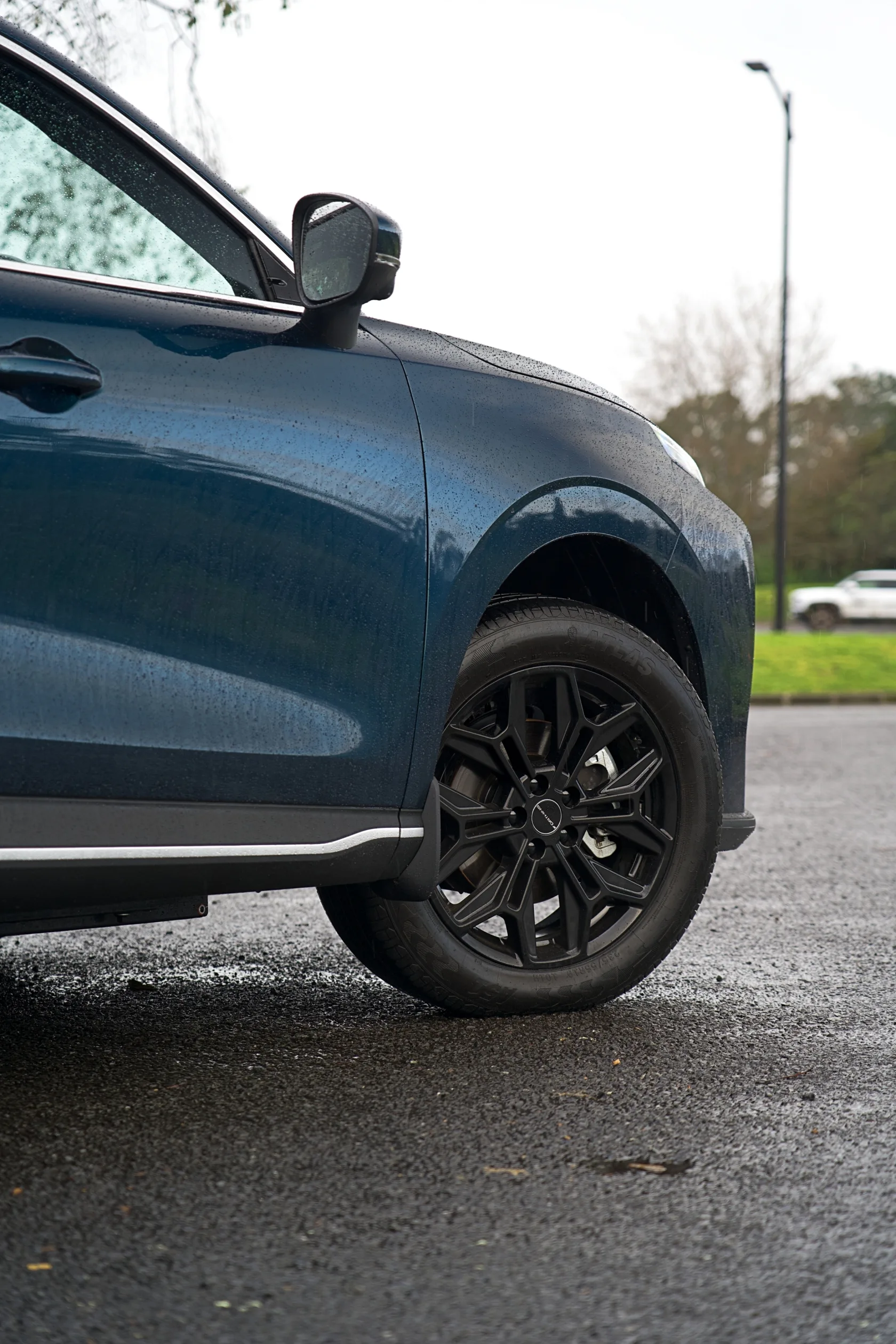
And then there’s daily living. As mentioned, there is enough power and torque for the job, but the car doesn’t particularly encourage you to push beyond that. There is a healthy amount of body roll and coarse steering, but more concerning is the calibration of the traction control system. Its intervention can feel slow and somewhat clumsy, particularly when the tyres begin to struggle for grip.
On some occasions, lifting completely off the accelerator didn’t produce the immediate response you would expect, with the car continuing to accelerate (and spin the tyres fiercely) for a noticeable period. The Atlas tyres fitted to the car may well be contributing to the behaviour, but either way, the combination doesn’t inspire the same confidence or smoothness as some competitors – who knew this was a burnout machine.
Again, for the purpose of the review (and outright entertainment), I pushed this more than owners are likely to. But I’m sure that being caught off-guard by this behaviour could be jarring, but as an everyday proposition, there is plenty to like: the Taikon is roomy, practical and well equipped for its price. It also has really usable rear seat space that makes it feel considerably larger than many of the EV crossovers you could buy for similar money.
The Forthing Taikon is an interesting addition to the New Zealand EV market because its strongest selling point is very easy to understand: you get a lot of car for your money. The combination of size, interior space, a 64.4kWh battery and a $42,990 starting price makes a compelling argument, particularly for buyers who need a family friendly crossover without wanting to spend $50,000 or more. But, as I always say, cars don’t exist in a vacuum.
The Chinese EV market has become fiercely competitive, and there are smaller options that feel more cohesive, more refined and better sorted on the road. The competition leads to improved products everywhere you look, and with the strengths it carries, it will certainly find prospects as I’ve already seen during my time with it. Thanks, Forthing, for the opportunity, and thank you for reading this far!