
Swatch and Omega have produced countless variations of the MoonSwatch since the collaboration first sent watch buyers into a frenzy like we had never seen before in 2022. Some have changed colours, others have added Snoopy, moonphase displays or Moonshine Gold. The new Mission to the Moon 1969, however, takes a considerably bigger step up the precious-metal ladder. Pun sort of intended.
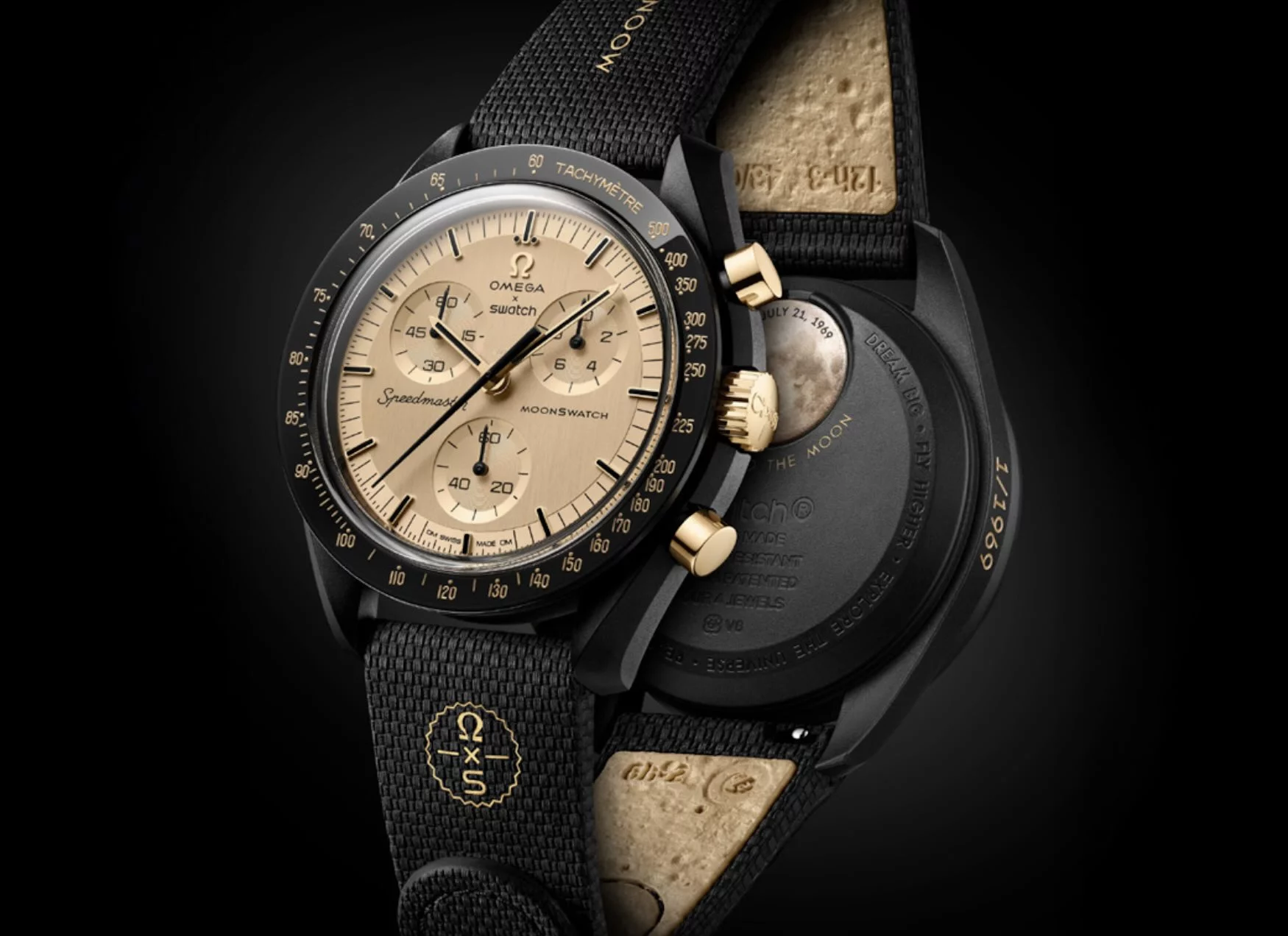
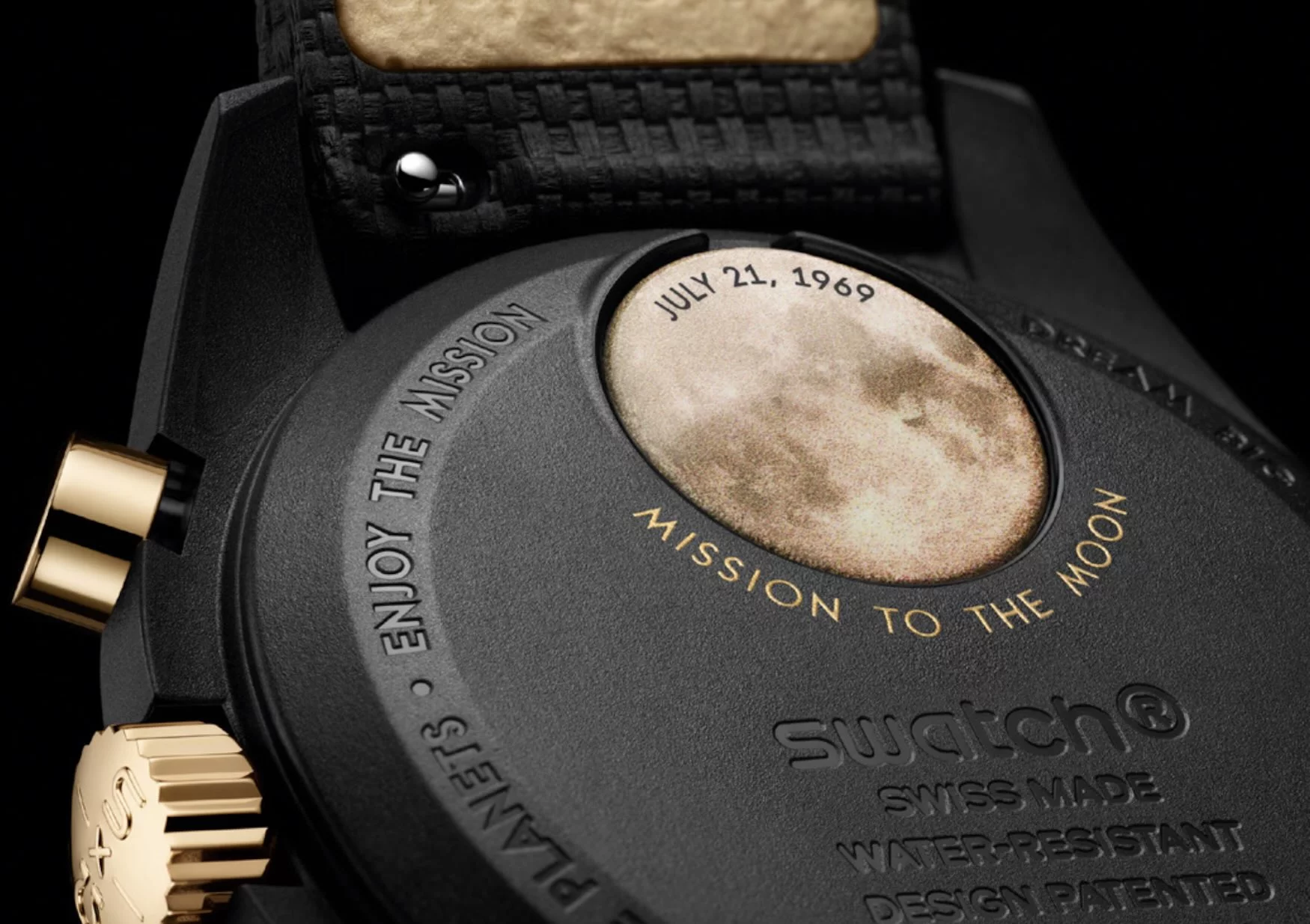
Created to commemorate the Apollo 11 Moon landing, the latest MoonSwatch combines its familiar matte-black Bioceramic case with 11 grams of Omega’s proprietary 18K Moonshine Gold. That number is deliberate, of course, matching the mission number of Apollo 11. Production is similarly symbolic, with only 1,969 individually numbered watches being made worldwide.
Before anyone starts imagining a suspiciously affordable solid gold Speedmaster, the Mission to the Moon 1969 remains fundamentally a MoonSwatch. Its 42mm case is still constructed from Swatch’s Bioceramic (erm, plastic) composite, the movement is a battery powered quartz chronograph and water resistance remains a modest 30m. The case measures 13.25mm thick and approximately 47.3mm from lug to lug, putting it in line with the proportions of the wider MoonSwatch family, as it was to be expected.
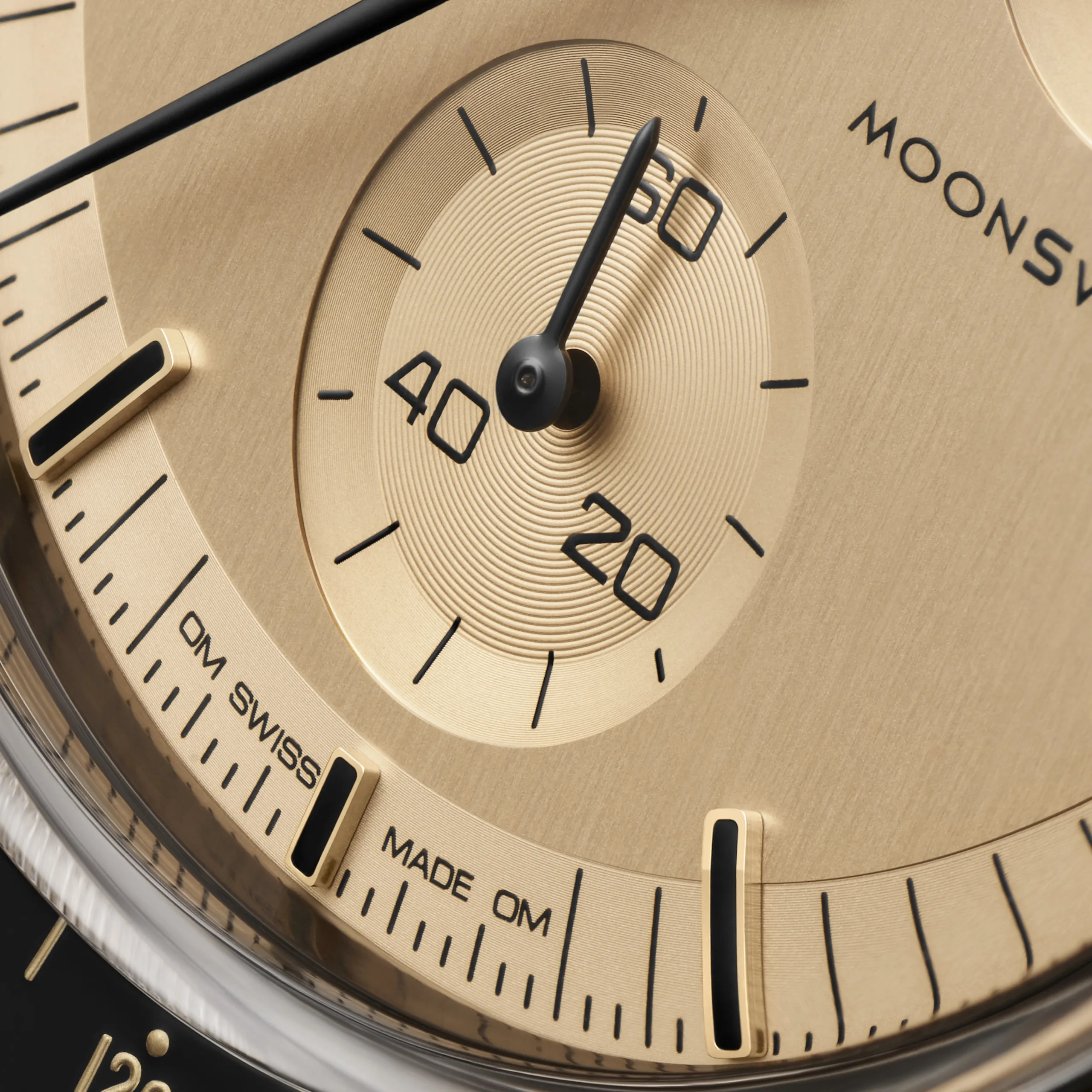
And again, as to be expected, the precious metal is used where it will actually be noticed. The vertically brushed dial plate, hands, crown and chronograph pushers are all made from 18K Moonshine Gold. Gold finished details also appear around the tachymeter scale and on the bevelled hour markers, which receive black lacquer inserts to maintain the classic, strong black and gold contrast.
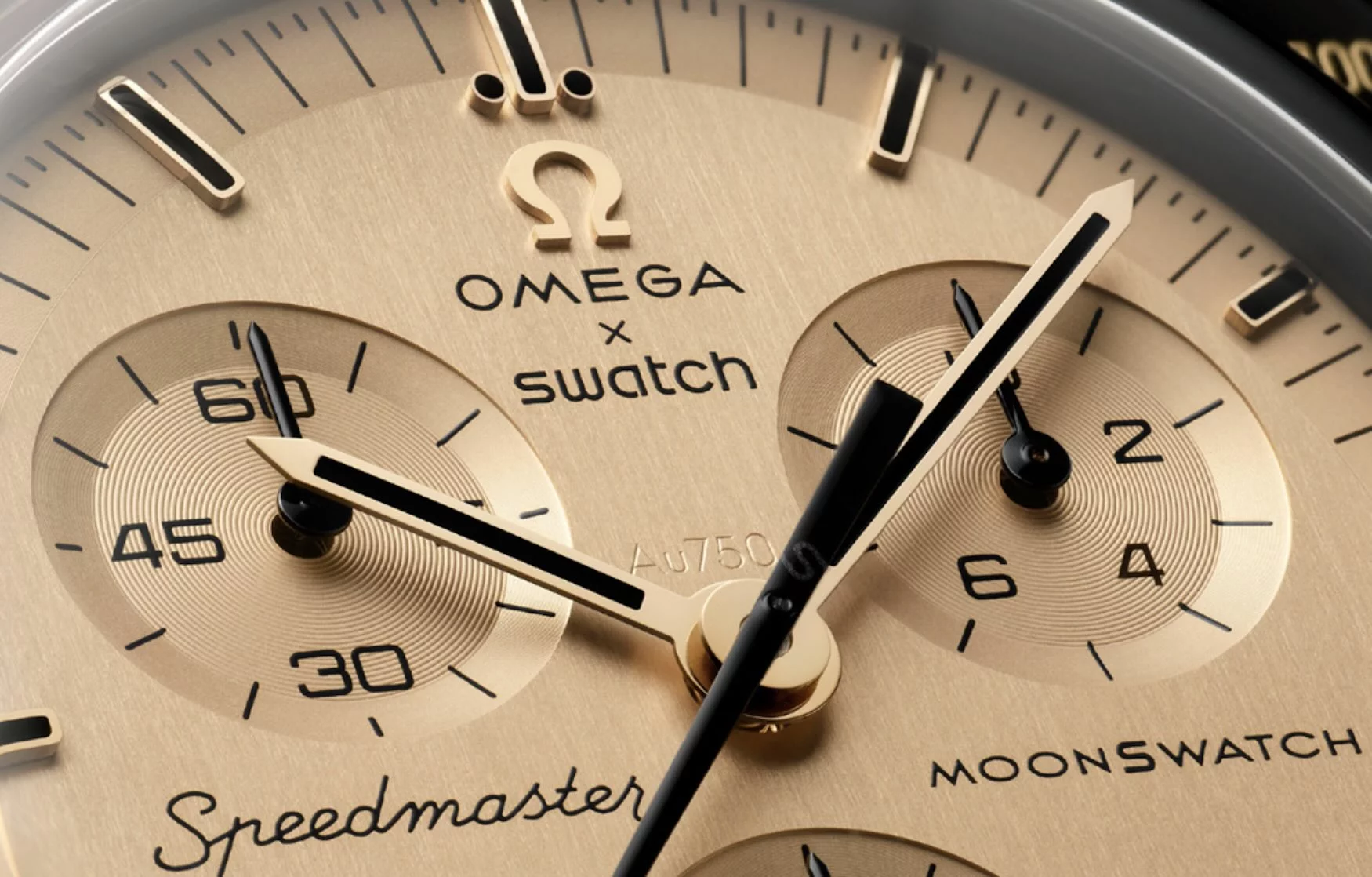
I was never the biggest MoonSwatch aficionado, but this is a particularly good looking combination. The black case tones down some of the toy-like character associated with brighter MoonSwatch models, while the gold dial gives the watch an obvious visual connection to Omega’s commemorative gold Speedmasters. Period correct Omega branding and fonts complete the faux-vintage look, while the individual production number is engraved into the side of the case.
The link with 1969 goes much farther, however, with Swatch saying Omega melted spare parts dating from 1969 to transform into the company’s modern Moonshine Gold alloy. So, some of the material physically comes from Omega components produced during the era the watch is celebrating – how cool is that.
Even the pricing has been wrapped in a suitably theatrical story (don’t we love marketing). Swatch says 11 grams of 18K gold cost approximately US$11 in 1969 and has based the watch’s CHF500 price on the historical value of the metal rather than its modern equivalent. At the time of the announcement, the present day value of that amount of 18K gold was calculated at considerably more than the watch’s Swiss retail price. It is an unusual situation in which a quartz Swatch may technically contain more value in raw gold than its original sticker price suggests.
Swatch Australia lists the Mission to the Moon 1969 at A$900. New Zealand pricing was not displayed on the regional pages available at the time of writing, and purchase eligibility also depends on whether a participating Swatch boutique appears during the application process.
No camping outside the shop this time – thank God
Buying a MoonSwatch was never an easy task, with big queues, conflicting information and no online ordering system. But this one will be considerably more complicated, although it should involve less pavement camping. Swatch has created what it calls an Electronic Swatch Timepiece Application, or ESTA. The name parodies the travel authorisation required by many visitors entering the United States, but the process functions as a combination of a quiz, application and purchasing lottery.
Applicants must answer 32 questions in two hours and 15 minutes to finish the application, referencing the amount of time Neil Armstrong and Buzz Aldrin spent carrying out work on the lunar surface. Answering everything correctly does not guarantee a watch: an internal Swatch jury will select 1,969 people from the pool of successful applicants. Those selected will receive an email and have 48 hours to complete their purchase online. The watch must then be collected personally from the boutique nominated during the application, with photo identification and the approved ESTA. The collection store cannot be changed, and another person cannot collect the watch on the buyer’s behalf.
It is a more orderly solution than the enormous queues that accompanied the original MoonSwatch launch and some of Swatch’s more recent limited releases. It will not necessarily stop determined resellers, but it removes much of the advantage previously enjoyed by people willing to camp outside a shop or employ professional queue sitters.
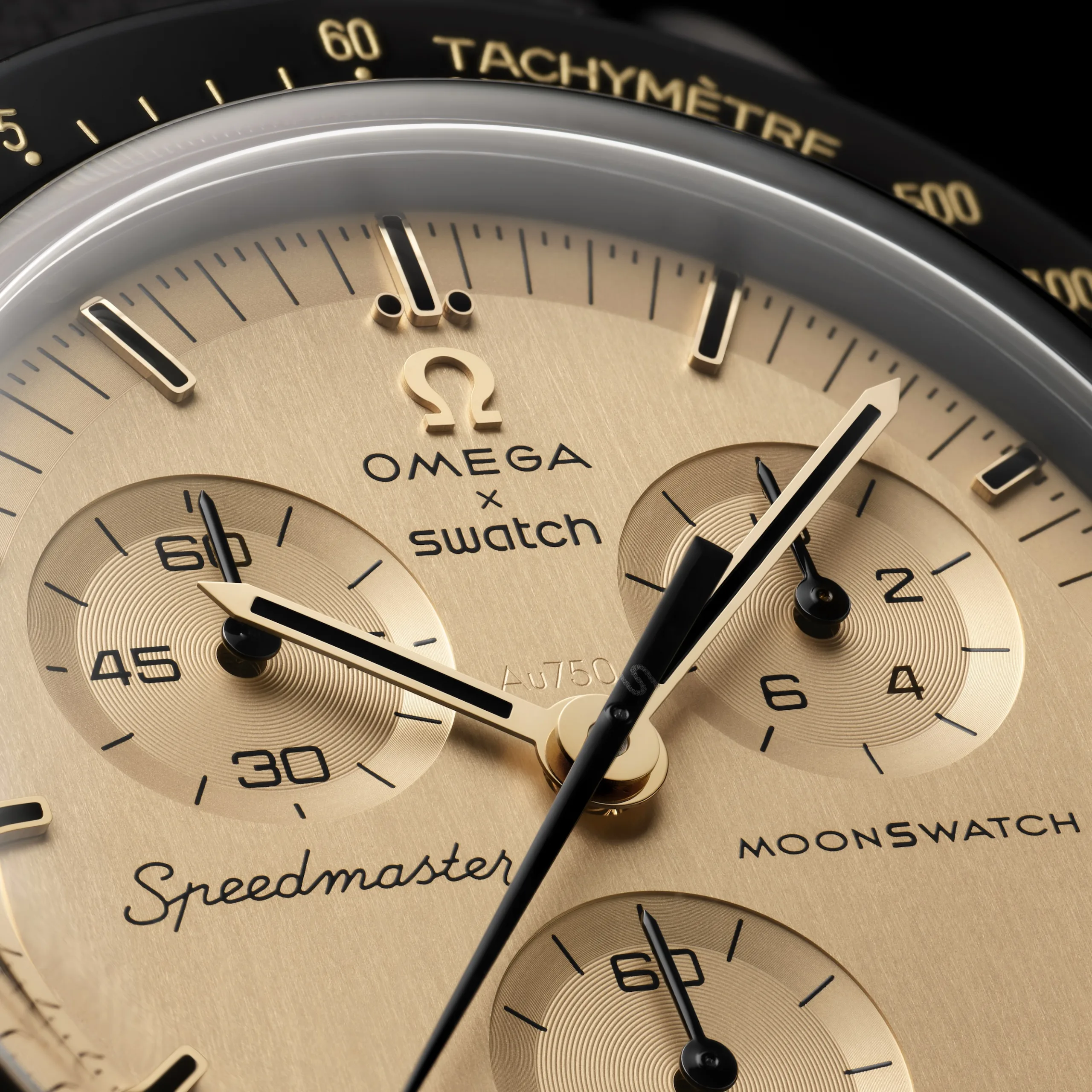
The Mission to the Moon 1969 is still a quartz chronograph housed largely in a composite case, and that will be enough for some traditional collectors to dismiss it. Yet it is undeniable this is one of the most interesting MoonSwatches so far, and the watch world has realised how massive of an effect this family of releases has had in the overall zeitgeist. The black-and-gold design works, the reclaimed Omega material gives it a genuine connection to the period being celebrated, and the limited production run is far more meaningful than another temporary colour variation.
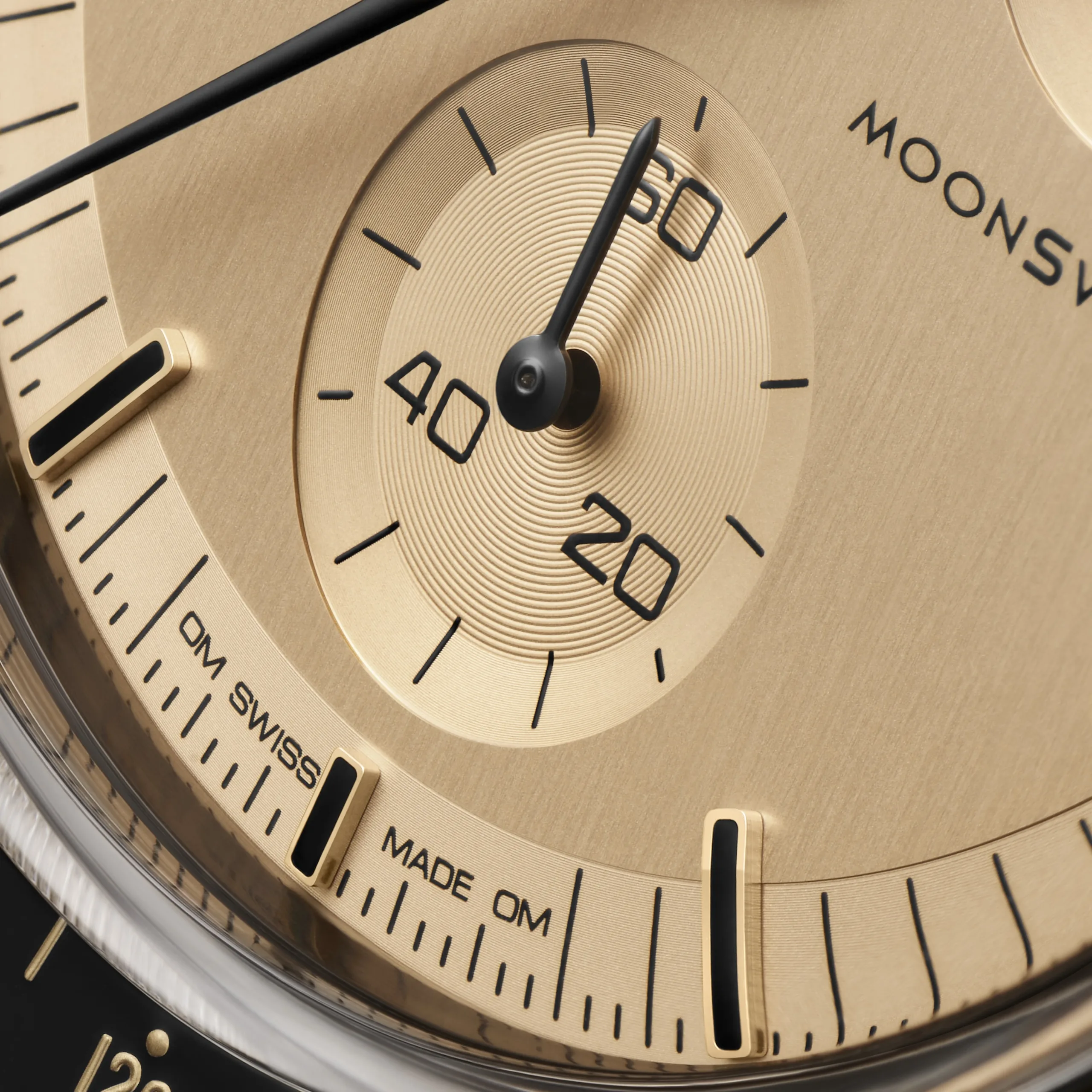
Whether the ESTA system proves to be a fairer way to distribute watches or simply creates a more elaborate kind of disappointment will be the life or death of the system, however. With only 1,969 pieces available worldwide, the odds of approval may make an actual trip to the Moon look relatively straightforward.