Friday 17 July 2026, and we’re back with another instalment of the Cardle of the Day series, the daily ritual where a single car is hidden behind five progressively clearer photographs, and the challenge is to name it before the image gives everything away.
If you haven’t played Cardle before, the premise is simple: each day a new car is revealed one crop at a time. You get five clues, each a little wider than the last. Guess correctly at any point, or skip through to the next reveal. The earlier you name it, the sharper the bragging rights.

How Today’s Puzzle Played Out
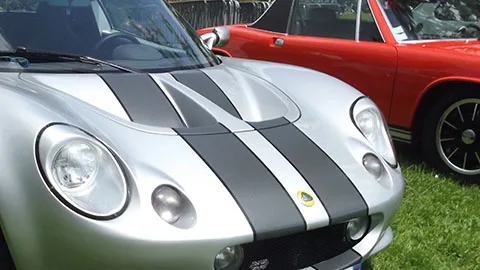
Today’s opening clue was way more generous. A tight crop of a bodywork this recognisable led to an easy guess, especially when you consider those wing mirrors and single windscreen wiper. I personally didn’t need many other clues to ascertain we were working with one of the industry’s most important sports cars: the Lotus Elise.
If it ain’t broke…
The original Elise, launched at the 1995 Frankfurt Motor Show, arrived as something of a provocation. Lotus had been through a turbulent decade, and the Elise was the company’s argument that lightness, not power, was the correct answer to the question of what a sports car should be. Enter the namesake of the owner’s granddaughter, the Elise.
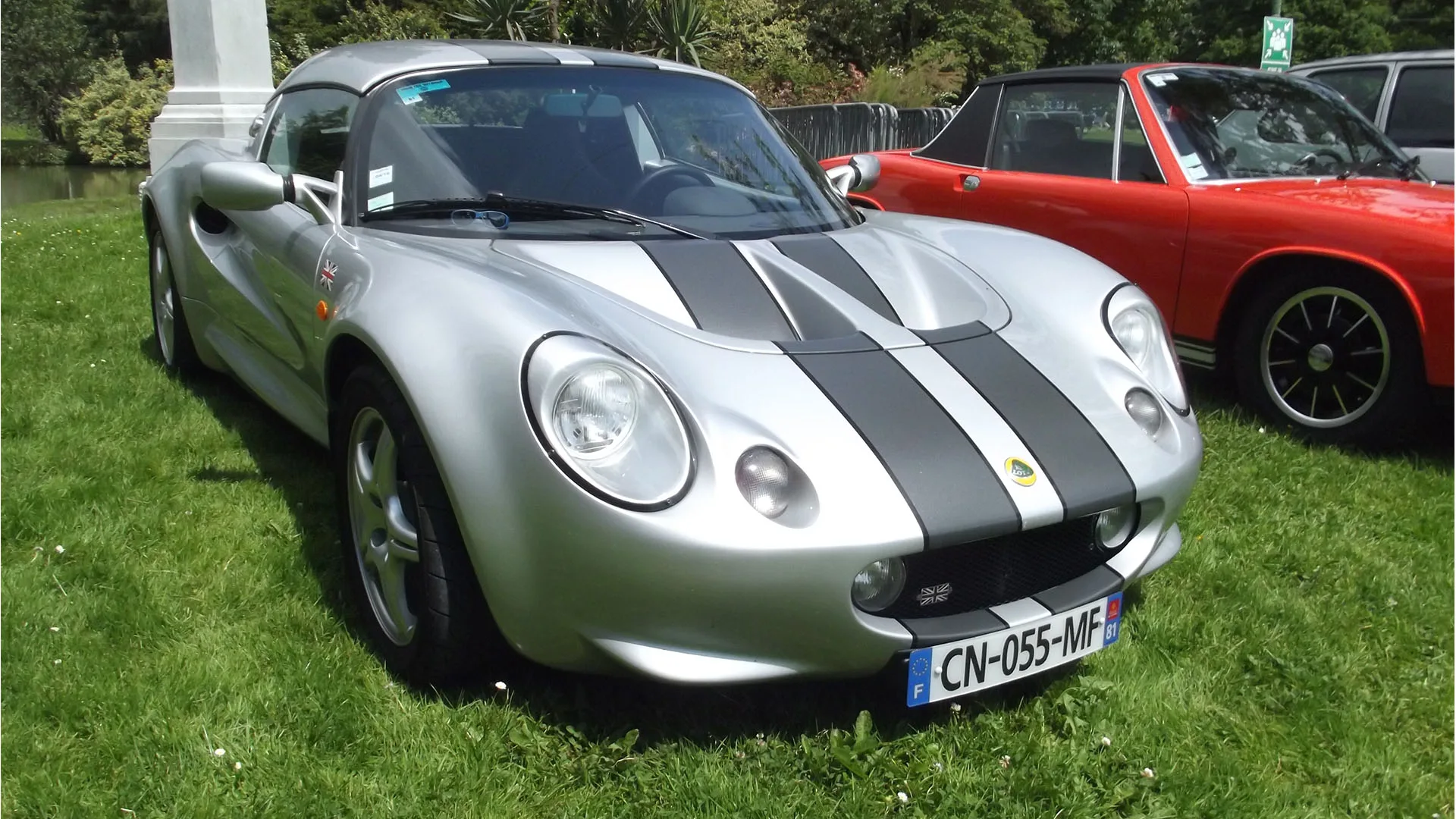
The Series 1’s engineering was genuinely unconventional. Its chassis used an extruded aluminium structure bonded with aerospace adhesive, a construction method that remained unpopular because of its complexity, but that kept the kerb weight to around 725 kg in early examples. The engine, a Rover K-Series unit producing roughly 118 bhp in standard trim, was almost beside the point. The car felt fast because it was so light, not because it was powerful. Simplify, then add lightness.
The S1 Elise was produced from 1996 to 2001, when it was replaced by the revised Series 2. The bonded aluminium chassis construction was developed in partnership with Hydro Aluminium and represented a significant departure from conventional sports car manufacturing. It needs to be seen to be appreciated: a close friend of mine had a Series 1 that was deeply restored, and I was fortunate to see the bare chassis many times and appreciate all the work and engineering needed to make such a thing.
A blueprint that both defied and outlasted its era
What makes the S1 worth talking about in 2026 is not (just) nostalgia. This car made a structural argument, one that stripping a vehicle down to its essentials produces something more engaging, not less, and that argument has never really been refuted. The Elise is widely credited with reviving Lotus as a credible manufacturer after the financial difficulties of the early 1990s, and Chapman’s famous motto of “adding lightness” goes way beyond just removing weight. It requires actual engineering thinking.
Subsequent Elise generations, the Exige, and the later Emira all carry some version of that philosophy forward, but only to a certain degree. The S1 in particular has a rawness that later iterations smoothed away in the name of refinement. There’s no power steering, the ride is uncompromising, and the cabin is famously spartan. Enthusiasts tend to regard those qualities as features rather than omissions. For a car that started life as a tight crop of bodywork and a puzzle, it turned out to be worth many, many times its weight in credentials. See you tomorrow!