
Being the new kid on the block, especially a highly contested one, is never easy. The New Zealand compact SUV market has become one of the toughest segments in the industry. Buyers are spoilt for choice, whether with established players like the Toyota Corolla Cross, Mazda CX-5 and Kia Seltos, or the increasingly aggressive wave of Chinese entrants looking to win over buyers with bigger feature lists and designs that no longer feel underdog-y.
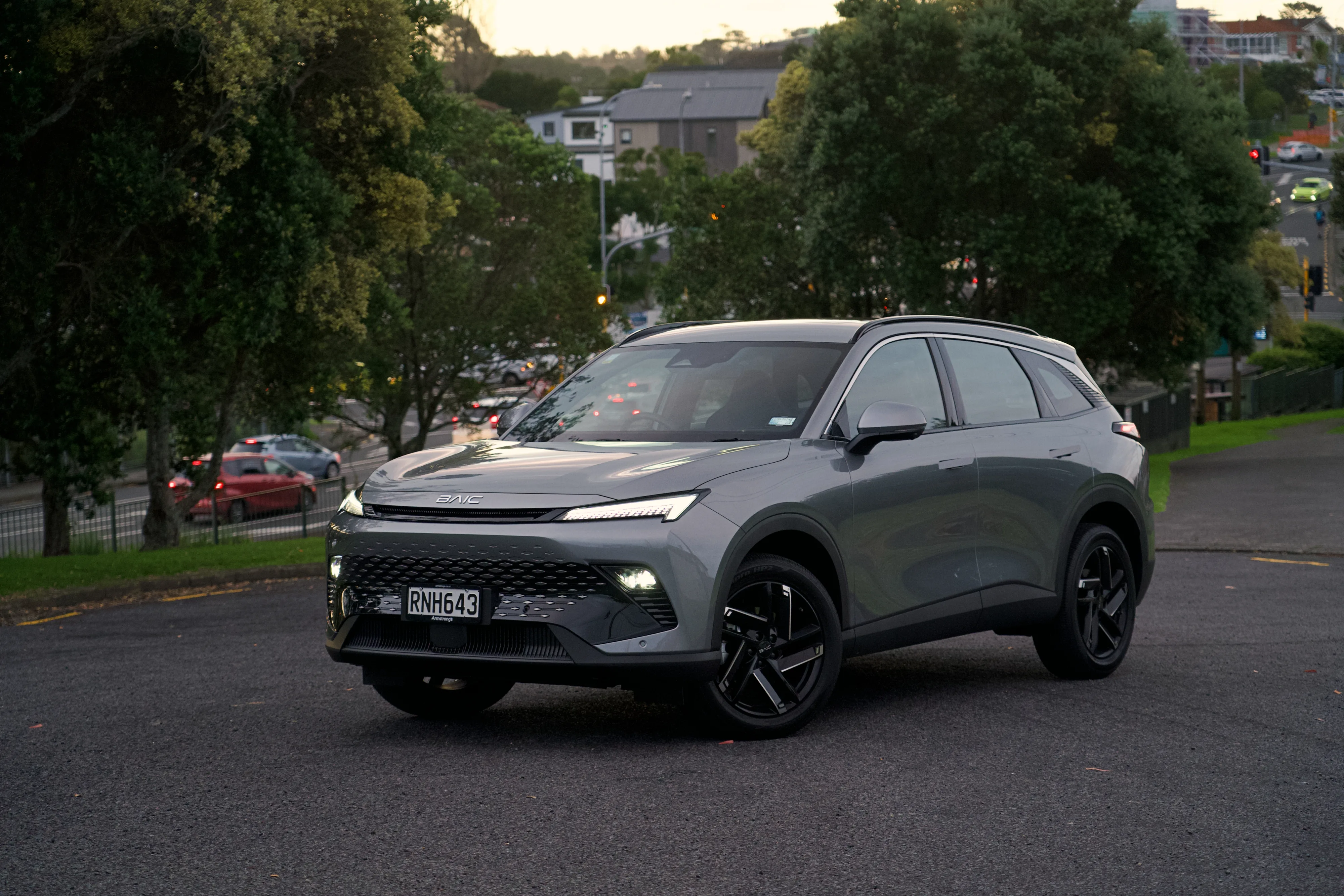
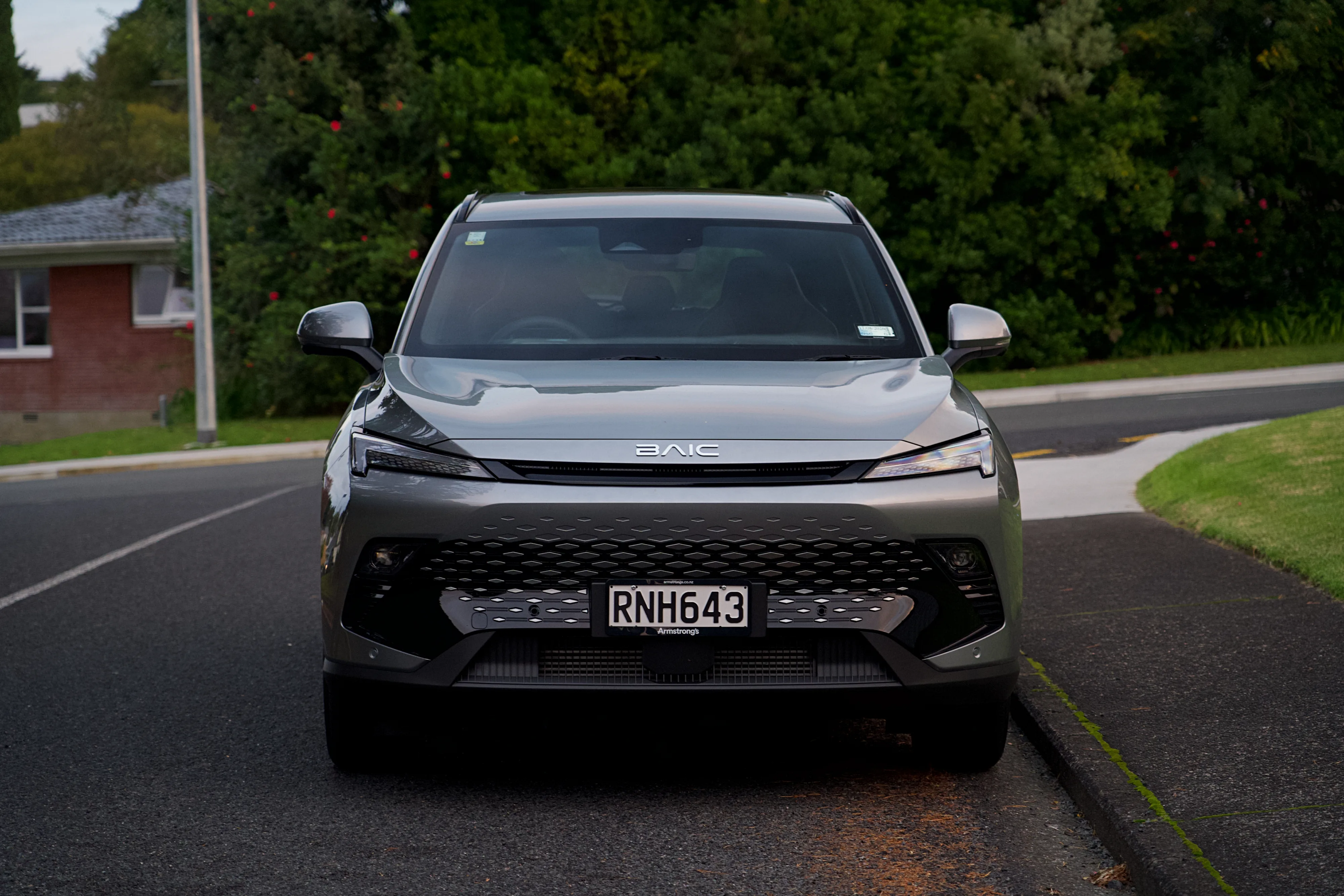
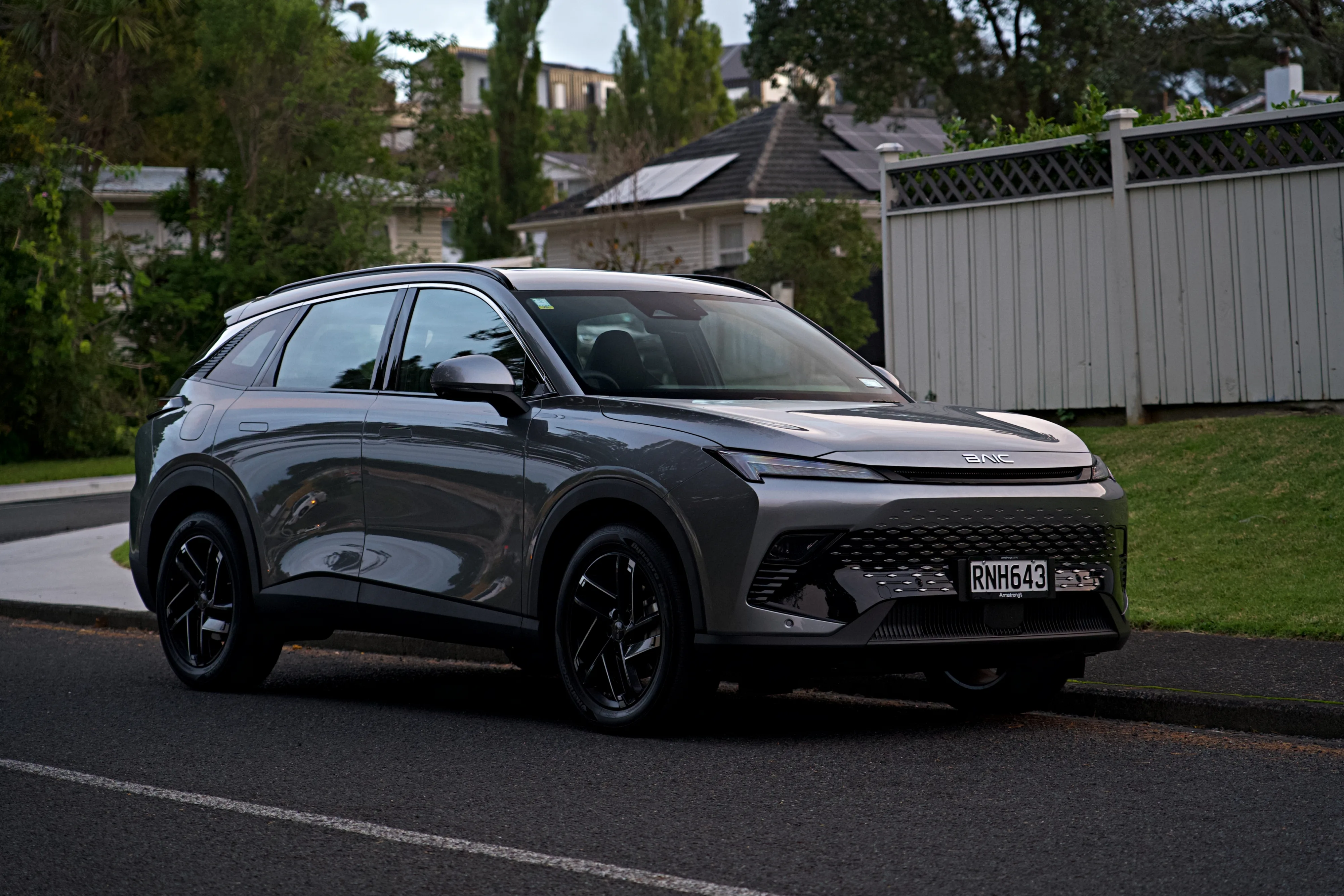
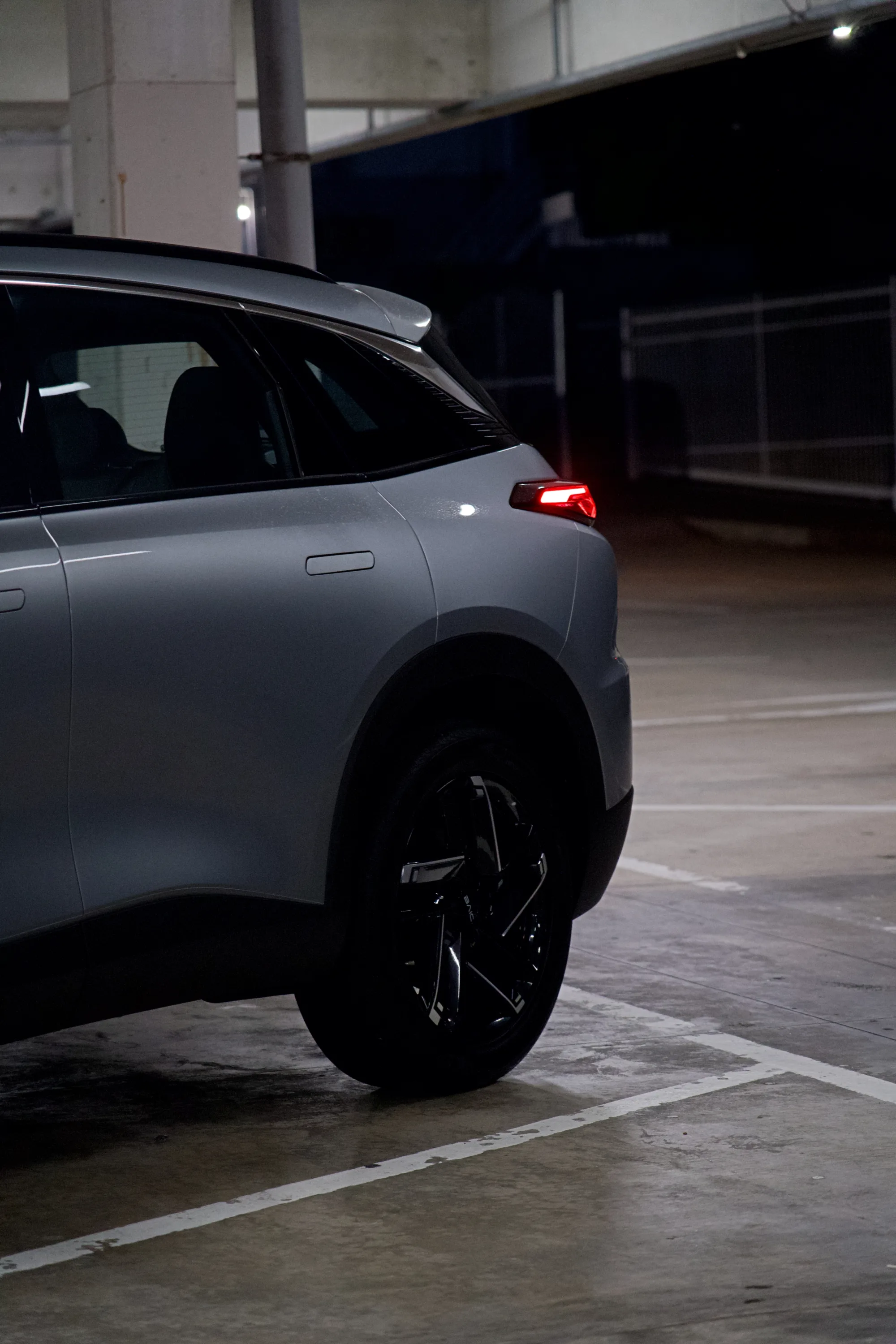
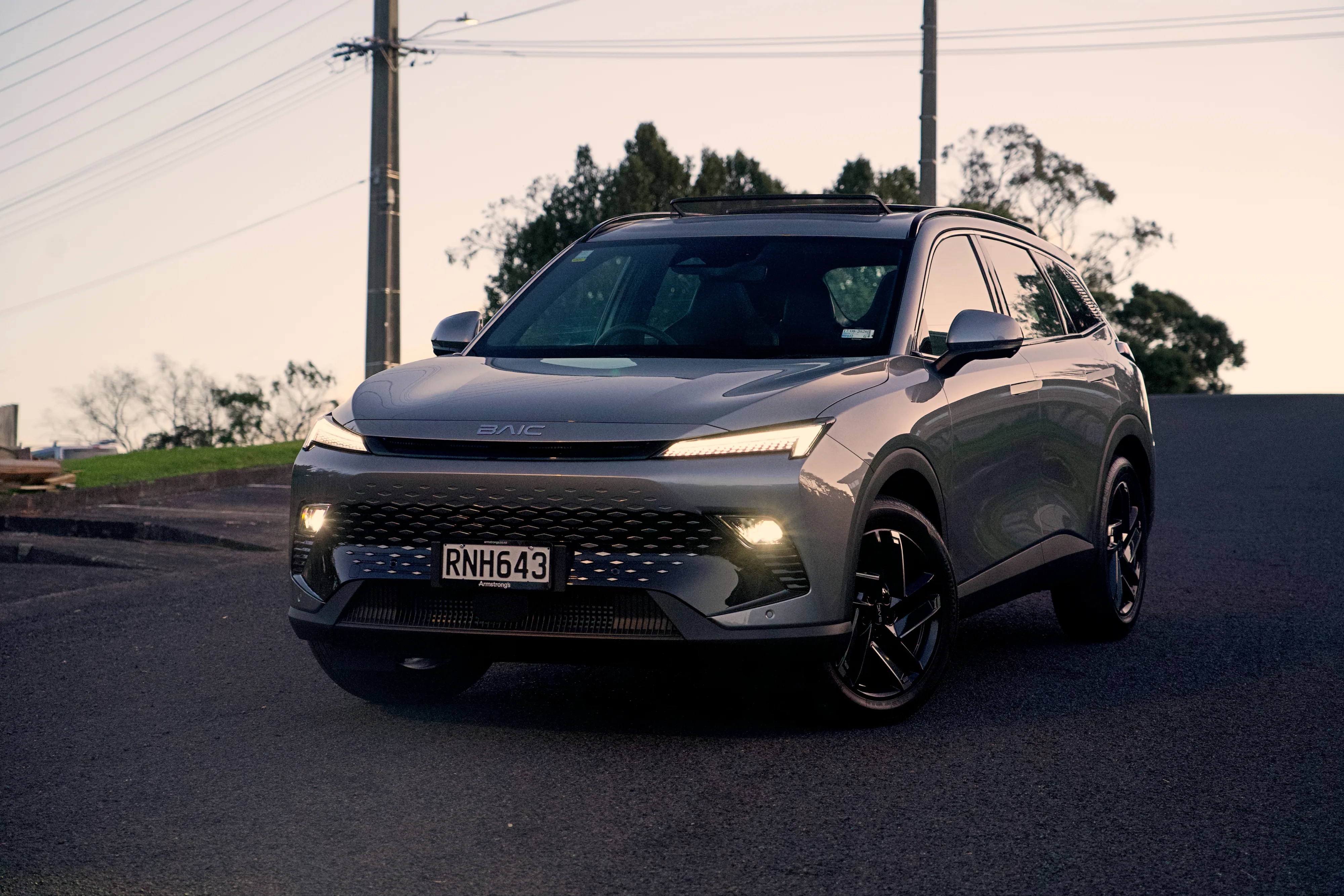
That last part is important, because if there’s one thing that newly arrived BAIC understood with their X55, it’s that you have a make a solid first impression. That might sound like cheap praise, when almost every SUV seems to have adopted the elements we see here: split headlights, aggressive styling, hidden door handles, the list goes on. But the X55 manages to pull off the hard task of doing all that without looking like everything else on the road, or that it is just a jelly bean on wheels.
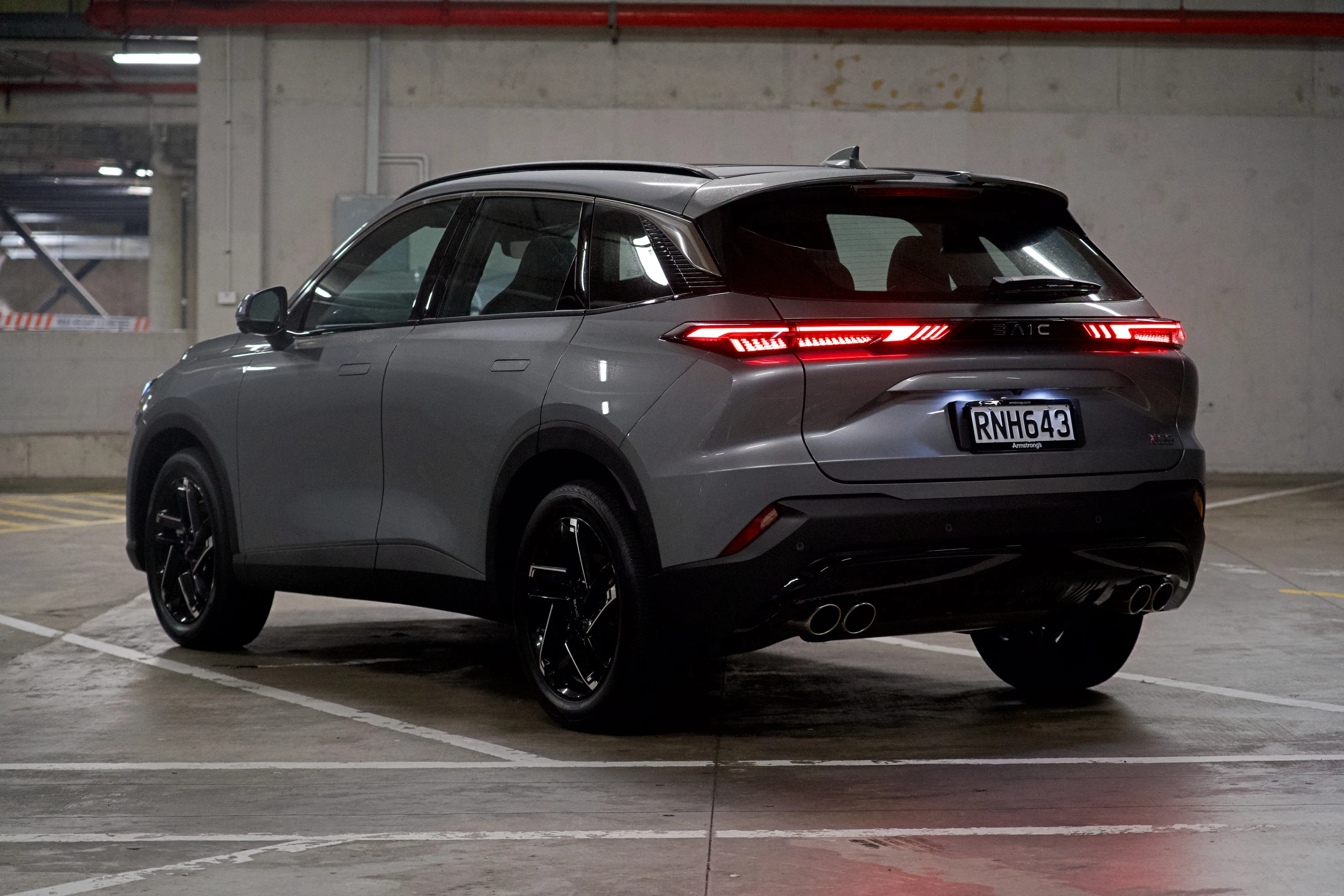
It shares the showroom with an off road SUV, the BJ30, BAICs outdoorsy, adventure-ready offering that I have on loan as I write this review, which poises the X55 as the more city focused member of the family, and it shows in the design cues. It’s not an easy segment to design for, with so many requirements and constraints, and yet I think this is one of the X55’s strongest suits.
Stepping inside, that design consistency persists, with the current tropes for storage, screens and controls being very familiar. What I really appreciate is that through the higher waistline, tighter cabin architecture, and lower seating position, the X55 wraps itself around you in a way that feels more hatchback-like, creating a cocooned, more connected driving environment. And you will see that it suits the car like a glove.
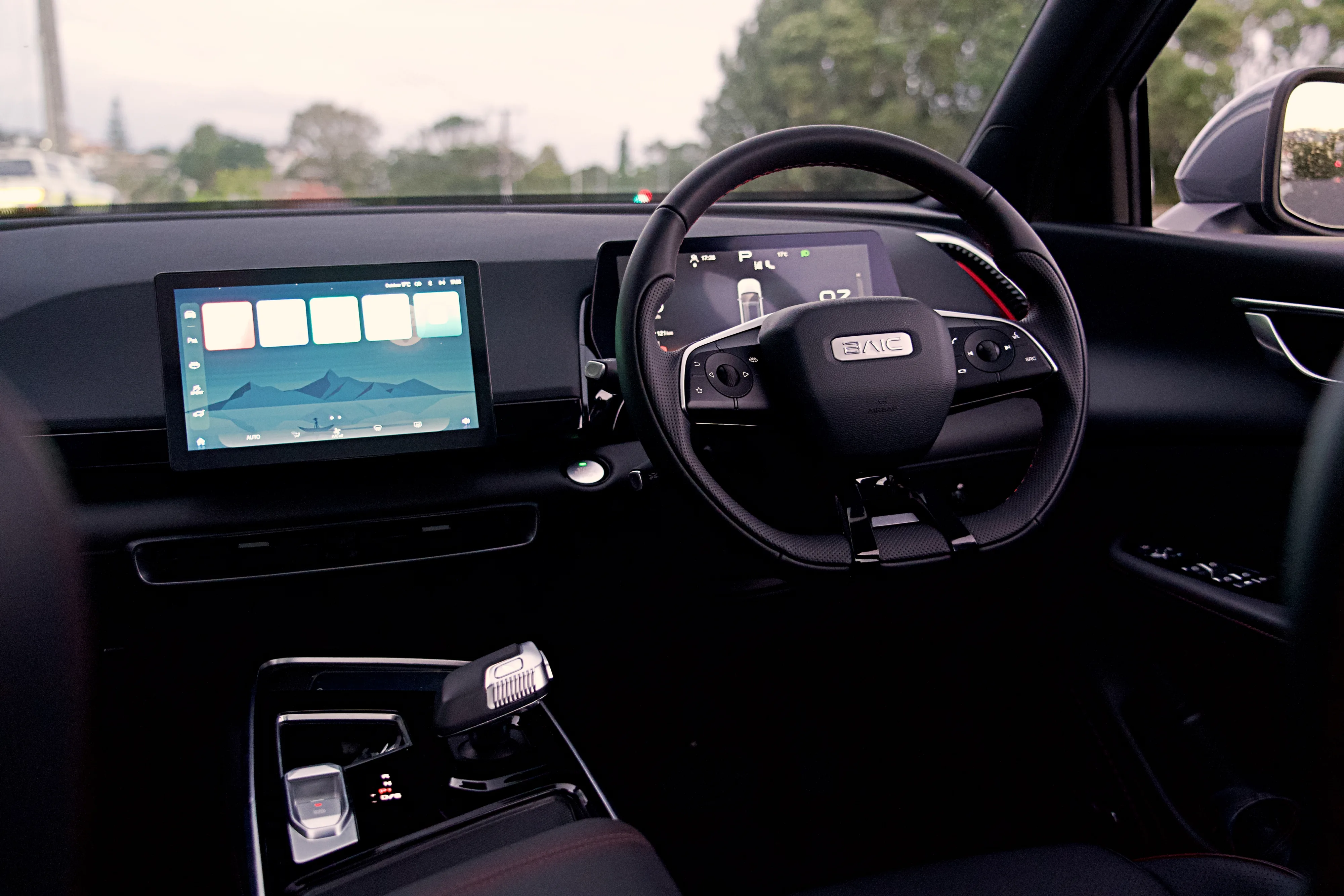
The six-way adjustable driver’s seat makes it easy to find a natural driving position, and the integrated, Beijing printed headrests give the front seats a sportier, more premium feel than you might expect at this price point. The rearview mirror housing is asymmetrical for a LHD market, so in my driving position it led to the mirror grazing the housing and not being set up perfectly.
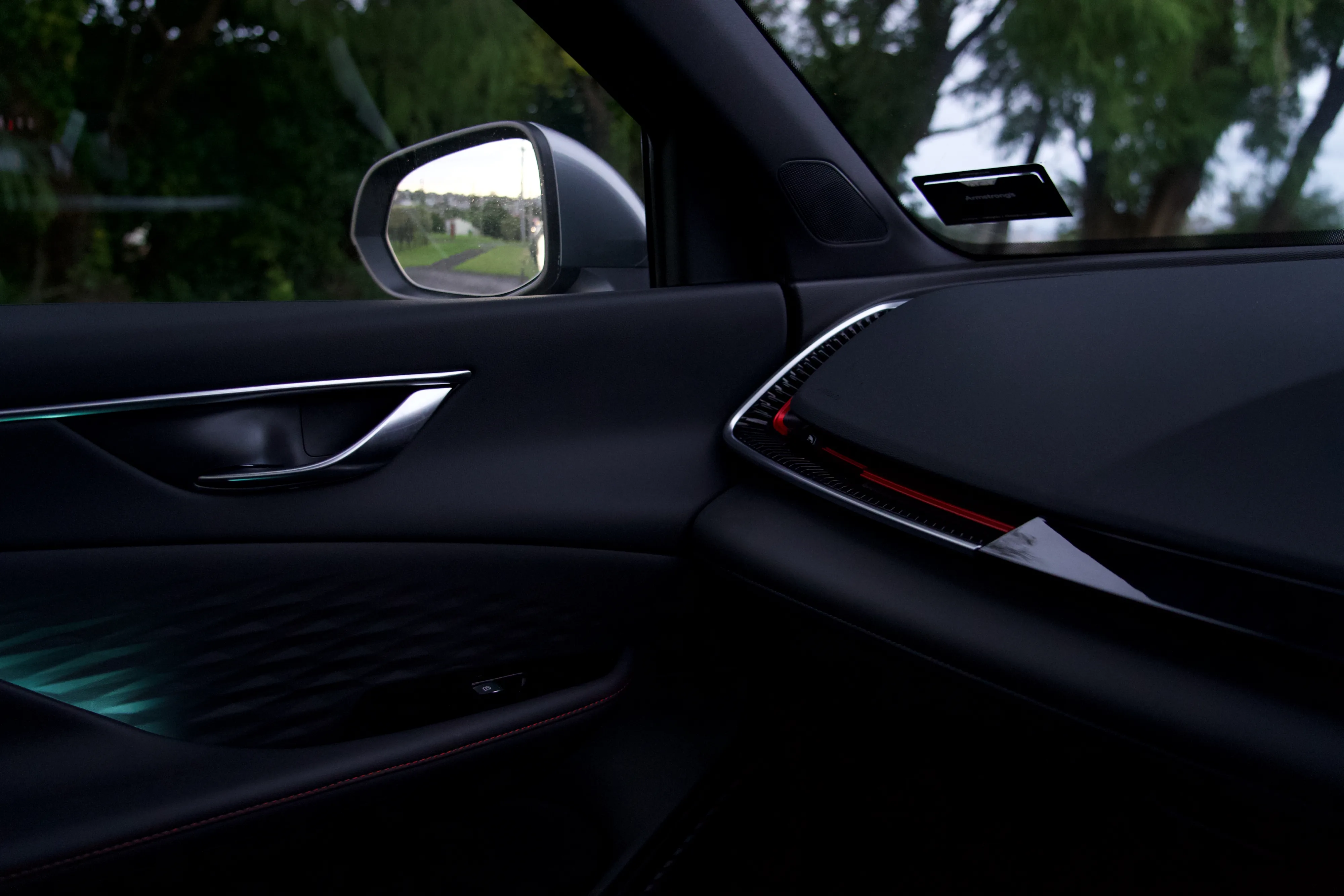
You can tell BAIC’s designers actually wanted this cabin to feel interesting. Material quality isn’t revolutionary, but it’s better than expected. The surfaces you touch most often avoid the usual sea of scratchy plastics, and there’s a clear effort to break up the visual monotony with different textures, namely on the corners of the dashboards and where the texture diffuses the ambient lighting on the door cards.
Storage is mostly well thought out too. The floating centre armrest design creates a useful storage cavity underneath, while the upper section houses a substantial armrest bin, a small forward cubby that’s ideal for a wallet, a cup holder positioned within easy reach and a very smart nook for wireless charging your devices securely.
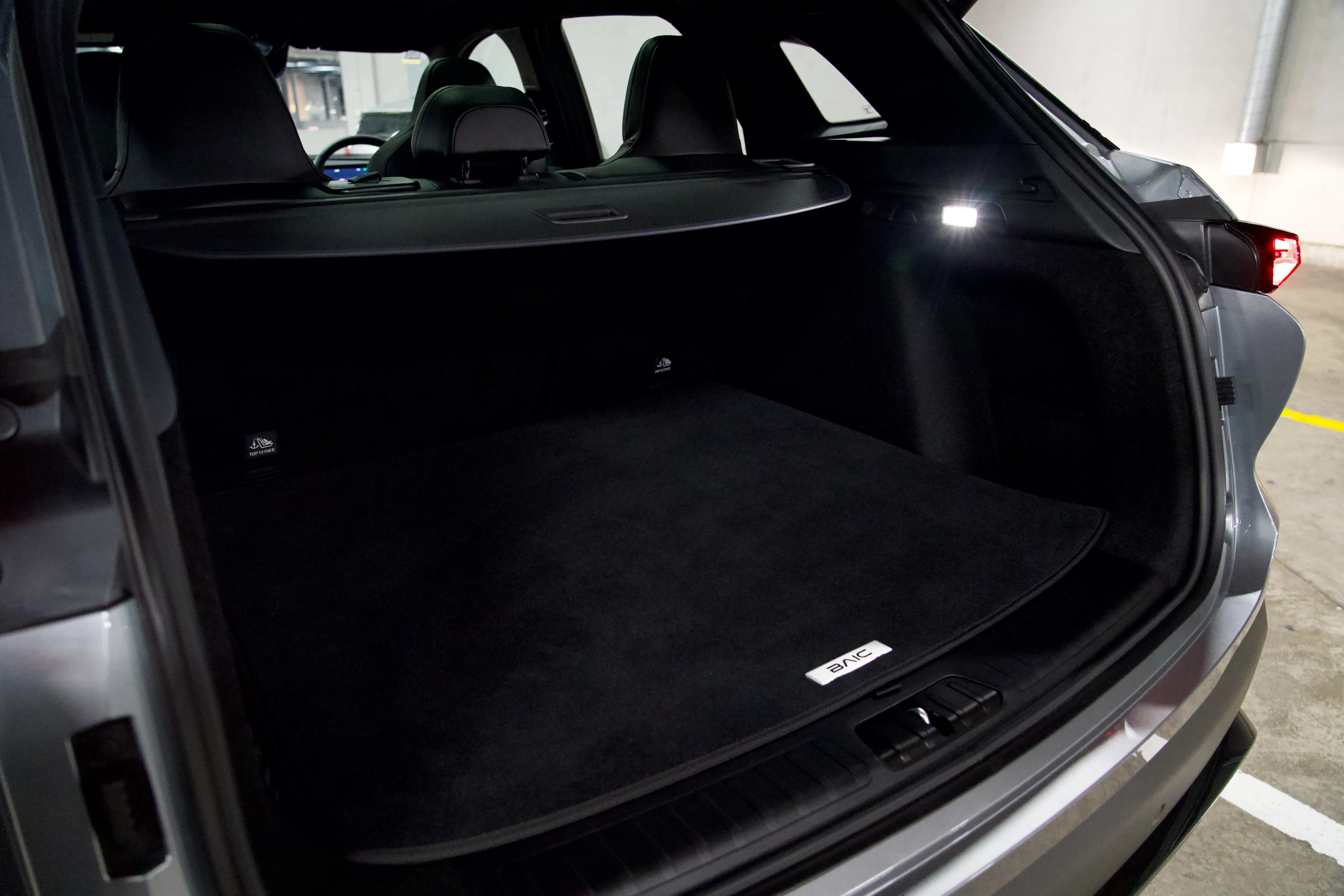
One caveat, however. Unlike some competitors that have moved entirely to minimalist toggles or column-mounted selectors, the X55 uses a traditional gear selector alongside an electronic parking brake. It does sacrifice a bit of practicality and storage in the process, but it’s almost like it’s trying to skip straight to the driving portion of the review. Rear accommodation is another pleasant surprise: the flat floor makes life easier for passengers, legroom is generous for two adults, and while the middle seat is inevitably narrower, it’s still genuinely usable for four adults, or a young family. Boot is also adequate at 350L and super easy to use.
So far, so good. Very good, actually, and that’s what makes what comes next so frustrating. The X55 gets so many important things right… only to stumble in an area that should be far easier to fix. The technology.
For starters, the same lack of localisation hurts the digital realm as well. Whether you’re using phone projection or the native vehicle software, key shortcuts remain on the left side of the display, making it very awkward for the driver to access shortcuts, or the passenger to change the volume.
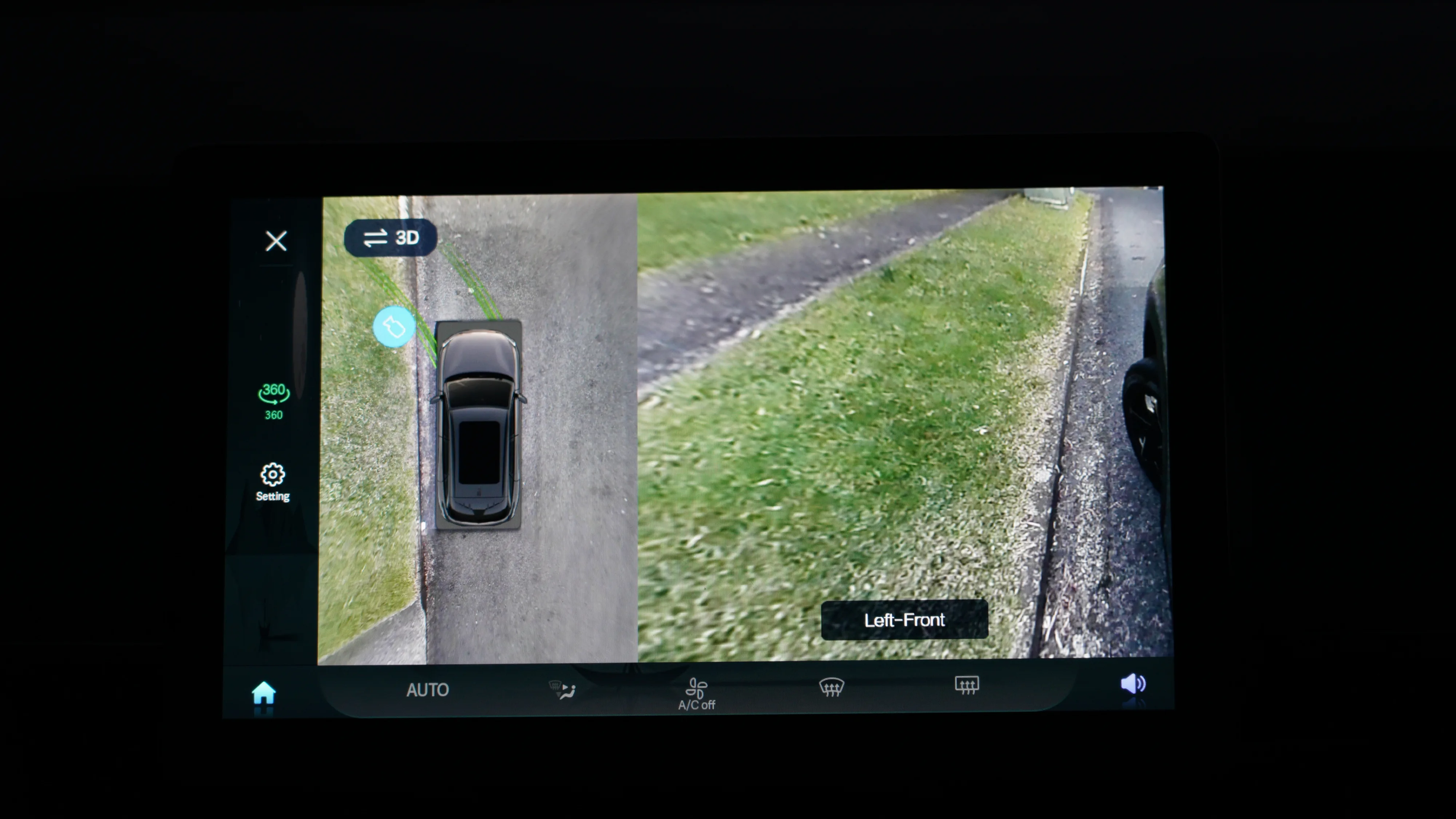
It sounds minor, until you have to interact with these things frequently as you drive. The screen itself doesn’t help matters either. It looks tacked on rather than integrated, resolution is merely average, response times are noticeably laggy, and the software lacks the polish you’d now expect even from entry level competitors, with a layout that makes suboptimal use of space and lays options out incoherently.
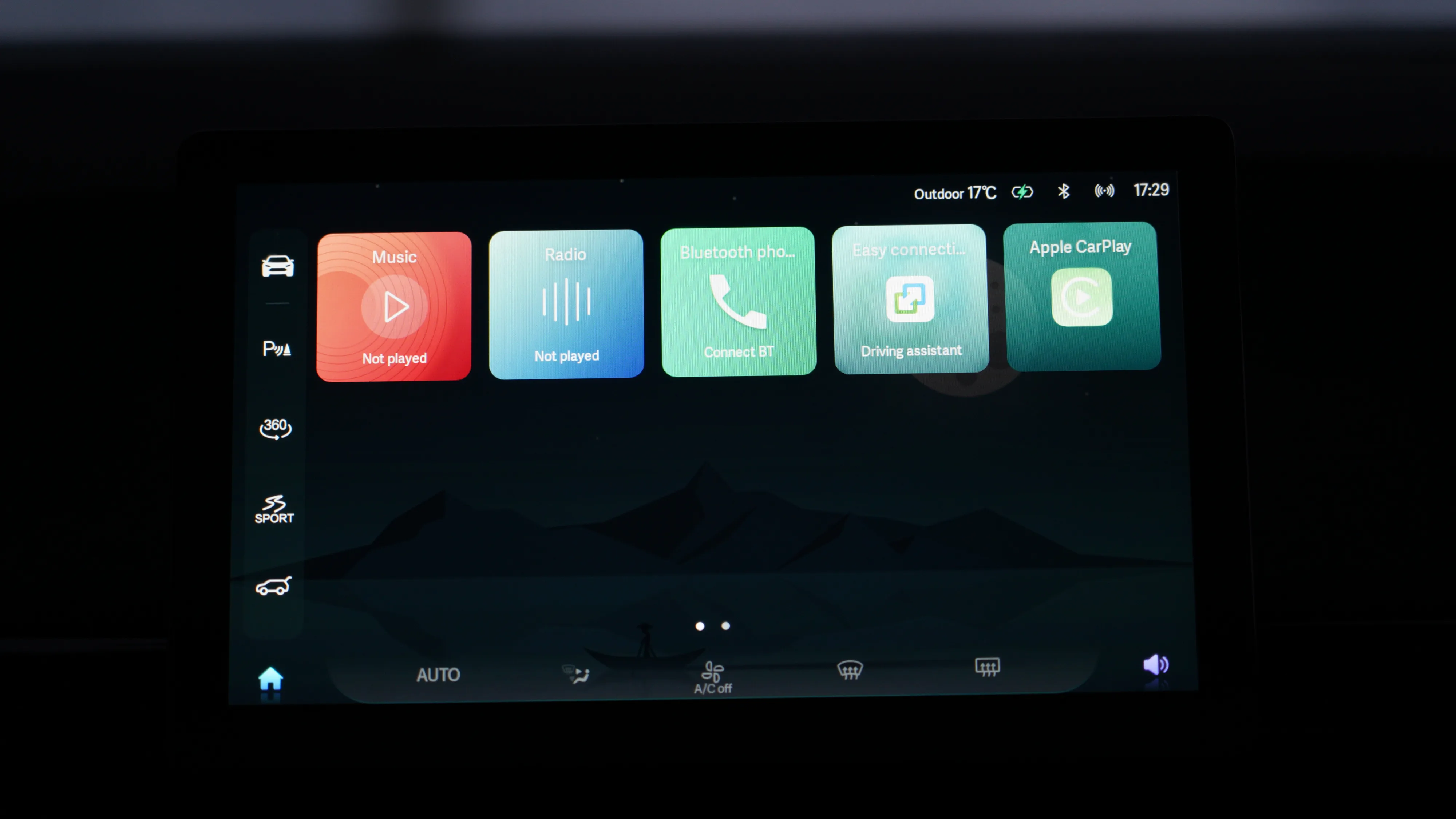
But the biggest frustration remains the climate controls. If you’re using smartphone projection – let’s be honest, it’s 2026 and the car’s system is very simple, so you most definitely are – and want to change something as simple as cabin temperature or airflow direction, you often have to jump back out of your phone interface and into BAIC’s native system before making even the smallest adjustment.

One degree, one airflow direction change, turning on heated seats. In the worst case scenario, it can be as high as 8 screen taps, in an action that could be one single tap should the shortcuts persist. Every single time. And that sort of friction adds up quickly, especially when there isn’t the ability to do it via voice commands. You can set a favourite button to take you to the A/C screen, yes, but it only mitigates half of the journey and highlights the lagginess of the system.
And unfortunately, my nerdy geekiness puts a lot of emphasis on this topic, and judging by how much it also frustrated my wife and Dave, I bet this is something that will get addressed in one way or another. For a car that needs to do daily duty, this could become old very quickly.
Which is a genuine shame, because once you actually start driving the X55, it immediately brings us back to the high notes earlier in the review. This thing drives well! The powertrain is one of the biggest surprises here. The turbocharged 1.5 four cylinder offers 138kW and 305Nm, and is paired to a dual-clutch transmission that not only offers a calibration that is impressively smooth, but that, in fact, even gives a remarkably European driving experience.
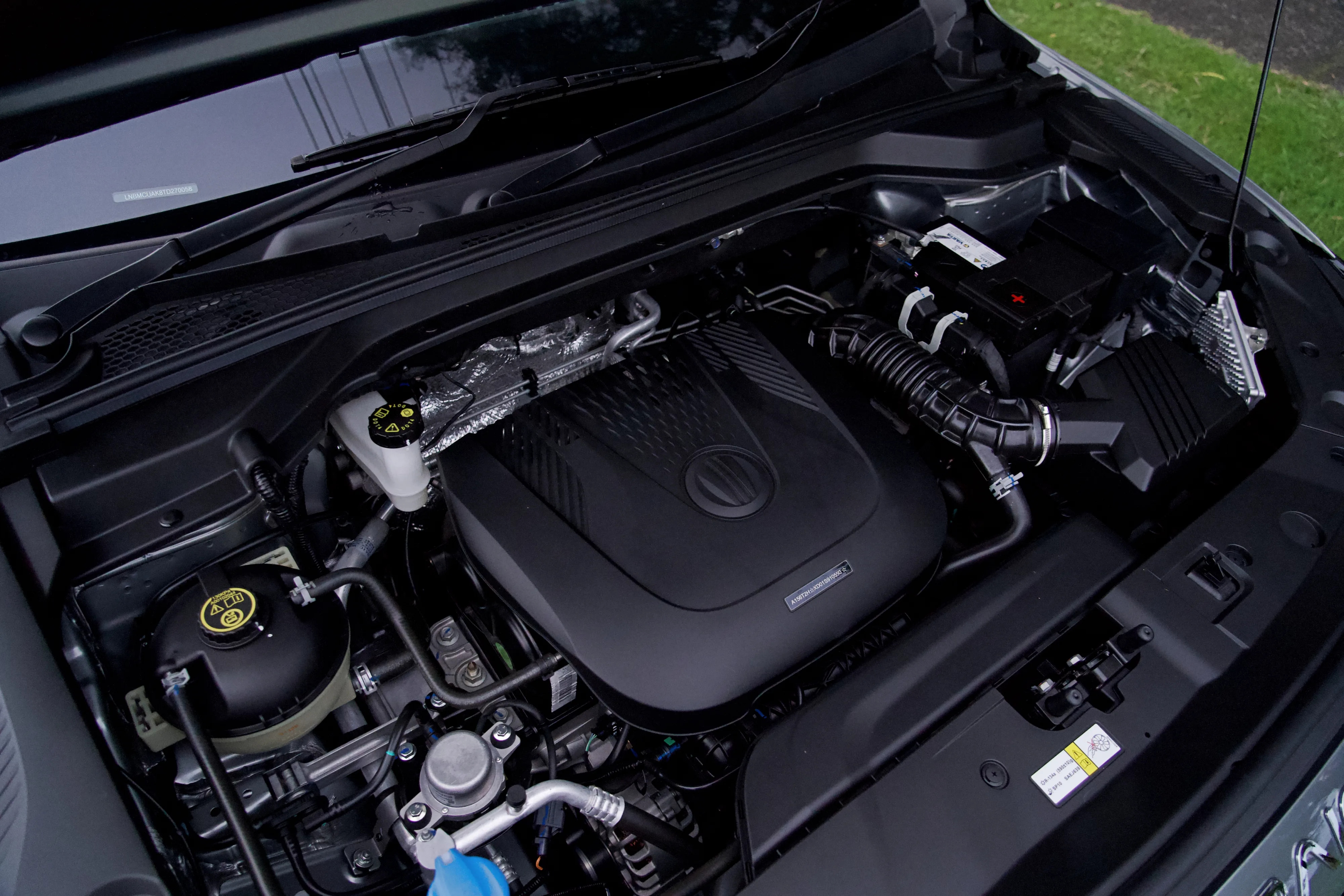
Throttle response is clean, power delivery is very urban-turbo with torque down low, and the gearbox shifts can be both smooth and engaging, immediately bringing to mind compact offerings from premium brands famous for their DCTs, complete to the hesitation to overcome inertia.
I could not get the 7.7L/100km claimed efficiency over my time with it, but I guess this is a testament to how engaging to drive it was, clearly standing taller than its compatriots. And when you combine that with the pricing BAIC is targeting, of $34,990 and $35,990 for the two trim levels, the X55 starts becoming a very serious proposition.
Underneath the occasional software frustration lies a capable, attractive, and genuinely enjoyable small SUV. Which makes the conclusion simple, really. The BAIC X55 isn’t being held back by engineering or design, it actually did those two remarkably well. It’s Achille’s heel rests on decisions that feel entirely fixable. If it had a Spider Graph, it would over perform on certain traits while lagging a bit on another. Would you rather that or a jack of all trades?
And if BAIC can sort those out, whether through software updates or proper RHD localisation, the X55 immediately jumps from being an interesting alternative, to becoming one of the most compelling value-focused urban SUVs on its segment. Building cars is very, very hard, after all. Thanks, BAIC, for the opportunity, and thank you for reading this far!