
For more than a century now, Zagato has been synonymous with lightweight engineering and distinctive design. Being synonymous to hand-shaped aluminium bodywork on 1950s race cars to modern limited-run designs, the Milanese house has always pursued the idea of reducing weight, maximising performance, and letting the mechanical components become part of the visual story.
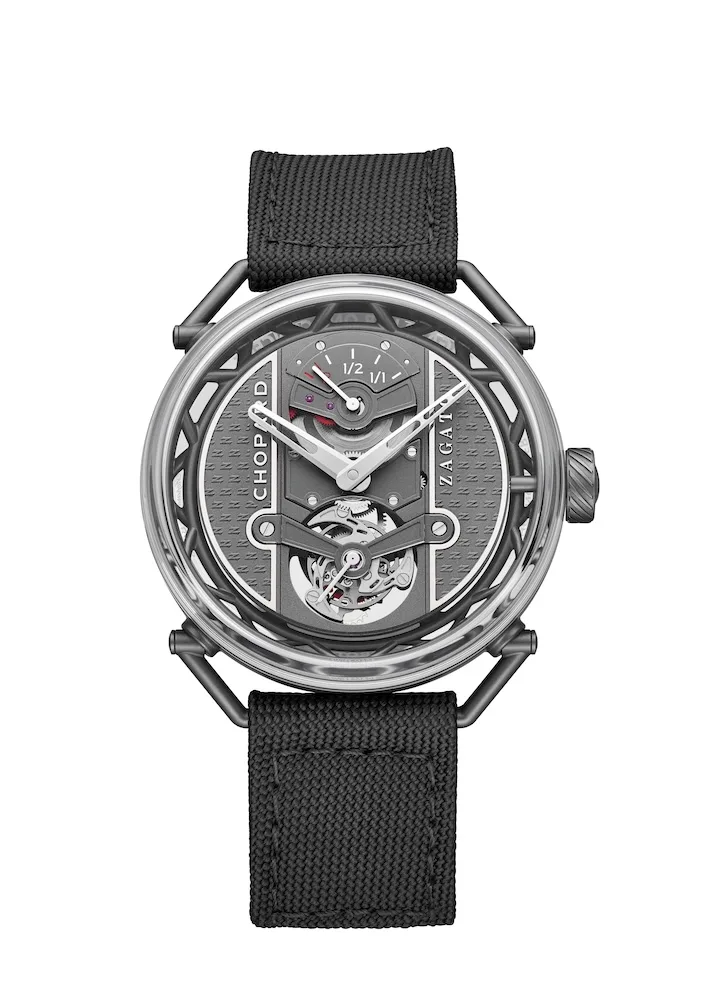
So it just made sense that that philosophy would be translated into the other medium where all of that attention to detail can shine: a mechanical wristwatch. The result is the Zagato Lab One Concept, a radical timepiece created in collaboration with Chopard. But while Chopard provides the horological expertise, the watch itself feels unmistakably Zagato in spirit and look, echoing the design language that has shaped some of the most iconic coachbuilt cars in automotive history.
The Lab One Concept made its debut at the 2026 edition of the classic-car show Rétromobile, a fitting venue given how deeply the design is rooted in motorsport thinking. Zagato has long specialised in lightweight structures, particularly during the golden era of racing in the 1950s and 1960s.

Back then, race cars often relied on tubular frames paired with ultra-thin aluminium bodywork – this is before Kevlar, carbon fibre, and all that good stuff. The structure was exposed, mechanical, and honest: you could see exactly how the machine was put together – sometimes more than you’d want.
That philosophy is directly mirrored in the Lab One Concept. Instead of a traditional enclosed watch case, the design uses a tubular architecture (just like a race car) that surrounds and supports the movement. The watch effectively exposes its inner workings in the same way a race car’s engine sits inside a visible chassis frame.
Zagato’s obsession with lightness carries through into the watch’s construction. The Lab One Concept weighs just 36.5 grams without a strap, making it the lightest titanium watch ever produced by Chopard, and an absolutely featherweight nonetheless.
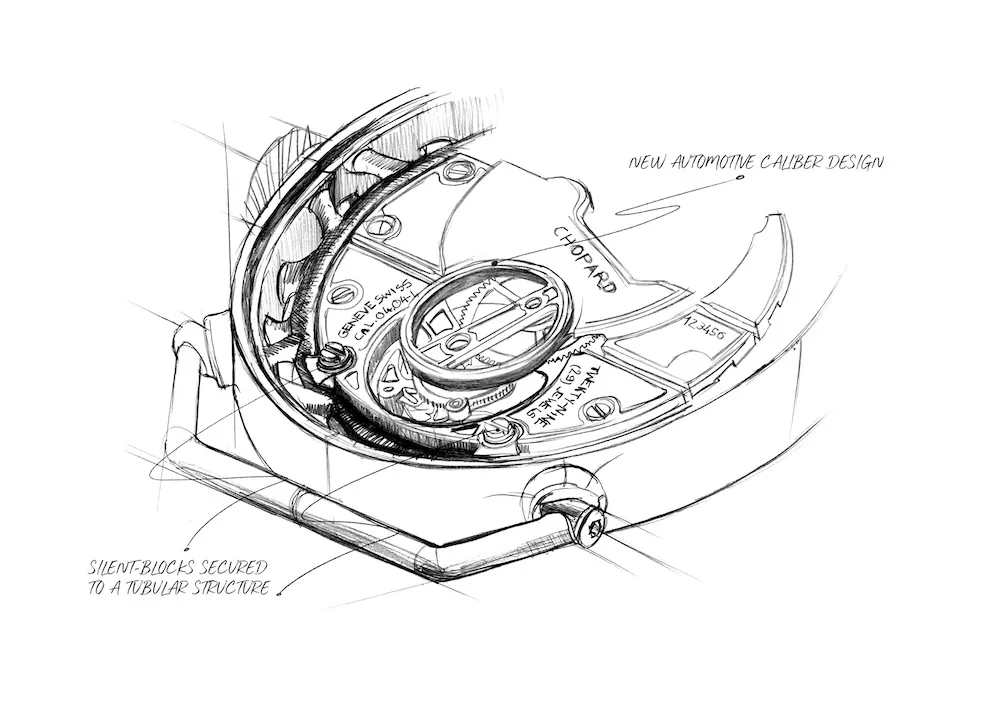
That impressive number is a direct expression of the coachbuilder’s philosophy. Lightweight structures have always been key to Zagato’s automotive projects, where reducing mass improves performance, handling, and efficiency. To achieve it, the watch removes traditional components such as a conventional dial. Instead, the movement’s mainplate doubles as the dial, decorated with Zagato’s signature “Z” motif.
The watch’s structure uses ceramicised titanium, produced through an electro-plasma oxidation process that gives the material a hardness comparable to ceramic while keeping weight extremely low. And you thought car people were nerdy.
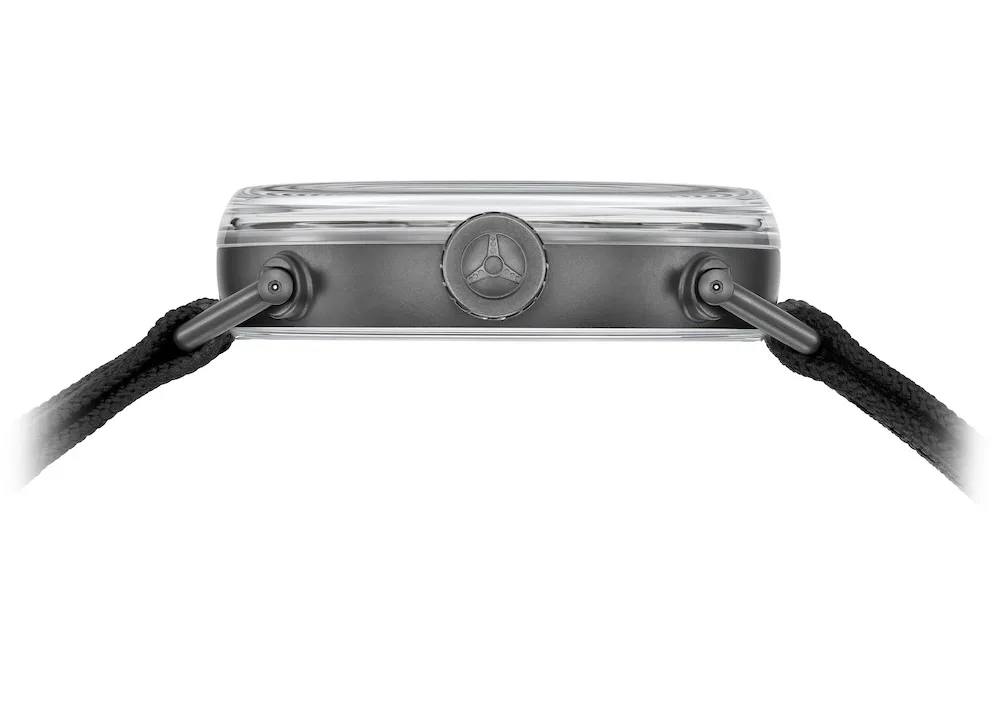
The crown resembles a differential gear, reinforcing the mechanical theme. The power-reserve indicator mimics the look of a fuel gauge, while the one-minute tourbillon at six o’clock sits like a mechanical centrepiece beneath the hands. Even the structural elements reference race-car construction. The watch integrates shock-absorbing components similar to engine mounts, designed to protect the movement from vibration and impacts.

Look closely, and the automotive inspiration becomes even more obvious. Inside the watch sits Chopard’s hand-wound L.U.C 04.04-L movement, featuring a 60-second tourbillon and a power reserve of around 60 hours. The movement is chronometer-certified by the COSC, ensuring precision alongside the dramatic design.
The partnership between Zagato and Chopard is not entirely new. The two companies have collaborated before through watches linked to the Mille Miglia, the legendary road race that Chopard has sponsored for decades. Previous timepieces included the 2013 Mille Miglia Zagato Chronograph and a 2019 anniversary model celebrating Zagato’s centenary. In keeping with Zagato tradition, the Lab One Concept will be extremely rare. Only 19 pieces will be produced, a number referencing April 19, 1919, when Zagato was founded.
While pricing hasn’t been widely publicised, watches of this complexity and exclusivity typically inhabit the upper tier of haute horlogerie. It’s a rare thing to see a coachbuilder’s philosophy applied so faithfully outside the automotive world. But then again, Zagato has never been afraid to explore new forms — as long as the principles of design, performance, and lightness remain intact.